
In his culinary tour of Italy, Mr. Famularo starts in the natural place: Rome. Called the Eternal City, Rome has been at the center of history for over 2000 years. From the time of the Roman Republic to the present day, each era has left its mark on the city in some way or another. Within a few blocks, you can find classical ruins, Renaissance churches, Baroque residences, and modern supermarkets, the old and new side by side.
Through all of this history, cuisine has evolved each step of the way. What has surprised me in studying this, though, is how different modern Roman cuisine is from that of Ancient Rome or the Medieval Papacy. From ancient times there has been an appreciation of good ingredients, including bread, cured pork products, cheeses, olive oil, wine, vegetables, and fruit, but preparation was often quite different. While many depictions in literature of ancient feasts are no doubt exaggerated, surviving recipes indicate that along with shellfish, egg dishes, and sweet and sour or pesto-type sauces, offal (including brains) was a favorite for all classes. Cumin and coriander were dominant flavors, at least a bit of fish sauce (called garum, much like a modern Thai fish sauce) was included in most recipes, and those who could afford it used lots of honey and pepper.
Pasta, the food most often associated with Italy today, did not really appear until the Middle Ages. Rice, sugar, eggplants, spinach, rosemary, basil and citrus fruits were introduced during this time, along with cinnamon, nutmeg, cloves and ginger. Garum disappeared, but the preference for sweet, sour and spicy flavors remained.
The biggest changes, however, came after 1492. Potatoes, maize, tomatoes, peppers, zucchini, turkeys, chocolate and vanilla arrived from the Americas, while coffee came from the Middle East. Over the next few hundred years, these ingredients transformed cuisine throughout Italy.
This menu, consisting of a baked pasta dish, bread, and salad, does a great job illustrating the history. Looking at the ingredients, you can see the onion, olive oil, cheese and pepper the ancients would have been familiar with, the pasta and basil introduced during the Middle Ages, and the tomatoes and zucchini, now ubiquitous in Italian cuisine, introduced after the time of Columbus.
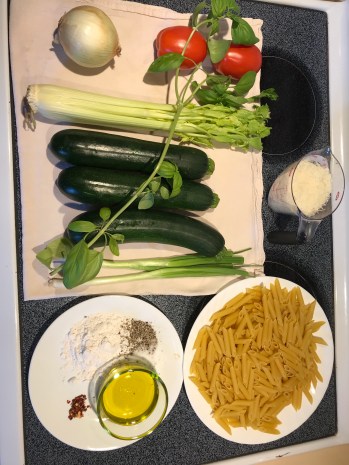


This pasta tasted as good as it looks. The vegetables, herbs, and flour created a light but flavorful sauce in the oven, and the Romano cheese on top added an extra layer of flavor. The only thing I would change is next time I would add more salt to the pasta itself but not sprinkle any extra over the top of the cheese. Overall, this project is off to a great start.
 Feasting Through Time