
Menu: Artichokes Cooked in a Saucepan, Sweet Macaroni and Cheese, Sour Cherry Jam Tart
Featuring some of Rome’s classic dishes, this menu of artichokes, pasta and a jam tart is, according to the text, relatively simple to prepare. Matters were somewhat complicated for me by a lack of experience with artichokes, lack of access to fresh ricotta, and somewhat dull knives (that have since been sharpened). While many Italian cheeses are available at the larger supermarkets, I have been unable to find a store that sells fresh ricotta and the nearest Italian grocery is 2 hours away, so I decided to make my own. I still haven’t mastered it, but if I make it a day or two ahead I can make a new batch if one doesn’t work out. Vinegar and salt are a negligible cost, and milk has been on sale at the nearest grocery store for $1.99/gallon for the last several months.
If you’re wondering about this last point, Wisconsin is having a crisis in the dairy industry at the moment and prices are down as a result. In theory, you can make about 2 pounds or 4 cups of soft cheese from a gallon of milk. I haven’t gotten to that level of yield quite yet and my results are inconsistent, but nevertheless, it seemed like this would be more like fresh ricotta than the ricotta in tubs.
Much of the preparation time was spent wrestling with the artichokes, although the result was most satisfying. Stuffing the insides with a mixture of chopped mint and parsley, minced garlic, salt and pepper and braising in water and olive oil yielded a well-flavored vegetable with a buttery texture and almost meaty taste. These were even better the next day, after the flavors had had time to meld. Just make sure to have plenty of napkins on hand, since these are messy to eat.
The pasta was yet another pleasant surprise. The mix of fresh ricotta, sugar, cinnamon and chives sounded a bit strange, but it tasted kind of like a sweet alfredo sauce and was surprisingly good. A little extra salt helped it make more “sense,” for lack of a better term, and bring the flavors together. It wasn’t as good as the other pasta dishes from the book, but it still made some nice leftovers for lunch the next day.
The star of the show, if you will, was the tart. There is an option to use a prepared pie crust rather than the homemade pastry provided in the recipe, but I would not do so. Said pastry, slightly sweetened with powdered sugar and flavored with a bit of lemon zest, was the best part, even if it did keep melting between my fingers as I was trying to weave the thin pieces of dough into a lattice top. It was about 90 degrees that day, so I ultimately rolled the top pieces into ropes and laid the horizontal strips across the vertical ones and it turned out fine. Jam fills in for fruit or pie filling here, I used a jar of Door County Cherry Jam and it worked beautifully. Though the recipe did not include this, a scoop of vanilla ice cream was a nice addition.
If you wish, Mr. Famularo again suggested serving this menu with Frascati, a white wine for which Rome is famous. Supposedly fresh-tasting, easy to drink and affordable, it is recommended for several menus in the Rome/Lazio chapter. According to the tour guides on a trip to Italy, this region tends to produce and drink more white wines, as does the area around Venice. I’m not sure if I actually had any Frascati in Rome but it is supposedly fairly typical of the area, so I’d imagine a lot of the table wine blends (which I think is what the tour gave us each night at dinner) are somewhat similar. If that’s the case, they are quite enjoyable, not too strong or too dry.
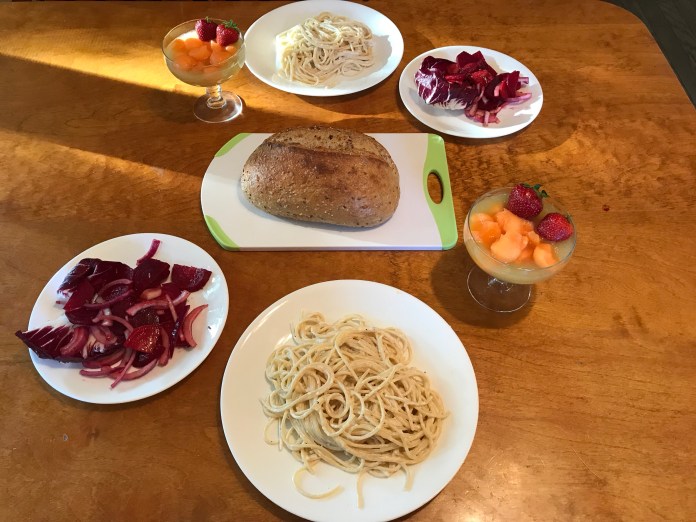 Still around Rome (maybe it’s just my imagination, but the menus and recipes seem, in many cases, to become more complicated as the book progresses), Mr. Famularo invites us to imagine lunch at a café after visiting a little-known gem in Grottaferrata, a town not far from Rome. There are numerous beautiful settings to imagine throughout the book, all wonderfully descriptive. Here, after being shown around a monastery museum by one of the monks, we can sit down to a lunch of a roasted beet salad, spaghetti with a lemon cream sauce, and a unique take on fruit salad for dessert.
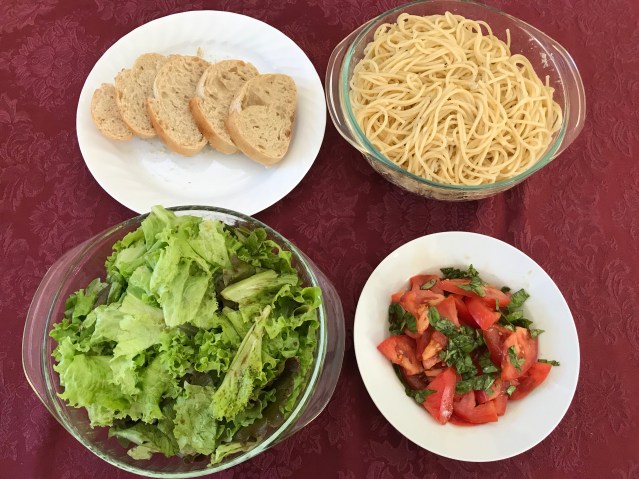 Overall, this was simple but really good. Ordinarily I’m not a big fan of Romano cheese (it has a bit of a funky taste to it), but grated and used in moderate amounts with pepper, it produced a pasta dish with a good flavor but not too strong. The one thing I would change is that I would not put salt in the salad, even though it was recommended. Though I only added it, along with the vinegar and oil, at the last minute, it quickly made the lettuce soggy and gave it a strange texture, though it was fine on the tomatoes. Maybe a different type of lettuce wouldn’t soften as fast, but personally I would skip it in the future since the salad had plenty of flavor without it. Still, the pasta was great and I would definitely make this menu again.
 Feasting Through Time