
Menu: Grilled Asparagus and Parma Ham Salad, Fresh Berries with Almond Cream, Cappuccino, Fruit Vinegars
Recommended Wine: Verdicchio (Yellow-Green Color, Higher Alcohol)

In Emilia-Romagna again, we have one of the most seasonal menus in the book, featuring fresh asparagus and berries. While they are generally available year-round, their quality is highest and prices lowest when they are in season. In the introduction to this menu, Mr. Famularo describes a light lunch during a trip in early summer, featuring a variety of seasonal produce and regional specialties. Also described is a balsamic vinegar factory with a peacock on the roof and learning how to make fruit-infused red and white wine vinegars, in this case peach, raspberry, and orange. I gave this method a try last year with some extra peaches and strawberries at risk of going bad if not used, and the results were remarkable, especially the strawberry vinegar. Though not used in the menu, these fruit vinegars are a tasty and interesting change of pace on salads, and the strawberry is fantastic on slices of cucumber. I imagine the peach would be as well.
Returning to the menu, we have a salad of baby greens tossed with a mustard vinaigrette, topped with grilled (or broiled) asparagus, a bit of grated parmesan cheese, and Parma Ham (or, if that is unavailable, as it was in this case, Black Forest Ham), fresh strawberries and blueberries topped with almond-scented whipped cream for dessert, and homemade cappuccino to drink. Walnut liqueur is also included on the list of dishes but not mentioned again, so I’m not sure what that means. Is it supposed to go in the cappuccino, or is it a mistake by the publisher from the revision process? Either way, with no clear answer on that and not wanting to buy an entire bottle, I skipped that part.
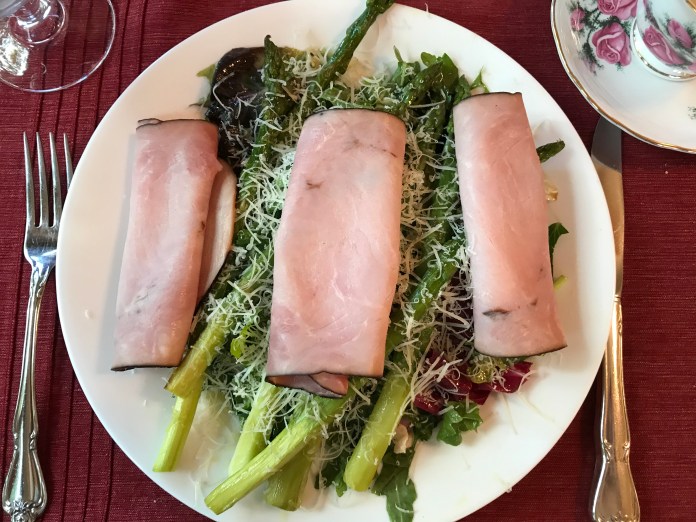
There is some interesting food history here that goes back all the way to the Ancient Romans. Salads were common appetizers, even then served with a vinegar and oil dressing, often flavored with mustard. The Romans loved asparagus, often cooking it with eggs in omelet-like patinas. They also enjoyed strawberries, especially those from around Lake Nemi, though they were not cultivated until the Middle Ages so were only available wild. Almonds, like other nuts, were popular desserts, though the flavorful but toxic if improperly prepared bitter almonds, used to make the extract, did not seem to come into use until later. Whipped cream and coffee also arrived later, during the Early Modern Era.
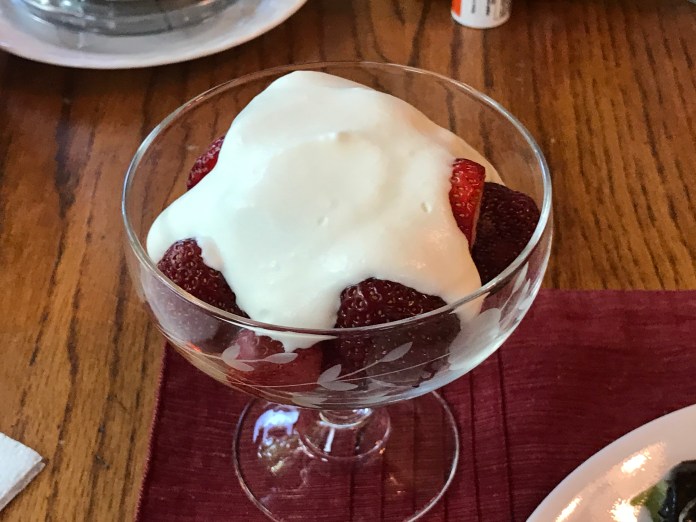
Just as described, this was a taste of early summer. The contrast of the warm asparagus on the cool greens, the meaty ham and cheese against the tangy dressing, were exceptional. Wild strawberries are recommended for the dessert if they can be found, indeed the Italian recipe name fragole di bosco translates roughly as “forest strawberries,” but surely fresh local berries in season are just as good. Due to having several quarts of these, super sweet and with an intoxicating aroma, I skipped the blueberries and put extra strawberries in the dessert glasses. The whipped cream, scented with almond extract, was the perfect accompaniment. I would have preferred it with a small amount of sugar (in many cases in the book whipped cream is unsweetened), but it was a fantastic dessert overall, perfect during those few weeks when strawberries are in season.
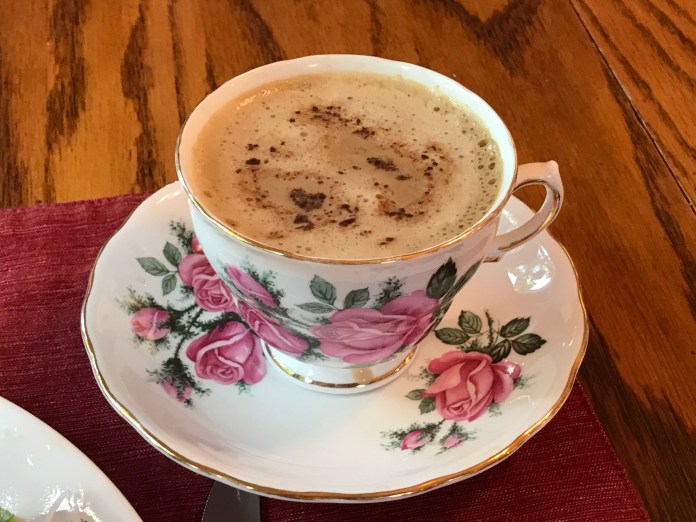
I even enjoyed the homemade cappuccino, though I don’t normally like the taste of coffee (its aroma is another matter entirely). It was surprisingly easy to make, just make some espresso (I used the granules I had on hand from some other recipes), heat some milk until it steams, whisking to make it foamy, and top the cups with a sprinkle of cocoa powder. Again, I would have preferred a little sugar in the coffee, but that’s a matter of personal preference. Overall, this was a delicious way to celebrate the start of summer’s bounty.
 Feasting Through Time
Another hit menu! Thanks for sharing your culinary adventures with us!