
Menu: A Country Spinach Pie, Fettuccine with Smoked Salmon, Sugared Red and White Grapes, Almond Biscotti without Vin Santo
Recommended Wine: Dry White like Vernaccia di San Gimignano
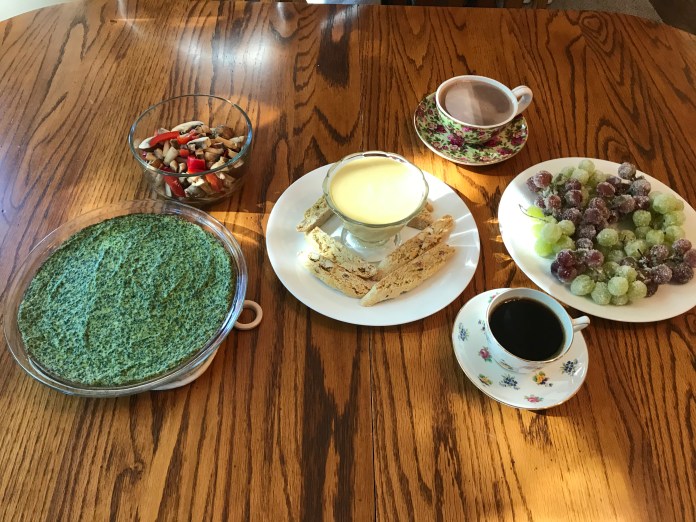
Due to a number of good summer menus, we remain in Tuscany for a meal in a pretty village in the Chianti region. Featuring a crustless, quiche-like spinach tart, something like fettuccine alfredo with smoked salmon, grapes with a crackly sugar coating, and biscotti, this menu demonstrates both Tuscan specialties and more national dishes. As stated in the text on page 43, the pasta dish is found across Italy. Grapes are as well, and not just in wine. The tart and the biscotti are more regional, as is the Vin Santo frequently served with the biscotti.
The crustless spinach tart seems to be a direct descendent of the Ancient Roman patina, something between an omelet or custard. There are several recipes for patinas in Apicius, often with pureed vegetables or vegetable juice mixed in with the eggs. The taste for green vegetables also goes back to Ancient times. While the spinach, basil, and nutmeg are Medieval introductions, similar recipes in Apicius feature lettuce or asparagus, almost always with pepper, and sometimes with ricotta cheese. Favorite vegetables in Tuscany today include spinach, chard, and especially black kale. (Text, Pg. 41 and 46) The optional mushrooms in the topping were another favorite of the Romans.
The biscotti is a more recent addition to the region’s cuisine and the cream sauce much more recent, but fruit and wine for dessert has a long history. A variety of ancient sources make clear that fresh and/or dried fruit were favorite desserts, and raisin wine similar to Vin Santo, pressed from partially dried grapes, is a frequent addition to sauces in Apicius. Vin Santo itself, along with sugared fruit, has been known since the Renaissance.
The tart was pretty good, though the texture was slightly odd. With only two eggs and an egg white to a pound of ricotta and 12 oz of spinach, it had a creamy texture but wasn’t quite like a quiche. It held together kind of like a cheesecake, but it was rather soft. The flavor was good, with onions, basil, and a bit of nutmeg, but the tart would have been better with a crust. The garnish of mushrooms (leftover stems from the last menu, mostly) and red bell pepper, dressed in olive oil and lemon juice, provided a flavor and texture contrast.

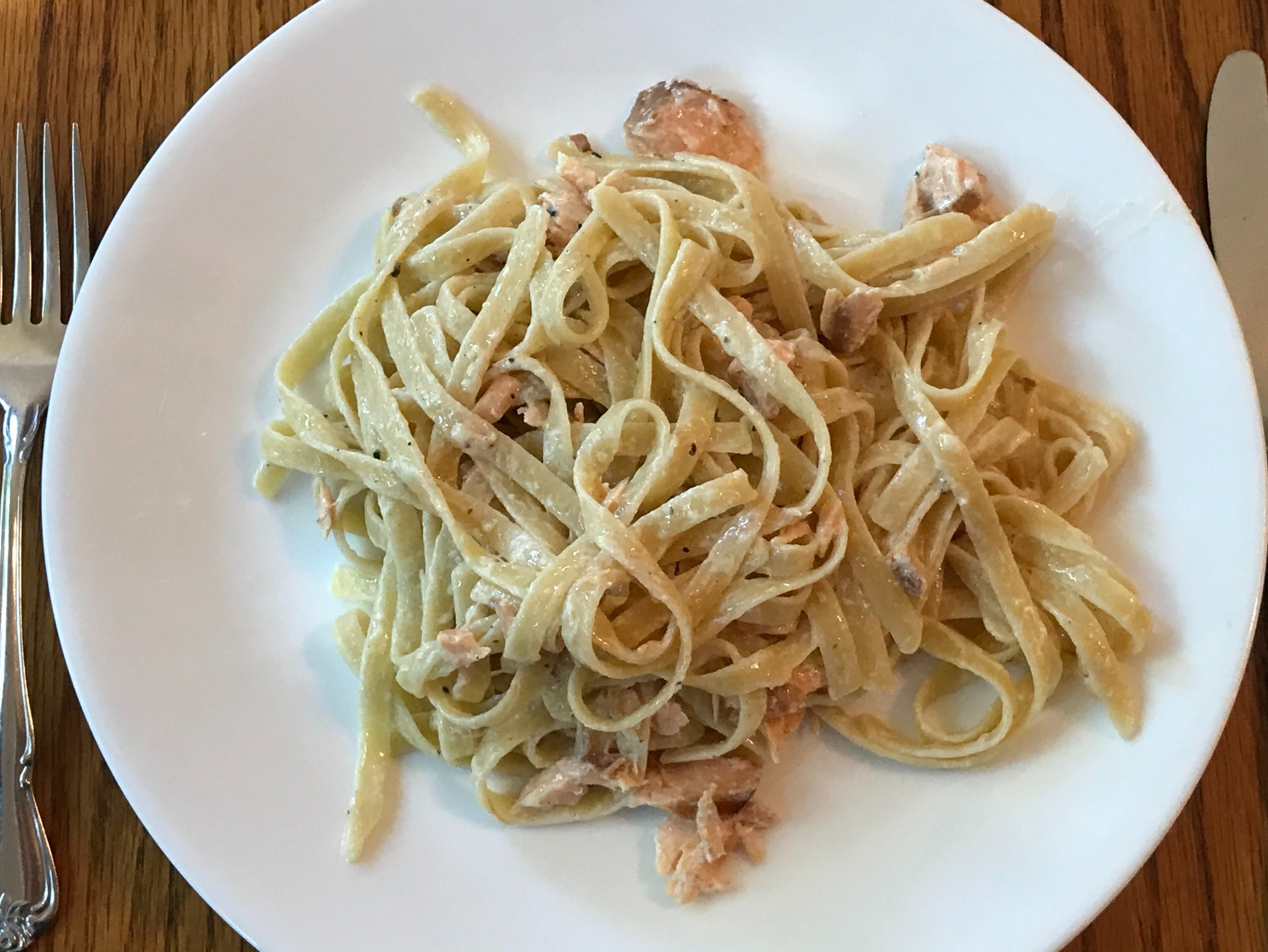
The pasta was also enjoyable, though the smoky flavor of the fish took some getting used to. Part of this may have been due to the type I used. The recipe called for thinly sliced smoked salmon cut into squares, but the only type I could find was in a small chunk. I adapted by flaking it with my fingers and continuing with the recipe, but maybe that kind is smoked more heavily. Or maybe I’m just not used to the taste of smoked fish. Regardless, it worked really well with the pasta, half and half, and parmesan cheese, and the flavor grew on me as I kept eating it.
My favorite part, however, was dessert: sugared red and white grapes and almond biscotti. The grapes turned out to be quite a revelation. They are first dipped in beaten egg whites, then sugar to coat. The end product is just gorgeous, with a frosted, sparkly look. After a few hours, the sugar becomes like a crackly crust, and the grapes are even better the next day. While this is certainly not the healthiest way to enjoy fruit, it is a nice treat and would look beautiful on a cheese tray. The biscotti had a great flavor from the almonds, which got nice and toasty during the baking, and were quite addictive. Just be forewarned that the dough is really thick and takes a long time to come together if you mix it with a wooden spoon and knead it by hand. It even gave my stand mixer, which can handle just about anything, a bit of a workout.


In Tuscany, the biscotti are often served with Vin Santo, a sweet dessert wine with some similar flavors to marsala. As I didn’t want to go multiple places to try and find it, I made a custard with a small amount of marsala to dip it into. I also make a cup each of hot cocoa and coffee in case I didn’t like the custard. As it turned out, I’m glad I did. Even with a small amount of wine, added at the start to cook off the alcohol, and a fair amount of milk, I just can’t get used to the taste of wine custard. I much prefer the biscotti with coffee or cocoa. They retained a nice crunch even after dipping. It’s clear why these are so popular.
 Feasting Through Time