Uncategorized

Cook’s Tour of Italy Menu 11 (Pgs. 45 – 48): Florentine Steak Dinner, Florence (Tuscany)

Menu: Tuscan Style Kale Soup, Grilled Porterhouse Steak, Grilled Chicory and Smoked Mozzarella, Praline Mousse Cake

Recommended Wine: Brunello di Montalcino or other big Italian red

            Here we have a number of Tuscan specialties: bread, olive oil, green vegetables, and the famous Florentine steak. Mentioned as far back as the Middle Ages, these steaks are cooked very rare and served simply, with just salt, pepper, a brushing of olive oil, and a squeeze of lemon, to avoid interfering with their natural taste. They are basically a thick-cut porterhouse, sourced from a special breed of cattle called Chianina. These are massive white beasts, with exquisite marbling and flavor. Unlike other grilled and roasted meats, Florentine steaks are not common everyday fare, but a favorite treat, both for native Florentines and visitors alike. While Chianina beef is hard to find in the US, this menu features a similar steak, served with kale soup, grilled chicory, and what is essentially a flourless chocolate cake with a layer of mousse.

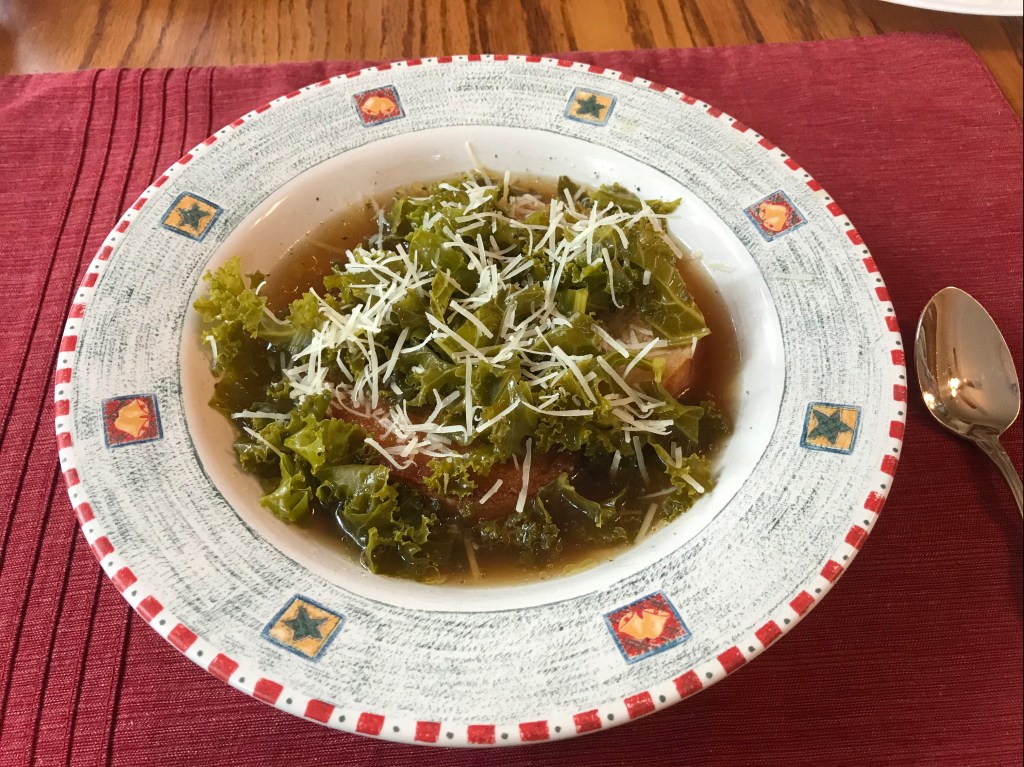
            The soup is a fine example of the rustic simplicity of many Tuscan dishes. The kale, in this case harvested a few hours before from a pot on the deck, is cooked in a mixture of chicken and beef broth. Meanwhile, slices of Italian bread are toasted under the broiler and rubbed with garlic. Pieces of toast are then placed in the soup bowls, given a sprinkling of salt, pepper, and olive oil, topped with the cooked kale, and given a bit more salt, pepper and oil before being finished with the broth and a sprinkle of parmesan cheese. The layered effect this gave the soup was both interesting and pretty, and it tasted as good as it looked.
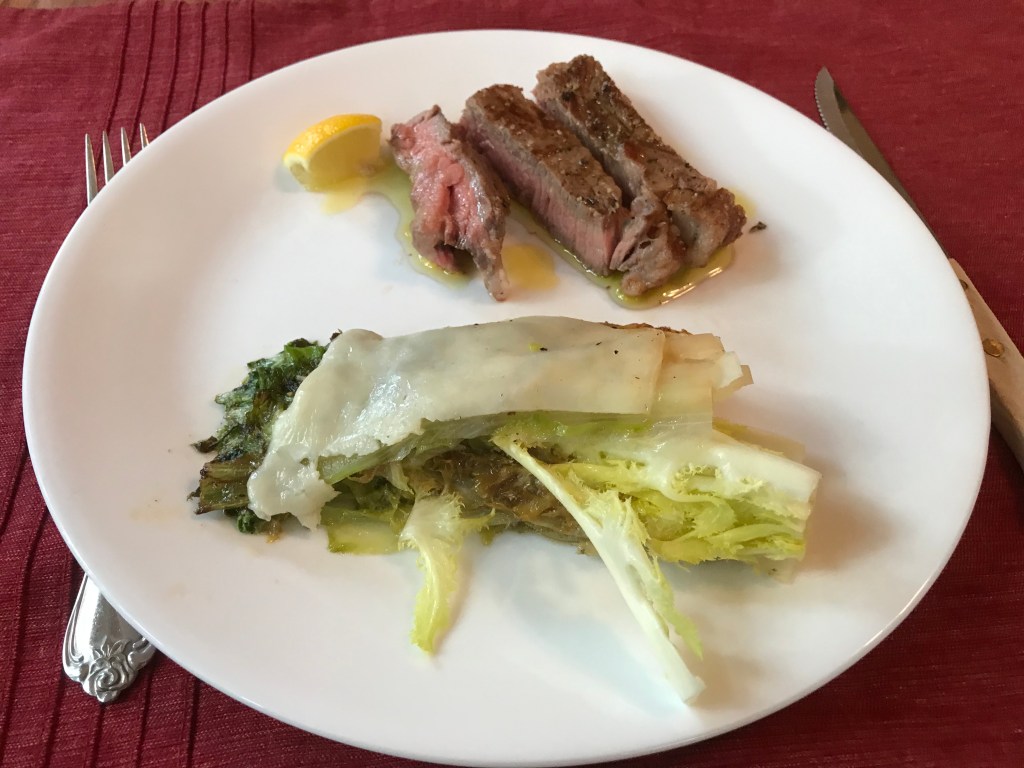
            The second course was also fairly easy to make. For the steak, the recipe provides directions for using a charcoal grill, but provides an alternative on a gas grill. First, the meat is seared close to the coals, then moved further away to cook for a few minutes, with the procedure repeated for the second side. Since the gas grill I have access to does not have a way to move the meat closer or further from the heat, I had to improvise. To have better control of the temperature, I used a skillet instead, raising and lowering the heat. This worked pretty well. Though the meat ended up more medium than rare, it remained tender and had a nice sear on the outside. Topped with garlic-infused olive oil (which is really quick and easy to make in a small skillet or saucepan) and a squeeze of fresh lemon, it was delicious.

            On a side note, the recipe may have been affected further by using a smaller steak. Though it looked to be at least an inch thick, as was needed, it was just under 1 ½ pounds, rather than the 3-pound monster steak the recipe called for. Since the original recipe is designed to serve six and I was only serving three people, this seemed reasonable, plus the 1.3 or 1.4 pounder was the largest steak available at the supermarket. While I made the full batch of soup in order to have leftovers, steak does not reheat particularly well, so I didn’t make a second one. When the really good sale price is $10.49/lb, you want to make sure you enjoy it at its best.

            Since the steak needed time to rest before slicing, I used the already-hot skillet to cook the chicory. Also called curly endive, it is a slightly bitter green. The darker, more bitter outer leaves are removed and either reserved for another use or discarded, while the lighter yellow and white hearts are seared briefly over very high heat with olive oil, salt, and pepper. Once removed from the heat source, a thin slice of smoked mozzarella is added on top to melt. The store didn’t have smoked mozzarella, so I got a deli pack of lightly smoked provolone. I only needed one slice, but provolone makes really good grilled cheese, the perfect accompaniment to leftover soup or a salad of the leftover chicory leaves.

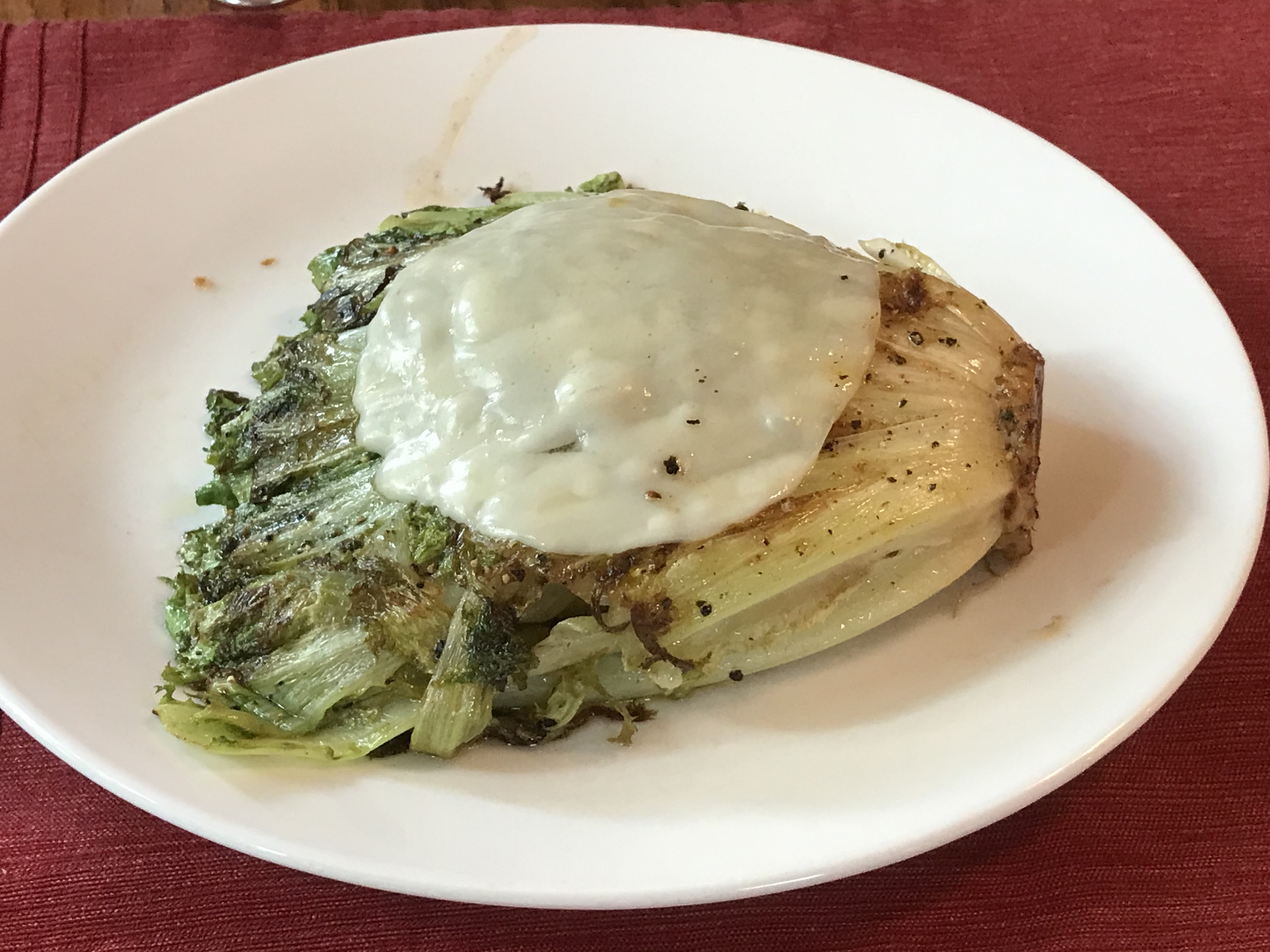
            I wouldn’t have thought of cooking greens in the skillet, but the chicory turned out really well. The quick sear cuts the bitterness and imparts a bit of a roasted flavor while creating a perfect crisp-tender texture, soft enough to cut easily but with a bit of crunch. The bit of melty smoked cheese was a nice finishing touch, but if unavailable, the dish would still be fantastic without it.
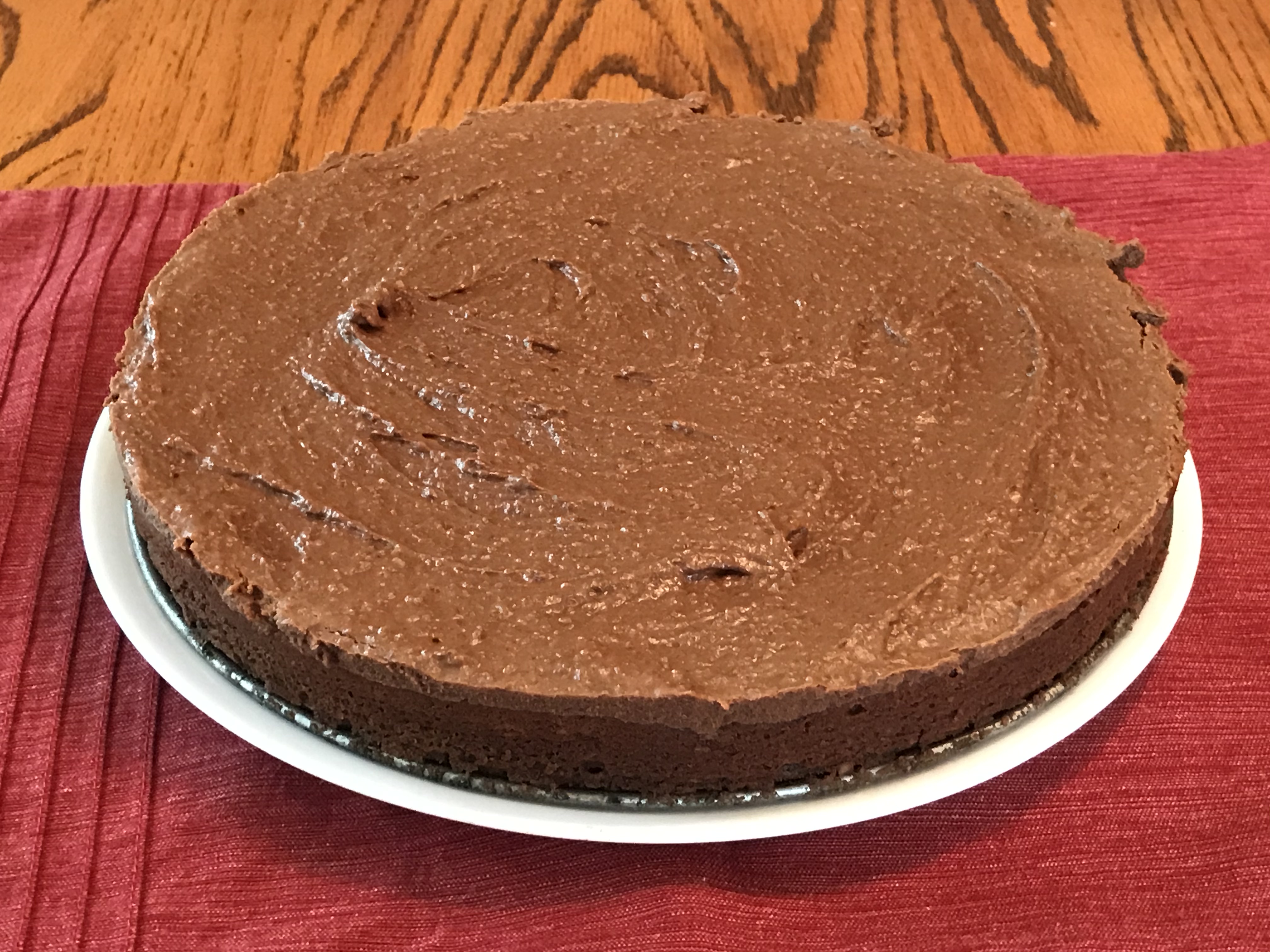
            The cake was one of the best desserts from the book. It contains no flour, rather it is held together by ground almonds. The volume comes from adequately beating the butter, sugar, and egg yolks, then, after adding the almonds and melted bittersweet chocolate, carefully folding in the beaten egg whites. Half of the mixture is baked and cooled, acquiring a brownie-like texture. The other half is then spread over the top. After chilling overnight to firm up the mousse, the cake is served. The flavor is perfect, with just the right balance of sweet and bitter. Though excellent as is, a bit of almond extract, some whipped cream, and/or fresh berries to cut through the intensity and richness would be nice additions. But as with the rest of this menu, it’s really hard to go wrong.
Standard
Uncategorized

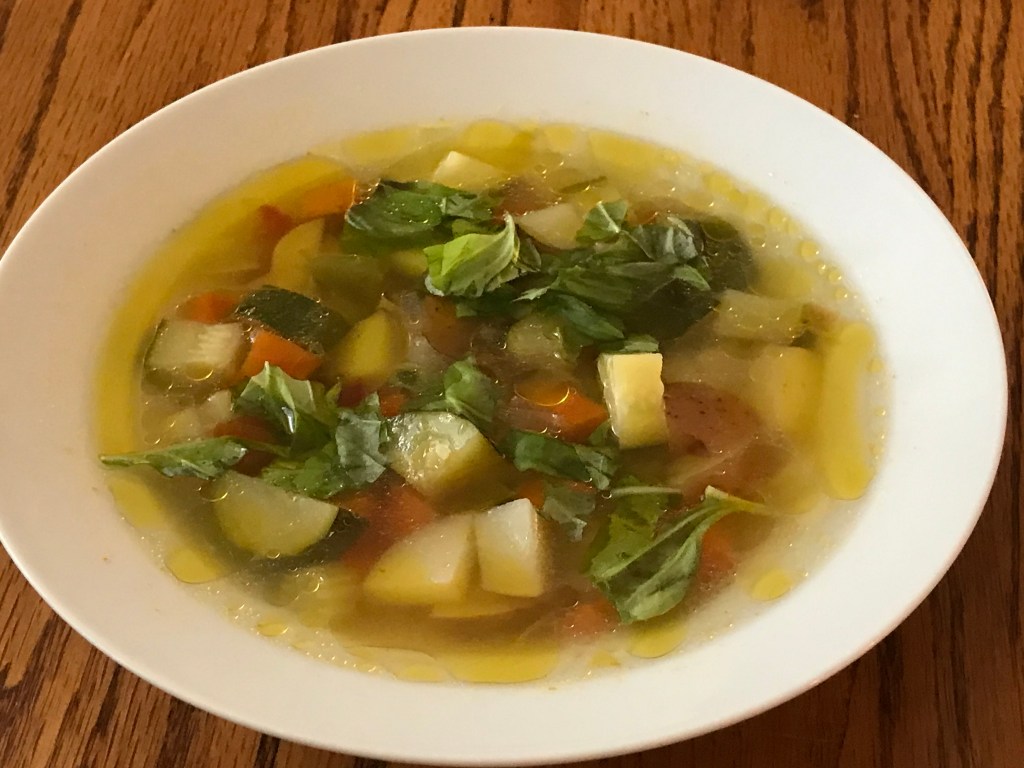
Cook’s Tour of Italy Menu 36 (Pg. 115): Genovese-Style Vegetable Soup

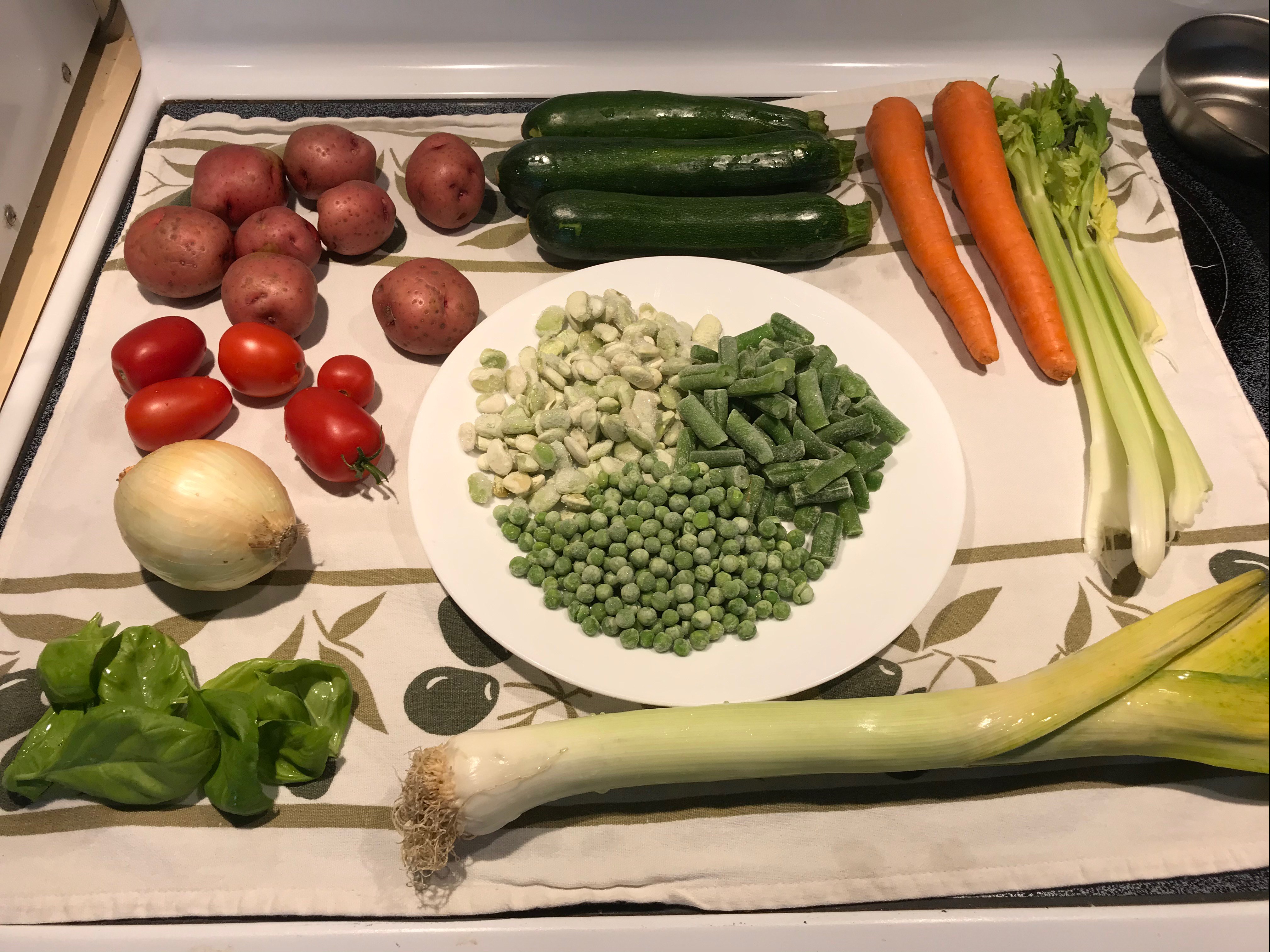
The raw ingredients

Menu: Genovese-Style Vegetable Soup, Bread

            Now its’s time to consider healthy food and fresh summer vegetables. This soup and those like it are frequently enjoyed by the residents of Lombardy while vacationing on the Ligurian Coast. Loaded with potatoes, beans, peas, zucchini, tomatoes, and several other vegetables, it contains no meat, meat broth, butter, or cheese. It’s just vegetables, water, salt, and olive oil, designed to be eaten with bread. These two foods, bread or some other starch and soup, are some of the most ancient and traditional dishes in numerous cultures across the globe. The reason for this is fairly simple. Since the rise of agriculture, most humans’ diet has been starch-based. Furthermore, cooking other foods in pottery or later metal vessels made sure all their calories and most of their nutrients went into the broth that would be consumed, rather than dripping into the embers and being wasted. Plus, soup can be made of pretty much anything available.

            In the case of Liguria, this has historically been lots of vegetables, herbs, and olive oil. The mild maritime climate allows vegetables to grow for a large part of the year and lets olive trees flourish north of where they ordinarily could (Liguria is north of Tuscany, their typical northern limit). Meanwhile the narrow coastal plain limits how much space can be dedicated to raising livestock. Hence, fish, vegetables, and olive oil have historically been more common than meat and butter and are still essential elements in the local cuisine. 

            The soup is really good, just make sure to add adequate salt. Since all the vegetables are fresh or, if necessary, frozen rather than canned and no broth is used, the only salt is whatever the cook adds. I thought I added plenty, but upon tasting the broth I thought it to be almost flavorless. Adding more salt changed my perspective entirely. It didn’t make the soup taste like salt, rather it brought out the vegetable flavors in the broth. While it is even better with a sprinkle of parmesan cheese and might benefit from a bit of vegetable soup base/bouillon, overall this recipe can be thought of as a tasty vegetarian minestrone.

Standard
Uncategorized

Cook’s Tour of Italy Menu 13 (Pgs. 52 – 57): Menu for 4, Lucca (Tuscany)

Menu: Lucca-Style Penne Pasta in Timbale, “Veal” Scallops with Ham and Sage, Roasted Broccoli and Cauliflower, Peach “Cobbler,” Purple Plum Ice Cream

Recommended Wine: Tuscan Chianti

            Back in Tuscany, this time in Lucca, we have another interesting menu, based on dishes served at the home of two of Mr. Famularo’s American friends who live there. It starts with a mix of pasta with meat sauce, topped with bechamel and parmesan, and encased in a sweet pastry crust flavored with lemon peel. This is followed by “veal” scallops, pounded thin, rolled with ham and sage, and braised in a mix of vegetables, white wine, and tomatoes. To the side is oven-roasted broccoli and cauliflower, topped with breadcrumbs. For dessert, there is a peach cobbler-type dish and purple plum gelato.

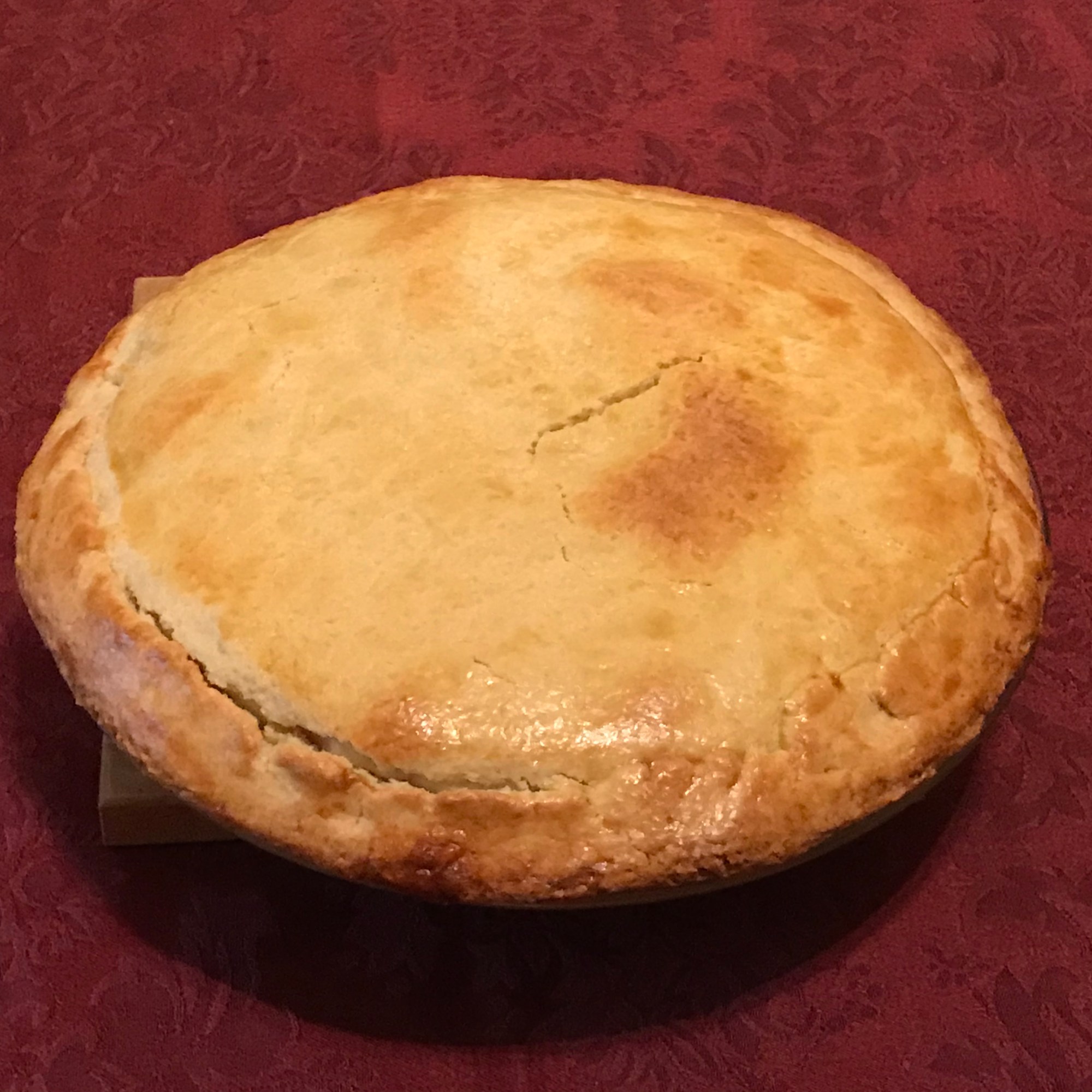
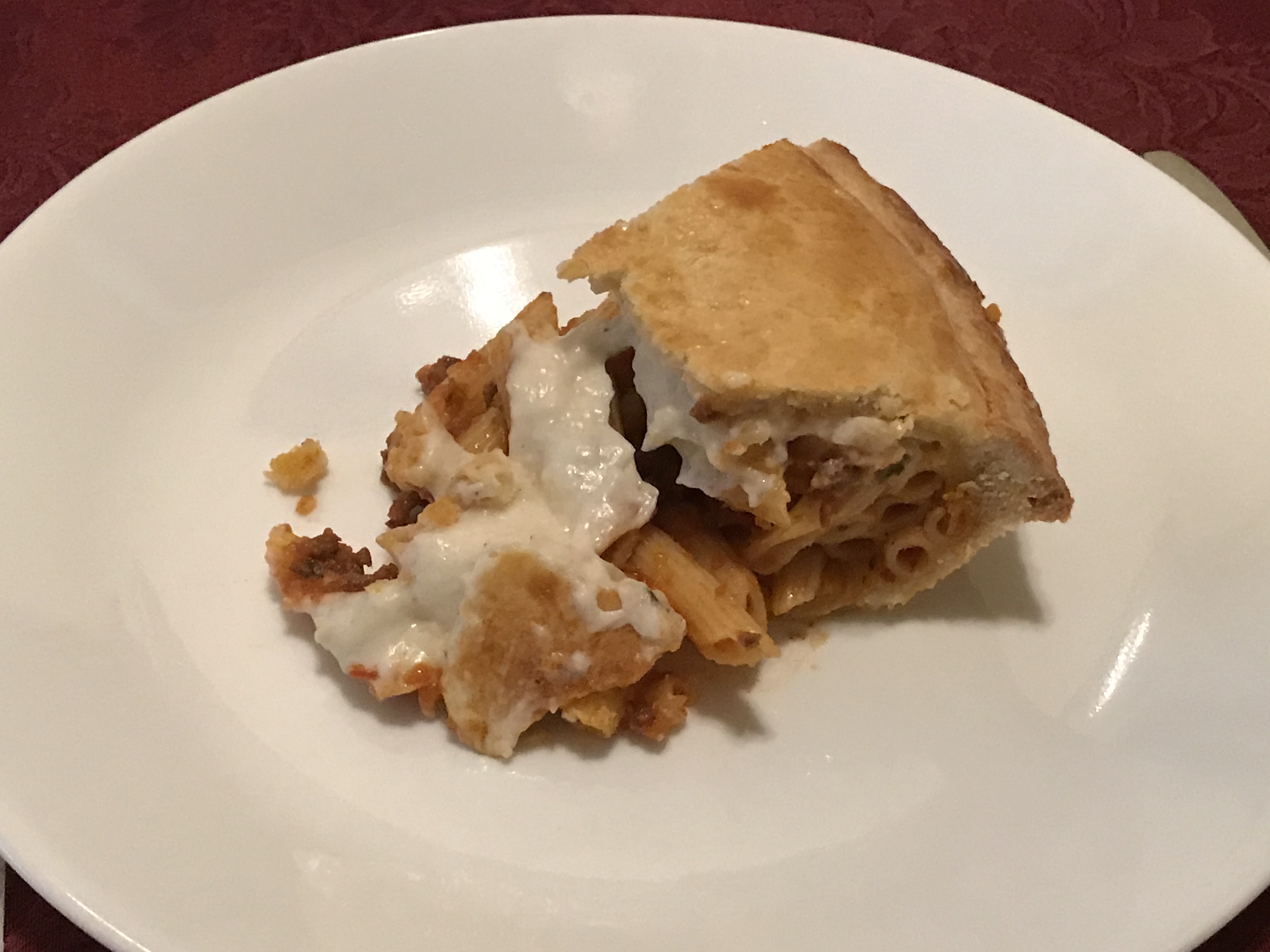
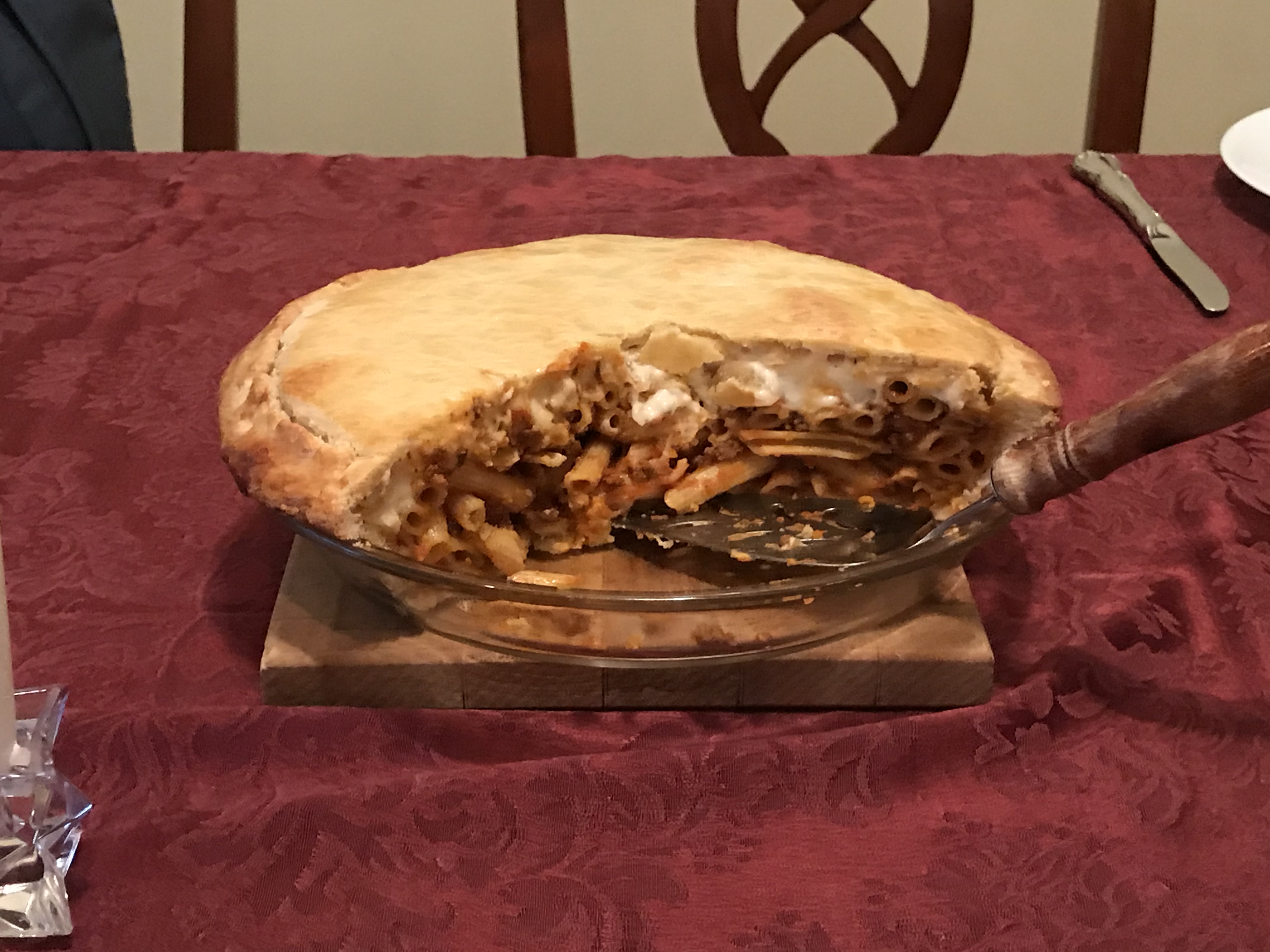
            The pie was really interesting. The pre-cooked penne pasta is combined with a tomato meat sauce, placed in a pastry shell, topped with a nutmeg-scented bechamel sauce, sprinkled with parmesan cheese, sealed with a second piece of pastry on top, and baked. The tomato sauce recipe makes a bit more than needed, but if the recipe is doubled you can get a second meal out of it with some extra pasta. Though I forgot to add the parmesan until after I’d already sealed the pie, it tasted just fine without. The crust was sweet, almost cookie-like, but it worked with everything else, the bechamel seemingly tying everything together. This crust recipe would be even better with a fruit filling.

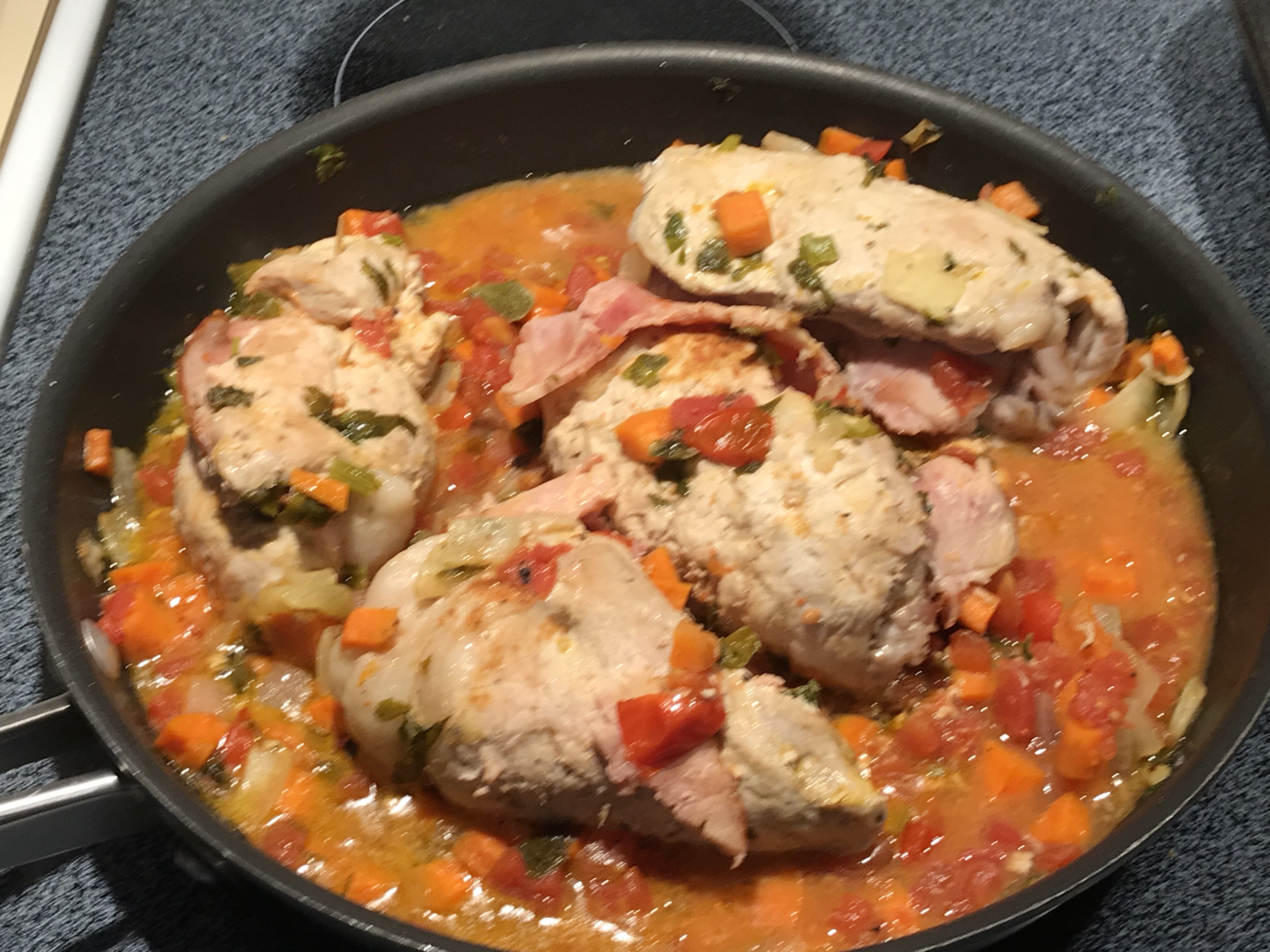
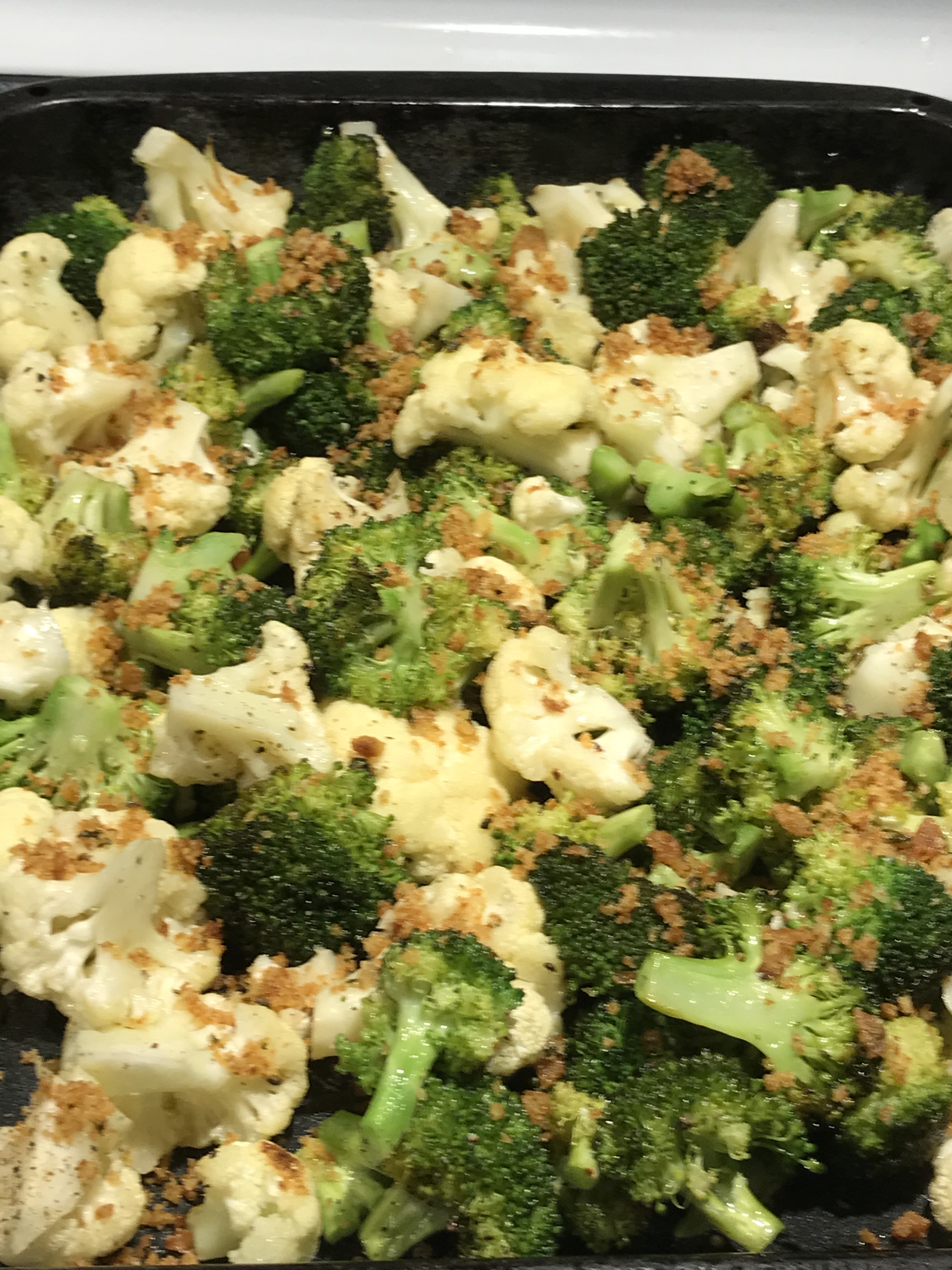
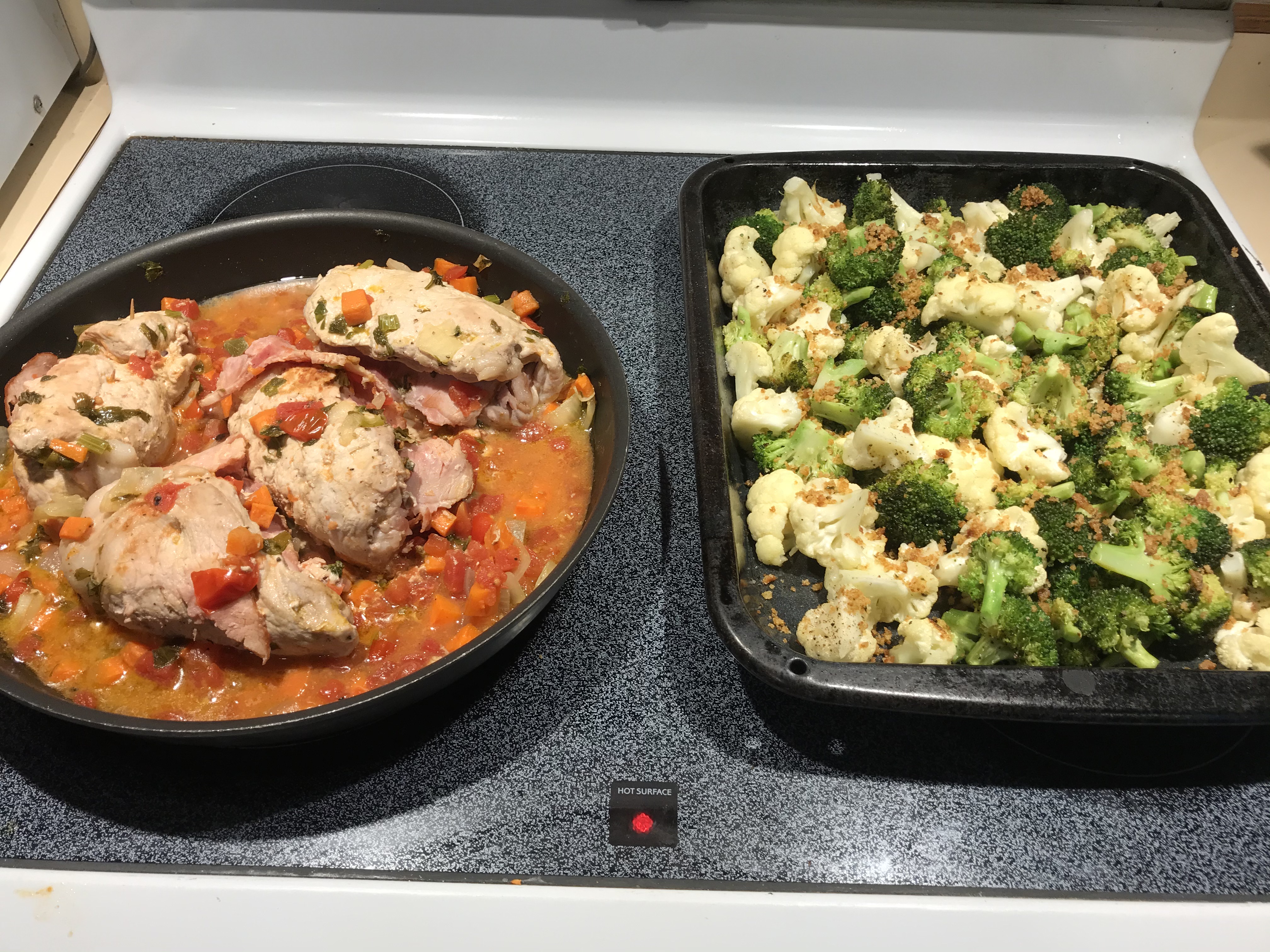
            After flattening and rolling the boneless pork chops (in place of veal scallops), the second course came together without difficulty. The carrots, onions, and celery flavored the braising liquid and pork. I’m not sure I would bother making the meat rolls again, though. They were good, but the vegetables and braising liquid would give just as good a flavor to plain pork or chicken pieces without the hassle of pounding and rolling. The broccoli and cauliflower, oven-roasted with just salt, pepper, and olive oil, then topped with toasted breadcrumbs, is simple and delicious. Just make sure that if the breadcrumbs are pre-made and frozen that they are brought to room temperature before sprinkling.

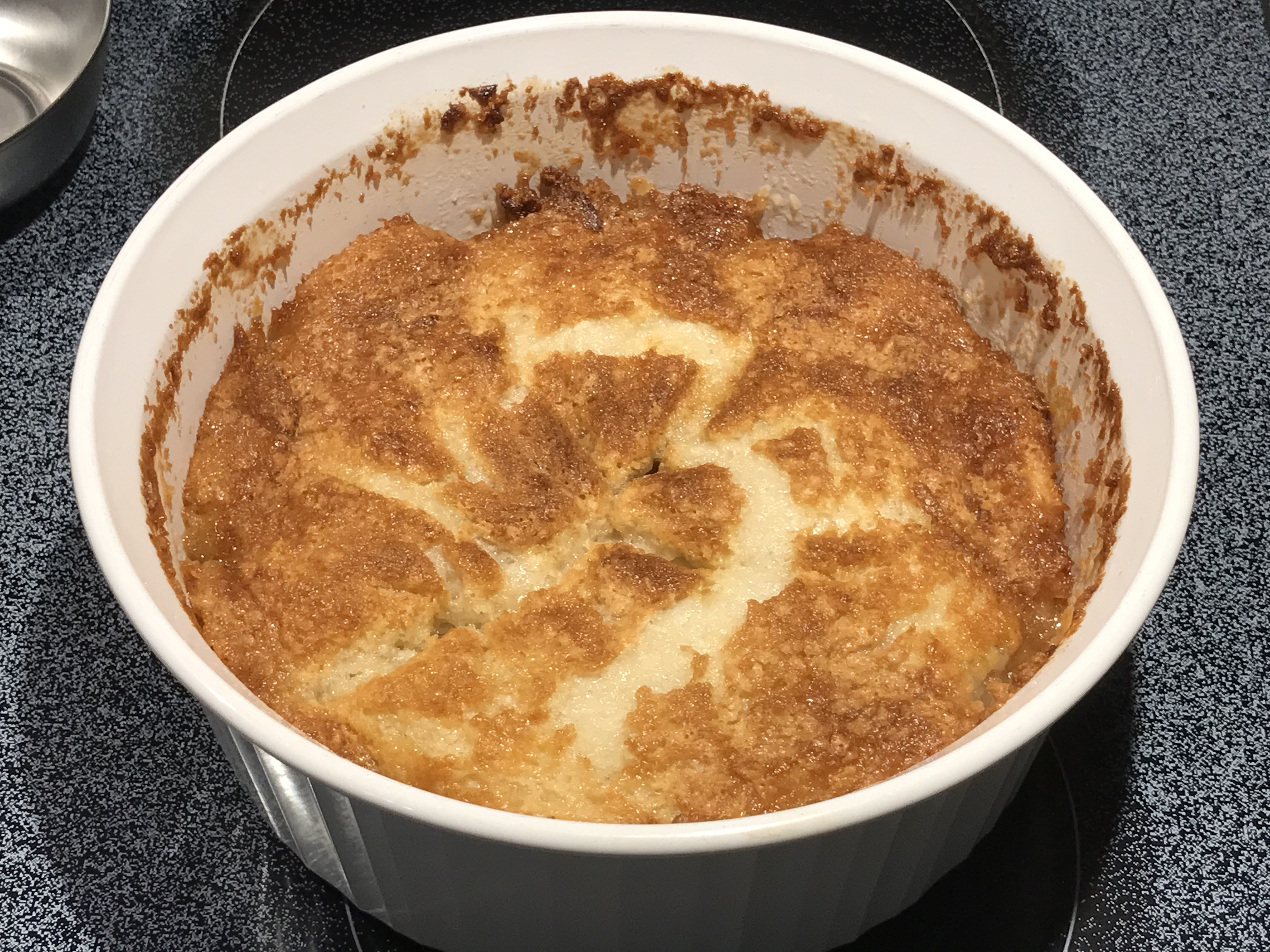
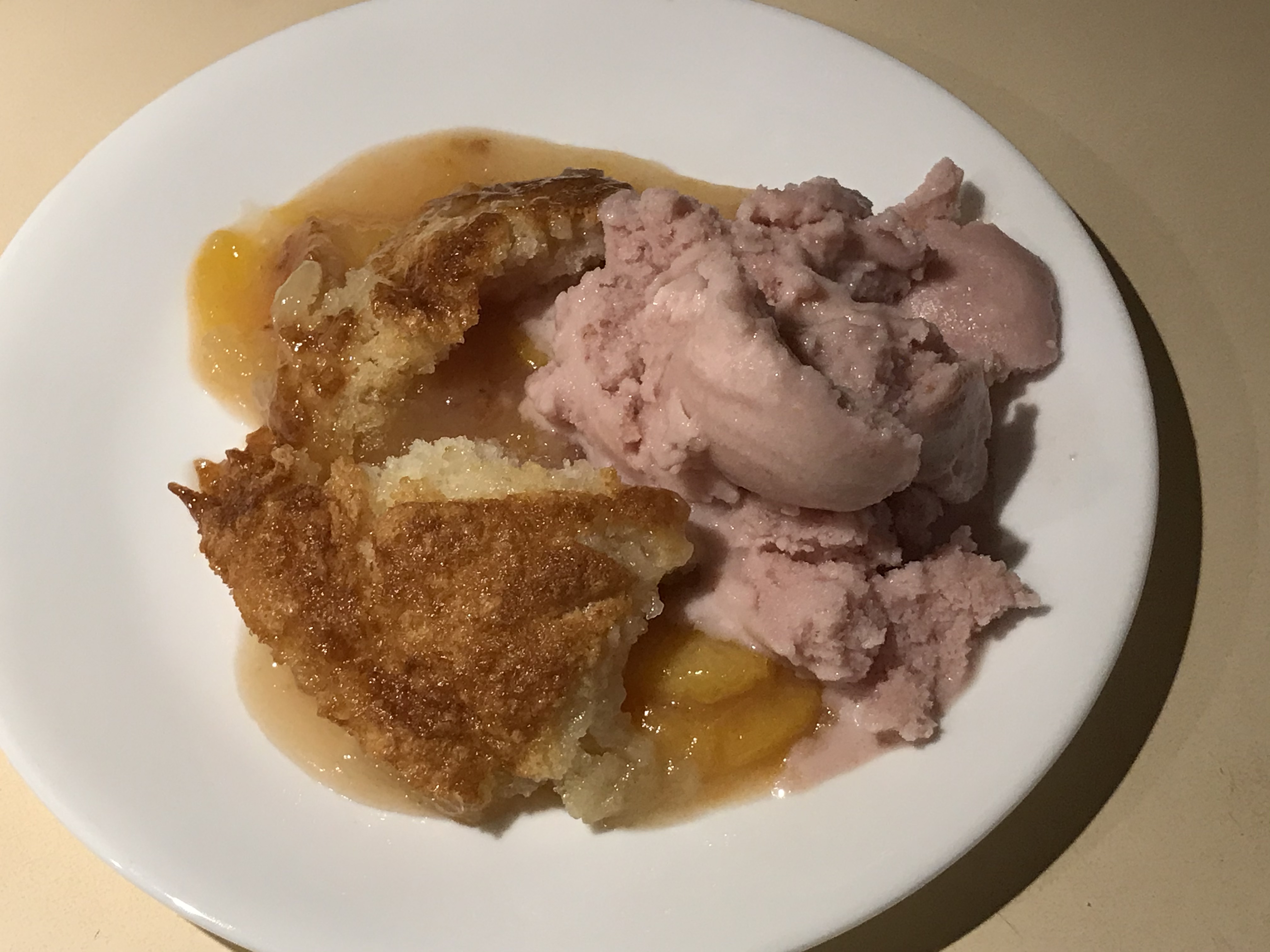
            Dessert was not quite as good as the other courses, though there was certainly nothing wrong with it. The issue was that the cobbler dish was a bit too sugary, both in the peaches and the topping, overwhelming the other flavors. The “crust” did end up with a nice angel food-like texture and the ice cream helped cut the sweetness, but I think fresh peaches would be better in a regular crust or, better yet, the pastry from which the pie was made. Made with just sweetened plum puree and milk, the ice cream had a flavor between sorbet and frozen yogurt. It was an interesting change of pace, but not as sweet or creamy as one might expect. Still, this all made for a highly enjoyable dinner.

Standard