
Menu: Roman Minestrone, “Sole” Fillets Wrapped in Leeks with Brussels Sprouts, Orange Panna Cotta with Blueberry Sauce
Recommended Wine: Verdicchio from near Rome or Virtu Romane
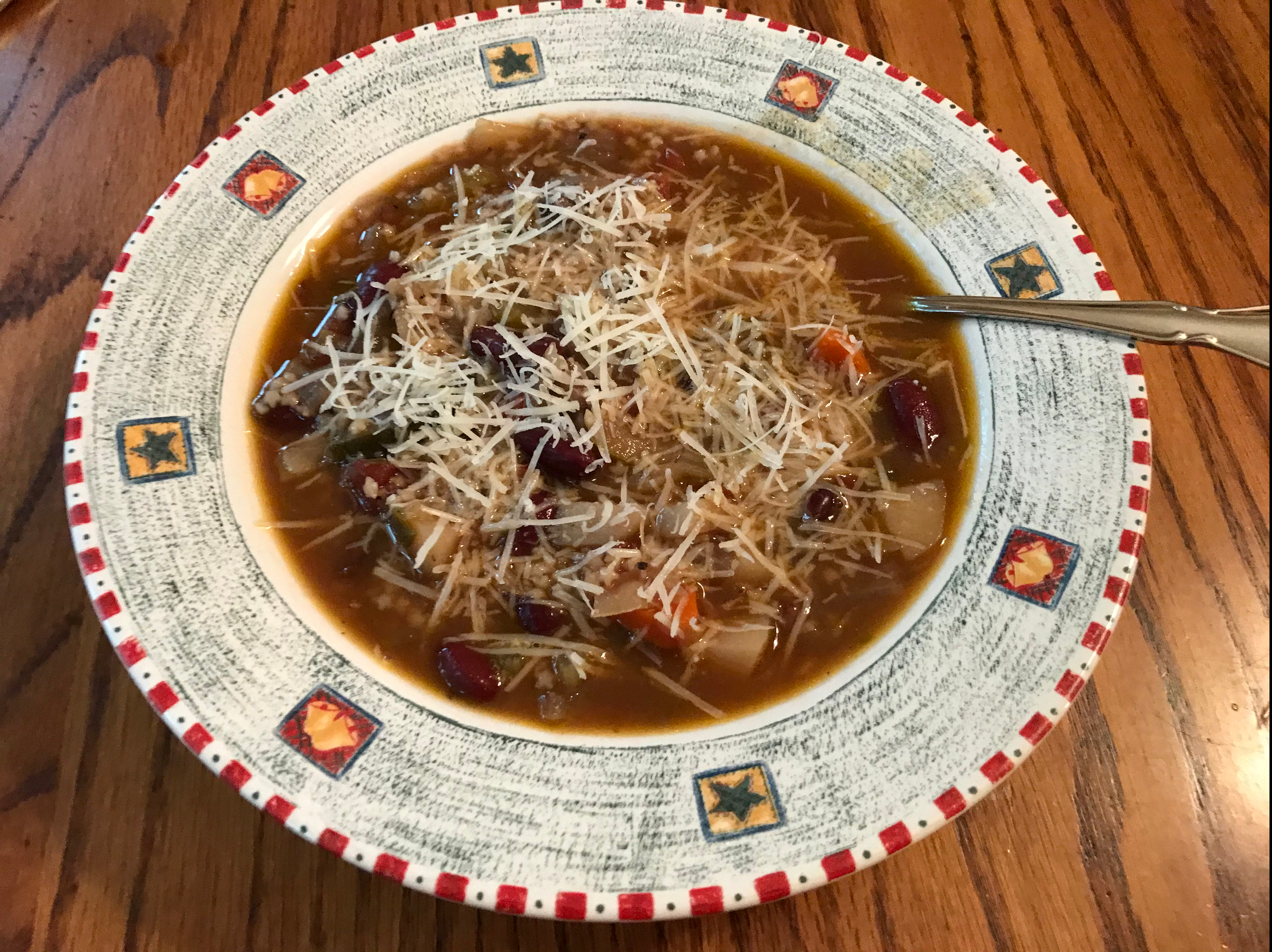
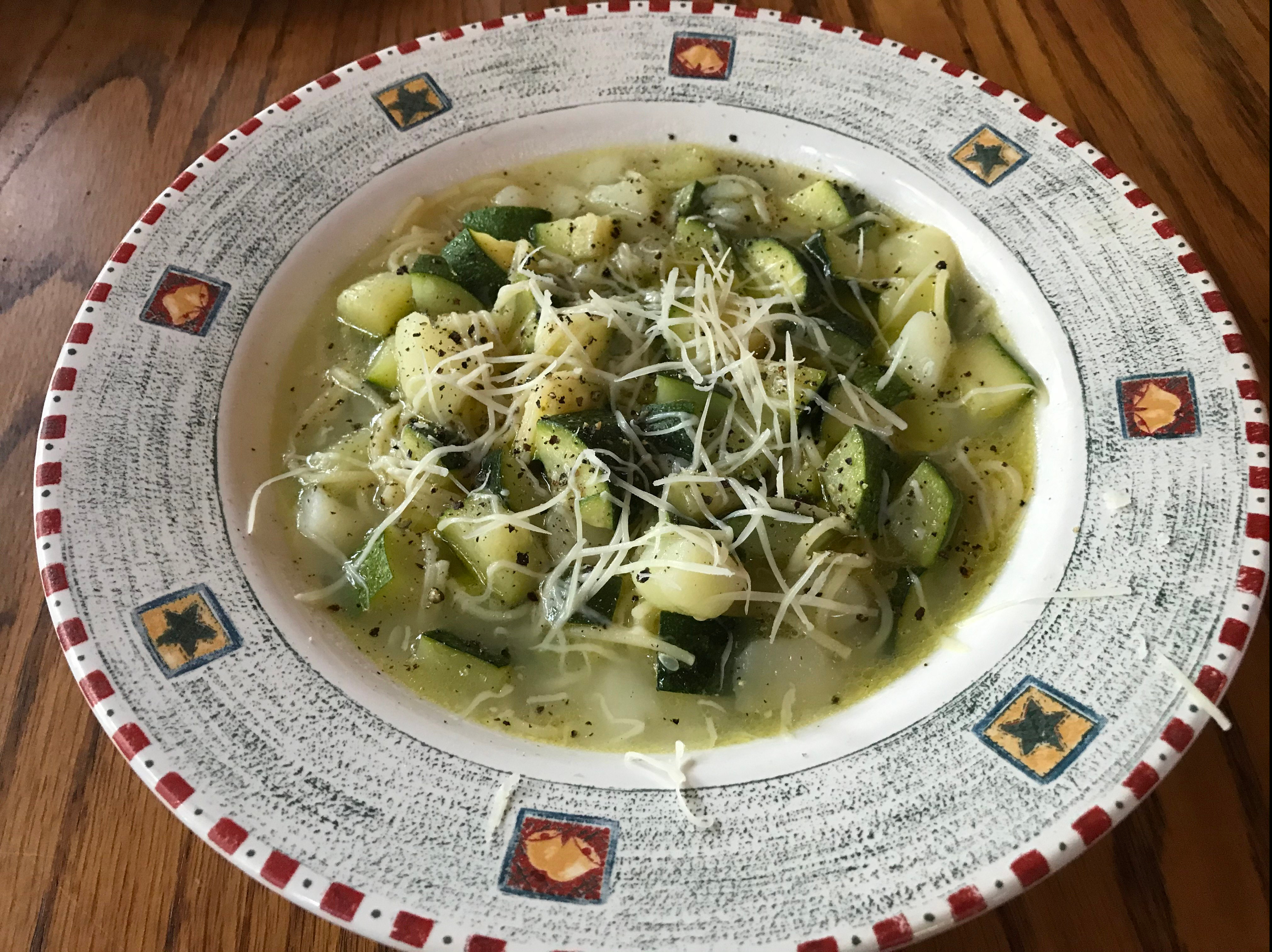
Returning to the Eternal City, we have a menu enjoyed at the home of two of Mr. Famularo’s friends, who both happen to be chefs. The first course is a minestrone typical of the Rome/Lazio region, with beef broth, chopped cooked beef, red beans, red wine, assorted vegetables, and a small pasta called pastina. The friends’ restaurant, which features updated and reinvented Roman cuisine, provides the inspiration for the second course: pieces of sole filet, wrapped in leek leaves and tied with string, braised and served with buttery sauce and brussels sprouts. Dessert is a classic originally from the Piedmont region and now found all over Italy: panna cotta, in this case lightly flavored with orange and served with a blueberry-orange sauce.
The really nice thing about this menu is that the soup, panna cotta, and blueberry sauce can be made ahead. In fact, as is often the case with soups, it is best to make the minestrone ahead by a day or two to allow time for the flavors to meld. This is especially useful here, since the process of assembling the fish dish is somewhat time-consuming. The leeks need to be cleaned and blanched, the fish cut into pieces that can be wrapped by the leek leaves, and the fish and leeks assembled and tied into “packets,” that can then be braised in the skillet. The final effect is really pretty, but it does take time.
The soup was another excellent one. While it was good immediately after cooking, it really came into its own upon reheating the next day. I had been a bit worried about the pastina getting mushy, but it maintained a good texture while soaking up the flavor of the broth. As discussed on Pages 18 – 19, each region has its own typical style of minestrone and each cook has their own variation. They all have a variety of vegetables, a starch and/or legume to add substance (which could be rice, pasta, or a few different types of beans), and various flavoring agents. Sometimes meat is added, particularly leftover. Regardless of the particular variation, minestrone is a great historical example of peasant ingenuity in the kitchen. The other ingredients allowed the cook to stretch the more expensive meat, while providing a nutritious, satisfying meal.
Sea fish was not particularly important in Early Rome. The city is located about 15 miles inland, so providing fresh seafood was a bit of a logistical challenge. Shipping it up the Tiber from the port at Ostia, presumably kept alive in tanks of water, was possible but expensive. During the Early Republic, even the rich ate a largely vegetarian diet. Much of the limited animal protein came from eggs, cheese, freshwater fish, and a variety of pork products. During the Late Republic, saltwater fish and especially shellfish became fashionable. Sources from the era describe banquets featuring mountains of oysters and sea urchins as starters, and aristocrats were known to spend fortunes on a single particularly fine red mullet. While some of these accounts were probably exaggerated for comic or shock value, parody often has at least some basis in reality.
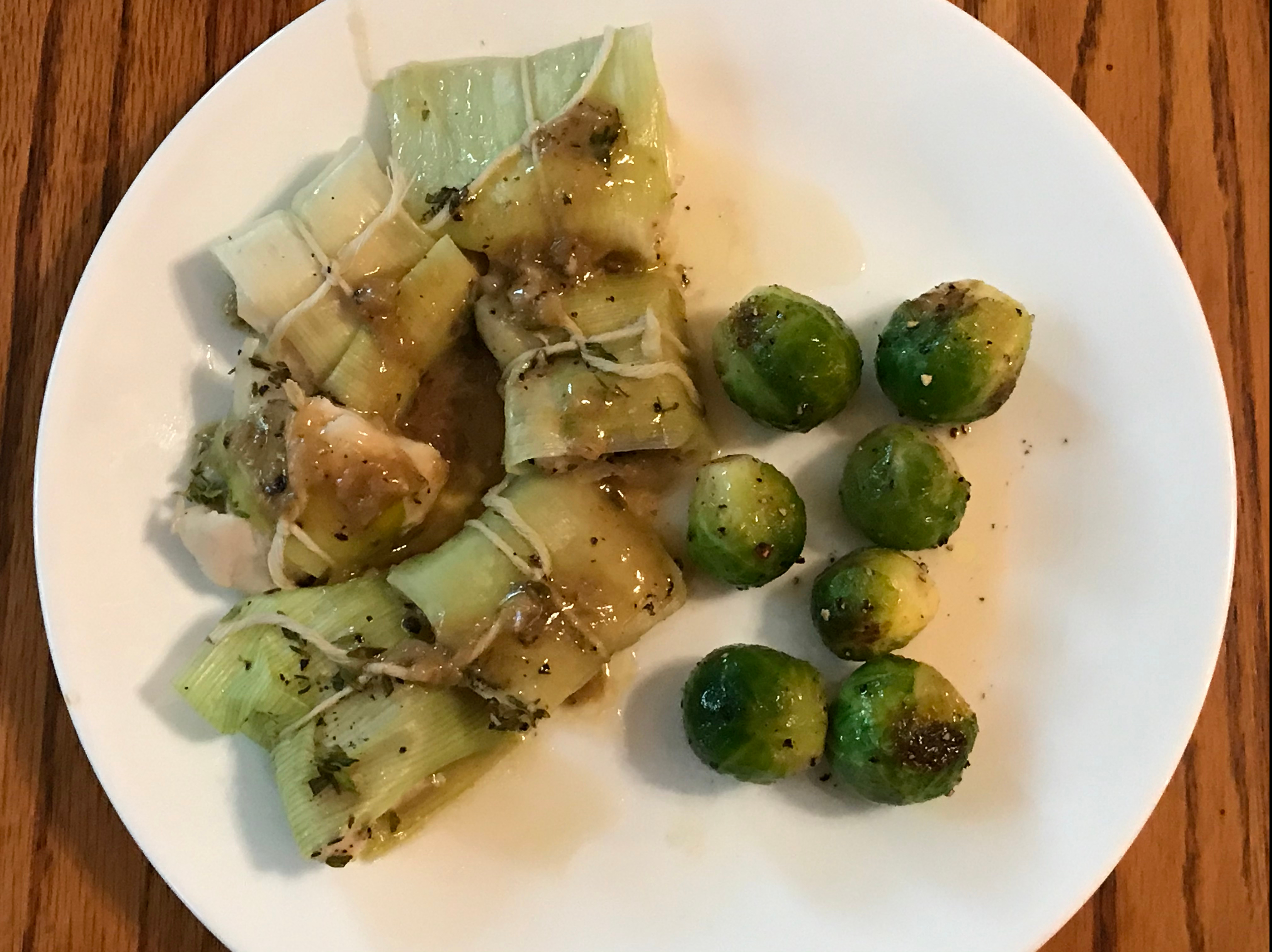
The fish dish here was very tasty, though dealing with the tied packets on the plate was a bit of a hassle. Due to the price and difficulty finding sole, I used farmed catfish, which is apparently a reasonable substitute. It cooked up mild and flaky but tender, enhanced by the leeks and buttery, shallot-flavored sauce. The brussels sprouts were a great accompaniment, their flavor boosted by being cooked in the water the leeks were braised in.
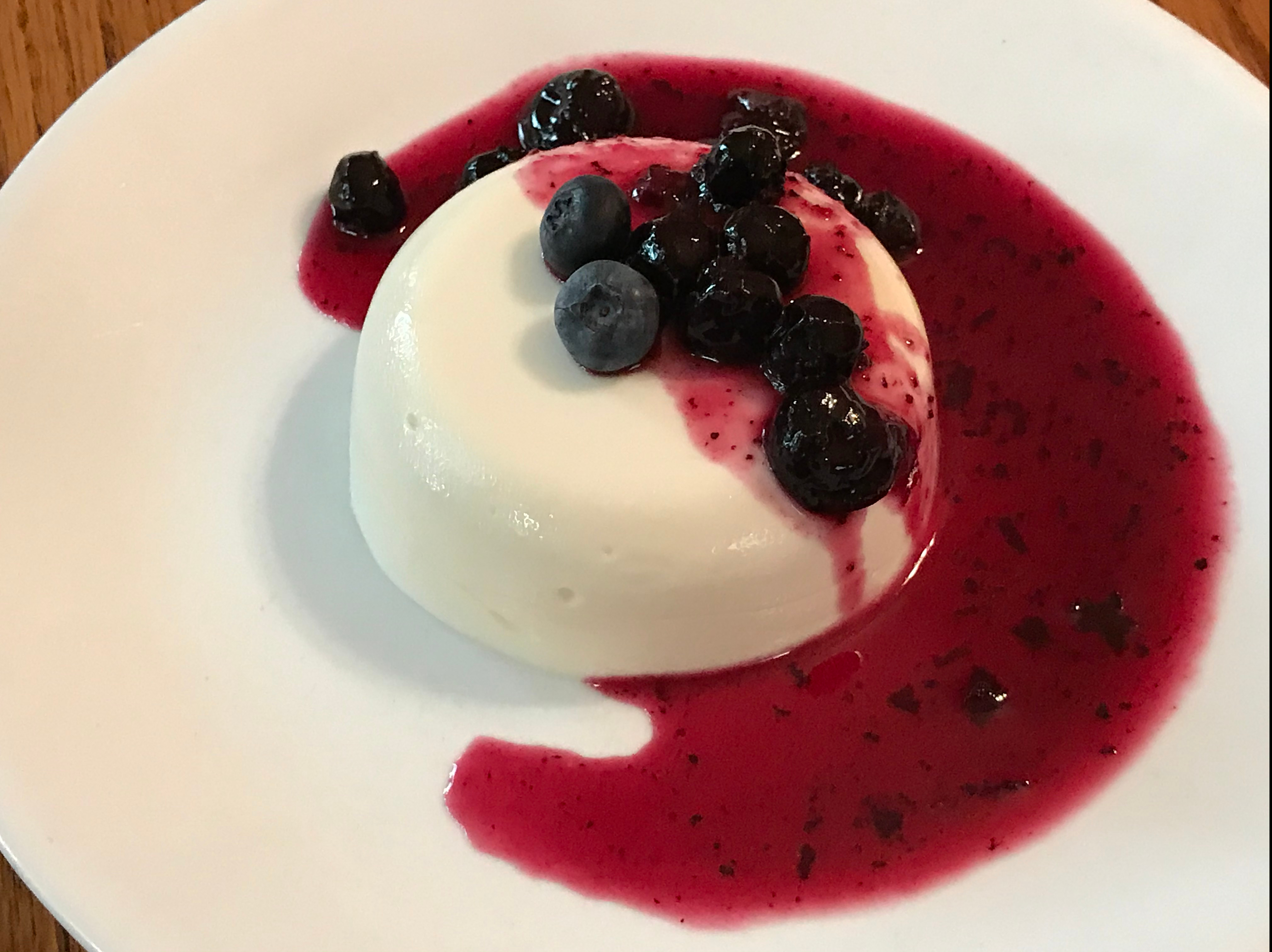
Panna cotta is in the same family of desserts as pudding and custard. What makes it unique is that it is set with gelatin rather than thickened with egg or cornstarch. As a result, despite the name meaning “cooked cream,” the ingredients don’t have to be cooked for long. The cream or half-and-half just needs to be heated enough to dissolve the gelatin and sugar. At its simplest, panna cotta consists of just half-and-half or milk and cream, sugar, and gelatin. Vanilla is usually included as well, and fresh fruit or fruit-based sauce are the most common toppings. Here, the custard includes sour cream, cream cheese, and a touch of orange, giving it a cheesecake-like quality. The desserts are served topped with a blueberry-orange sauce. The combined flavors were very good, and there was a fair amount of extra sauce left over. Fortunately, these kinds of sauces freeze and thaw well. The leftovers would be worth trying over pancakes, waffles, or ice cream.
 Feasting Through Time