
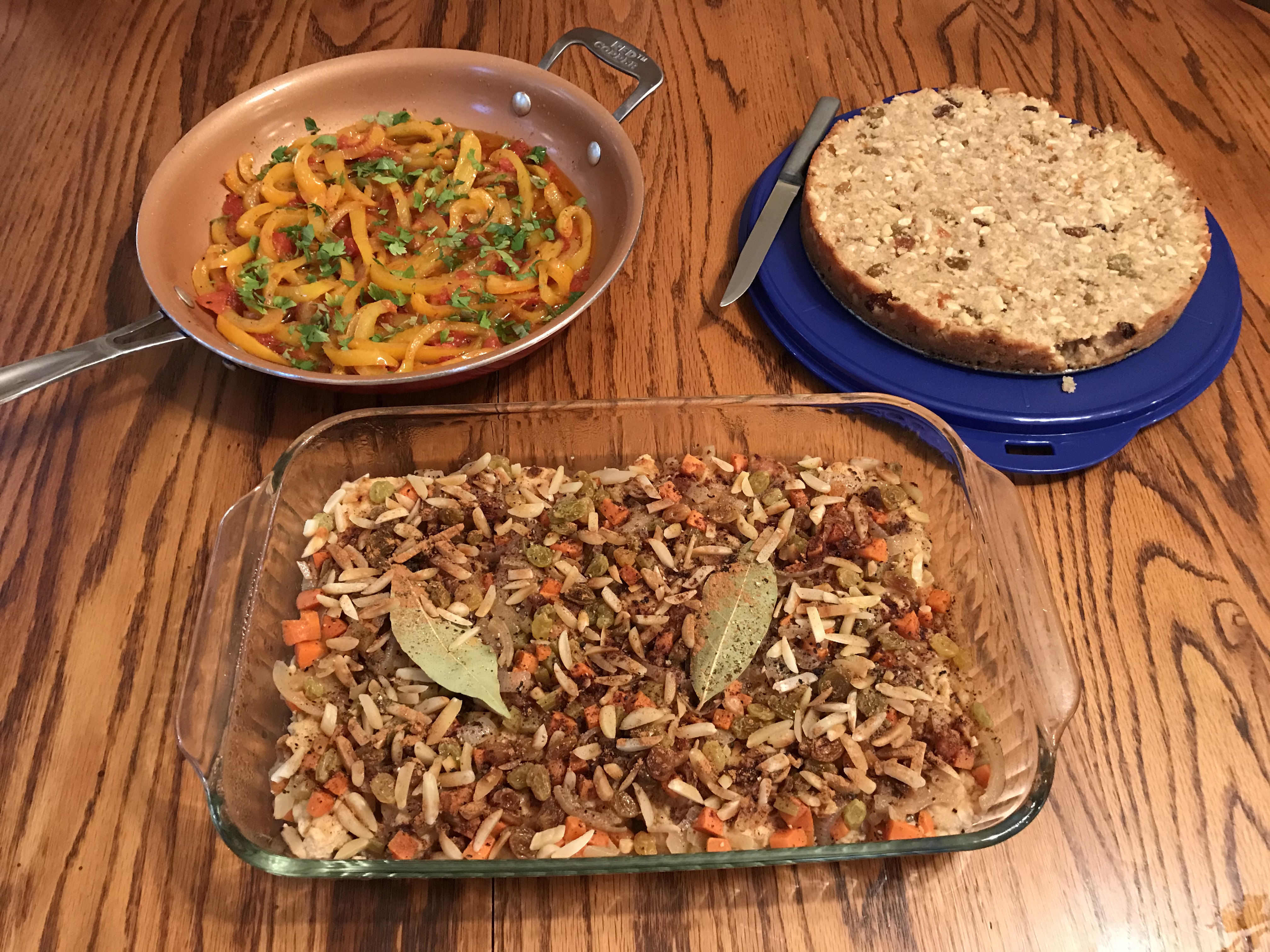
Menu: Rice and Pea Risotto, Fried Marinated “Sole” in Sweet and Sour Sauce, Stewed Sweet Peppers, Venetian Nut Cake
Recommended Wine: Soave (white wine from near Verona)
This menu here includes two Venetian classics; rice and peas (risi e bisi) and fried fish, topped with golden raisins, pine nuts, and a sprinkle of spices, marinated in a vinegary, sweet and sour sauce. Alongside these dishes are sweet yellow peppers stewed with tomatoes and a Venetian cake popular around Carnival time, loaded with nuts, golden raisins, and candied peel. All of the dishes except for the risotto can be made ahead, and the fish is in fact served cold after two days of marinating. For reasons of cost and convenience, I replaced the fish with halved chicken breast pieces.
The fish dish is historically quite interesting. As mentioned in previous posts, sweet and sour sauces have a long ancient and medieval history, and vinegar, the main component in the sauce, is both a flavoring agent and a preservative. Historically, the fish would be fried, then covered in vinegar. According to late 18th and early 19th century British cookbook authors (this method of preservation was quite widely used), fish could be preserved for up to a year this way. While I am not sure if this would actually work, I have no intention of finding out one way or the other. Thankfully, the fish here is just marinated for two days to gain flavor.
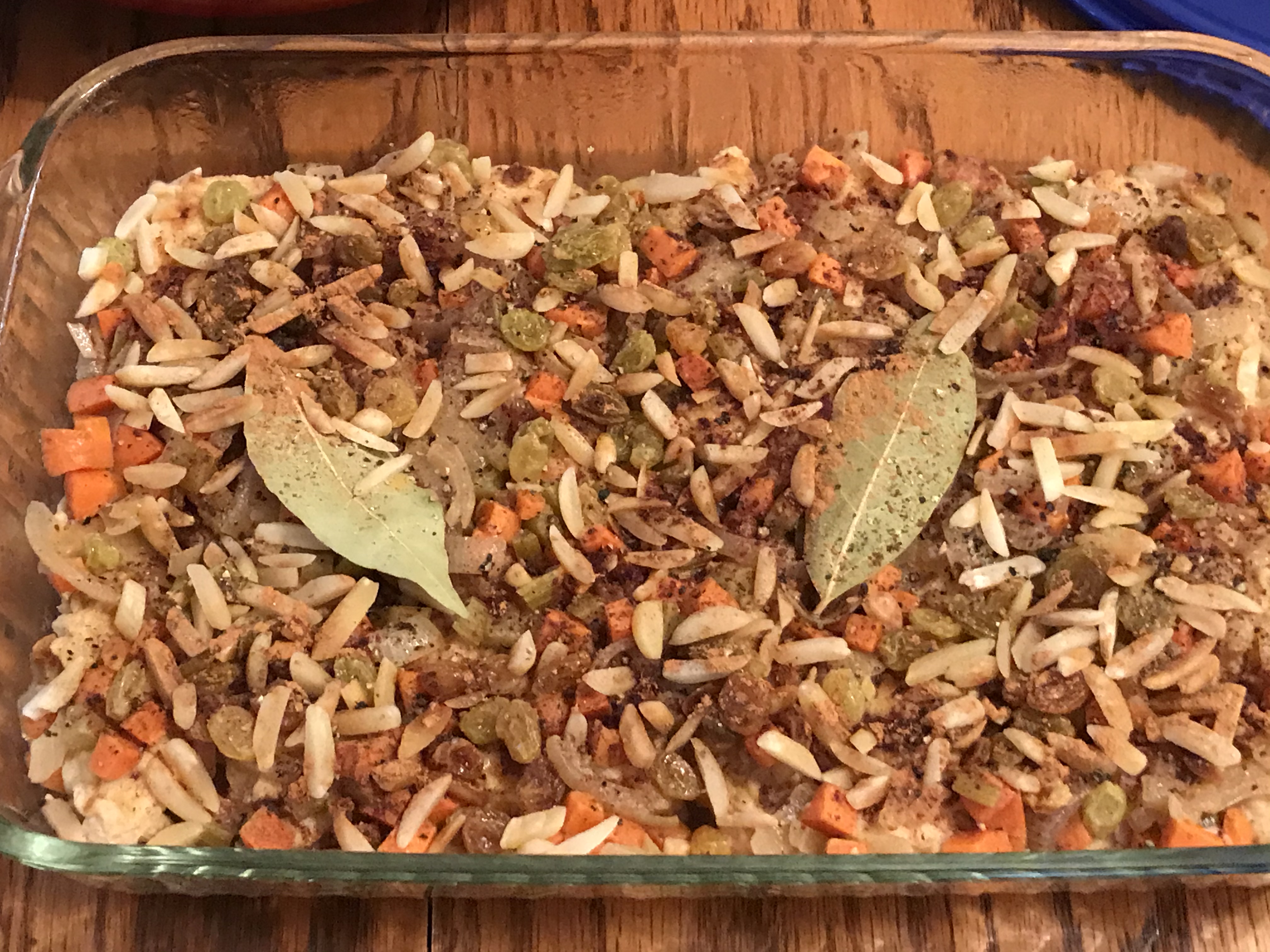
To be completely honest, I was not a big fan of the flavor. The vinegar was very strong, and the sweetness of the raisins was not quite enough to cut through it. The almonds sprinkled over the top (as a replacement for pine nuts, which are a lot more expensive) provided a nice crunch, but the coating on the chicken pieces became a soggy, sour, sponge-like layer, rather than having the crispy texture characteristic of frying. This must be an acquired taste, because seafood dishes with sweet and sour sauces are very popular in the Venice region.
The risotto has an entirely different flavor. Made with short-grain rice, sweet green peas, pancetta, parmesan cheese, and a mixture of chicken and beef broth, it is much milder. The sweet green peas, a favorite across Italy in the springtime, were a novelty in 17th Century France. When they arrived in Venice is not clear, but regardless, the risotto is a springtime classic, and on tasting it, the reason is obvious. When fresh peas are not in season (or if you don’t want to bother shelling them), frozen peas can be used, though many Venetians would say that is inauthentic.
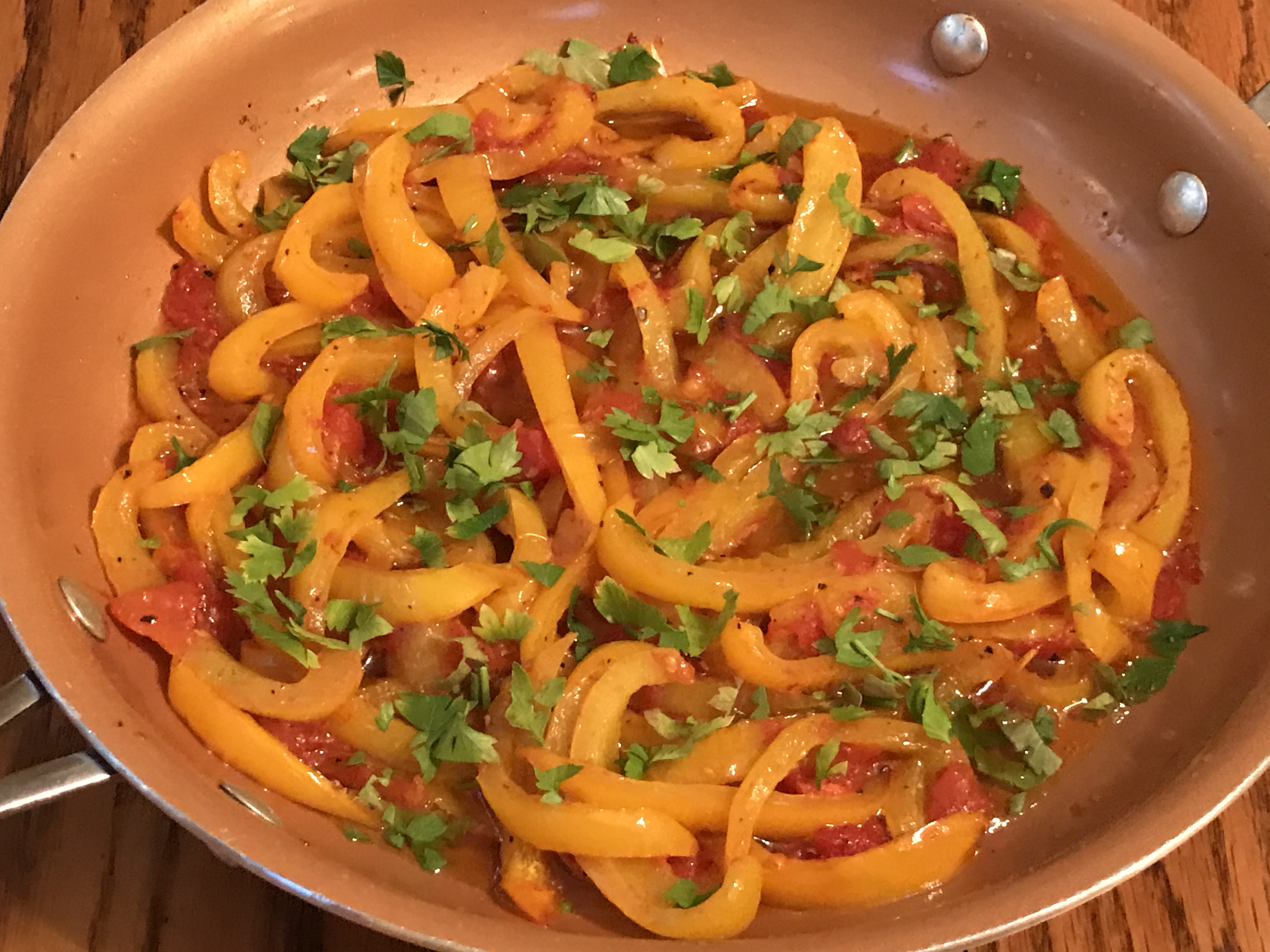
For another dish with a sweet and sour flavor but different from the fish dish, sweet yellow peppers are sliced thin and sauteed with tomatoes and garlic. This was much more balanced than the “fish” and quite good. The flavor was somewhat reminiscent of fajita vegetables, interestingly enough. Any leftovers would definitely be good on tacos, fajitas, burritos, or the like.
The cake was a really interesting mix of sponge cake crumbs, almonds, walnuts, pine nuts, golden raisins, and candied peel, held together by a sugar syrup. The base is a genoise sponge. In this recipe, as in the original version, no baking powder or baking soda is used. The rise comes solely from air beaten into the eggs. The trick is to avoid forcing the air out upon folding in the flour. I have not yet mastered this and ended up with a cross between a cake and a pancake, but it was a rather tasty pancake. Since it was to be used as crumbs, the lack of rise was not a big deal.

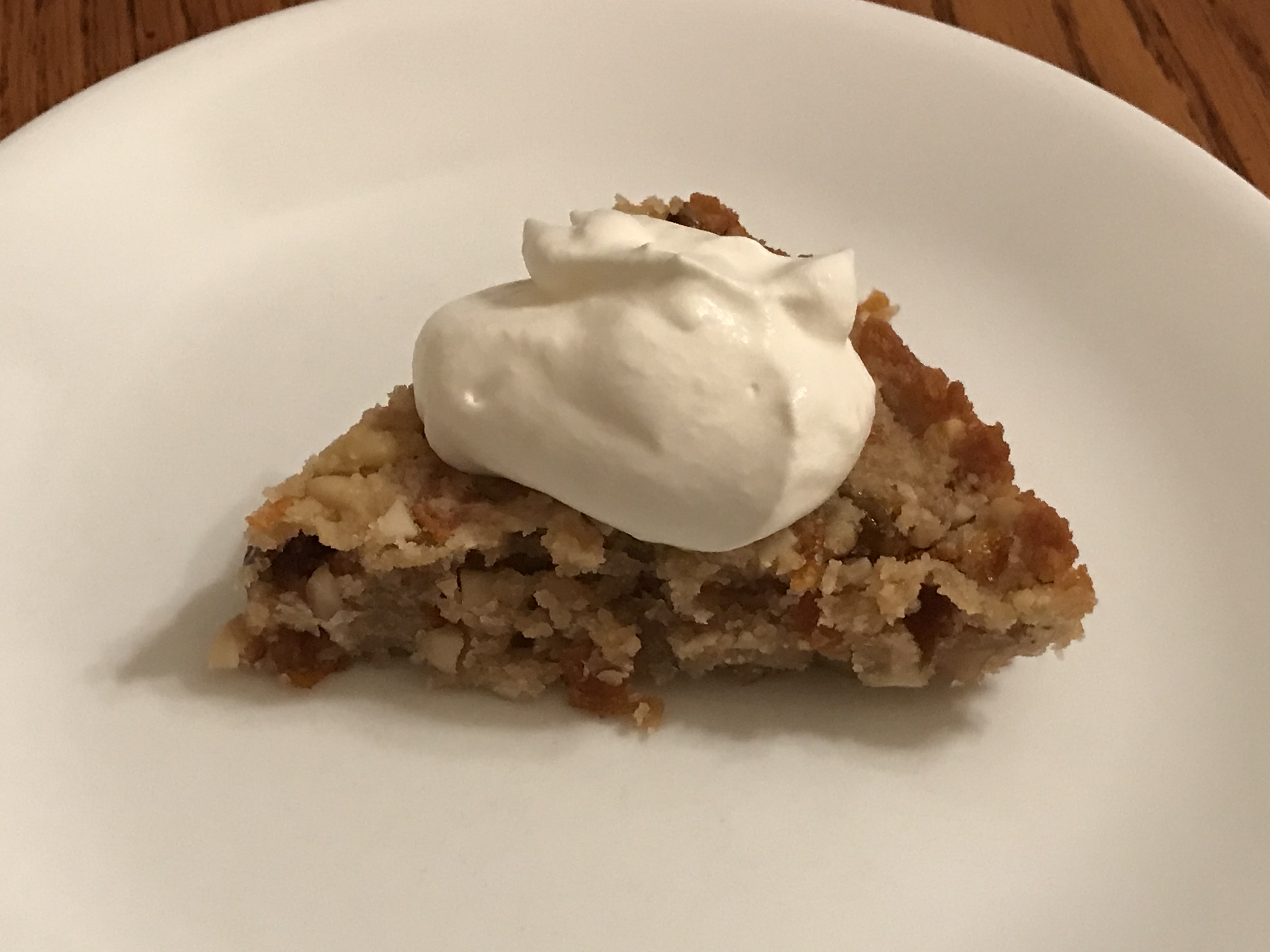
The final product was flavorful, but between the cake crumbs, candied peel, and sugar syrup, was overly sweet. In addition, the sugar syrup was not a particularly strong binder at room temperature, so the cake was very crumbly. A solution for this was found by accident. As the cake is so rich and sweet, it is difficult for two people to finish before it would go bad, so I stored the extra in the freezer. This firmed up the syrup and made the cake easier to eat, and the optional unsweetened whipped cream helped balance the sweetness.
 Feasting Through Time