
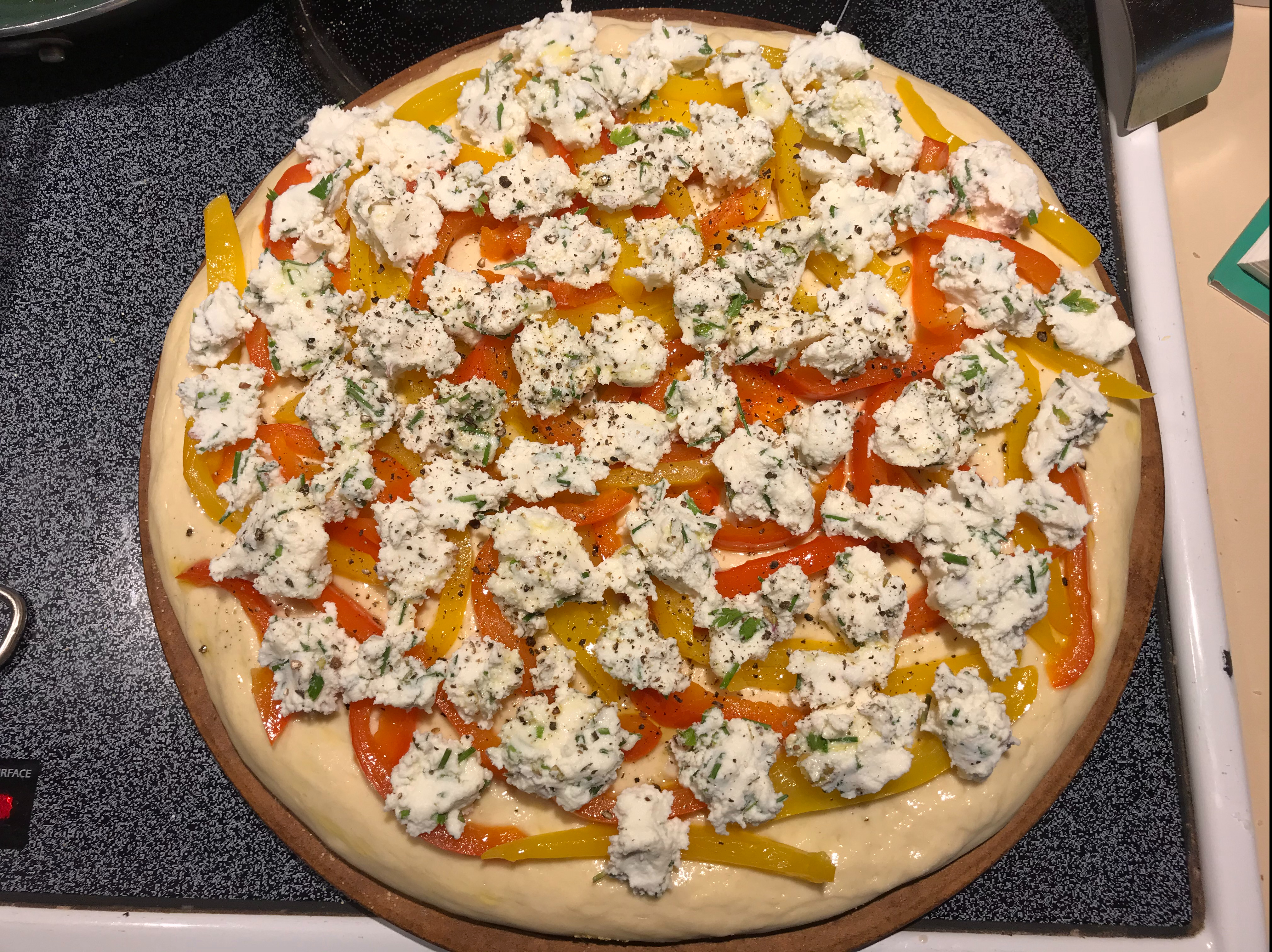
Finally, we have one of the most iconic Italian dishes: a pizza. Three pizza recipes are featured in the text, but none of them are the stereotypical takeout or delivery staple. None of these recipes have tomato sauce, pepperoni, or sausage, and only one of them has mozzarella cheese. Not that there is anything wrong with the American staple, far from it, but it is nice to have a change of pace from time to time. In this case we have pizza dough topped with garlic-infused oil, sauteed bell peppers, and ricotta salata mixed with herbs.
Pizza is an interesting dish with an unclear history. As discussed in the text on page 224, it does not have any special meaning and was originally commoners’ food. Bread dough with a few toppings to make it more interesting seems to have been around for hundreds of years if not longer, but perhaps because it was the food of peasants and poor urban dwellers, it was not written down. The earliest mention of it that I have found is an aristocratic recipe for a sweet dough with marzipan and crushed cookies from the 16th Century. Perhaps in the past the definition of pizza was broader than it is today. At any rate, the story goes that pizza became “respectable” in the 19th Century when a chef created the original “Pizza Margherita” for the queen at the time, Margherita of Savoy. From there, it’s popularity only grew.
While not quite as fast as takeout or delivery, this recipe is not particularly difficult. Most of the time required is in kneading the dough and letting it rise. A stand mixer with a dough hook saves a lot of time and mess for the first part. While it’s rising, there’s plenty of time to assemble/prepare the other ingredients and make the garlic oil, if there isn’t some already made from a previous pizza (the recipe makes enough for several). There are only two real tricks here. First, make sure the water is not too hot when adding it to the yeast. If it is, it will kill the yeast and the dough won’t rise properly. Second, infuse the garlic in the oil over very low heat to prevent the garlic from scorching and imparting that flavor to the finished product.
Since I could not find ricotta salata anywhere near me, I tried to make my own by mixing ricotta cheese with some extra salt, wrapping it in cheesecloth, and pressing it between two plates for a few days. The idea was to squeeze out some of the excess moisture, ideally enough to make the cheese firm and able to be grated. That didn’t quite work out as planned. Some moisture was soaked up by the cheesecloth, but the texture didn’t change significantly. I went ahead with the recipe anyway. Rather than mixing the herbs with the grated cheese, I just stirred them into the soft cheese and called it good. As there was no sprinkling this over the top of the pizza, I spaced globs of it on there as evenly as I could and hoped for the best.
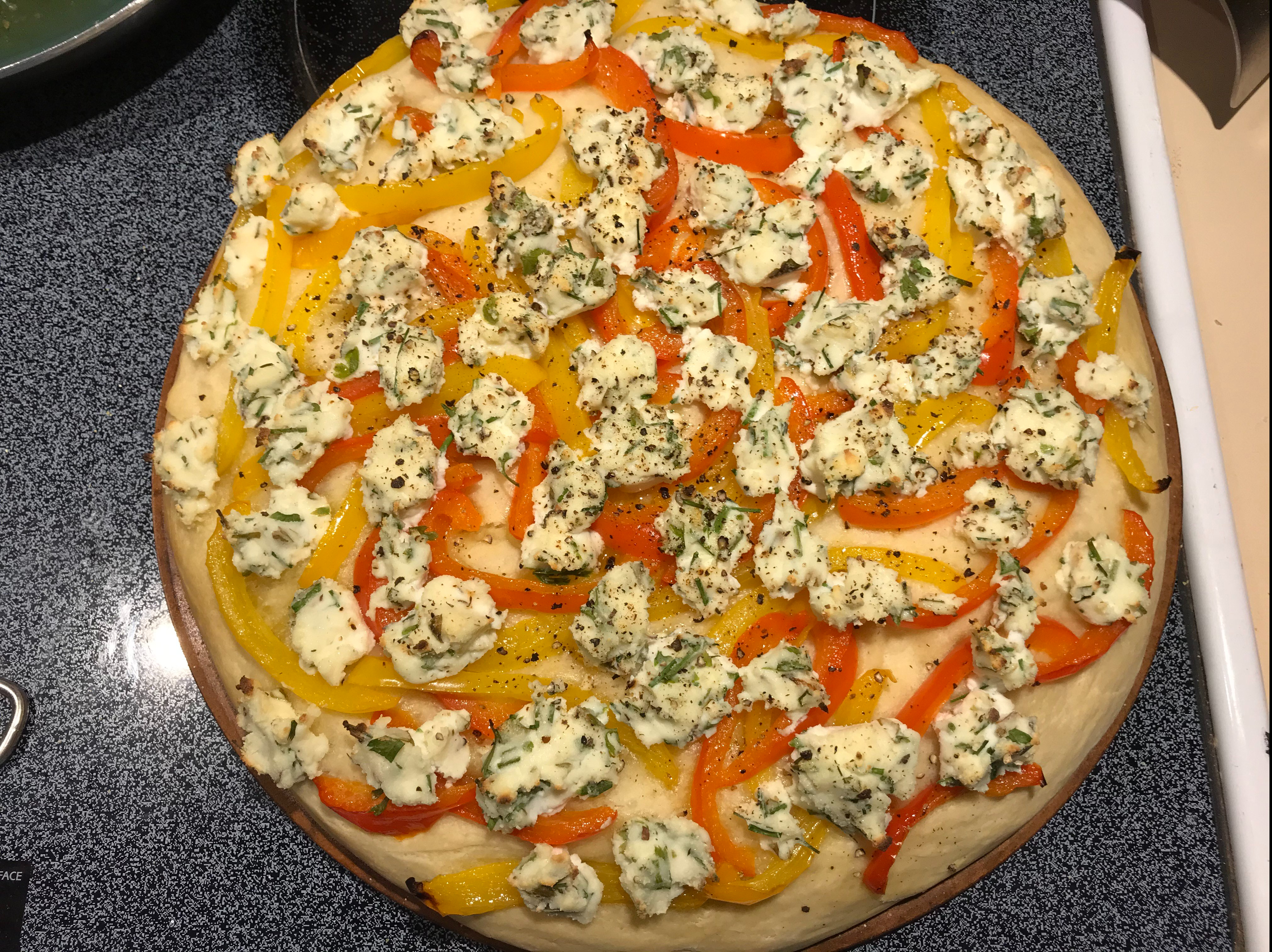
The cheese didn’t spread out over the surface as I thought it might, but the pizza was still delicious. The crust crisped up well on the pizza stone, the garlic flavor was clearly there but not overpowering, and the outside parts of the cheese globs browned a bit for added flavor. At some point it would be nice to try this with actual ricotta salata, but in the meantime, the modified version is more than worth making again.
 Feasting Through Time