
Source: 1000 Foods (pgs. 289 – 290)
In cold climates, the first spring vegetables and greens are particularly appreciated. Often, they appear around Easter as edible symbols of renewal. Seeing the landscape coming back to life after a long winter seems like the perfect celebration of the Resurrection. This does make the idea of celebrating Easter in the Southern Hemisphere, where it occurs during the fall, a little bit strange. My grandparents once told me that when they were in Australia one year for Easter, there were chrysanthemums on the altar at mass. While I understand why the seasons are reversed south of the Equator, thinking about a fall Easter with harvest decorations or a Christmas summer barbecue is still somewhat mind-bending.
Anyway, back to green herbs. Traditionally, seven-herb soup was a German dish for Holy Week, right before Easter. Historically, fasting rules for Lent were a lot stricter than today. In early Christian communities, meat, fish, eggs, and dairy products were all forbidden. Fish was permitted from the Early Middle Ages onward. While this may seem surprising given the relative cost of fish today compared to most types of meat, it makes sense in the historical context. When fasting rules were first established in the later Roman Empire, most Christians lived around the Mediterranean, where grazing land was limited but fish was relatively abundant. As a result, fish was cheaper than meat.
This changed once the people of northern Europe became Christian. Here there was plenty of land to pasture cattle and forests where pigs could forage. This made meat and dairy products more abundant and thus cheaper than they were further south. In many cases, meat was even cheaper than fish. Another issue was that north of the area where olive trees grew, people relied on lard, butter, and suet as their main cooking fats. This could be why, from the 15th Century onward, restrictions against dairy products (and eggs) during Lent and on Fridays began to be relaxed.
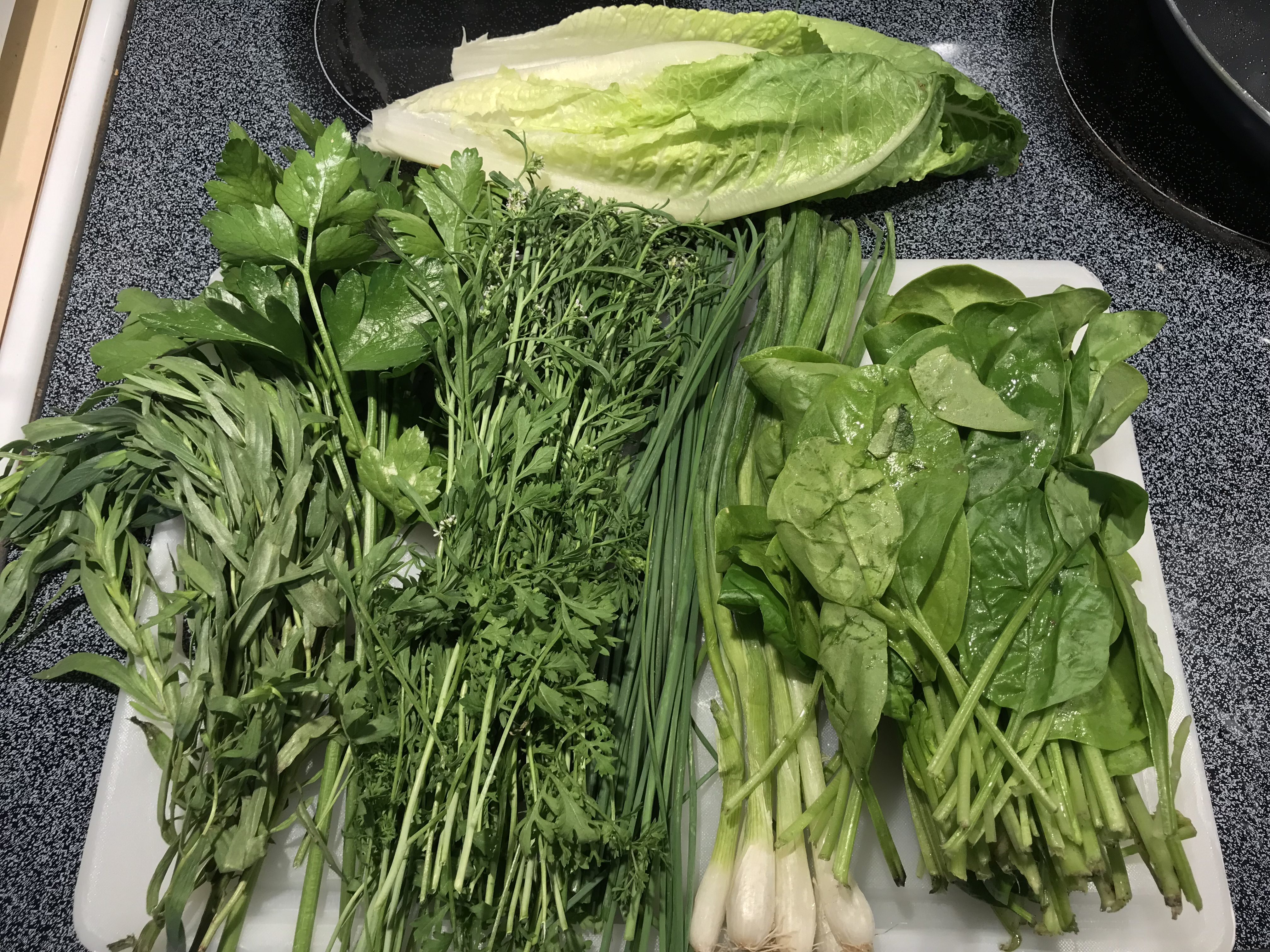
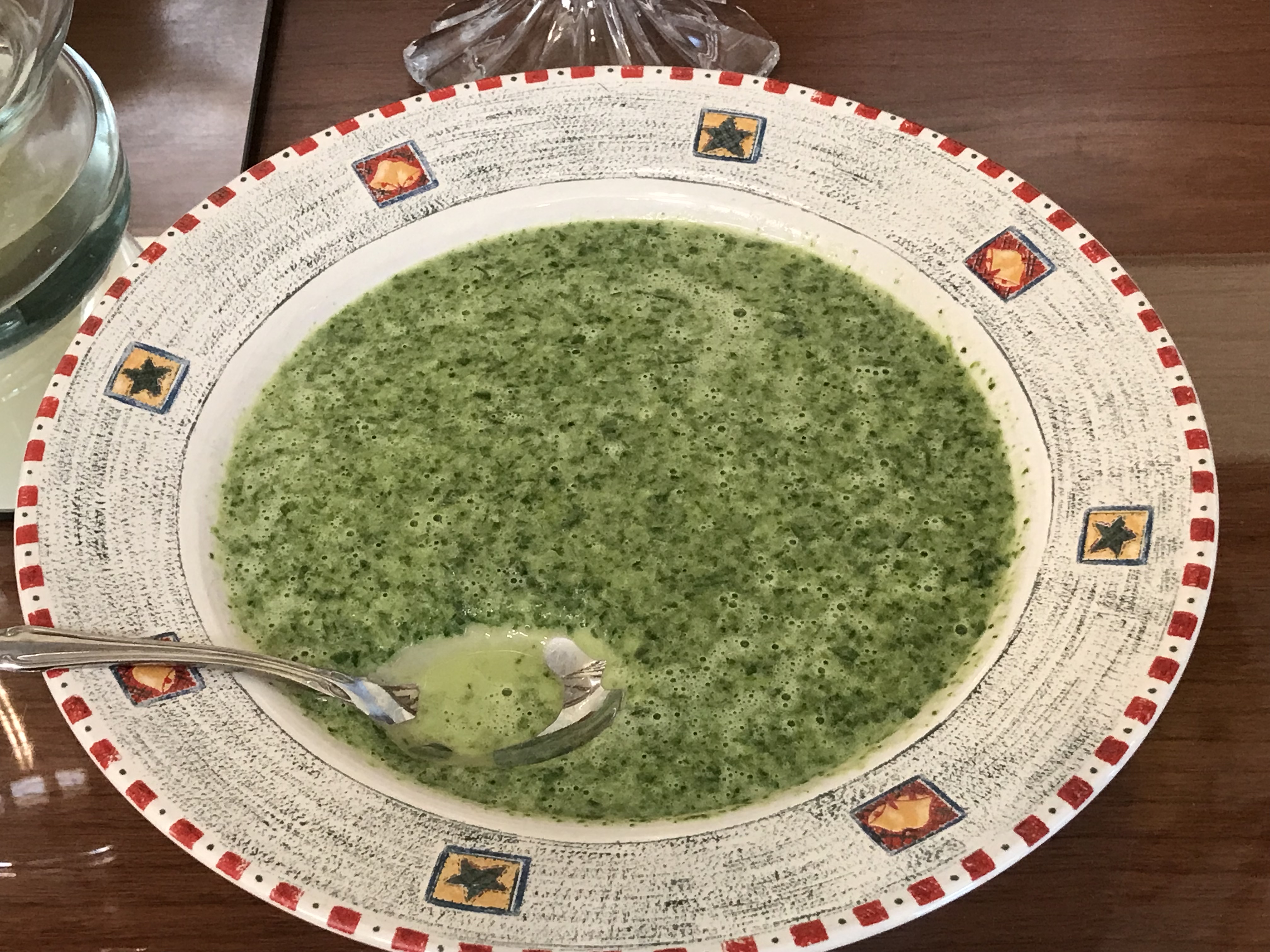
The seven “herbs” I used were parsley, tarragon, watercress, chives, scallions, spinach, and lettuce. Cooked and pureed with vegetable broth and enriched with potato and cream, it was very fresh tasting. The only issue I had was that since I had never cooked with watercress before, I didn’t realize that the tougher stems needed to be removed, resulting in tough bits in the soup. Personally, I liked the extra texture they provided, but they weren’t supposed to be there.
After Lent is over, an option is to use chicken or meat broth and add meatballs to the soup. Even though I made this in July, I stuck with the traditional Holy Week version to let the herbs shine. Served with some multigrain crackers, it was a light but complete meal, perfect to celebrate spring or summer.
 Feasting Through Time
This soup sounds so refreshing. I think I’d like the chicken broth version, too. Thanks for including the background information—it was fascinating!