
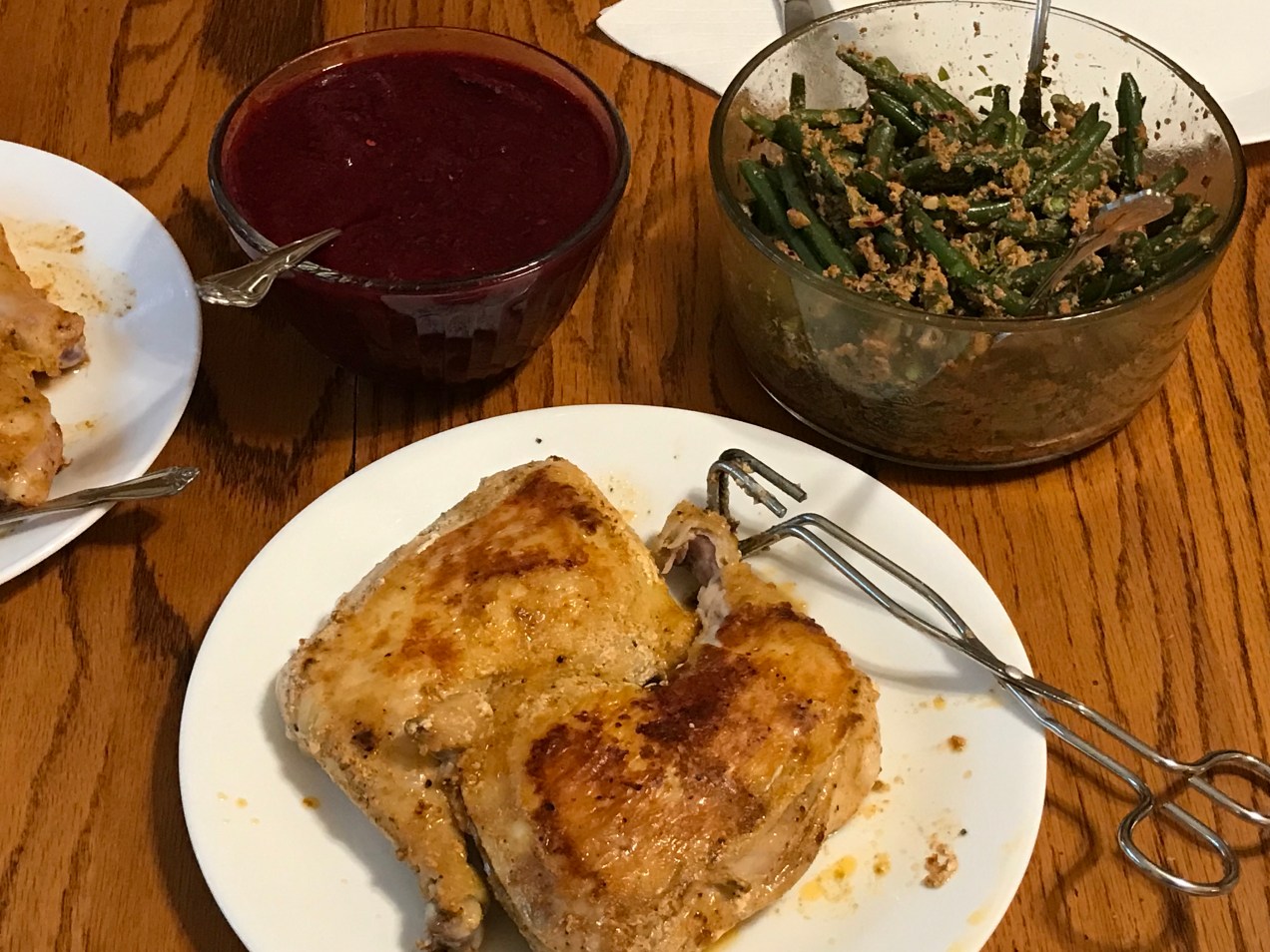
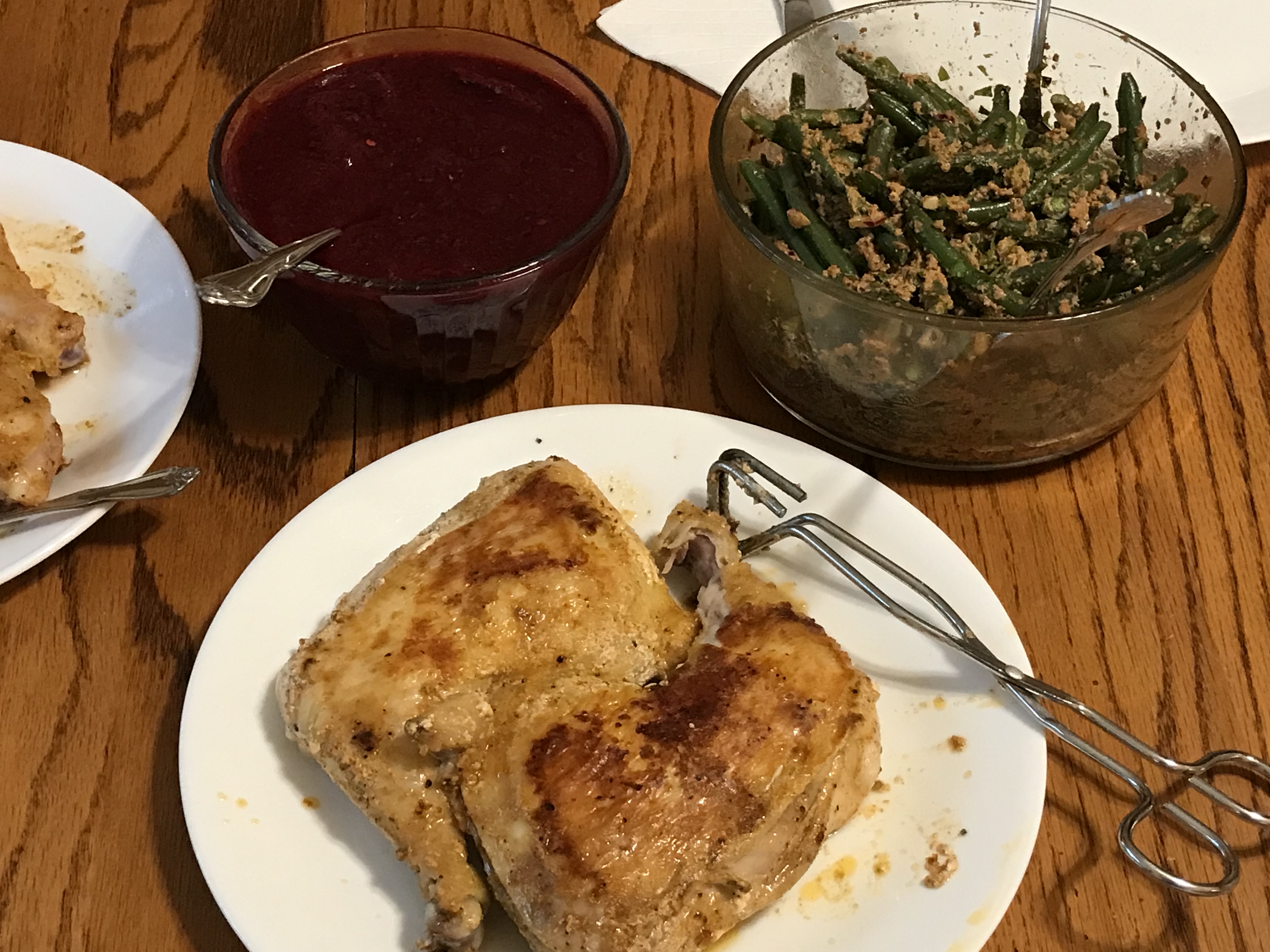
Menu: Chicken Tabaka with Tkemali (plum sauce), Lobio Satsivi (green beans with walnut sauce)
Source: 1000 Foods (pgs. 389 – 392)
In this case, the word Georgian does not refer to the British historical period of the 18th and early 19th Centuries. Nor does it refer to the state in the Southeastern United States known for its peaches. Rather, we are referring to the country of Georgia, located in the Caucasus on the eastern edge of the Black Sea, between Russia, Turkey, Armenia, and Azerbaijan. The terrain is mountainous, but the climate is moderated by proximity to the sea, creating a favorable environment for growing vegetables, fruits, and nuts.
Sour plums are the base of Georgia’s most popular sauce, tkemali. Ms. Sheraton refers to it as a sort of “Georgian ketchup” that can be used with pretty much anything. The sweet-tart plums are cooked and combined with garlic, fresh herbs, spices, and chili pepper for a fascinating mix of sweet, savory, and aromatic. Based on the recipes I looked at, it is not a major issue if the usual sour plums are not available. The sauce didn’t taste overly sweet, probably because the plums are cooked with the skin, where most of the sour flavor is. Another benefit of cooking plums with the skin is to release the red and purple pigments found there.
An interesting thing about the tkemali was how its flavor evolved over a few days in the fridge. At first the garlic and cilantro were the strongest flavors, but gradually it became fruitier and more minty. I’m not sure why this happened, but at all points the sauce was a flavorful accompaniment to the chicken. While adding a fruity sauce to vegetables is uncommon in the US, it is often added to green beans in Georgian cuisine (text, pg. 390). They already had walnut sauce here, but the idea sounds good. It even worked well with baked potatoes.
The chicken was less successful, but improved on the second day. A flattened whole chicken is rubbed with salt, garlic, hot paprika, and sour cream, placed in a skillet to fry, and another skillet is placed on top, weighted down with something heavy. Since I didn’t feel comfortable trying to flatten a whole chicken, I used thigh/drumstick quarters and weighted them down with a heavy pot half full of water.
For some reason, after the given amount of time plus a little extra, the chicken was nowhere near done. At first I was confused, since the quarters are smaller than whole chickens, but I think there is a scientific explanation. Water has a very high specific heat, meaning that it can absorb (or release) a lot of energy without its temperature changing much. That makes it a great industrial coolant, but probably not the best choice for weighting down chicken being cooked. Most likely, some of the heat that was supposed to be going into the chicken went into the water instead. This process might have worked if the water was heated first, but after some time in the oven to reheat the texture and flavor were much better.
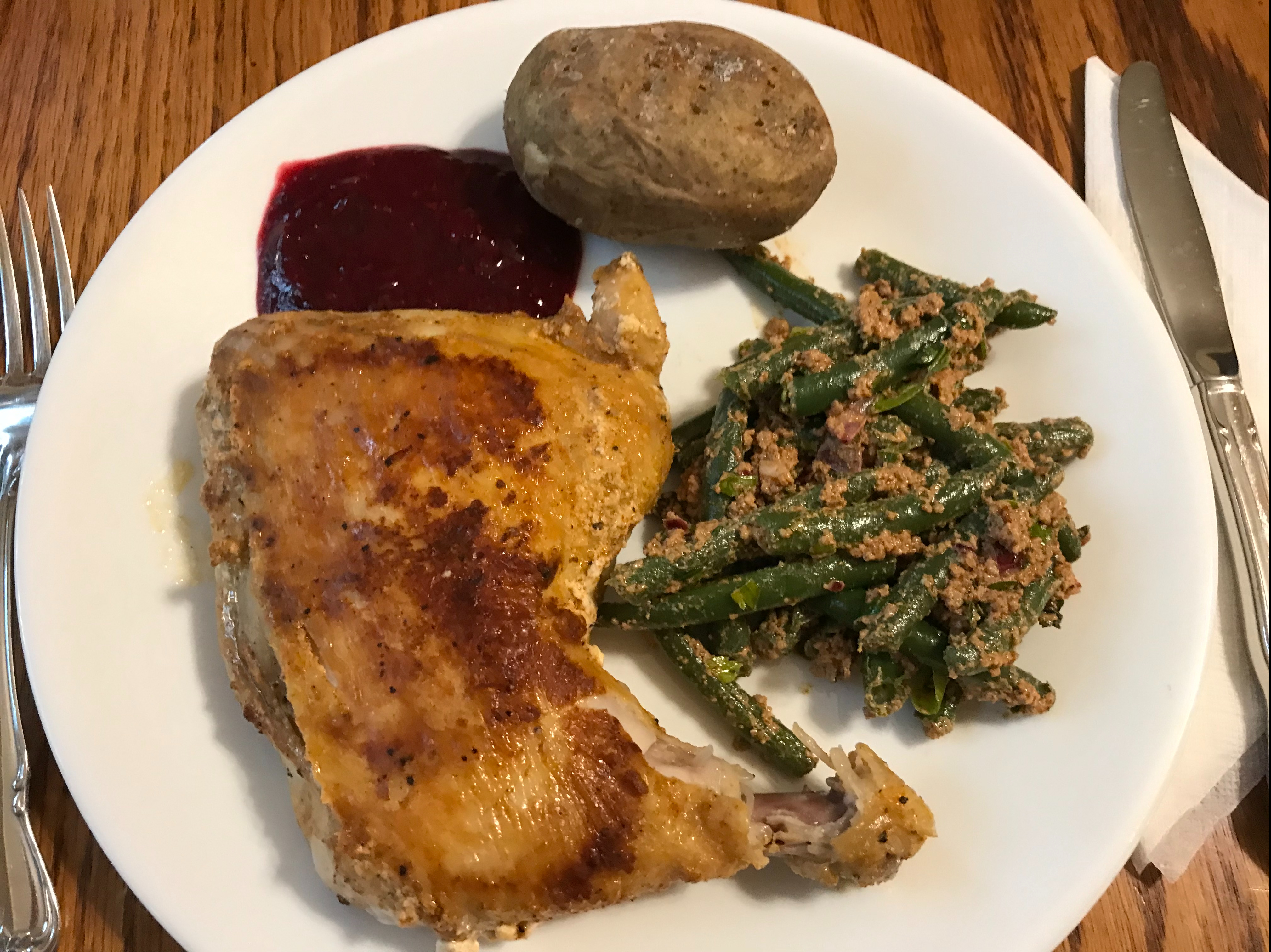
My favorite dish here was the green beans. After being lightly cooked, they are tossed with a sauce that resembles pesto without the basil. These types of sauces, where ingredients are chopped or ground together with a small amount of liquid, have a long history. Ancient Romans combined things like herbs, spices, dried fruit, vinegar, oil, and the fish sauce garum with a mortar and pestle to make thick, strongly-flavored sauces. Medieval cooks did much the same, but ditched the garum and often added almonds, walnuts, or bread crumbs as thickeners. At a time when people ate with their fingers, this all made perfect sense. Thinner sauces would be a lot messier.
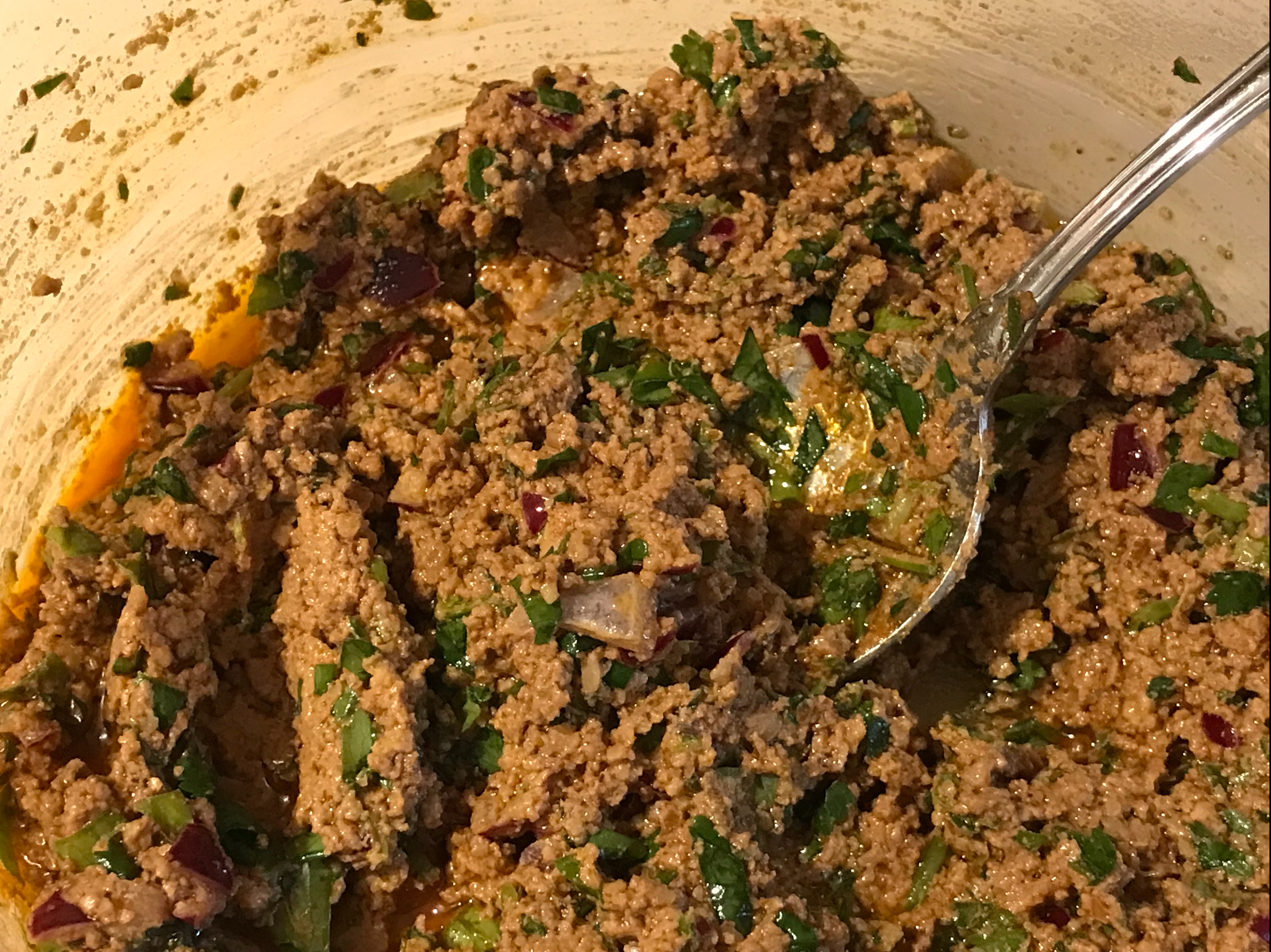
The walnuts are dominant in the sauce, enhanced by garlic, cilantro, and paprika, which seem to be core flavors in Georgian cuisine. Vinegar and oil add another layer of flavor, and bits of chopped red onion and parsley add extra crunch and color. The sauce was amazing on fresh seasonal beans, and would probably make out-of-season frozen beans a lot more interesting. Ms. Sheraton suggests serving them with “southern fried chicken or barbecued beef and pork in the other Georgia.” (Pg. 389) This good idea becomes even better when compared to salads coated in the bacterial breeding ground known as mayonnaise.
 Feasting Through Time
That sauce sounds like it would be good on carrots, too. I like your analysis of how the water affected the chicken.