Uncategorized

Reflecting on the Growing Season: Basil, Pesto, San Marzano Tomatoes, and Seed Saving

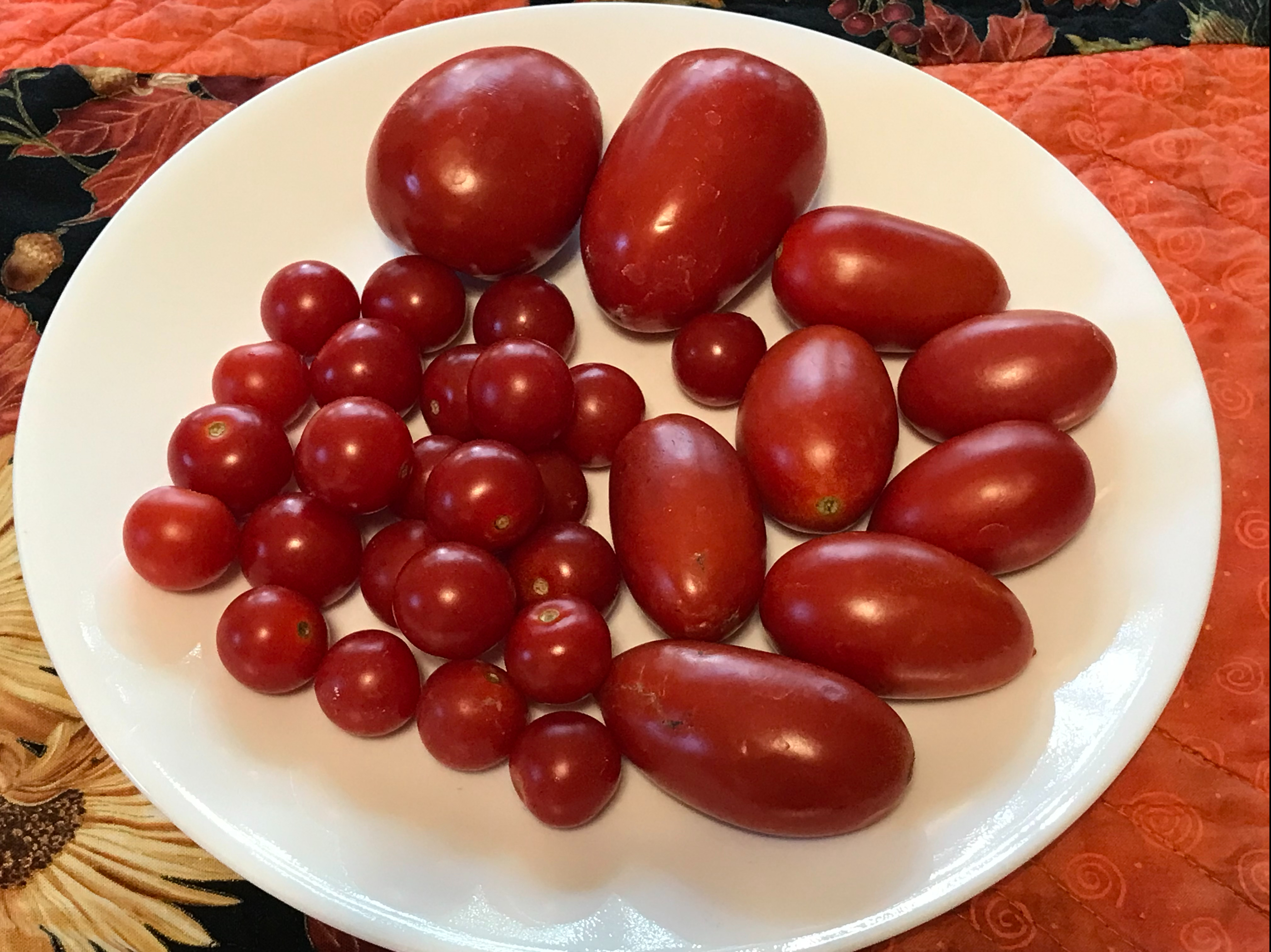
Clockwise from the top: Roma, San Marzano, and cherry tomatoes

1000 Foods (pgs. 220, 223 – 224, 235 – 236)

            This last summer, after removing part of the deck that was in disrepair, I had a small garden bed to use. For my birthday back in March one of my aunts gave me a gift card for a seed savers catalog, which had some particularly interesting selections, including two types of sunflowers, giant zinnias, arugula, and cress. After buying more herb plants than necessary and planting them in pots, I had a plan for the new garden bed. The larger type of sunflowers would go in the back row. Three tomato plants would get half of the middle row instead of their usual 5-gallon buckets. On the other side I had a bean plant given to me by a student after an experiment to determine where plants get their mass from as they grow. (Answer: it’s mostly the carbon and oxygen in the air.) I planted a few leftover seeds in the row to keep it company. In the corner was an unknown plant from a different student (turned out to be mustard greens). The front row was half arugula, almost half cress. Marigolds on the sides would hopefully keep rabbits away. It sounded tidy and organized.

            Plants don’t necessarily do tidy and organized. With plenty of space, the tomato plants spread out and covered much of the arugula. The bean plants, which I was not aware were pole beans (it didn’t say on the package) grew in every direction. By the time I got the stakes in it was too late to manage the chaos. They didn’t produce many beans and those few were tough, but the plants themselves may have had an additional benefit. The sunflowers on that side of the garden were taller than those on the side with the tomatoes. Since the change was gradual it may have had as much to do with drainage patterns, but the nitrogen-fixing bacteria that live on bean roots may well have enriched the soil and given them a boost. Finally, the marigolds ended up about two feet tall. Whether they or the fence was more effective at rabbit control is an open question.

            Along with Roma and cherry tomatoes, I planted a San Marzano plant. Technically, to be 100% authentic, the tomatoes would need to be grown in the rich volcanic soil near Naples, but this was a way to taste them fresh. The plants are scraggly-looking with long, thin, pointy fruits, but they are said to be one of the best tomatoes for canning. In fact, the use of tomatoes in Italian cuisine increased significantly once the canning industry developed. I couldn’t taste much difference in the three types of fresh tomatoes, but I’m not normally a fresh tomato fan. They seemed to work well in the various soups and salsas over the course of the season. It will be interesting to compare canned San Marzanos with other varieties at some point in the future.

            I probably could have managed with one basil plant instead of two. They were small when I got them, and so had me fooled. Each in their own pot, with lots of sunshine and daily watering, they thrived to the point of my not knowing what to do with all the basil. With a potent, distinctive aroma, basil is widespread around the world. In its homeland of South and Southeast Asia, it has religious as well as culinary significance. Pesto is perhaps basil’s most popular use in the West, but it can also be used in sauces, salads, and even lemonade and sorbet. It actually works as well with strawberries as it does with tomatoes.

            What’s interesting about pesto is that while pesto-type sauces have existed since Ancient Rome and basil was introduced to the Mediterranean in the Medieval era, the two were not combined until well into the Early Modern period. Perhaps the speed at which basil oxidizes once cut made people suspicious of it. (The darkening/browning is oxidation. The same process happens with guacamole.) Or maybe Medieval cooks were underwhelmed, since they didn’t like to serve raw ingredients and basil loses much of its flavor when cooked. Fortunately for us, the Italians eventually figured out the best way to use it, and many other cuisines followed.

            Like most popular foods, pesto has a number of variations. The classic form has basil, salt, garlic, olive oil, and pine nuts. Usually a hard cheese such as Parmesan or Romano is included, but not always. Some or all of the basil might be replaced with parsley or arugula, reducing the discoloration on the surface but changing the flavor. One modification that does not affect the flavor much is to substitute almonds or especially walnuts for the pine nuts. With all the garlic and basil, it’s hard to tell the difference, and walnuts are a lot more affordable. They thicken and enrich the mixture just as well. Some versions, like the one in the book, even replace part of the olive oil with butter. Garlic is a constant, as is salt. In addition to adding flavor, the salt is *supposed* to reduce discoloration, but that was not my experience. A reliable solution is to scrape off the discolored part. The pesto below will be as green and aromatic as ever.

            In the meantime, winter is here. For next year, I’ve embarked on some seed saving of my own, gathering hundreds of sunflower seeds, along with a few small bags of marigold and one of zinnia seeds. I’m not sure where the petunias that appeared in the garden bed with the small sunflowers and zinnias came from. Most likely, some petunia seeds got mixed in with the other seeds by mistake, or some seeds blew over from another plant. However it happened, they grew so well and lasted so long into the fall that I saved some of their seeds too. Planting slightly earlier and starting some of the sunflowers inside should ensure an even better display next summer. Just not a tidy one.
Standard
Uncategorized

Impromptu Turkish Dinner: Kilic Sis (tuna kebab), Bulgur Pilavi (bulgur pilaf)

1000 Foods (pgs. 481, 485)

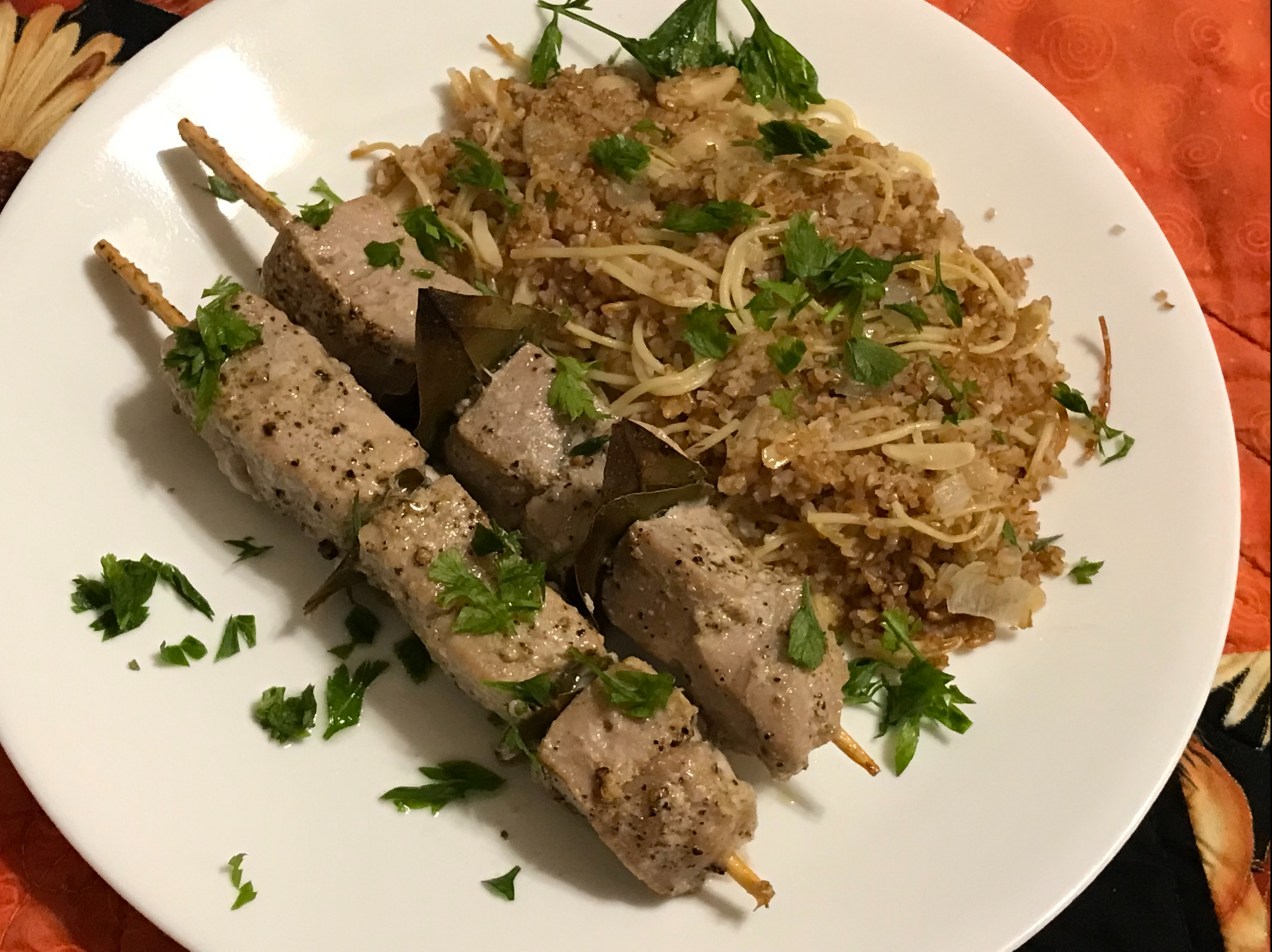
            Venturing to the Middle East again, we have two Turkish specialties: kebabs and pilaf. Specifically, swordfish kebabs (tuna is used here, for a reason detailed below), and bulgur pilaf. The fish is marinated in olive oil and lemon juice and flavored simply with bay leaves, while the bulgur fills in for rice, adding some extra flavor and texture. Both dishes were easy to make. Due to rain, the kebabs were broiled instead of grilled. For the pilaf, just toast the bulgur in the skillet with butter, minced onion, and broken vermicelli (angel hair) pieces, then add broth to finish the cooking process. Both lamb or chicken are authentic options. Since I already had chicken soup base on hand and wasn’t about to make a lamb stock/broth, I used chicken broth. The end result was one of the best things I’ve made in a while.

            For why this was an impromptu Turkish dinner, here’s the story. On a rainy Saturday, I was using up some of the herbs I’d brought in from outside. From my two basil plants, I made a big batch of pesto. After taking some to the neighbors, I took some downstairs to put in the deep freeze. When covered with a layer of oil, it can supposedly be kept for about a month. Upon opening the freezer, I noticed a strange, unpleasant smell. A bag of pulp from garden tomatoes wasn’t frozen, but it smelled fine. Then I realized that nothing in the top layer was frozen. The interior of the freezer was cool, but nowhere near where it was supposed to be, as evidenced by the fact that I could comfortably place my hand against the freezer wall. A quick look around revealed the problem. Somehow, the freezer cord had become unplugged from the extension cord, probably when some nearby bins holding decorations were moved around.

            After plugging it back in, I had to figure out which items were salvageable. Since the temperature was still around refrigerator level, the number was higher than expected. The corn, strawberries, cherries, and jam from last summer were fine, and a large chunk of pork butt I’d gotten on sale was still mostly frozen. After pulling everything out, drying it off, and cleaning up the water that had gathered in the bottom, everything was handled. The source of the smell was most likely some leftover corned beef and cabbage. One lingering question was with some tuna skewers that had thawed out. Since they were in an unopened, vacuum-packed bag I decided that they were okay, but wanted to cook them that day.

            After glancing through the recipes in both A Cook’s Tour of Italy and 1,000 Foods to Eat Before You Die, I settled on the Turkish fish kebabs. Swordfish is the traditional choice, but since the text suggests some alternatives if swordfish is unavailable, I subbed in the tuna. What’s special about this dish is that the fish is cooked with bay leaves on the skewers. This makes sense, since bay leaves grow abundantly in Turkey and their flavor complements pretty much anything. The dried variety can actually be used, as long as they are soaked in hot water to soften first. Since the kebabs are typically served with either rice or bulgur pilaf, this was a great opportunity to try out another recipe from the text. The best part of it was being able to turn a potential mini catastrophe into a thoroughly enjoyable dinner.

Standard
Uncategorized

More Tastes of France: Quiche Lorraine, Chocolate Mousse, and Madeleines

Source: 1000 Foods (pgs. 123, 102 – 103, 99 – 100)

            As promised, here is a brief(ish) explanation of Lothringia, from which the region of Lorraine got its name. The tradition among Frankish kings was to divide their territory among their sons upon their death. As you might imagine, this led to kingdoms fracturing and going to war with each other almost every generation. The Merovingians, who ruled the Franks from the late 5th Century to 751 AD, weakened themselves this way, and Charlemagne’s dynasty, the Carolingians, followed a similar pattern. Charlemagne’s father Pepin usurped the throne in 751 and died in 768, dividing his kingdom between Charles (Charlemagne) and his brother Carloman. Upon Carloman’s death a few years later, the realms were reunited.

            Charlemagne had three legitimate sons reach adulthood, but by the time of his death in 814, only Louis the Pious survived. While this was unfortunate for the other two sons, it was probably fortunate for the empire (Charlemagne had been crowned Holy Roman Emperor in 800), which held together for another generation. Louis had three sons, Lothar, Louis, and Charles, and they didn’t like each other. Even before Louis’ death in 840, they began to fight. The whole story is a complicated mess of shifting alliances, and Lothar and the younger Louis even imprisoned Louis the Pious on two separate occasions. The disorder opened the door for Viking attacks, particularly from the 830s onwards.

            In 843, a settlement was reached at the Treaty of Verdun. Lothar, the eldest, got the imperial title and a territory wedged between the other two. His kingdom, not-so-creatively called Lothringia, encompassed the Low Countries, the northeast corner of modern France, part of Burgundy in eastern France, part of Switzerland, and most of Italy. Louis got East Francia, which encompassed most of Germany and Austria, and Charles got West Francia, centered on France. Over time the West and East Frankish kingdoms developed separate French and German identities. Later in the 9th Century the king of Lothringia died without an heir, setting the stage for a over a millennium of fighting over his territory. The Holy Roman Empire centered on the increasingly disunified German states, France often sparred with the Empire, and Lorraine was caught in the middle.

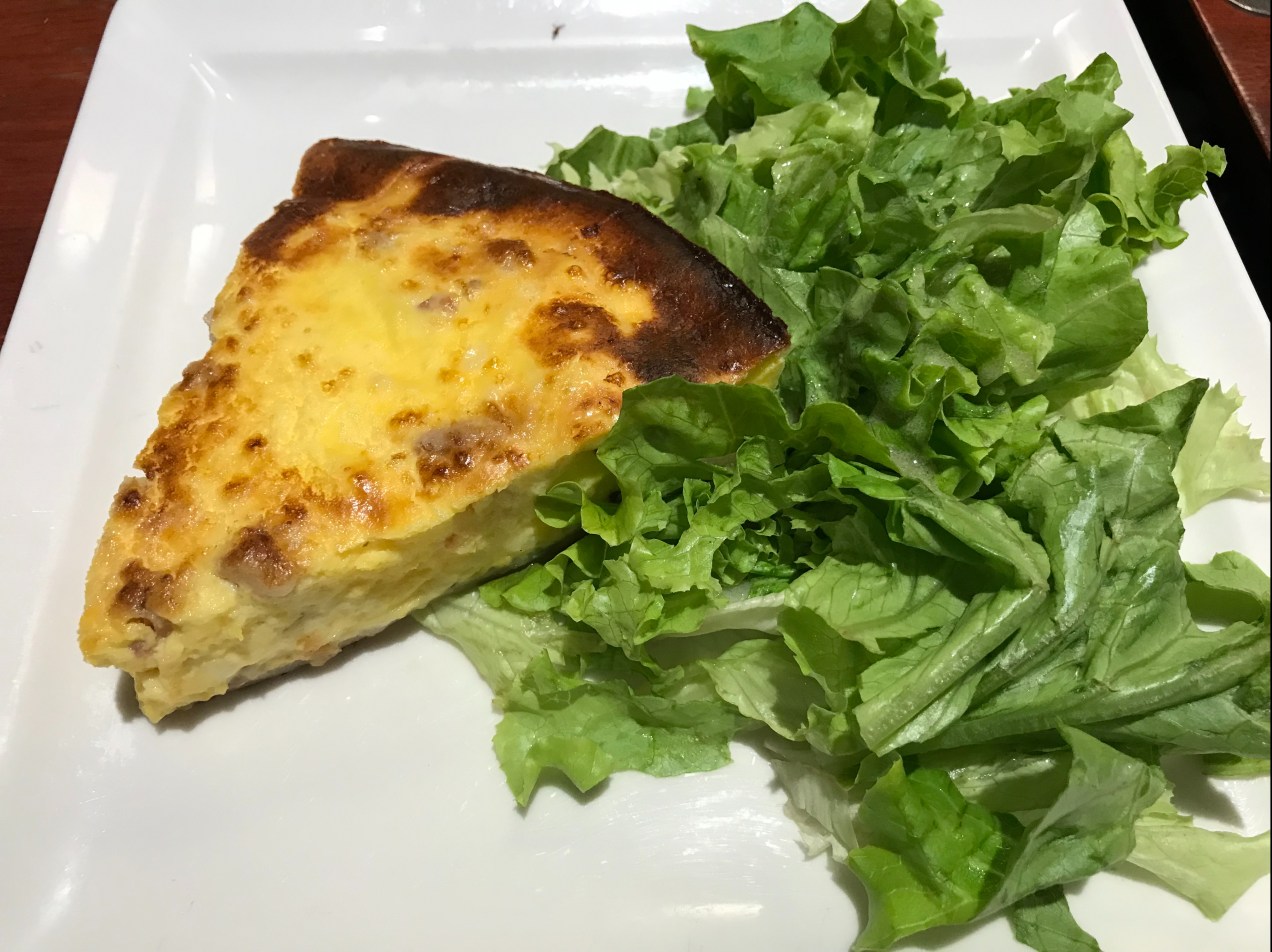
            Now part of France, Lorraine and Alsace to the east have both French and Germanic influences in the local culture. Some dishes there, particularly in Alsace, have clear German origins and even names (particularly baeckeoffe, a mixed-meat stew with sauerkraut, bireweche, a spicy Christmas bread, and kugelhopf, a yeast coffee cake). The origin of Quiche Lorraine is a lot less certain. At its simplest it is just a nutmeg-scented custard in a pastry crust, both elements widespread across Europe. Bacon is usually added, but authentically a Quiche Lorraine does not have cheese, onions, or leeks, which would make it Alsatian. None of the additions give much of a clue on cultural origin, but ultimately, it doesn’t matter. Quiche Lorraine, and other variations, have an appeal that goes far beyond their native regions.

            While in Amboise, a few of us came upon a café with a reasonably priced lunch special, which included dessert. The pastry and custard in the Quiche Lorraine were both very good, but to be honest I prefer the Alsatian version. Onions or leeks add an extra layer of flavor, and are often included in American versions. The great thing about quiche is that you can customize it to your taste. Onions, broccoli and cheddar, spinach and feta, dates and bone marrow, anything can be added as long as it doesn’t have too much water, which could make the custard split. The last option might not be very popular today, but it was a common Medieval recipe called “Lombard custard.” Whatever strikes your fancy is available, as long as you have an oven. It might not be Quiche Lorraine, but it will probably be delicious.

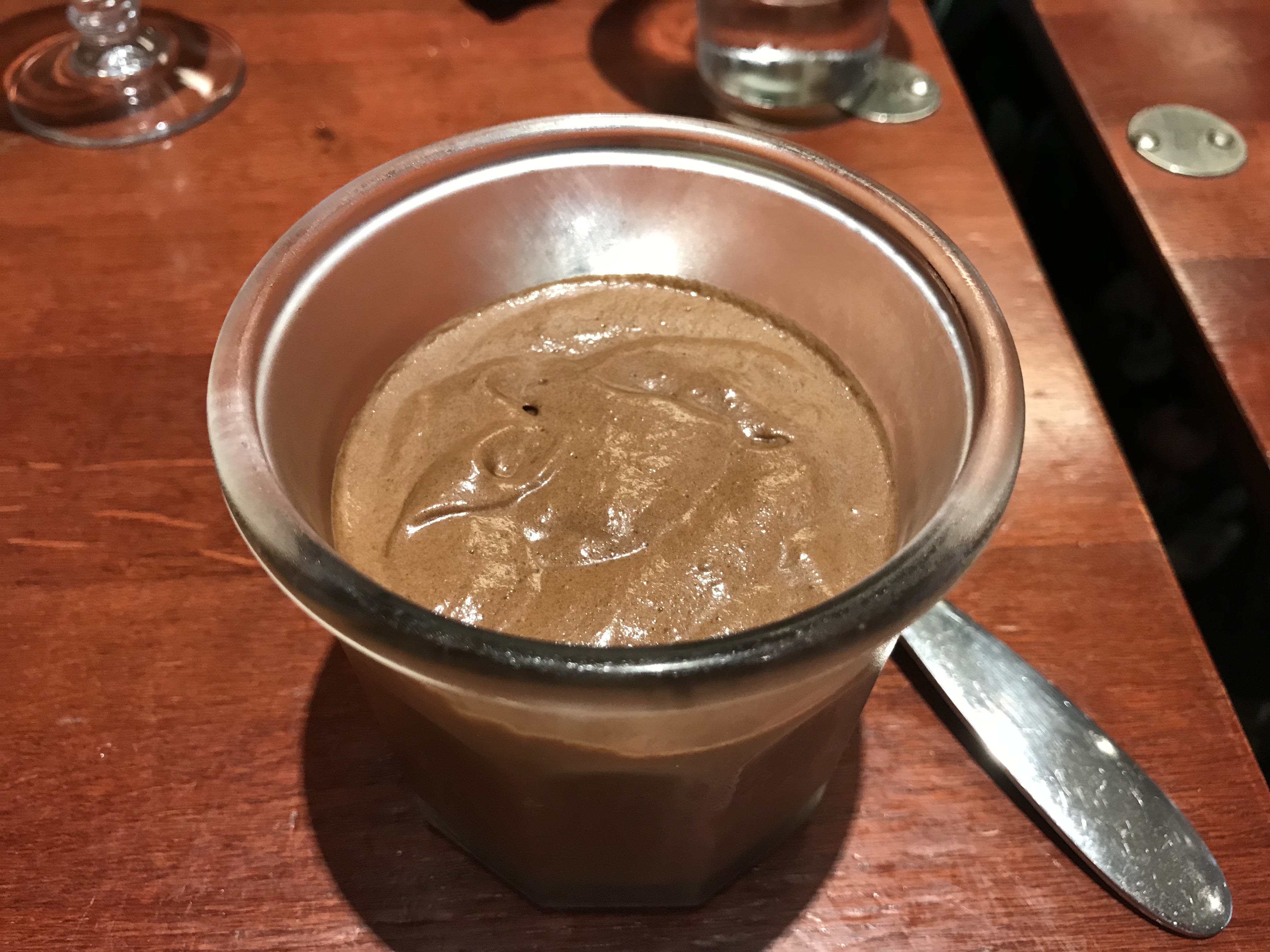
            Also relatively easy to make at home is chocolate mousse. The trick is to whip tiny air bubbles into egg whites and/or cream and avoid deflating them when adding the other ingredients. Follow the recipe (I like the food network recipe but omit the espresso powder), gently fold in the egg whites or cream until just combined with the other ingredients, and in the worst-case scenario it will be more like a pudding. Just be careful if the recipe contains raw eggs, which many do. Often the egg yolks are cooked a bit with the chocolate while the whites are left completely raw. This is no worse than eating cookie dough, but it does need to be mentioned.

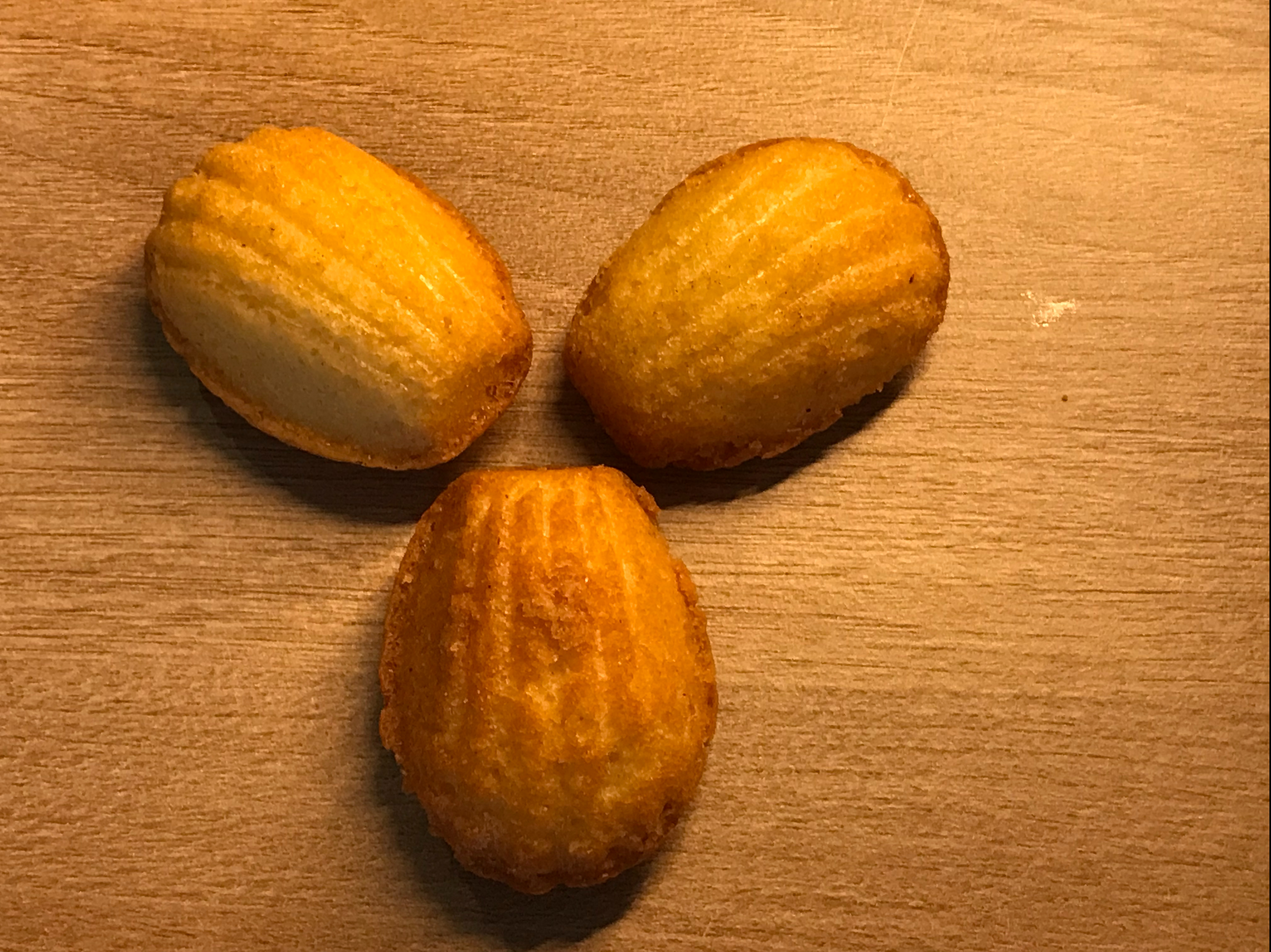
            Madeleines are sort of a cross between a cookie and a cake. They are basically a sponge cake batter baked in small, scallop-shaped molds, which produces a browned outside and soft interior. They are mildly flavored, usually with vanilla or lemon peel. Marcel Proust was particularly fond of them, or at least had fond memories of them from his childhood, and why not? Like a good pound cake, madeleines have a nice flavor on their own, but they also lend themselves to embellishment. A bit of almond extract, a dip in chocolate, or a sprinkle of cinnamon would all be interesting additions.

If you enjoy this blog, please consider making a donation. Any contribution is appreciated.

One-Time
Monthly
Yearly

Make a one-time donation

Make a monthly donation

Make a yearly donation

Choose an amount

$5.00
$15.00
$100.00
$5.00
$15.00
$100.00
$5.00
$15.00
$100.00

Or enter a custom amount

$

Your contribution is appreciated.

Your contribution is appreciated.

Your contribution is appreciated.

DonateDonate monthlyDonate yearly
Standard
Uncategorized

Upside-Down French Apple Pie: Tarte Tatin

Sources: 1000 Foods (pgs. 138 – 139), tartetatin.org

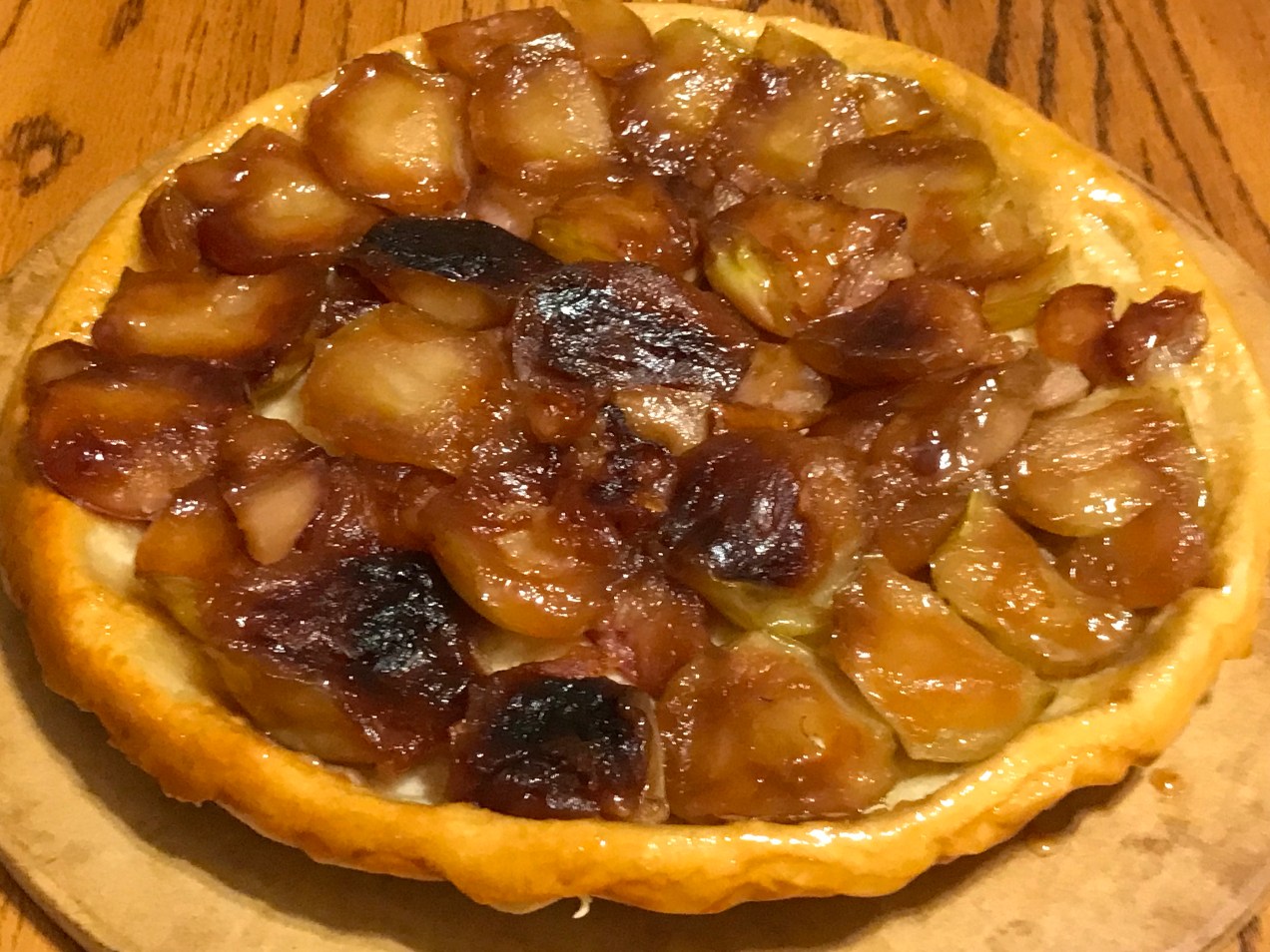
            Cider isn’t the only use for apples. Aside from eating them fresh, people have been baking them into pies and tarts for centuries. Early examples used an inedible crust to cook and preserve the filling, which often only had a little sugar. Over time, edible “short crust” pastry, made with butter and/or lard, became common, the amount of sugar increased, and a huge number of varieties were developed. Some omit the top crust for an open tart, or contain a sugary crumble topping. One particular French variant, Tarte Tatin, is baked upside down to keep the crust from getting soggy.

            The origin story goes something like this. In the 19th Century, the two Tatin sisters ran an inn. During one busy hunting season, an apple tart got dropped and landed upside-down. Rather than discard it, the cook served it upside-down and called it a new house specialty. No matter what the truth is, the French take Tarte Tatin seriously. There is even a website dedicated to it. According to the website, the tarte should be served by itself, without whipped cream or ice cream. What I found more interesting is that in the website’s recipe, there is no spice. While it is listed as an optional addition, my understanding is that the earliest recipes just included apples, crust, and the caramel formed in the pan.

            The first step is to make the pastry. If you’re going to be making bread or pastry with any regularity, you will want a stand mixer. While I’m not usually in the business of advertising products, my KitchenAid mixer has been so helpful I wanted to mention it. They’re a bit of an investment, but their quality and durability make them worth it. The pastry is surprisingly easy to make. Cold butter is combined with the flour until the mixture is crumbly, then just enough ice water is mixed in for the dough to stick together. The dough is then kneaded a few times before being allowed to rest. One thing to be careful about, especially if you’re using a stand mixer, is not to overmix, which can make the pastry tough.

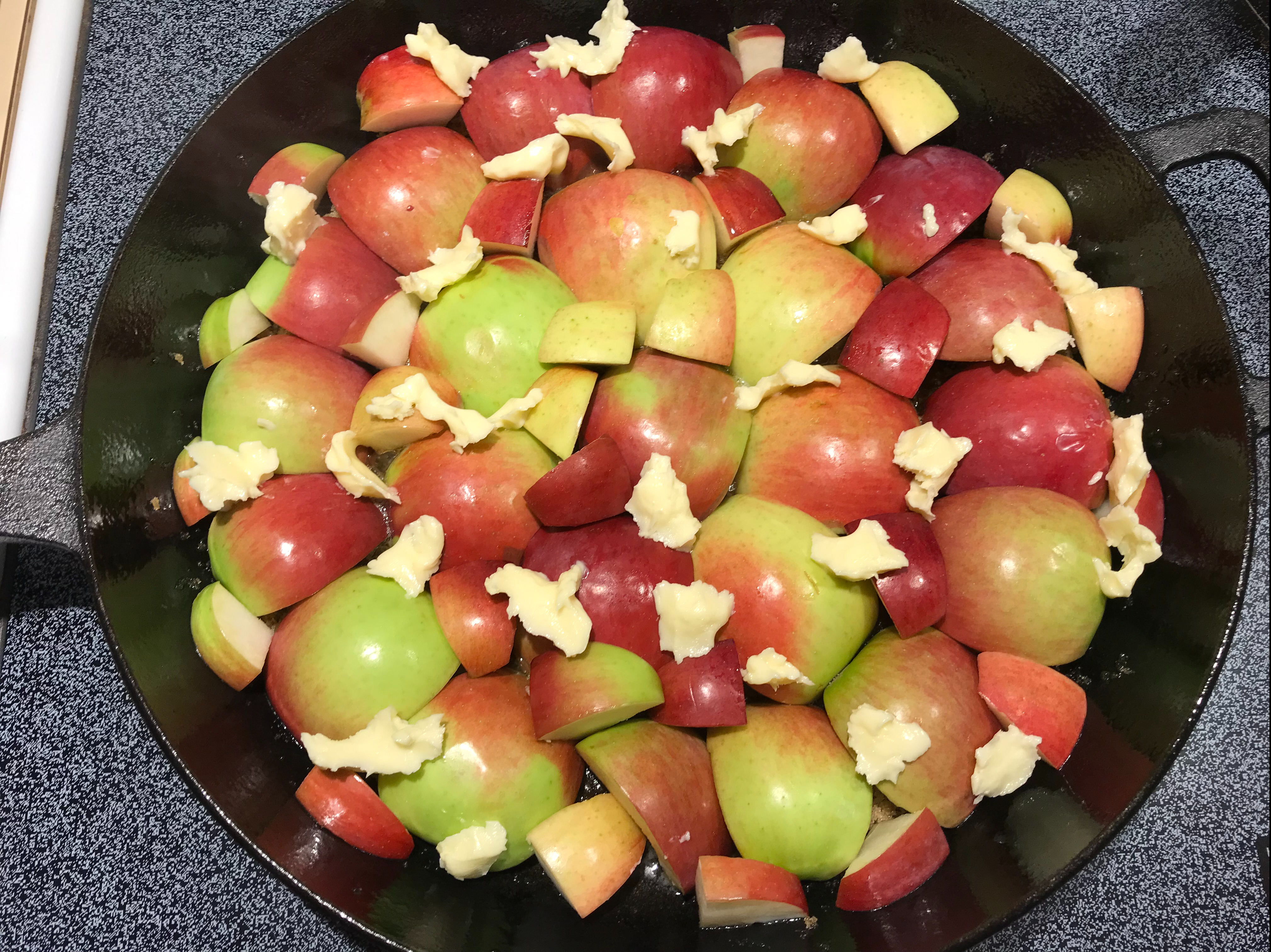
            A caramel is produced by layering sugar and apples in a buttered oven-safe skillet, ideally cast iron. What’s great about this particular recipe is that you don’t have to peel the apples. Not only does this save time, but the pectin in the skin improves the texture of the caramel. The only issue was that the cast iron skillet I used is wider than the burner, resulting in the caramel forming and browning faster in the middle than around the edges. Lightly shaking the pan a few times helped, but the outside edge was not quite as caramelized as I would have liked. Since the apples seemed to be mostly cooked and I didn’t want to risk burning the middle by keeping it on the stove, I added the crust and put the skillet in the oven.

            The reason for cooking the apples first is to release some of their moisture, which could make the crust soggy and inhibit browning. As for the type of apples, the website suggests either some particular varieties most common in France or golden delicious. Ms. Sheraton has two suggestions. For the prettiest appearance, golden delicious are still the best choice. For extra flavor, Cortlands are one of the best varieties. Since I care more about flavor, I used Cortlands. They’re easy to find in the fall, both sweet and tart, juicy but firm enough to hold up in the oven without disintegrating, and all around an excellent baking apple.

            If you decide to make Tarte Tatin, be very careful taking the skillet out of the oven, and make sure your oven mitts or pot holders are dry and hole-free. Wet cloth conducts heat a lot better than dry cloth, which is what you’re trying to avoid. And as it turned out, one of my pot holders had a hole. It was hard to see without looking for it, but the intense pain made me aware of it within a split second. Fortunately, the natural human reflex is to let go before the brain can even make a conscious decision. The pain eventually went away after running my hand under cold water, and I only ended up with a small blister. Inverting the skillet onto a pizza stone did not result in any further burns.

            The Tarte Tatin was delicious. With a thicker pastry and higher crust to apple ratio than most pies have, it was definitely different, but the caramel really made it. A bit of cinnamon might have enhanced the tarte, but the flavor was surprisingly complete without it. Apples, caramel, and buttery pastry worked together to make a dessert worthy of its status as a classic. And it was actually easier to make than a typical apple pie. By the time it comes out of the oven, the peels have broken down enough to be barely noticeable, saving a step. And baking with the crust on top avoids, in the words of the Great British Baking Show, a soggy bottom.

Standard
Uncategorized

Cook’s Tour of Italy Menu 40 (Pgs. 128 – 132): Bachelor Party with Romeo, Verona

Menu 40 (Pgs. 128 – 132): Bachelor Party with Romeo, Verona

Region: Veneto

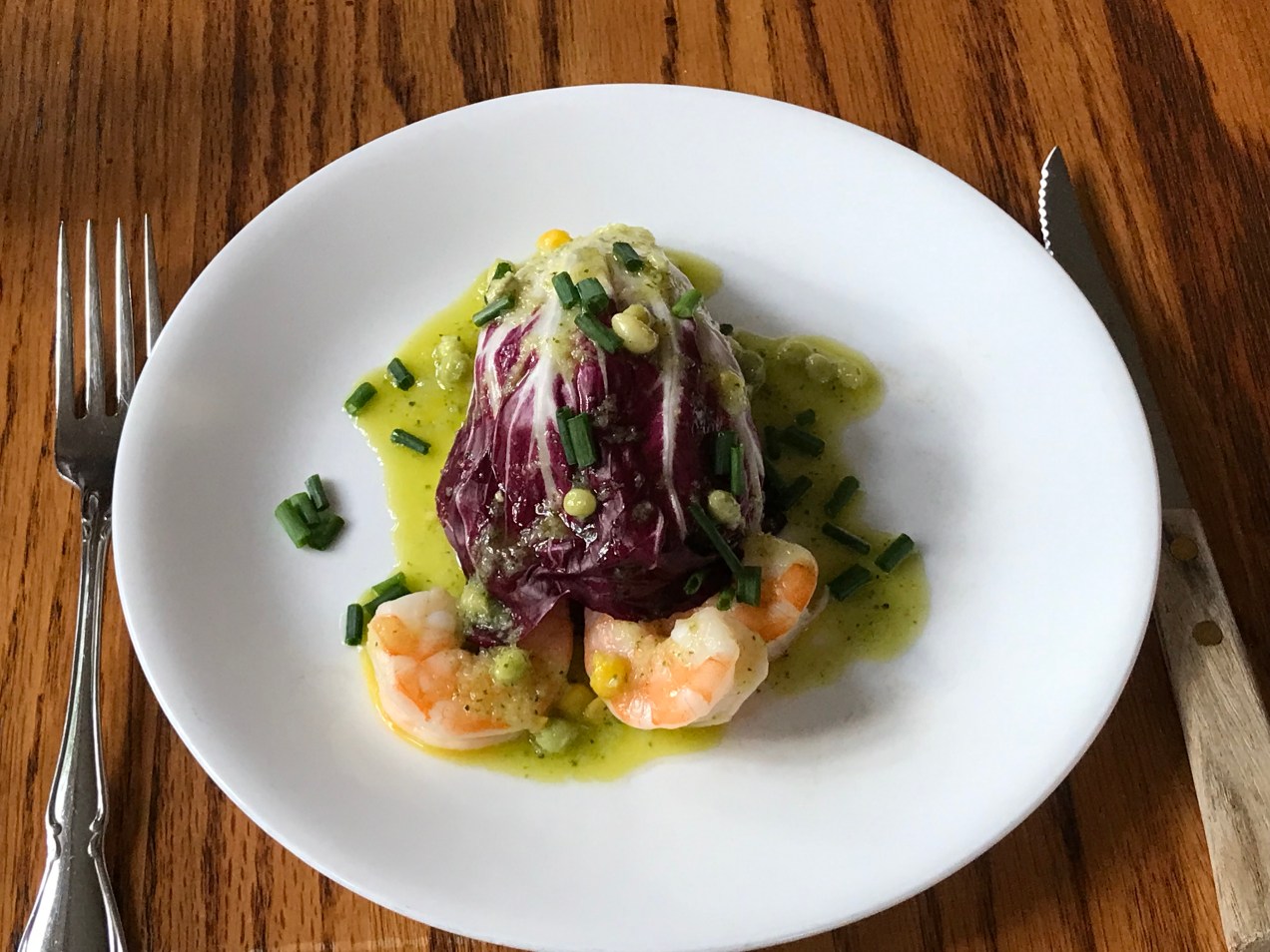
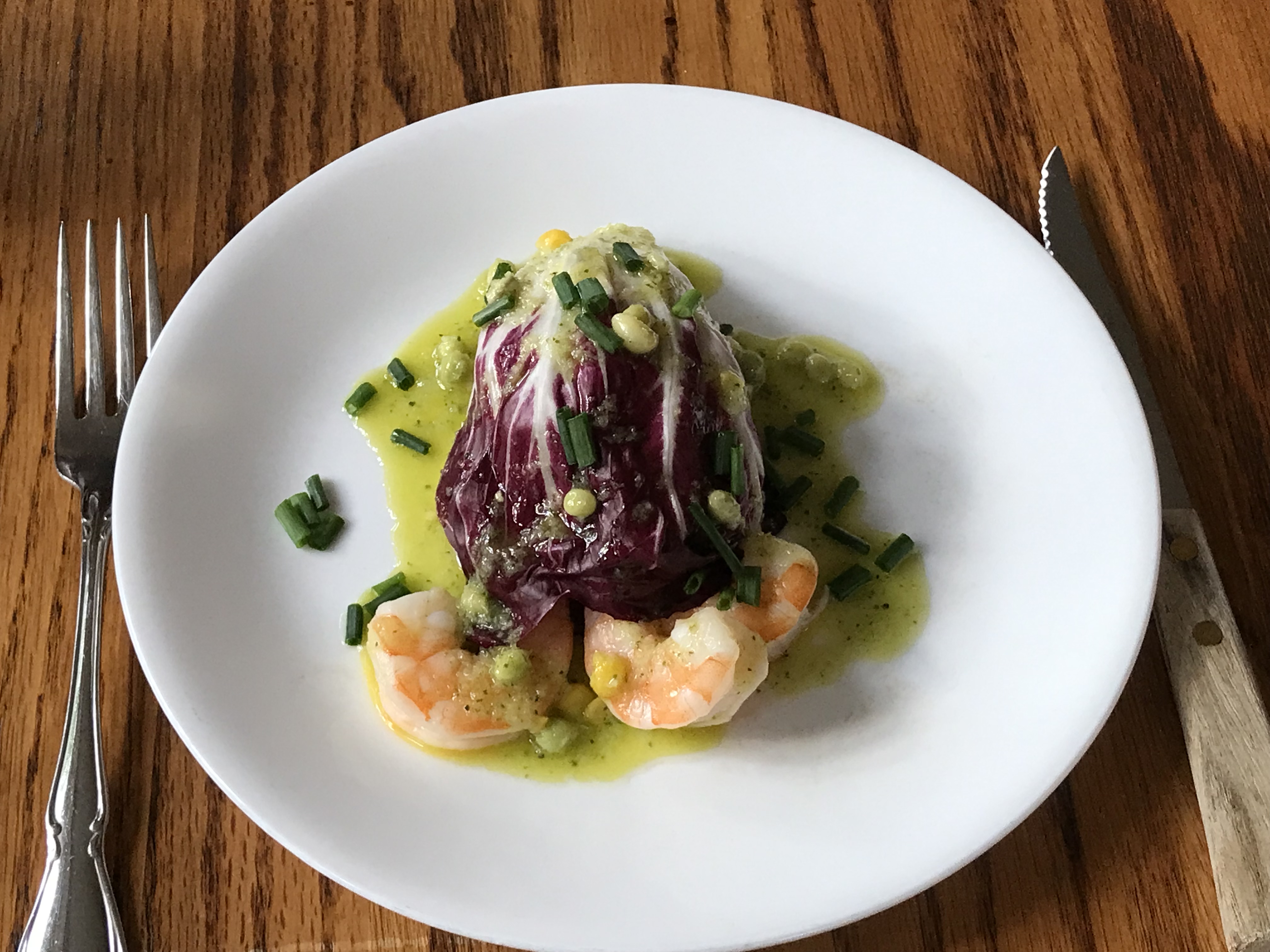
Menu: Shrimp and Radicchio with a Sweet and Sour Sauce, Fried “Soft-Shell Crabs,” Asparagus with Oil, Vinegar, and Fried Eggs on Radicchio, Sweet Semolina Cookies with Grana and Honey

Recommended Wine: Frontego (Soave, bright yellow with citrus aroma)

            If you’ve ever read Romeo and Juliet, you’ll know that the title characters’ secret wedding did not allow for a bachelor party, but here we can imagine one. Pizza, hot wings, and lots of beer seem more likely fare for such a party, but maybe Romeo preferred the specialties of the Veneto region. These include fish, shellfish, and cephalopods of all sorts, including soft-shell crabs and cuttlefish, a variety of sweet and sour sauces, and radicchio. While this menu does not match up to the story’s Medieval origins very well, it was tasty and interesting.
            Note that I did make a few substitutions for economy, convenience, and personal preference. The recipe called for using smoked salmon to form a “cornucopia” for the shrimp and vegetable pieces, but with all the other flavors in the mix it would be hard for the fish to shine. While the smoky flavor probably would have been a nice contrast with the sweet corn, peas, and sauce, the benefit didn’t justify the added cost. The contrast was provided by radicchio instead. Its bitter flavor worked well with the other ingredients, and it looked pretty on the plate. Even though I care more about how food tastes, having it look good is a nice bonus.

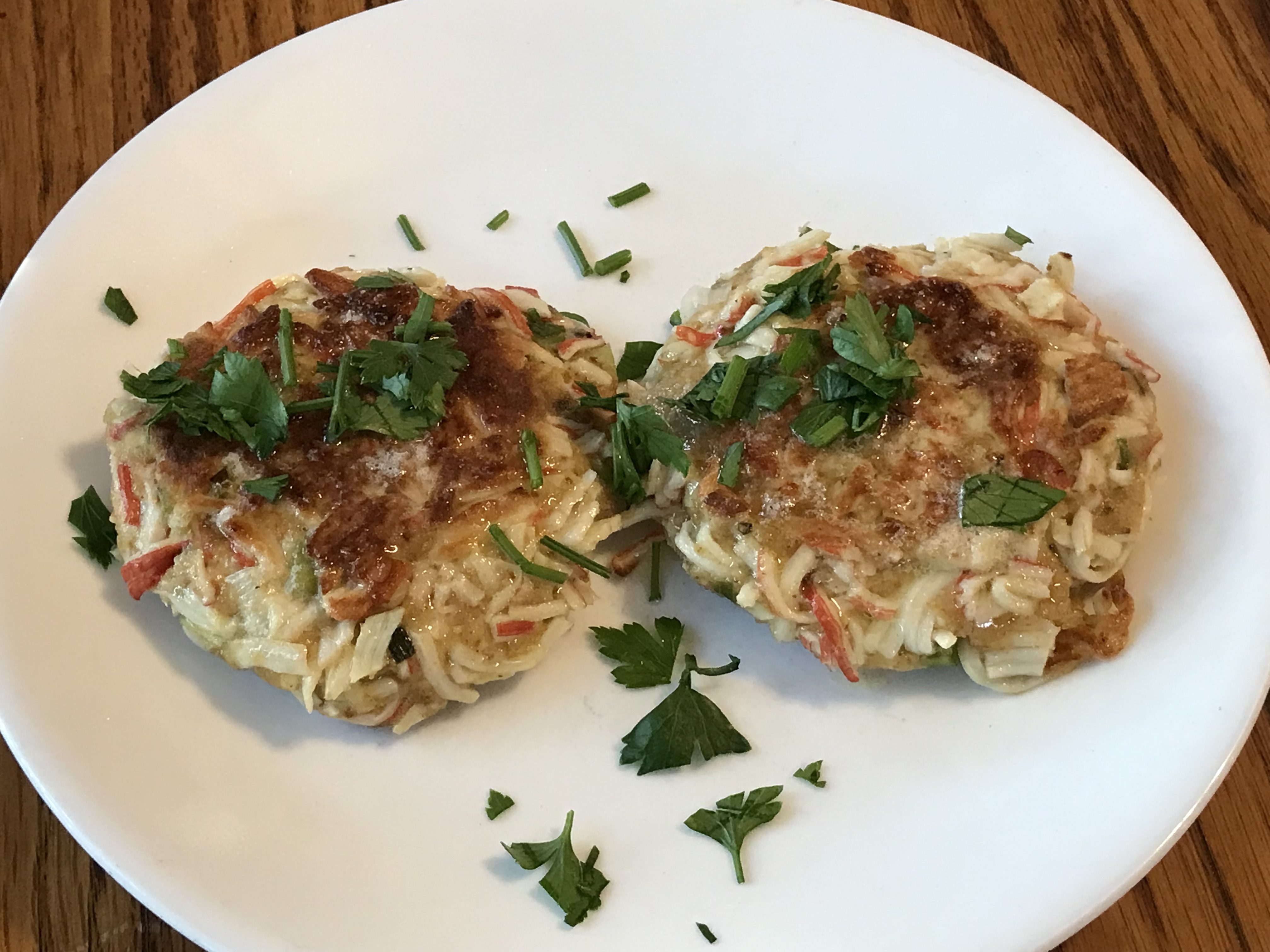
            Soft-shell crabs are hard to come by when you live several states away from the nearest ocean. The two options are 1) have them delivered (which is impractical unless buying a large quantity of items) or 2) drive three hours to one of the fish markets in Chicago (possibly at night to accommodate their early hours). As neither option was feasible, I decided to make crab cakes instead. Specifically, imitation crab cakes, because frozen crab was too expensive and I didn’t trust the canned variety. So I combined chopped imitation crab, bread crumbs, and eggs, shaped them into cakes about the width of a palm (roughly the size of actual soft-shell crabs), and made those the main course. They were delicious.

            The asparagus was closer to the recipe in the book. I cooked and marinated it as directed and plated it on radicchio. The difference was in the topping. The recipe calls for working chopped hard-boiled egg into the sauce. Since I don’t like hard-boiled eggs, I used another common method mentioned in the recipe: topping the asparagus with butter, fried eggs, and parmesan cheese. This all worked very well together and isn’t as weird for a bachelor party as it might seem.

            Asparagus has been viewed as an aphrodisiac since the days of Ancient Rome. After falling out of favor for several centuries, it became popular again in the Renaissance. There was even a way to tell if someone was eating it in secret: by the distinctive odor it left in their chamber pot. People have noticed for centuries that asparagus made their urine smell funny. Both Benjamin Franklin and Marcel Proust mention it at least once in their writings, and one 18th Century club insisted that gentlemen not urinate in the coat rack during asparagus season. Why that was too much to ask for during the rest of the year is unclear, but it was a different time.

            Moving on from aphrodisiacs and asparagus pee, we have dessert. These cookies are made crunchy and slightly gritty with semolina flour, flavored with rum and raisins, and served with parmesan-like grana cheese and honey. I’m not usually a raisin fan, but they were a good match with the light sweetness of the cookie and texture from the semolina. There is actually a Medieval connection here. At the end of a feast, it was common to serve wafers and cookie-like sweets, along with aged cheese, dried fruit, and spiced wine sweetened with honey. While the idea that this helped close the stomach and aid digestion was incorrect, the cookies, cheese, and honey worked surprisingly well together for a treat that stands the test of time.

Standard
Uncategorized

Cook’s Tour of Italy Menu 69 (Pgs. 220 – 224): Dinner for 4, Taranto

Region: Naples/Adriatic Coast

Menu: Taranto-Style Baked Oysters, Grilled Red Pepper Shrimp, Whipped Potatoes with Olive Oil, Farm-Style Zucchini in a Hot Sauce, Blueberry Ice with Melon Ball Spears

Recommended Wine: Rosa del Golfo (rosé from Apulia, coral pink with berry aroma)

            Like many other cities in Southern Italy, Taranto was originally founded by the Greeks. For centuries, the inhabitants fished, traded, and fought with other city-states. The first two activities remained important after the region was conquered by the expanding Roman Republic in the 3rd Century BC. The Romans were followed by the Visigoths, Byzantines, Lombards, Holy Roman Empire, Normans, French, Spanish, and finally the unified nation of Italy. Through all the changes in control, the inhabitants looked to the sea for an essential part of their diet.

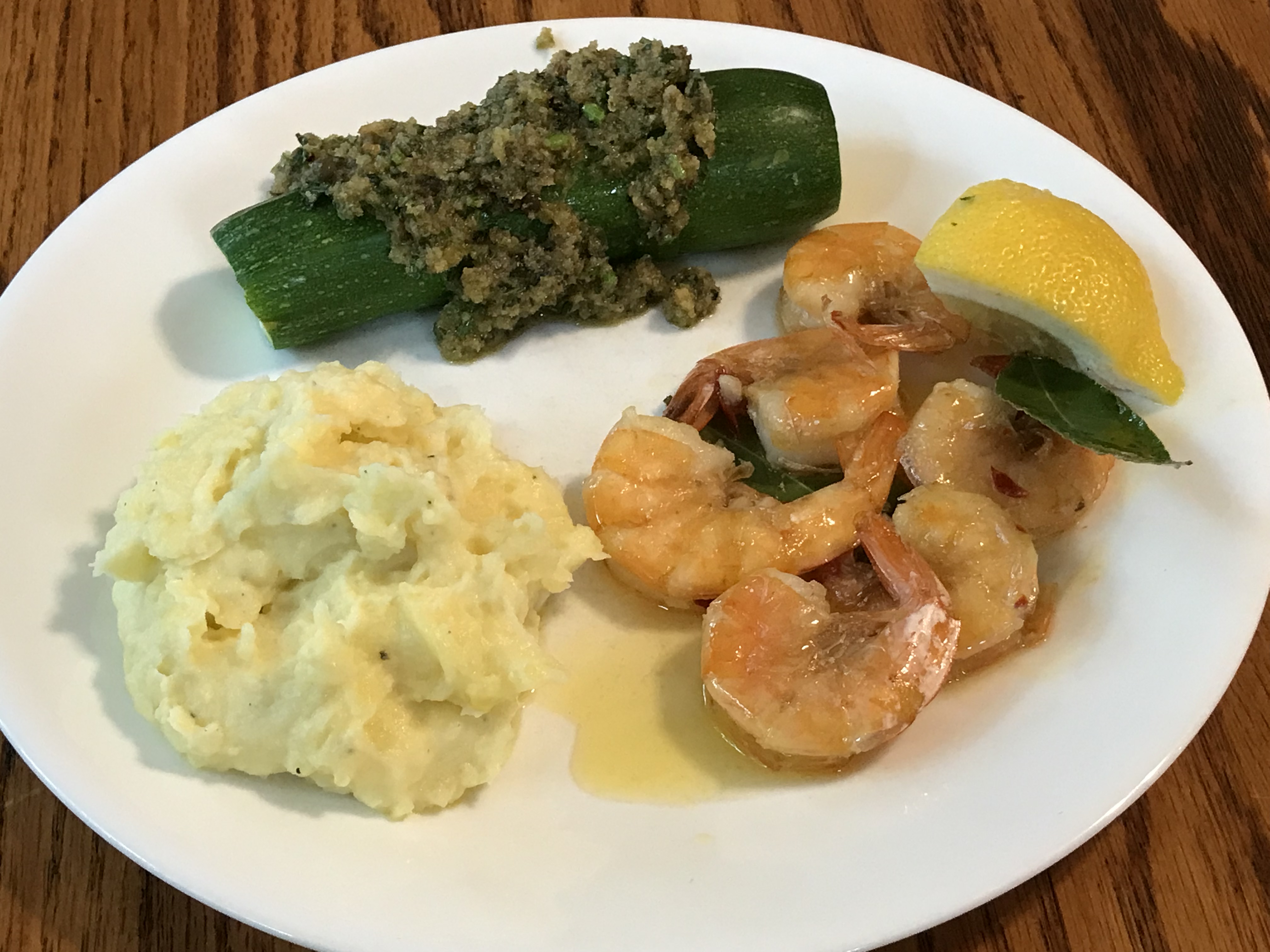
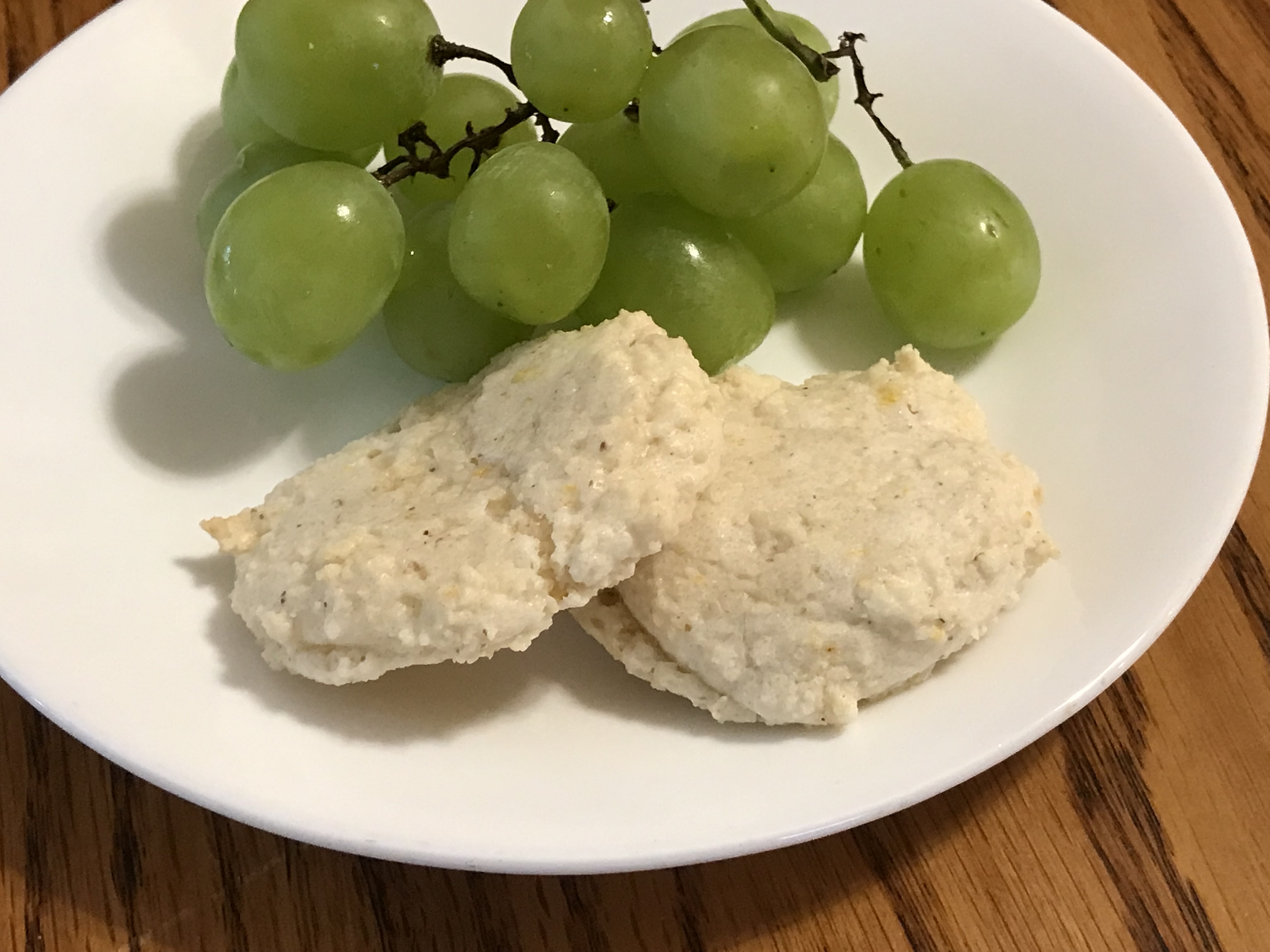
            Oysters have a complicated history. The Ancient Romans prized them and they are a luxury today, but for centuries they were peasant food. Perhaps this was because they were abundant by the coast and could not safely be transported inland as transportation networks broke down. Oysters did not become popular again until the Early Modern Era, with the exact date varying from place to place. As population rose and more oysters were eaten, they went from cheap protein, to mid-priced staple, to special treat, at least for some people. I’m not usually an oyster fan. They have an odd flavor and slimy texture, but baking them with bread crumbs was a significant improvement. The oysters tasted good, but were not spectacular. The shrimp was much better, with a nice garlic flavor and just a bit of spice.

            What’s interesting about this menu is how much it relies on ingredients originally from the Americas. The red pepper on the shrimp, potatoes, and zucchini were all part of the Columbian Exchange. While potatoes became much more important in Northern Europe, their high yields helped them achieve a place in Italian cuisine as well. Here they are whipped with olive oil, cream, and pecorino cheese. I wouldn’t have thought of putting olive oil in mashed potatoes or serving them with seafood, but the combination worked surprisingly well.

            Zucchini is everywhere is Italian cuisine. Exactly when it caught on is unclear, but since Europeans were already growing vine crops like melons and cucumbers when zucchini arrived from the Americas, it seems unlikely that there was much resistance. There is a joke in the US that you can’t leave your car unlocked in late summer or someone might put zucchini in it, which points to two of its virtues. It’s easy to grow and famously (or infamously) productive, hence the number of different recipes to use up the bounty.

            This is one of the more interesting recipes. The zucchini is simply boiled, but then it’s served with a sauce made from vinegar and oil, flavored with herbs and hot pepper flakes, and thickened with breadcrumbs. While the pepper flakes are a New World introduction, the sauce has a definite Medieval character. Most sauces at the time were strongly flavored with spices, herbs, and/or vinegar, contrasting with rather than complementing whatever they were served with. Because roux and flour were not yet used as thickeners, breadcrumbs filled that role, producing thicker sauces with much more texture. I was expecting a soggy sludge, but was pleasantly surprised. The flavor was the perfect balance for the neutral zucchini, and the thicker texture helped the sauce stay where it was supposed to rather than spill all over the plate.

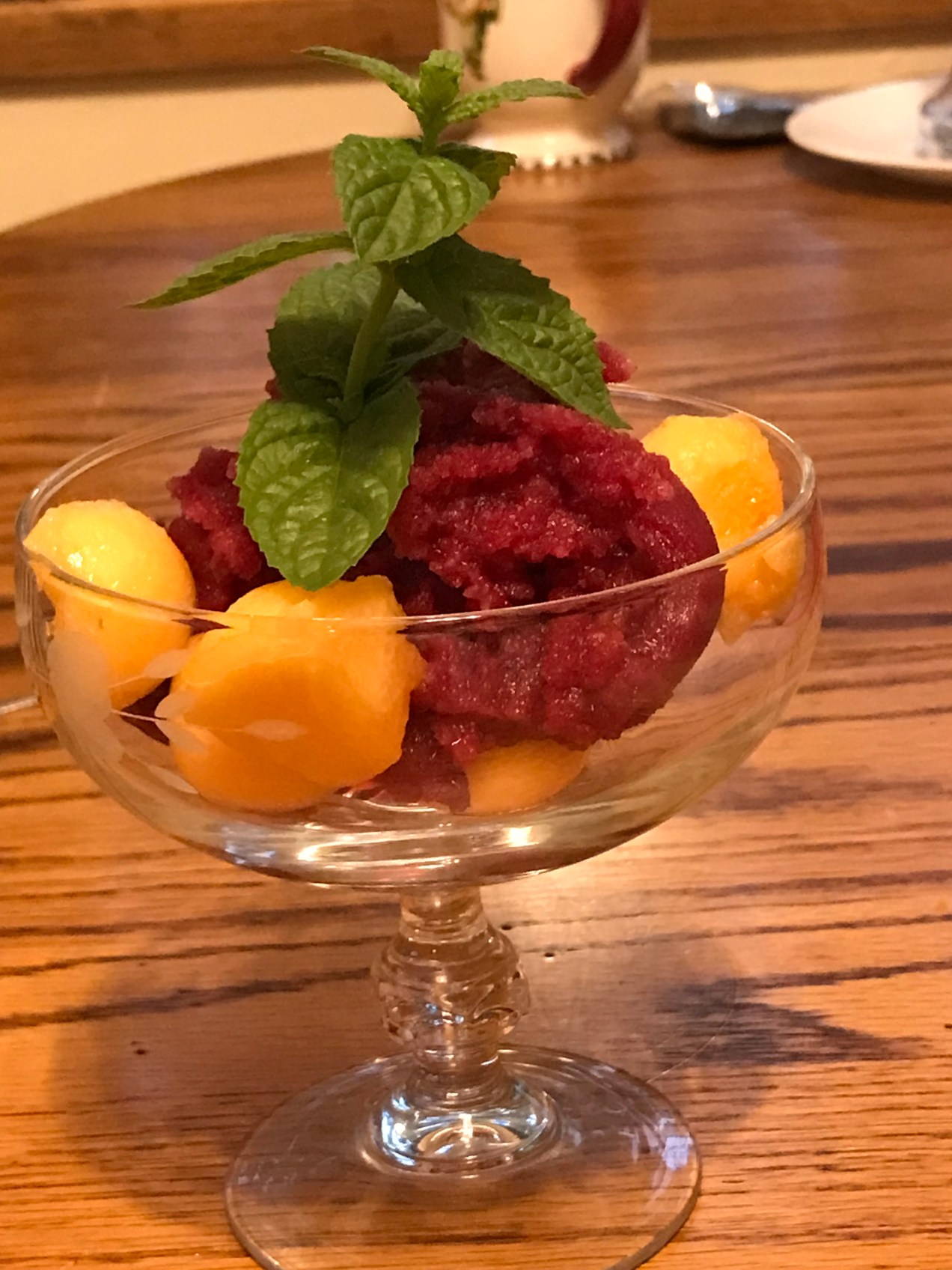
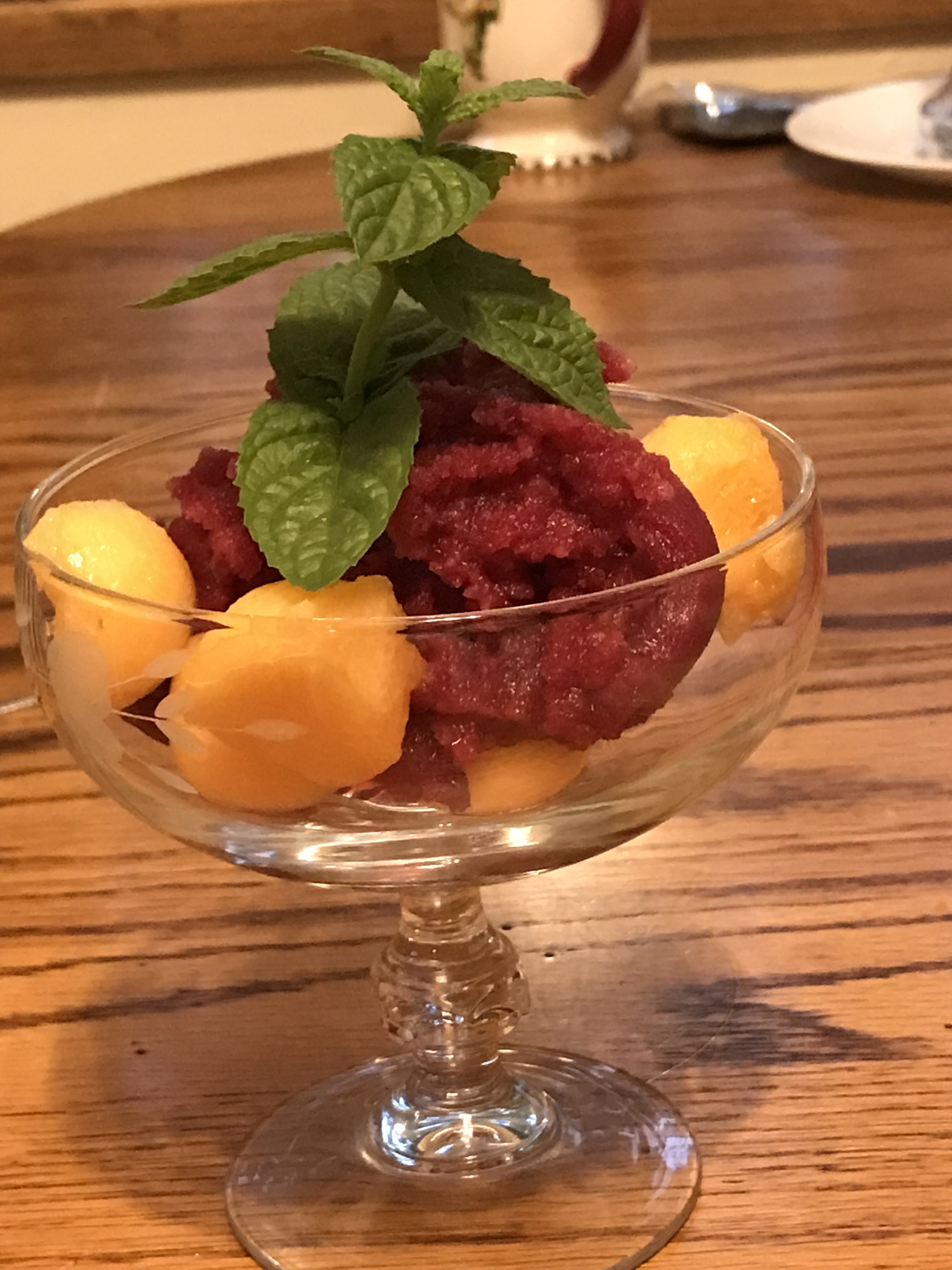
            For dessert was blueberry sorbet. I didn’t think that there were many blueberries in Southern Italy, but the recipe looked interesting and I was excited to try out my new ice cream maker. The flavor was unique and tasty, but what really stood out was the deep purple color. Just look how pretty it is.

Look at it!
Standard
Uncategorized

Cook’s Tour of Italy Menu 20 (Pgs. 72 – 74): Lunch for 6 at Home, Genoa

Region: Liguria/Piedmont

Menu: Genovese Squid Salad with Vegetables, Focaccia with Sage, Chocolate Mocha Ricotta Cheesecake

Recommended Wine: Cinque Terre

            Squid might seem like a strange salad ingredient, but various seafood salads are common in Genoa and the rest of Liguria. With hilly terrain and mountains close to the sea limiting grazing land, seafood has long been a staple in the Ligurian diet. One of the most elaborate preparations is a Christmas Eve specialty called cappon magro, or “lean capon.” At one time, Christmas Eve was a “lean” or meatless day, as was the rest of Advent. To compensate for the lack of meat, cooks for wealthy clients created numerous elaborate seafood dishes. Some of these specialties included “ham” made of salmon, “bacon” made with different colors of fish layered together, “game birds” made of spiced pike, and custard made with fish and almond milk.

            Liturgical fasting has a fascinating history. As Christianity spread around the Mediterranean, meat was more of a luxury than fish, so replacing meat with fish made sense. This changed once Christianity reached Northern Europe, especially inland regions, and over the centuries those who could afford to do so increasingly followed the letter of the law, but not its spirit. By the Late Middle Ages, what could be considered “fish” was truly mind-boggling.

            Considering whales and dolphins as fish was probably an honest mistake, but I’m not sure how the confusion persisted. Surely whoever was responsible for preparing them noticed that they lacked gills and had lungs like a cow or pig, but maybe animals were classified by where they lived rather than how they breathed. Other “fish” included beavers and barnacle geese, which were believed to come from barnacles instead of eggs, though this was doubted by many people, including at least one Pope. If you’re wondering, barnacle geese do hatch from eggs, but since they nest in the Arctic no Europeans saw the evidence until the 16th Century. By the time that confusion was cleared up, Spanish settlers in South America had decided that the capybara counted as a fish because it spends a lot of time in the water. Apparently, the fact that they look more like giant guinea pigs than fish was irrelevant.

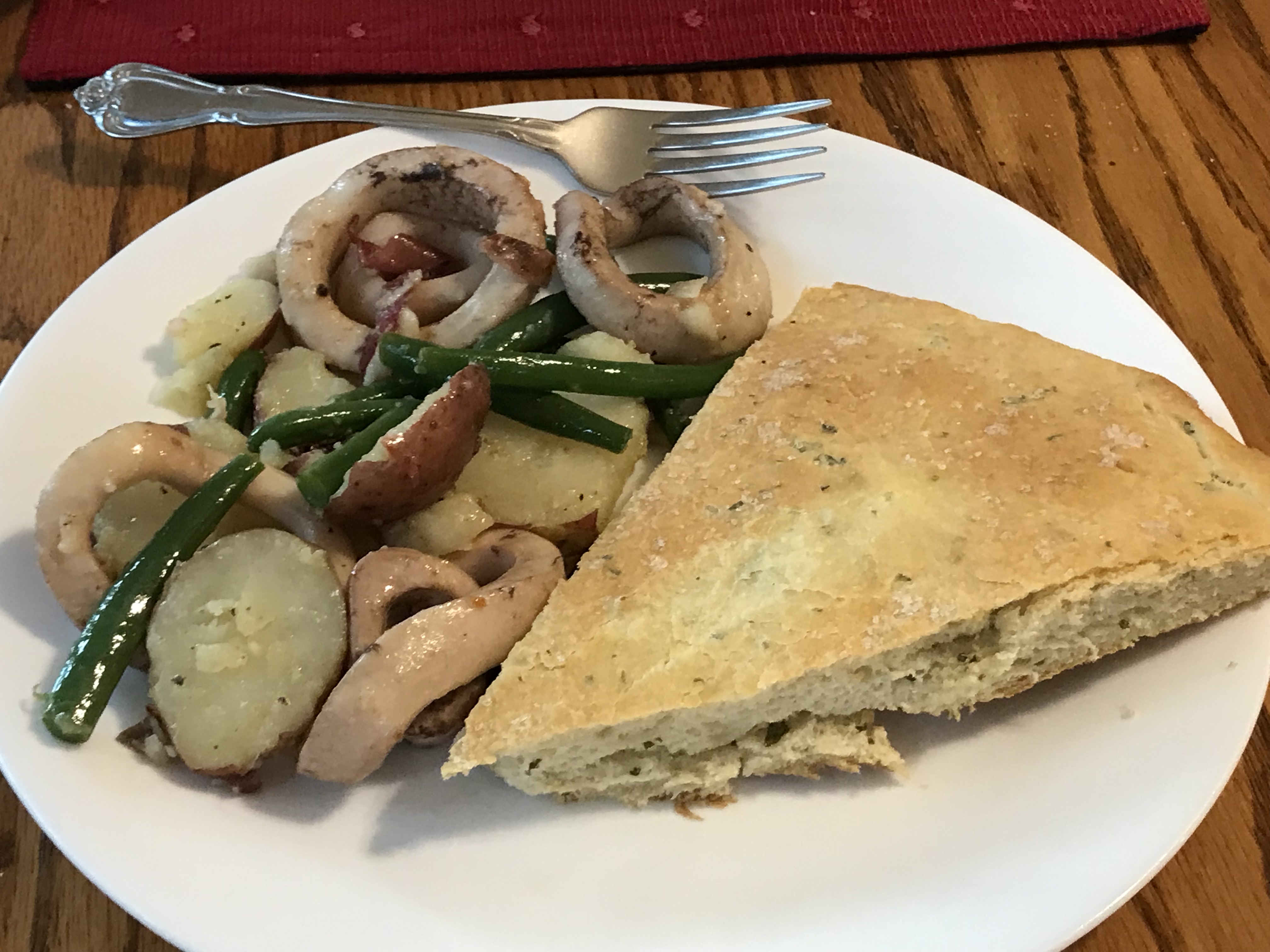
            There is no doubt, however, that squid counts as a fish. In this salad, it is baked, combined with potatoes, cooked vegetables, and a vinaigrette dressing, and served slightly warm. While the dish didn’t stand out like some that I’ve tried, it had a nice balance between protein, starch, and vegetable, none of the flavors overpowered the others, and the leftovers were almost as good cold the next day. And based on everything I’ve learned, the mix of seafood and fresh vegetables is very Ligurian.

            So is the focaccia, with lots of olive oil and herbs. Personally, I had some trouble with it. Despite following the recipe exactly, it wasn’t thick and spongy like what you find in the store and see on cooking shows. It was thinner and crispy, almost like a hand-tossed pizza crust. It still tasted great, but I couldn’t figure out what went wrong. Maybe the recipe is for a different variety of focaccia. With the number of bread varieties in Italy, that would not be surprising.

            I do know what went wrong with the cheesecake. The recipe called for a 6-inch springform pan, which I do not have. Rather than buy a new piece of equipment, I just used a regular springform pan, set the timer for less, and kept a close eye on the progress. It was good that I did, because even the shorter time was plenty. Many people would probably consider it overbaked, but it wasn’t burnt and I liked the firmer texture. The mocha flavor was excellent and it was a generally nice dessert.

Standard
Uncategorized

Cook’s Tour of Italy Menu 64 (Pgs. 204 – 207): Neapolitan Macaroni Menu

Region: Naples/Adriatic Coast

Menu: Penne with Pork Tomato Sauce, Sliced Pork, Carrots with Marsala, Romaine Watercress and Snow Peas with Lemon, Almond-Orange Meringue Cookies

Recommended Wine: Gragnano

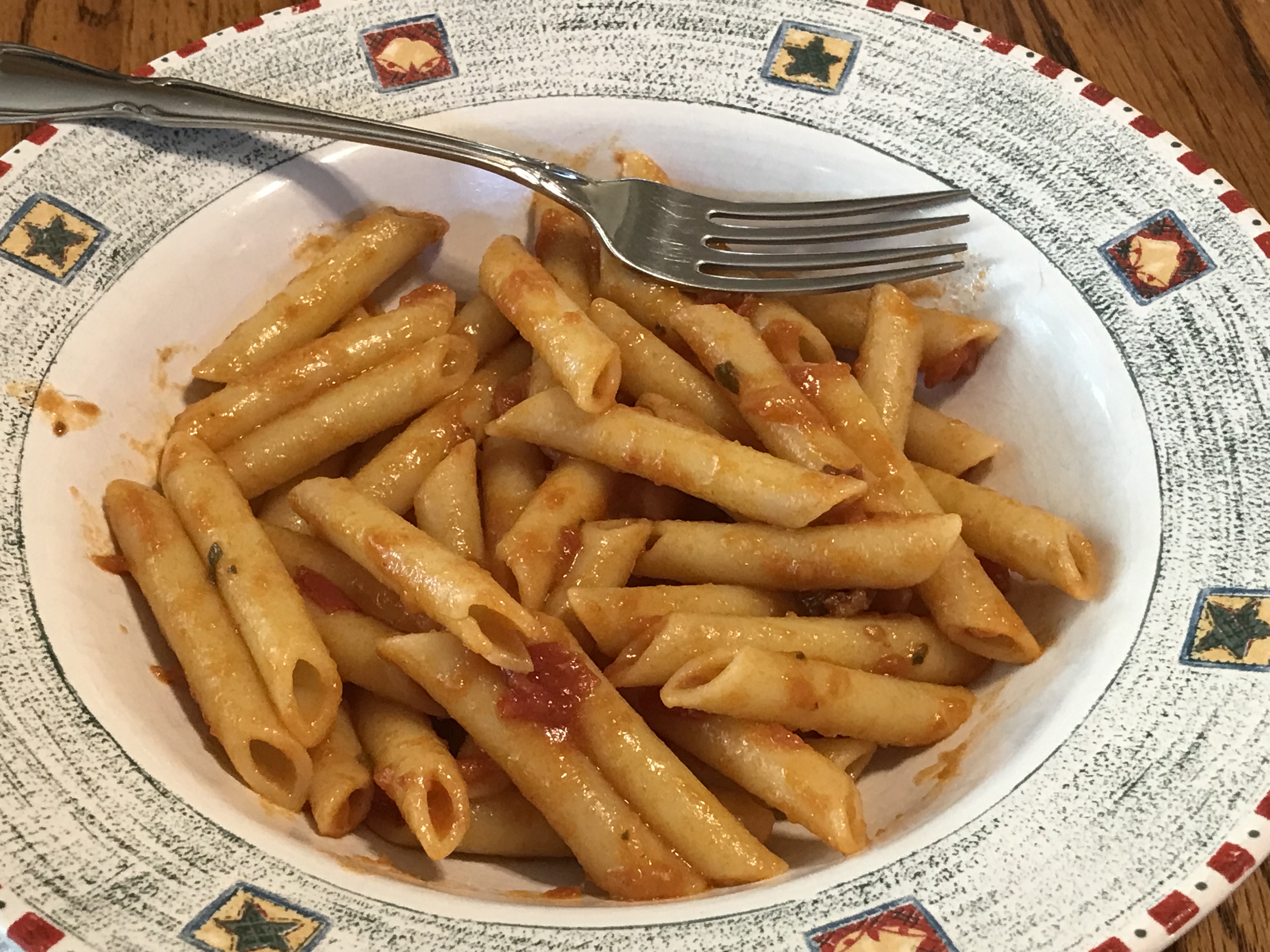
            Ragu, a rich sauce with tomatoes and meat, is popular all over Italy, but two main styles are most famous. The first, Bologna-style, is more of a meat sauce flavored with tomatoes and is popular across the North. The second, Neapolitan-style, is a tomato sauce flavored with meat, which is then served as a separate course. Variations of this second style are prevalent across the South, and here we have a basic version, flavored with pork shoulder. The difference in the two styles probably has to do with the fact that in the historically less affluent South, there was more incentive for diners to fill up on pasta before serving the meat.

            This brings up an important point about typical Italian meal structure. The number of courses included depends on if it is an everyday or celebratory meal, but they usually follow a specific sequence: antipasti (appetizers), primi (pasta, risotto, polenta, or another starch or soup), secondi (meat or fish) with contorni (vegetable sides), salad, fruit and cheese (the most typical dessert), and dolci (sweets). If meat or fish is included (it may or may not be), it is always served after the starch. Here we have pasta with the tomato sauce as a first course, sliced pork for the second with carrots as a side, followed by salad, then cookies.

            Humans and pigs have a fascinating history. First domesticated around 8000 BC, pigs quickly proved their value to early farming peoples. While they didn’t provide wool, surplus milk for human use, or pull plows, pigs mature quickly and breed much faster than sheep, goats, or cattle. This made them the most efficient source of meat, making up for their shortcomings in other regards. Plus, they could eat almost anything. Despite all this, pork taboos have been widespread across the Middle East for thousands of years.

            At first glance, this is baffling. After all, this is where pigs were first domesticated. People in the earliest Mesopotamian civilizations ate pork without issue. Evidence suggests it was fed to workers building the pyramids. But over time, more and more taboos appeared, particularly after 1000 BC. There were some complete prohibitions like in the Hebrew Bible. In other cases, pork was seen as an inferior food for those who couldn’t afford meat otherwise, or an unclean food that was fine for the common people but unfit for priests and nobles. At the same time in Europe, where pigs had been introduced, and in China, where they were domesticated independently, no such problems arose and pork continued to be eaten widely.

            There are a number of theories for this. One is that centuries of environmental damage in the Middle East reduced the area suitable for raising pigs. Another is that the introduction of chickens, which eat similar food, are small enough to eat at a single meal, and also produce eggs, made pigs unnecessary. Regardless, pigs remained essential in Europe, where they had plenty of woodland to forage in. Plus, in the cooler climate, preserving the meat as bacon, ham, or sausage was easier to do.

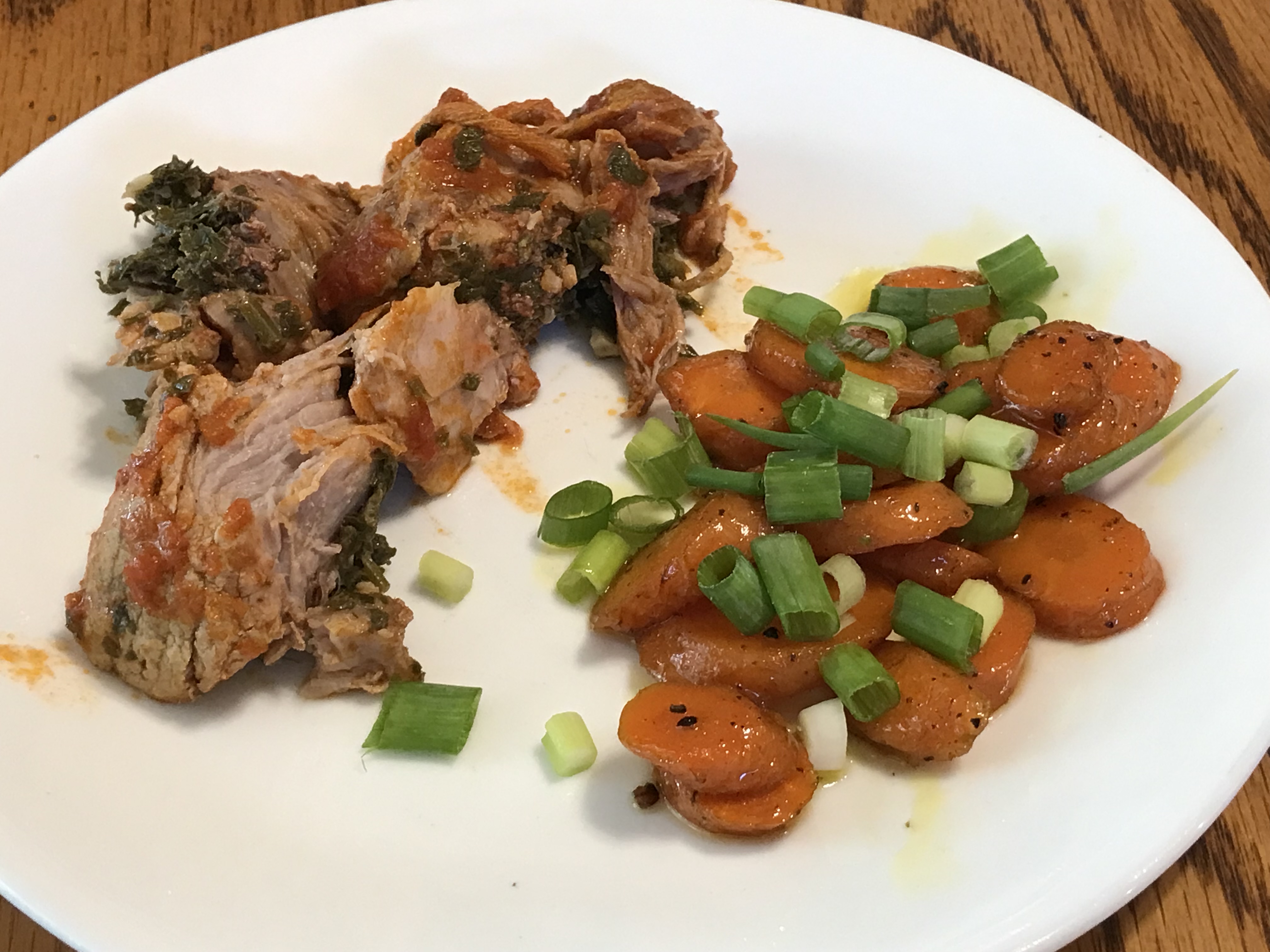
            In cuisines where meat is limited, pork often acts as much as a flavoring as a source of protein. Cured pork products are frequently used for this, but here fresh pork shoulder or butt is used. After the meat is cooked, it is kept warm while the sauce is eaten with the pasta. If serving pasta first is to encourage people to fill up before having any meat, this dish did its job. The pork flavor was clearly present and provided an incredible richness to the sauce. Saving room for the other courses took substantial willpower. As expected, the sliced pork that followed was excellent; very tender and flavorful.

            Carrots might seem surprising in an Italian menu, but they were eaten as far back as Ancient Rome, though they might not have been orange. New varieties were introduced from the east in the Middle Ages, though the story about the orange carrot being created by the Dutch to honor their ruling family in the 17th Century seems unlikely to be true. A drawing in a 6th Century manuscript clearly shows an orange carrot, though during the Renaissance white, yellow, red and purple carrots were also common. These other colors have recently regained popularity in a big way, even becoming trendy. Hopefully this particular trend sticks, as each of the varieties has a slightly different flavor, and they are just so pretty. But for this menu, we have regular orange carrots, cooked with a bit of sugar and marsala, and topped with minced scallions.

            Every now and then, there is a dish that makes me think “Whoa, I made this?” This was one of those dishes. The marsala worked a lot better with carrots than with oranges, and the sugar produced a lightly browned glaze, and everything worked together for an incredible depth of flavor. A sprinkling of scallions on top added a nice contrast in taste and color. Though made with affordable ingredients, these would fit right in on a fancy restaurant menu. The advantage of making them at home is that you can have a normal portion size, leftovers, and avoid the restaurant markup in cost.

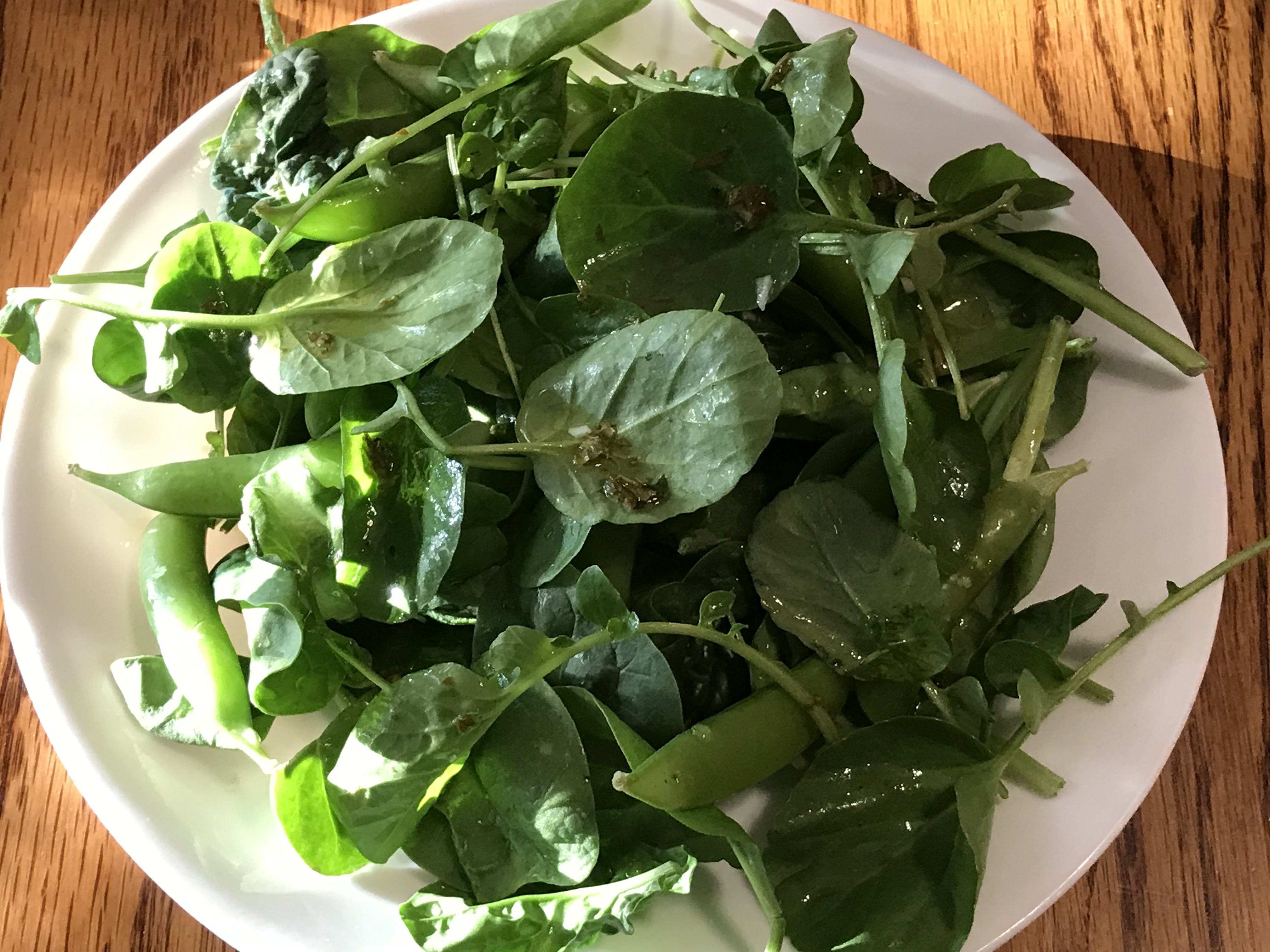
            Watercress and snow peas provided interesting contrasts for the salad; peppery for the watercress, sweet and crunchy for the snow peas. The dressing was a bit too sour, but in small quantities worked fine.

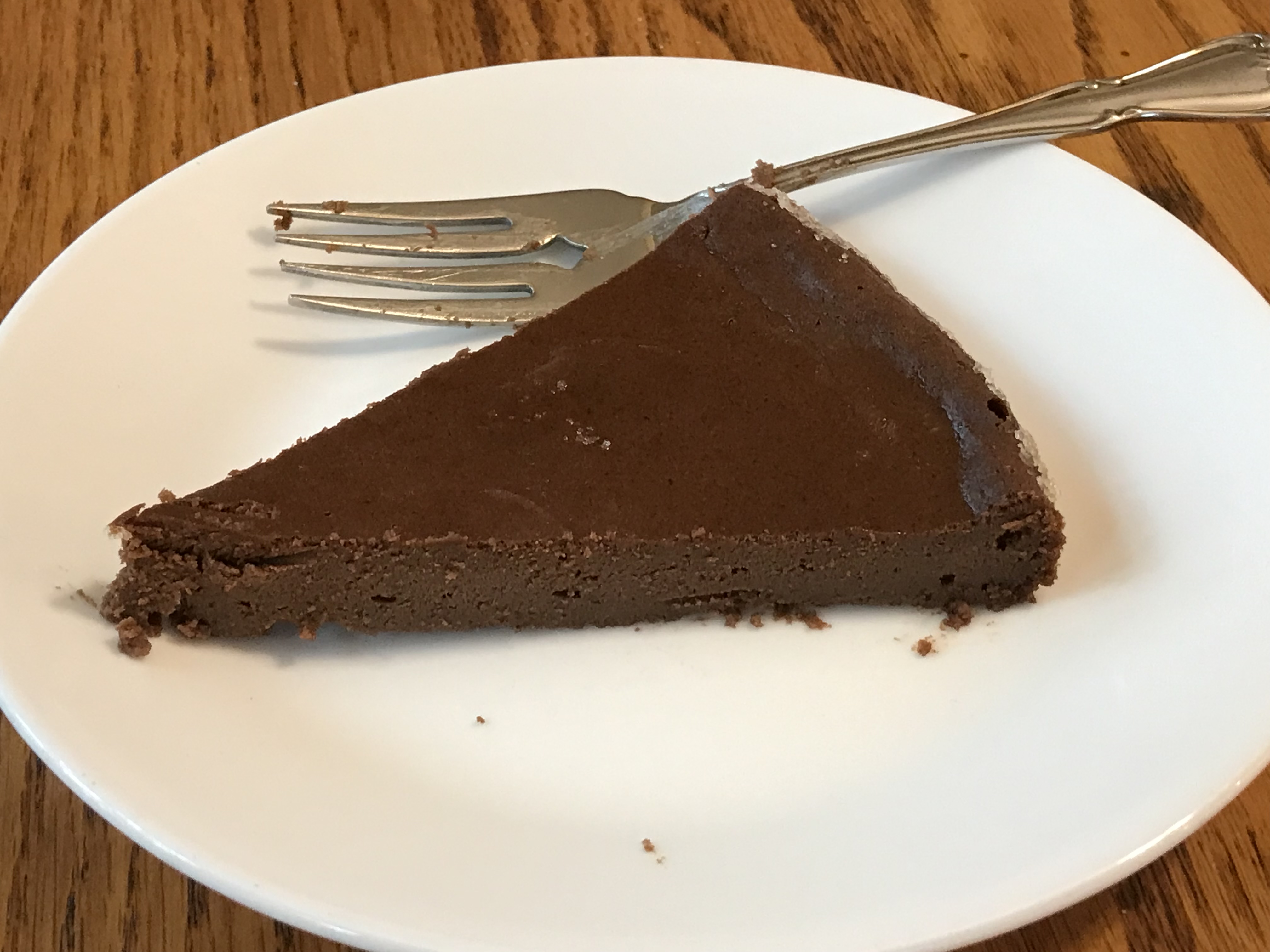
            The cookies were based on a meringue, which is a whipped mixture of sugar and egg whites. As pointed out in the book, these were sort of like the ricciarelli from Siena, with almonds and orange peel. They reminded me of macarons, with a crispy outside and chewy inside, though these were supposed to be crunchy. I suspect that humidity may have played a role in the texture not quite matching up, since meringue is known to be touchy on humid days. However they were supposed to turn out, they were delicious. Maybe I’ll tackle actual macarons at some point in the future.

Standard
Uncategorized

Cook’s Tour of Italy Menu 76 (Pgs. 235 – 238): Lunch in Potenza

Region: South Mainland/Islands (Basilicata)

Menu: Spaghetti with Ginger and Garlic, Chicory Salad Mimosa, Sliced Oranges with Marsala, Enriched and Crisped Vanilla-Almond Cookies

Recommended Wine: Calabrian Red Ciro

            South of Naples and Amalfi is Basilicata, one of Italy’s least known and least developed regions. Between the rugged terrain and often harsh taxation, life has historically been difficult here. The traditional diet includes pasta, vegetables, olive oil and fruit, all of which are featured here. In a nod to increasing prosperity in the area, this menu ends with buttery almond cookies.

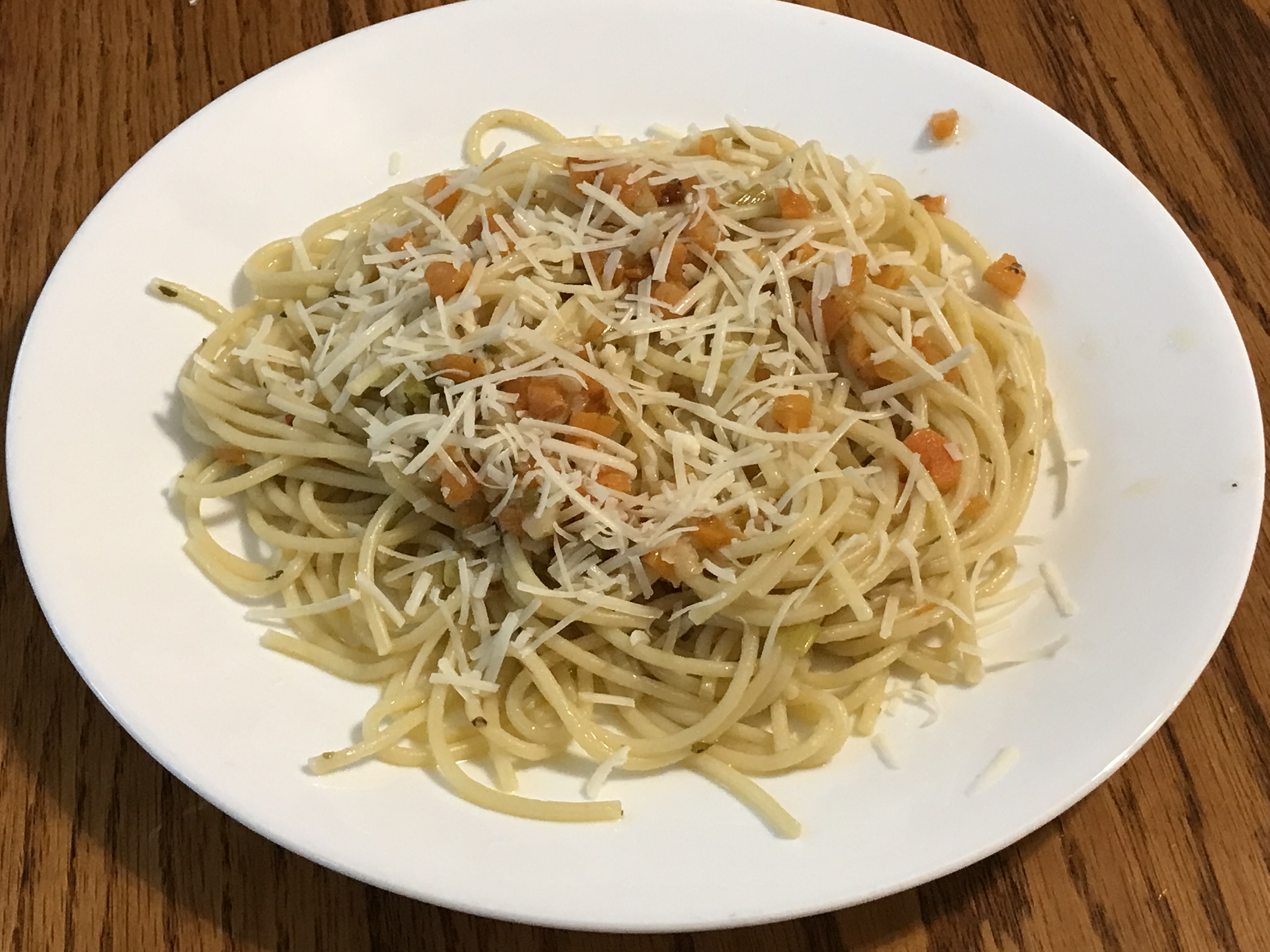
            Adding ginger to a pasta dish sounds strange at first, but it does give it an interesting flavor. Ginger and garlic work together to flavor the pasta, enhanced by oregano and hot pepper flakes, sweetened with carrots and vermouth, and enriched with olive oil, butter, and Romano cheese. The flavor was good, but the amount of water called for in the sauce made it very thin, causing it to pool at the bottom on the serving platter instead of sticking to the pasta. It was also a bit sweet from the vermouth.

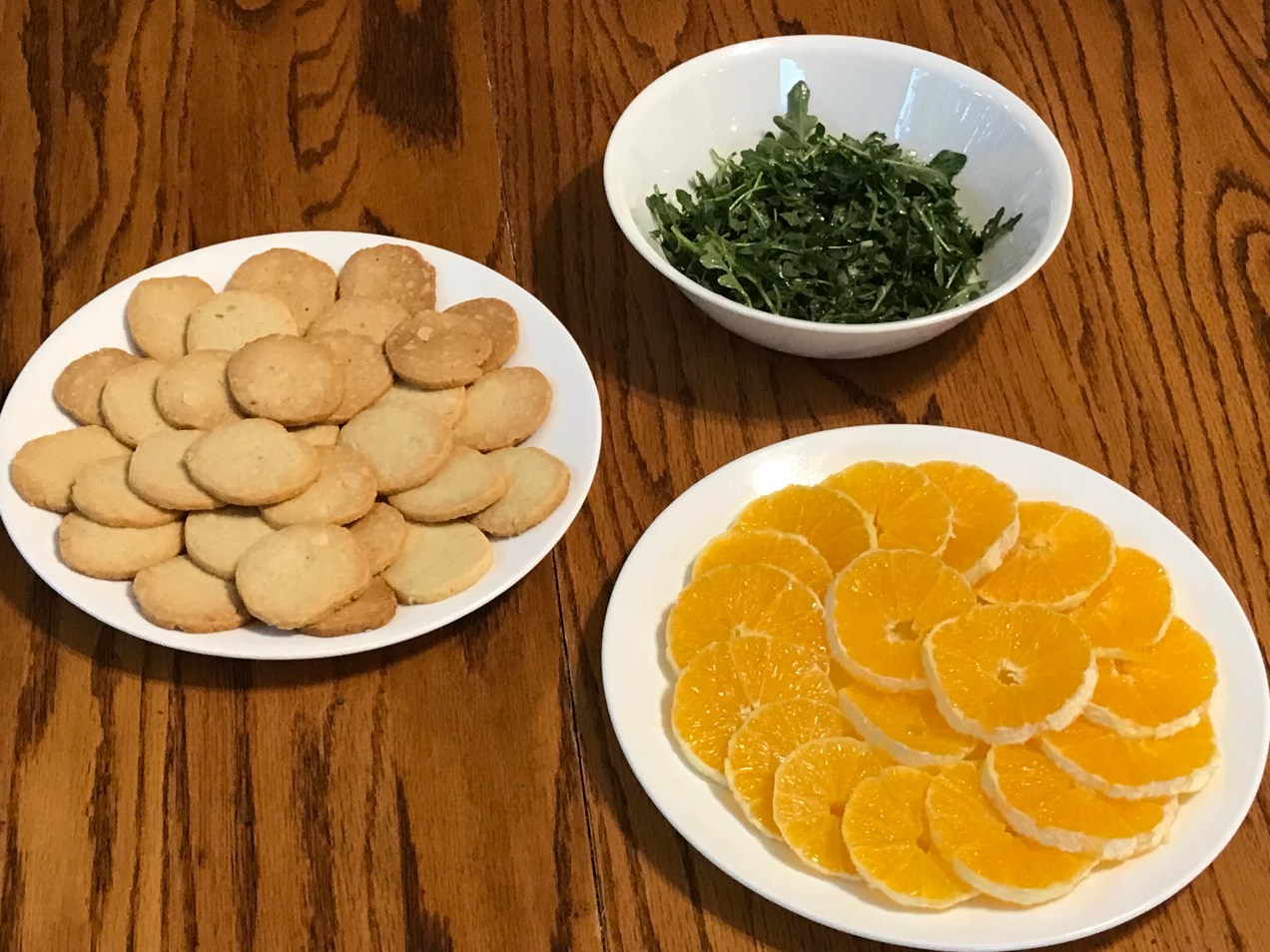
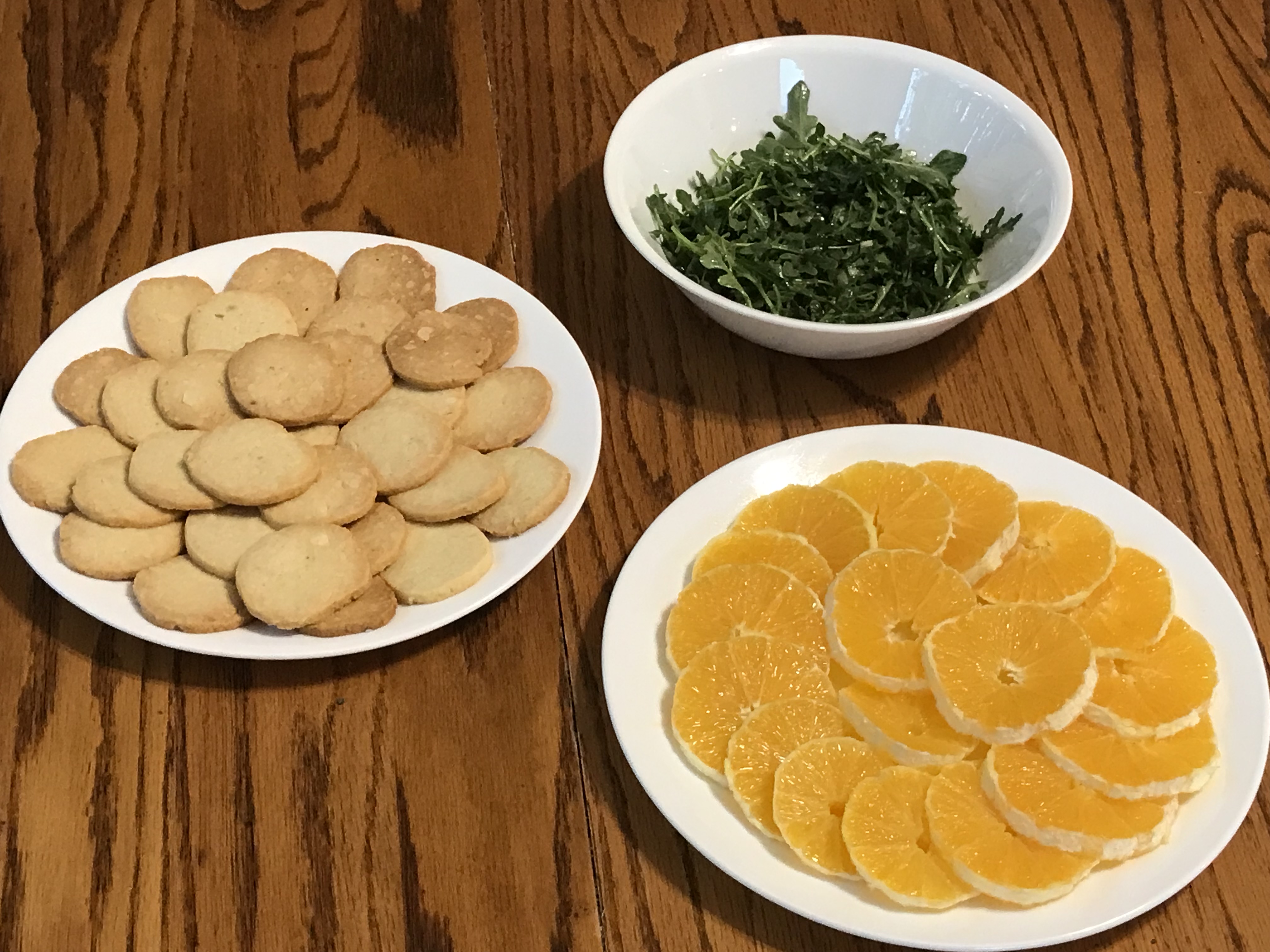
            The reason the salad is called “mimosa” is because of chopped hard-boiled egg yolks sprinkled over it. I omitted this here because of my dislike for hard-cooked eggs, particularly the yolks. I also substituted arugula for the chicory because it is not quite as bitter. The lemon juice dressing was still pretty sour, but it was a decent salad.

            Oranges grow all over southern Italy and are a popular dessert, especially in the winter. While they are often eaten plain, they can be embellished, as they are here with Marsala wine. Marsala is unique in that it is partially “cooked,” killing the yeast in the wine. As a result, it stays in good condition even after the bottle has been opened, at least for a while. This process also gives it a unique flavor. While I don’t drink much alcohol and am hardly a wine connoisseur, even I could pick out what seemed like briny and nutty flavors. Unfortunately, those flavors clashed with the oranges. A non-alcoholic experiment, with pineapple juice replacing the wine, was much better.

            Dessert had a slight glitch in the preparation. A buttery dough was rolled into logs, chilled, sliced, and baked on buttered baking sheets. That was all fine, but one thing I didn’t realize was that if the cookies weren’t removed from the sheets almost immediately after coming out of the oven they would stick. The first sheet of cookies ended up as a bunch of broken pieces. They were still delicious, but not exactly photo-worthy. The cookies from the second sheet were able to be removed intact, but an experiment a few days later with leftover dough proved that parchment paper worked better.

            Overall, this was a well-rounded menu, though I’m not sure if I’d make the pasta or salad again. The oranges and cookies, however, would be perfect for a Christmas spread. After the typically heavy main course and sides, the oranges would be a nice contrast; light and sweet with a bit of tartness. A little later, after everyone’s food has settled a bit, the cookies could be eaten with whatever other desserts are on offer.

Standard
Uncategorized

Taste of Normandy: Apples and Dairy

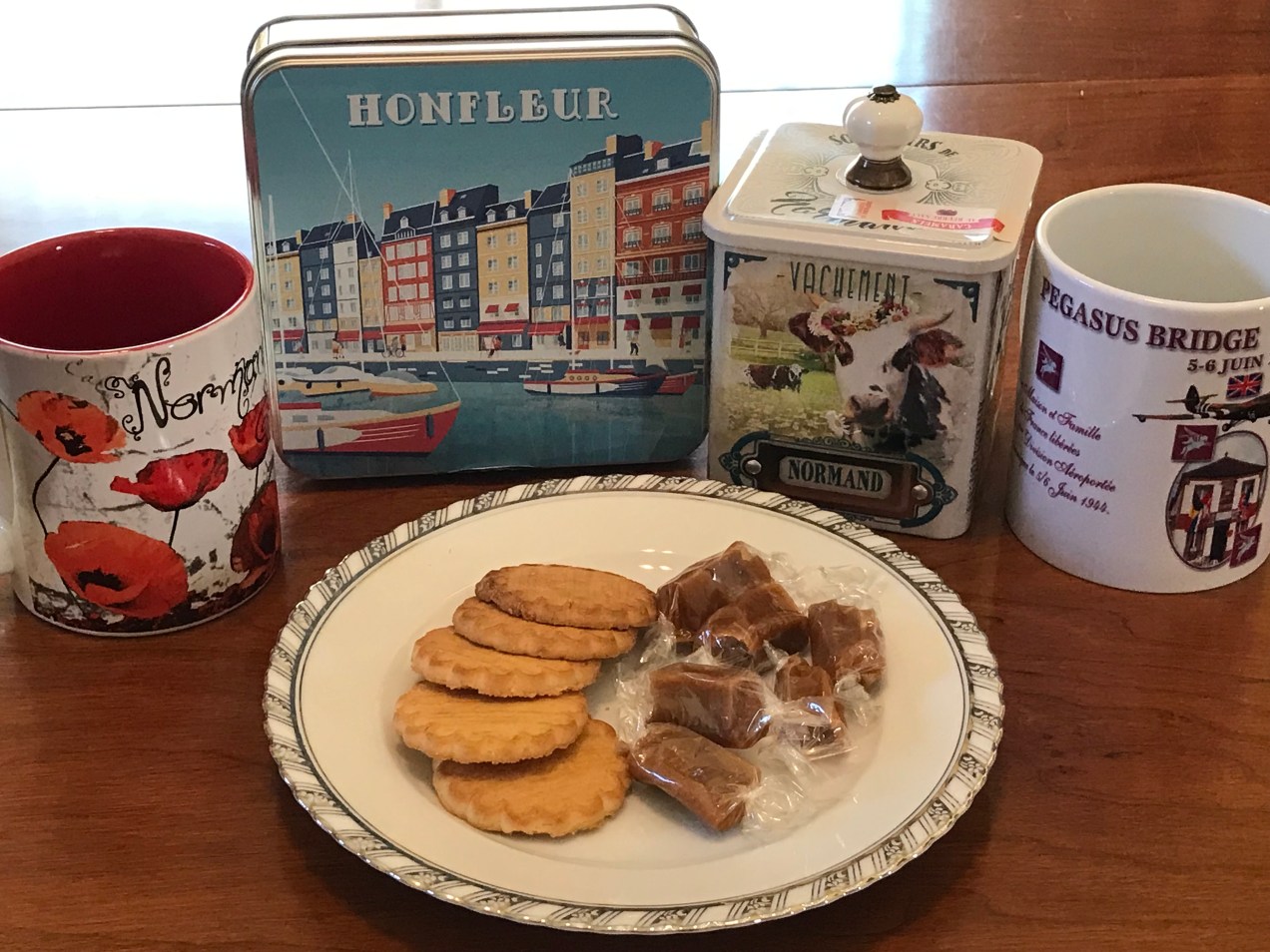
Butter cookies and salted butter caramels, souvenir tins and mugs

            Continuing from a previous post, let’s talk about apples. Actually, let’s talk about Normandy, then we’ll talk about apples. The history of Normandy starts out like that of the rest of France. Agriculture was introduced several thousand years ago, followed by bronze working and horses. At some point after 1000 BC, so was iron working. Celtic peoples arrived a few hundred years after that and came to dominate much of Central and Western Europe. By the time of Julius Caesar, modern France, which the Romans called Gaul, was covered by a patchwork of chiefdoms. While not yet literate, the people there were expert metalworkers, had a complex social hierarchy, and often lived in large towns. This was the world conquered by Julius Caesar in the 50s BC.

            After the initial conquest, the citizens of Gaul offered surprisingly little resistance to Roman rule. Most likely, the people saw certain benefits. The presence of the Roman army protected the frontier and stopped tribal warfare, reducing the chance of looting, slave raids, and destroyed harvests. Occasional heavy taxation probably seemed like a reasonable trade off. The Celts also had some things in common with the Romans. They spoke an Indo-European language and were farmers. The Romans introduced and spread new crops and built roads, which helped get those crops to market. Aqueducts provided water to the developing cities, and there were even water mills to grind grain into flour. Trade flourished, bringing wealth and new goods from across the Roman Empire and beyond. While not everyone benefitted equally and some suffered, most residents probably saw their standard of living rise.

            There was another benefit, too. Unlike the Greek city-states, the Roman Empire was generous with granting citizenship. If someone learned to speak Latin (or Greek, which was the language of the upper class in the East since the days of Alexander the Great three centuries earlier) and adopted Roman customs, they were considered Roman and could often get citizenship. Since they were not permanently trapped with the status of subjects, the Gauls had an incentive to cooperate with the Romans. Like other elites in the Western Empire, the upper classes in Gaul became Romanized. Gradually the Latin language spread down the social scale. By the time the Western Empire began to collapse in the 5th Century, the residents of modern France mostly spoke a dialect of Latin, considered themselves Roman, and were ready to defend the Empire.

            But it was not to be. First the Visigoths conquered much of Southern Gaul, along with most of modern Spain. Then the Franks moved in, pushing the Visigoths south and eventually controlling almost all of modern France, the Low Countries, and part of Germany. Over time, Frankish culture and language came to influence the dialect of Latin spoken, gradually giving rise to French. In fact, modern France takes its name from the Franks. Frankish influence was weaker in the South, where Latin evolved into Occitan, Provencal, and Gascon and the Roman way of life was able to continue for longer. By the time of Charlemagne in the late 8th Century, the Franks in the North were well on their way to becoming French.

            In Normandy the story has another twist. Starting in the 9th Century, as Charlemagne’s empire fractured, Vikings began attacking the coasts of the Frankish kingdoms. West Francia, which would become France (East Francia would become Germany, while Lothringia was a complicated situation I’ll get into in a later post), had it especially bad. Viking longships could sail up rivers and frequently raided the settlements along the Seine, which had prospered under Charlemagne and the other members of his dynasty, the Carolingians. At one point, even Paris was besieged. Eventually, the situation got so bad that the king granted one Viking leader land between Paris and the English Channel in exchange for help fending off other Vikings. While this could easily have backfired, it actually worked. Over time, the area became known as Normandy, from “Land of the Northmen.”

            The Vikings in Normandy quickly became Christian and learned to speak their own variety of French. The dukes of Normandy became powerful and often had a tense relationship with the French kings in Paris. In fact, in a book I picked up in France, I learned that 1) William the Conqueror didn’t consider himself French and hated them and 2) the Norman Conquest was not to the benefit of the French kings. Quite the opposite, in fact. Having one of their most powerful vassals become a king in his own right caused almost 400 years of headaches.

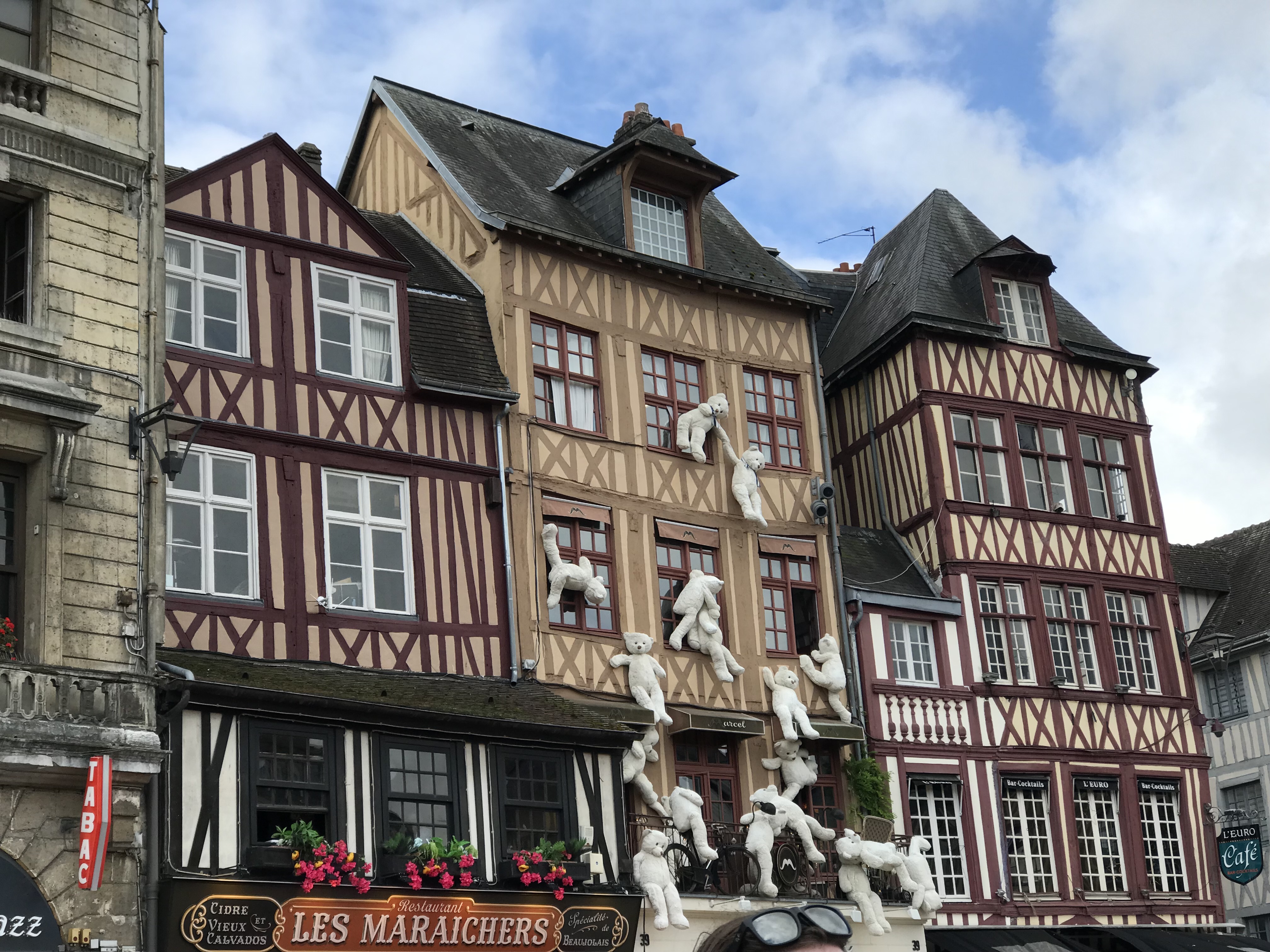
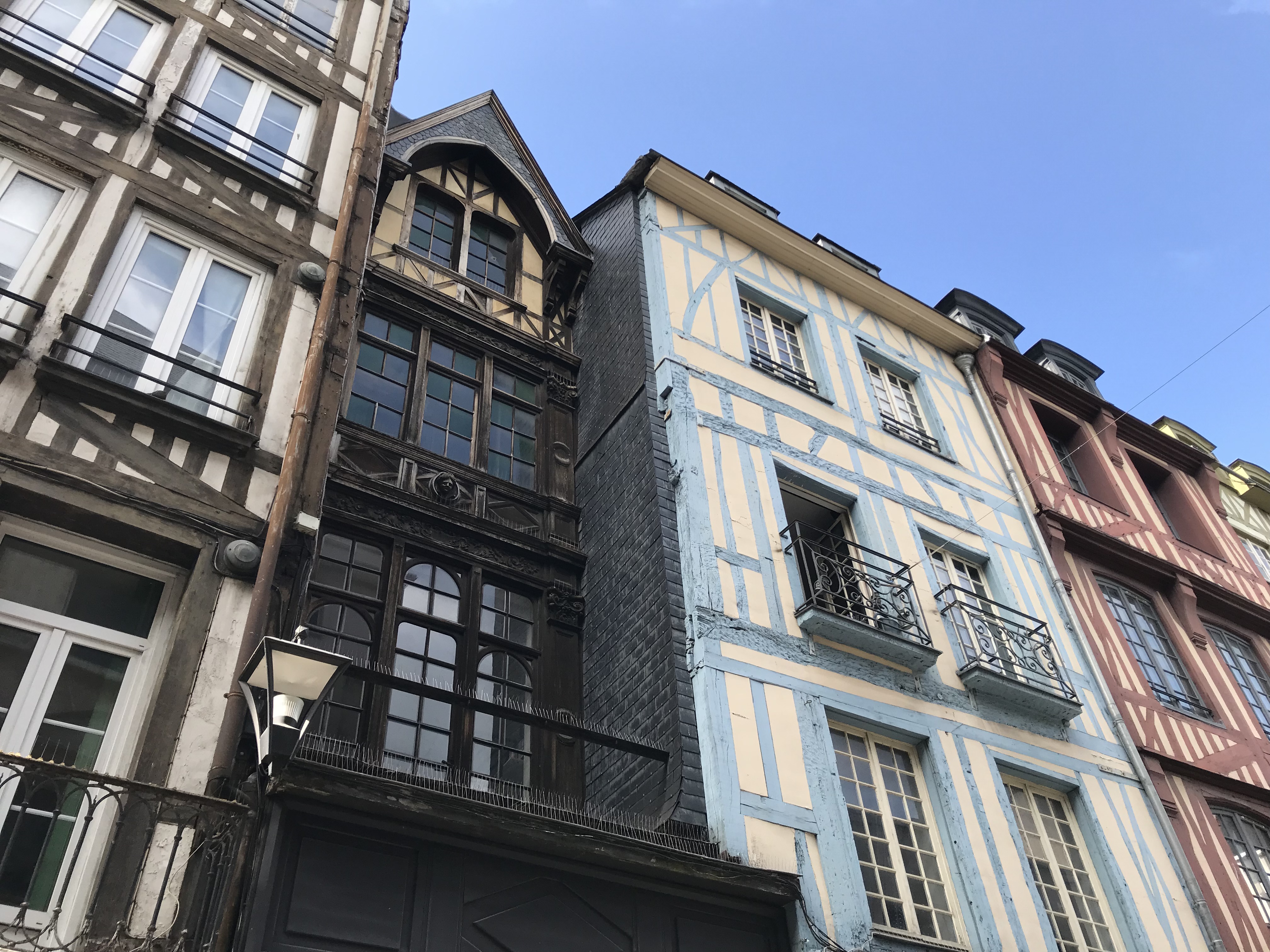
            I’ll go into the history of Normandy since the Hundred Years’ War in a later post, but until then, let’s consider the culture. While the Vikings were never a majority of the population and became mostly French, they left their mark on the region. In some places, particularly Rouen and Honfleur, there are many colorful timber-framed buildings that look like they belong in Amsterdam or Scandinavia. Part of this is due to the lack of quality building stone in Normandy, but the extra Germanic influence there is also a factor. As for the food, the terrain, climate, Celtic, and Germanic influences all favor dairy products and apples.

            Unlike the drier, hillier lands around the Mediterranean, the North European Plain is favorable for cattle. Most cultures that raise cattle make cheese to preserve the milk, but it seems to have been especially important here. In a climate with long, cold winters, storing food in preparation was essential. Along with smoked and salted meats, cheese was a useful source of protein that could be kept for months in a cool place. Salted butter could also be stored for much of the winter. While the Ancient Greeks and Romans saw butter as a “barbarian” food and considered cow’s milk cheeses inferior to those made with sheep’s and goat’s milk, Northern Europeans consumed both widely. The Vikings seem to have been particularly fond of their dairy products.

            For better or worse, humans have always enjoyed consuming alcohol. The specifics varied by culture and what was available to ferment. Beer was common in Mesopotamia and Egypt, with rich grain crops but too hot for most grape varieties. The Ancient Greeks, chronically short of land to grow grain but able to grow vines on hillsides and terraces, preferred wine so much that they considered beer drinkers barbarians. Other things that could get someone labeled a barbarian included drinking milk, drinking wine without mixing it with water, and speaking a language other than Greek. Mead was made anywhere honey was available. With few or no grape vines, Germanic and Celtic peoples drank beer and cider.

            The apple was historically king of fruits in Northern Europe. Celts in particular had a lot of mythology about apples and apple trees. One crucial benefit was that unbruised apples could be stored in a cool place over the winter. Their texture and flavor might suffer a bit, and a few would go bad, but most would remain edible. Pigs could be fattened up by scavenging the windfall apples, fertilizing the orchards in the process. And of course, the fruits were fermented to make cider. Even as new cultures evolved and rulers came and went, cider remained popular in Normandy and the British Isles.

Standard