

Also White Gazpacho (Ajo Blanco)
Source: 1000 Foods (pg. 260)
In early summer, I did not expect much from my tomato plants. There weren’t many blossoms, and I was losing a lot of the first tomatoes to blossom end rot. I still can’t figure out what was wrong. Later in the summer and into the fall the problem went away without me doing anything differently. Yields began increasing in August, and by the end of the month there were so many I didn’t know what to do with all of them. The plants kept yielding heavily until the first frost, even as they became stressed by shortening days.
One way to use up the tomatoes before they start attracting fruit flies is to make gazpacho. Interestingly, while we think of tomatoes as a central ingredient, gazpacho has been made since well before there were tomatoes in Spain. Some sources suggest that the Ancient Romans introduced a version based on stale bread, flavored with garlic, vinegar, and oil, and moistened with water as necessary. Until recently, bread and other grain products were the center of the diet in pretty much every culture. In the days before effective preservatives, bread would go stale in a day or two. You can observe this today with fresh bakery bread.
Exactly how the Ancient Romans revived their stale bread is not clear, but there are a few possibilities. They might have pounded the ingredients with a mortar and pestle to make a puree, or cut the bread into cubes to toss with the other ingredients. Maybe the bread was toasted first, maybe not. In the Middle Ages, a white pureed version based on almonds appeared. Today it is called ajo blanco (translates as “white garlic”) and is usually served with green grapes or slices of melon, interestingly enough. This might sound weird, but until Early Modern times there was no real distinction between “sweet” and “savory” dishes. The timing of this division varied from place to place, but appears to have been earlier in France than elsewhere in Europe.
At least in America, the sweet/savory divide is incomplete. Think of barbecue sauce, which is a combination of sour, spicy, and usually sweet. At Thanksgiving, turkey is served with sweet and sour cranberry sauce, often alongside a sweet potato casserole topped with marshmallows. Christmas and Easter hams are frequently glazed with honey or brown sugar. As dishes from cuisines that never made the distinction become more popular, the sweet/savory line appears to be blurring again, at least in some cases. Examples of this phenomenon include Chinese takeout with sweetened sauces, bacon with a sugary glaze, or desserts with crystals of sea salt. And honestly, the white gazpacho with melon was a surprisingly good combination. The texture was better with the melon, and the flavor seemed incomplete without it. Green grapes are another possible garnish.
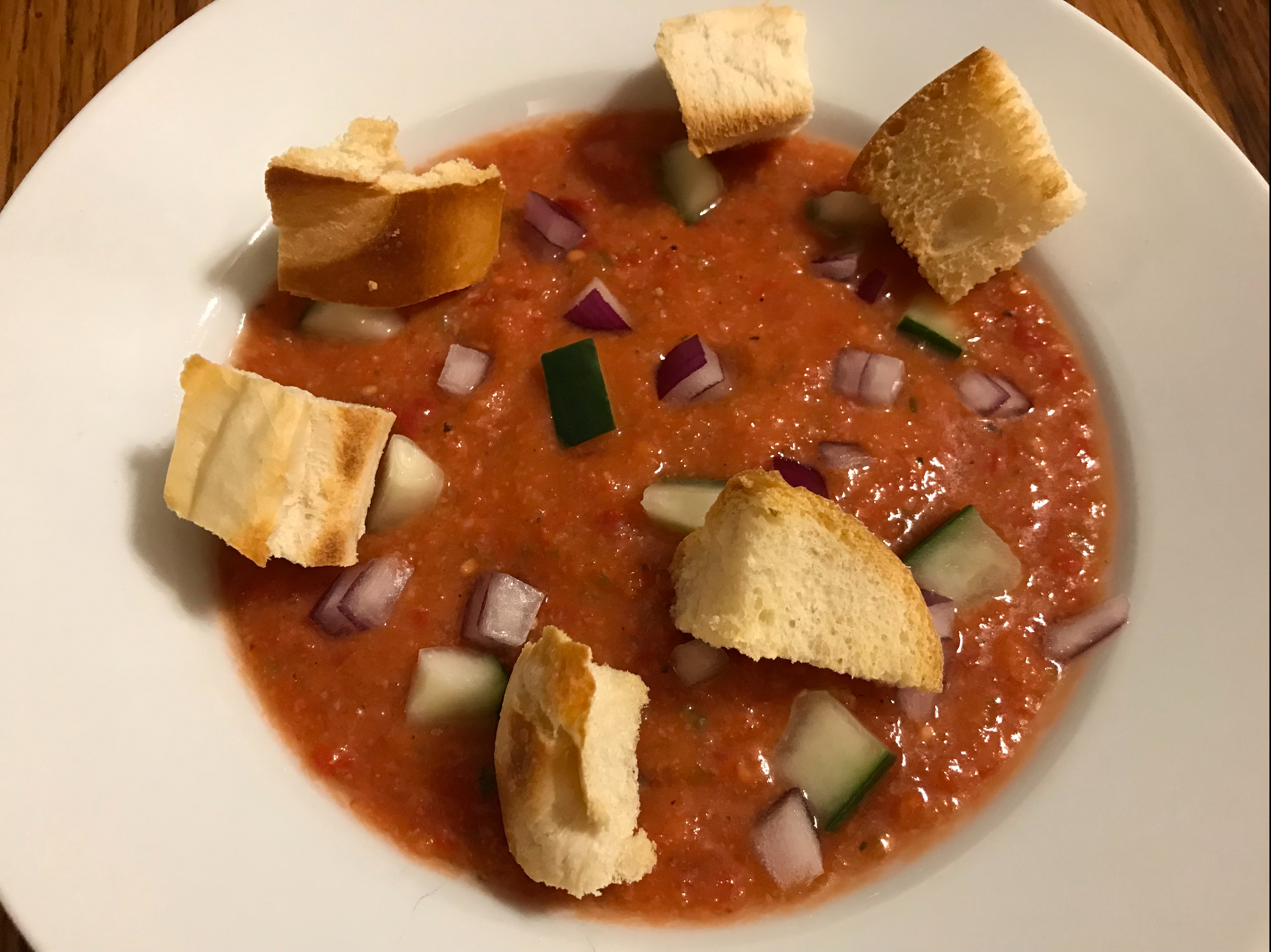
Spaniards first encountered tomatoes in Mexico and transplanted them to Europe. They grew very well in Spain and at some point in the next few centuries, people realized that they were not poisonous. In the southern region of Andalusia, they became an essential part of gazpacho. Ms. Sheraton indicates on pg. 260 that the earliest versions were a sort of salad with tomatoes, vegetables, and croutons, but today a pureed version is most common. It can be served in a bowl with chopped vegetables and croutons as a garnish. In Andalusia, where summer temperatures often surpass 100 degrees Fahrenheit, people often serve their gazpacho in a glass over ice cubes and drink it with a straw.
In theory, gazpacho is a good idea. It’s semi-filling but refreshing on hot summer days and is full of healthy vegetables. But I didn’t care for the red version. While I understand the appeal, I’m not a big fan of tomatoes on their own. The gazpacho tasted like pureed salsa in a bowl, and the texture was weird, even with the crunchy garnishes. But if I liked pureed soups, I probably would have enjoyed it.
 Feasting Through Time
I really enjoy tomatoes, either cooked or in a raw manner. I find I do not care for them broiled. I have tried cold soups, but I much prefer them warm. Maybe on a hot summer day, I would change my opinion.