

1000 Foods (pgs. 481, 485)
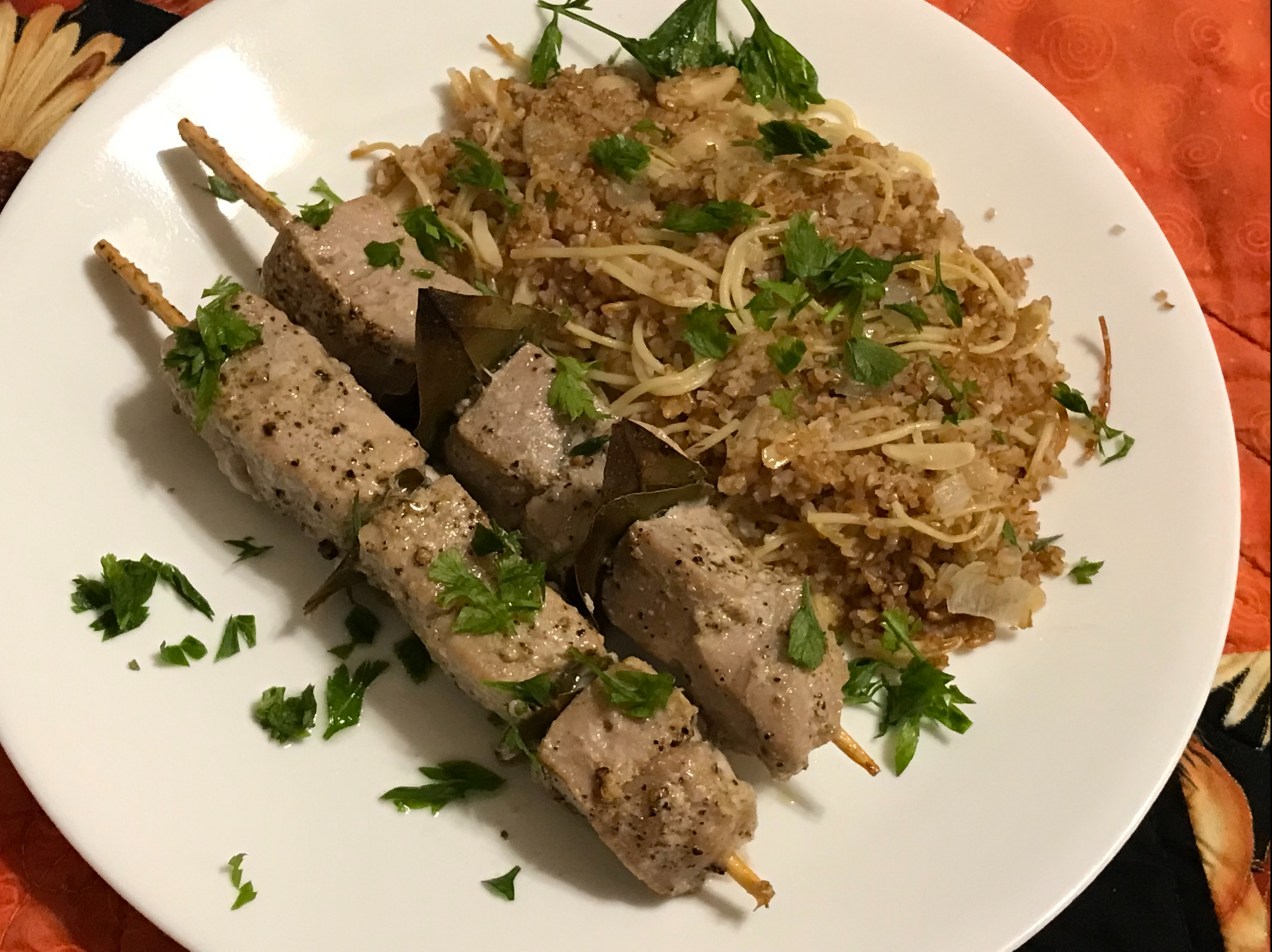
Venturing to the Middle East again, we have two Turkish specialties: kebabs and pilaf. Specifically, swordfish kebabs (tuna is used here, for a reason detailed below), and bulgur pilaf. The fish is marinated in olive oil and lemon juice and flavored simply with bay leaves, while the bulgur fills in for rice, adding some extra flavor and texture. Both dishes were easy to make. Due to rain, the kebabs were broiled instead of grilled. For the pilaf, just toast the bulgur in the skillet with butter, minced onion, and broken vermicelli (angel hair) pieces, then add broth to finish the cooking process. Both lamb or chicken are authentic options. Since I already had chicken soup base on hand and wasn’t about to make a lamb stock/broth, I used chicken broth. The end result was one of the best things I’ve made in a while.
For why this was an impromptu Turkish dinner, here’s the story. On a rainy Saturday, I was using up some of the herbs I’d brought in from outside. From my two basil plants, I made a big batch of pesto. After taking some to the neighbors, I took some downstairs to put in the deep freeze. When covered with a layer of oil, it can supposedly be kept for about a month. Upon opening the freezer, I noticed a strange, unpleasant smell. A bag of pulp from garden tomatoes wasn’t frozen, but it smelled fine. Then I realized that nothing in the top layer was frozen. The interior of the freezer was cool, but nowhere near where it was supposed to be, as evidenced by the fact that I could comfortably place my hand against the freezer wall. A quick look around revealed the problem. Somehow, the freezer cord had become unplugged from the extension cord, probably when some nearby bins holding decorations were moved around.
After plugging it back in, I had to figure out which items were salvageable. Since the temperature was still around refrigerator level, the number was higher than expected. The corn, strawberries, cherries, and jam from last summer were fine, and a large chunk of pork butt I’d gotten on sale was still mostly frozen. After pulling everything out, drying it off, and cleaning up the water that had gathered in the bottom, everything was handled. The source of the smell was most likely some leftover corned beef and cabbage. One lingering question was with some tuna skewers that had thawed out. Since they were in an unopened, vacuum-packed bag I decided that they were okay, but wanted to cook them that day.
After glancing through the recipes in both A Cook’s Tour of Italy and 1,000 Foods to Eat Before You Die, I settled on the Turkish fish kebabs. Swordfish is the traditional choice, but since the text suggests some alternatives if swordfish is unavailable, I subbed in the tuna. What’s special about this dish is that the fish is cooked with bay leaves on the skewers. This makes sense, since bay leaves grow abundantly in Turkey and their flavor complements pretty much anything. The dried variety can actually be used, as long as they are soaked in hot water to soften first. Since the kebabs are typically served with either rice or bulgur pilaf, this was a great opportunity to try out another recipe from the text. The best part of it was being able to turn a potential mini catastrophe into a thoroughly enjoyable dinner.
 Feasting Through Time