
1000 Foods (pgs. 328 – 329)
Austrian Emperor Franz Joseph had an eventful and often tragic life. He ascended the throne at 18 in 1848, a year of revolutions across Europe. The emperor at the time was his uncle Ferdinand, who suffered from various health issues, probably as a result of Habsburg inbreeding. Although revolution was quickly suppressed in Austria, there were concerns about his ability to handle any future unrest. Supposedly, when told that the people were revolting, he asked an advisor “are they allowed to do that?” Emperor Ferdinand was persuaded to abdicate, and since he was childless, Franz Joseph became emperor, with his mother Sophie of Bavaria acting as the power behind the throne.
Between industrialization, continuing political unrest, a disastrous war with Prussia, the rise of anarchism, rising tensions in the Balkans, and eventually WWI, Franz Joseph had a lot to deal with during his reign. In 1889, his only son died in a murder-suicide with his mistress. Nine years later, his wife, the famously beautiful Empress “Sisi,” was fatally stabbed by an anarchist. In 1914, his heir Franz Ferdinand (nephew, I believe) was assassinated in Sarajevo, starting WWI. With all the stress ruling must have involved, it’s no wonder former Emperor Ferdinand’s health improved during his retirement in Prague.
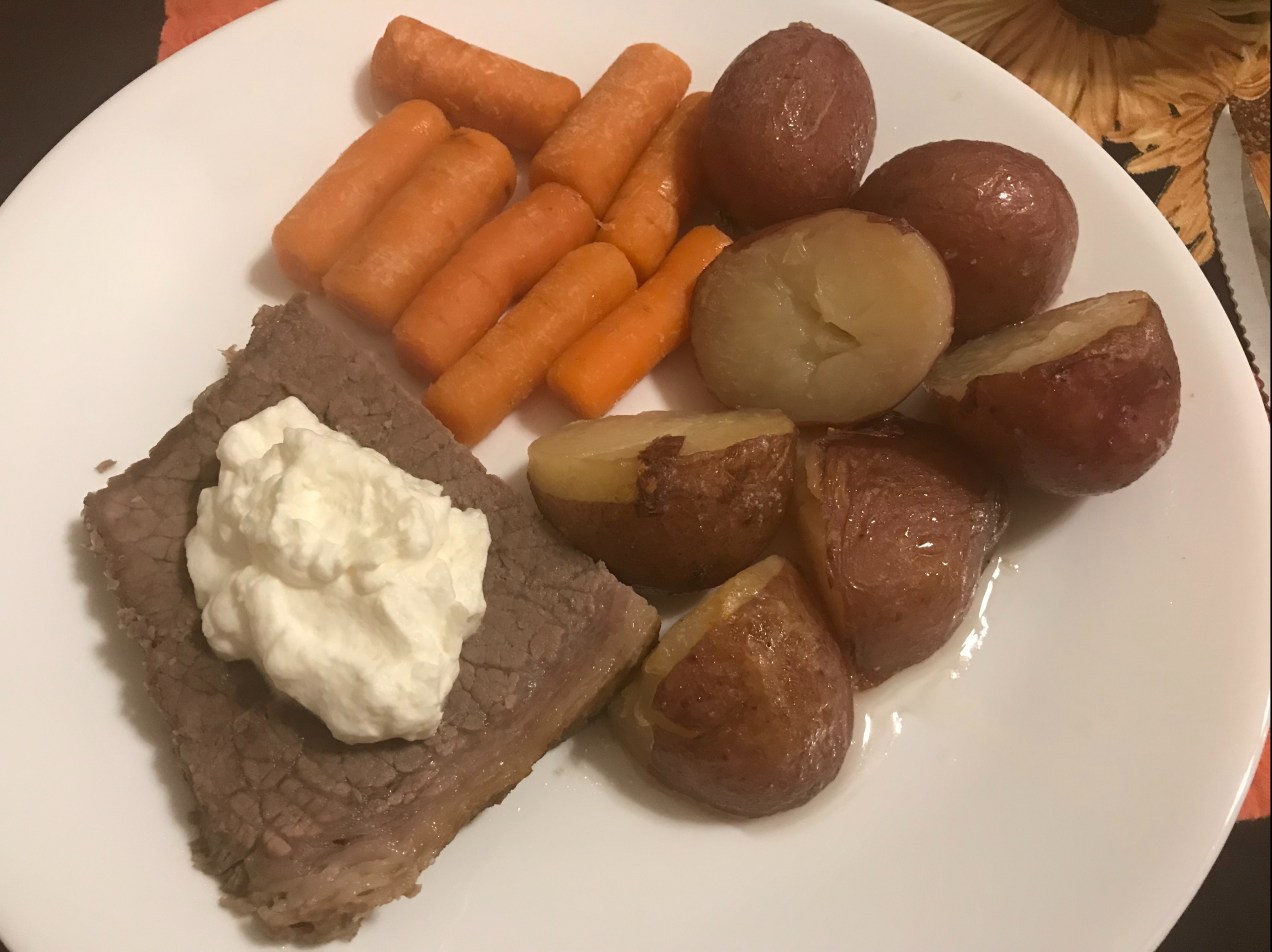
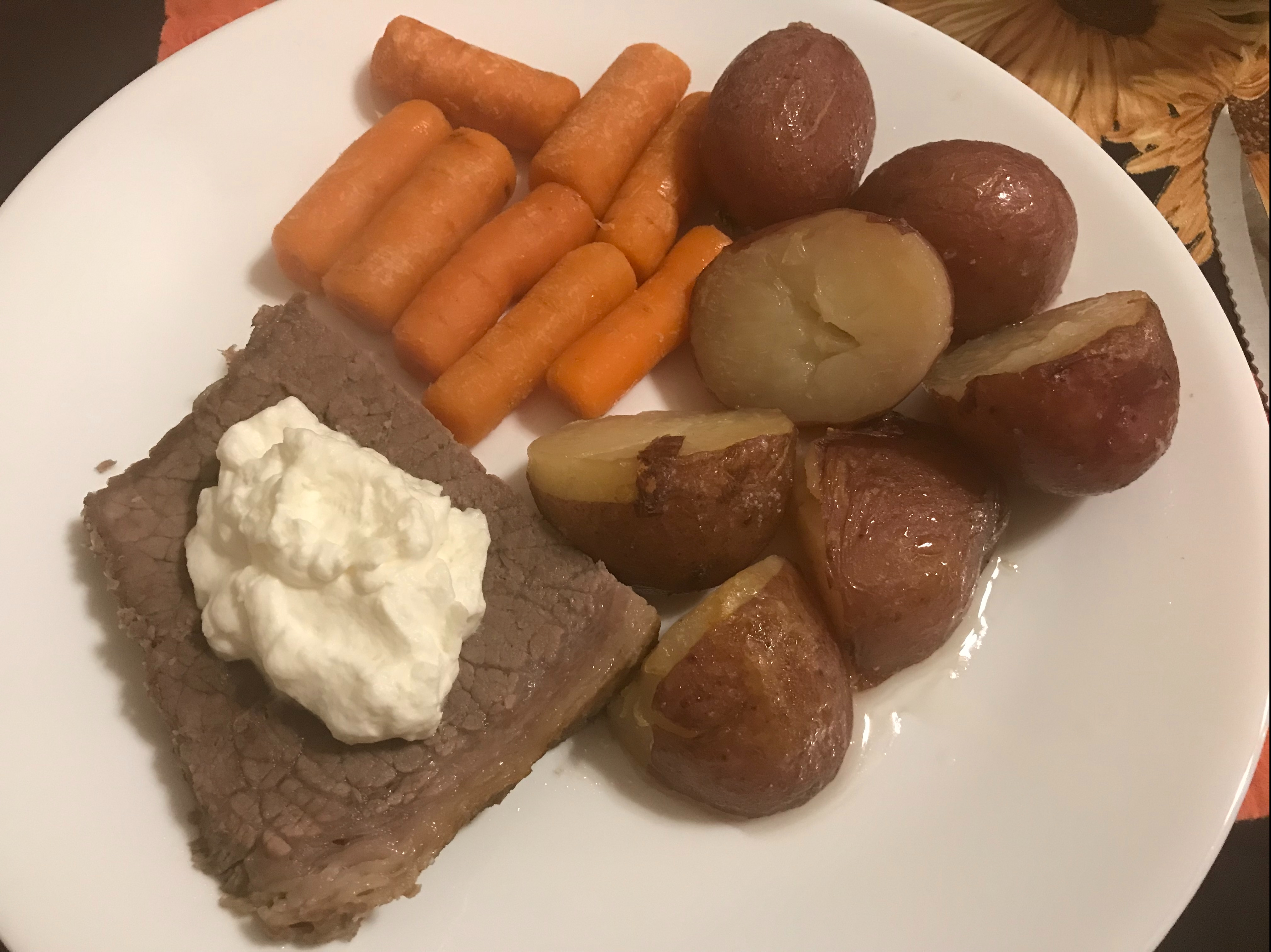
Perhaps all the stress and heartbreak he endured drove Franz Joseph to comfort foods. One of his favorites was tafelspitz. A large piece of beef is slowly braised with root vegetables, tenderizing the meat and producing a rich consommé. Constant skimming is supposed to ensure a clear bouillon to serve in cups as a first course. The beef is then served with potatoes, vegetables, and some form of a horseradish sauce. I oven-roasted some leftover red potatoes with oil and salt to crisp them up and added fresh carrots, cooked in a bit of broth, to the plate (the braising vegetables get too soft for serving). Other options might include braised onions or leeks, or pickled beets. I followed the recommendation to mix the horseradish with unsweetened whipped cream, adding grated apples to half, chives to the other half. Either is typical, as is plain horseradish.
Things did not go according to plan. Despite frequent skimming, the broth was not as clear as it was supposed to be, but that was a minor issue. It was also somewhat bland, though definitely not bad. The much bigger problem was the beef. I used a piece of chuck, which is common for tafelspitz, and slowly simmered it, which is supposed to make it tender. This didn’t work at all. The beef was extremely tough, almost like leather, and was even difficult to cut. I’m not sure what went wrong. Was the water too close to a boil? Did it need more cooking time? Whatever the problem was, slicing and simmering the meat again didn’t help much. Even without the texture issue, the flavor was a bit boring. The horseradish cream sauce was good, but it didn’t help the beef much. Exactly why the emperor loved tafelspitz so much is still a mystery.
I hadn’t expected this, but I was prepared. Temperatures were dropping rapidly and respiratory illnesses were spreading, so I already had plans to make beef mushroom barley soup with the leftovers. With less eaten on the first night, there was extra meat and broth for a bigger batch of soup. Three or four meals for two people, as it turned out, so it wasn’t all bad.
If you like this blog, please consider making a donation to help the fun continue.
Make a one-time donation
Make a monthly donation
Make a yearly donation
Choose an amount
Or enter a custom amount
Your contribution is appreciated.
Your contribution is appreciated.
Your contribution is appreciated.
DonateDonate monthlyDonate yearly Feasting Through Time
Elizabeth, I have asked a family member that cooks Jewish foods, if she has any suggestions about this dish. She is a descendant from my father’s line of the family.