

Region: Naples/Adriatic South
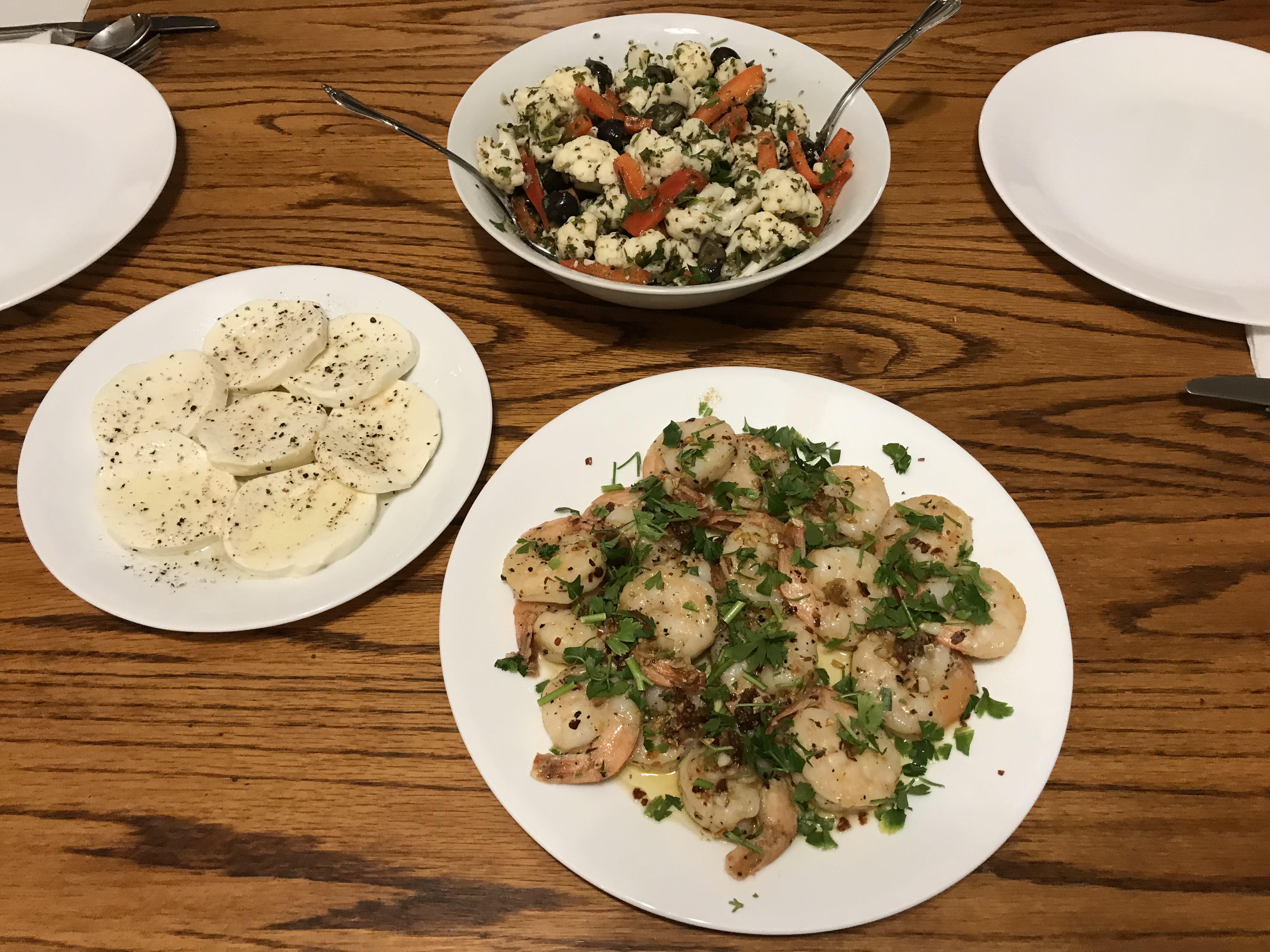
Menu: Seasoned Fresh Mozzarella, Peppery Shrimp 1-2-3, Neapolitan Cauliflower Salad, Spaghettini with Clams, Carrots, and Wine, Fish Filets Neapolitan Fishermen’s Style, Spinach with Oil and Lemon, Hearts of Escarole with Red Pepper Confetti, Panettone Bread Pudding
Recommended Wine: Capri or Sicilian dry white
Anywhere Christmas is celebrated, it is an occasion for feasting. Medieval Europeans loved a whole roasted boar with an apple in its mouth and hot spiced beer and wine. Gingerbread and other sweets were banquet treats in Elizabethan England, especially at Christmastime. Victorians liked roast beef, goose, or turkey, with plum pudding, mince pies, oranges, and nuts. In modern Australia, where Christmas is in the summer, holding a barbecue is popular. Exactly what people eat depends on personal preferences and cultural traditions, but the important thing is sharing it with loved ones.
In many places, including parts of Italy, the biggest feast is on Christmas Eve. This is interesting, because at one time, people fasted during Advent. There would be a simple meatless meal on Christmas Eve, people would go to midnight mass, then on Christmas Day enjoy eating lots of meat after a month of abstaining. Over time, the Christmas Eve meal became more elaborate. Eventually, in the area around Naples, it became the Feast of the Seven Fishes, supposedly for the seven sacraments. In some cases, it would even be twelve, for the twelve Apostles. To make things more complicated, the seven (or twelve) types of fish had to be in different dishes. A soup or salad with multiple varieties could only count as one dish.
To make everything easier to cook and eat, Mr. Famularo reduces the number of seafood dishes to three. This could be for the Trinity (text, pg. 198), but regardless, three “fishes,” plus all the other dishes in the menu, were a big enough challenge. The cauliflower salad could be made ahead of time, ingredients could be prepared, and the bread pudding assembled and left to soak up the custard, but a lot of last-minute prep was unavoidable. To make things easier, I split things up and made the fish filets and escarole salad on a second night.
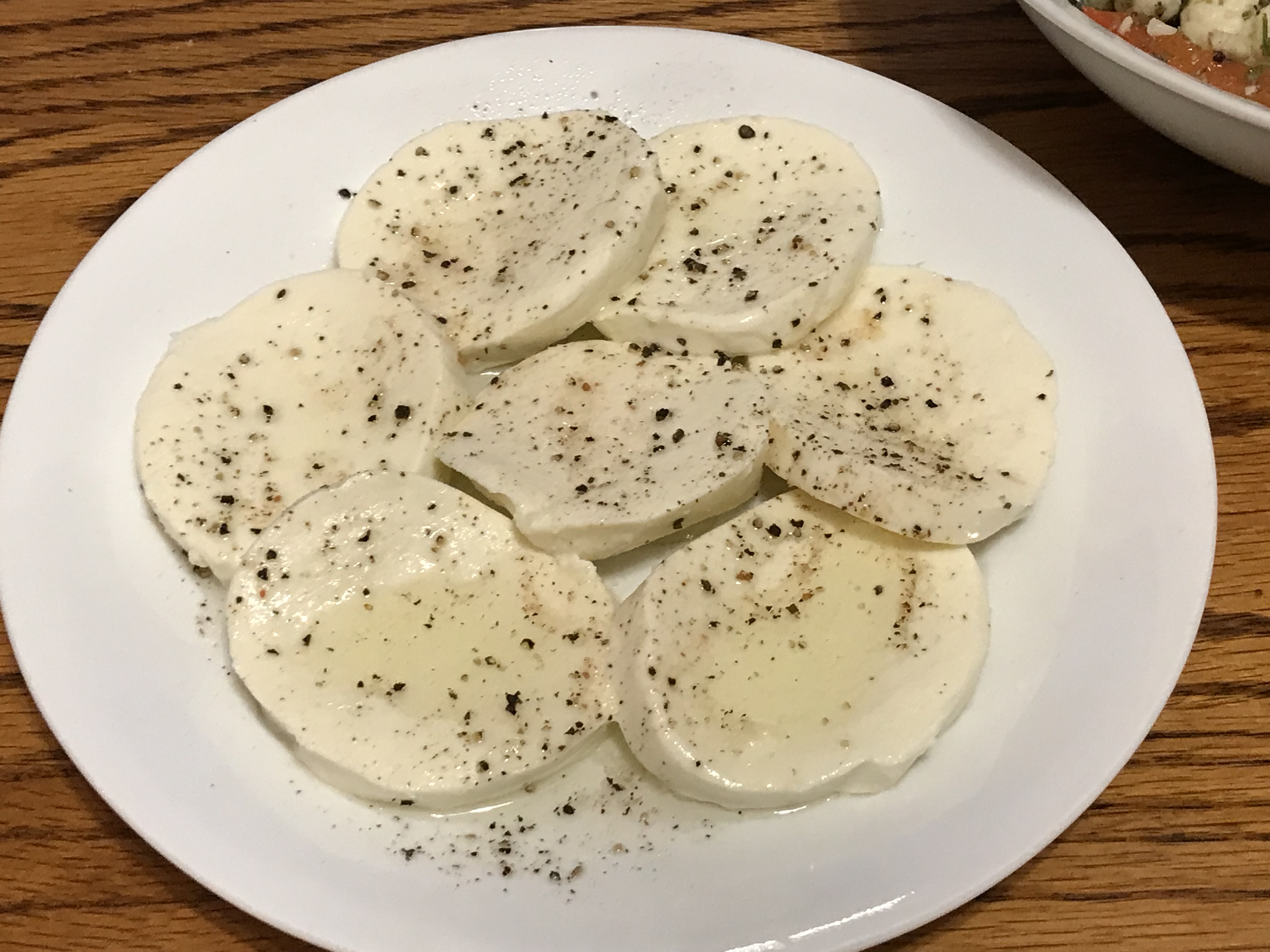
The first dish was composed of fresh mozzarella slices, sprinkled with olive oil and black pepper. Ideally, the cheese would be provolone burrinos, which have a piece of butter in the center. Since there is no Italian deli or food store near me that stocks them, I used the suggested alternative. The best fresh mozzarella in Italy is made from water buffalo milk (mozzarella di bufala), though cow’s milk varieties seem to have always been common. Some historians think the water buffalo was introduced to Italy by the Goths in the 5th and 6th Centuries AD. The technique of stretching the curds in hot water to produce mozzarella’s characteristic chewy texture appears to have been developed at some point after that. A few factories near me produce high quality fresh mozzarella, and you can even buy it ready-sliced in a log. The oil and pepper added some extra flavor, but even on its own, it was delicious.
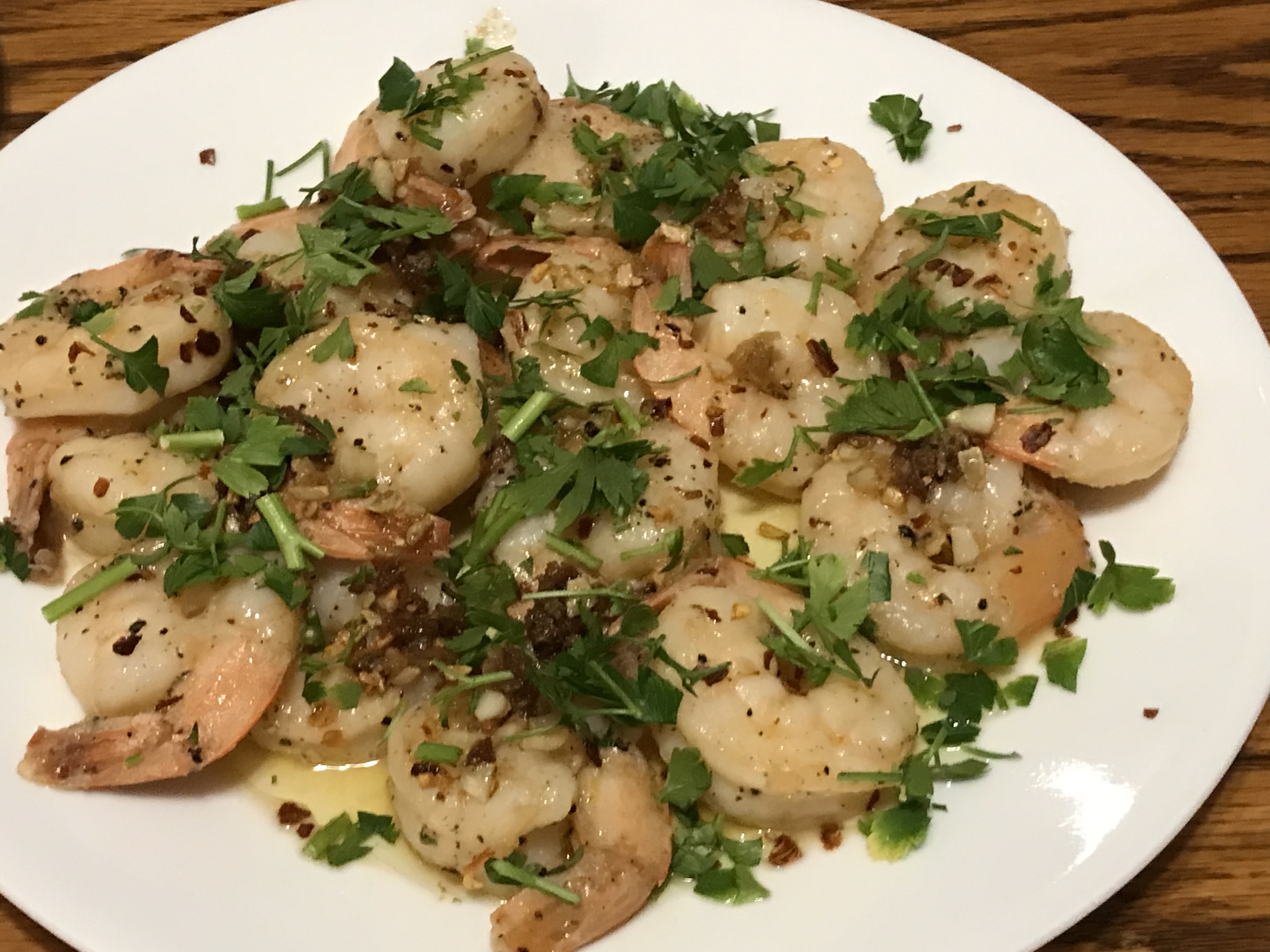
Success continued with the shrimp. What was unusual was that red pepper flakes were only sprinkled over it after it was sauteed. The oil was kept on the stove to briefly cook the garlic, just enough to add color before the garlic oil was sprinkled over the dish. It was interesting to add the seasonings after the shrimp was finished cooking, but it kept the pepper and garlic from scorching or darkening. A sprinkle of green parsley contrasted nicely with the red pepper.
The cauliflower salad was definitely different, but tasted great. Another great thing about it is that it can, and for the best flavor should, be made a day ahead. Cauliflower is firm enough not to get soggy when marinating and soaking up the flavor from the dressing. I wouldn’t have thought of cauliflower as a salad vegetable, but it worked beautifully.

The second fish, the thin spaghetti with clams and carrots, was not such a success. While I hadn’t cared for the steamed clams in the Liguria/Portofino seaside menu, I had enjoyed chopped clams in a tomato-clam sauce in one of the Venetian menus, so I expected this would be similar. It wasn’t bad, but I still didn’t enjoy its strong fishy flavor. Tomato sauce had helped balance it, but there was no tomato in this recipe. Fortunately, Mr. Famularo does not follow a strict “no combining seafood and dairy” rule common in Italian cuisine, since some extra parmesan cheese made the pasta almost good. Good enough to eat the leftovers, in fact, but not good enough to make again.
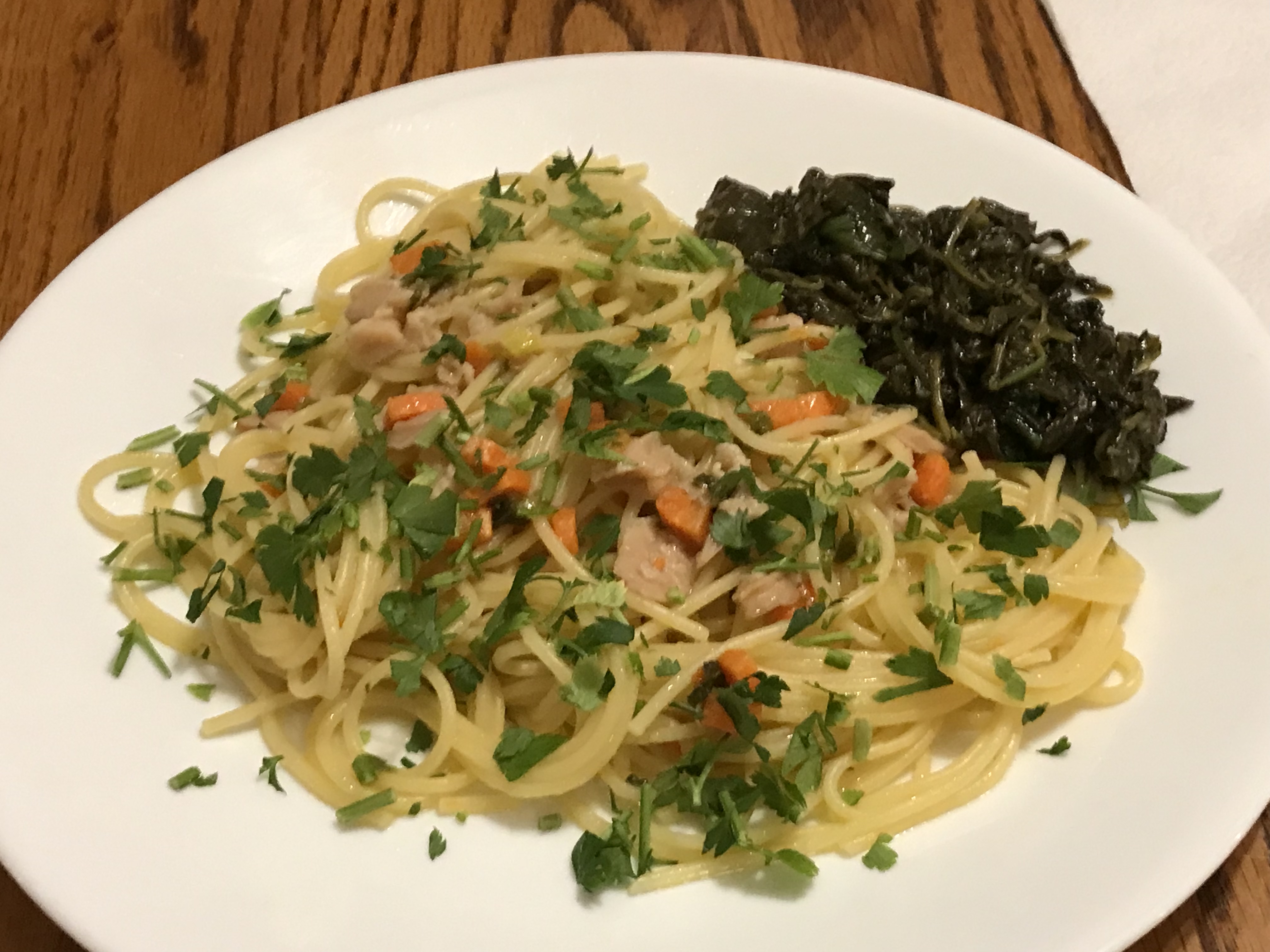
The spinach was less edible. Part of the issue was that I was too cheap to buy fresh spinach in December and used frozen instead. That one was on me. But there was another issue. After cooking, the spinach got its addition of lemon juice. The problem is that the color and texture of some foods are affected by the pH of the dish, or how acidic it is. Bases are the opposite of acids. When green vegetables are cooked with a base, usually baking soda, their color stays especially green. Cooking them with an acid turns them an unappealing brown color, though their texture is unaffected. Lemon juice is highly acidic, and adding it after cooking didn’t help. The spinach immediately changed color, and using frozen instead of fresh did affect the texture, creating a gross-looking brown sludge. Maybe using fresh spinach is the key, since this is supposedly one of the favorite ways to cook spinach in Italy (text, pg. 202). The taste was ok, but the texture and appearance of this dish made it hard to eat.
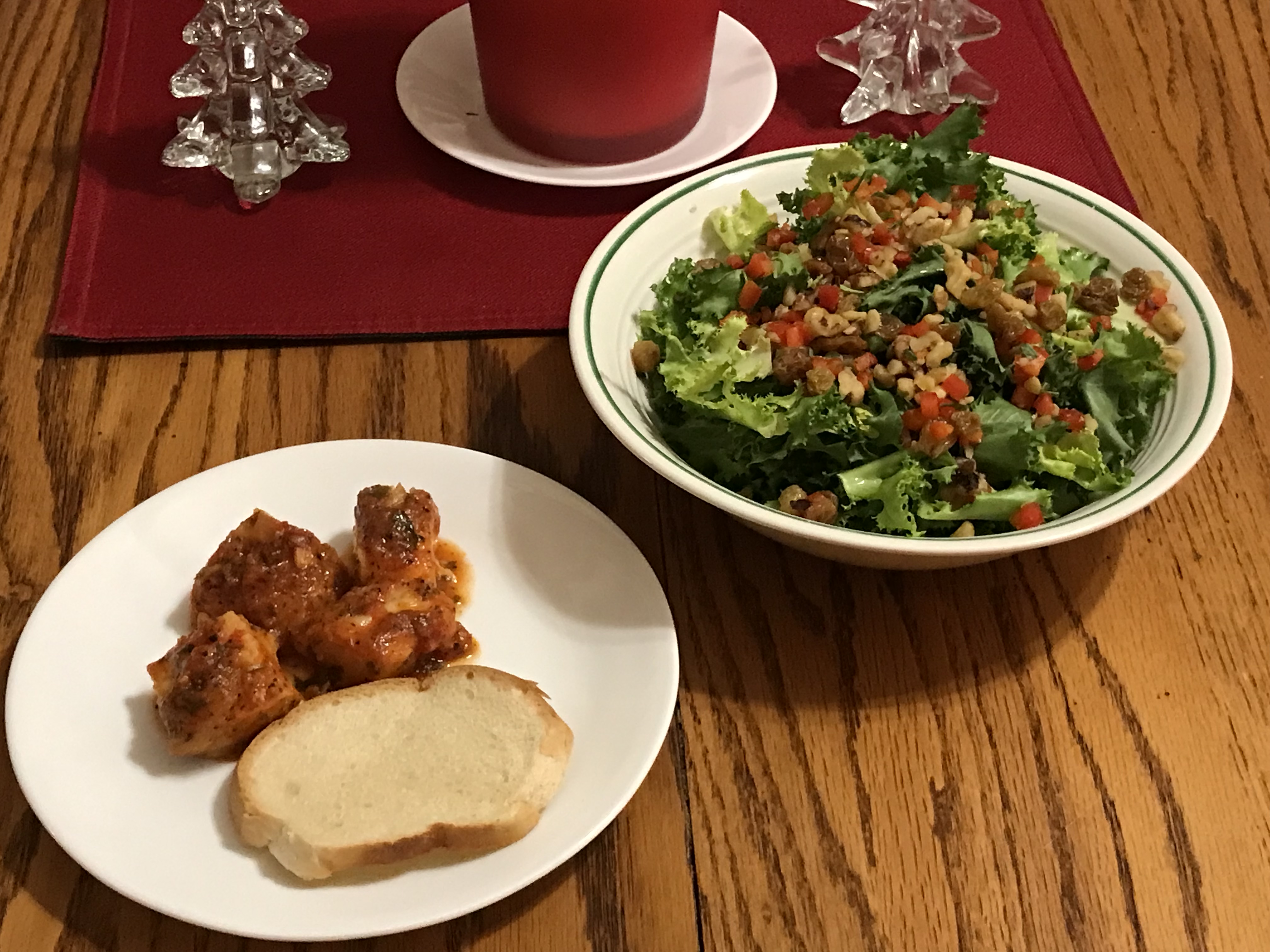
I had better luck with the fish filets and salad. Due to time constraints, those were made on a second night. The fish was eaten with a tomato-garlic-herb sauce. I wouldn’t have thought of using it with seafood, but the flavors worked together well. The escarole in the salad was a little bitter, but balanced with diced red pepper “confetti,” golden raisins, walnuts (replacement for pine nuts), and capers.

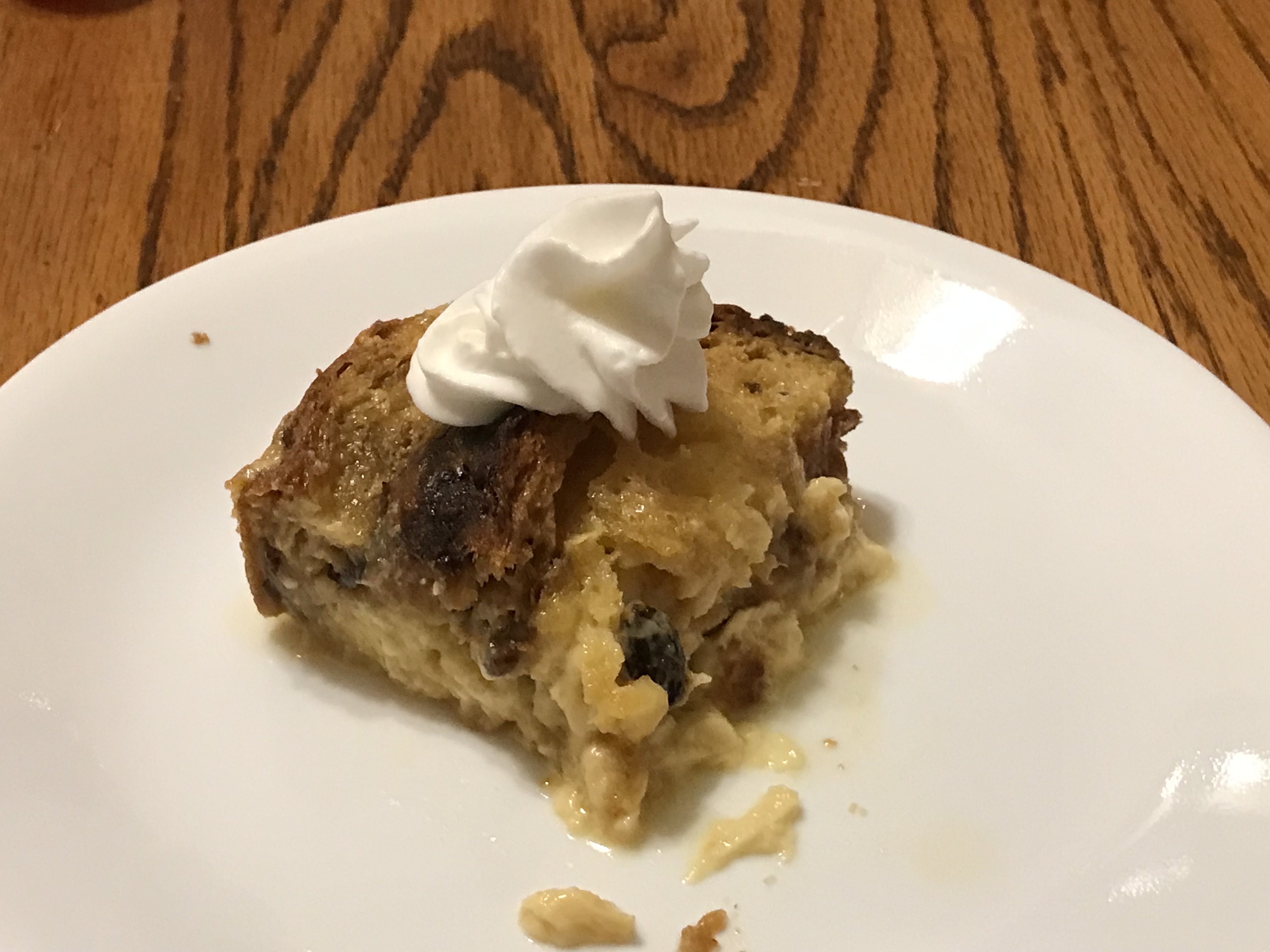
People have been making bread pudding for hundreds of years. Along with toasting, soaking stale bread with eggs is a great way to revive it. This particular variety, made with sweet, eggy panettone, soaked in a honey syrup and a creamy custard, was particularly rich. Panettone was originally from Milan, and is now a Christmas staple across Italy. Making a bread pudding was a unique way to include it in the menu. The cooking time was a lot longer than the recipe said, but dessert was worth the wait.
 Feasting Through Time