
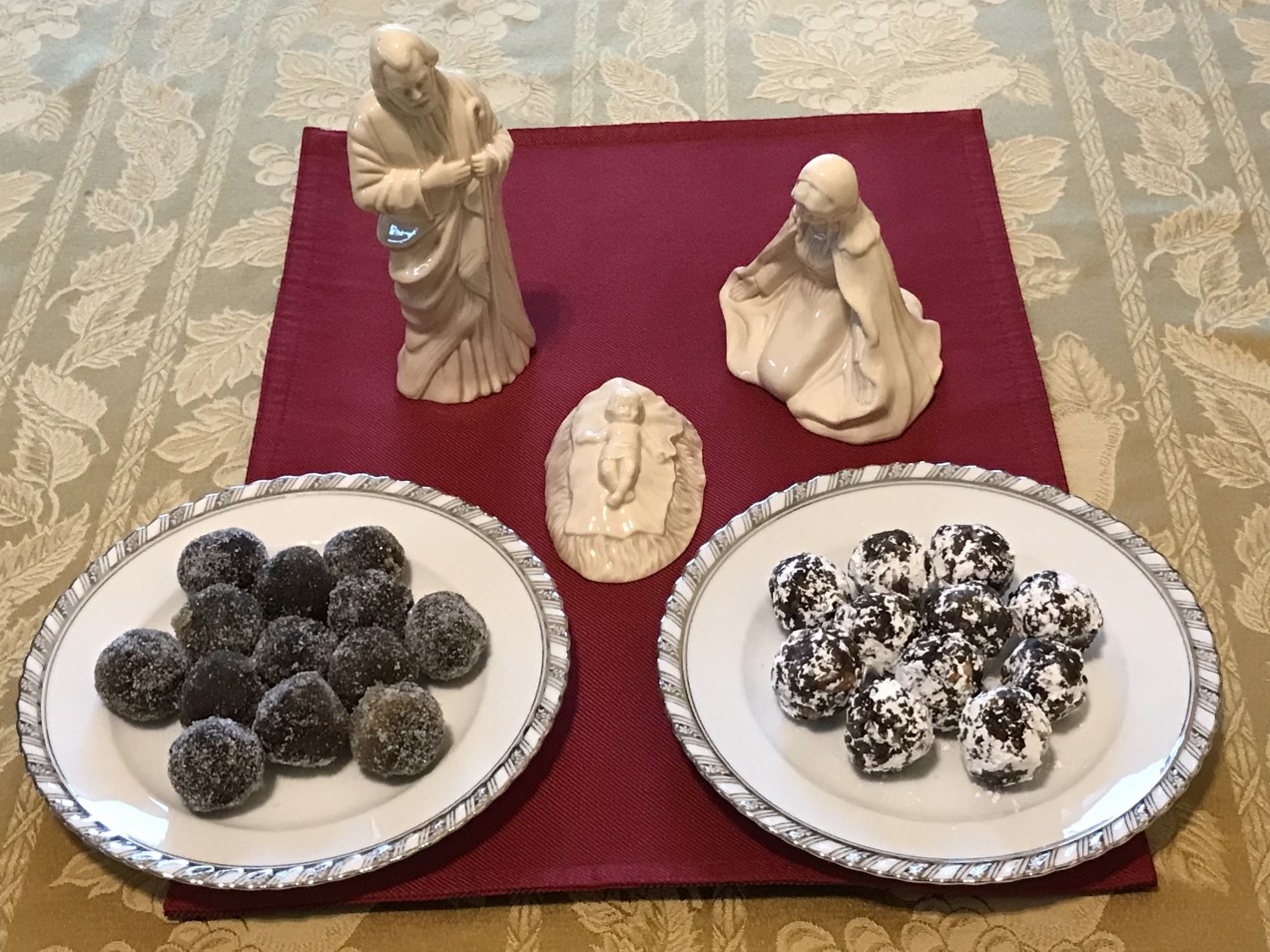

Portuguese, Byzantine, and English Sugarplums
1000 Foods (pgs. 271 – 272)
Visions of sugarplums dance in children’s heads in The Night Before Christmas. The Sugarplum Fairy is one of the most, if not the most, famous character in The Nutcracker ballet. But many people don’t know what a sugarplum is, yet alone eaten one. To make things complicated, the word means different things in different countries. And to make things confusing, not all varieties contain plums. Some don’t even contain fruit.
Plums are sometimes candied in a sugar syrup, and they are beautiful to look at. Crystallized fruits seem to be especially popular in Italy and southern France, where anything from cherries and pears to melons, pineapple, and even pumpkin form lovely, jewel-like displays. Sugar has been used as a preservative for hundreds of years, allowing fruit to be kept for months after its usual season ends. This process works by pulling some of the water out of the fruit. Since bacteria need water to survive, candying (or salting, for that matter) can dramatically slow the rate of spoilage. Plus, humans are naturally inclined to enjoy sweet flavors. A few months back, I attempted to candy some plums from the local apple orchard, but they had softened too much after several days in the fridge and fell apart in the hot sugar syrup. Maybe next year.
On the other end of the spectrum, in British English, sugarplums were usually nuts or spices, covered in layer after layer of a hard sugar coating, often brightly colored. The price of the core ingredients, plus the time it took to build up all those layers, made these sugarplums an occasional treat, suitable for Christmas and other special occasions. The best modern example, although they are no longer called sugarplums, are Jordan almonds. Besides almonds, candied fennel, caraway, or coriander seeds were popular. As for why they were called sugarplums, supposedly it was because they were roughly the size of many dried fruits. All dried fruits were called plums at one time, even if they were actually figs or apricots. To make things even more confusing, sometimes sugarplums were a mix of chopped dried fruit and nuts, spiced and rolled in sugar.
Portuguese sugarplums, or bombos de figo, are made with dried figs or prunes, which are dried plums. I used a mix of two thirds figs, one third prunes. The fruit is steamed to soften, ground up, and seasoned with cinnamon and cloves. A ball of this mixture is formed around a toasted almond, which takes the place of a pit. They are then rolled in sugar. According to the text, Byzantine sugarplums don’t contain plums. Usually, they have figs, dates, and raisins, chopped rather than ground. Walnuts and pistachios add more texture, and they are flavored with cinnamon and cloves, plus candied ginger and orange zest. These are rolled in powdered sugar for a snowball-like appearance.

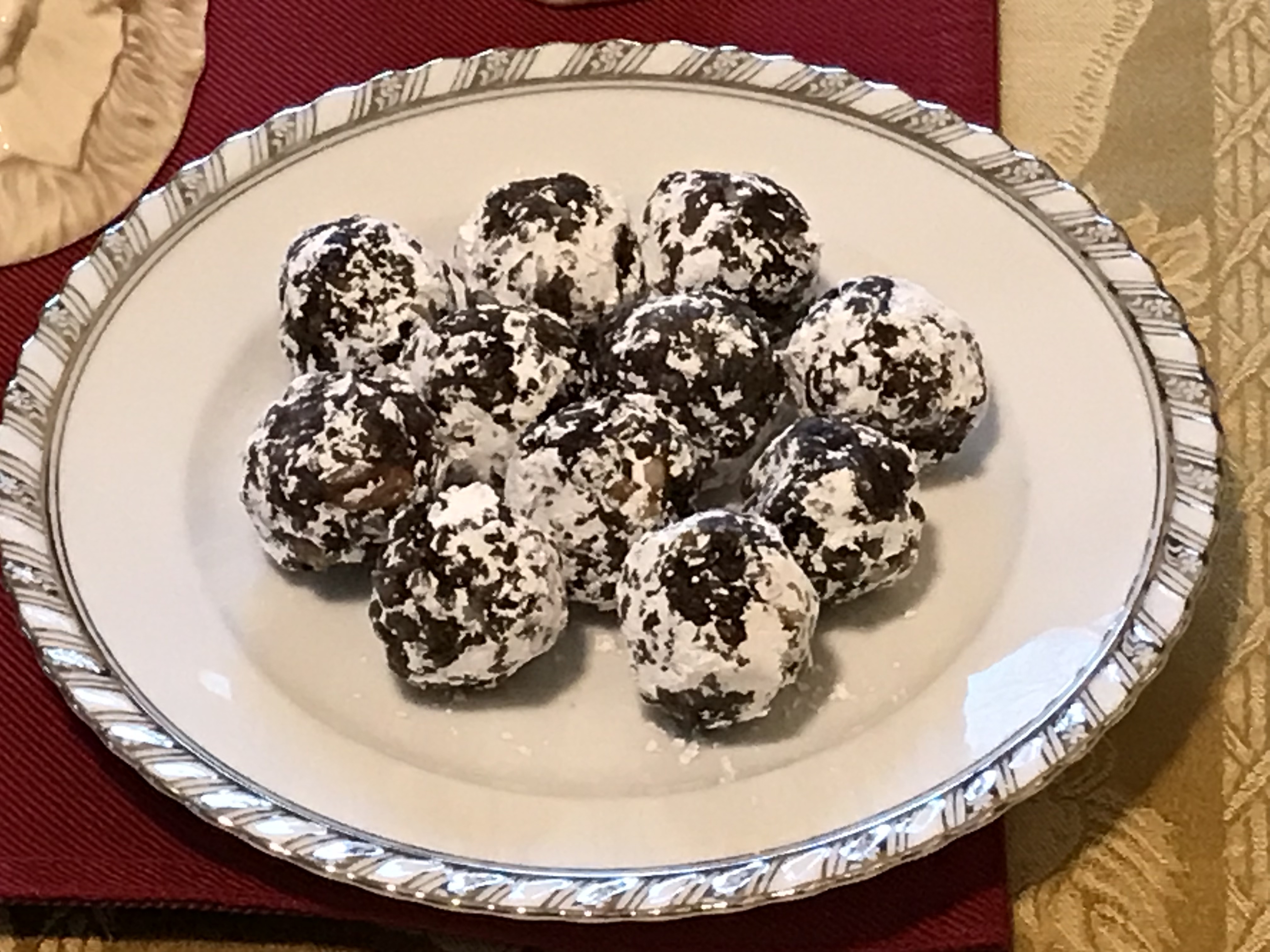
I made both varieties, and enjoyed them both. The dried fruit was nice and sweet without too much added sugar, and the spices made things interesting. The extra flavor from the ginger and orange zest, plus the chunky and chewy texture, gave the Byzantine variety a bit of an edge, but the toasted almond “pit” in the Portuguese variety was a nice touch. How much sugarplums were originally associated with Christmas is unclear. They may have been just a special-occasion treat in general. Regardless, the warm spices are perfect for this time of year.
If you liked this post, please subscribe! It’s free and you’ll receive an email whenever I create a new post. No cost, ensure that you’ll never miss a post, what do you have to lose?
 Feasting Through Time