Uncategorized

Holiday Restorative: Thanksgiving Turkey Broth/Soup

1000 Foods (pgs. 630 – 631)

            For non-American readers, the Thanksgiving holiday might seem a little strange. Celebrating what we’re thankful for with a feast is straightforward enough. The odd part is that tradition dictates a number of specific dishes. In a large country with a huge variety of terrain, climate, and natural vegetation, not to mention national origins, millions of people are eating pretty much the same thing. Turkey is almost always the centerpiece and is the symbol of Thanksgiving. Some households will opt for ham or a vegetarian option, but that’s usually as far as variety goes. Gravy and cranberry sauce accompany the turkey. Sides include potatoes, usually mashed, stuffing, and a few vegetables, particularly corn, carrots, and green beans. Pies are the favorite dessert. The most common flavors are apple and pumpkin.

A fairly typical Thanksgiving plate. Not pictured: pie for dessert.

            Not every menu will necessarily have every item on the list, and there is some regional variation. One feature of Thanksgiving that’s pretty universal is the large quantity of leftovers. Turkeys are massive. Even after sending leftovers home with their guests, most cooks will have quite a bit of carved meat, plus a large carcass. Usually, a fair amount of meat is stuck to the bones. One way to get it off is to make soup. Slow simmering keeps the lean turkey tender while deeply flavoring the broth. Throw in a selection of fresh and leftover vegetables, and you have an easy way to minimize waste. It’s especially great for anyone who catches a respiratory infection from a Thanksgiving get-together.
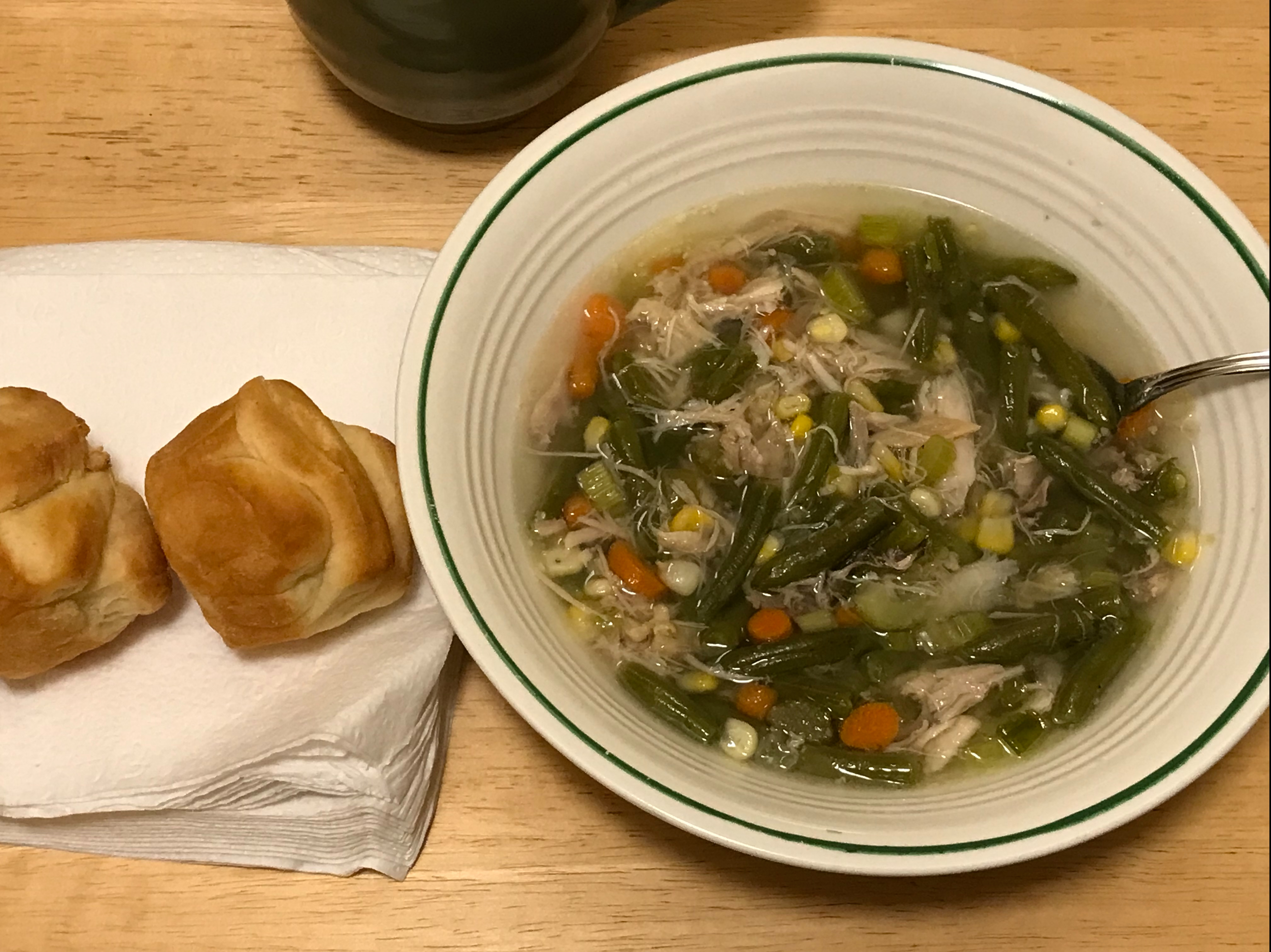
Turkey vegetable soup and leftover rolls. The soup worked – I didn’t get a sinus infection.

            Soup actually does help with cold and flu-type illnesses. The hot liquid and the moisture evaporating from it help to open up the airways. Other common home remedies like tea and a warm shower work in the same way. While this won’t do anything against a cold or flu virus, it does help loosen up any mucus and allow it to drain more easily. This is important because mucus that gets stuck becomes a breeding ground for bacteria, leading to a sinus infection or pneumonia, depending on its location. Plus, soup is easy to eat with a sore throat. There’s a reason societies from North America to Europe to China rely on it to soothe whatever winter throws at them.
Standard
Uncategorized

Reanimating Tough Beef: Mushroom Barley Soup

1000 Foods (pgs. 450 – 451)

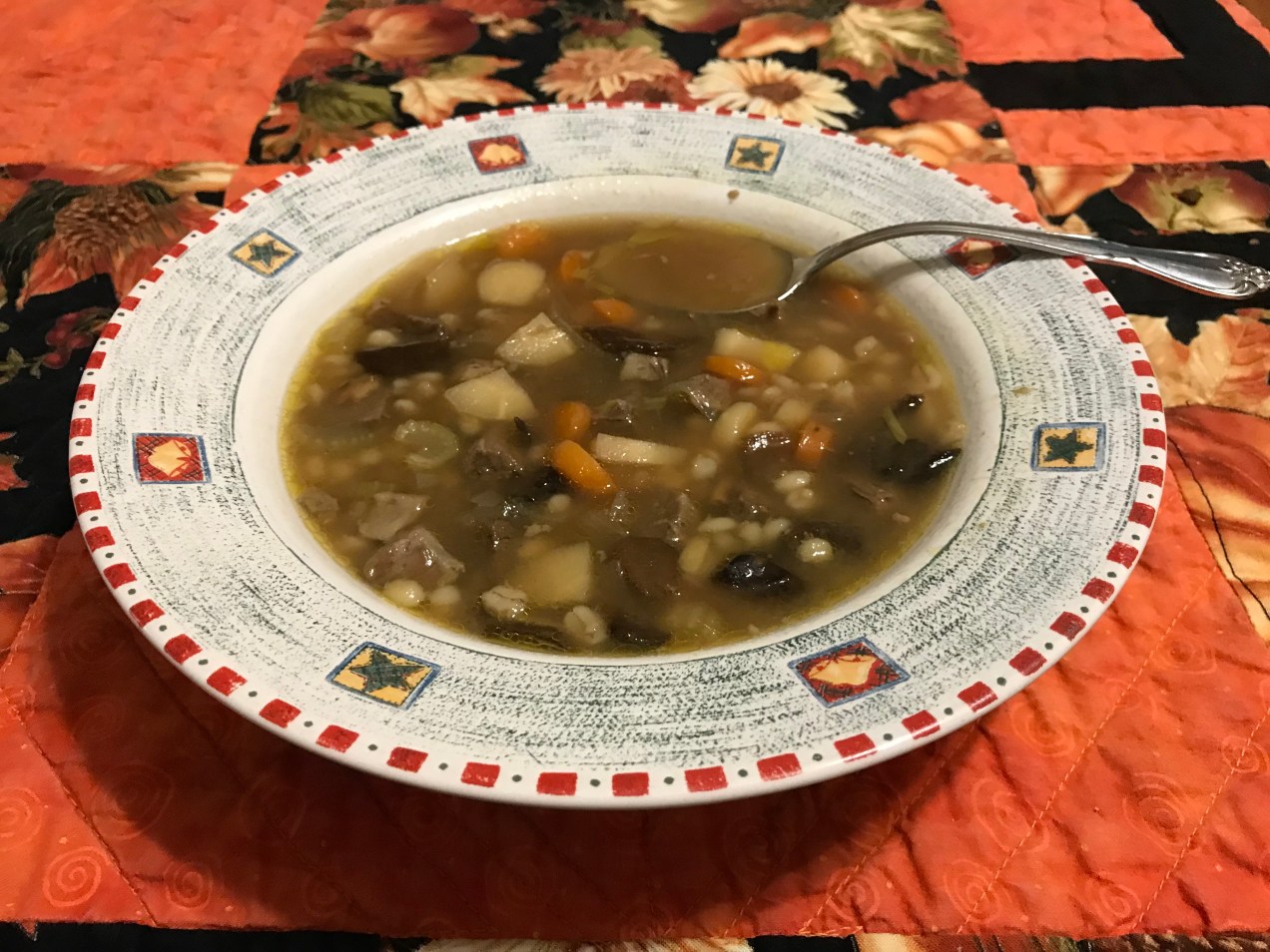
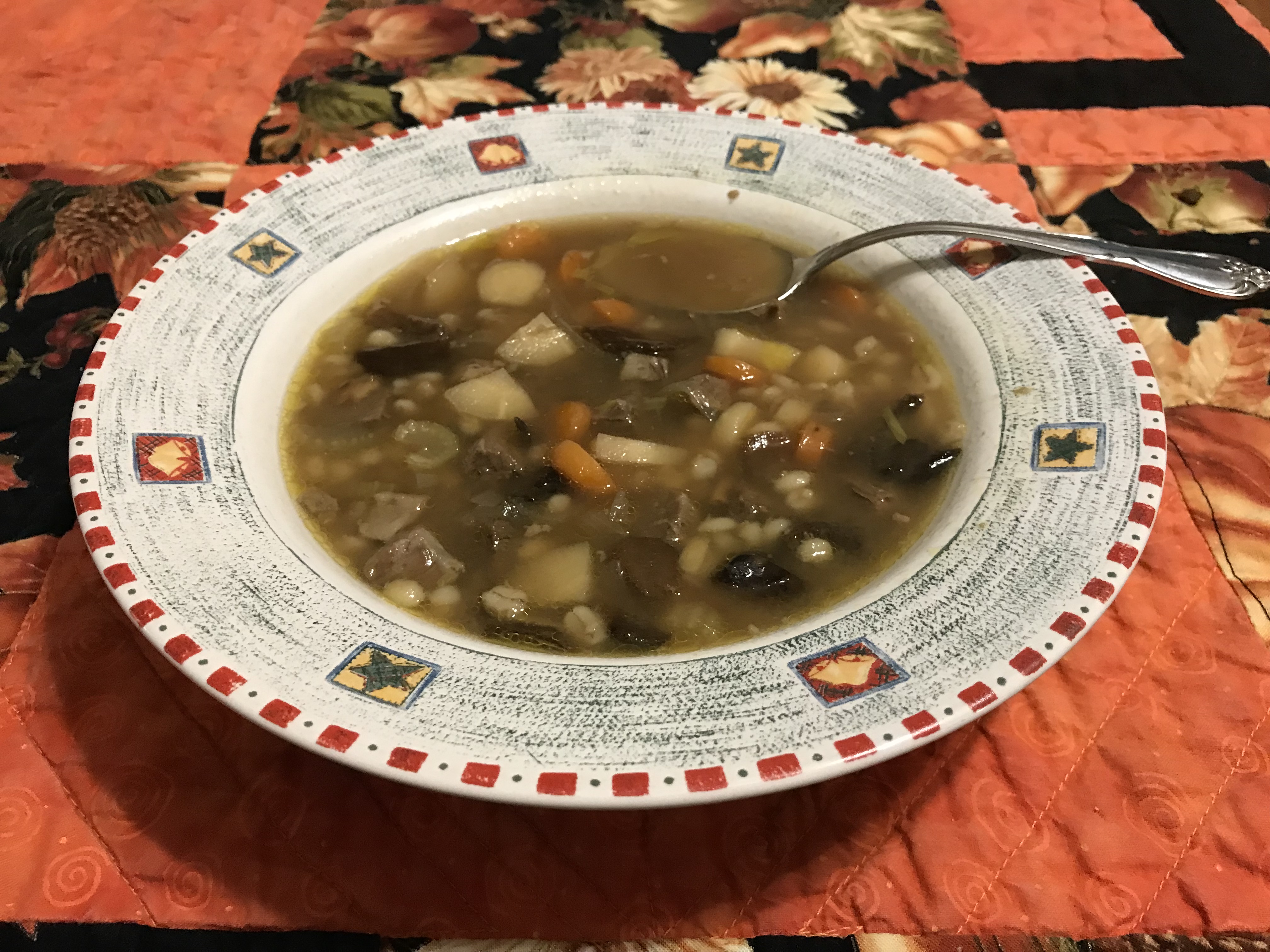
            After failing to soften the leftover tafelspitz beef by re-simmering, using the leftovers in salads, as suggested in the book, was definitely out. Fortunately, I’d been planning on using them in mushroom barley soup, since it uses many of the same vegetables (which I had extra of) needed to flavor the tafelspitz. With the failure of the emperor’s favorite lunch, I just had more beef and broth to work with. The idea was that chopping up the beef would increase its surface area, meaning more edges in contact with the broth as it re-cooked. New root vegetables plus dried mushrooms would add more flavor, while barley added substance. This time, everything went according to plan.

            Barley is one of the oldest crops cultivated by humans, deliberately planted no later than 8,000 BC, and possibly as early as 10,000 BC. A specific date is hard to come by, since the switch from gathering the wild plants, to deliberately spreading the seed, to building villages by designated fields was a gradual one. In some cases, the archaeology suggests that villages preceded agriculture, at least where there was a lot of wild grain to harvest. But whenever the process happened, barley was domesticated around the same time as wheat. The Sumerians, in modern Iraq, used barley as a form of money. Almost 3000 years before coinage, it was the perfect currency. A goat herder in need of a clay pot might not be able to find a potter in need of a goat, but everyone accepted payment in barley. The seller could eat the barley themselves, or trade it for something else they needed. Money didn’t grow on trees, but it did grow in fields.

            For almost as long as they have been growing grain, people have been turning it into alcohol. Our friends the Sumerians brewed lots of beer and even worshipped a beer goddess. From Egypt to Northern Europe, people fermented their grain. Often, they would drink their barley and eat their wheat. The reason for this is simple: wheat has more gluten than any other grain, which means it makes better bread. Most cultures seem to have preferred bread over other ways of preparing grain, creating a preference for wheat. Since wheat was usually more expensive, it made little sense to use it for beer, where its gluten would be of no use. Barley became the primary grain for brewing, and was used in soup, porridge, and cheaper bread.

            Barley is particularly good in soup. As it cooks, it swells up, taking on the flavor of the broth and creating substantial morsels. There’s a reason beef barley soup is a cold-weather classic. Mushroom barley (with beef) is another variation. I’m not sure why it’s in the Jewish food chapter, but the essential dried mushrooms provide a clue. Dried mushrooms are popular across Eastern Europe, and many of the Ashkenazi Jews who immigrated to the US in the early 20th Century came from this region. I’ll admit that I’m not very familiar with the kosher specialties associated with New York City, but the origin theory makes sense.

            Dried mushrooms have two major benefits: a long shelf life and concentrated flavor. To make the most of this flavor, don’t discard the soaking liquid. After letting the grit settle out (or straining through a coffee filter), it can be added to the dish. Mushrooms in the boletus family are particularly favored, but most varieties will work. I used some from a medley I found at Woodman’s, and they were great. All the other ingredients are available at any supermarket, making this a perfect home-cooked delight. You could order it at a restaurant, but it’s so easy to make at home, and the leftovers are as good if not better upon reheating. Over the course of a few days, they all got eaten. The tafelspitz redeemed itself.

Standard
Uncategorized

Austrian Boiled Beef: Tafelspitz

1000 Foods (pgs. 328 – 329)

            Austrian Emperor Franz Joseph had an eventful and often tragic life. He ascended the throne at 18 in 1848, a year of revolutions across Europe. The emperor at the time was his uncle Ferdinand, who suffered from various health issues, probably as a result of Habsburg inbreeding. Although revolution was quickly suppressed in Austria, there were concerns about his ability to handle any future unrest. Supposedly, when told that the people were revolting, he asked an advisor “are they allowed to do that?” Emperor Ferdinand was persuaded to abdicate, and since he was childless, Franz Joseph became emperor, with his mother Sophie of Bavaria acting as the power behind the throne.

            Between industrialization, continuing political unrest, a disastrous war with Prussia, the rise of anarchism, rising tensions in the Balkans, and eventually WWI, Franz Joseph had a lot to deal with during his reign. In 1889, his only son died in a murder-suicide with his mistress. Nine years later, his wife, the famously beautiful Empress “Sisi,” was fatally stabbed by an anarchist. In 1914, his heir Franz Ferdinand (nephew, I believe) was assassinated in Sarajevo, starting WWI. With all the stress ruling must have involved, it’s no wonder former Emperor Ferdinand’s health improved during his retirement in Prague.

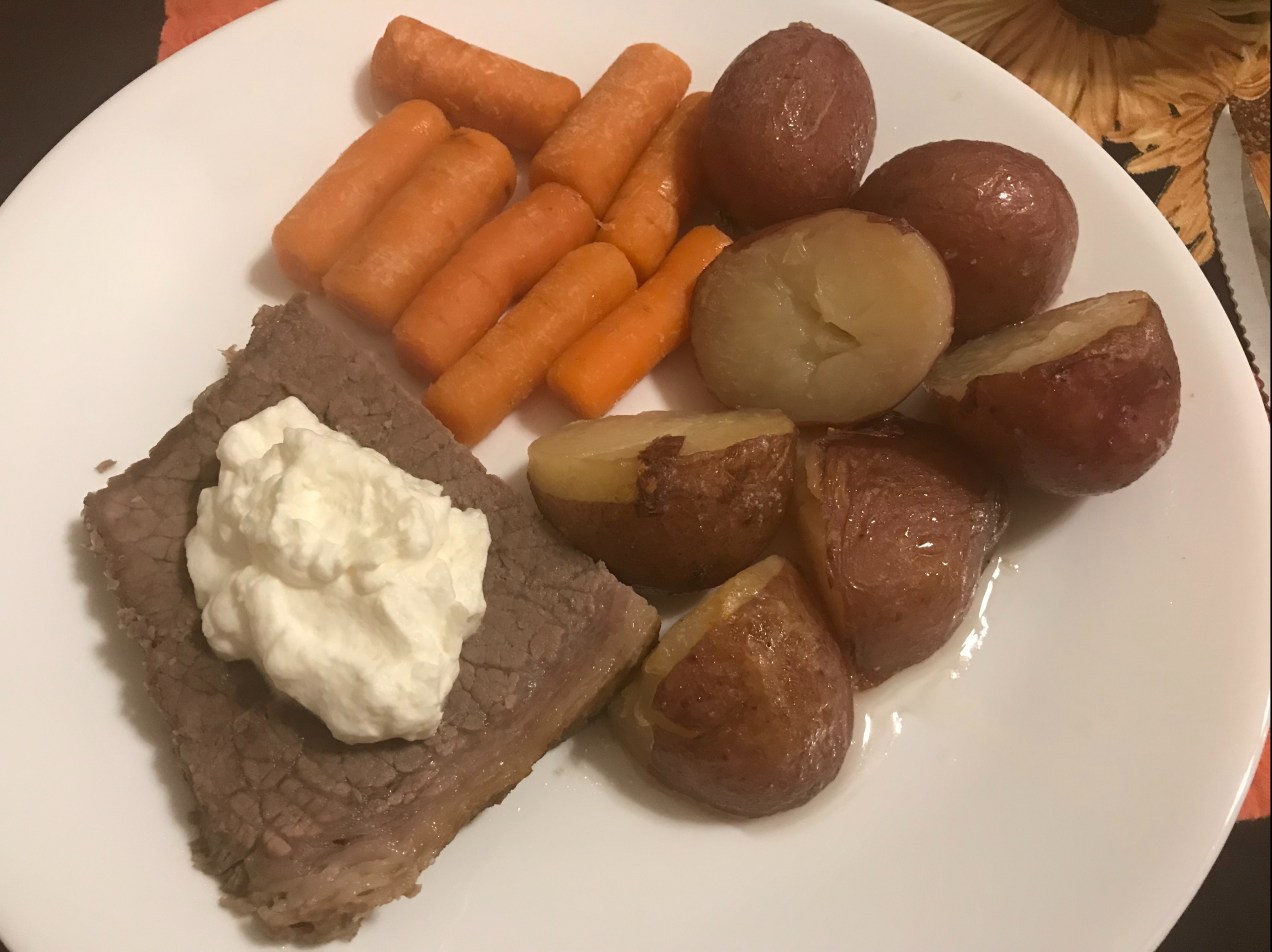
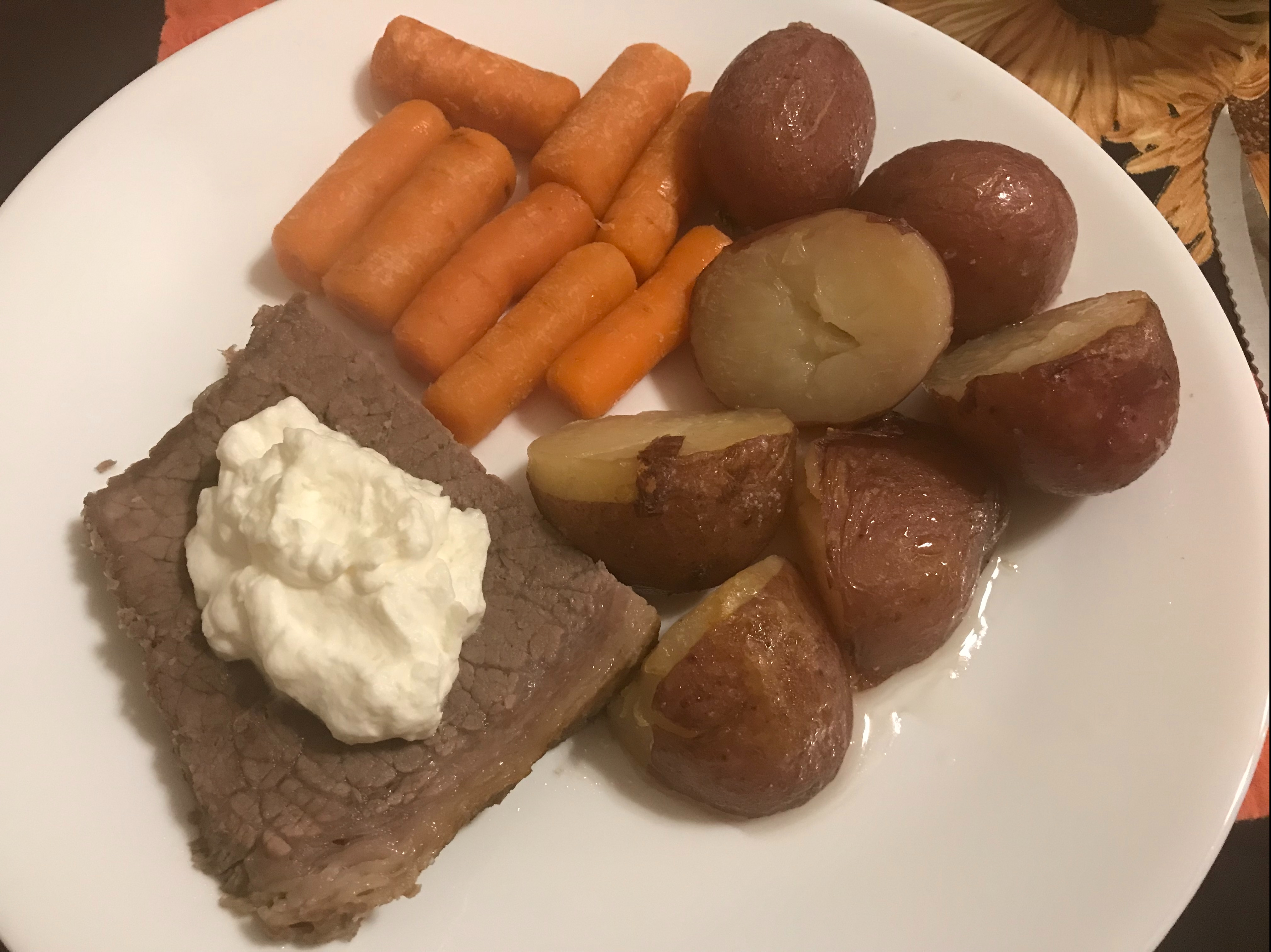
            Perhaps all the stress and heartbreak he endured drove Franz Joseph to comfort foods. One of his favorites was tafelspitz. A large piece of beef is slowly braised with root vegetables, tenderizing the meat and producing a rich consommé. Constant skimming is supposed to ensure a clear bouillon to serve in cups as a first course. The beef is then served with potatoes, vegetables, and some form of a horseradish sauce. I oven-roasted some leftover red potatoes with oil and salt to crisp them up and added fresh carrots, cooked in a bit of broth, to the plate (the braising vegetables get too soft for serving). Other options might include braised onions or leeks, or pickled beets. I followed the recommendation to mix the horseradish with unsweetened whipped cream, adding grated apples to half, chives to the other half. Either is typical, as is plain horseradish.

            Things did not go according to plan. Despite frequent skimming, the broth was not as clear as it was supposed to be, but that was a minor issue. It was also somewhat bland, though definitely not bad. The much bigger problem was the beef. I used a piece of chuck, which is common for tafelspitz, and slowly simmered it, which is supposed to make it tender. This didn’t work at all. The beef was extremely tough, almost like leather, and was even difficult to cut. I’m not sure what went wrong. Was the water too close to a boil? Did it need more cooking time? Whatever the problem was, slicing and simmering the meat again didn’t help much. Even without the texture issue, the flavor was a bit boring. The horseradish cream sauce was good, but it didn’t help the beef much. Exactly why the emperor loved tafelspitz so much is still a mystery.

            I hadn’t expected this, but I was prepared. Temperatures were dropping rapidly and respiratory illnesses were spreading, so I already had plans to make beef mushroom barley soup with the leftovers. With less eaten on the first night, there was extra meat and broth for a bigger batch of soup. Three or four meals for two people, as it turned out, so it wasn’t all bad.

If you like this blog, please consider making a donation to help the fun continue.

One-Time
Monthly
Yearly

Make a one-time donation

Make a monthly donation

Make a yearly donation

Choose an amount

$5.00
$15.00
$100.00
$5.00
$15.00
$100.00
$5.00
$15.00
$100.00

Or enter a custom amount

$

Your contribution is appreciated.

Your contribution is appreciated.

Your contribution is appreciated.

DonateDonate monthlyDonate yearly
Standard