

1000 Foods (pgs. 693 – 694)
Let’s face it: January can be depressing. Thanksgiving, Christmas, and New Year’s are over, Valentine’s Day is six weeks off, and in much of the northern hemisphere, it’s cold and the landscape is barren. In some places, such as Venice and New Orleans, this is Carnival season, but in others, people are going on a diet to lose those Christmas pounds. Something cheery is needed.
Hibiscus flowers are lovely. Native to India, British sailors and botanists introduced them to the other tropical and subtropical parts of their empire in the 18th and 19th Centuries. Once the flowers reached Jamaica, locals appreciated them for more than just their beauty. Hibiscus blossoms are also edible. For some reason, they are called “sorrel” in Jamaica, India, and the Middle East when they are eaten. Most likely, this is due to the herb sorrel and hibiscus flowers both having a sour flavor. Hibiscus is also fruity, and, when steeped in hot water, produces a lovely red infusion.
In Jamaica, dried hibiscus blossoms are used to make a popular Christmas punch. In the US, many Latin American groceries carry them. Once the mixture is brewed, often with ginger and/or other spices, it is sweetened and sometimes spiked with rum. Even though Christmas is over, sorrel punch seems like a good new year’s or anytime beverage. And honestly, the bright color and flavor would be a great antidote for the “January blues” and a nice contrast with typically heavy winter dishes. Plus, hibiscus is rich in vitamin C, helpful after the germs you’ve probably been exposed to over the holidays. It’s also rich in iron, which the vitamin C helps the body absorb.
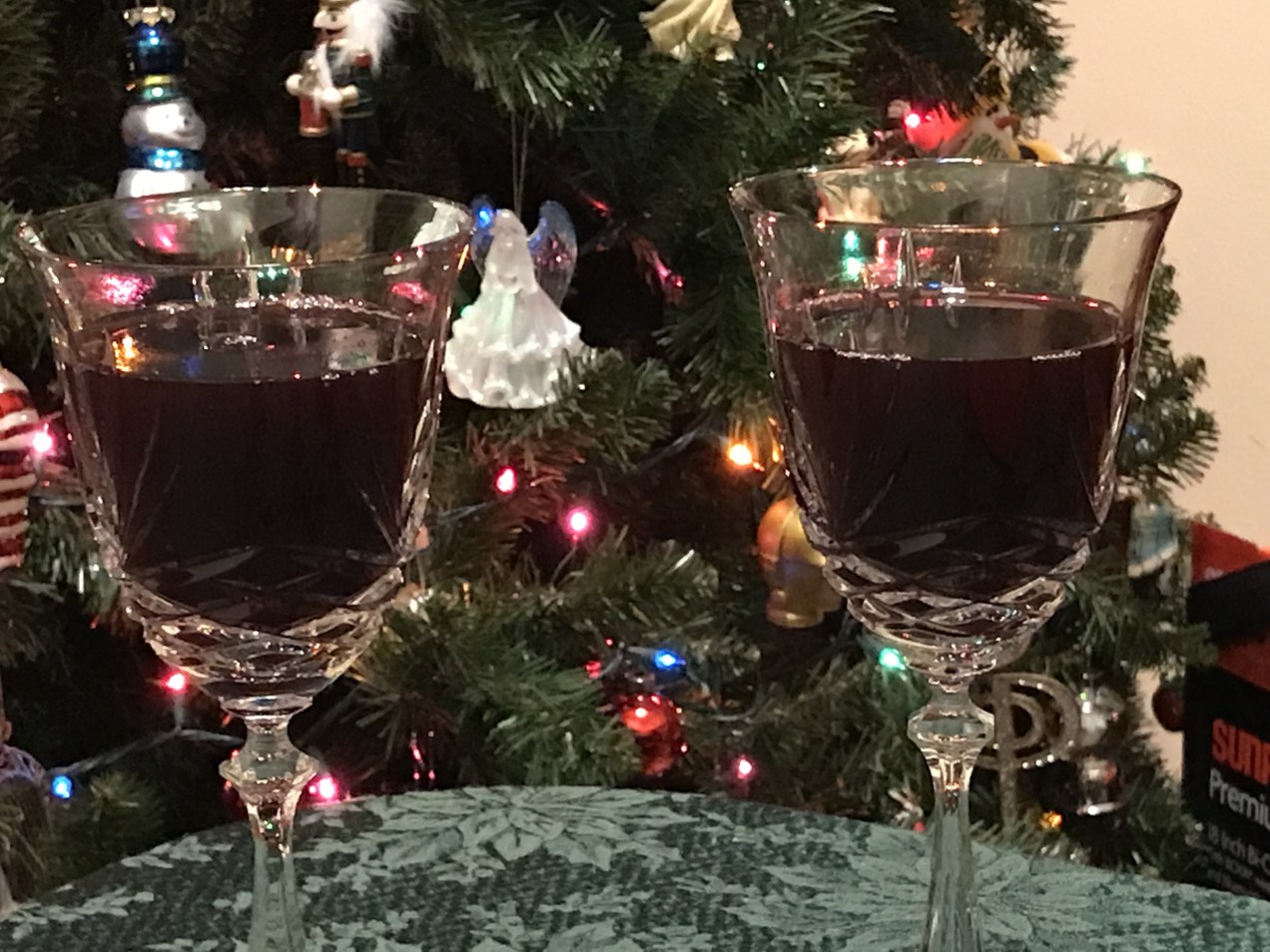
For sorrel punch, I began with Jillian Atkinson’s recipe on Serious Eats (https://www.seriouseats.com/jamaican-sorrel-hibiscus-drink), but modified it to quantities and ingredients I had available. I used one quart (4 cups) of water, 2oz of dried hibiscus flowers, about 2.5oz sliced candied ginger, 3 whole cloves, and three small pinches of ground allspice. After boiling for 8 minutes, the mixture cools on the stove, then is chilled overnight to finish infusing. To prevent any metal flavor from leaching into the punch, I transferred it to a plastic container.
After infusing overnight, the punch is strained and sweetened to taste. The recipe uses a simple syrup of sugar and water, but I just stirred four tablespoons of sugar into the mix, which seems to be about the right balance. It takes a bit longer to dissolve, but that quantity will dissolve eventually. The punch was best when diluted with about 1 part water to 2 parts hibiscus infusion, but that can be adjusted to taste. It’s often spiked with Jamaican rum, but is perfectly good without it, making sorrel punch a great festive drink for those who wish to abstain from alcohol.

Hibiscus has an interesting flavor, slightly floral, but distinctly fruity, almost like cranberry. The infusion is pretty sour on its own, so adding a bit of sugar balances it out. The ginger and cloves gave it a pleasant flavor like mulled cranberry cider, but a bit different. It’s hard to describe. The best way to find out more is to try it.
 Feasting Through Time