dessert, lebanese cuisine, middle eastern cuisine

Dessert from the Desert: Dates in Clove Syrup (Murabba El Balah)

Not bad dates, if you’ll pardon the Indiana Jones reference.

1000 Foods (pg. 514) for information, recipe is my own creation

            For a unique dessert, we have dates in clove syrup. Date palms are more tolerant of heat and drought than most other plants, making them essential in the hot deserts of the Middle East and North Africa. The fruit is sweet, high in nutrients, and calorie-dense, a useful feature in the past. Before sugar, dates were the main sweetener in the region, added to a variety of breads, porridges, and sweet cakes in Ancient Egypt and Mesopotamia. Usually, they were preserved by drying in the hot sun, a method still widely used.

            People have been stuffing dates for at least two thousand years, and probably for even longer. Once the pit is removed, the fruit has a hollow center. Dates were a popular luxury in the Roman Empire. Since the trees don’t produce fruit in Italy, they had to be imported from the Middle East and North Africa. Almonds, which fit into the centers almost perfectly, were a favorite filling, either on their own or in a more complex mixture. Murabba El Balah, a Lebanese specialty, also uses almonds for a nice contrast in flavor and texture.

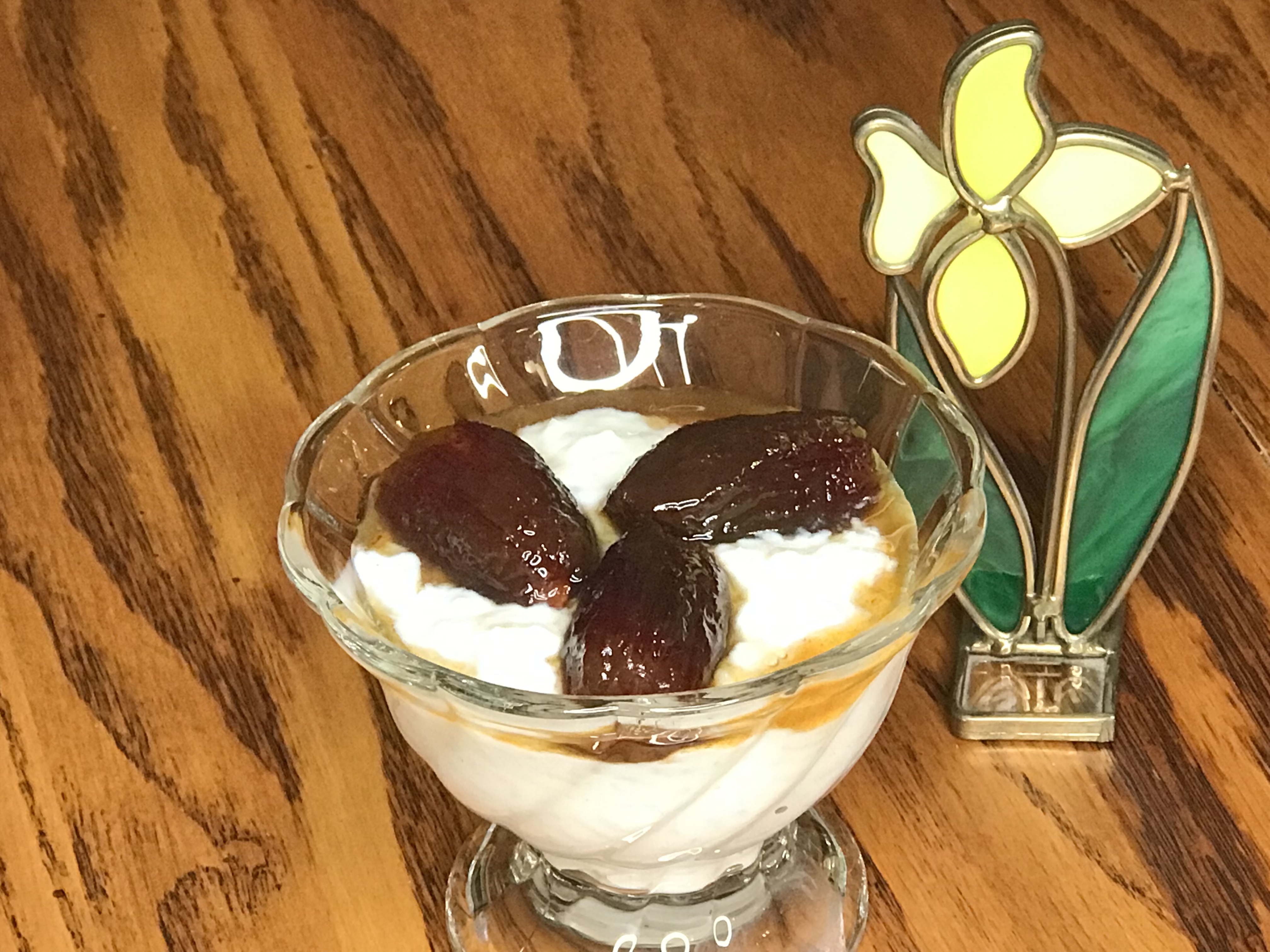
            Normally the dish uses fresh dates. Since those are extremely hard to find, I developed a recipe using the dried variety. After soaking in hot water the dates can be peeled, and the pits removed with a nut pick or knitting needle. I put two almonds in each date, toasted for extra flavor. After steeping for several days, the fruit is chewy and extremely sweet. To avoid being overwhelming, I’ve included a recipe for lightly sweetened rice pudding. The syrupy dates are a popular garnish for puddings of all sorts.

            They have a great flavor and nice crunch, but are a bit of a sugar bomb, for lack of a better term. Dates are already very sweet, and a sugar syrup only increases it. Because of this, they go even better with pancakes, oatmeal, cream of wheat, and the like, which aren’t usually pre-sweetened. Plain yogurt would be another excellent choice.

            Note that the dates need to soak in the clove syrup for at least four days, so plan ahead. The rice pudding is very thick, because that’s the way I prefer it, but you can thin it with a bit more milk once it’s cooled. No vanilla or cinnamon is included because the clove syrup would overpower it, but if you want to add some, by all means go ahead.

            Ingredients:

  • 20 – 24 dates (about 1 pound dried with pits, less if pitted)
  • 40 – 48 toasted unsalted almonds (2 per date)
  • 24 whole cloves
  • 1 ½ cups sugar

For rice pudding (if desired)

  • 4 cups (1 quart) whole or 2% milk
  • 6 tablespoons white rice, long or short grain (short grain makes a thicker pudding)
  • 1 tablespoon sugar

            Directions:

  1. Place dates in a medium saucepan with just enough water to cover, about 2 cups. Bring water to a boil, shaking pan occasionally. Remove from heat, cover, and let stand for at least an hour, or until cool.
  2. Peel dates, starting from areas where the peel has bubbled up. Remove pits with nut pick or knitting needle if necessary. Set fruit aside, discarding peels and pits. Strain cooking liquid and return to pan.
  3. Add the cloves to the cooking liquid and bring it back to a boil. When boiling, add the 1 ½ cups sugar and boil, stirring, for two or three minutes, or until the sugar is dissolved. Remove from heat.
  4. While the syrup partially cools, stuff two whole almonds into each date. Pour the warm syrup over the stuffed dates and gently stir. Let cool to room temperature, then marinate in the refrigerator for at least four days. Due to the sugar content, these will stay good for a few weeks.
  5. Remove the cloves and serve with rice pudding, ice cream, or yogurt.
  6. For the pudding, heat the milk, rice, and tablespoon sugar in a saucepan over medium heat, stirring frequently, until mixture simmers. Turn down heat to medium low, then cook for about 15 minutes until thickened, stirring frequently to prevent scorching. Chill before serving if desired.

            Don’t worry if you accidentally eat a clove. It might dull your sense of taste a for a few minutes, but that’s as far as side effects go. As usual, make sure to subscribe to get free posts and recipes sent right to your inbox. If you’re feeling extra generous and want to donate a few bucks to support my work, you can do that too.

One-Time
Monthly
Yearly

Make a one-time donation

Make a monthly donation

Make a yearly donation

Choose an amount

$5.00
$15.00
$100.00
$5.00
$15.00
$100.00
$5.00
$15.00
$100.00

Or enter a custom amount

$

Your contribution is appreciated.

Your contribution is appreciated.

Your contribution is appreciated.

DonateDonate monthlyDonate yearly
Standard
food history, italian cuisine

Cook’s Tour of Italy Menu 15 (Pgs. 62 – 66): Menu for 8, La Foce

Region: Tuscany

Menu: Cantaloupe with Prosciutto, Lasagnette with Meat Sauce, Fennel and Watercress Salad, Orange Ring Cake

Recommended Wine: Vino Nobile de Montepulciano (like Chianti, but with some white grapes mixed in with the red)

            Believe it or not, at one time, doctors thought melons were unhealthy and even dangerous. During the Middle Ages and Renaissance, raw produce in general was mistrusted. In the 15th and 16th Centuries, when salads and beautifully-arranged platters of fresh fruit became fashionable, doctors freaked out, thinking the trend would make their patients sick. People did sometimes get sick after eating fresh, raw fruit, but the problem wasn’t the fruit itself. Most likely, the water used to wash it was contaminated, or cooks didn’t adequately clean their work surfaces.

            Melons were even implicated in the death of a 15th Century pope. The story goes that in July 1471, Pope Paul II ate two large melons, and died shortly thereafter. Sources don’t say what kind of melons they were, what was meant by large (most fruits and vegetables were smaller at the time), or the timeframe they were eaten over. Since Rome gets really hot in July and this was before air conditioning, His Holiness probably found them refreshing, and may not have had much appetite for other food. If that was the case, eating two melons the size of small modern cantaloupes over the course of a hot day sort of makes sense.

Delicious treat, or heartless killer?

            Supposedly, cantaloupes originated in either Persia (modern Iran) or Armenia before being brought to the Mediterranean. Regardless of what doctors thought, people living there, especially Italians, went crazy for them. During the hot summer months, when melons were at their peak, people found them irresistible. Supposedly, eating them with a bit of salty ham or some wine reduced the risk, which is where melon and prosciutto came from. Personally, I think prosciutto is stringy and overpriced, so had the melon plain. It was good as always, but was definitely different as an appetizer.

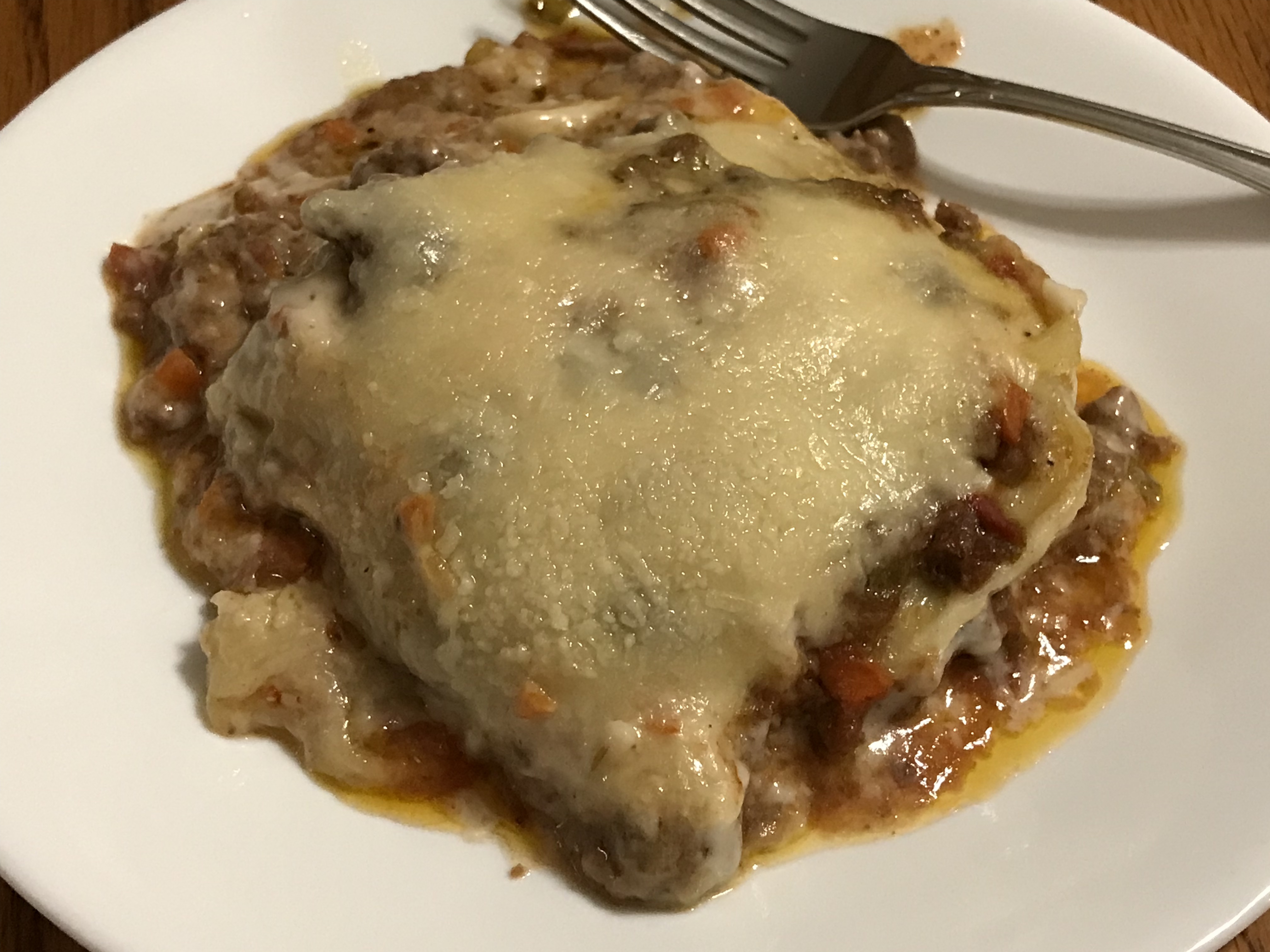
            The name “lasagnette” suggests a miniature lasagna, but this recipe filled a full pan. Like the Bologna-style lasagna, this one used a ragu with a high proportion of meat to tomato, bechamel sauce, and parmesan cheese. I think there must have been a typo in the bechamel recipe. It calls for one cup flour to three of milk. At that ratio, a sticky dough-like substance forms, not a sauce. It was salvageable with extra milk, whisking, and straining the lumps out, but it probably would have been easier to restart with a different bechamel recipe. Everything else with the lasagna went smoothly, and it was quite tasty, but I still prefer the mozzarella and ricotta version. Maybe if I made my own pasta dough instead of purchasing it, I would feel differently.

Instrument of fraud

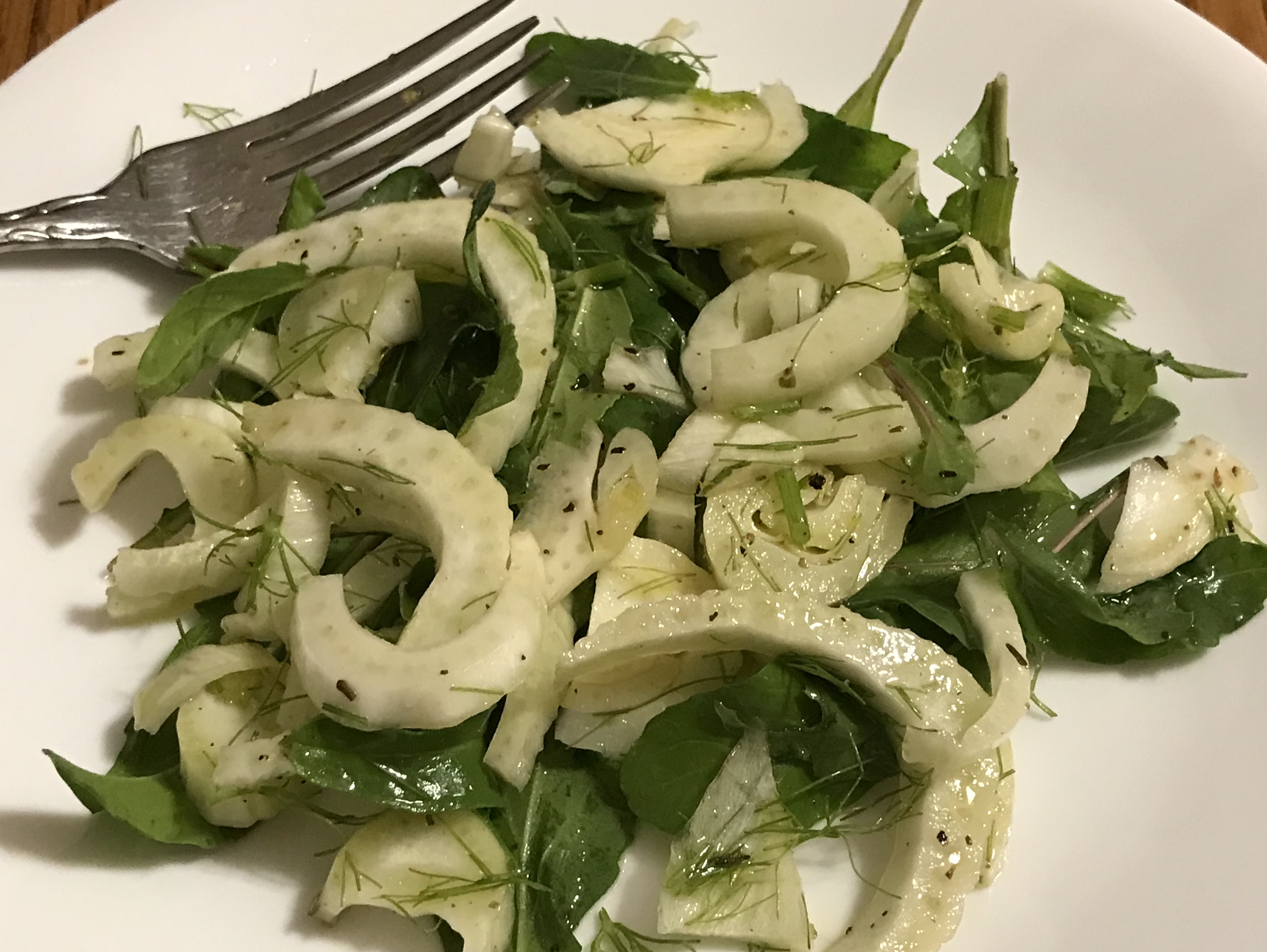
            The fennel and watercress made for a fascinating combination. Supposedly, Medieval Florentine wine merchants would give potential buyers fennel to snack on, hoping it would overwhelm their taste buds and make wine faults less noticeable. Here the sweet, licorice-like flavor served no such nefarious purpose. The watercress was distinctly peppery, much like arugula, which was a nice contrast with the fennel.

As the author says, the secret is the syrup. And the whipped cream.

            Everything was good, but the orange ring cake was incredible. The cake itself is flavored with grated orange peel, which seems to be popular in Italian recipes. The juice, meanwhile, goes into a syrup with lemon juice, which gets drizzled on the hot cake after baking. It was delicious, and would probably be even better if holes were poked in the cake first to let the syrup soak in more. Whipped cream was a delightful contrast to the sweet and tart flavor, in a fascinating change of pace from regular chocolate and yellow cakes. Not that there’s anything wrong with those, especially with fluffy homemade chocolate frosting, but the orange cake was delicious and pretty.

Standard
american cuisine, food history, recipes

Kentucky Derby Treat: Benedictine Dip/Spread

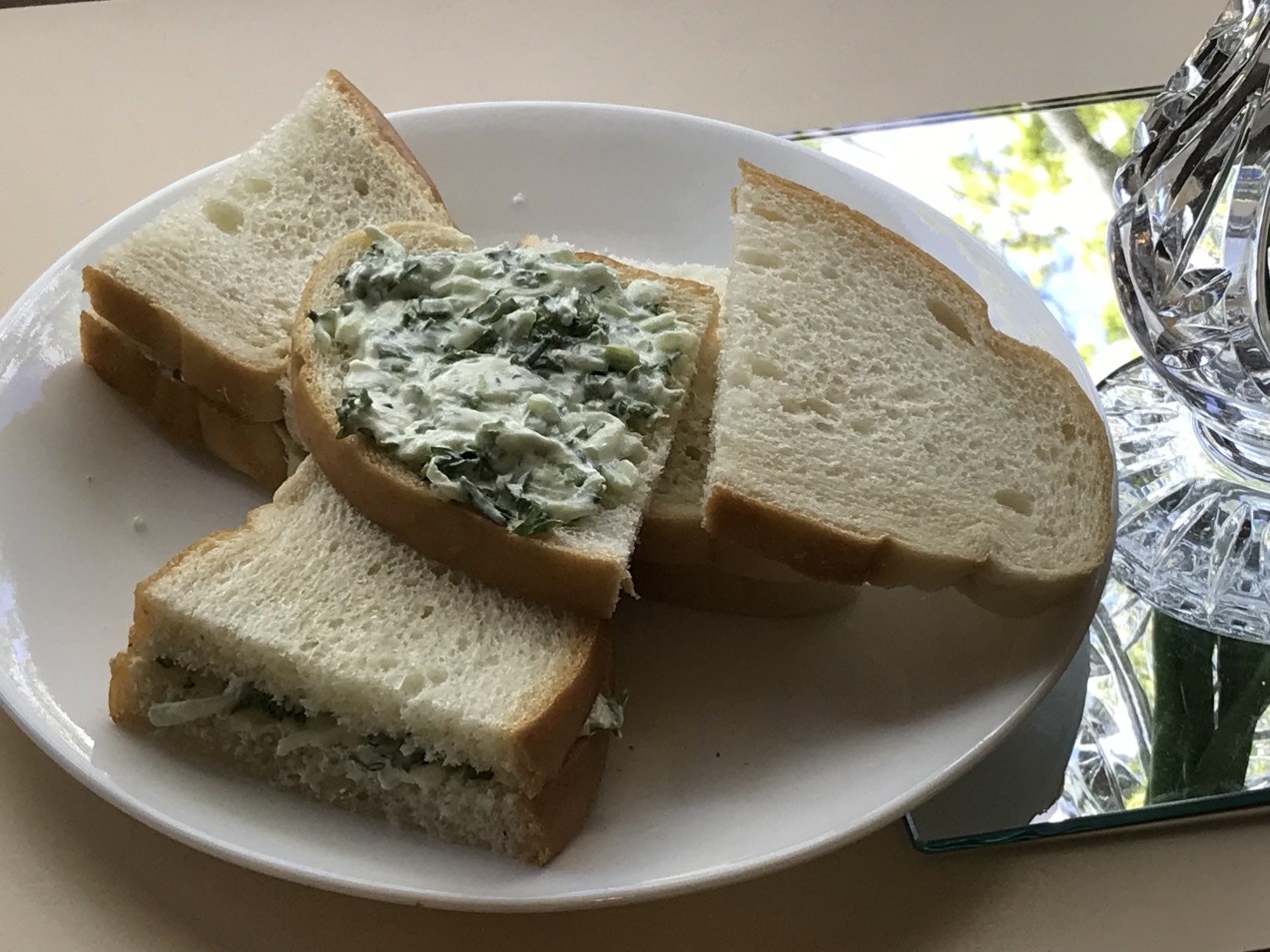
Benedictine sandwiches to enjoy during the Kentucky Derby

            The Saturday before last, a lot of people who don’t normally follow horse racing tuned into the Kentucky Derby. Personally, I like to see all the brightly-colored suits and over-the-top hats that aren’t worn anywhere else. And of course, the segments on the food, both at Churchill Downs and elsewhere. Hot brown sandwiches, strawberries and cream, chocolate walnut pie, and most of all mint juleps are associated with the first leg of the Triple Crown.

            So is benedictine, which has evolved a bit over the decades. At first, it was cream cheese flavored with onion and cucumber juice, maybe colored with green food coloring, served between white bread triangles as tea sandwiches. Supposedly, the name comes from the green color, which was similar to an herbal liqueur made by Benedictine monks in France. Modern recipes tend to skip the food coloring and use grated cucumbers and onions, not just the juice, and serve the benedictine as a dip.

            My recipe uses the modern approach. The grated cucumber and minced scallions give it a bit of texture, and parsley adds extra freshness and color. Spread it over bread, eat it with crackers, and/or vegetables, or, if you’re feeling fancy, put it in a sandwich with some cucumber slices and channel your inner Downton Abbey character. It’s also a great alternative to mayonnaise or miracle whip on more substantial sandwiches. This recipe is loaded with cucumber and herbs, but if you want a higher proportion of cream cheese, feel free to use two packages, or cut the other ingredients in half.

Note: The easiest way to seed cucumbers is to cut them in half lengthwise after peeling. Then it’s easy to remove the seeds with a spoon. The fresh aroma released in the process is nice too.

Ingredients:

  • 1 8oz package cream cheese, softened
  • 1 medium cucumber, peeled, seeded, grated, and squeezed to remove extra moisture
  • 1 bunch green onions/scallions, minced
  • 1 bunch parsley (I use curly for this recipe, but flat leaf is fine too), minced
  • Pinch salt

Directions:

  1. Beat cream cheese until smooth. Mix in the grated cucumber until evenly combined.
  2. Stir in the minced scallions and parsley, mixing until evenly distributed. Add salt to taste.
  3. Refrigerate for at least an hour, preferably longer, to give flavors time to meld.

Over a few days in the fridge, a bit of extra liquid will probably form in pockets on the dip. This is just liquid from the cucumbers and is nothing to worry about. I prefer to pour it off, but if you want a thinner texture, feel free to mix it back in.

            And as always, if you subscribe for free, you’ll get notifications of new posts in your inbox. Of course, if you do want to support my work with a monetary donation, I won’t complain about that either.

One-Time
Monthly
Yearly

Make a one-time donation

Make a monthly donation

Make a yearly donation

Choose an amount

$5.00
$15.00
$100.00
$5.00
$15.00
$100.00
$5.00
$15.00
$100.00

Or enter a custom amount

$

Your contribution is appreciated.

Your contribution is appreciated.

Your contribution is appreciated.

DonateDonate monthlyDonate yearly
Standard