food history, french cuisine, recipes

Using Up the Wine: Oeufs en Meurette (eggs poached in red wine)

1000 Foods (pg. 106) for information, recipe is my own creation

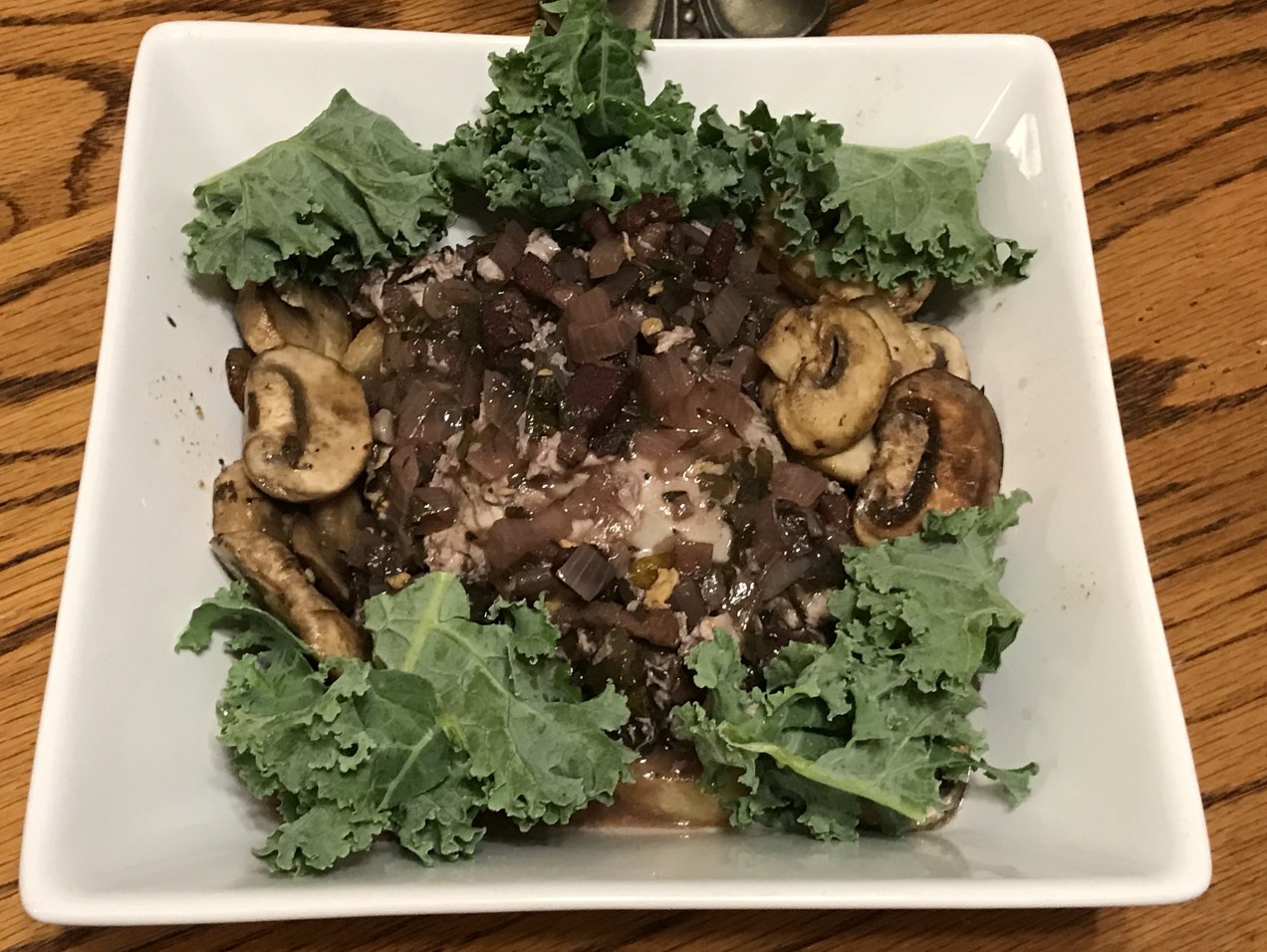
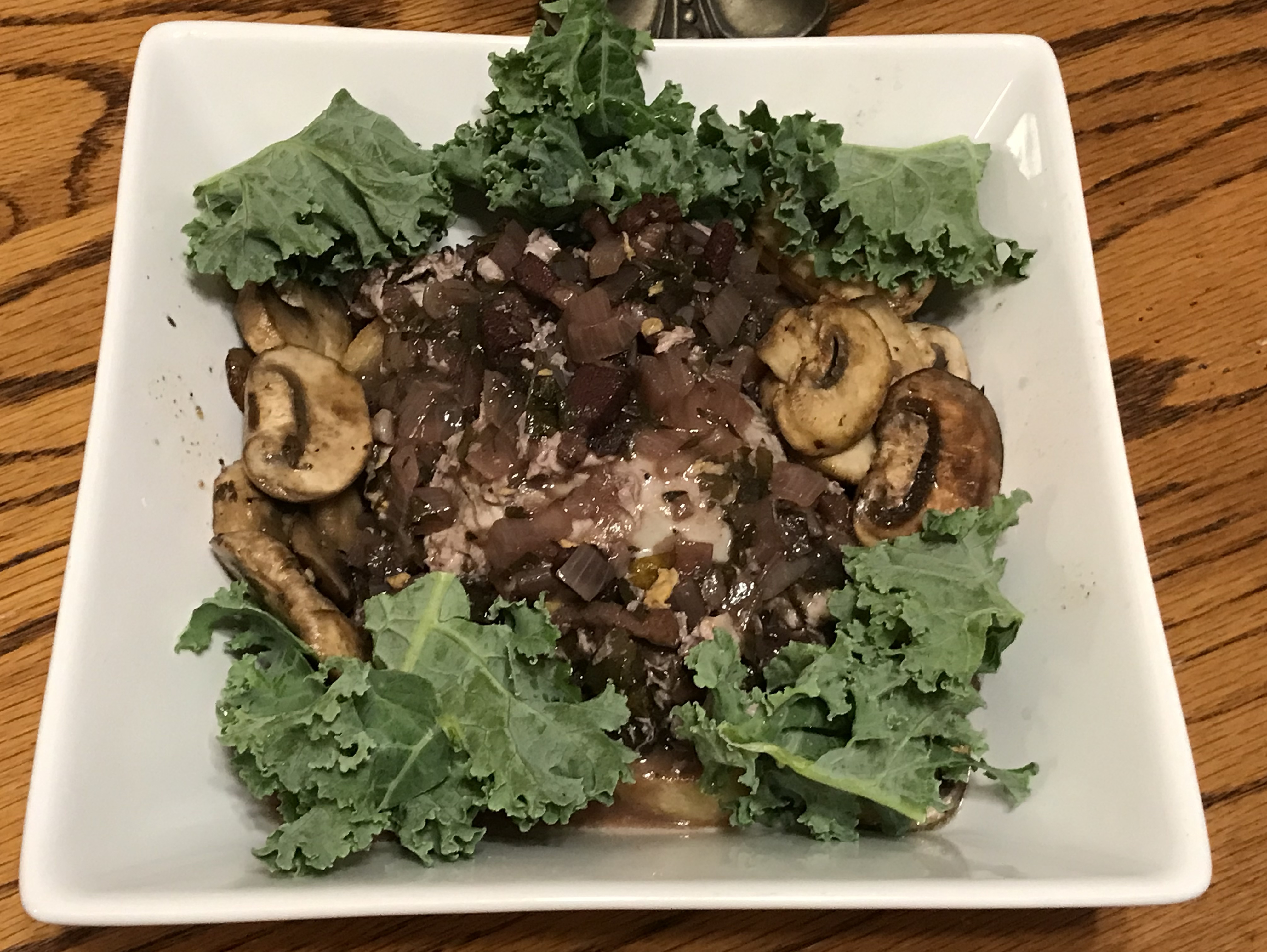
            After making the beef burgundy, I had about a third of a bottle of the wine left over. Not wanting to waste it but not really wanting to drink it either (too dry), I chose to make another dish from the French region of Burgundy: oeufs en meurette. These are basically eggs poached in a mix of wine, beef broth, and aromatics, which is then reduced to form a sauce. The eggs are served with toast to soak up the sauce and runny yolks, and are often garnished with sauteed onions or mushrooms.

            Even though I don’t usually like poached eggs, this was really good. The egg yolks blended into the sauce once the eggs were cut, making their runniness less apparent. All the butter, to toast the bread, sauté the mushrooms, and make roux to thicken the sauce probably helped too. The leftover sauce was even better with scrambled eggs. As an extra garnish, I added some kale, which holds up next to the hot ingredients much better than lettuce.

Ingredients:

  • 4 pieces thick-cut bacon, cut into matchsticks across the grain
  • 1 shallot, peeled, crushed with a chef’s knife, and minced
  • 2 cloves garlic, peeled, crushed with a chef’s knife, and minced
  • 1 cup red burgundy or other pinot noir (you don’t need an expensive bottle, mid or even medium-low priced is fine)
  • 2 bay leaves, broken in half
  • ½ teaspoon dried thyme or 1 ½ teaspoons fresh
  • Minced fresh parsley, if desired
  • 1 cup beef broth
  • 4 eggs
  • 1 tbsp softened butter, plus enough to coat skillet
  • 1 tbsp flour
  • 8 oz sliced mushrooms
  • 2 pieces thickly sliced white bread, such as Texas toast

            Directions:

  1. Brown the bacon over medium-low heat in a medium saucepan until enough fat has been rendered to coat the bottom. Add the shallots and cook until soft. Then add the garlic and cook until it takes on some color.
  2. Add the wine, bay leaves, and thyme to the saucepan and scrape the bottom with a rubber spatula. Add the broth and parsley, salt and pepper to taste, and bring to a simmer.
  3. Meanwhile, make a paste with a tablespoon each of butter and flour.
  4. Melt enough butter in the skillet to coat it, and brown the toast to the desired color over medium heat. Place each piece in a wide individual serving bowl.
  5. Add more butter to the skillet if needed along with the mushrooms. Salt and pepper to taste. Cook over medium-low heat, stirring occasionally, while you poach the eggs and reduce the sauce.
  6. Break the eggs into a bowl, and if strands of egg white in the sauce bother you, hold each in a fine-mesh strainer for a few seconds to let the loose part of the white drain.
  7. Carefully add the eggs to the wine and broth mixture, stirring gently. Poach just until the whites are firm, then remove them with a slotted spoon and place two over each piece of toast.
  8. Turn the heat up to medium, and add the butter and flour paste to the poaching liquid. Cook, stirring frequently, until the sauce is slightly thickened.
  9. Ladle sauce over each serving, adding mushrooms for garnish. If desired, you can also add some greens or parsley.

            And as always, to get recipes and posts sent straight to your inbox, make sure to subscribe for free. Or, if you’re feeling particularly generous, there’s a form for donations as well.

One-Time
Monthly
Yearly

Make a one-time donation

Make a monthly donation

Make a yearly donation

Choose an amount

$5.00
$15.00
$100.00
$5.00
$15.00
$100.00
$5.00
$15.00
$100.00

Or enter a custom amount

$

Your contribution is appreciated.

Your contribution is appreciated.

Your contribution is appreciated.

DonateDonate monthlyDonate yearly
Standard
food history, french cuisine, stew

Classic Julia Child: Boeuf Bourguignon

1000 Foods (pgs. 60 – 62), recipe found in text

            For centuries, from the 17th to the mid-20th and even beyond, French cuisine has had a stuffy, high-class reputation outside of France. The fanciest restaurants were almost all French, and they served elaborate, haute-cuisine creations that most home cooks would never attempt. Julia Child did more than any other English-language author to popularize French middle-class and provincial dishes. Even high-class French restaurants jumped on the bandwagon, often with a bit of fancying up.

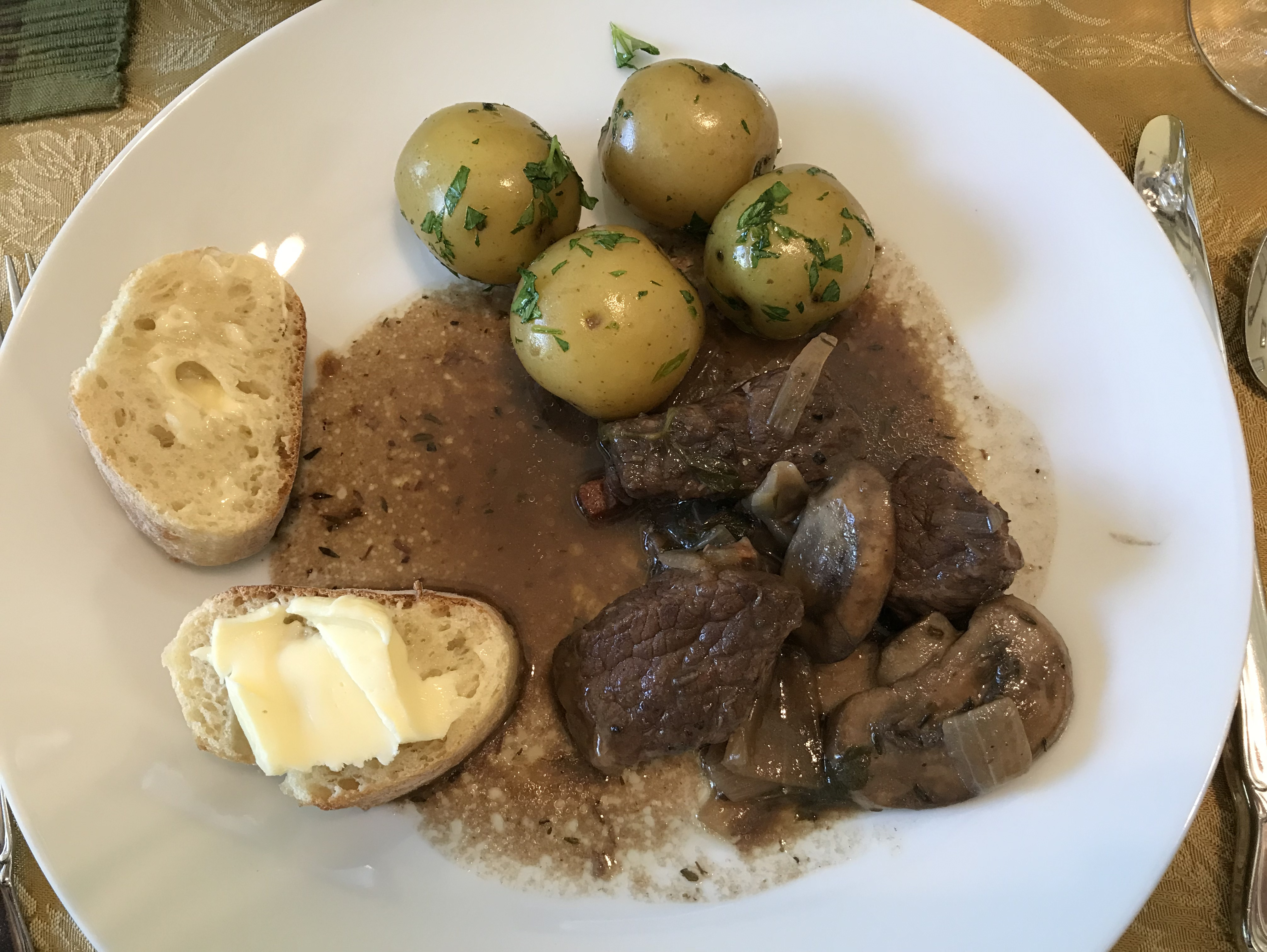
            Perhaps the most famous Julia Child dish of all is boeuf bourguignon, a beef stew starring the Burgundy region’s famous red wine. Low, slow cooking tenderizes economical beef cuts like chuck while creating a rich gravy. Even more flavor comes from onions, shallots, garlic, mushrooms, parsley, thyme, and dried orange peel. The recipe does take a bit more prep work and finessing than the typical American or British beef stew, separately cooking the onions, mushrooms, and bacon before adding them to the pot, but none of it is very difficult. Just set aside enough time, particularly for marinating the meat.

            Along with Bordeaux in the southwest, the area of Burgundy in the east has been one of France’s most prestigious wine regions since the Middle Ages. Vineyards there produce some of the most expensive pinot noir in the world, along with more affordable wine. The recipe calls for a good but not extravagant red burgundy. Since the local grocery store didn’t have French burgundy, I got a bottle of California pinot noir. Supposedly the vines were started with cuttings from Burgundy, and it was under $20 but not the absolute cheapest option. In other words, mid-priced by flyover country standards, and there was some leftover to serve with the stew.

            The French region of Burgundy has a long and complicated political history. Sandwiched between France and the Holy Roman Empire, wealthy and powerful Burgundy was often either fully or partially independent. Throughout the Middle Ages, the dukes there had a love-hate relationship with the kings of France and caused them all sorts of headaches. During the Hundred Years’ War, King Jean II granted the duchy to his youngest son Philippe the Bold. Through his own and his son’s marriages, the duke of Burgundy gained control of the Flanders, Holland, Brabant, and Hainaut in the Low Countries.

            For much of the 15th Century, the dukes of Burgundy were almost as powerful as the French kings themselves. Due to a conflict over who got to act as regent whenever Charles VI experienced an episode of psychosis, which happened almost annually, for months at a time, over a 30-year period, Burgundy ended up siding with the English for part of the Hundred Years’ War. Without their help, Henry V of England would probably not have had such spectacular success, and Burgundy’s later return to French allegiance helped turn the tide back toward France once and for all. Meanwhile, the dukes of Burgundy had one of the most dazzling courts in Europe.

            Burgundy’s rise was stopped abruptly when Duke Charles the Bold was killed in battle without a male heir in 1477. Louis XI of France seized his French territories, but his attempt to take Flanders and force Charles’ daughter Marie to marry his own son, the future Charles VIII, backfired. Burgundy and the Holy Roman Emperor Frederick III had previously worked together to counter Louis XI, to the point of negotiating a marriage between his Marie and Frederick’s son Maximilian. For political reasons, and since the future Charles VIII was only 8 years old while Maximilian was 18, the 20-year-old Marie chose the latter. Their son later married the daughter of Ferdinand and Isabella, bringing the Habsburgs to Spain and leading to three more centuries of conflict with France.

            This dish is a good project for a day off work, when you can take your time and enjoy the process. Boeuf bourguignon, or beef burgundy, is also a great dish for entertaining, and not just because it can be made ahead. It makes you seem classy without breaking the bank. And the taste is a revelation. Beef burgundy is probably one of the best dishes I’ve made so far. The flavors of beef, wine, onions, and mushrooms all blend together in perfect harmony.

            Mimi Sheraton recommends serving it with little potatoes, tossed with butter and parsley after cooking. Since this was already a special meal, I added two more items. A simple green salad is a nice fresh contrast, and with the amount of flavorful gravy, you definitely want bread to soak it up. Naturally, since this is a French dish, a crusty baguette is the way to go.

            To get recipes and posts sent straight to your inbox, don’t forget to subscribe.

Standard