Calabrian cuisine - chicken, spaghetti, and zucchini
food history, italian cuisine

Cook’s Tour of Italy Menu 77 (Pgs. 238 – 241): Menu for 4, Calabrian Coast

Region: South Mainland/Islands (Calabria)

Menu: Calabrian Onion Soup with Potatoes, Skewered “Tuna” with Lemon and Oregano, Spaghetti with Garlic and Chili, Baked Zucchini with Mozzarella, Roasted Grapes with Caciocavallo

Recommended Wine: Nozze d’Oro, Sicilian white

            Here is another southern Italian menu with potatoes. As discussed before, even though bread and pasta are more widely eaten there, people living in the region do occasionally eat potatoes. Like in neighboring Basilicata, Calabria has a long history of inequality and poverty, though tourism has improved the region’s economy in recent years. Directly across the Strait of Messina from Sicily, Calabrian farmers grow many similar crops, including olives and citrus fruits. Of particular note are bergamot oranges, whose aromatic peel gives earl grey tea its distinctive flavor.

            The soup was a mix of onions, potatoes, and chicken broth, flavored with a bit of butter and brandy. It had a surprisingly sweet edge to it, probably due to sautéing the onions first, caramelizing their sugars. After getting used to it, this was an interesting change of pace, especially when balanced with a bit of cheese, in this case Romano. Personally I prefer the Roman minestrone or the French soupe au pistou, but there was definitely nothing wrong with this.

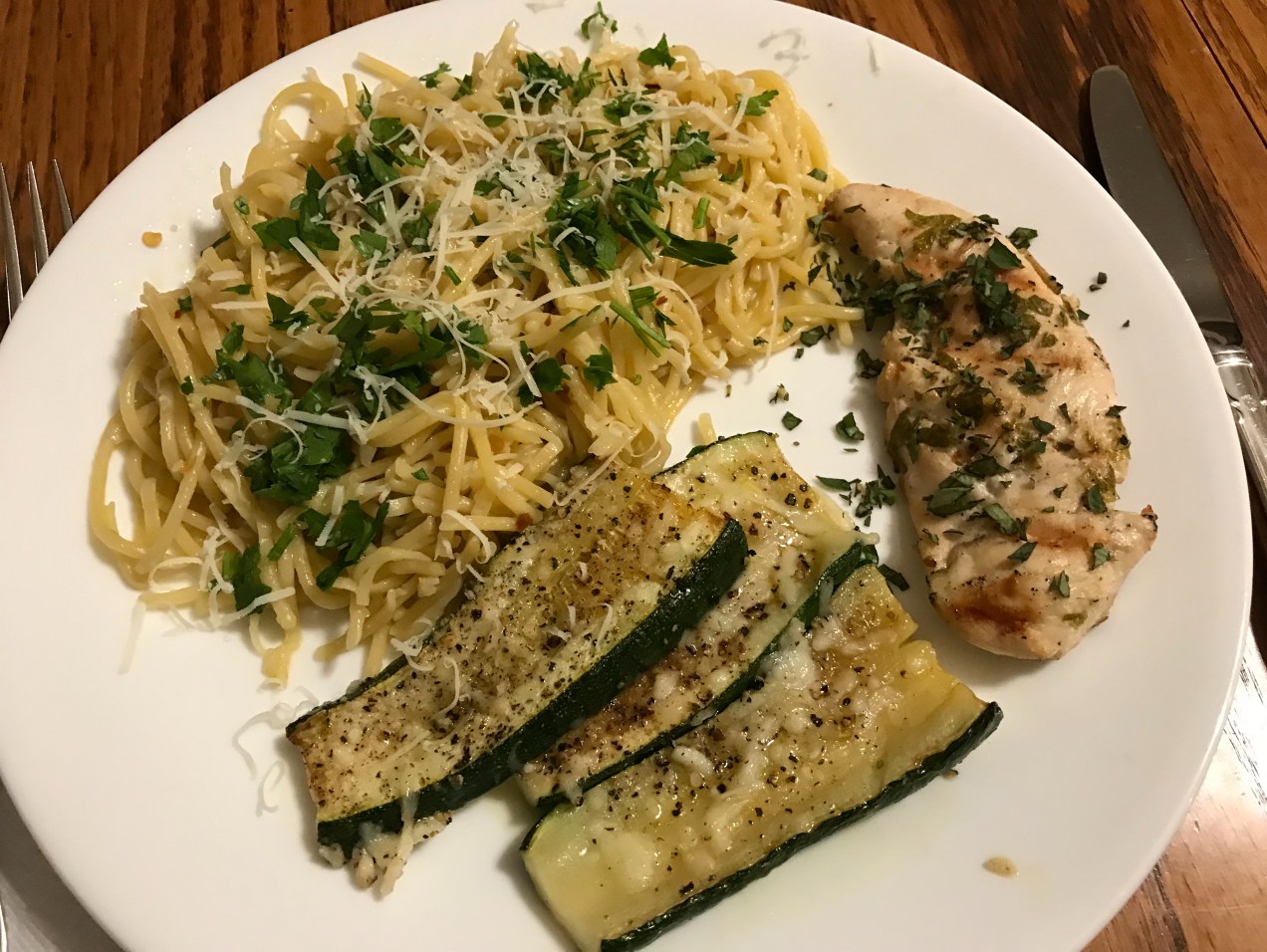
            Chicken replaced tuna with lemon and oregano, which go well with pretty much any protein. Centuries if not millennia of heavy fishing have made tuna rarer while factory farming has brought the price of chicken down, but at one time chicken was the pricier treat. Spaghetti with a simple mix of oil, minced garlic, and chili flakes is easy to make, uses pantry staples, and pairs well with either.

            It seemed a bit unusual to cook zucchini in the oven, for the simple fact that during the summer when it is in season, many people prefer not to turn the oven on. Maybe the situation is different in Italy, where people are more likely to open windows than rely on air conditioning, and where drier heat makes that feasible. Either way, I outright disregarded the advice to serve the zucchini on separate plates. It saves a few dishes, and the green color was a nice contrast with the chicken and pasta.

            Roasting grapes was an interesting experiment. They aren’t cooked for so long that they become raisins, which are more cost-effective to buy than to make. Rather, they bake just long enough to soften and collapse a bit, concentrating their sugars. I personally prefer them fresh where the skin has a bit of a crunch, but these are enjoyable. No caciocavallo was available.

            Overall, this would be a great special summer menu that isn’t difficult to make. If you’re worried about turning on the oven, I’m sure the zucchini could be grilled, with slices of mozzarella added at the end of cooking. And to be honest, there’s no need to mess with fresh grapes. Table (as opposed to wine) grapes are bred to be juicy and have that slight crunch as you bite through the skin. They’re best enjoyed as is, without bothering with the oven.
Standard
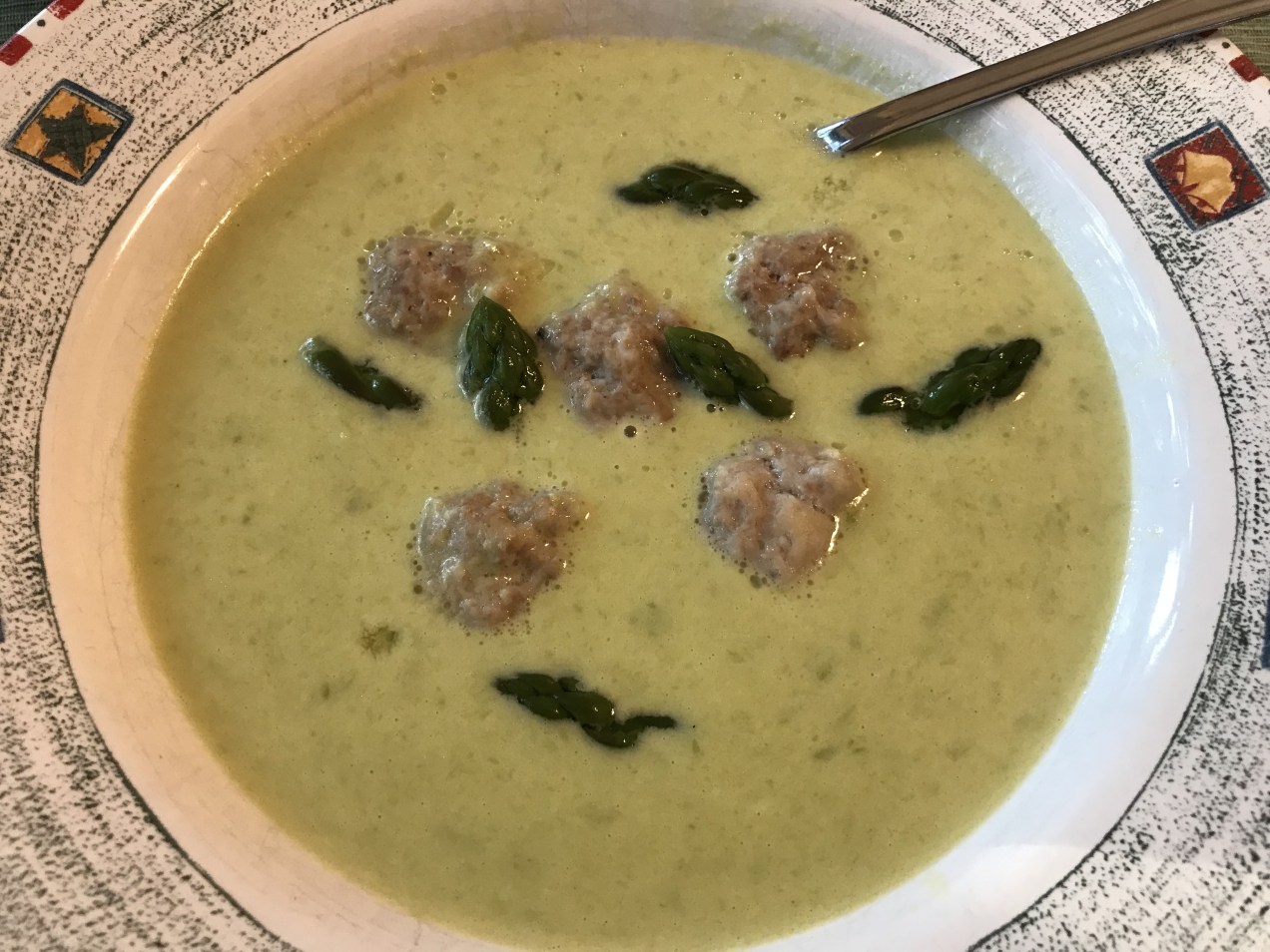
Aspargessuppe - Danish asparagus soup with mock veal dumplings
danish cuisine, food history, soup

Aspargessuppe: Danish Spring Asparagus Soup

1000 Foods (pgs. 344 – 346), recipe found in text

            Ever since the days of Ancient Rome, asparagus has been a symbol of spring and early summer. Ready sooner than most other vegetables, it seems to be especially popular in northern Europe, where long winters mean a longer season without fresh produce. Perhaps this makes people eager to enjoy everything about summer while they can.

            An interesting Danish recipe for asparagus is a soup enriched with veal dumplings and garnished with asparagus tips. Supposedly, it is not as common as it used to be, at least in restaurants. Most likely, this has to do with how fiddly it is to make. The recipe in the text requires at least five saucepans – one to cook and puree the asparagus, one to heat cream or half-and-half, one to heat broth, one to make a combination bechamel/velouté sauce, and one to cook the dumplings. Egg yolks are added at the last minute. Once they are, the soup has to be heated very carefully to prevent curdling.

            I don’t have five saucepans, and I assume most other people don’t either. If the broth and cream are heated in the microwave, the number can be reduced to a more manageable three. You can save another step by not straining the pureed asparagus. The soup won’t be as smooth, but I personally prefer for it to have a bit more texture.

            The first thickener is a combination of two of the French “mother sauces,” bechamel and velouté. Both use a butter and flour mix called roux to thicken a liquid. For bechamel, or white sauce, the liquid is milk, and for velouté, it is a light broth, typically poultry or fish. Yes, velouté is essentially gravy, but using the French term makes it sound fancy. Additional thickening comes from tempered egg yolks. About half of the soup is gradually whisked into the beaten egg yolks to bring them up to temperature, then the mix is added to the pot and heated carefully.

            This was an excellent soup. The asparagus flavor was clear and distinct, enriched but not overpowered by the bechamel/velouté and egg yolks. For some reason, the combined beef and pork “veal” dumplings didn’t puff up like they were supposed to. I suspect this was because I had previously frozen them and didn’t allow adequate time to thaw before cooking, but they still tasted good. For an easier recipe, the soup would be just as good plain. As with most asparagus soup recipes, the asparagus tips are set aside after cooking, reserved as the perfect garnish.

One-Time
Monthly
Yearly

Make a one-time donation

Make a monthly donation

Make a yearly donation

Choose an amount

$5.00
$15.00
$100.00
$5.00
$15.00
$100.00
$5.00
$15.00
$100.00

Or enter a custom amount

$

Your contribution is appreciated.

Your contribution is appreciated.

Your contribution is appreciated.

DonateDonate monthlyDonate yearly
Standard
Anoush Aboor - Armenian wheat and apricot pudding
armenian cuisine, dessert, food history

Armenian Christmas Pudding: Anoush Aboor (wheat berry and dried apricot pudding)

1000 Foods (pgs. 507 – 508), recipe is in the text

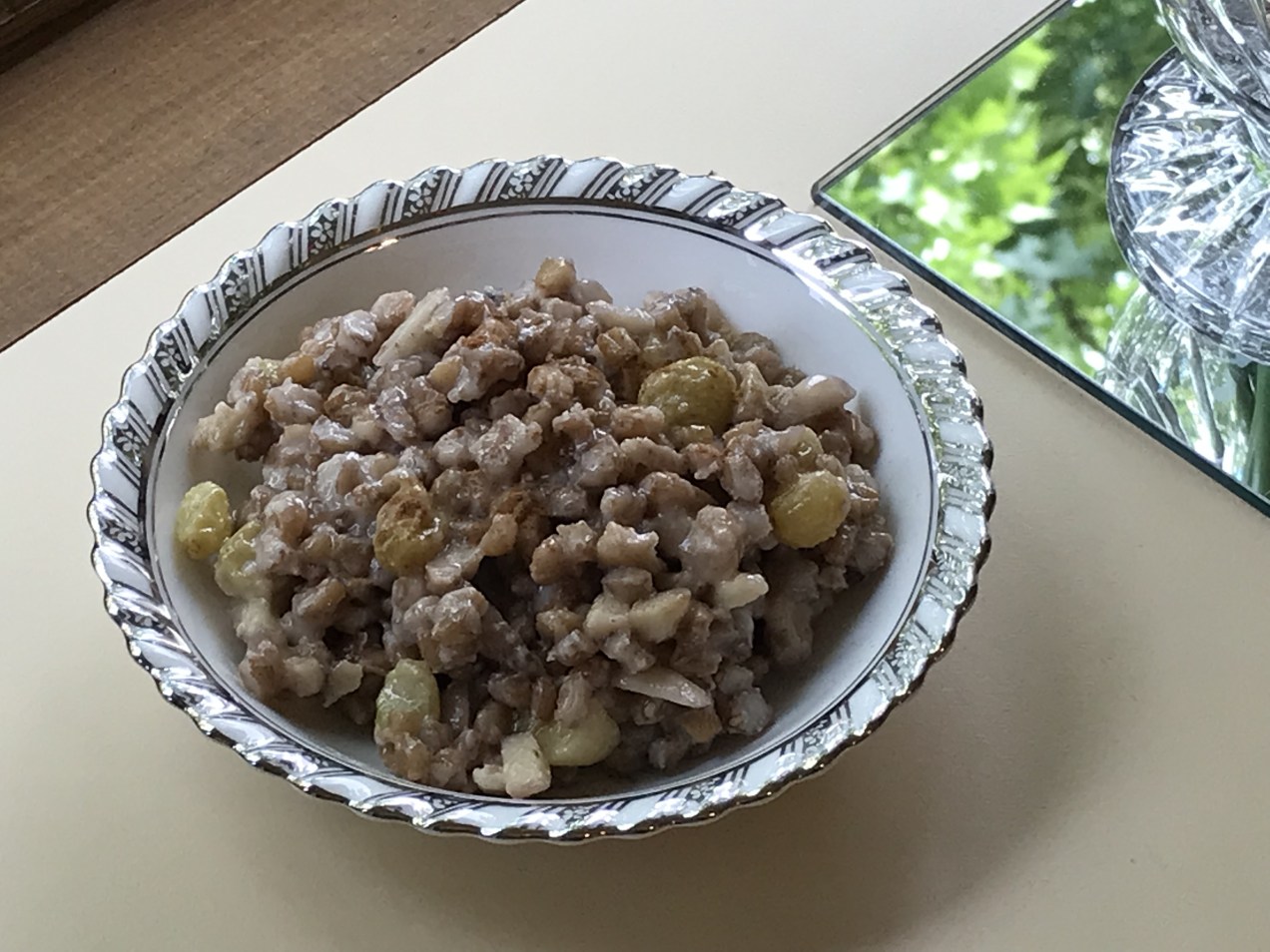
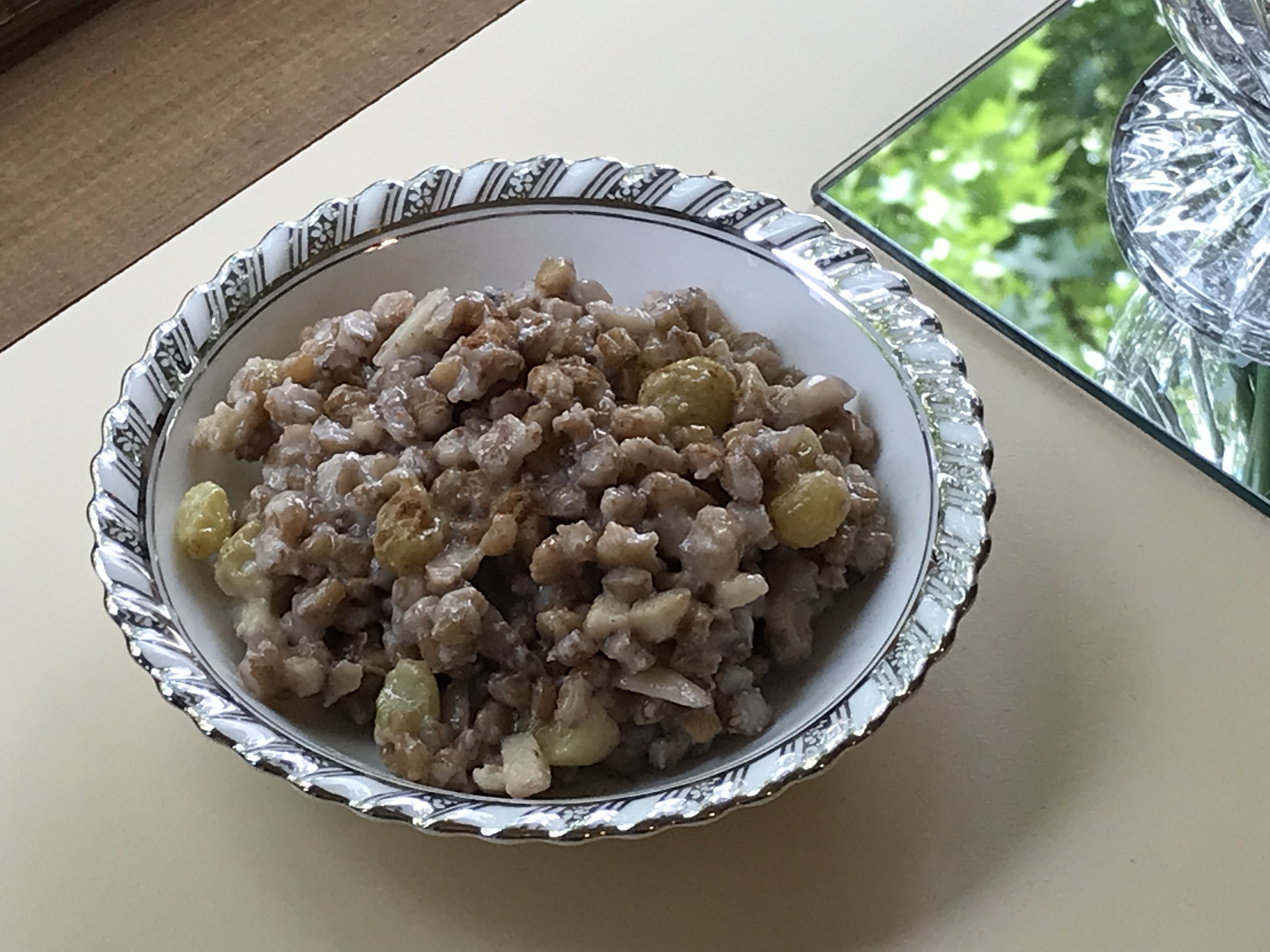
            If you’re wondering why I made a Christmas pudding in the middle of summer, it’s because I had all the ingredients in the pantry and wanted to use up what I could. The mix of wheat berries, dried apricots and golden raisins, nuts, and honey sounded like a healthy, tasty alternative to heavy desserts while still satisfying the craving for something sweet and starchy.

            Particularly popular at Christmas, anoush aboor is eaten year-round in both Armenia and Turkey. With the exception of the sugar and cinnamon, all the ingredients have been grown in the region for thousands of years. Situated in eastern Anatolia, near the headwaters of the Tigris and Euphrates rivers, this area was home to some of the earliest farmers. They grew wheat, barley, peas, and beans, raised sheep, goats, and cattle, and soon began selectively breeding and cultivating a variety of fruits, vegetables, and nuts.

            Apricots, an essential part of the dish, were originally domesticated somewhere in Turkey or Armenia. When the fruit was introduced to Rome, the Romans called it prunus armeniacus, meaning roughly “Armenian plum,” or praecox for early, since they ripen before most other stone fruits. Fresh apricots are delicious in the early summer, but are highly perishable and rarely available out of season. To have apricots year-round, people have been sun-drying them for millennia. In the Middle East’s hot dry summers, this was easy and didn’t require the use of often-scarce fuel. Even today, Turkey produces much of the world’s supply.

            Literally, the name anoush aboor translates to “sweet soup,” probably because of its porridge-like consistency. The wheat berries are cooked until they “pop” and release their starch into the water, thickening it. Despite being cooked in just water, the pudding had an almost creamy texture and even taste, sweetened with a mix of sugar, honey, and dried fruit. Chopped almonds and walnuts (I skipped the pine nuts and added extra of the others) gave it a nice crunch, and a sprinkle of cinnamon was a nice finishing touch.

            I had one problem with the recipe. It called for a teaspoon of salt. Since I made a half batch, I used half a teaspoon, which didn’t sound like much. Unfortunately, even that amount made the pudding taste distinctly briny and a bit unpleasant. The pudding was much better stirred into unsalted hot wheat cereal to cut the salt while adding texture, but to be honest, I don’t think I would make this again. Back before modern cakes, cookies, and brownies it might have been a nice treat. Today, it’s pretty lackluster.

One-Time
Monthly
Yearly

Make a one-time donation

Make a monthly donation

Make a yearly donation

Choose an amount

$5.00
$15.00
$100.00
$5.00
$15.00
$100.00
$5.00
$15.00
$100.00

Or enter a custom amount

$

Your contribution is appreciated.

Your contribution is appreciated.

Your contribution is appreciated.

DonateDonate monthlyDonate yearly
Standard
Patriotic pound cake trifle
american cuisine, british cuisine, dessert, food history, recipes

Patriotic Trifle: An American Spin on a British Classic

1000 Foods (pgs. 31 – 32) for information, recipe is my own creation

            While British cuisine doesn’t have a great reputation abroad, desserts are an exception to this rule. Drool-worthy examples abound on the Great British Baking Show (which you should never watch while hungry), and one of the classics is trifle. Trifles also appear multiple times in the Harry Potter series, typically at celebrations, and in the second book, Harry even ends up wearing one.

            The specifics vary by recipe, but they always include cake or ladyfinger biscuits, custard and/or whipped cream, and fruit and/or jam. Basically something starchy, something creamy, and something fruity. British versions usually include sherry or another fortified wine. Originally, this was to help revive stale cake. With modern recipes this is unnecessary, but a lot of people like the taste. I omit this for a family-friendly version and clearer fruit flavor, bursting with berries and vanilla.

            Wine and liquor were once extremely common dessert flavorings. Since the 19th Century, perhaps because of the temperance movement, vanilla has largely taken their place. Despite its boring reputation, vanilla blends extremely well with fruit, chocolate, caramel, cream, and pretty much anything else you might put in a dessert. For a beautiful, fresh, and surprisingly easy centerpiece, the essentials are a good pound cake, seasonal or frozen fruit, vanilla pudding, and homemade whipped cream.

            Strawberries make a particularly good trifle, because as the trifle sits in the refrigerator, the lightly sugared berries release lots of flavorful juice that soaks into the cake. If they aren’t in season, it’s better to use frozen, which tend to have a better flavor (and price) than the out-of-season fresh berries, which are usually picked underripe so they ship better and last longer on the shelf. This applies for any fruit, not just strawberries.

            Pound cake is another crucial ingredient, and you don’t have to make your own for success. The frozen Sara Lee pound cakes are excellent quality. I like to make my own vanilla pudding, but an instant mix still produces a special dessert if you’re crunched for time. Just avoid the sugar-free kind, and don’t make it with skim milk. And make your own whipped cream. It makes a huge difference, and with the cost of the spray bottles, it’s actually cheaper when you need a lot.

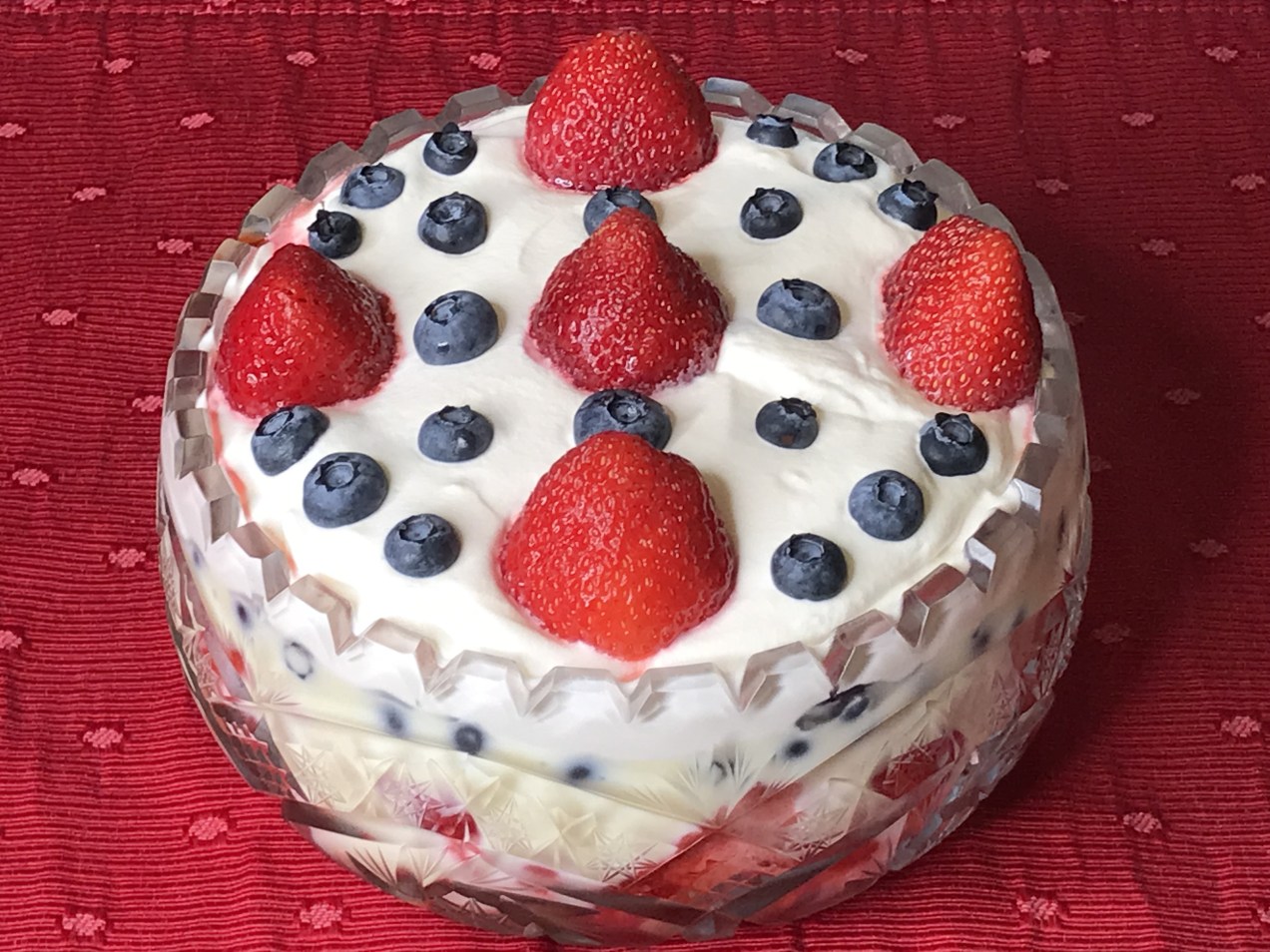
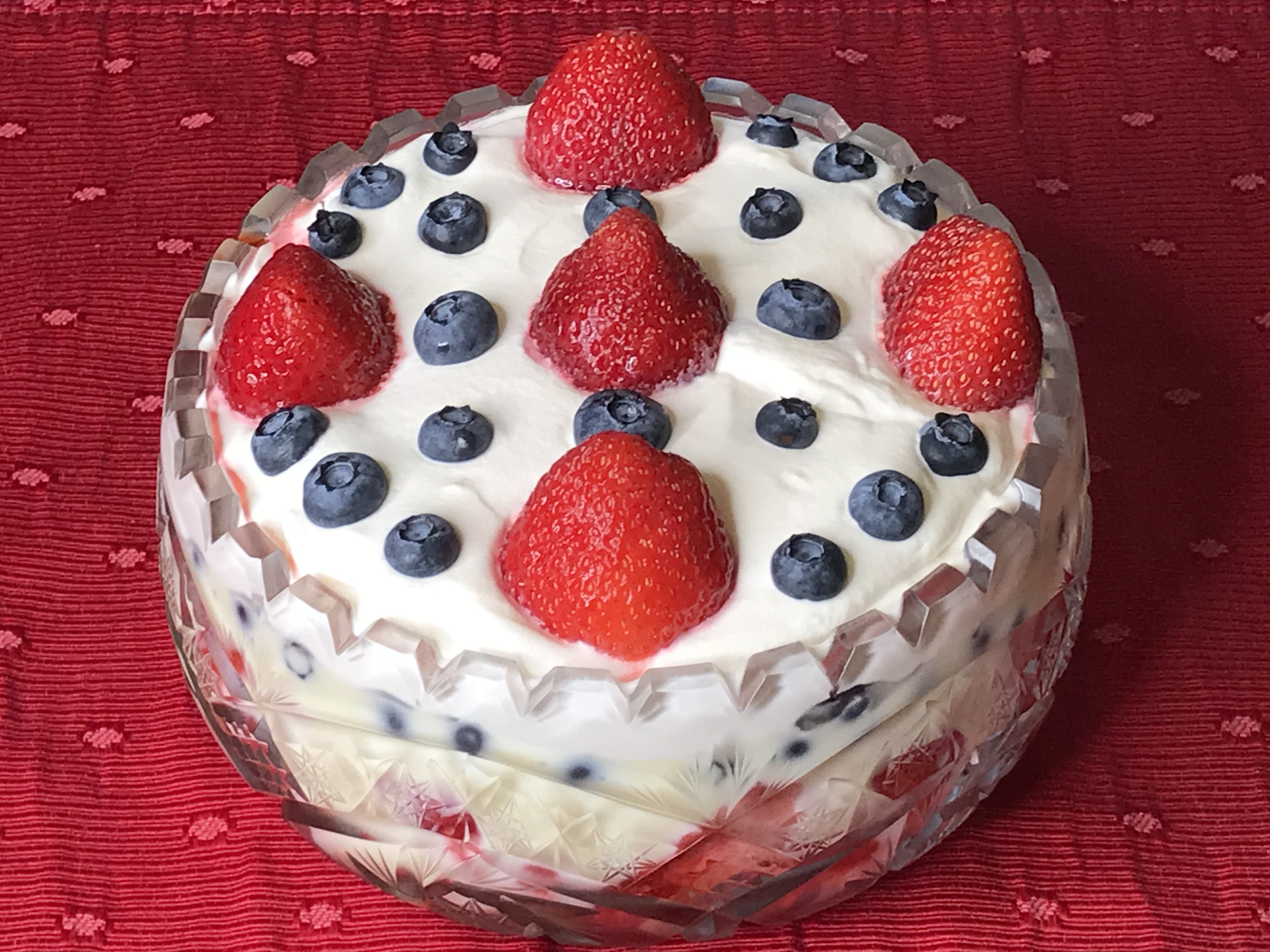
            For a full red, white, and blue effect, blueberries can be sprinkled over the top of the trifle or added between the layers. Since they don’t produce much juice, I usually stick with a strictly strawberry trifle, but I added them this time because they were in season and it was for the 4th of July. Just make sure to layer the trifle in a glass bowl if at all possible, to show it off to full effect.

To impress your guests, decorate the top with fruit.

            Note that the quantities in the recipe are not always specified. This is because different serving bowls have varying capacity, and everyone has their own preference for how much of each ingredient to add.

            Ingredients:

  • 1 pound cake, homemade or Sara Lee
  • Strawberries
  • 2 tablespoons sugar per quart of strawberries
  • Vanilla pudding, homemade or from a mix
  • Blueberries, optional
  • 1 cup whipping cream
  • 1 tablespoon powdered sugar per cup whipping cream
  • ½ teaspoon vanilla per cup whipping cream

            Directions:

  1. Hull and halve the strawberries, cutting any larger berries into quarters. Toss with the sugar and let stand while you prepare the other ingredients.
  2. Cut enough of the pound cake into cubes to cover the bottom of the serving bowl.
  3. Whip the cream with the powdered sugar and vanilla until soft peaks form.
  4. Layer the cake cubes in the bottom of the serving dish. Top with the strawberries and drizzle any liquid over all.
  5. Add the pudding over the strawberries, and top with the blueberries if using.
  6. Finish the trifle with the whipped cream, decorating the top with fruit if desired.

            If strawberry season is over but you have fresh peaches or raspberries, I’m sure they would also make an excellent trifle. And as always, don’t forget to subscribe to get posts sent to your inbox for free.

One-Time
Monthly
Yearly

Make a one-time donation

Make a monthly donation

Make a yearly donation

Choose an amount

$5.00
$15.00
$100.00
$5.00
$15.00
$100.00
$5.00
$15.00
$100.00

Or enter a custom amount

$

Your contribution is appreciated.

Your contribution is appreciated.

Your contribution is appreciated.

DonateDonate monthlyDonate yearly
Standard
Modified Cobb salad platter
american cuisine, food history, recipes

Cobb Salad: A Cold Main Course for Hot Weather

1000 Foods (pg. 547) for information, recipe is my own creation

            This upcoming weekend is supposed to be hot. At times like these, most people don’t want to heat up the kitchen by turning the oven on. Grilling, quick-cooking pasta, and stir-fry are all popular options for home cooks, as are a variety of cold salads.

            Supposedly, cobb salad was invented in California in the 1930s as a way to use up leftovers. Turning leftovers into salads was just as common then as now, though inexplicably this often involved mayonnaise and/or gelatin. Thankfully, cobb salad avoided this in favor of a vinaigrette flavored with lemon juice, Worcestershire sauce, and garlic. Original ingredients included hard-boiled eggs, blue cheese, chicken, bacon, avocado, and tomatoes, presented in rows for a striped effect.

            Inevitably, cobb salad’s popularity in Hollywood spread the recipe nationwide, with some variations. Since avocados were harder to find outside California, they were frequently omitted, and sometimes other diced ingredients like ham were added. Shredded cheese might replace the blue cheese, and some cooks might use the mayonnaise-based dressings popular at the time.

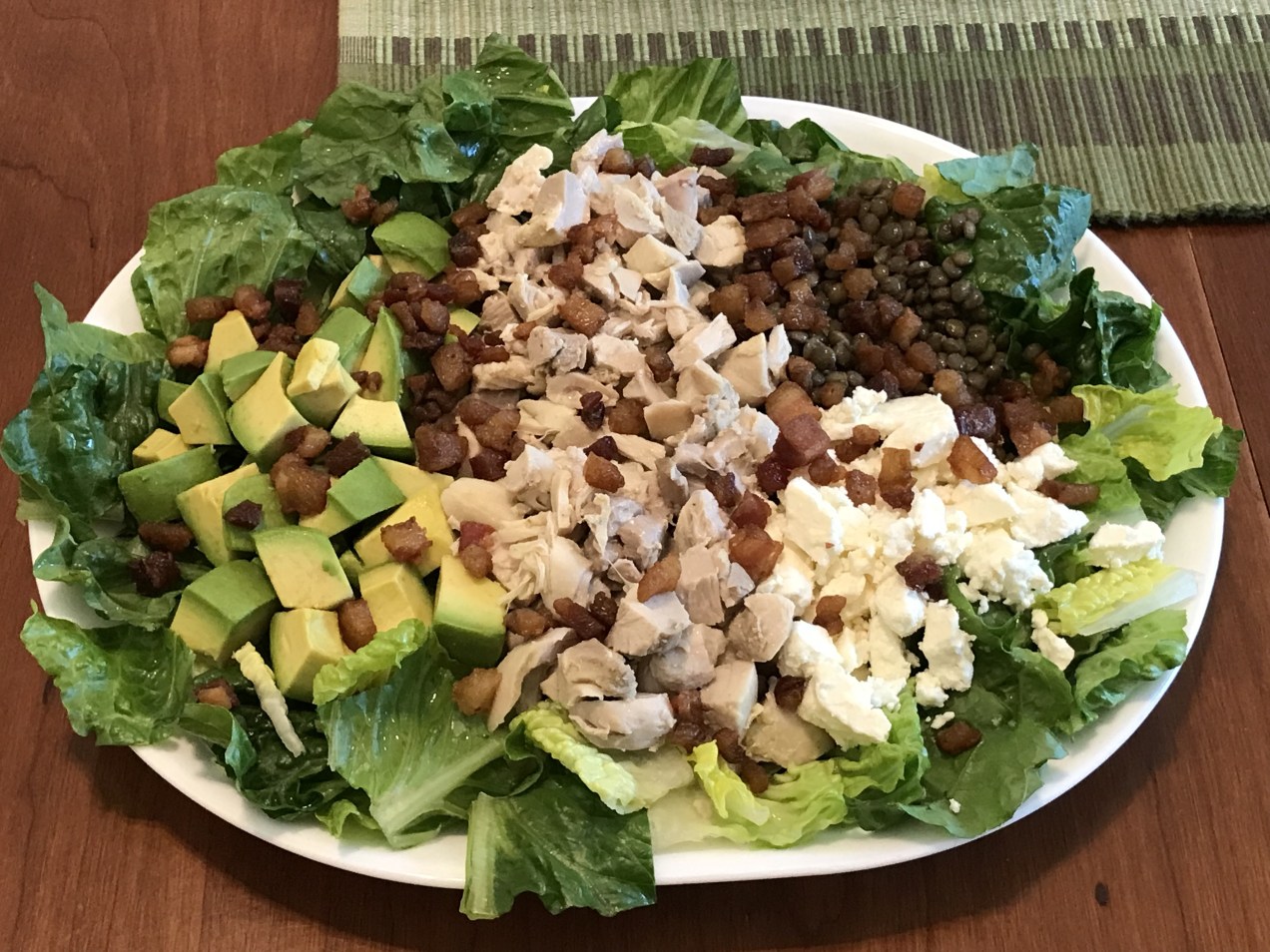
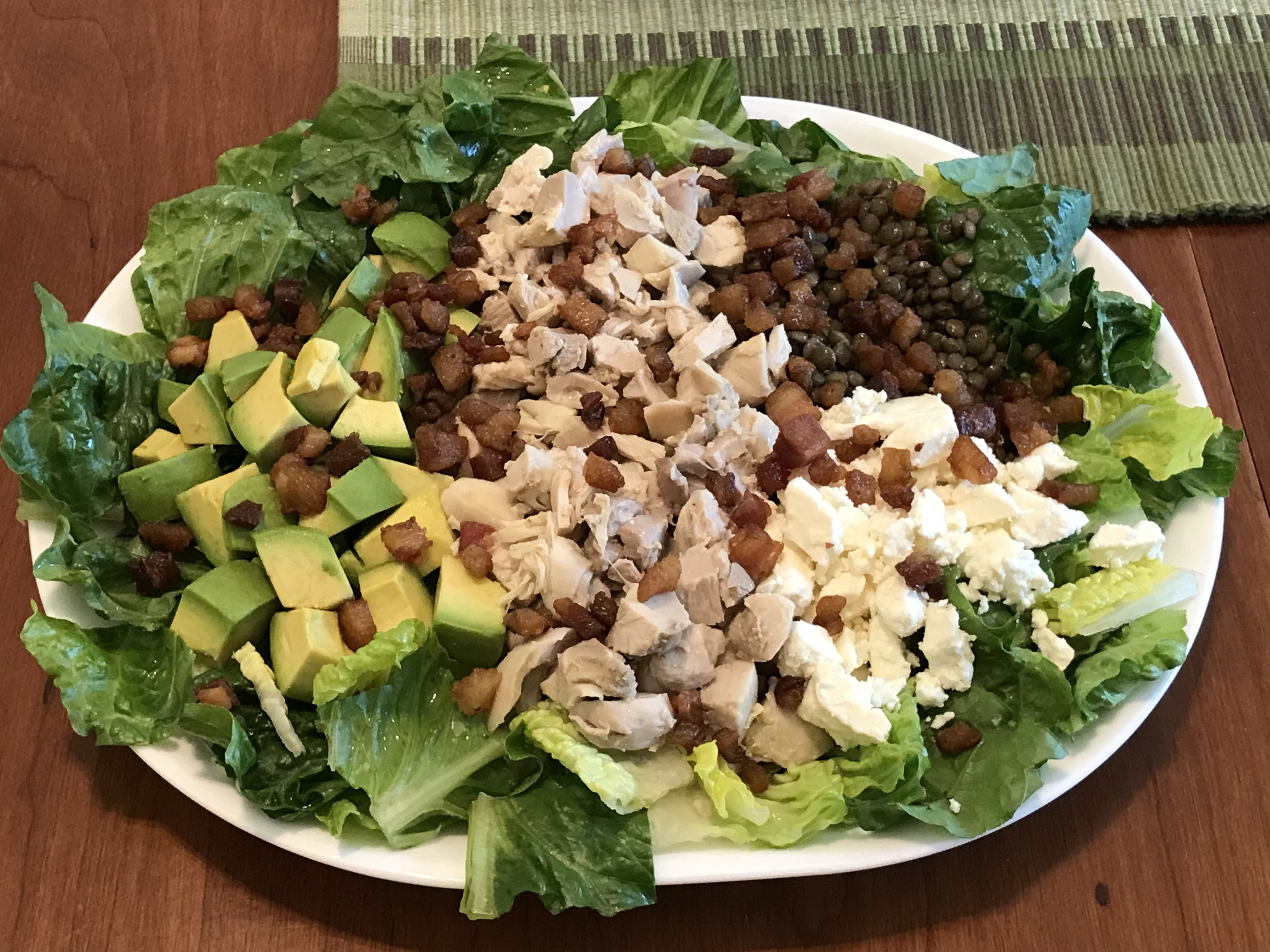
            For my own recipe, I made three adjustments. Since I don’t like boiled eggs or blue cheese, I replaced them with feta and lentils. The French-style green lentils I found at Woodman’s were particularly good, with an almost meaty flavor. And I omitted the tomatoes because they are not yet in season fresh.

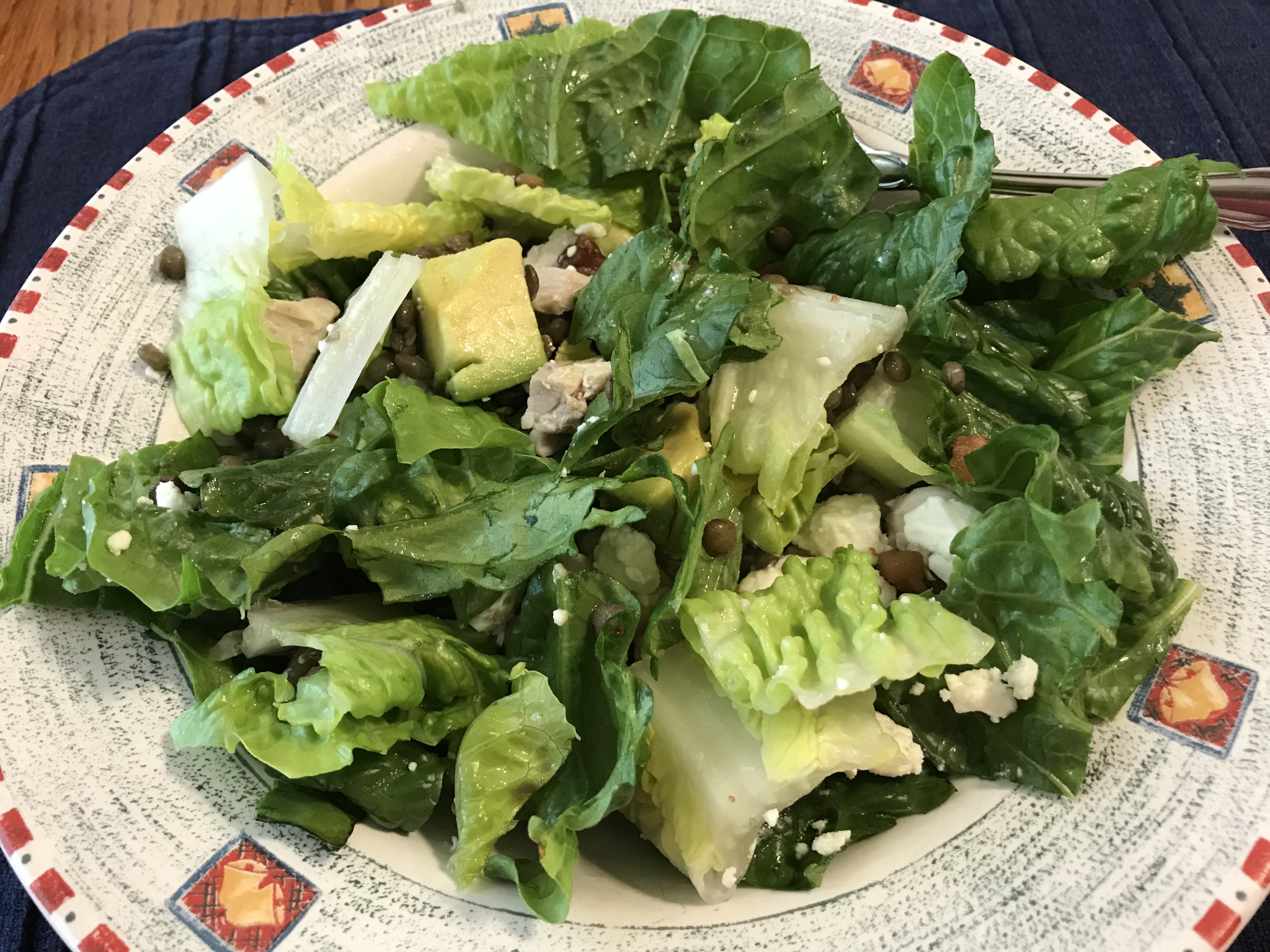
            The final result was a mix of chicken, avocados, bacon, feta cheese, lentils, and romaine lettuce with a flavorful vinaigrette. All the different textures and flavors contrasted well with each other, and the platter was just so pretty.

            Ingredients:

  • 1 head romaine lettuce, washed and torn into bite-sized pieces
  • About 1 pound boneless skinless chicken breasts or thighs, cooked, cooled, and cut into cubes
  • About 8 oz feta or blue cheese
  • About 8 oz bacon, sliced across the grain into roughly 1-inch pieces, cooked, drained, and cooled
  • 1 cup French-style green lentils (I used Bob’s Red Mill brand) cooked and cooled, or a few chopped hard-boiled eggs
  • 2 ripe avocados, halved, seeded, and cut into cubes
  • Sliced ripe tomatoes, if in season
  • Juice of ½ lemon
  • 1 tbsp red or white wine vinegar
  • 4 tbsp olive oil
  • 1 or 2 cloves garlic, peeled and crushed with the side of a knife
  • A few dashes Worcestershire sauce
  • Salt and pepper to taste

            Directions:

  1. For the dressing: combine the lemon juice, vinegar, olive oil, garlic, Worcestershire sauce, salt, and pepper in a bowl and beat together with a fork. Let rest for at least an hour to infuse the garlic flavor.
  2. Arrange the remaining ingredients either on a platter or individual plates. Rows are the most traditional, but feel free to let your creativity run wild.
  3. Remove the garlic cloves from the dressing. Whisk the dressing and pour over the salad before the liquids separate. Serve.

            To get posts sent directly to your inbox, don’t forget to subscribe. And if you want to support my work with a one-time or recurring donation, I’m not going to complain.

One-Time
Monthly
Yearly

Make a one-time donation

Make a monthly donation

Make a yearly donation

Choose an amount

$5.00
$15.00
$100.00
$5.00
$15.00
$100.00
$5.00
$15.00
$100.00

Or enter a custom amount

$

Your contribution is appreciated.

Your contribution is appreciated.

Your contribution is appreciated.

DonateDonate monthlyDonate yearly
Standard