food history, french cuisine, recipes, stew, vegetarian

Ratatouille + Recipe

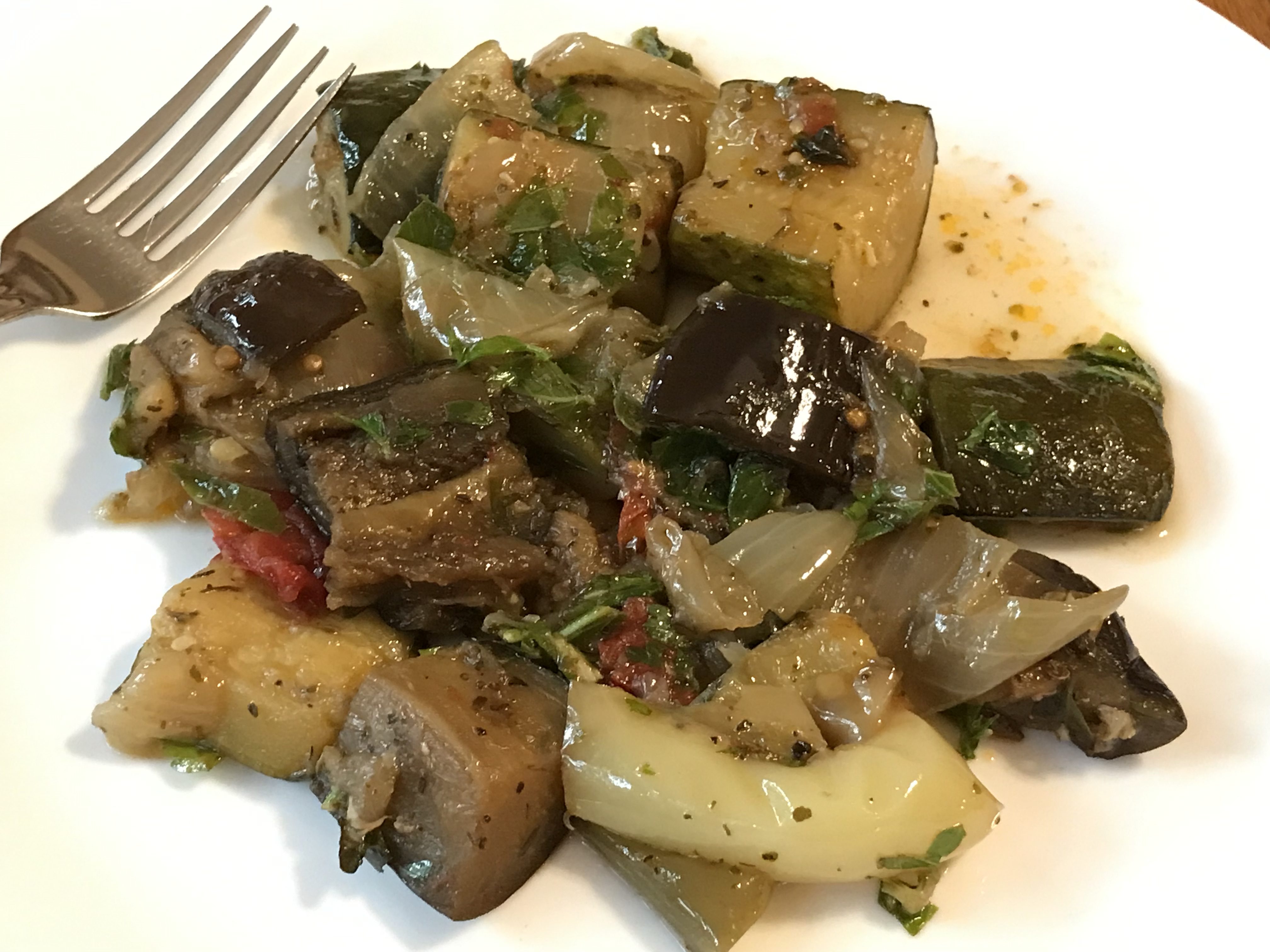
Ratatouille, not made by rats

            Let’s revisit another late summer dish I made last year. Ratatouille, a rustic vegetable stew hailing from the same region of Southern France as soupe au pistou, is even easier to make. Mimi Sheraton describes it as one of 1,000 Foods to Eat Before You Die in the book of the same name. Unlike some of the foods in the book, no travel or specially ordered ingredients are required. It’s just vegetables commonly available at the store or farmer’s market, served with bread, pasta, or alongside meat, if desired.

            Many of the same ingredients, like eggplant, zucchini, tomatoes, garlic, and olive oil, are combined in similar ways all around the Mediterranean. One example is the Sicilian caponata, which also includes capers, vinegar, and typically celery. But you don’t have to be anywhere near the Mediterranean to enjoy ratatouille. Just make sure to make it in the summer, when the vegetables are at their best (and most affordable).

            Note that ratatouille can be baked in the oven, and many recipes use that method. I prefer the stovetop because it heats the kitchen less. Like most stews, ratatouille reheats very well, and leftovers make a great omelet filling.

            Ingredients:

  • 1 medium eggplant, cut into 1-inch cubes, tossed with 1 teaspoon salt, and left to sit for half an hour
  • 2 medium zucchini, sliced into roughly half-inch thick rounds
  • 1 green bell pepper, coarsely chopped
  • 1 yellow onion, coarsely chopped
  • 4 Roma tomatoes, coarsely chopped
  • 6 cloves garlic, peeled, crushed with the edge of a knife, and minced
  • ½ cup olive oil
  • 4 sprigs parsley, thick stems minced separately from leaves
  • 4 fresh basil leaves or more to taste, left whole until needed

            Directions:

  1. Combine the eggplant, zucchini, bell pepper, onion, tomatoes, garlic, olive oil, and minced parsley stems in a large pot with 2 tablespoons water.
  2. Bring to a simmer over medium low heat, then cook, stirring occasionally, for about 30 to 35 minutes.
  3. Mince the basil and add to the pot with the parsley leaves. Taste for salt, adding more if necessary, then simmer for 10 more minutes.
  4. Serve the ratatouille with bread, pasta, grilled meat, or all of the above. Sprinkle with additional parsley if desired.

            Eating the ratatouille while watching the movie of the same name is encouraged. It isn’t weird, I promise. For more recipes, subscribe below for free. And if you’re feeling extra generous and would like to support my work, I would be most grateful.

One-Time
Monthly
Yearly

Make a one-time donation

Make a monthly donation

Make a yearly donation

Choose an amount

$5.00
$15.00
$100.00
$5.00
$15.00
$100.00
$5.00
$15.00
$100.00

Or enter a custom amount

$

Your contribution is appreciated.

Your contribution is appreciated.

Your contribution is appreciated.

DonateDonate monthlyDonate yearly
Standard
food history, french cuisine, recipes, soup, stew, vegetarian

French Summer Vegetable Soup: Soupe au Pistou

Soupe au pistou, a southern French classic

            Last summer, in my exploration of 1000 Foods to Eat Before You Die by Mimi Sheraton, I made my own version of soupe au pistou, a southern French soup loaded with summer vegetables, and loved it. Now that it’s August and vegetables are at their peak, I made it again and recorded my recipe. Southern France is quite different from Paris, Normandy, Brittany, and the other northern regions, in climate, culture, and food. If a trip isn’t in the cards for the near future, some of the local cuisine will help us both imagine it. Maybe it will happen someday, but for now, think of rolling hills, olive trees, and enjoy the lack of crowds.

            Note that you can switch up the vegetables depending on what you like or have on hand. Just make sure to include tomatoes, onions, potatoes, white and green beans, pasta, and of course the pistou. Beyond that, feel free to add a sprinkle of cheese, or switch out the angel hair for other pasta, adjusting cooking time accordingly.

            Ingredients:

  • 8 ounces (about 1 ½ cups) navy or other small white beans, soaked and drained according to package directions
  • 1 onion, quartered and thinly sliced
  • 8 tablespoons (equal to ½ cup) olive oil
  • 2 Roma tomatoes, coarsely chopped
  • Salt
  • 6 small red or other waxy potatoes, cut into roughly ½ inch cubes
  • 2 carrots, sliced crosswise with the larger pieces cut in half
  • 2 zucchini, halved lengthwise and thinly sliced
  • 4 ounces green beans, cut into roughly 2-inch pieces
  • 4 ounces angel hair pasta, broken into roughly 2-inch pieces
  • 4 large cloves garlic, peeled and crushed with the side of a knife blade
  • 80 fresh basil leaves, about 2 cups loose
  • Grated parmesan cheese, if desired
  • Sprig of parsley, if desired

            Directions:

  1. Heat the olive oil in a large pot over medium heat. When hot, add the navy beans, onion, and a pinch of salt and sauté until the onions take on some color, stirring occasionally.
  2. Add the tomatoes and cook, stirring a few times, until they begin to break down.
  3. Add just enough water to cover the beans and vegetables and bring to a boil, then reduce heat to simmer. Cook with the lid tilted for 30 minutes, adding more water if necessary.
  4. Add the potatoes, carrots, another pinch of salt, and more water to cover the new additions. Simmer for another 30 minutes.
  5. For the pistou, combine the basil, garlic, ½ teaspoon salt, the remaining 4 tablespoons of olive oil, and, if desired, a bit of parmesan and a sprig of parsley, in a food processor and blend until smooth. It won’t look like a large amount, but a little goes a long way.
  6. Test the white beans. If they are soft, add the zucchini and green beans and taste for salt, adding more if necessary.
  7. Increase the heat to medium and cook for 5 minutes, add the angel hair, and cook for another 3 minutes. Serve the soup with the pistou and optional cheese.

            For more seasonal, global, and historical recipes, make sure to subscribe for free. Of course, if you want to donate and buy me some virtual vegetables, I’m not about to complain.

One-Time
Monthly
Yearly

Make a one-time donation

Make a monthly donation

Make a yearly donation

Choose an amount

$5.00
$15.00
$100.00
$5.00
$15.00
$100.00
$5.00
$15.00
$100.00

Or enter a custom amount

$

Your contribution is appreciated.

Your contribution is appreciated.

Your contribution is appreciated.

DonateDonate monthlyDonate yearly
Standard