

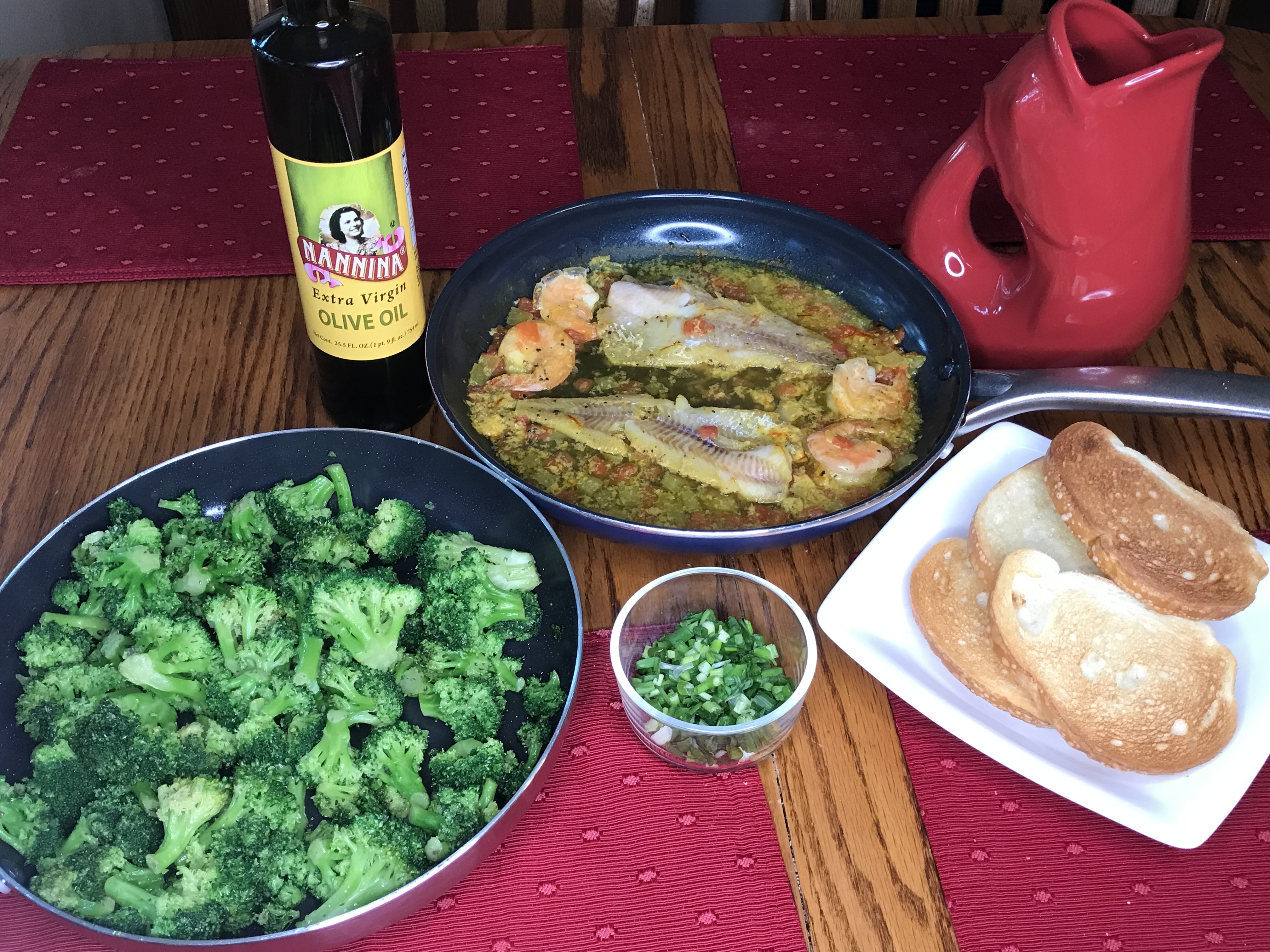
Region: Umbria/Marches
Menu: Poached “Sea Bass” with Wine and Saffron, Bruschetta, Broccoli Cooked in Garlic-Flavored Oil, Ricotta with Honey and Thyme
Recommended Wine: Orvieto (a dry or slightly sweet white)
In the 8th Century BC, rising population in their homeland led many Greeks to set out and establish colonies. They settled along the coasts of southern Italy, Sicily, Turkey, and the Black Sea, in some cases going as far as southern France, the Spanish coast, and north Africa. Over time, these colonies began setting up their own colonies. For some reason, the process slowed to a trickle by 500 BC. Had the Greeks run out of favorable locations? Did grain imports from Egypt and the Black Sea reduce population pressure in their city-states? Were local populations getting better at resisting the colonists? Or were the colonies, now grown into city-states in their own right, too busy fighting each other to keep expanding?
Whatever the reason, most colonization was finished when the Golden Age of Athens began in the 470s BC. There were a few exceptions. One of these was the city of Ancona, on Italy’s central Adriatic coast. It was founded by colonists from Syracuse in the 4th Century BC, several decades after the Syracusans crushed the Athenian invasion of Sicily. Ancona prospered but was never a great power, and was absorbed into the expanding Roman Republic in the 3rd Century BC.
Along Italy’s Adriatic (eastern) coast, various cities and regions feature seafood stews in their cuisine. Supposedly this is a remnant of Greek influence. Regardless, they are an interesting change of pace from grilled, fried, and baked fish, and cook much faster than meat or bean-based stews. It’s typical to serve these fish stews and chowders with bruschetta, to soak up the broth.
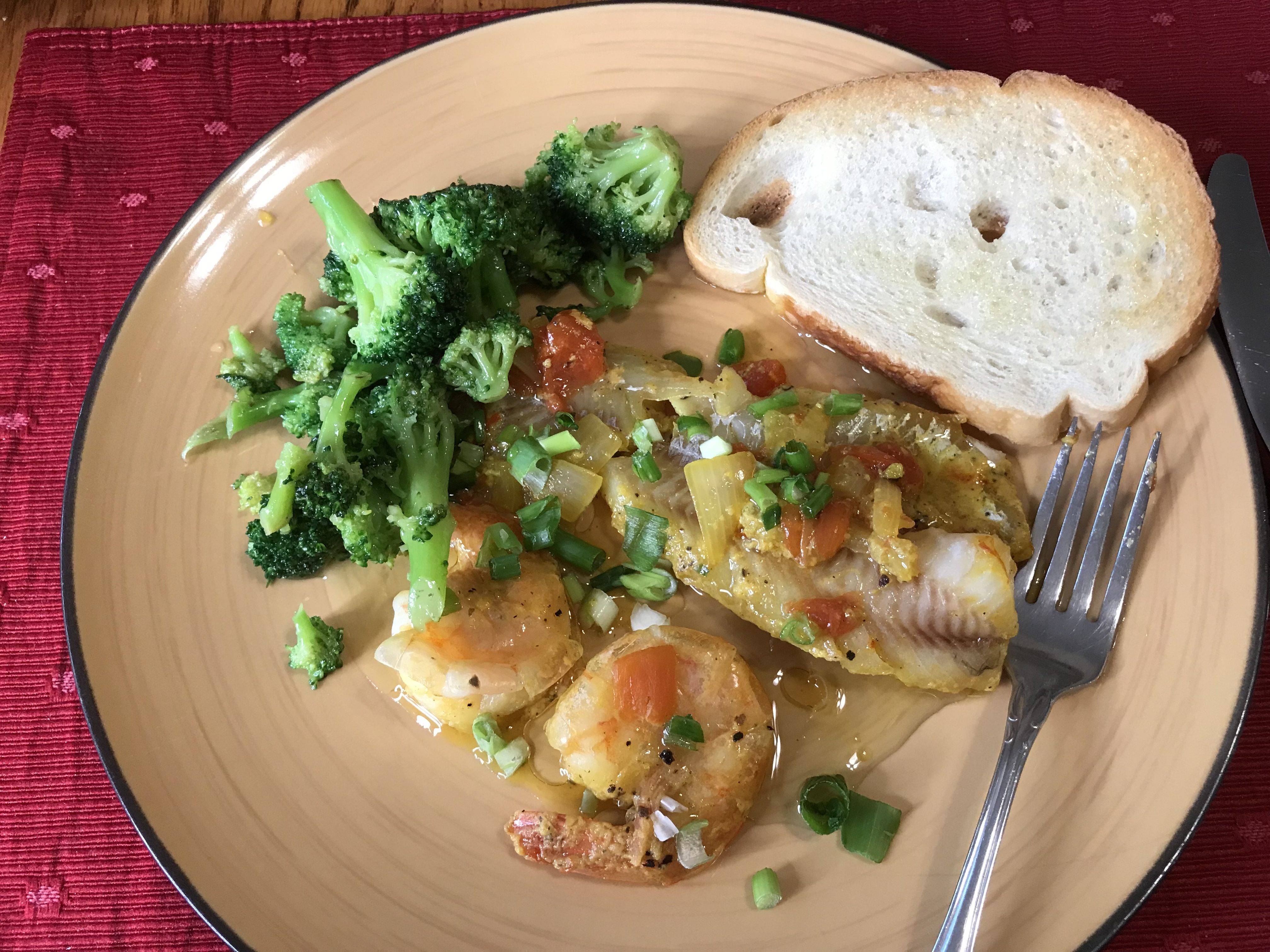
Since I couldn’t find sea bass, I used tilapia (I think). With the strong flavors of wine, tomatoes, garlic, and saffron, any affordable white fish would probably work. As promised in the introduction, this is one of the easiest main dishes in the book. Prep is just chopping a few vegetables, and cooking time is under 30 minutes. Personally, saffron is not my favorite flavoring, but the other ingredients balanced its somewhat medicinal flavor. Broccoli, lightly precooked and sauteed in garlic-infused oil, was a pleasant accompaniment, and the green was a pretty contrast with the red tomatoes and yellow saffron.
Dessert was rather interesting, fresh ricotta drizzled with honey and sprinkled with thyme. I have no problem with supermarket ricotta in lasagna, stuffed pasta, cheesecake, or cannoli filling, but don’t necessarily want to eat straight spoonfuls of it. Since fresh Italian-style ricotta was unavailable, I made my own. To serve, I had a trio of Italian honeys from World Market, chestnut, acacia, and millefiori (wildflower).

The acacia and millefiori honeys both paired well with the cheese (honestly, I couldn’t tell much difference). The chestnut took some getting used to. It’s dark in color, almost like maple syrup, and has a distinctly bitter edge. Like the saffron, it wasn’t my favorite, but overall, this was a tasty and balanced dinner.


 Feasting Through Time