Patriotic pound cake trifle
american cuisine, british cuisine, dessert, food history, recipes

Patriotic Trifle: An American Spin on a British Classic

1000 Foods (pgs. 31 – 32) for information, recipe is my own creation

            While British cuisine doesn’t have a great reputation abroad, desserts are an exception to this rule. Drool-worthy examples abound on the Great British Baking Show (which you should never watch while hungry), and one of the classics is trifle. Trifles also appear multiple times in the Harry Potter series, typically at celebrations, and in the second book, Harry even ends up wearing one.

            The specifics vary by recipe, but they always include cake or ladyfinger biscuits, custard and/or whipped cream, and fruit and/or jam. Basically something starchy, something creamy, and something fruity. British versions usually include sherry or another fortified wine. Originally, this was to help revive stale cake. With modern recipes this is unnecessary, but a lot of people like the taste. I omit this for a family-friendly version and clearer fruit flavor, bursting with berries and vanilla.

            Wine and liquor were once extremely common dessert flavorings. Since the 19th Century, perhaps because of the temperance movement, vanilla has largely taken their place. Despite its boring reputation, vanilla blends extremely well with fruit, chocolate, caramel, cream, and pretty much anything else you might put in a dessert. For a beautiful, fresh, and surprisingly easy centerpiece, the essentials are a good pound cake, seasonal or frozen fruit, vanilla pudding, and homemade whipped cream.

            Strawberries make a particularly good trifle, because as the trifle sits in the refrigerator, the lightly sugared berries release lots of flavorful juice that soaks into the cake. If they aren’t in season, it’s better to use frozen, which tend to have a better flavor (and price) than the out-of-season fresh berries, which are usually picked underripe so they ship better and last longer on the shelf. This applies for any fruit, not just strawberries.

            Pound cake is another crucial ingredient, and you don’t have to make your own for success. The frozen Sara Lee pound cakes are excellent quality. I like to make my own vanilla pudding, but an instant mix still produces a special dessert if you’re crunched for time. Just avoid the sugar-free kind, and don’t make it with skim milk. And make your own whipped cream. It makes a huge difference, and with the cost of the spray bottles, it’s actually cheaper when you need a lot.

            For a full red, white, and blue effect, blueberries can be sprinkled over the top of the trifle or added between the layers. Since they don’t produce much juice, I usually stick with a strictly strawberry trifle, but I added them this time because they were in season and it was for the 4th of July. Just make sure to layer the trifle in a glass bowl if at all possible, to show it off to full effect.

To impress your guests, decorate the top with fruit.

            Note that the quantities in the recipe are not always specified. This is because different serving bowls have varying capacity, and everyone has their own preference for how much of each ingredient to add.

            Ingredients:

  • 1 pound cake, homemade or Sara Lee
  • Strawberries
  • 2 tablespoons sugar per quart of strawberries
  • Vanilla pudding, homemade or from a mix
  • Blueberries, optional
  • 1 cup whipping cream
  • 1 tablespoon powdered sugar per cup whipping cream
  • ½ teaspoon vanilla per cup whipping cream

            Directions:

  1. Hull and halve the strawberries, cutting any larger berries into quarters. Toss with the sugar and let stand while you prepare the other ingredients.
  2. Cut enough of the pound cake into cubes to cover the bottom of the serving bowl.
  3. Whip the cream with the powdered sugar and vanilla until soft peaks form.
  4. Layer the cake cubes in the bottom of the serving dish. Top with the strawberries and drizzle any liquid over all.
  5. Add the pudding over the strawberries, and top with the blueberries if using.
  6. Finish the trifle with the whipped cream, decorating the top with fruit if desired.

            If strawberry season is over but you have fresh peaches or raspberries, I’m sure they would also make an excellent trifle. And as always, don’t forget to subscribe to get posts sent to your inbox for free.

One-Time
Monthly
Yearly

Make a one-time donation

Make a monthly donation

Make a yearly donation

Choose an amount

$5.00
$15.00
$100.00
$5.00
$15.00
$100.00
$5.00
$15.00
$100.00

Or enter a custom amount

$

Your contribution is appreciated.

Your contribution is appreciated.

Your contribution is appreciated.

DonateDonate monthlyDonate yearly
Standard
Modified Cobb salad platter
american cuisine, food history, recipes

Cobb Salad: A Cold Main Course for Hot Weather

1000 Foods (pg. 547) for information, recipe is my own creation

            This upcoming weekend is supposed to be hot. At times like these, most people don’t want to heat up the kitchen by turning the oven on. Grilling, quick-cooking pasta, and stir-fry are all popular options for home cooks, as are a variety of cold salads.

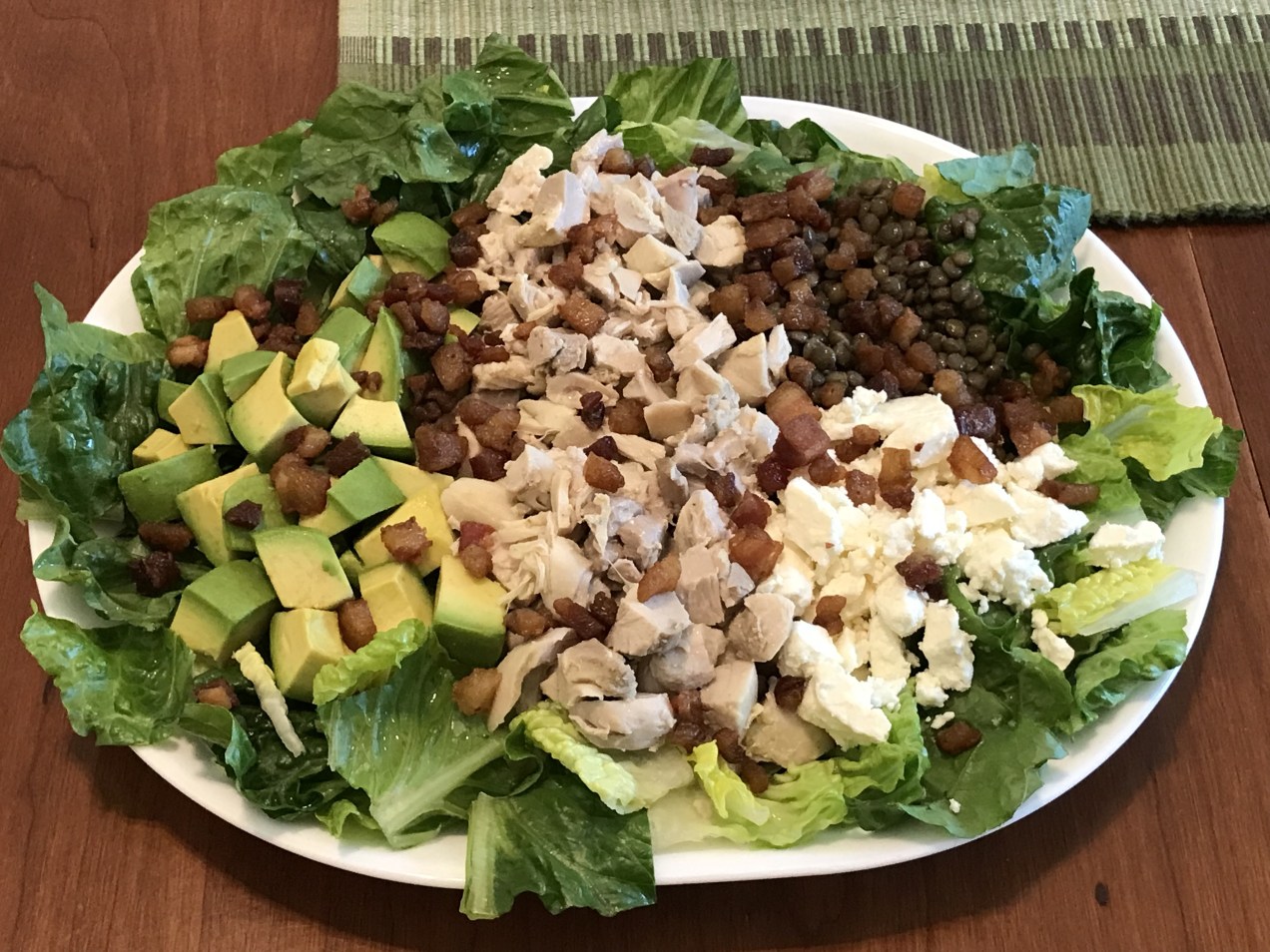
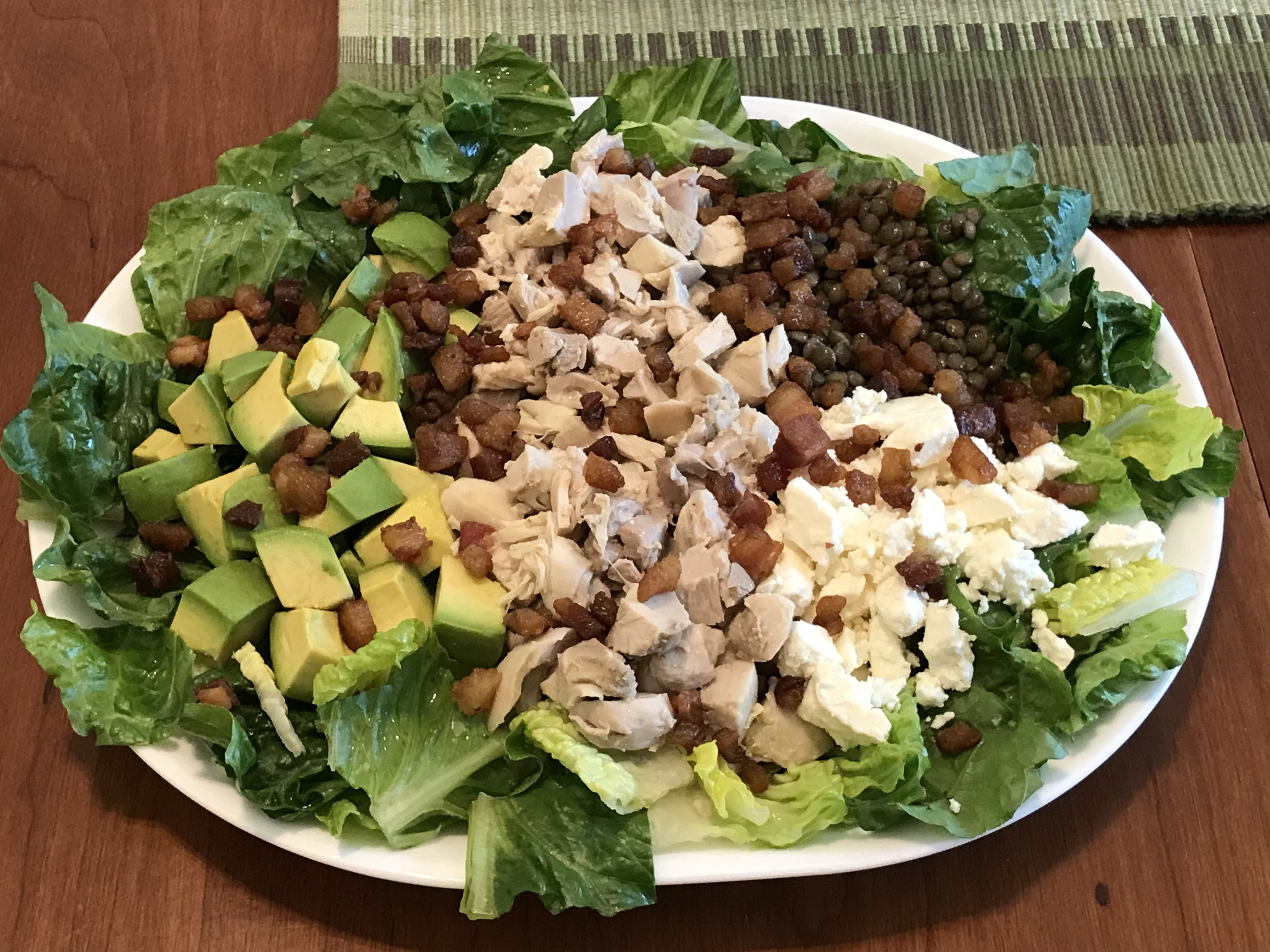
            Supposedly, cobb salad was invented in California in the 1930s as a way to use up leftovers. Turning leftovers into salads was just as common then as now, though inexplicably this often involved mayonnaise and/or gelatin. Thankfully, cobb salad avoided this in favor of a vinaigrette flavored with lemon juice, Worcestershire sauce, and garlic. Original ingredients included hard-boiled eggs, blue cheese, chicken, bacon, avocado, and tomatoes, presented in rows for a striped effect.

            Inevitably, cobb salad’s popularity in Hollywood spread the recipe nationwide, with some variations. Since avocados were harder to find outside California, they were frequently omitted, and sometimes other diced ingredients like ham were added. Shredded cheese might replace the blue cheese, and some cooks might use the mayonnaise-based dressings popular at the time.

            For my own recipe, I made three adjustments. Since I don’t like boiled eggs or blue cheese, I replaced them with feta and lentils. The French-style green lentils I found at Woodman’s were particularly good, with an almost meaty flavor. And I omitted the tomatoes because they are not yet in season fresh.

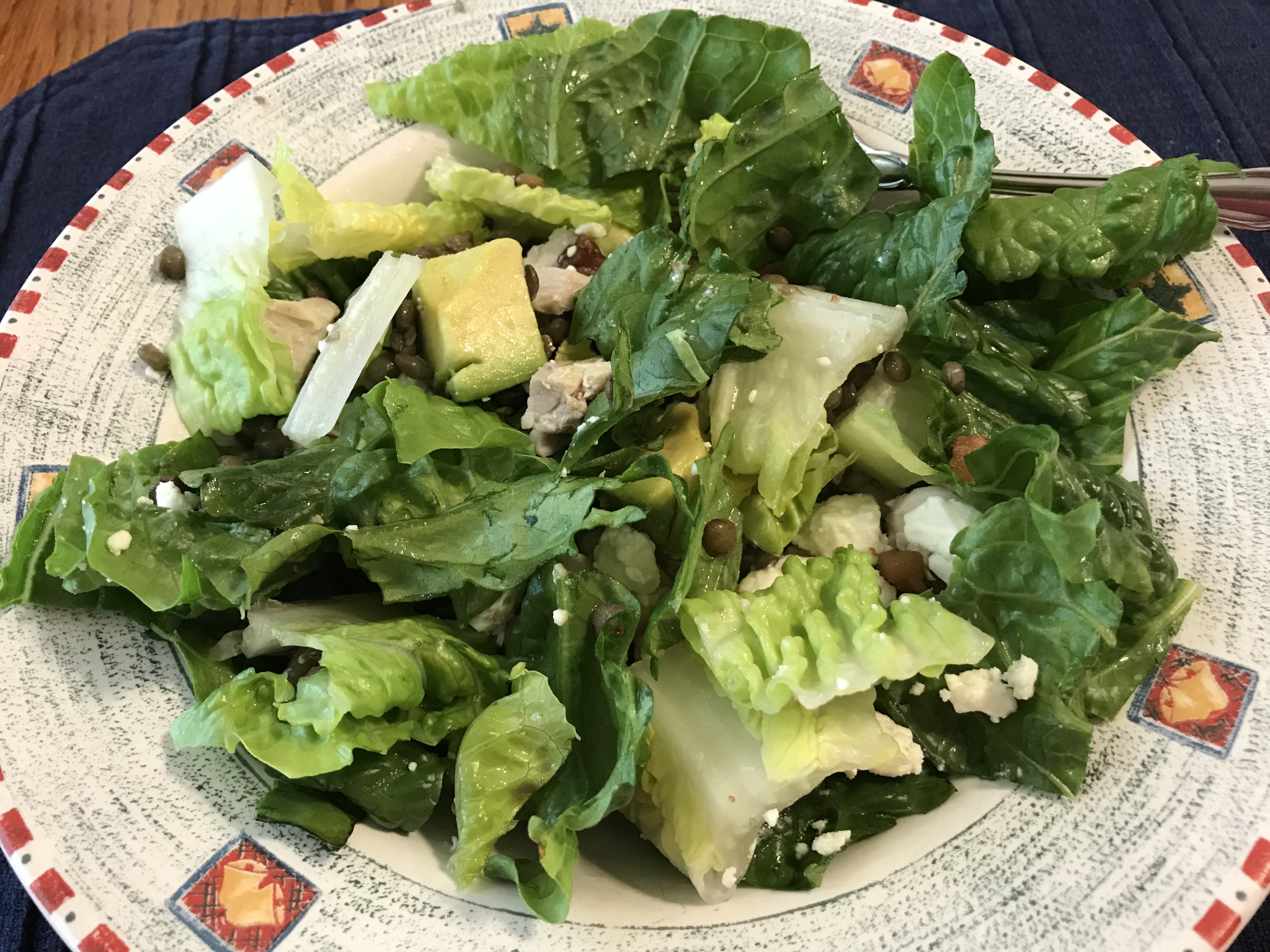
            The final result was a mix of chicken, avocados, bacon, feta cheese, lentils, and romaine lettuce with a flavorful vinaigrette. All the different textures and flavors contrasted well with each other, and the platter was just so pretty.

            Ingredients:

  • 1 head romaine lettuce, washed and torn into bite-sized pieces
  • About 1 pound boneless skinless chicken breasts or thighs, cooked, cooled, and cut into cubes
  • About 8 oz feta or blue cheese
  • About 8 oz bacon, sliced across the grain into roughly 1-inch pieces, cooked, drained, and cooled
  • 1 cup French-style green lentils (I used Bob’s Red Mill brand) cooked and cooled, or a few chopped hard-boiled eggs
  • 2 ripe avocados, halved, seeded, and cut into cubes
  • Sliced ripe tomatoes, if in season
  • Juice of ½ lemon
  • 1 tbsp red or white wine vinegar
  • 4 tbsp olive oil
  • 1 or 2 cloves garlic, peeled and crushed with the side of a knife
  • A few dashes Worcestershire sauce
  • Salt and pepper to taste

            Directions:

  1. For the dressing: combine the lemon juice, vinegar, olive oil, garlic, Worcestershire sauce, salt, and pepper in a bowl and beat together with a fork. Let rest for at least an hour to infuse the garlic flavor.
  2. Arrange the remaining ingredients either on a platter or individual plates. Rows are the most traditional, but feel free to let your creativity run wild.
  3. Remove the garlic cloves from the dressing. Whisk the dressing and pour over the salad before the liquids separate. Serve.

            To get posts sent directly to your inbox, don’t forget to subscribe. And if you want to support my work with a one-time or recurring donation, I’m not going to complain.

One-Time
Monthly
Yearly

Make a one-time donation

Make a monthly donation

Make a yearly donation

Choose an amount

$5.00
$15.00
$100.00
$5.00
$15.00
$100.00
$5.00
$15.00
$100.00

Or enter a custom amount

$

Your contribution is appreciated.

Your contribution is appreciated.

Your contribution is appreciated.

DonateDonate monthlyDonate yearly
Standard
food history, french cuisine, recipes

Using Up the Wine: Oeufs en Meurette (eggs poached in red wine)

1000 Foods (pg. 106) for information, recipe is my own creation

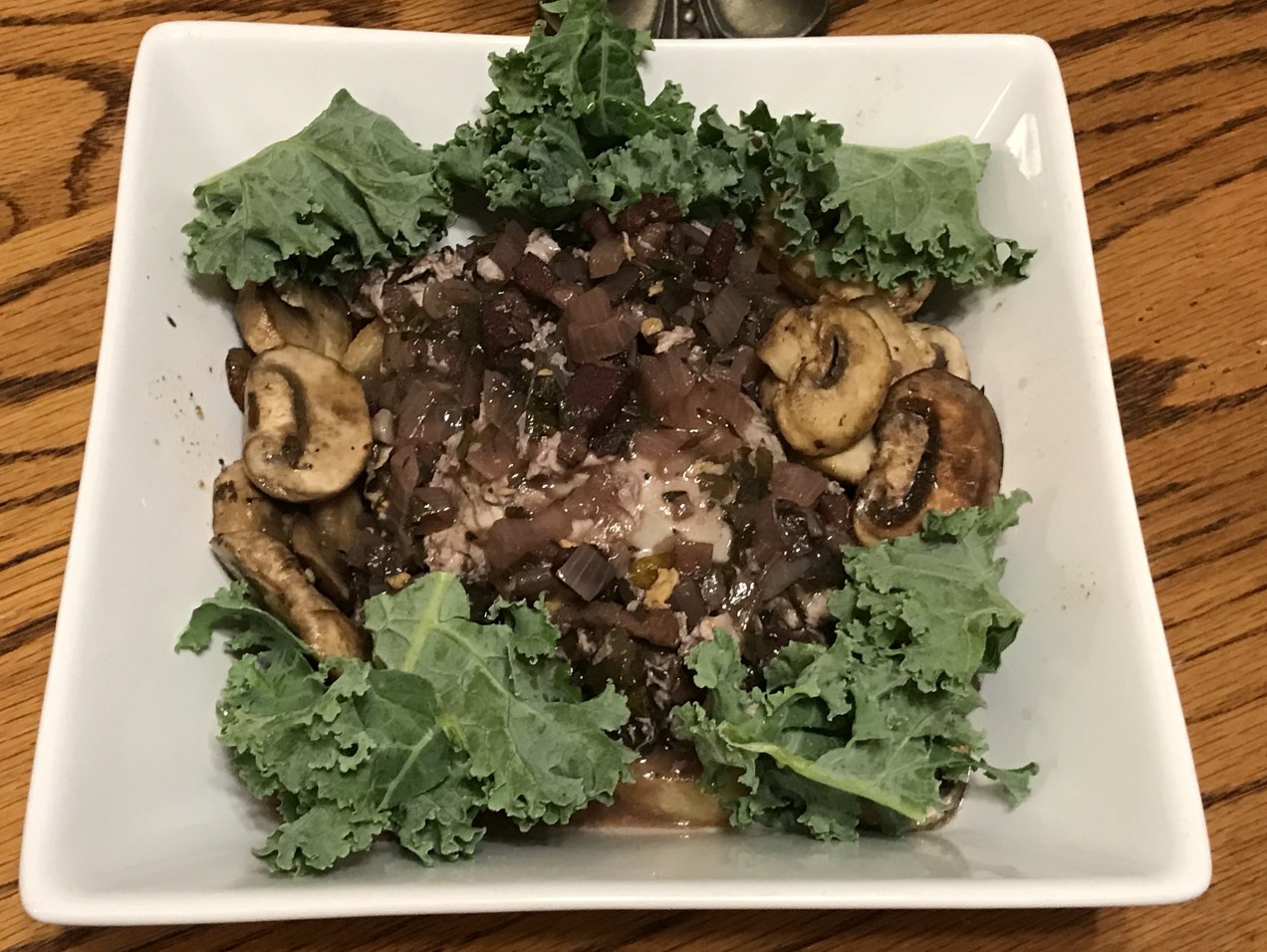
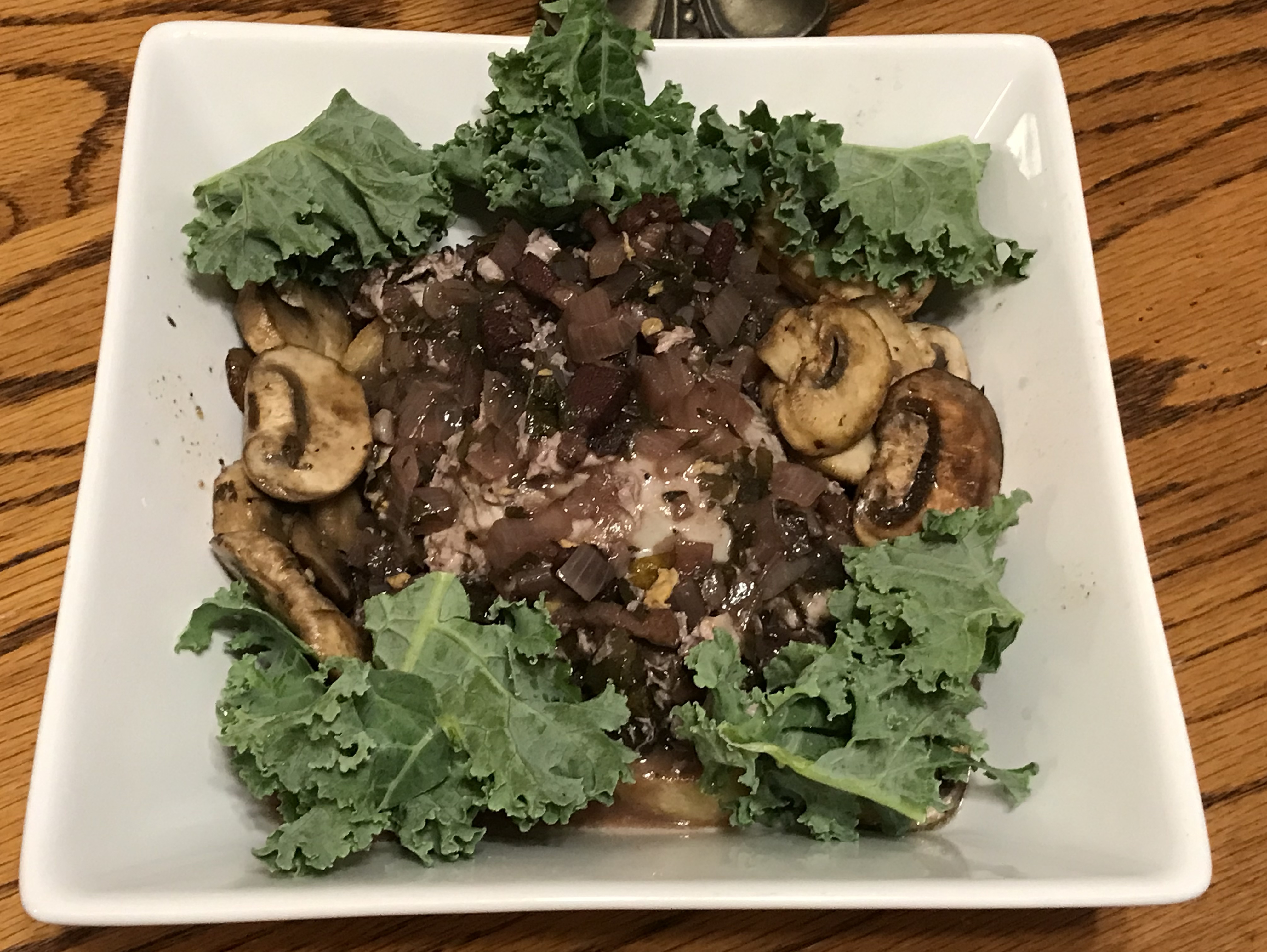
            After making the beef burgundy, I had about a third of a bottle of the wine left over. Not wanting to waste it but not really wanting to drink it either (too dry), I chose to make another dish from the French region of Burgundy: oeufs en meurette. These are basically eggs poached in a mix of wine, beef broth, and aromatics, which is then reduced to form a sauce. The eggs are served with toast to soak up the sauce and runny yolks, and are often garnished with sauteed onions or mushrooms.

            Even though I don’t usually like poached eggs, this was really good. The egg yolks blended into the sauce once the eggs were cut, making their runniness less apparent. All the butter, to toast the bread, sauté the mushrooms, and make roux to thicken the sauce probably helped too. The leftover sauce was even better with scrambled eggs. As an extra garnish, I added some kale, which holds up next to the hot ingredients much better than lettuce.

Ingredients:

  • 4 pieces thick-cut bacon, cut into matchsticks across the grain
  • 1 shallot, peeled, crushed with a chef’s knife, and minced
  • 2 cloves garlic, peeled, crushed with a chef’s knife, and minced
  • 1 cup red burgundy or other pinot noir (you don’t need an expensive bottle, mid or even medium-low priced is fine)
  • 2 bay leaves, broken in half
  • ½ teaspoon dried thyme or 1 ½ teaspoons fresh
  • Minced fresh parsley, if desired
  • 1 cup beef broth
  • 4 eggs
  • 1 tbsp softened butter, plus enough to coat skillet
  • 1 tbsp flour
  • 8 oz sliced mushrooms
  • 2 pieces thickly sliced white bread, such as Texas toast

            Directions:

  1. Brown the bacon over medium-low heat in a medium saucepan until enough fat has been rendered to coat the bottom. Add the shallots and cook until soft. Then add the garlic and cook until it takes on some color.
  2. Add the wine, bay leaves, and thyme to the saucepan and scrape the bottom with a rubber spatula. Add the broth and parsley, salt and pepper to taste, and bring to a simmer.
  3. Meanwhile, make a paste with a tablespoon each of butter and flour.
  4. Melt enough butter in the skillet to coat it, and brown the toast to the desired color over medium heat. Place each piece in a wide individual serving bowl.
  5. Add more butter to the skillet if needed along with the mushrooms. Salt and pepper to taste. Cook over medium-low heat, stirring occasionally, while you poach the eggs and reduce the sauce.
  6. Break the eggs into a bowl, and if strands of egg white in the sauce bother you, hold each in a fine-mesh strainer for a few seconds to let the loose part of the white drain.
  7. Carefully add the eggs to the wine and broth mixture, stirring gently. Poach just until the whites are firm, then remove them with a slotted spoon and place two over each piece of toast.
  8. Turn the heat up to medium, and add the butter and flour paste to the poaching liquid. Cook, stirring frequently, until the sauce is slightly thickened.
  9. Ladle sauce over each serving, adding mushrooms for garnish. If desired, you can also add some greens or parsley.

            And as always, to get recipes and posts sent straight to your inbox, make sure to subscribe for free. Or, if you’re feeling particularly generous, there’s a form for donations as well.

One-Time
Monthly
Yearly

Make a one-time donation

Make a monthly donation

Make a yearly donation

Choose an amount

$5.00
$15.00
$100.00
$5.00
$15.00
$100.00
$5.00
$15.00
$100.00

Or enter a custom amount

$

Your contribution is appreciated.

Your contribution is appreciated.

Your contribution is appreciated.

DonateDonate monthlyDonate yearly
Standard
food history, french cuisine, stew

Classic Julia Child: Boeuf Bourguignon

1000 Foods (pgs. 60 – 62), recipe found in text

            For centuries, from the 17th to the mid-20th and even beyond, French cuisine has had a stuffy, high-class reputation outside of France. The fanciest restaurants were almost all French, and they served elaborate, haute-cuisine creations that most home cooks would never attempt. Julia Child did more than any other English-language author to popularize French middle-class and provincial dishes. Even high-class French restaurants jumped on the bandwagon, often with a bit of fancying up.

            Perhaps the most famous Julia Child dish of all is boeuf bourguignon, a beef stew starring the Burgundy region’s famous red wine. Low, slow cooking tenderizes economical beef cuts like chuck while creating a rich gravy. Even more flavor comes from onions, shallots, garlic, mushrooms, parsley, thyme, and dried orange peel. The recipe does take a bit more prep work and finessing than the typical American or British beef stew, separately cooking the onions, mushrooms, and bacon before adding them to the pot, but none of it is very difficult. Just set aside enough time, particularly for marinating the meat.

            Along with Bordeaux in the southwest, the area of Burgundy in the east has been one of France’s most prestigious wine regions since the Middle Ages. Vineyards there produce some of the most expensive pinot noir in the world, along with more affordable wine. The recipe calls for a good but not extravagant red burgundy. Since the local grocery store didn’t have French burgundy, I got a bottle of California pinot noir. Supposedly the vines were started with cuttings from Burgundy, and it was under $20 but not the absolute cheapest option. In other words, mid-priced by flyover country standards, and there was some leftover to serve with the stew.

            The French region of Burgundy has a long and complicated political history. Sandwiched between France and the Holy Roman Empire, wealthy and powerful Burgundy was often either fully or partially independent. Throughout the Middle Ages, the dukes there had a love-hate relationship with the kings of France and caused them all sorts of headaches. During the Hundred Years’ War, King Jean II granted the duchy to his youngest son Philippe the Bold. Through his own and his son’s marriages, the duke of Burgundy gained control of the Flanders, Holland, Brabant, and Hainaut in the Low Countries.

            For much of the 15th Century, the dukes of Burgundy were almost as powerful as the French kings themselves. Due to a conflict over who got to act as regent whenever Charles VI experienced an episode of psychosis, which happened almost annually, for months at a time, over a 30-year period, Burgundy ended up siding with the English for part of the Hundred Years’ War. Without their help, Henry V of England would probably not have had such spectacular success, and Burgundy’s later return to French allegiance helped turn the tide back toward France once and for all. Meanwhile, the dukes of Burgundy had one of the most dazzling courts in Europe.

            Burgundy’s rise was stopped abruptly when Duke Charles the Bold was killed in battle without a male heir in 1477. Louis XI of France seized his French territories, but his attempt to take Flanders and force Charles’ daughter Marie to marry his own son, the future Charles VIII, backfired. Burgundy and the Holy Roman Emperor Frederick III had previously worked together to counter Louis XI, to the point of negotiating a marriage between his Marie and Frederick’s son Maximilian. For political reasons, and since the future Charles VIII was only 8 years old while Maximilian was 18, the 20-year-old Marie chose the latter. Their son later married the daughter of Ferdinand and Isabella, bringing the Habsburgs to Spain and leading to three more centuries of conflict with France.

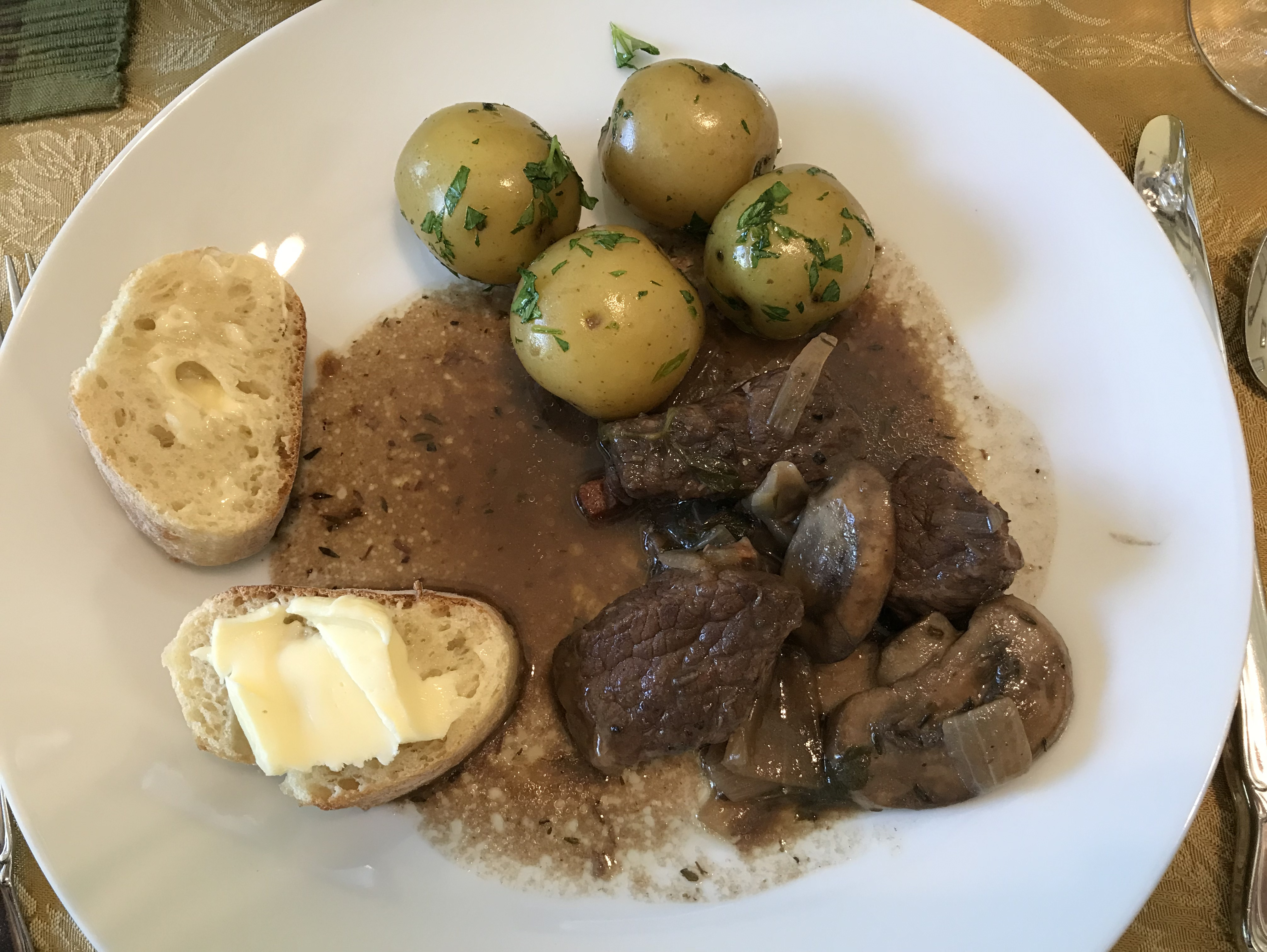
            This dish is a good project for a day off work, when you can take your time and enjoy the process. Boeuf bourguignon, or beef burgundy, is also a great dish for entertaining, and not just because it can be made ahead. It makes you seem classy without breaking the bank. And the taste is a revelation. Beef burgundy is probably one of the best dishes I’ve made so far. The flavors of beef, wine, onions, and mushrooms all blend together in perfect harmony.

            Mimi Sheraton recommends serving it with little potatoes, tossed with butter and parsley after cooking. Since this was already a special meal, I added two more items. A simple green salad is a nice fresh contrast, and with the amount of flavorful gravy, you definitely want bread to soak it up. Naturally, since this is a French dish, a crusty baguette is the way to go.

            To get recipes and posts sent straight to your inbox, don’t forget to subscribe.

Standard
dessert, lebanese cuisine, middle eastern cuisine

Dessert from the Desert: Dates in Clove Syrup (Murabba El Balah)

Not bad dates, if you’ll pardon the Indiana Jones reference.

1000 Foods (pg. 514) for information, recipe is my own creation

            For a unique dessert, we have dates in clove syrup. Date palms are more tolerant of heat and drought than most other plants, making them essential in the hot deserts of the Middle East and North Africa. The fruit is sweet, high in nutrients, and calorie-dense, a useful feature in the past. Before sugar, dates were the main sweetener in the region, added to a variety of breads, porridges, and sweet cakes in Ancient Egypt and Mesopotamia. Usually, they were preserved by drying in the hot sun, a method still widely used.

            People have been stuffing dates for at least two thousand years, and probably for even longer. Once the pit is removed, the fruit has a hollow center. Dates were a popular luxury in the Roman Empire. Since the trees don’t produce fruit in Italy, they had to be imported from the Middle East and North Africa. Almonds, which fit into the centers almost perfectly, were a favorite filling, either on their own or in a more complex mixture. Murabba El Balah, a Lebanese specialty, also uses almonds for a nice contrast in flavor and texture.

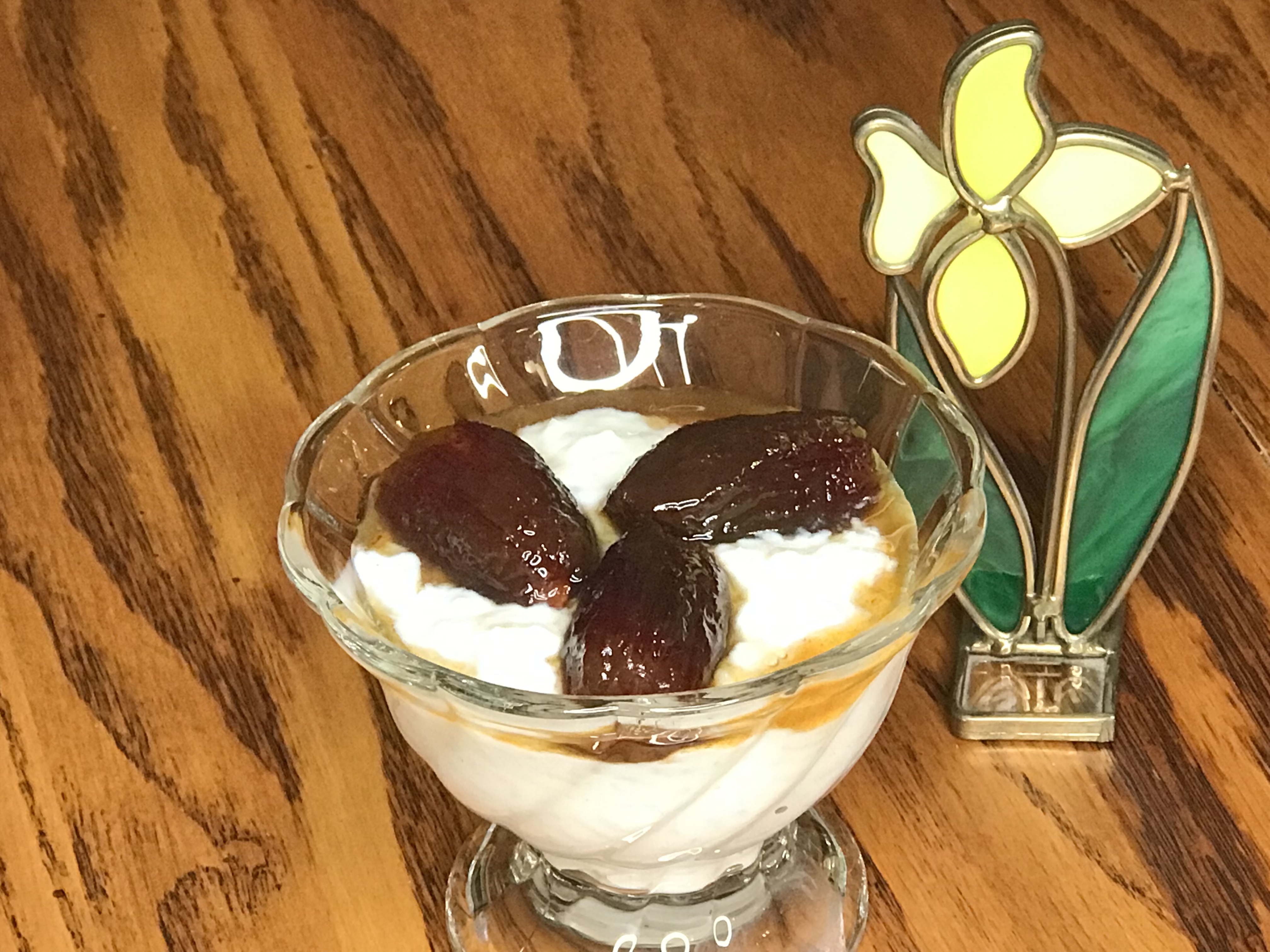
            Normally the dish uses fresh dates. Since those are extremely hard to find, I developed a recipe using the dried variety. After soaking in hot water the dates can be peeled, and the pits removed with a nut pick or knitting needle. I put two almonds in each date, toasted for extra flavor. After steeping for several days, the fruit is chewy and extremely sweet. To avoid being overwhelming, I’ve included a recipe for lightly sweetened rice pudding. The syrupy dates are a popular garnish for puddings of all sorts.

            They have a great flavor and nice crunch, but are a bit of a sugar bomb, for lack of a better term. Dates are already very sweet, and a sugar syrup only increases it. Because of this, they go even better with pancakes, oatmeal, cream of wheat, and the like, which aren’t usually pre-sweetened. Plain yogurt would be another excellent choice.

            Note that the dates need to soak in the clove syrup for at least four days, so plan ahead. The rice pudding is very thick, because that’s the way I prefer it, but you can thin it with a bit more milk once it’s cooled. No vanilla or cinnamon is included because the clove syrup would overpower it, but if you want to add some, by all means go ahead.

            Ingredients:

  • 20 – 24 dates (about 1 pound dried with pits, less if pitted)
  • 40 – 48 toasted unsalted almonds (2 per date)
  • 24 whole cloves
  • 1 ½ cups sugar

For rice pudding (if desired)

  • 4 cups (1 quart) whole or 2% milk
  • 6 tablespoons white rice, long or short grain (short grain makes a thicker pudding)
  • 1 tablespoon sugar

            Directions:

  1. Place dates in a medium saucepan with just enough water to cover, about 2 cups. Bring water to a boil, shaking pan occasionally. Remove from heat, cover, and let stand for at least an hour, or until cool.
  2. Peel dates, starting from areas where the peel has bubbled up. Remove pits with nut pick or knitting needle if necessary. Set fruit aside, discarding peels and pits. Strain cooking liquid and return to pan.
  3. Add the cloves to the cooking liquid and bring it back to a boil. When boiling, add the 1 ½ cups sugar and boil, stirring, for two or three minutes, or until the sugar is dissolved. Remove from heat.
  4. While the syrup partially cools, stuff two whole almonds into each date. Pour the warm syrup over the stuffed dates and gently stir. Let cool to room temperature, then marinate in the refrigerator for at least four days. Due to the sugar content, these will stay good for a few weeks.
  5. Remove the cloves and serve with rice pudding, ice cream, or yogurt.
  6. For the pudding, heat the milk, rice, and tablespoon sugar in a saucepan over medium heat, stirring frequently, until mixture simmers. Turn down heat to medium low, then cook for about 15 minutes until thickened, stirring frequently to prevent scorching. Chill before serving if desired.

            Don’t worry if you accidentally eat a clove. It might dull your sense of taste a for a few minutes, but that’s as far as side effects go. As usual, make sure to subscribe to get free posts and recipes sent right to your inbox. If you’re feeling extra generous and want to donate a few bucks to support my work, you can do that too.

One-Time
Monthly
Yearly

Make a one-time donation

Make a monthly donation

Make a yearly donation

Choose an amount

$5.00
$15.00
$100.00
$5.00
$15.00
$100.00
$5.00
$15.00
$100.00

Or enter a custom amount

$

Your contribution is appreciated.

Your contribution is appreciated.

Your contribution is appreciated.

DonateDonate monthlyDonate yearly
Standard
food history, italian cuisine

Cook’s Tour of Italy Menu 15 (Pgs. 62 – 66): Menu for 8, La Foce

Region: Tuscany

Menu: Cantaloupe with Prosciutto, Lasagnette with Meat Sauce, Fennel and Watercress Salad, Orange Ring Cake

Recommended Wine: Vino Nobile de Montepulciano (like Chianti, but with some white grapes mixed in with the red)

            Believe it or not, at one time, doctors thought melons were unhealthy and even dangerous. During the Middle Ages and Renaissance, raw produce in general was mistrusted. In the 15th and 16th Centuries, when salads and beautifully-arranged platters of fresh fruit became fashionable, doctors freaked out, thinking the trend would make their patients sick. People did sometimes get sick after eating fresh, raw fruit, but the problem wasn’t the fruit itself. Most likely, the water used to wash it was contaminated, or cooks didn’t adequately clean their work surfaces.

            Melons were even implicated in the death of a 15th Century pope. The story goes that in July 1471, Pope Paul II ate two large melons, and died shortly thereafter. Sources don’t say what kind of melons they were, what was meant by large (most fruits and vegetables were smaller at the time), or the timeframe they were eaten over. Since Rome gets really hot in July and this was before air conditioning, His Holiness probably found them refreshing, and may not have had much appetite for other food. If that was the case, eating two melons the size of small modern cantaloupes over the course of a hot day sort of makes sense.

Delicious treat, or heartless killer?

            Supposedly, cantaloupes originated in either Persia (modern Iran) or Armenia before being brought to the Mediterranean. Regardless of what doctors thought, people living there, especially Italians, went crazy for them. During the hot summer months, when melons were at their peak, people found them irresistible. Supposedly, eating them with a bit of salty ham or some wine reduced the risk, which is where melon and prosciutto came from. Personally, I think prosciutto is stringy and overpriced, so had the melon plain. It was good as always, but was definitely different as an appetizer.

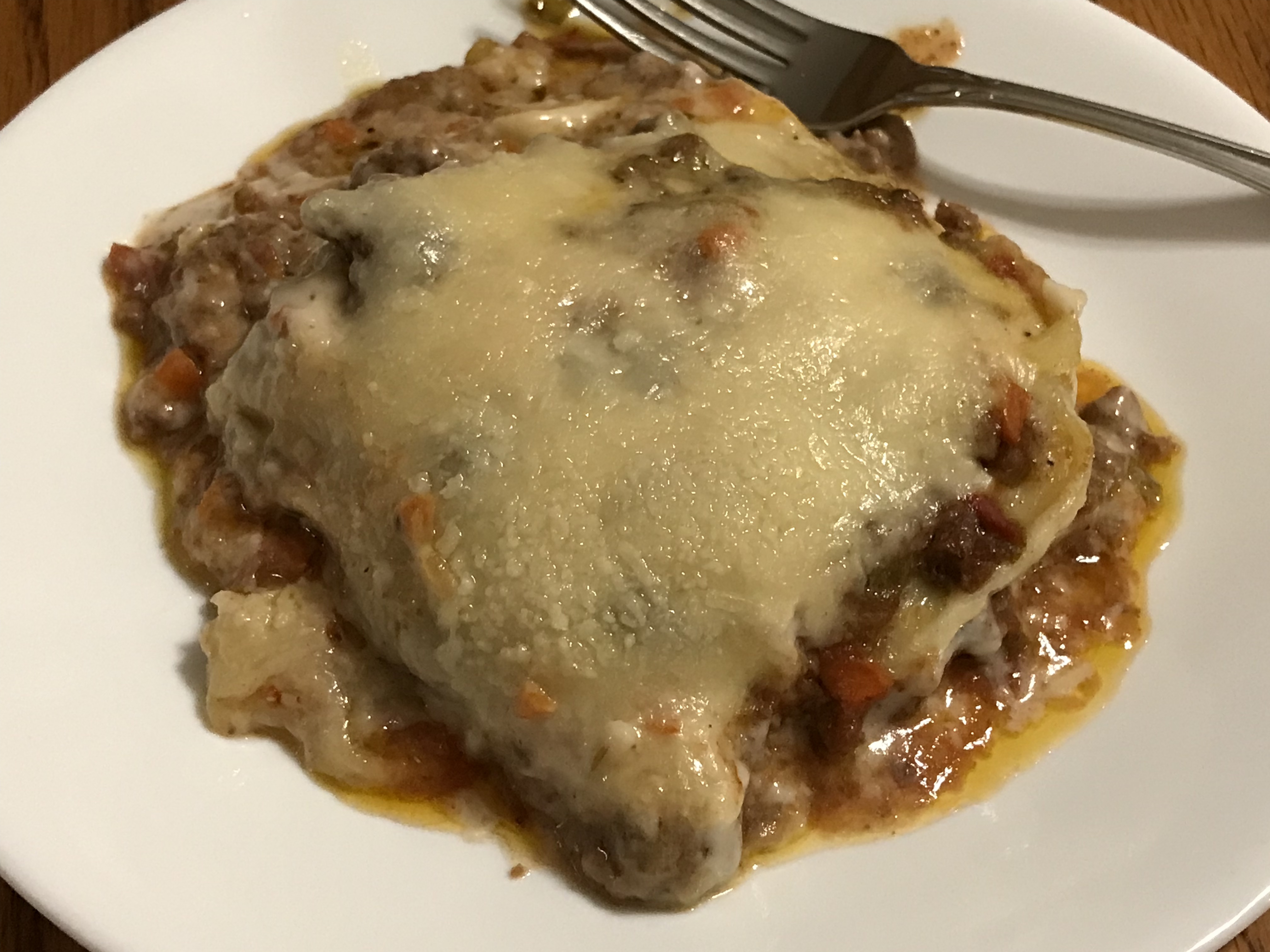
            The name “lasagnette” suggests a miniature lasagna, but this recipe filled a full pan. Like the Bologna-style lasagna, this one used a ragu with a high proportion of meat to tomato, bechamel sauce, and parmesan cheese. I think there must have been a typo in the bechamel recipe. It calls for one cup flour to three of milk. At that ratio, a sticky dough-like substance forms, not a sauce. It was salvageable with extra milk, whisking, and straining the lumps out, but it probably would have been easier to restart with a different bechamel recipe. Everything else with the lasagna went smoothly, and it was quite tasty, but I still prefer the mozzarella and ricotta version. Maybe if I made my own pasta dough instead of purchasing it, I would feel differently.

Instrument of fraud

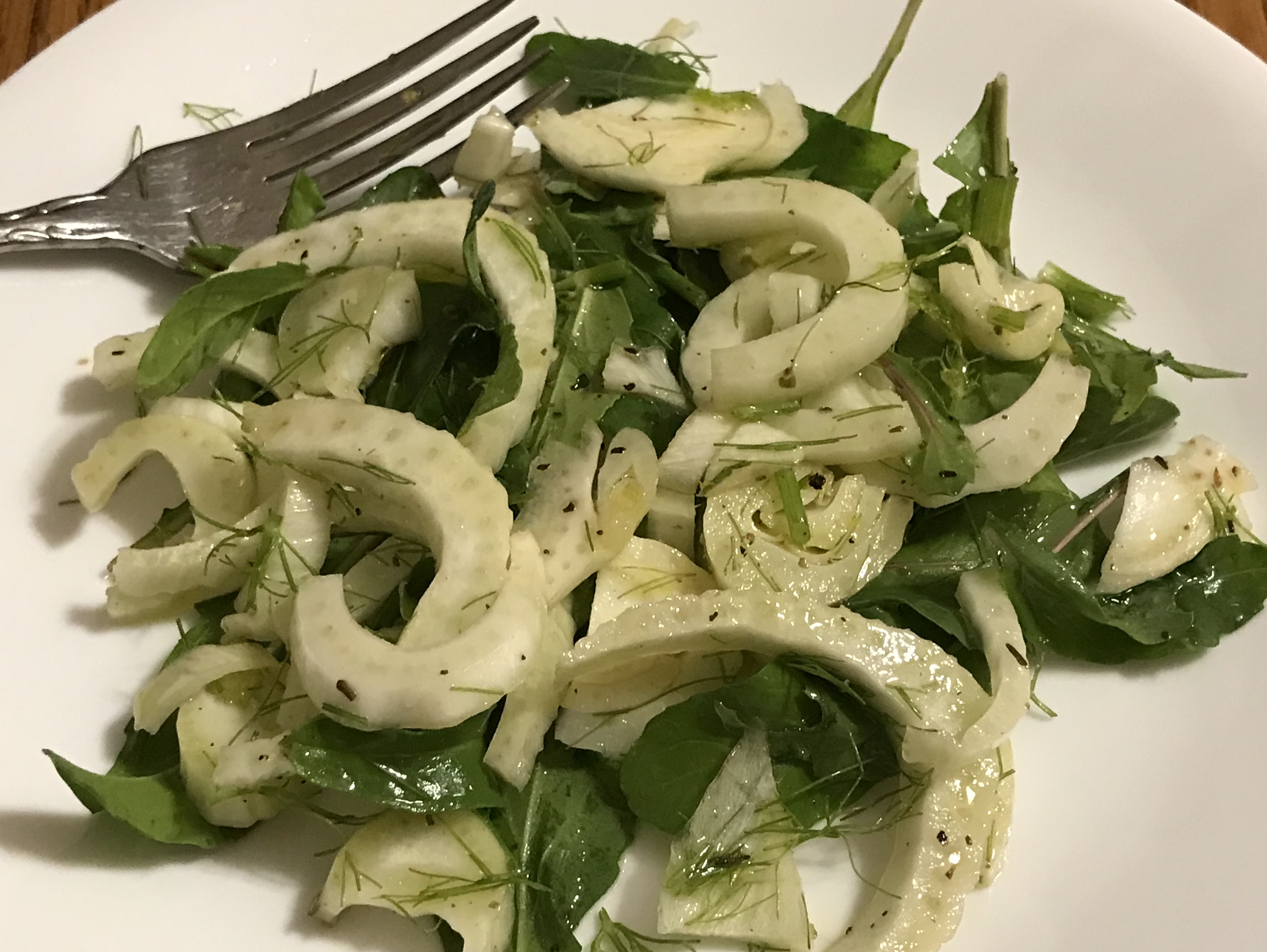
            The fennel and watercress made for a fascinating combination. Supposedly, Medieval Florentine wine merchants would give potential buyers fennel to snack on, hoping it would overwhelm their taste buds and make wine faults less noticeable. Here the sweet, licorice-like flavor served no such nefarious purpose. The watercress was distinctly peppery, much like arugula, which was a nice contrast with the fennel.

As the author says, the secret is the syrup. And the whipped cream.

            Everything was good, but the orange ring cake was incredible. The cake itself is flavored with grated orange peel, which seems to be popular in Italian recipes. The juice, meanwhile, goes into a syrup with lemon juice, which gets drizzled on the hot cake after baking. It was delicious, and would probably be even better if holes were poked in the cake first to let the syrup soak in more. Whipped cream was a delightful contrast to the sweet and tart flavor, in a fascinating change of pace from regular chocolate and yellow cakes. Not that there’s anything wrong with those, especially with fluffy homemade chocolate frosting, but the orange cake was delicious and pretty.

Standard
american cuisine, food history, recipes

Kentucky Derby Treat: Benedictine Dip/Spread

Benedictine sandwiches to enjoy during the Kentucky Derby

            The Saturday before last, a lot of people who don’t normally follow horse racing tuned into the Kentucky Derby. Personally, I like to see all the brightly-colored suits and over-the-top hats that aren’t worn anywhere else. And of course, the segments on the food, both at Churchill Downs and elsewhere. Hot brown sandwiches, strawberries and cream, chocolate walnut pie, and most of all mint juleps are associated with the first leg of the Triple Crown.

            So is benedictine, which has evolved a bit over the decades. At first, it was cream cheese flavored with onion and cucumber juice, maybe colored with green food coloring, served between white bread triangles as tea sandwiches. Supposedly, the name comes from the green color, which was similar to an herbal liqueur made by Benedictine monks in France. Modern recipes tend to skip the food coloring and use grated cucumbers and onions, not just the juice, and serve the benedictine as a dip.

            My recipe uses the modern approach. The grated cucumber and minced scallions give it a bit of texture, and parsley adds extra freshness and color. Spread it over bread, eat it with crackers, and/or vegetables, or, if you’re feeling fancy, put it in a sandwich with some cucumber slices and channel your inner Downton Abbey character. It’s also a great alternative to mayonnaise or miracle whip on more substantial sandwiches. This recipe is loaded with cucumber and herbs, but if you want a higher proportion of cream cheese, feel free to use two packages, or cut the other ingredients in half.

Note: The easiest way to seed cucumbers is to cut them in half lengthwise after peeling. Then it’s easy to remove the seeds with a spoon. The fresh aroma released in the process is nice too.

Ingredients:

  • 1 8oz package cream cheese, softened
  • 1 medium cucumber, peeled, seeded, grated, and squeezed to remove extra moisture
  • 1 bunch green onions/scallions, minced
  • 1 bunch parsley (I use curly for this recipe, but flat leaf is fine too), minced
  • Pinch salt

Directions:

  1. Beat cream cheese until smooth. Mix in the grated cucumber until evenly combined.
  2. Stir in the minced scallions and parsley, mixing until evenly distributed. Add salt to taste.
  3. Refrigerate for at least an hour, preferably longer, to give flavors time to meld.

Over a few days in the fridge, a bit of extra liquid will probably form in pockets on the dip. This is just liquid from the cucumbers and is nothing to worry about. I prefer to pour it off, but if you want a thinner texture, feel free to mix it back in.

            And as always, if you subscribe for free, you’ll get notifications of new posts in your inbox. Of course, if you do want to support my work with a monetary donation, I won’t complain about that either.

One-Time
Monthly
Yearly

Make a one-time donation

Make a monthly donation

Make a yearly donation

Choose an amount

$5.00
$15.00
$100.00
$5.00
$15.00
$100.00
$5.00
$15.00
$100.00

Or enter a custom amount

$

Your contribution is appreciated.

Your contribution is appreciated.

Your contribution is appreciated.

DonateDonate monthlyDonate yearly
Standard
Uncategorized

Foods Not Eaten: Combined Reasons

Boulud Burger, Fugu (pufferfish)

1000 Foods (pgs. 533, 802 – 803)

            A properly made burger, whether seared in the skillet or grilled, is almost always enjoyable. Cheese, onions, sauteed mushrooms, pickles, or lettuce can take it to the next level, but adding a chunk of foie gras (and black truffles) to the middle of the patty seems like expensive overkill. But that’s what’s in the Boulud Burger, a specialty of chef Daniel Boulud. It seems like such an expensive ingredient would be better savored on its own, or since the liver is a toxin filter, not eaten at all, but maybe that’s my lack of sophistication showing. On another note, based on the picture, the burger looks way too thick to eat in a civilized manner. But if you want to try it and can’t get to Boulud’s restaurant, he has a demonstration video online.

            One food I definitely won’t be trying is fugu, or pufferfish. You’re probably aware that some species are super poisonous. Specifically, they produce tetrodotoxin, which paralyzes the muscles, including those needed to breathe. Some species are safe, and farm-raised fugu does not contain the toxin, but for some reason, the more toxic varieties are the most highly prized. Supposedly, the taste is worth the risk, but I’m skeptical.

            To give you an idea of how dangerous fugu is, Japanese law requires several years of study and a detailed final test for chefs to be licensed to prepare it. The best fugu chefs are able to leave a tiny bit of the poison behind, just enough to make the diner’s lips tingle, but any mistake can be fatal. Several people die from eating fugu every year, many more end up in the hospital, and the emperor is forbidden from consuming it. The pufferfish innards are so toxic that after the fish are cleaned, law requires chefs to store the entrails in a locked box until they can be incinerated under the supervision of city authorities. I’m not even kidding.

            The specialized training required to prepare fugu explains why it’s so expensive, but not why people take the risk. Regardless, paying top dollar to risk getting poisoned isn’t for me. Between writing and cooking for this blog, setting up an associated YouTube channel, writing articles, and my day job, I don’t have time for it. Plus, fugu is illegal in much of the US, and only available in a few big cities. A final irony here: in 1000 Foods to Eat Before You Die, one of the entries could very well be the last thing you ever eat.

Standard
food history

Foods Not Eaten: Personal Taste Part 2 (Aspics and Miscellaneous)

Meat/Fish Aspics: Boeuf a la Mode en Gelee (beef and vegetables in aspic), Compote de Caille en Gelee (quail in aspic), Oeufs en Gelee (eggs in aspic), Sulze (pork in aspic), Carpe a la Juive/Jedisch Fisch (jellied carp), Gefilte Fish (freshwater fish dumplings in aspic), P’tcha (jellied calf’s foot)

Miscellaneous: Pasta Pagliata (with chopped calf or lamb intestines), Okroshka, Kholodynk, and Botvinia (Russian and Ukrainian cold soups), Tuna Salad Sandwich, Snoek (oily fish), Natto (fermented soybeans)

1000 Foods (pgs. 60, 68, 105 – 106, 314, 430 – 431, 436 – 437, 459 – 460, 219, 416 – 417, 633 – 634, 744, 811)

            For centuries, people have made gelatin by simmering meat and fish scraps. The time and effort necessary to strain and chill it made jellies and aspics high-status foods in the past, but times have changed. Perhaps people are still scarred by midcentury monstrosities full of hot dogs, canned fish, and mayonnaise. There are seven aspic dishes in the book, three French, one German, and three Ashkenazi Jewish. None of them sound appealing. In my mind, aspic seems like a broth or gravy that no one bothered to reheat. Cold soups have the same problem, even if they’re supposed to be cold.

            There are some dishes that, no matter how good they taste, I have trouble eating if they contain certain ingredients. This makes sense for the calf/lamb intestines in pasta pagliata (that’s where it gets its cheesy flavor), but I don’t understand why I have such a problem with ketchup, mayonnaise, and most bottled salad dressings. A dislike of mayonnaise means no tuna salad sandwiches (and the canned fish looks too much like cat food). For ketchup, the issue is so bad that I have trouble eating a dish if I think it might possibly contain ketchup (ex. sweet and sour pork at a buffet). Even watching someone else eating ketchup is difficult. I won’t say anything, but mentally I’m gagging. When I was little, I actually tried to train myself to eat it, but that went about as well as training myself to write with my left hand. That is to say, not well at all.

            Finally, I don’t like most strong-smelling, fermented ingredients. Mimi Sheraton compares the smell of natto, Japanese fermented soybeans, with the notoriously stinky Swedish herring surstromming. That alone is reason enough not to try it. Supposedly, a man in Germany got evicted after spilling a can of surstromming in his apartment hallway. When he took the landlord to court, the landlord won the case by opening a can in the courtroom. Whether the story is true or not, I would rather not risk eviction over fermented soybeans.

Standard
beverages, egyptian cuisine

Accompanying the Ful Medames: Egyptian Mint Tea

1000 Foods (pg. 704) for information, recipe is my own creation

            Mint tea is popular across North Africa, with numerous regional variations. Mimi Sheraton discusses this in the text on page 704. We’ve already discussed the Moroccan variety, with lots of mint and a bit of green tea. Egyptian mint tea has less mint, more tea, and uses black tea instead of green. It’s similarly sweet, and is sometimes flavored with warm spices. I use a clove, a piece of cinnamon stick, and a pinch of cardamom for a flavor that’s present without overwhelming the mint. Note that black tea is brewed at a slightly higher temperature than green, so it can be added to the hot water right away.

            Ingredients:

  • 2 or 3 sprigs fresh mint
  • 2 teaspoons black tea leaves
  • Sugar to taste
  • 1 piece cinnamon stick, 3 to 4 inches
  • 1 whole clove
  • Small pinch ground cardamom

            Directions:

  1. Bring 2 cups of water to a boil. Remove, tear, and bruise the mint leaves. Place in a teapot or strainer cup with the tea leaves and spices.
  2. Add boiling water to the mint, tea leaves, and spices, and steep for 3 to 5 minutes.
  3. Strain into teacups, adding a pinch of sugar or more to taste.

            In Egypt, the tea is usually a lot sweeter, kind of like the sweet tea popular in the US Southeast, but served hot. Personally, I don’t like that much sugar, and prefer tea unsweetened in most cases. Flavored teas like this one are an exception, but a pinch of sugar per teacup or a few per mug is plenty.

Standard