egyptian cuisine, food history, recipes, stew, vegetarian

Egyptian “Tacos”: Ful Medames (fava bean stew)

1000 Foods (pgs. 708 – 709) for information, recipe is my own creation

            There’s no liver or chianti with these fava beans. To be honest, neither sounds appealing. The purpose of the liver is to filter toxins from the body, and supposedly chianti is a fairly dry wine. But fava beans on their own sound much better. Historically, most people across the Mediterranean and Middle East ate a largely vegetarian diet by necessity. Beans of all sorts provided essential protein and vitamins, which brings to mind an interesting story. Supposedly, the Ancient Greek mathematician Pythagoras hated beans but advocated a vegetarian diet. Balanced nutrition would still be possible if eggs and dairy were allowed, but Pythagoras definitely made things more difficult for himself.

            Supposedly, he even thought that beans were evil. Crazy as that probably sounds, there might have been a logical (okay, semi-logical) explanation. A small percentage of people don’t produce a particular enzyme that breaks down a chemical naturally occurring in fava beans. If someone with this gene does eat them, they become ill. Since this gene is most common in people living near the Mediterranean, Pythagoras likely knew a few people who suffered from it. It’s unclear why he decided that other types of beans were also evil, but maybe it was just a phobia. At a time and place where legumes were an essential source of protein, it would have been an unfortunate one.

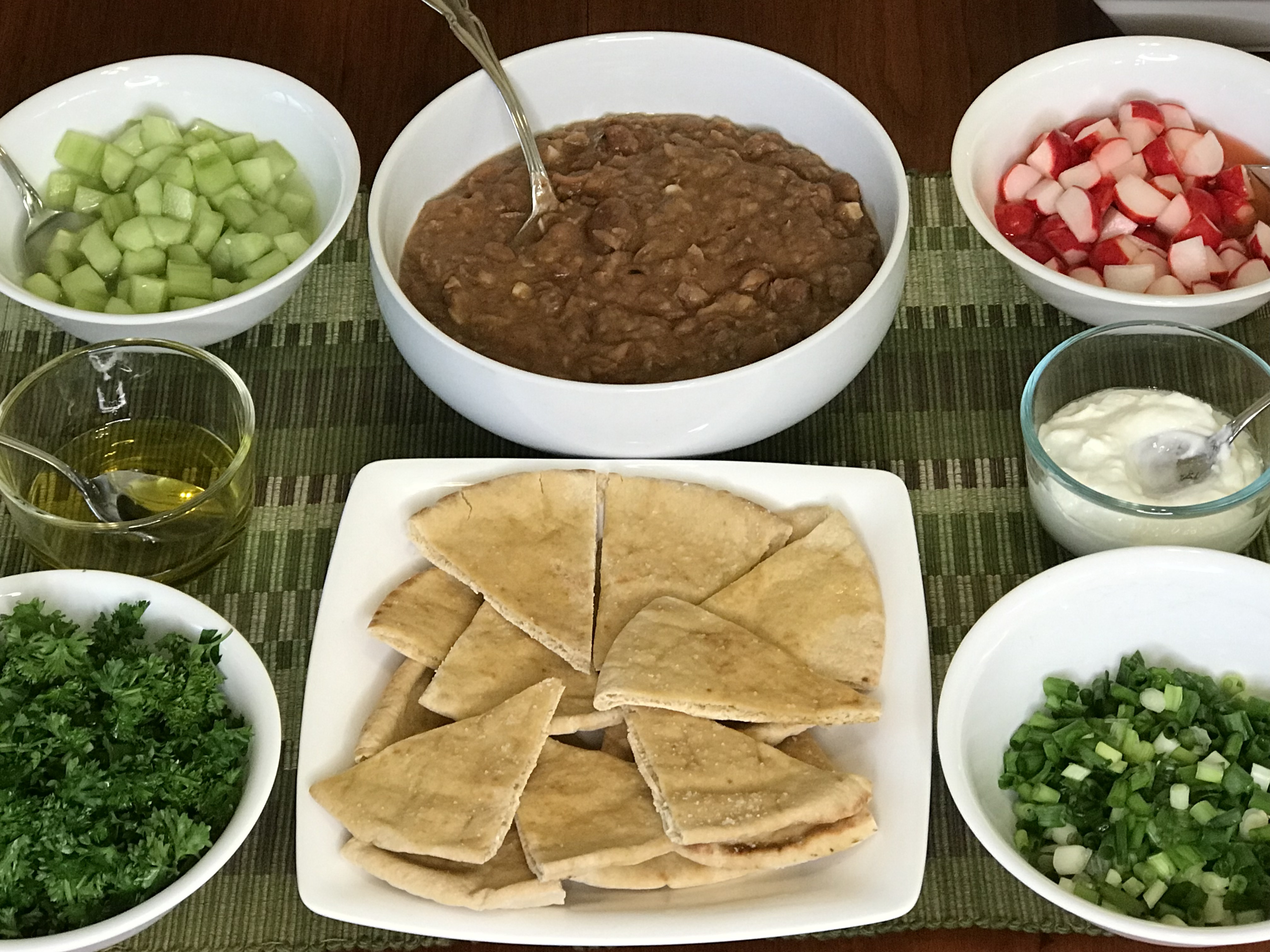
            Fava beans, also called broad beans, have a long history in Egypt as a staple food, especially for the poor. Sometimes, when prices were high, the government would even subsidize them to ensure they remained affordable. Ful medames, a basic fava bean “porridge,” is often eaten for breakfast with a variety of toppings. The beans can be enhanced with butter, oil, onions, boiled eggs, and/or herbs, depending on what’s available and affordable. It seems like a strange choice for breakfast, but the protein helps keep you full until lunchtime. Some bread provides carbs for balance, as well as a vehicle for soaking up the juice. Pitas are the traditional choice.

            The beans, flavored with garlic and cumin and cooked until partially broken down, come to resemble refried beans. Combined with pita bread and assorted toppings, they bear a distinct resemblance to vegetarian tacos in a way, hence the description. While it’s a bit messy and time-consuming for breakfast, ful medames make a great vegetarian lunch or dinner, filling but fresh. And it’s customizable. Each person can add the toppings they wish.

            Ingredients:

  • 1 large can (about 30 ounces) fava beans, drained and rinsed
  • Water or broth
  • 2 cloves garlic, crushed and minced
  • ½ teaspoon cumin
  • Pinch hot pepper flakes, to taste
  • Salt and pepper to taste
  • Bread for serving (especially pitas, lightly warmed in oven with olive oil and salt)

Toppings (optional):

  • Flaxseed, olive, or untoasted sesame oil, or butter
  • Chopped parsley and/or cilantro
  • Minced onions, raw or sauteed, or scallions
  • Lemon juice
  • Plain yogurt
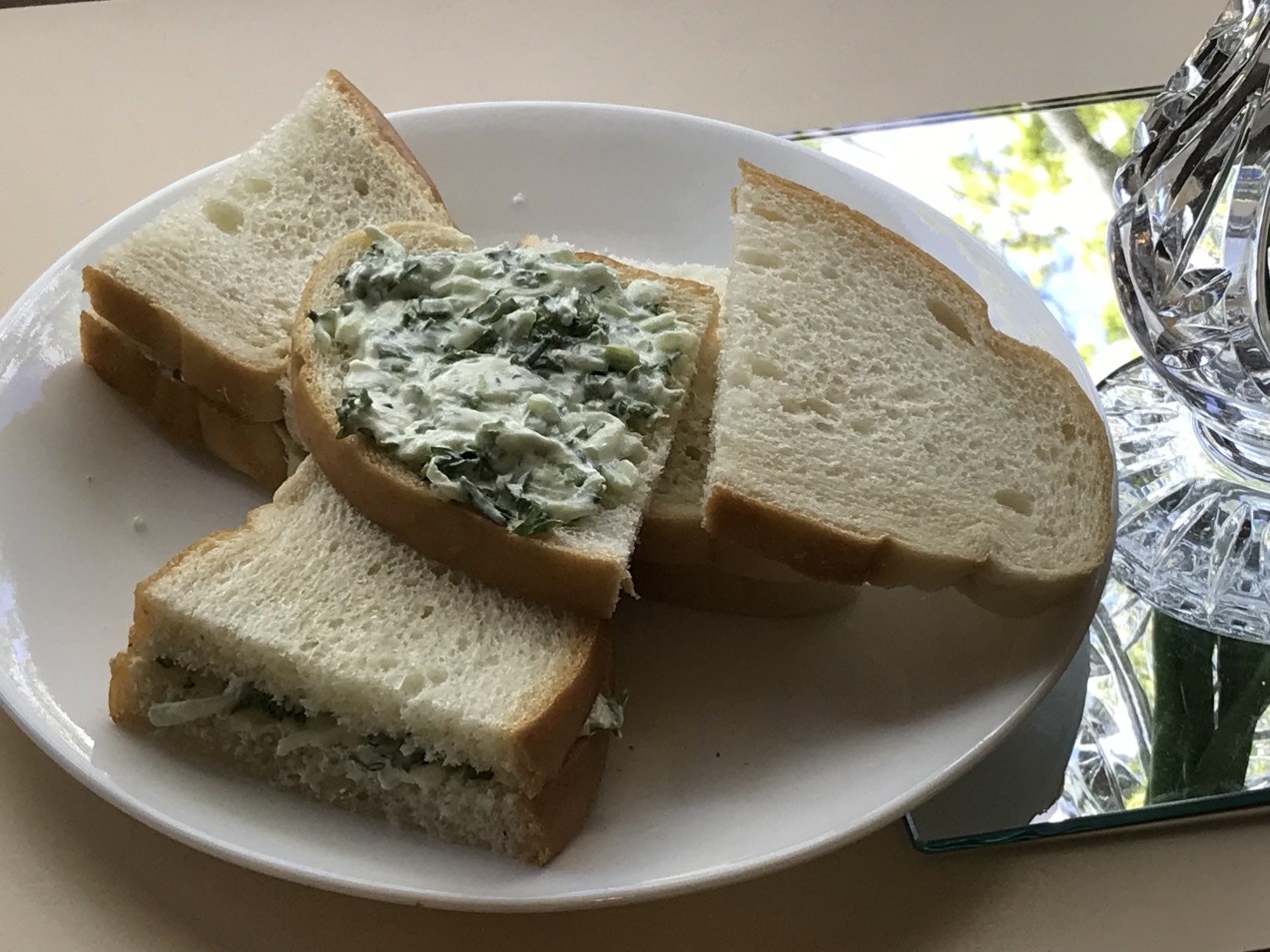
  • Vegetables (I used radishes and cucumbers), chopped, with vinegar and lemon juice to cover and a pinch of salt, and marinated in refrigerator for a few hours
  • Chopped hard-boiled eggs (I do not like them, but they are a common accompaniment, so enjoy (?) if desired)

            Directions:

  1. Place drained beans, garlic, cumin, and hot pepper flakes in a small to medium saucepan. Add enough water or broth to cover, about 1 ½ cups.
  2. Bring to a soft boil over medium heat, then reduce heat to low and simmer, uncovered, for about 20 minutes, stirring occasionally and gently breaking up the beans.
  3. When the beans have the texture of refried beans, remove from heat and serve in bowls. Pass desired toppings and plenty of bread.
  4. This recipe makes two good-sized servings, but is easy to multiply for larger groups. Make sure to have at least one pita per person.

            For free posts and recipes sent straight to your inbox, be sure to subscribe.

Standard
beverages, moroccan cuisine

Accompanying the Shakshuka: Moroccan Mint Tea

1000 Foods (pg. 704) for information, recipe is my own creation

            Moroccan cuisine is famous for its mint tea. Along with bunches of fresh mint, the tea requires green tea leaves and lots of sugar. A bit of rosewater can be added for even more flavor. Typically, the tea is served in tiny glass cups as a gesture of hospitality. The preferred serving method is to hold the teapot high while pouring, so the liquid froths as it hits the cups. Traditionally, the tea is served hot, regardless of the temperature outside. In fact, drinking hot beverages in the summer heat is common from Morocco to Italy to India. Supposedly, this encourages sweating to help cool the body, but since most people sweat anyway in the heat, I’m skeptical about its usefulness. Maybe it’s different when it’s a dry heat. Interestingly, even though iced tea seems to be uncommon in the Middle East, people there enjoy cold lemonade.

            Humans have been eating mint for thousands of years. It is mentioned in the Bible, various Ancient Greek texts, and in Apicius, the most complete cookbook to survive from Ancient Rome. Mint is a perennial and one of the easier herbs to grow. In fact, when left to its own devices, it’s notorious for taking over garden beds. Always cool and aromatic, there are two main varieties. Spearmint is the most versatile and widely used, while peppermint is a bit sweeter and spicier. At local garden centers, I’ve seen lemon, cinnamon, and chocolate mint. I’m not sure how much the flavors of these resemble their names, but they are interesting.

            When brewing green tea, it’s essential not to put the tea leaves in boiling water, which can draw out the tannins and make it bitter. Let it cool for a minute or two first. If using rosewater, add it immediately before serving to preserve its aroma.

            Ingredients:

  • Several sprigs (about ¼ ounce) fresh mint
  • 1 teaspoon green tea leaves
  • Sugar to taste
  • A few drops rosewater, if desired

            Directions:

  1. Bring two cups of water to a boil. Remove, tear, and bruise the mint leaves. Place the mint in a teapot or strainer cup.
  2. Pour the boiling water over the mint and allow to steep for five minutes.
  3. Add the tea leaves and allow to steep for another three minutes. Strain into teacups, ideally holding the spout 2 or 3 feet above the cups.
  4. Add a pinch of sugar to each cup, and a drop of rosewater, if desired.

Coming soon, I’ll have a recipe for Egyptian-style mint tea, so make sure to subscribe. Whenever there’s a new post, you’ll be notified right away.

Standard
middle eastern cuisine, recipes, vegetarian

Lent Friday Special: Shakshuka (eggs in tomato sauce)

1000 Foods (pg. 697) for information, recipe is my own creation

            Lent recently ended, along with its associated dietary restrictions. Fortunately for those of us inclined to follow Lent Friday fasting rules, eggs and dairy products have been permitted for the last few hundred years. Fish fries are always an option, but for an easy dinner at home that follows both the letter and spirit of Lent, it’s hard to beat eggs. (Or cheese, but that’s a topic for another post. Seriously, instead of fried fish sandwiches, fast food places should offer fried cheese as a meat alternative. I guarantee there’s a market for it.) They’re quick-cooking and versatile, perfect for an evening when you’re tired after the work week. An easy, quick-cooking egg recipe is the Middle Eastern dish shakshuka.

            Tomatoes aren’t just for Italian food. Once they were introduced to the Mediterranean, they were widely adopted across the Middle East and North Africa. The plants thrive in the abundant sunshine, as do sweet and hot peppers. One use for them is in shakshuka, a thick, spicy tomato sauce used to poach or scramble eggs. It’s often a breakfast dish in the Middle East, but also makes a great vegetarian lunch or dinner. The prettiest appearance comes from poaching the eggs whole, producing a mix of red, white, and yellow. Personally, I prefer to scramble the eggs and pour them into wells in the sauce. Either way, a sprinkle of cilantro brightens it up and adds even more color. If you happen to have the gene that makes cilantro taste like soap, I’m sure chopped parsley would be a good substitute. This should be served alongside some bread.

            Ingredients:

  • 1 – 2 tablespoons olive oil
  • 1 onion, chopped
  • 1 green pepper, chopped
  • 2 garlic cloves, smashed and minced
  • ½ teaspoon red pepper flakes
  • ½ teaspoon cumin
  • 1 can (about 15 – 16 oz) crushed tomatoes (not tomato sauce)
  • 4 eggs
  • 2 tablespoons milk
  • 1 bunch cilantro (also called fresh coriander), chopped
  • Bread, for serving

            Directions:

  1. Heat the olive oil in a large skillet over medium heat, then add the onions and peppers with a pinch of salt, sautéing until soft.
  2. Add the garlic, red pepper flakes, and cumin, stirring for about a minute. Stir in the crushed tomatoes.
  3. Reduce the heat to medium-low. Cook for about 10 minutes, stirring occasionally, until the sauce thickens.
  4. Meanwhile, beat the eggs with the milk and a pinch of salt.
  5. Make four “wells” in the sauce, then pour in the eggs, dividing evenly. If the wells overflow a bit, that’s fine. Cover the pan and cook until the eggs are set, about 5 – 8 minutes.
  6. Sprinkle with about half the cilantro, setting aside the remainder for anyone who wants extra. Serve with bread.

This quantity serves two people, but to feed more, just add another two eggs and one tablespoon milk per person. If serving more than four, double the sauce and use two skillets. And for more fun facts and recipes, make sure to subscribe for free.

Standard
food history

Foods Not Eaten: Personal Taste Part 1 (Blue Cheese, Boiled Eggs, and Raw Seafood)

Blue/Funky Cheeses: Stilton, Stinking Bishop, Epoisses de Bourgogne, Fourme d’Ambert, Roquefort, Gorgonzola, Cabrales, Picon Bejes-Tresviso, Kase mit Musik, Liederkranz Cheese

Boiled/Runny Eggs: Aselila (walnut egg salad), Deviled Eggs, Fried Eggs, Pidan (preserved duck egg)

Raw Seafood: The Oysters of Locmariaquer (farmed there or elsewhere in Brittany), Nieuwe Haring (new herring eaten raw), The Fine Art of Oysters (view but not eat), Sild (Scandinavian herring), Pickled Herring, North Atlantic Clams on the Half-Shell

1000 Foods (pgs. 27 – 28, 87, 91, 127 – 128, 195, 257, 298 – 299, 592 – 593, 381, 555 – 556, 571 – 572, 778 – 779, 108 – 109, 155 – 157, 342 – 344, 457 – 458, 604 – 605)

            Everyone has their own personal tastes, so we all have different opinions about what to eat at least once in our lifetimes. For the most part, I trust Mimi Sheraton’s advice on this, but there are a few things I just don’t like. Most notably, there’s strong cheese, hard-cooked egg yolks, runny eggs (usually), raw seafood (usually), meat or fish in gelatin, ketchup, mayonnaise, most bottled salad dressings, or anything with the “wrong” temperature or texture.

            If that sounds familiar, like it might be autism-related, that’s certainly possible. I am, in fact, on the autism spectrum, which might be how I’ve managed to stay obsessed with this project for so many years. It could be a sensory thing, and I do have sensory issues with loud noise and rough/itchy clothing. On the other hand, it could also be a learned behavior. My mom won’t eat most of those things either, except for bottled salad dressing.

            Let’s start with a common aversion: blue or stinky cheese. Even when it’s a type safe to eat, I find visible mold on or in cheese most unappetizing. It isn’t just the appearance. When ground into a burger, blue cheese messes up the taste. That means there’s no point trying Stilton (British), Fourme d’Ambert, Roquefort (both French), Gorgonzola (Italian), Cabrales, or Picon Bejes-Tresviso (both Spanish). Stinky cheeses are also out. No matter how good the flavor is, getting past a “mushroomy,” “barnyard,” or “putrid” (all descriptors used in the text) smell is a tall order. That eliminates four more cheeses: the British stinking bishop, French epoisses de Bourgogne, German kase mit musik, and American Liederkranz.

            For eggs, I don’t like hard-cooked yolks, which smell like sulfur and have a weird texture. Deviling the eggs doesn’t solve either issue, and even looking at egg salad grosses me out. A poached or fried egg is sometimes okay in soup or on a burger or rice bowl, as long as the yolk isn’t cooked hard (texture issue just like hard-boiled eggs), but I don’t usually like runny eggs either. Ideally, they should be scrambled and fully cooked, used in an omelet, quiche, or casserole, or mixed into baked goods. Two exceptions to this rule are Tollhouse chocolate chip cookie dough and my homemade brownie batter. Since I can’t taste the raw eggs, they are no longer gross. And no matter now good the Chinese preserved duck eggs, sometimes called century eggs, are, they look scary.

            The Dutch, Scandinavians, and New York Jewish population seem to like herring, either raw or pickled, but I do not. This might be a partially learned behavior, since my mom hates the smell of seafood (and is actually allergic). Regardless, the idea of eating whole raw herrings, bones, skin, and all, is not appealing. They have a fairly strong, “fishy” flavor, and the texture is off. Oily fish like (presumably) snoek are also too strong. Raw oysters have a slimy texture, and I can’t imagine raw clams being any better. They make a pretty still-life painting, but actually eating them is another story.

            Speaking of oysters in the French region of Brittany, here’s a story our tour director told us on the way back to Paris from Versailles. On a previous tour, most of the group decided to get (raw) oysters in the Breton former pirate city of Saint-Malo, since the area is famous for them. The tour director himself and a handful of people opted for crepes instead. You can probably guess where this is headed. The only people who didn’t get sick were the crepe group. Everyone else was miserable for the next few days. When we got to Saint-Malo a few days later, I went with the safe option. Brittany is also known for buckwheat crepes, with both sweet and savory fillings. The buckwheat crepe with ham, cheese, and egg was delicious and affordable, even in a touristy area. After eating some real food, I could enjoy a few buttery pastries and walk off the calories exploring. Bottom line: unless you really like oysters, stick with the crepes and pastries.

Standard
food history, french cuisine, italian cuisine

Foods Not Eaten: Prohibitive Cost

Poularde en Demi-Deuil (chicken with black truffles), Insalata de Ovoli e Tartufi (oval mushroom and white truffle salad), Risotto Piedmontese (with white truffles)

1000 Foods (pgs. 118, 198, 233)

            You’ll probably notice a theme here. Truffles, particularly from the Perigord region of France and Piedmont region of Italy, are really expensive. There are two reasons for this. First, they are highly sought after. Second, these varieties have resisted all attempts to farm. Truffles generally only grow among the roots of oak and chestnut trees, but not with any predictability. They must be foraged by truffle hunters with trained dogs. Based on the laws of economics, a limited supply plus high demand equals high prices. Truffles’ reputation as an aphrodisiac, whether accurate or not, only increases their allure.

            At one time, truffle hunters used pigs, which are great at sniffing out the elusive fungi, even under several inches of soil. Problem was, pigs also like to eat the truffles, so the industry switched to dogs, who are content with a treat and some petting. Since pigs also disturb the soil when rooting out the truffles, making it harder for the spores to grow new tubers, their use has since been banned in many areas.

            While actual truffles from Perigord and Piedmont are too expensive, especially for a fungus that grows in the dirt, the chocolate variety is another story. Made of chocolate and cream and rolled in cocoa powder, they only resemble the fungus in appearance. The great thing about chocolate truffles, aside from how easy they are to make, is how customizable they are. Dark chocolate orange, milk chocolate mint, white chocolate mocha, rolled in chopped almonds, the possibilities are endless.

Standard
german cuisine, recipes, stew

Nothing to Do with Ground Beef: Hamburger Aalsuppe (Hamburg eel soup)

1000 Foods (pgs. 292 – 293) for information, recipe is my own creation, but lacks eels

            Like other places in Northern Europe, the German city of Hamburg gets quite cold and dreary during the winter months. A specialty found there is eel soup, with chicken, beef, ham, vegetables, dried fruit, vinegar, and raspberry jam. If it sounds crazy, recall that combining sweet and savory flavors like meat and fruit used to be common in European dishes and is still popular in other parts of the world. Turkey and cranberry sauce, sauerbraten, and Swedish meatballs with lingonberry jam are some modern examples of this principle.

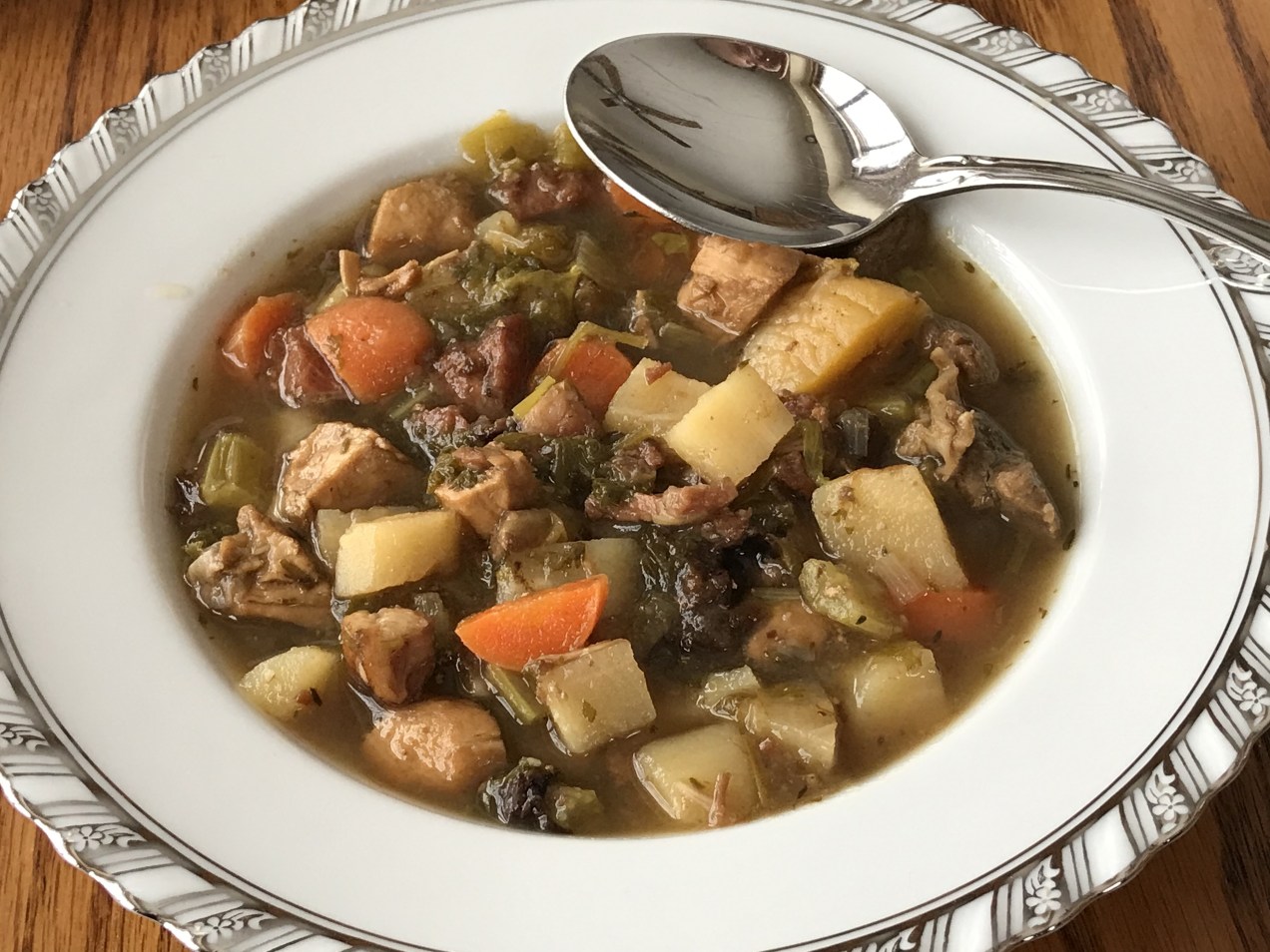
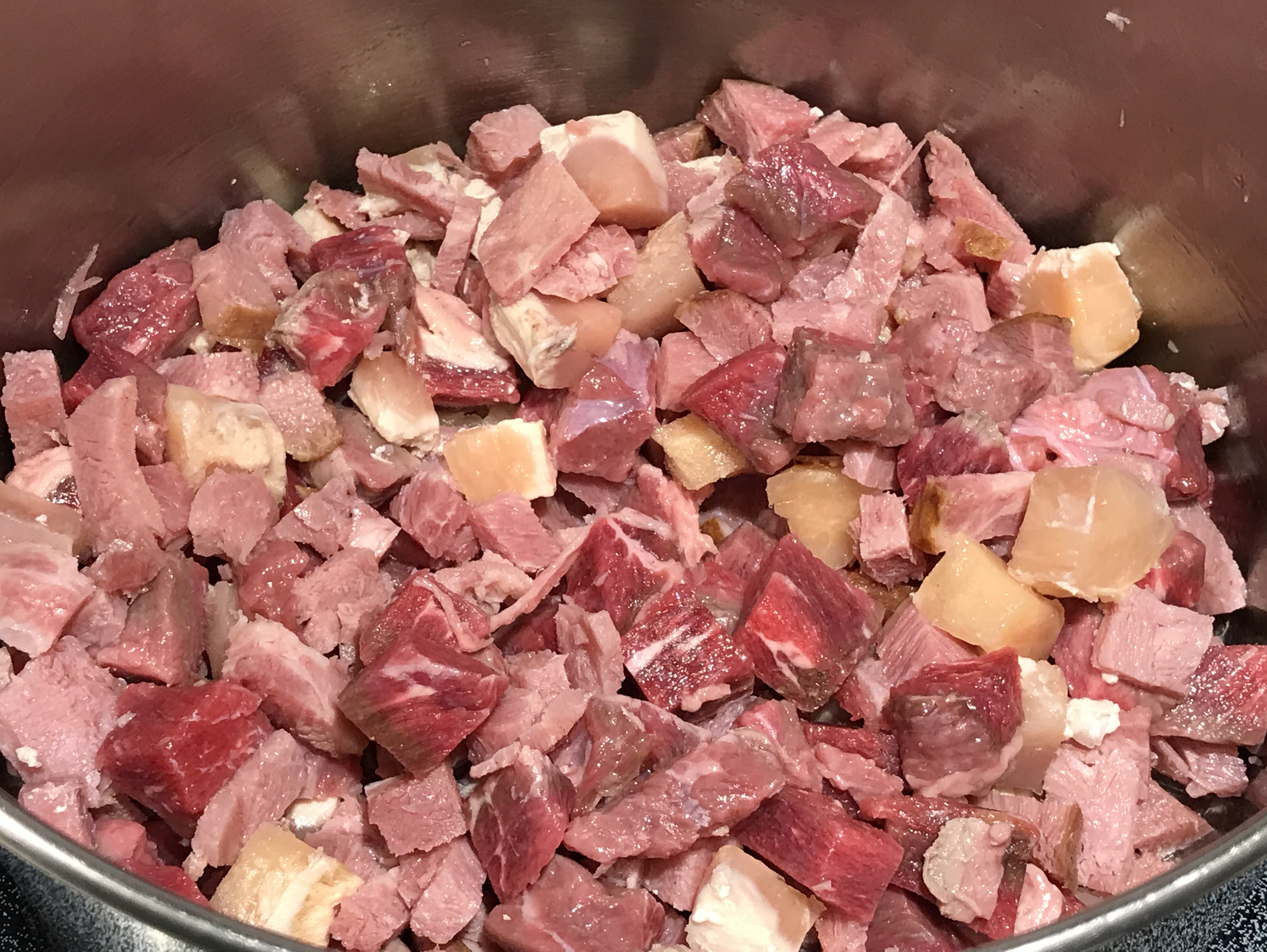
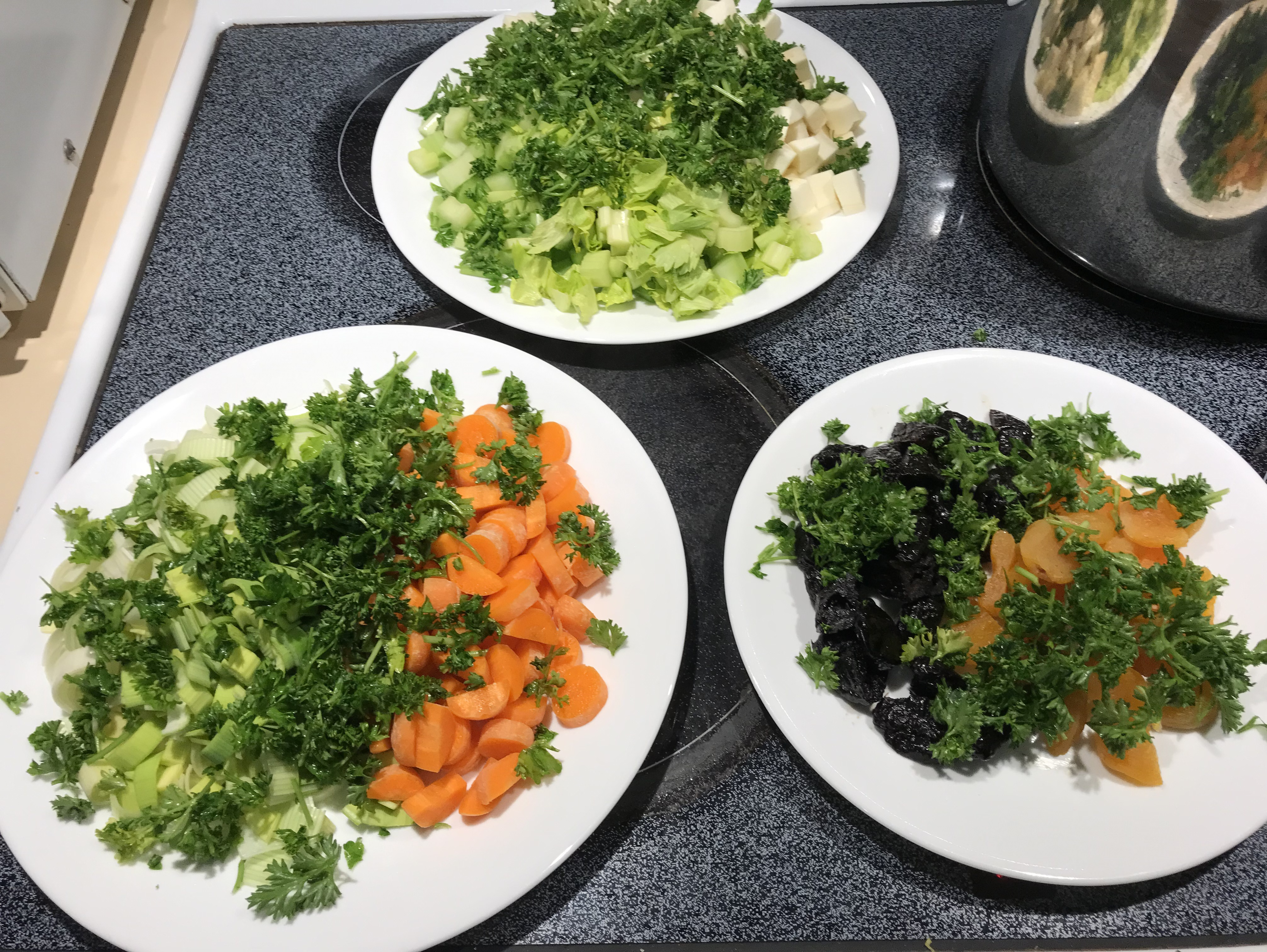
            Since eels are hard to find where I live, I decided to make “eel” soup without them, because the flavor combination sounded interesting. For the base, there’s beef chuck, ham, chicken, onions, bay leaves, and thyme. To prevent overcooking, carrots, celery, parsnips, leeks, parsley, prunes, and dried apricots are added a bit later. At the end of cooking, the soup gets a finishing touch of vinegar and jam. You can also add mini dumplings.

            For a dish that sounds so weird, the eel-less eel soup is actually delicious. The vinegar and jam give it a sweet-tart flavor resembling sauerbraten.

            Here’s what you need to make your own eel-less eel soup:

  • 1 pound beef chuck or similar cut, cubed
  • 2 chicken breasts or 4 thighs, cubed
  • 1 pound ham, chopped
  • 1 yellow onion, chopped
  • 2 bay leaves
  • 1 teaspoon dried thyme or 3 teaspoons fresh
  • 2 carrots, washed, halved, and sliced
  • 2 ribs celery, with some leaves if possible, sliced
  • 4 parsnips, peeled and chopped
  • 12 prunes, halved
  • 12 dried apricots, halved
  • 1 leek, halved and sliced crosswise
  • 1 bunch parsley, chopped
  • ¼ cup vinegar (I particularly like apple cider vinegar)
  • 2 tablespoons raspberry jam

            To make it:

  1. Put the beef, chicken, and ham into a large pot and turn on the burner to medium, stirring frequently. When it starts to brown, add 1 cup of water and scrape any browned bits off the bottom of the pot.
  2. Add the onion, bay leaves, thyme, a pinch of salt, and enough water to cover. Simmer for about 45 minutes.
  3. Add the carrots, celery, parsnips, leek, prunes, apricots, and parsley. Stir and add more water to cover. Simmer for another 45 minutes.
  4. When the meat, vegetables, and fruit are tender, add the vinegar to the soup, followed by the jam, and stir to combine.

            And remember, subscribing is free, and you’ll get a notification whenever there’s a new post.

Standard
food history, german cuisine, stew

Pre-Potato Winter Stew: Frankischer Grunkern (with green spelt)

1000 Foods (pgs. 288 – 289)

            Imagine, for a moment, that you’re making stew on a cold day. It has beef, onions, carrots, celery, and parsnips, plus some butter and minced bacon to brown the meat and vegetables before adding liquid. Most people would think of adding potatoes at this point, and some cooks do, but they aren’t the key ingredient. That particular honor goes to grunkern, or green spelt. A specialty of Baden-Wurttemberg in the southwestern corner of Germany, the stew contains starch, protein, fat, vitamins, and flavor in one bowl.

            Spelt is an ancient variety of wheat that’s been grown for thousands of years. The German word grunkern sounds very similar to “green corn,” because the grain is harvested before it’s fully ripe. In Europe, corn can mean any type of grain, not just maize and sweet corn. Exactly how green spelt was discovered is unclear. Perhaps one summer grain supplies were running low and the harvest was still a few weeks or months away, so some farmers harvested a bit of their grain early. Interestingly, grunkern doesn’t seem to be widespread in European cuisines. Maybe it was more popular before potatoes, which are also ready before the main grain harvest, were introduced from the Americas, but that’s just speculation.

            The full recipe can be found in 1000 Foods to Eat Before You Die on pages 288 – 289, but here’s a summary. Butter is melted on the stove, then bacon, onion, carrots, and celery are added. You can add the beef or pork at this point to brown, which I did. Then soaked grunkern is added, with optional leek and parsnip, along with celery leaves and the meat, if it hasn’t been added already. This is followed by a bit of thyme, pepper, and either broth or water. I omitted the leek but added a minced parsnip, celery leaves, dried thyme, and beef broth. The recipe called for salt, but that can be added later to taste. Since I used salted butter and broth instead of water, adding extra at this point was unnecessary. Then everything simmers for a little over an hour.

            One thing that surprised me about this recipe was how little meat it uses. For 4 to 6 servings, it only called for 8 ounces beef or pork. That’s less than 2 ounces per serving, contrary to the stereotype of German food. Even though Germans have historically had more meat available per person that many other Europeans, large servings were an occasional treat, particularly during the Early Modern Era and into the 19th Century, after large-scale population growth and before industrial agriculture. So we have a stew with plenty of grain and root vegetables, with some beef and bacon as enhancements.

            Overall, this soup is highly enjoyable. My favorite from this project is still beef-mushroom-barley, but this was an interesting change of pace. Like barley, the grunkern swells up in storage and upon reheating, so a bit of extra broth or water might be necessary. If you have trouble finding green spelt or grunkern, which I couldn’t find even online, try looking in a Middle Eastern food store. There it’s called freekeh, but the product is the same. Ziyad brand is one of the most widely available.

            Next time there will be another soup recipe, so be sure to subscribe. Did I mention it’s free?

Standard
egyptian cuisine, food history, recipes, vegetarian

Egyptian Rice and Beans: Kosheri

1000 Foods (pg. 711) for information, recipe is my own creation

            Kosheri or Kushari has nothing to do with kosher rules, but the Israelites may well have eaten an early variant in Egypt. Their Egyptian neighbors may have been eating it over a thousand years earlier, in the 3rd Millennium BC. Records indicate that wheat, barley, lentils, garlic, and onions were cooked together in clay pots for a combination of starch and protein. Ancient Egyptians may have added flavorings like butter, fat, or vinegar to make things more interesting, depending on what they could afford. At a time and place when most people ate little meat, the lentils were an essential source of protein.

            Even today, the starch/lentil combination is common in Egypt, particularly among those with less disposable income. Kosheri is a popular street food, often eaten for lunch. Rice, introduced at some point in the early centuries AD, is now the grain, pasta is added, sometimes browned in butter, and spicy tomato sauce is an essential flavoring. Interestingly, even though hot peppers didn’t really catch on in most of Europe when they were introduced from the Americas, Africans and Asians adopted them quickly and in much greater quantities. And presumably, early modern Egyptians found that tomatoes thrived in the sun and rich soil by the Nile.

            To make kosheri, there are four elements needed: the rice/lentil mixture, tomato sauce flavored with garlic, vinegar, and hot pepper, onions browned in butter, and broken vermicelli (angel hair pasta), also browned in butter. Mimi Sheraton suggested that mastic was an essential flavoring so I tried it, but personally I think the kosheri is better without. It’s a balanced and flavorful vegetarian dish, and if the butter is replaced with oil, could even be made vegan.

            Here’s the recipe I developed. You need:

  • 2 cups long-grain rice
  • 1 cup lentils (I used the yellow variety, but other kinds would work)
  • Pinch mastic (optional, has a bit of a piney flavor)
  • Pinch salt
  • 1 tablespoon canola or vegetable oil
  • 6 cloves garlic, crushed and minced
  • ¼ cup vinegar (any kind but balsamic, which is too sweet)
  • 1 can crushed tomatoes, about 16 ounces
  • 1 yellow onion, peeled and thinly sliced
  • 4 tablespoons butter
  • 4 ounces vermicelli, broken into roughly 1-inch pieces

            To make it:

  1. For the sauce, heat the oil in a saucepan. When hot, add the garlic and cook until it starts to brown. Then add the vinegar and scrape the bottom of the pan.
  2. Stir in the crushed tomatoes, and leave sauce to simmer, stirring occasionally, while you prepare the rest of the ingredients.
  3. If using the mastic, grind it with a pinch of salt to reduce sticking.
  4. Bring 4 cups water to a boil, then add the lentils, salt, and optional mastic, partially cover the pot, and cook for 15 minutes.
  5. Add the rice and another cup of water, fully cover the pot, and cook another 15 minutes.
  6. Melt 2 tablespoons of the butter in a skillet over medium heat. Add the vermicelli and cook, stirring frequently, until the pasta browns. Empty the pasta onto a plate, but don’t wipe out the pan.
  7. Add the rest of the butter. When it’s melted, add the onions and cook, stirring frequently, until browned and reduced in volume.
  8. To serve the kosheri, add a portion of the rice/lentil mixture to each plate. Top with tomato sauce, sauteed onions, and browned vermicelli to taste.

            For more recipes, be sure to subscribe. It’s free, and you’ll get a notification whenever there’s a new post.

Standard
beverages, food history, italian cuisine, recipes

Northwestern Italy’s Afternoon Pick-Me-Up: Bicerin

1000 Foods (pgs. 165 – 166) for information, recipe is my own creation

            Italians seem to love their coffee, but have some interesting opinions about what kind of coffee to drink when. Any coffee with milk, such as cappuccino, should only be drunk in the morning. Maybe that’s because many Italians don’t eat much breakfast and need the calories. Unless they’re drinking gallons of café lattes or adding sweeteners, they probably won’t be getting many, but maybe black coffee is too irritating on an empty stomach. It seems like adding milk to coffee in the afternoon, or after dinner, would cut the caffeine and allow for better sleep, but apparently that’s culinary heresy. But I don’t care for coffee unless it has a fair amount of milk and sugar, so what do I know?

            One particularly delicious coffee drink is bicerin, essentially a fancy layered mocha native to Turin. A number of 19th Century authors loved it. To enjoy it at home, a heatproof glass is essential, as is “a steady hand,” in the words of Mimi Sheraton. The servings are small by American standards, but the drink is rich and meant to be savored. Espresso goes into the glass first, followed by thick hot chocolate. If this is done correctly and the chocolate is thick enough, it will sink to the bottom. Foamed milk goes on top, carefully, so it will stay separate, at least temporarily. Bicerin is not stirred. Rather, the layers mix as you drink it, and flavor gradually shifts from mostly coffee and milk to mostly chocolate.

            Charges of culinary heresy aside, bicerin is a great afternoon treat. Drinking it in the morning seems like a recipe for a sugar crash before lunch. Plus, it’s a bit fiddly to make, not ideal for someone who isn’t a morning person. For the right consistency, almost like a syrup, the hot chocolate should be made from scratch with chocolate pieces and milk. 2 ounces of bittersweet chocolate and 4 ounces (1/2 cup) of milk seems to be the right amount for two servings. Espresso needs to be made, and milk needs to be heated and foamed. For two servings, 6 ounces of espresso and 1 cup of a 50/50 mix of milk and half-and-half is about right. None of this is particularly difficult, but having all three elements hot and ready at the same time can be a logistical challenge to anyone still half-asleep.

            So in summary, you need: 2 ounces of bittersweet chocolate, 1 cup milk, 6 ounces espresso, and ½ cup half-and-half. Melt the chocolate in half of the milk, stirring frequently, until smooth. Remove from heat. Prepare the espresso however you choose. Combine the remaining milk with the half-and-half and heat, whisking almost constantly, until the mixture is foamy and steaming. The coffee goes in the glasses first, then the chocolate. Spoon the milk foam over the top, don’t stir, and serve. And enjoy by mid-afternoon at the latest. With three ounces espresso and an ounce of dark chocolate per serving, it will keep you up otherwise.

Standard
food history, italian cuisine

Italian Christmas Treats After Christmas

Panettone, Pandoro, Panforte

1000 Foods (pgs. 214, 215)

            Looking at the names of these three treats, you probably noticed something. The all start with the word part “pan,” Italian (and Spanish) for bread. Festive breads, especially sweet enriched breads, have long been Christmas specialties. Before baking powder was invented, breads and cakes were strictly leavened with yeast. As sugar was much more expensive in the past, dried fruits were a frequent addition to make them sweeter. Panforte isn’t actually a bread at all, but still has the name.

            Panettone is a perfect example of these sweet, special occasion breads. Its exact origin is unclear, and there are many stories, but one thing is certain: it was invented in Milan. The dough is enriched with lots of butter and egg yolks, which give the finished panettone a lovely golden color. Flavor comes from a combination of sugar, assorted dried and candied fruit, and warm spices. Occasionally saffron is included to make the yellow color even stronger. Over time, panettone spread from Milan to the rest of Italy, then to the rest of the world. In most places, people seem to purchase their panettone, rather than make it themselves. At World Market, I’ve seen pumpkin spice and chocolate varieties, but decided to stick to the original. They even have mini versions, for those who want a taste without a lot of extra.

            There were also mini versions of pandoro, native to Verona. It’s a vanilla-scented bread/cake, whose named literally translates to “golden bread.” Verona is located in the Veneto region of northern Italy along the Adige River, about halfway between Milan and Venice. In the Middle Ages, Verona was an influential city in its own right, trading and fighting with the other city-states that ruled most of Italy north of Rome. At one point, Milan ruled Verona, allowing another opportunity for Milanese culinary influences to spread. The Veronese not only adopted panettone, but developed their own variation.

            Further south is Siena, home of panforte. In the 13th and early 14th centuries, Siena vied with Florence and Pisa to dominate Tuscany. Florence pretty much always came out on top, but Siena managed to put up quite a fight. Some of the greatest artists of the Late Middle Ages, whose work would eventually pave the way for the Renaissance, lived and worked there. By 1348, construction was underway on what was to be the largest cathedral in Europe. Then the plague struck.

Not a rice cake

            The Black Death first arrived in Sicily in late 1347. Over the next six years, it reached every corner of Europe. Mortality rates varied, but tended to be higher in urban areas, where there were enough hosts for the bacteria responsible to keep circulating. Heavily urbanized Italy was among the worst affected. Many of the large cities had death tolls of 50 or 60 percent, compared to the continental average of about one third. Records suggest that Siena lost about 80 percent of its population. Even if some losses came from citizens fleeing to the countryside, the death toll was devastating. Siena never fully recovered. The cathedral remains unfinished to this day. Tuscany as a whole suffered greatly, but the story wasn’t over.

            Florence rebounded, becoming the birthplace of the Renaissance. Even Siena, despite its setbacks, produced a few more great artists of its own. In the culinary sphere, Siena contributed the almond cookies called riciarelli, and panforte. Despite its name, panforte is made of nuts and dried fruit, not bread. The mix is spiced much like panettone, and honey holds everything together. Conveniently, World Market also carries those in miniature.

            All three were pleasantly sweet and festive. It took a while to get used to the panettone and pandoro, since they were kind of a cross between bread and cake. With the exception of cinnamon rolls, sweet yeast-leavened breads are not as common in America as in Europe. The rich vanilla pandoro and warmly spicy, fruity panettone and panforte were enjoyable, but I still prefer the usual holiday treats – peppermint cookies, buttery cutouts, brownies with peppermint ice cream, the toffee-coated cereal the neighbors brought over, etc. And candy. Lots of candy.

Standard