
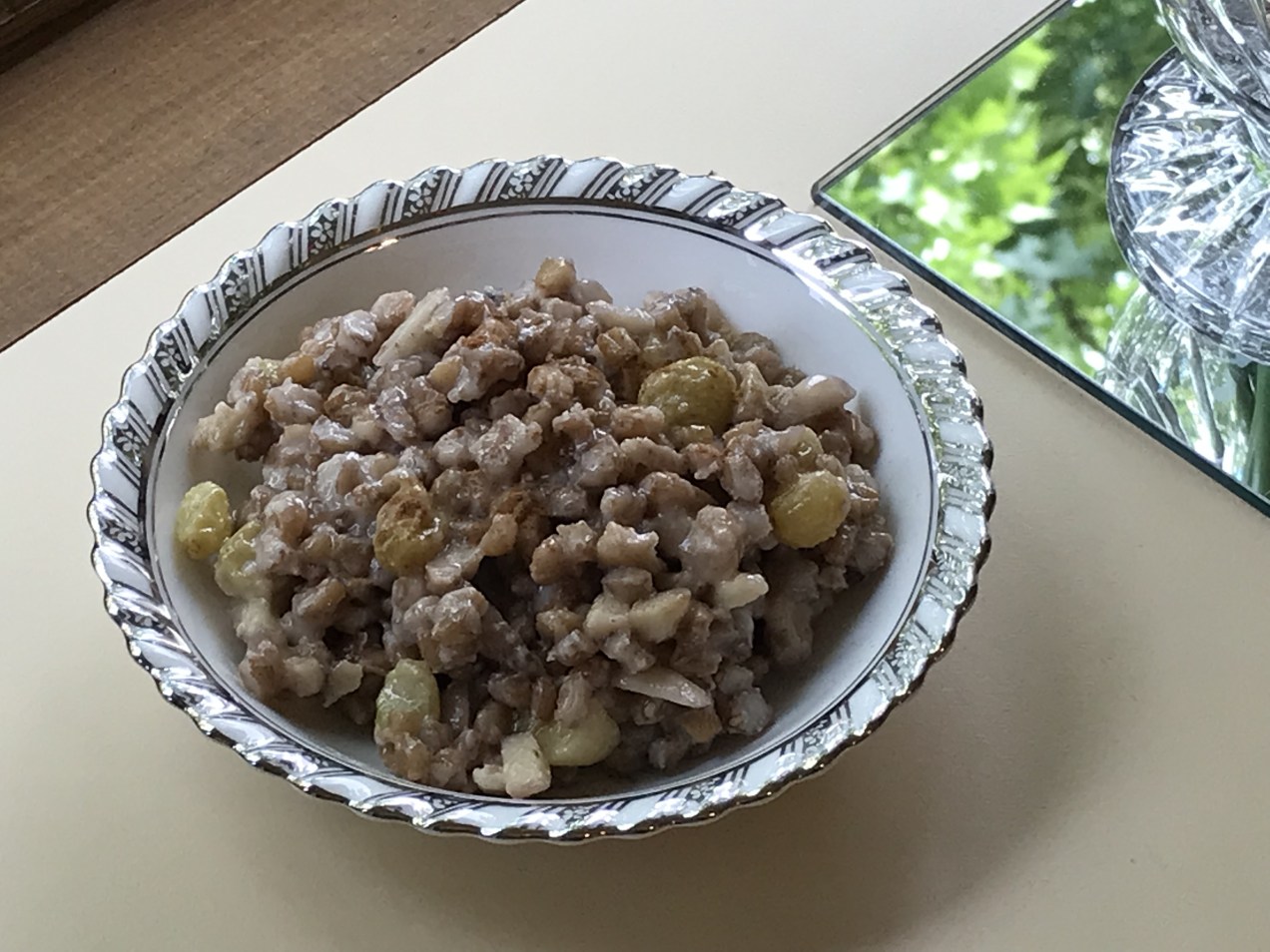
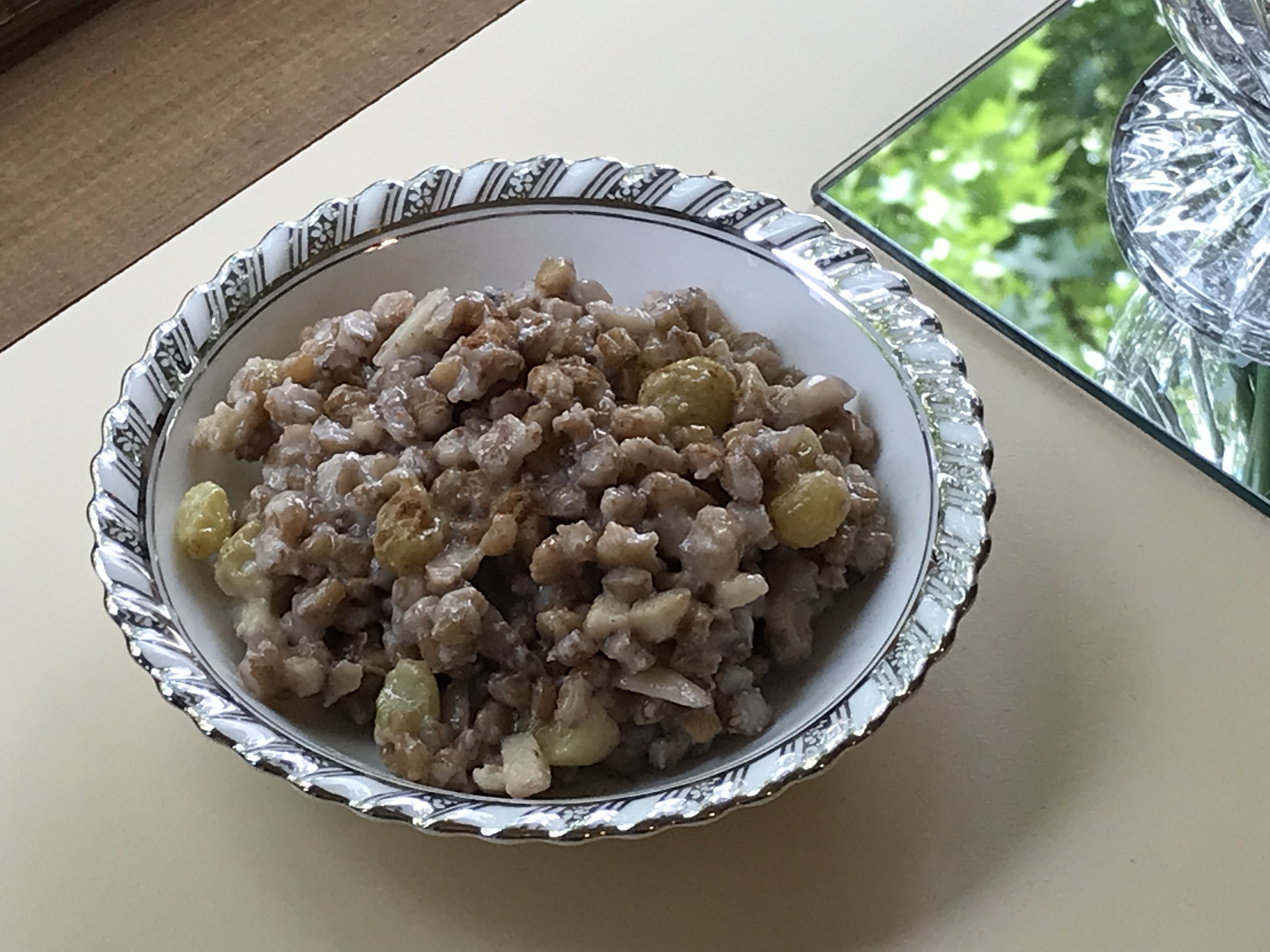
1000 Foods (pgs. 507 – 508), recipe is in the text
If you’re wondering why I made a Christmas pudding in the middle of summer, it’s because I had all the ingredients in the pantry and wanted to use up what I could. The mix of wheat berries, dried apricots and golden raisins, nuts, and honey sounded like a healthy, tasty alternative to heavy desserts while still satisfying the craving for something sweet and starchy.
Particularly popular at Christmas, anoush aboor is eaten year-round in both Armenia and Turkey. With the exception of the sugar and cinnamon, all the ingredients have been grown in the region for thousands of years. Situated in eastern Anatolia, near the headwaters of the Tigris and Euphrates rivers, this area was home to some of the earliest farmers. They grew wheat, barley, peas, and beans, raised sheep, goats, and cattle, and soon began selectively breeding and cultivating a variety of fruits, vegetables, and nuts.
Apricots, an essential part of the dish, were originally domesticated somewhere in Turkey or Armenia. When the fruit was introduced to Rome, the Romans called it prunus armeniacus, meaning roughly “Armenian plum,” or praecox for early, since they ripen before most other stone fruits. Fresh apricots are delicious in the early summer, but are highly perishable and rarely available out of season. To have apricots year-round, people have been sun-drying them for millennia. In the Middle East’s hot dry summers, this was easy and didn’t require the use of often-scarce fuel. Even today, Turkey produces much of the world’s supply.
Literally, the name anoush aboor translates to “sweet soup,” probably because of its porridge-like consistency. The wheat berries are cooked until they “pop” and release their starch into the water, thickening it. Despite being cooked in just water, the pudding had an almost creamy texture and even taste, sweetened with a mix of sugar, honey, and dried fruit. Chopped almonds and walnuts (I skipped the pine nuts and added extra of the others) gave it a nice crunch, and a sprinkle of cinnamon was a nice finishing touch.
I had one problem with the recipe. It called for a teaspoon of salt. Since I made a half batch, I used half a teaspoon, which didn’t sound like much. Unfortunately, even that amount made the pudding taste distinctly briny and a bit unpleasant. The pudding was much better stirred into unsalted hot wheat cereal to cut the salt while adding texture, but to be honest, I don’t think I would make this again. Back before modern cakes, cookies, and brownies it might have been a nice treat. Today, it’s pretty lackluster.
Make a one-time donation
Make a monthly donation
Make a yearly donation
Choose an amount
Or enter a custom amount
Your contribution is appreciated.
Your contribution is appreciated.
Your contribution is appreciated.
DonateDonate monthlyDonate yearly Feasting Through Time