Black-Eyed Susan Cocktail
american cuisine, beverages, food history, recipes

Preakness Stakes Mocktail: The Black-Eyed Susan

Black-Eyed Susan Cocktail

            Tomorrow is the Preakness Stakes, the second leg in the Triple Crown. The Preakness is always run on the third Saturday in May at Pimlico in Baltimore. Some trainers say the two-week turnaround time is not enough for the horses to recuperate, and sometimes the Kentucky Derby winner won’t race. Sovereignty will not race tomorrow, meaning there will not be a Triple Crown winner this year. While not as famous as the Derby, the Preakness is still an interesting event, with two associated food traditions. Since Maryland is associated with blue crab from the Chesapeake Bay, it’s no surprise that the Preakness is known for crab cakes.

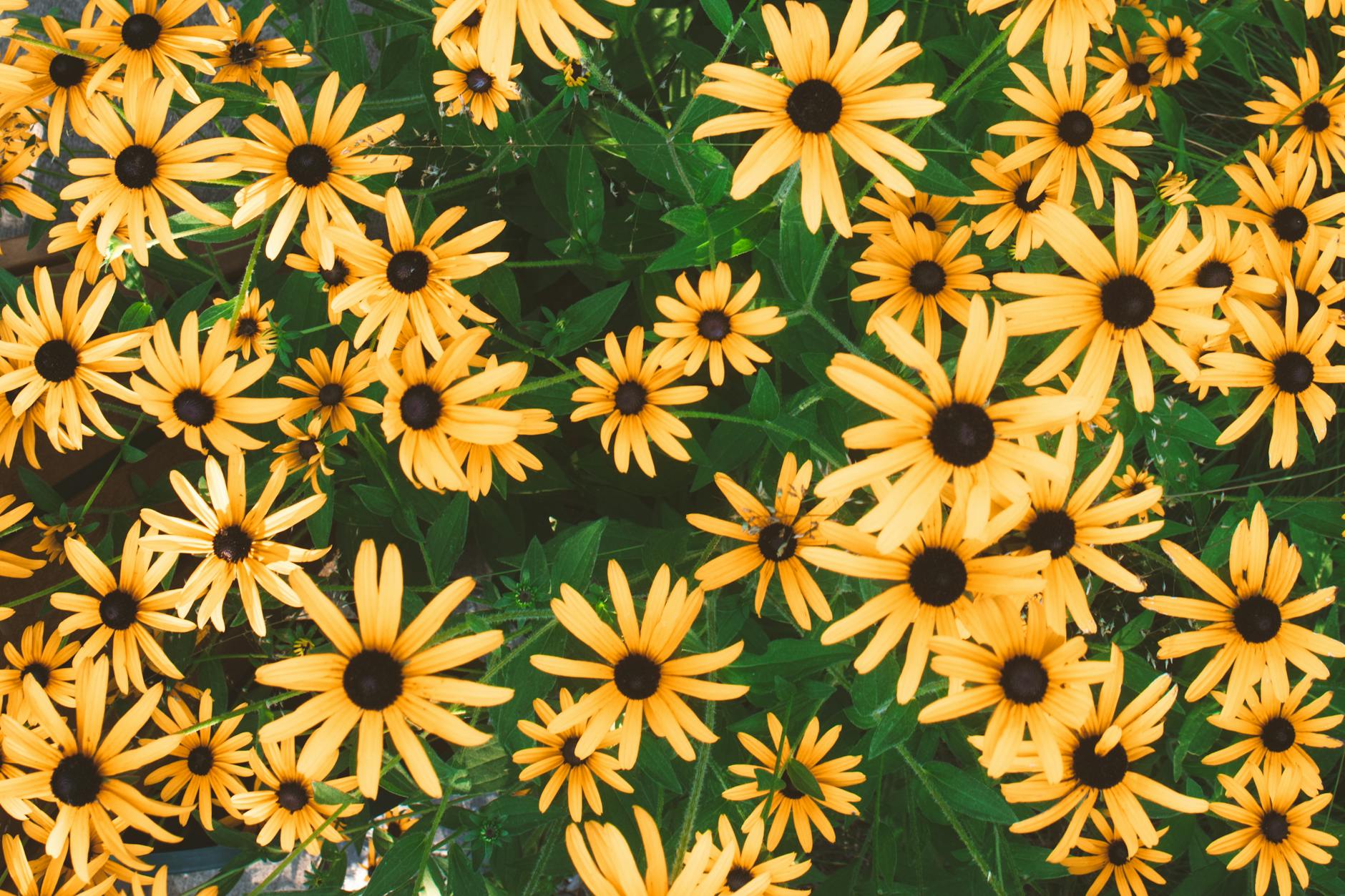
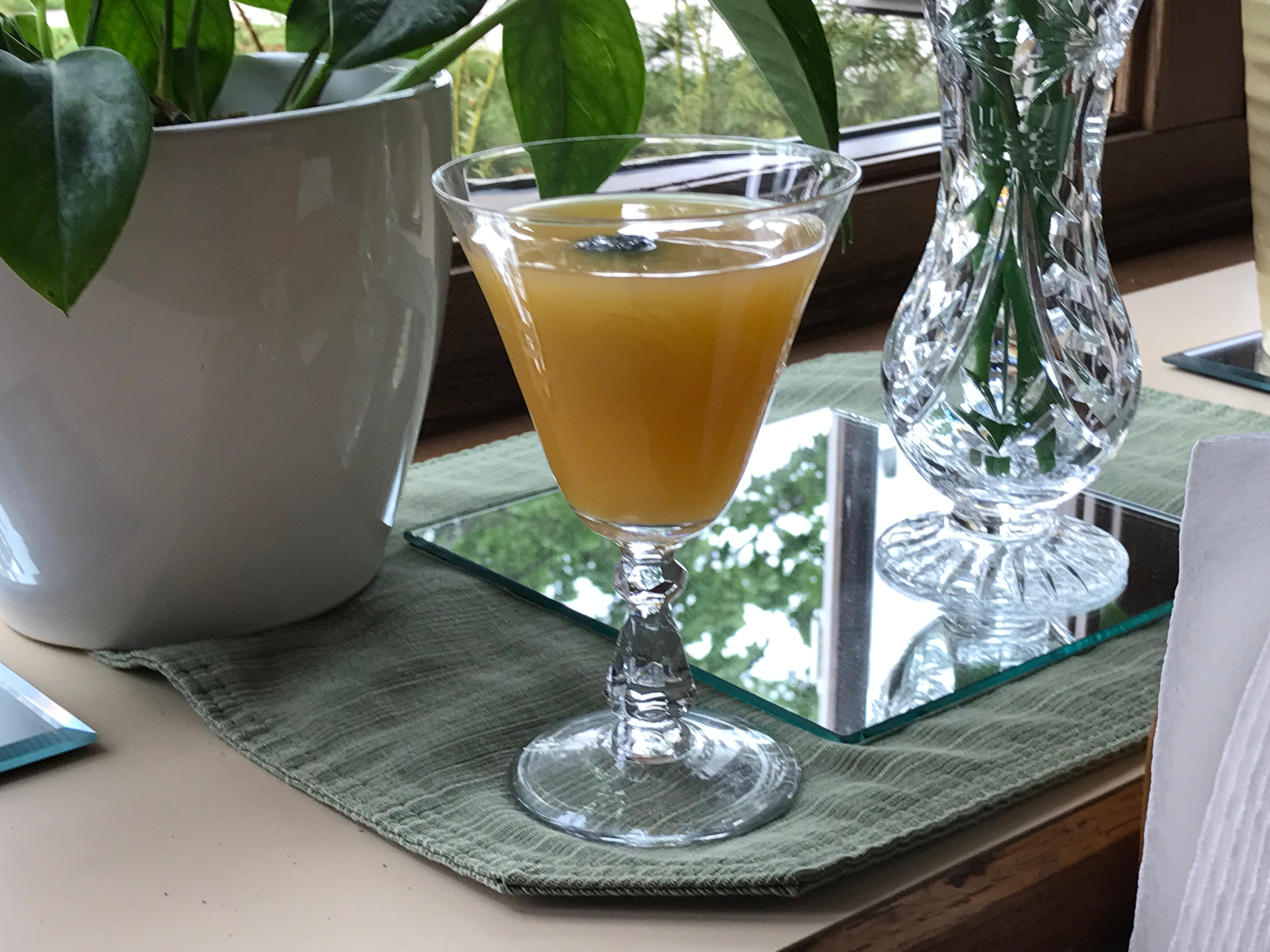
            The Preakness Stakes also has its own signature cocktail, called the black-eyed Susan. Most likely, it was named for the blanket of flowers draped over the winner. The Kentucky Derby has red roses, the Preakness has black-eyed Susans, and the Belmont Stakes has white carnations. Ideally, the cocktail will be about the same yellow-orange color as the flowers. Interestingly, black-eyed Susans are not yet blooming in Maryland.

Photo from Pexels.com

            Unlike the mint julep, the black-eyed Susan never seems to have had an “official” recipe. Invented in the 1970s, ingredients varied over time, even at Pimlico, and according to the drinker’s personal taste. The only constants are orange juice and vodka. Other ingredients might include pineapple juice, grapefruit juice, peach schnapps, rum, or bourbon. Frequently the drink will be finished with a blueberry or blackberry for the characteristic “black eye.” As long as there are at least two fruit flavors, pretty much anything goes.

Black-Eyed Susan Cocktail
Black eye demonstrated here. Definitely a resemblance, in an abstract way.

            Fruity cocktails lend themselves well to non-alcoholic variations. For my own version, I keep things simple with equal parts orange juice, pineapple juice, and tonic water with a bit of peach syrup. The tonic water is the “secret ingredient” that makes non-alcoholic cocktails more complex, and its bitter edge tastes a bit like grapefruit.

Here’s how to make it:

            For each serving, combine 1/3 cup orange juice, 1/3 cup pineapple juice, and 1/3 cup tonic water with a few ice cubes. Stir in a tablespoon of peach syrup (like what’s used in Italian sodas), or more to taste. For a low-alcohol but not completely alcohol-free cocktail, the syrup can be replaced with peach schnapps. If desired, add a blueberry or blackberry. It’s that simple, unlike the system for betting on the race.

            To get notifications of new posts sent straight to your inbox, make sure to subscribe for free. Of course, if you want to make a contribution, you’re more than welcome to.

One-Time
Monthly
Yearly

Make a one-time donation

Make a monthly donation

Make a yearly donation

Choose an amount

$5.00
$15.00
$100.00
$5.00
$15.00
$100.00
$5.00
$15.00
$100.00

Or enter a custom amount

$

Your contribution is appreciated.

Your contribution is appreciated.

Your contribution is appreciated.

DonateDonate monthlyDonate yearly
Standard
beverages, egyptian cuisine

Accompanying the Ful Medames: Egyptian Mint Tea

1000 Foods (pg. 704) for information, recipe is my own creation

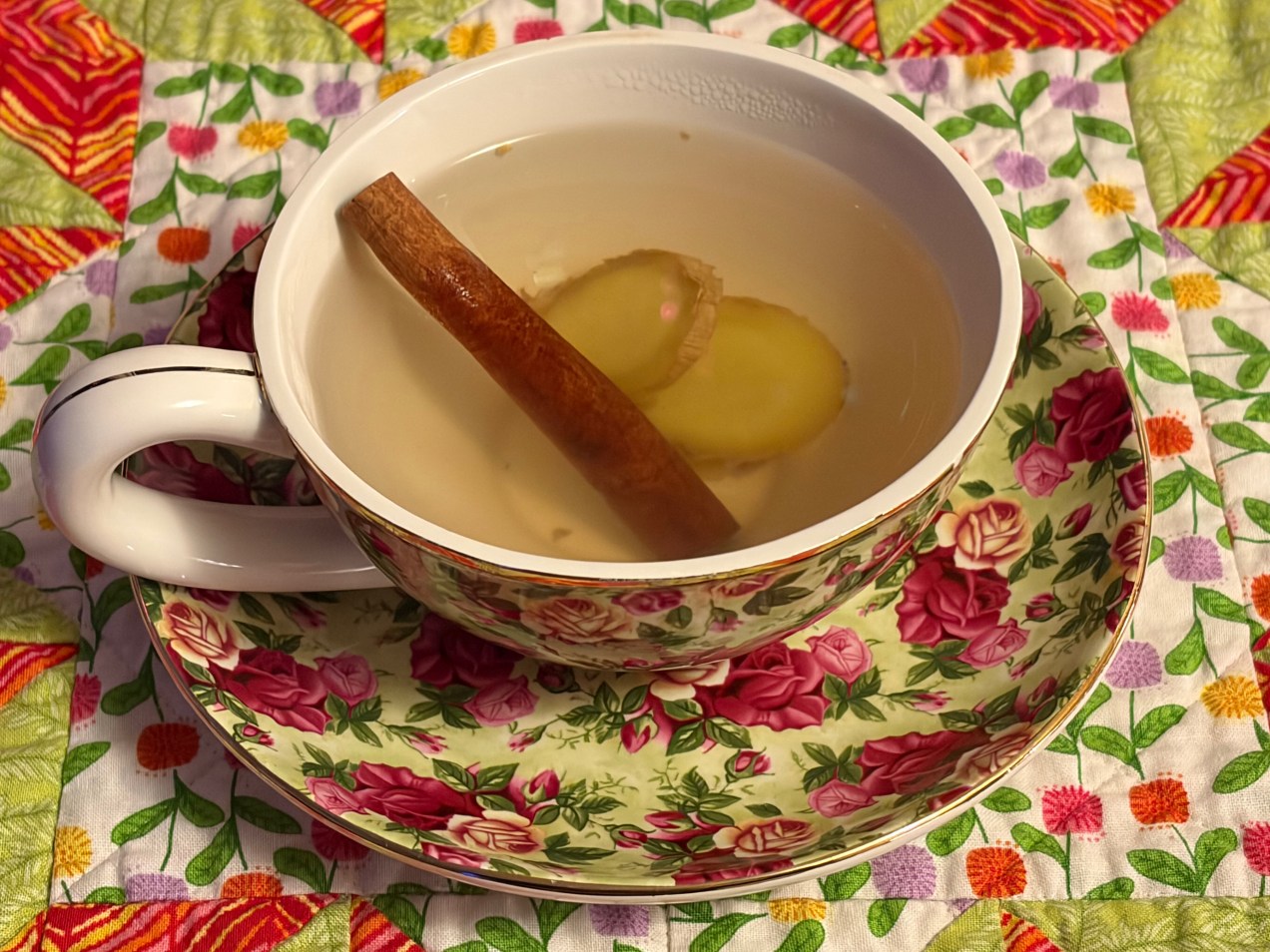
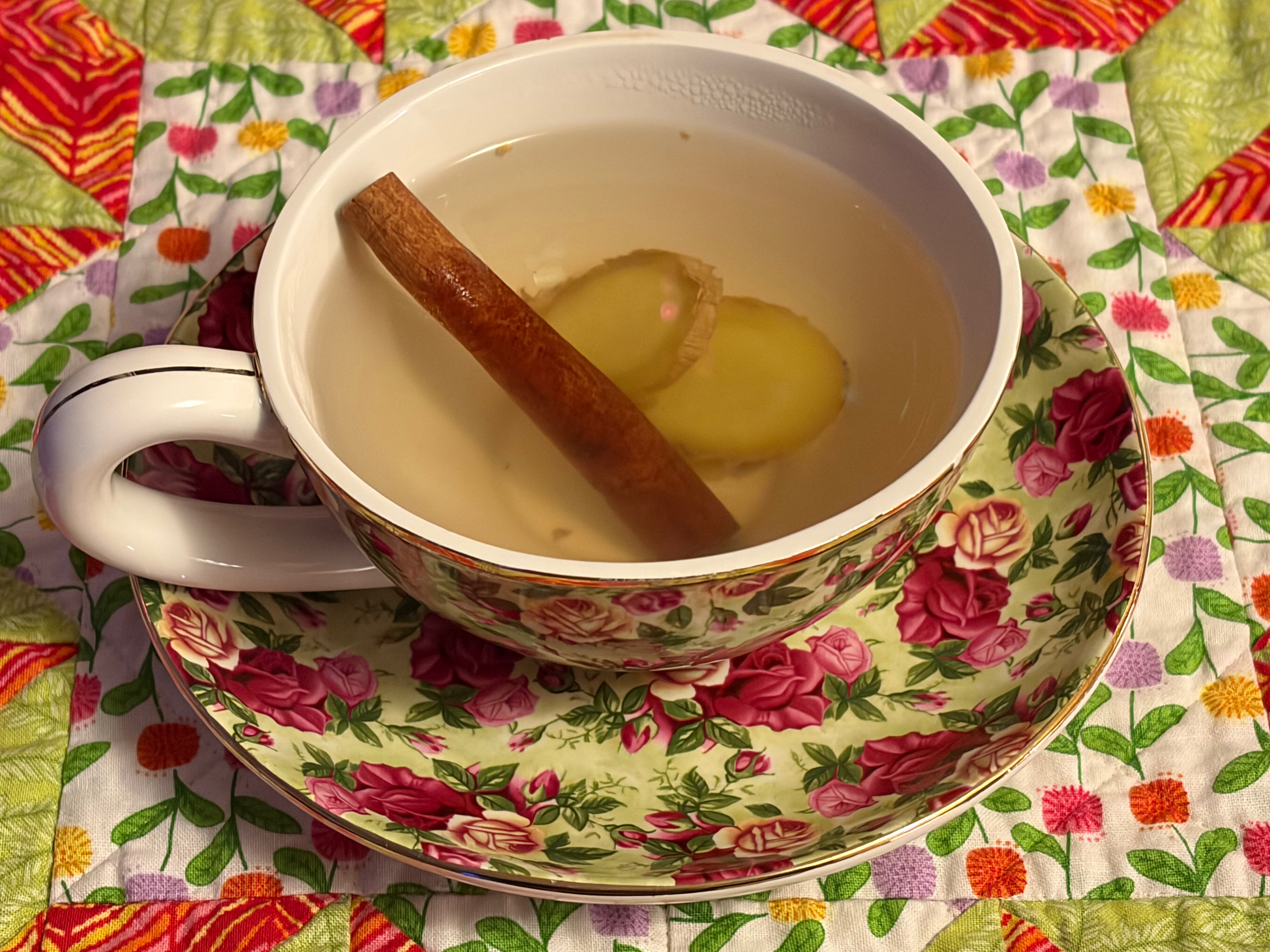
            Mint tea is popular across North Africa, with numerous regional variations. Mimi Sheraton discusses this in the text on page 704. We’ve already discussed the Moroccan variety, with lots of mint and a bit of green tea. Egyptian mint tea has less mint, more tea, and uses black tea instead of green. It’s similarly sweet, and is sometimes flavored with warm spices. I use a clove, a piece of cinnamon stick, and a pinch of cardamom for a flavor that’s present without overwhelming the mint. Note that black tea is brewed at a slightly higher temperature than green, so it can be added to the hot water right away.

            Ingredients:

  • 2 or 3 sprigs fresh mint
  • 2 teaspoons black tea leaves
  • Sugar to taste
  • 1 piece cinnamon stick, 3 to 4 inches
  • 1 whole clove
  • Small pinch ground cardamom

            Directions:

  1. Bring 2 cups of water to a boil. Remove, tear, and bruise the mint leaves. Place in a teapot or strainer cup with the tea leaves and spices.
  2. Add boiling water to the mint, tea leaves, and spices, and steep for 3 to 5 minutes.
  3. Strain into teacups, adding a pinch of sugar or more to taste.

            In Egypt, the tea is usually a lot sweeter, kind of like the sweet tea popular in the US Southeast, but served hot. Personally, I don’t like that much sugar, and prefer tea unsweetened in most cases. Flavored teas like this one are an exception, but a pinch of sugar per teacup or a few per mug is plenty.

Standard
beverages, moroccan cuisine

Accompanying the Shakshuka: Moroccan Mint Tea

1000 Foods (pg. 704) for information, recipe is my own creation

            Moroccan cuisine is famous for its mint tea. Along with bunches of fresh mint, the tea requires green tea leaves and lots of sugar. A bit of rosewater can be added for even more flavor. Typically, the tea is served in tiny glass cups as a gesture of hospitality. The preferred serving method is to hold the teapot high while pouring, so the liquid froths as it hits the cups. Traditionally, the tea is served hot, regardless of the temperature outside. In fact, drinking hot beverages in the summer heat is common from Morocco to Italy to India. Supposedly, this encourages sweating to help cool the body, but since most people sweat anyway in the heat, I’m skeptical about its usefulness. Maybe it’s different when it’s a dry heat. Interestingly, even though iced tea seems to be uncommon in the Middle East, people there enjoy cold lemonade.

            Humans have been eating mint for thousands of years. It is mentioned in the Bible, various Ancient Greek texts, and in Apicius, the most complete cookbook to survive from Ancient Rome. Mint is a perennial and one of the easier herbs to grow. In fact, when left to its own devices, it’s notorious for taking over garden beds. Always cool and aromatic, there are two main varieties. Spearmint is the most versatile and widely used, while peppermint is a bit sweeter and spicier. At local garden centers, I’ve seen lemon, cinnamon, and chocolate mint. I’m not sure how much the flavors of these resemble their names, but they are interesting.

            When brewing green tea, it’s essential not to put the tea leaves in boiling water, which can draw out the tannins and make it bitter. Let it cool for a minute or two first. If using rosewater, add it immediately before serving to preserve its aroma.

            Ingredients:

  • Several sprigs (about ¼ ounce) fresh mint
  • 1 teaspoon green tea leaves
  • Sugar to taste
  • A few drops rosewater, if desired

            Directions:

  1. Bring two cups of water to a boil. Remove, tear, and bruise the mint leaves. Place the mint in a teapot or strainer cup.
  2. Pour the boiling water over the mint and allow to steep for five minutes.
  3. Add the tea leaves and allow to steep for another three minutes. Strain into teacups, ideally holding the spout 2 or 3 feet above the cups.
  4. Add a pinch of sugar to each cup, and a drop of rosewater, if desired.

Coming soon, I’ll have a recipe for Egyptian-style mint tea, so make sure to subscribe. Whenever there’s a new post, you’ll be notified right away.

Standard
beverages, food history, italian cuisine, recipes

Northwestern Italy’s Afternoon Pick-Me-Up: Bicerin

1000 Foods (pgs. 165 – 166) for information, recipe is my own creation

            Italians seem to love their coffee, but have some interesting opinions about what kind of coffee to drink when. Any coffee with milk, such as cappuccino, should only be drunk in the morning. Maybe that’s because many Italians don’t eat much breakfast and need the calories. Unless they’re drinking gallons of café lattes or adding sweeteners, they probably won’t be getting many, but maybe black coffee is too irritating on an empty stomach. It seems like adding milk to coffee in the afternoon, or after dinner, would cut the caffeine and allow for better sleep, but apparently that’s culinary heresy. But I don’t care for coffee unless it has a fair amount of milk and sugar, so what do I know?

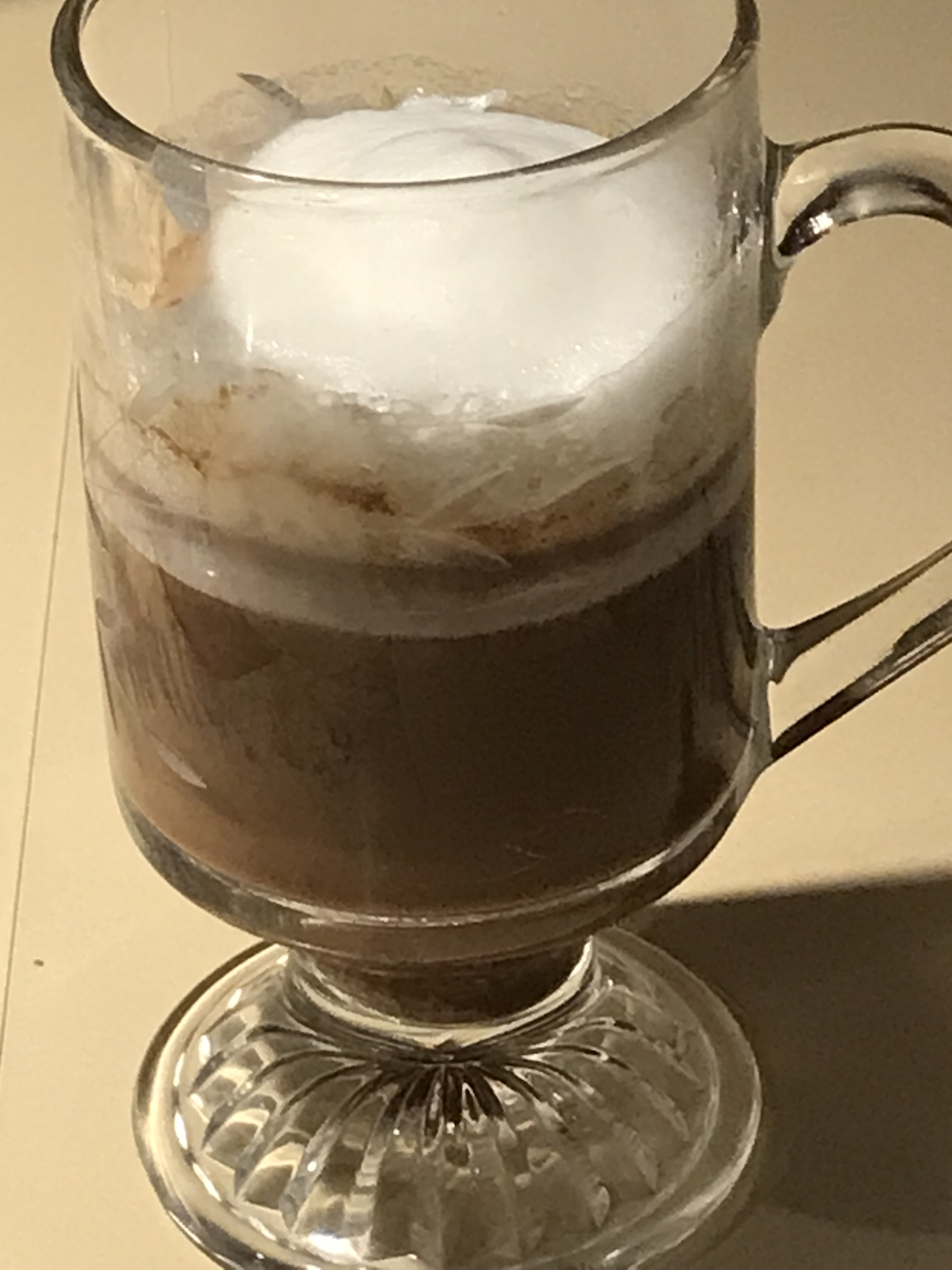
            One particularly delicious coffee drink is bicerin, essentially a fancy layered mocha native to Turin. A number of 19th Century authors loved it. To enjoy it at home, a heatproof glass is essential, as is “a steady hand,” in the words of Mimi Sheraton. The servings are small by American standards, but the drink is rich and meant to be savored. Espresso goes into the glass first, followed by thick hot chocolate. If this is done correctly and the chocolate is thick enough, it will sink to the bottom. Foamed milk goes on top, carefully, so it will stay separate, at least temporarily. Bicerin is not stirred. Rather, the layers mix as you drink it, and flavor gradually shifts from mostly coffee and milk to mostly chocolate.

            Charges of culinary heresy aside, bicerin is a great afternoon treat. Drinking it in the morning seems like a recipe for a sugar crash before lunch. Plus, it’s a bit fiddly to make, not ideal for someone who isn’t a morning person. For the right consistency, almost like a syrup, the hot chocolate should be made from scratch with chocolate pieces and milk. 2 ounces of bittersweet chocolate and 4 ounces (1/2 cup) of milk seems to be the right amount for two servings. Espresso needs to be made, and milk needs to be heated and foamed. For two servings, 6 ounces of espresso and 1 cup of a 50/50 mix of milk and half-and-half is about right. None of this is particularly difficult, but having all three elements hot and ready at the same time can be a logistical challenge to anyone still half-asleep.

            So in summary, you need: 2 ounces of bittersweet chocolate, 1 cup milk, 6 ounces espresso, and ½ cup half-and-half. Melt the chocolate in half of the milk, stirring frequently, until smooth. Remove from heat. Prepare the espresso however you choose. Combine the remaining milk with the half-and-half and heat, whisking almost constantly, until the mixture is foamy and steaming. The coffee goes in the glasses first, then the chocolate. Spoon the milk foam over the top, don’t stir, and serve. And enjoy by mid-afternoon at the latest. With three ounces espresso and an ounce of dark chocolate per serving, it will keep you up otherwise.

Standard