british cuisine

Window Shopping in the Harrods Food Halls

Photo by Mingyang LIU on Pexels.com (I couldn’t get a good picture myself without blocking traffic)

            Harrods is probably the most famous department store in London. It’s also really hard to navigate. Perhaps this is by design, so potential customers pass more high-end merchandise. After all, some of the wealthiest customers in London shop there, or have their people shop for them. But for the casual tourist who just wants to window shop in the food halls at the center, the maze is a bit annoying.

            Sure, there are smaller items like rolls, pastries, jars of jam, pieces of cheese, boxes of tea, and so on, that are affordable for most people. But after being warned by the tour director that the same items are marked up heavily just because they come from Harrods, I decided to stick with admiring the selection. There is a lot to admire, starting with the store itself. It’s kept the elaborate Victorian and Edwardian columns, ceilings, arches, and crown moldings, while gleaming like any upscale modern establishment.

            I’m not sure what’s more beautiful, the building or the merchandise. Right by the door where I came in was a selection of caviar, smoked salmon, and whole gourmet fish. To my other side was a whole wall of baked goods, and directly ahead was a truly international deli case. Many of the salads looked Mediterranean or Middle Eastern, but there were also ready-prepared slices of beef Wellington. On the other side of the deli I found all sorts of exotic fruits, including cacao pods. Oddly enough, after coming home I saw cacao pods at Woodman’s.

Advertisements

            On a side note, if you’re ever in the produce department at Woodman’s, take a minute to smell the guavas, especially if they’re a bit overripe. The intoxicating tropical aroma is impossible to describe. Anyway, back to Harrods, where there were no guavas, but the meat cases had luxury wagyu beef, authentic Spanish jamon iberico, and any cured meat you can think of. And I’m pretty sure the cheese case contained every cheese mentioned in 1000 Foods to Eat Before You Die (the food halls themselves are featured on pg. 15).

            As far as I could tell, the non-perishable (or less perishable) items like coffee, tea, honey, jams, oils, chocolates, and confectionary were more significantly overpriced than the others, though overpriced might not be the right word. There’s a quote from somewhere that “everything is worth what its purchaser will pay for it.” It’s the law of supply and demand. Perhaps because the “dry goods” can be kept for longer, the sellers can be comfortable charging more, knowing whatever doesn’t sell one day won’t be wasted. Or maybe those items are in higher demand as gifts.

            In fact, the store website suggests that the chocolates and hampers (basically gift baskets) would be perfect for the hard-to-shop-for relative or business acquaintance. I’m sure they would be. Everything in the chocolate hall was beautiful, and Harrods chocolate is known to be of exceptional quality. But a mixed 15-piece box of chocolates is $35. 325 grams (just over 11 ounces) of mixed chocolate almonds is $27. And a 16-piece chocolate truffle selection box is $40. Granted, some of those are in collectible tins, but that’s still out of my price range.

            For the cost of 2 of those items, I could get a bulk bag of pecans, make a batch of cinnamon sugar nuts, eat half of them, make another batch, and have enough for several homemade gift baskets. With the money left over, the baskets and tins (which have been passed back and forth between friends and relatives since about 1995) could be finished with Lindt truffles, clementines, and some homemade cookies and/or Chex mix. Maybe it’s just me, but that feels so much more personal. And who doesn’t love cinnamon sugar pecans?

Advertisements

            After finishing my window shopping, there was still plenty of evening sunlight to ride the Underground to visit the Tower of London. (Another interesting thing is that because the British Isles are further north than many Americans might expect, it stays light really late during the summer. In July, there was still some twilight at 10pm.) The inside was closed (not sure why they don’t stay open later in the summer to profit from the long days and tourist surge), but I had a great view of the outside of both the Tower itself and the Tower Bridge. Even from a distance, the arrow slots in the walls were clearly visible. Add in the multiple layers of walls, and the Tower could rival any modern maximum-security prison.

Tower Bridge London
Better luck getting pictures of the tower bridge

            And on the ride home, there were a few drunk guys doing pull-ups on the handhold straps hanging down from the subway roof. I was a little worried the straps would give way, injuring them physically or mentally, but they held firm. Since drunken pull-ups are apparently a common thing, the train engineers probably factored that into their designs.

            Point is, even if buying much from Harrods is out of your budget, it’s well worth a look around. If only they had free samples, which might encourage hesitant shoppers to buy.

Standard
Summer Pudding
british cuisine, food history

Summer Pudding: Britain’s No-Bake Specialty (and let’s talk about currants)

Summer Pudding

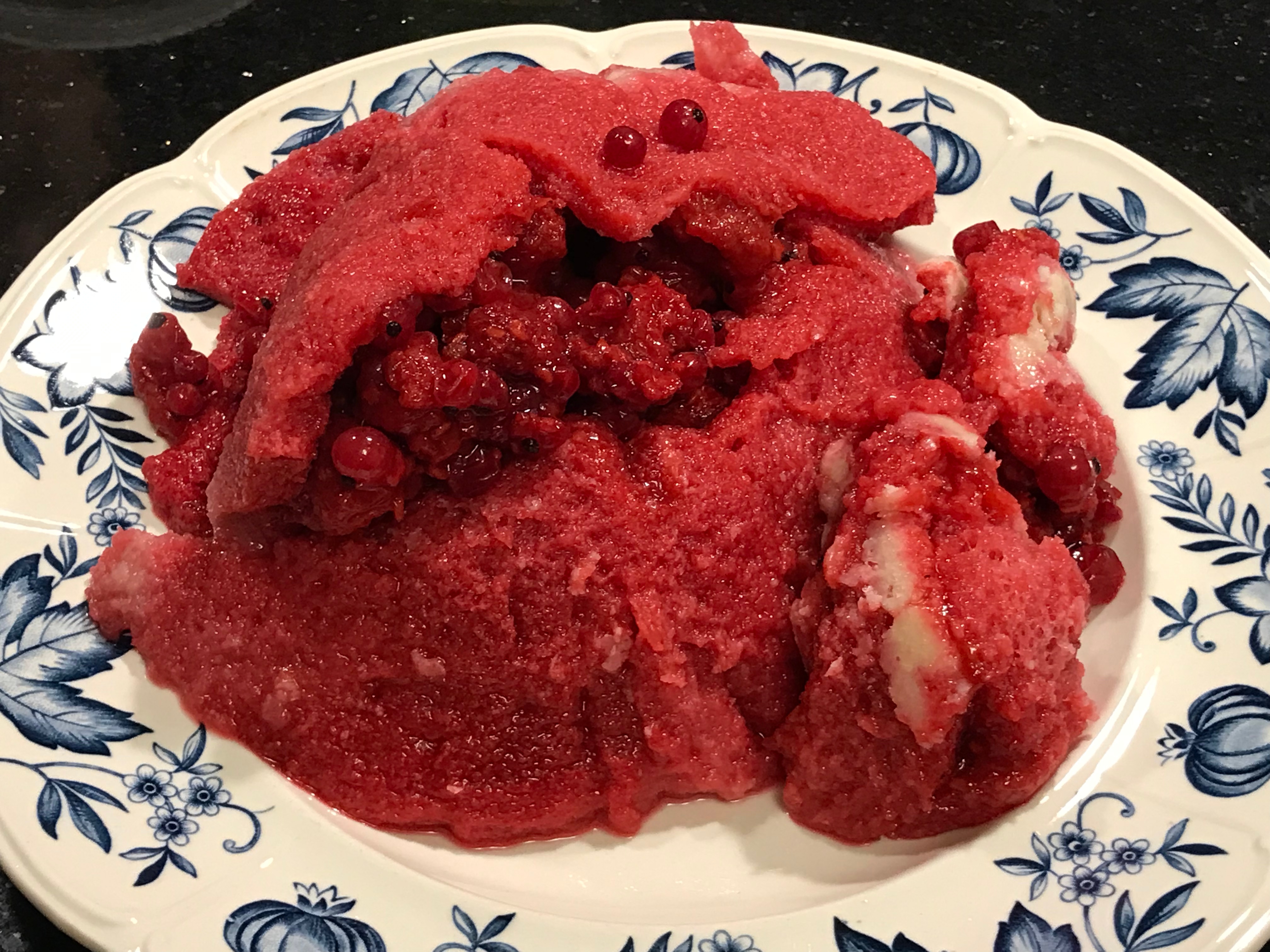
            No-bake desserts are great for special occasions during the summer. I’ve already discussed strawberry trifle, which uses frozen pound cake for beautiful and delicious results. Another showy use for berries and their juices is the British dessert summer pudding. It involves lining the bottom and sides of a bowl with white bread slices, filling the center with a mix of berries and sugar, covering the top with more bread, and pressing everything together with another bowl overnight. Excess juices are thus forced into the bread, coloring it a lovely hue between red, pink, and purple, depending on what fruit you use.

            I was a little skeptical at first. It sounded like a recipe for soggy bread, but if summer pudding is popular in the British Isles, there had to be a reason. After finding red currants at the farmer’s market, I decided to give it a try. If the bread part wasn’t good, the berry filling could be scooped out and served on its own with whipped cream.

            This turned out to be unnecessary. Odd as it sounded, the bread worked perfectly. Due to its gluten structure, it soaked up the juices like a sponge and held together even when fully saturated. Cake would typically fall apart in a similar situation. Beyond that, the bread balanced out the tart currants and raspberries very well. It was indeed soggy, but in a good way.

Advertisements

            Let’s pause here to talk about currants. The dried currants you can buy in boxes are not true currants at all. They are actually a type of small raisin. Most boxes now specifically refer to their contents as Zante currants to avoid confusion. These Zante currants are worth trying in their own right in scones, oatmeal, and the like. But they’re not what we’re talking about today.

            True currants come in three common colors: red, white, and black. All are much more common in Europe than in the US, though the red kind is occasionally found fresh in farmers’ markets and backyard gardens. White currants are a mutant form of the red variety. Black currants are even harder to find, and were in fact banned for several decades because they could carry white pine blister rust, which threatened the US logging industry. Even with new disease-resistant varieties, black currants are still illegal to grow in several states. Which is a pity, because they make great jams and juices.

Red currants
Red currants, with my hand for scale

            This history could explain the rarity of currants in the US. So too could be the fact that red currants, which were never banned, have to compete with native cranberries. Both are tart red fruits that make excellent juices and sauces, but cranberries are a lot cheaper and easier to store. And in the Midwest, where growing conditions are favorable for currant bushes, people prefer sour cherries in jams and desserts. Red and occasionally black currant jam can be found at stores and farmer’s markets, but beyond that, there are few traditional (or modern) American recipes for the fruit.

            British cuisine, by contrast, has plenty of uses for currants, especially, it seems, for the black variety, which are in fact dark purple. Blackcurrant jam is one of the favorite varieties. Many candies use the flavor. A sweetened concentrate called Ribena (which is not uncommon in the international food aisles in the US, at least in big stores) makes what tastes like currant-flavored Kool-Aid. It would taste better with a little less sugar, but is enjoyable nonetheless. And of course, there are numerous desserts made with all varieties of currant.

            One of the favorites is summer pudding, which Mimi Sheraton suggests is best made with a mix of red currants and raspberries. Taking the expert’s advice, I picked up some frozen raspberries, scaled down the recipe on pages 29 – 30 in 1000 Foods to Eat Before You Die by half, and got started. (Information about currants can be found on pages 12 – 13). Whether or not to cook the fruit or just briskly stir it with the sugar depends on how soft and/or ripe the fruit is. Since currants are firmer and tarter, even when ripe, I decided to cook them with the sugar for a few minutes, then stir in the raspberries, which are more prone to fall apart, after. This worked perfectly.

            The biggest challenge turned out to be finding a bowl that would fit perfectly inside the bowl with the pudding. This is important because pressing down on the surface with adequate weight (provided by a few cans of food) is what forces the excess syrup into the bread. The other issue was unmolding. I’m not sure why the recipe called for buttering the main bowl, since the butter completely solidifies when everything is chilled, unless it’s for flavor. The now-solid butter stuck the bread to the bowl, making for a slightly messy presentation.

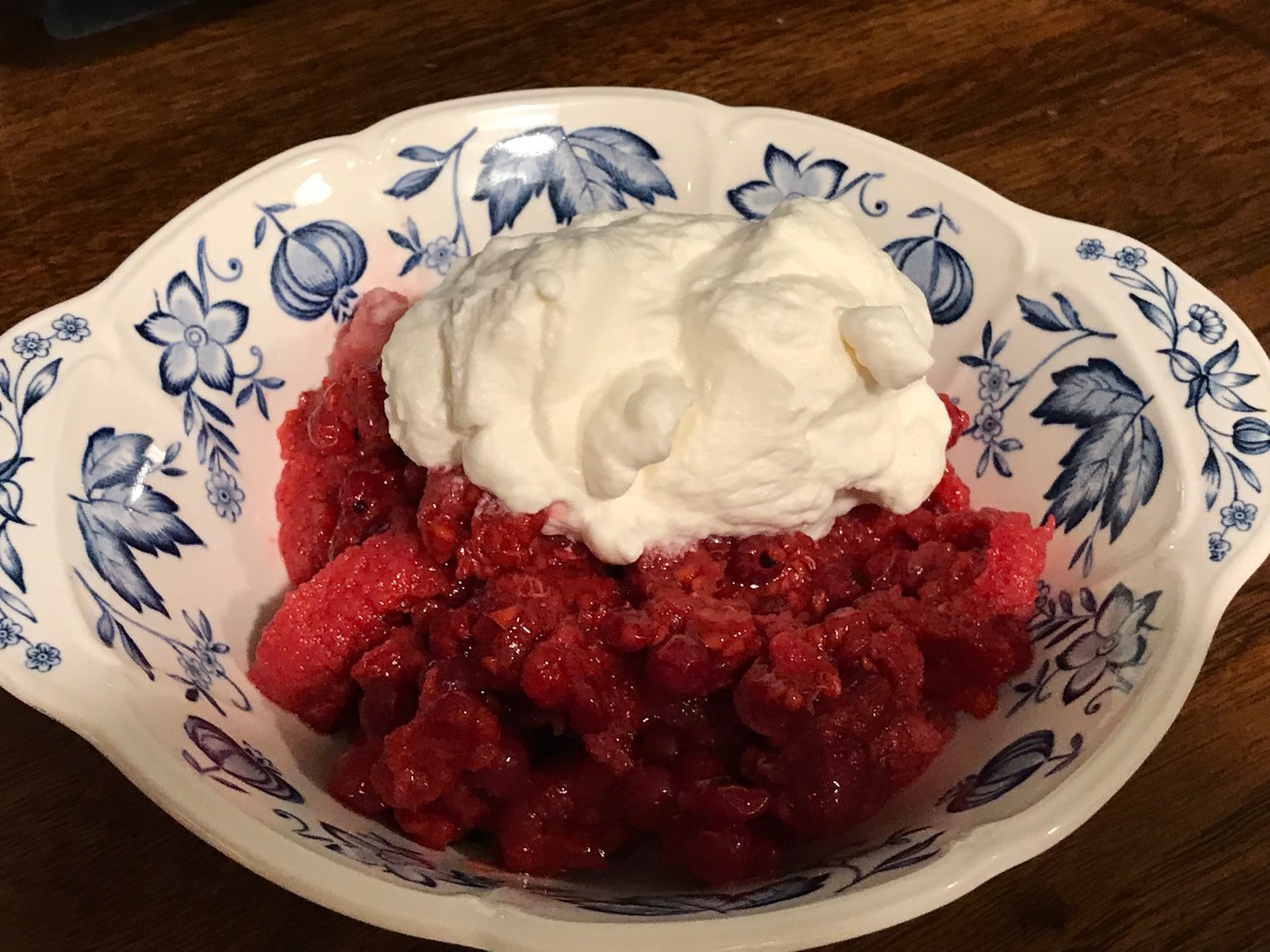
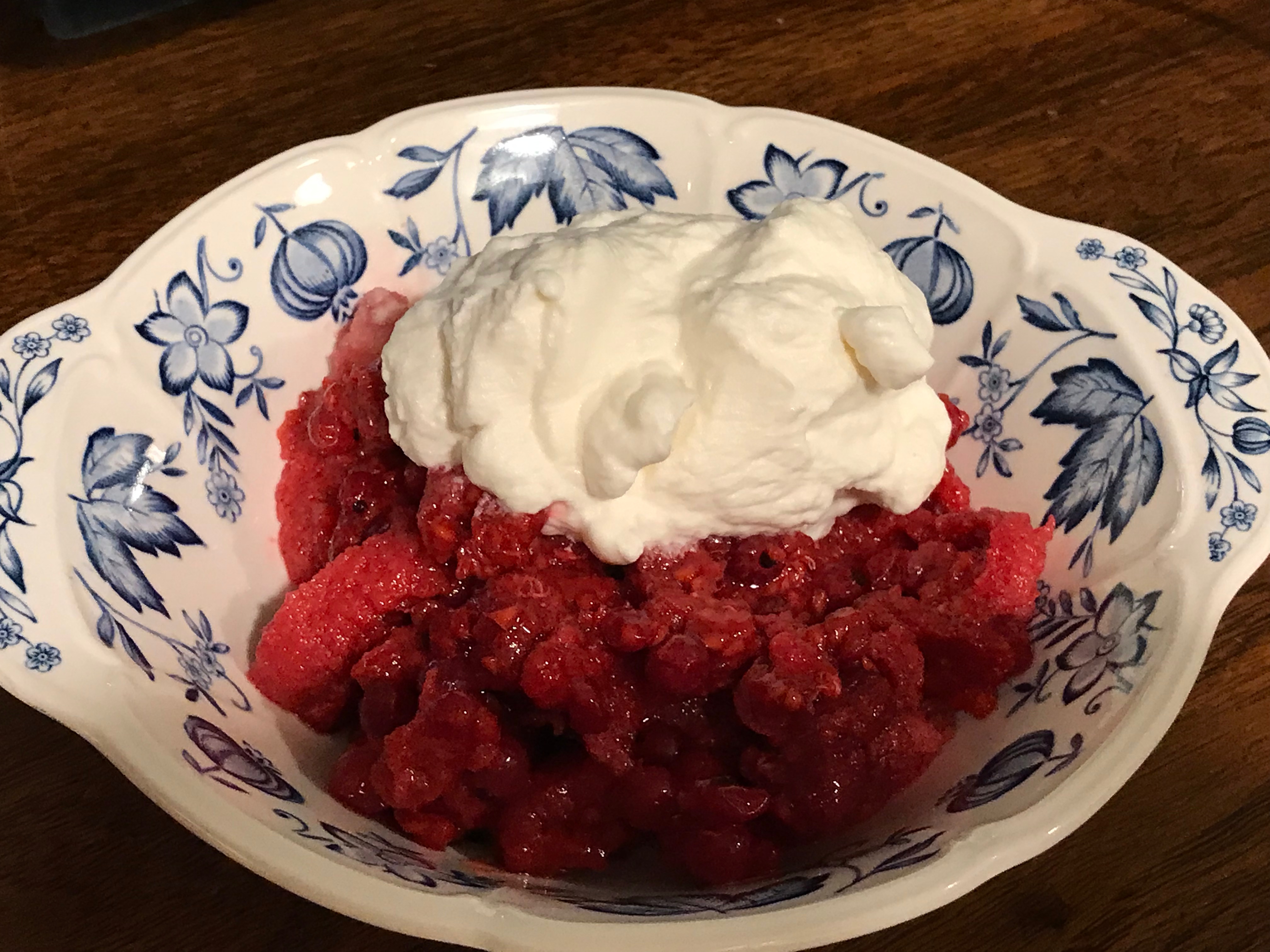
            Messy or not, the juice-stained bread and red fruits were pretty in their own way, especially with a contrast of whipped cream. Brits often serve summer pudding with either clotted or whipped cream. I’m not sure how the former is, but the latter is perfect, especially if you make it yourself. Homemade whipped cream is super easy to make, and it makes the odd-sounding but delicious summer pudding even better. To be honest, it makes any dessert better.

Standard
Parliament Big Ben
british cuisine, food history

Tastes of the British Isles: More Interesting Than People Think

Parliament Big Ben
Fun fact: Big Ben is technically not the name of the tower itself, but the bell inside it.

            British cuisine gets a bad rap. Jokes abound about it being bland, heavy, and sometimes bizarre. Even the island’s inhabitants make fun of it, and often don’t eat “traditional” British dishes on a daily basis. Partly due to immigration from the Indian Subcontinent, Brits love curry and other Indian dishes. You can find falafel, Italian, and Chinese food everywhere. Still, some local dishes are worth trying. Read through the Harry Potter series for some good examples.

            Last month, I went on a trip to Great Britain and Ireland. The history was fascinating and the scenery was lovely. There were just two surprising things. First, people don’t just drive on the left. They also keep to the left on sidewalks, staircases, and anywhere else people might be passing each other in opposite directions. It felt completely backwards and I couldn’t quite get used to it. Luckily we had a bus for long distances and didn’t have to drive.

Tower Bridge London
The Tower Bridge in London

            I was also surprised by how difficult some of the local accents were to understand. Despite having a fraction of the landmass and only about a fifth of the population, the British Isles have a greater number of distinct accents than the US. This makes sense, since people have been speaking some form of English there for around 1600 years instead of 400, giving the language a lot longer to develop various dialects.

            American English certainly has its diversity, but for the most part, a speaker of one dialect can understand another. This isn’t the case in Britain and Ireland, particularly in more rural areas. On several occasions, I could only get a rough idea of what someone was saying. If asking them to repeat themselves didn’t work, I would just say ok, nod, and hope for the best.

Swans in Avon River, Stratford
Swans in the Avon River in Stratford. They were a popular Medieval feast dish, but apparently don’t taste very good.

            The food was easier to understand. Most of the ingredients are familiar and easy to find. Fish and chips are just fried fish and French fries. Beef and Guinness stew is straightforward and delicious, even if you don’t usually like Guinness. Pasties are meat and vegetables in a pie crust. Think of them as cousins of empanadas. Cheeses like cheddar are imitated all over the world. There’s bangers and mash (sausages with mashed potatoes), shepherd’s pie, roast beef and what are essentially popovers, cheese sauce with toast, and a variety of jams and marmalades.

Advertisements

            Then there’s the desserts, which is where British cuisines excel. The best introduction can be found by watching the Great British Baking Show. The Victoria sponges, loaf cakes, shortbread, sticky toffee pudding, and cream-filled fruit tartlets look and sound delicious. There have definitely been some odd flavor combinations (like miso caramel and black sesame ice cream), but sometimes they turn out to be inspired. Other times, the classics done well are what impress the judges.

            That contrast seems to sum up British cuisine as a whole: willing to try new ingredients and dishes, but not forgetting the classics.

Standard
Potted shrimp with toast and greens
british cuisine, food history

Unplanned British Treat: Potted Shrimp

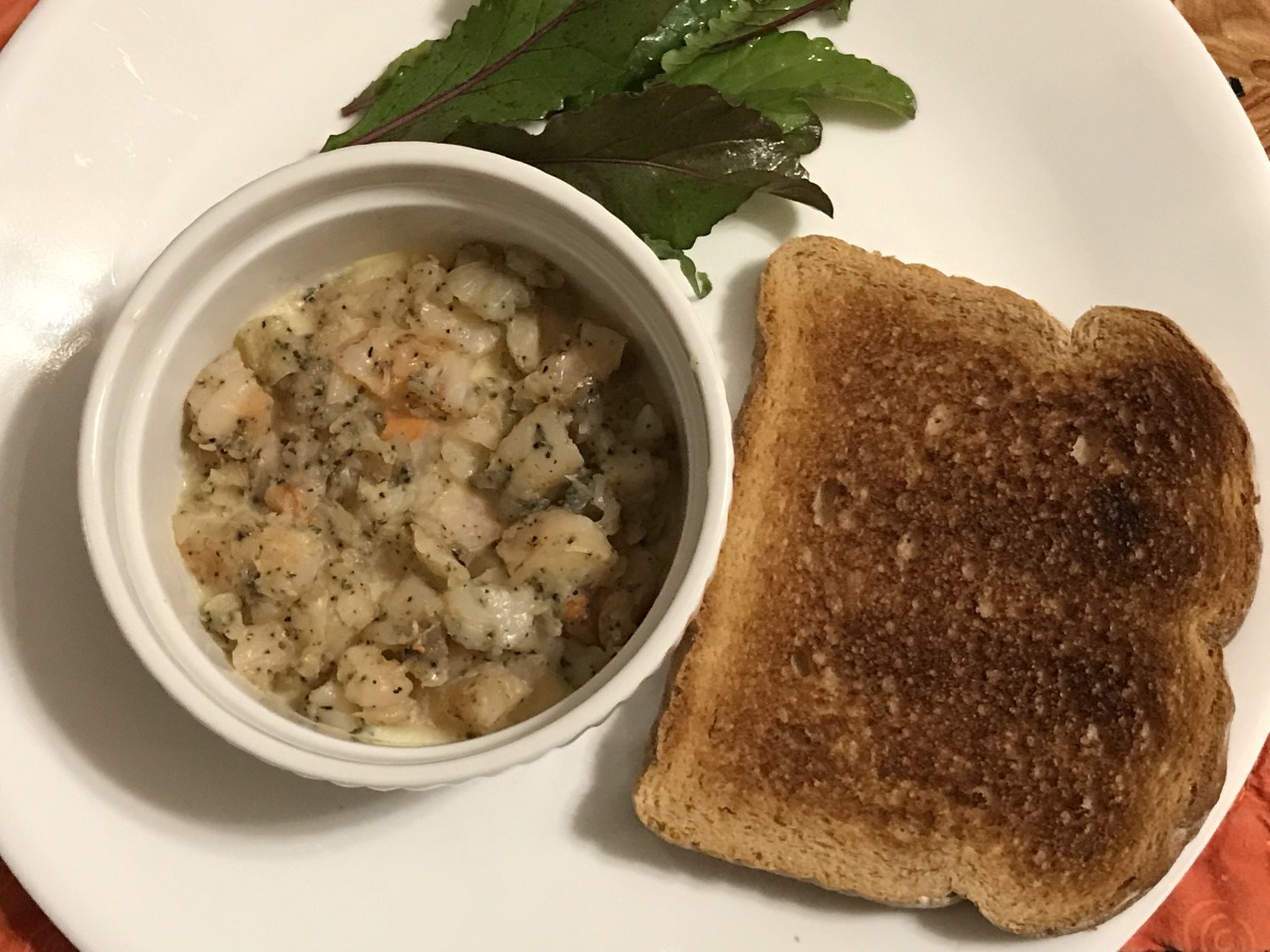
Potted shrimp with toast and greens

Recipe can be found in 1000 Foods to Eat Before You Die on pages 18 – 19

            Before refrigeration, preserving food was always a challenge, particularly for highly perishable things like shellfish. Besides salting, pickling, smoking, and controlled fermentation, cooked meat and fish could be covered in a layer of fat to keep out the oxygen. The French preserved pork in its own fat for rillettes, and duck or goose as confit. For leaner proteins like ham or shrimp, the British “potted” them in ceramic dishes. This process involved mixing the chopped shrimp with melted butter and covering everything with more butter.

            Since shrimp were reduced price for quick sale at the store, I thought I would give this recipe a try. Interestingly, though British cuisine has a reputation for being dull and bland, potted shrimp is traditionally seasoned with cayenne pepper and mace. Once the mixture of shrimp and flavored butter is chilled and solidified, it is served on either salad greens or toast.

            Mace and cayenne pepper might seem odd for a traditional British dish, but both became popular in the 18th Century. Most likely, this has to do with Britain’s growing influence in India. Modified “curry” dishes began to appear in cookbooks, and the long-term Dutch monopoly on nutmeg (mace comes from the same plant) was broken, allowing the British East India Company to bring cargoes of both spices to Europe. A little spice goes a long way in a generally bland diet, especially when fresh food was unavailable for much of the year.

            Note that mace isn’t widely available in grocery stores, but is easy to find in specialty spice stores and online. Because you’ll probably have to buy more than you need, it’s a good idea to buy whole mace and grind it yourself. Whole spices stay fresh for longer.            

The potted shrimp was interesting, but not my favorite preparation. Overnight in the refrigerator, the butter became, for lack of better terms, crumbly and waxy. This may have been due to adding more than the recipe called for, which was not enough to cover the shrimp. Another issue was that the little flecks of ground mace darkened in the refrigerator overnight, which looked alarming since I wasn’t prepared for what looked like ground pepper to appear. Spreading the mixture on hot toast helped with the texture, and the flavor was a nice mix of shrimp, butter, and spice. Not bad at all, though I would prefer the shrimp hot with garlic butter.

Standard
british cuisine, recipes, soup, stew, welsh cuisine, winter

Medieval-Inspired Welsh Soup: Leek Broth

Idea comes from 1000 Foods to Eat Before You Die, pg. 35, recipe is my own

            For some reason, leeks are a Welsh symbol. They are particularly associated with St. David’s Day, dedicated to Wales’s patron saint. Exactly how this happened is unclear, and history doesn’t provide many clues. At some point after 500 BC, Celtic peoples came to dominate the British Isles, including Wales. Starting in 43 AD, the Roman Empire conquered England and Wales, staying until the 5th Century.

            During these centuries, the native population became somewhat Romanized, adopting many Roman customs and, from the 4th Century onward, Christianity. These Romano-Britons spoke a Celtic language similar to Welsh. After the legions left to deal with everything else going on in the 5th Century, Anglo-Saxons from modern Germany began invading the island. The Romano-British chieftains put up a spirited defense, but were gradually pushed west into Wales, which is why the land to the east came to be called “Angle-Land,” later England. Did the proto-Welsh use leeks, which were a favorite of the Romans, to distinguish themselves from the Saxons? It’s possible.

            One of these proto-Welsh chieftains became the basis of the King Arthur legends. In other words, the man behind the myth was Welsh, not English. Perhaps because Wales is hillier and less fertile than England, or perhaps because they were busy fighting first each other and later the Vikings, the Anglo-Saxons mostly left the Welsh alone. After the Norman Conquest in 1066, so did the descendants of William the Conqueror. They were busy fighting rebellious Saxons, building an empire in France larger than what was controlled by the French king, and fighting their relatives over shares in that empire. There were some incursions into Wales, Scotland, and Ireland, but the Anglo-Norman kings of England were mostly occupied elsewhere.

            This changed in the 13th Century, probably because the kings of England lost most of their land in France. With the French kings much stronger than before, reconquest was a difficult proposition. So the English kings turned their energy towards the rest of the British Isles. King Edward I conquered Wales in the 1280s, and from then on heirs to the English throne were called the Prince of Wales. One story goes that the Welsh asked King Edward for a prince that spoke neither English nor French, so he presented them with his infant son, the future Edward II, who did not yet speak any language.

            Unlike Scotland and Ireland, Wales merged into the English monarchy with only a few early rebellions. It remained a culturally distinct backwater, but Welsh longbowmen played an essential role in the Hundred Years’ War. Without them, the English could not have won so many battles against much larger French forces.

            In Wales’s cool, wet climate, raising livestock was more profitable than growing most crops. Oats, barley, rye, and root vegetables grow more easily than wheat. Traditional Welsh dishes tend to be homey and comforting, not spicy and exciting. Not many Welsh specialties are known outside the British Isles, but one of the more famous is leek broth, called cawl cennin in Welsh. It’s a simple mix of leeks, carrots, potatoes, and cabbage, flavored with bacon and thickened with oatmeal.

            Except for the potatoes, this sounds a lot like the thick soups, called pottages, eaten by most medieval Europeans. The ingredients varied by social class and the occasion, but for the common people, vegetable-based soups and bread were the core of the diet. These were supplemented with butter and cheese, some meat and fish (usually salted), fruit in season, and beer, cider, or wine, depending on the region. Leeks and salted pork products like ham or bacon gave pottages more flavor, and vegetables like carrots and cabbages kept reasonably well over the winter. Grains, particularly those like oats and barley that were less useful for making bread, were often added as thickeners.

            Once potatoes became common in the 17th Century, they went into the pot too. Before soup bases and bouillon cubes, water would have been the liquid. Until the 20th Century, chicken was more expensive than beef, mutton, or pork, so there would be no chicken broth in a common, everyday dish. Today, a bit of bouillon or soup base is typical in leek broth, adding extra flavor for just a few cents.

            As far as affordable home cooking goes, leek broth is a great choice. The root vegetables are full of vitamins, and the oats make it taste sort of creamy and surprisingly filling. The soup/stew has a fair amount of starch, but carbohydrates are not the enemy, especially in the form of carrots and whole grains like oats. A chunk of whole grain bread would be a great accompaniment, maybe with a piece of cheese or glass of milk for extra protein. And don’t skip the bacon. Per serving, it does not add that much fat, and a little bit adds a ton of flavor. Which makes a popular New Year’s resolution a bit easier.

Ingredients:

  • About 8 ounces bacon, diced
  • 2 large leeks, halved lengthwise, cleaned, and thinly sliced crosswise
  • 8 ounces carrots, thinly sliced
  • 6 medium-sized red potatoes, cut into roughly ½ inch cubes
  • Half of a small green cabbage, thinly sliced
  • About ½ cup to 1 cup rolled oats (not steel-cut or instant)
  • Chicken broth or water (broth from a soup base is perfectly good here)

Directions:

  1. Place the bacon in a large soup pot over medium heat. Cook until starting to crisp, then add the leeks, carrots, and potatoes. Do not drain the fat. All the other ingredients are healthy, and it is essential for the best flavor.
  2. Cook the root vegetables in the bacon fat with the bacon, stirring occasionally, until the vegetables start to cook down and release their moisture.
  3. Add enough water to cover, about 12 cups. If desired, add 1 teaspoon soup base or bouillon per cup of water.
  4. Bring the soup to a boil, then reduce the heat and simmer, stirring occasionally, until the potatoes are soft.
  5. Stir in the cabbage and oats. Cook on low heat, stirring frequently, until the cabbage softens and the soup begins to thicken.
  6. Ladle the soup into bowls and serve hot. Don’t worry about presentation; leek broth tastes a lot better than it looks.

            For more warming recipes over the next few months, don’t forget to subscribe for free.

One-Time
Monthly
Yearly

Make a one-time donation

Make a monthly donation

Make a yearly donation

Choose an amount

$5.00
$15.00
$100.00
$5.00
$15.00
$100.00
$5.00
$15.00
$100.00

Or enter a custom amount

$

Your contribution is appreciated.

Your contribution is appreciated.

Your contribution is appreciated.

DonateDonate monthlyDonate yearly
Standard
british cuisine, food history, recipes, winter

Shepherd’s and Cottage Pie: The Surprising Reason for a Mashed Potato “Crust”

Idea comes from 1000 Foods to Eat Before You Die, pg. 24, recipe is my own

            Strictly speaking, shepherd’s pie involves mutton or lamb. If ground beef is used, as is often the case, it is technically cottage pie. Technicalities aside, the term shepherd’s pie is widely used for either. The important thing is that the ground meat and vegetable filling is baked under a thick layer of mashed potatoes. Whenever it’s dreary, snowing flakes the size of your palm, or 0 degrees outside, either is a great home-cooked dinner.

            The ingredients are simple enough. As for why what is clearly a casserole is called a pie, the answer has to do with grain shortages in 18th Century Britain. Stick with me, I promise the explanation will be brief. At the time, population was rising rapidly. So were agricultural yields, but not as quickly. This meant higher prices for bread and other flour-based products, the essential staple for most of the population.

            Fortunately, residents of the British Isles accepted the potato earlier than most Europeans. They still preferred grain, but potatoes provided some protection from bad harvests and rising food prices, and became increasingly important during the 18th Century. Most sources suggest that shepherd’s and cottage pie originated then. Cooking a meat filling in a pastry crust had long been popular. As a cost-saving measure, Britons began to ditch the pastry, top the filling with mashed potatoes, and call it a pie. These new “pies” were easy to make, stretched pricey meat with the cheapest foodstuff available, and tasted good.

            Then came the 1790s. The grain harvests of 1794 and 1795 were low, leading to widespread hunger and unrest. Nervous because of the recent French Revolution, Britain’s upper classes decided to voluntarily reduce their consumption of flour, particularly refined white flour. While this would have only been a drop on the bucket in terms of actual grain saved, it was an important symbolic gesture. Even the royal family got in on the action. Not wanting to give up their beloved pies, well-off Britons took the shepherd’s/cottage pie idea and fancied it up, baking the meat and potato mix in ceramic dishes designed to look like elaborately molded pie crusts.

            The popularity of the mashed potato pies continued long after the grain shortage was over. During the Victorian Era, recipes were widespread in the cookbooks targeted toward comfortably off but not wealthy women. At the time, it was common to buy a large piece of meat for a big Sunday roast dinner, then use the leftovers in other dishes for the rest of the week. Since raw meat could not safely be stored in the days before refrigeration, and daily trips to the butcher were a hassle, these recipes utilized leftover cooked meat, typically mutton or beef.

            As one poem put it, “hot on Sunday, cold on Monday, hashed on Tuesday, minced on Wednesday, curried Thursday, broth on Friday, cottage pie Saturday,” was a way to reuse and repurpose leftovers. This seems like an extreme example for several reasons, including the size of a roast needed to last for an entire week, and more importantly, keeping it edible without refrigeration FOR SIX DAYS. Even when cooked, that seems like a tall order, especially during the summer. Why not visit the butcher twice a week, and have more variety with beef for 3 – 4 days, and mutton for the other 3 – 4?

            Today beef is more common for shepherd’s pie, and the meat usually starts out raw. While I enjoy repurposing leftovers, using raw meat allows the beef or lamb fat to flavor the gravy, which is why I don’t drain it in this recipe. This can be made right in the skillet with the meat and vegetables. Just add a bit of flour to form a roux with the fat, then some broth to make a gravy.

            Like many popular British dishes, shepherd’s pie falls firmly in the comfort food category. It can even be assembled ahead of time and refrigerated, though this will mean a longer baking time. Leftovers are equally delicious. Just don’t store them for days at room temperature.

Ingredients:

  • About 1.5 pounds ground chuck (or lamb/mutton)
  • 8 ounces carrots (about 3 large ones), sliced, with larger pieces halved
  • 1 onion, halved and thinly sliced
  • Several sprigs parsley, minced
  • Worcestershire sauce and black pepper to taste
  • Several dried mushrooms, broken into small pieces (optional)
  • 8 oz frozen peas (optional)
  • ¼ cup flour
  • About 2 cups beef broth (I use reduced sodium broth from a carton. It’s convenient, and regular often makes dishes too salty)
  • About 3 pounds potatoes, peeled if desired (I typically peel russets but not red or yellow potatoes)
  • Milk and butter for mashing potatoes
  • Cheddar cheese

Directions:

  1. Cut the potatoes into large chunks and bring to a boil in salted water. Cook until easily pierced with a fork, about 10 – 15 minutes. Drain, return to pot, and mash with butter, milk, and salt to taste. Set aside.
  2. Meanwhile, place the ground meat in a large skillet over medium heat, leaving in one chunk at first. This allows for better browning.
  3. Once the meat is browned on the one side, break it up with a spatula or a potato masher and cook, stirring occasionally, until only a little pink remains. Don’t drain the fat, because it flavors the gravy.
  4. Add the onions, carrots, parsley, and, if desired, peas and mushrooms to the skillet. Season with several dashes or Worcestershire sauce and plenty of freshly-ground black pepper. Cook until vegetables have softened and begun to cook down.
  5. Sprinkle flour over meat and vegetable mix and stir to combine. Add the broth, a little at a time, until a gravy forms. Taste for salt, pepper, and Worcestershire, adding more if desired.
  6. Preheat the oven to 350 (degrees Fahrenheit) if eating right away. Spread the meat mixture evenly over the bottom of a 13 x 9 baking pan. Top with the mashed potatoes, smoothing to the edges with a spatula. Top with the cheese.
  7. Bake for about 20 minutes, until the cheese is melted and bubbly. If made ahead and chilled, this will take 40 – 50 minutes.
  8. Let the shepherd’s pie rest for a few minutes before enjoying.

            More baked and stewed comfort will be coming over the next few months, so be sure to subscribe.

One-Time
Monthly
Yearly

Make a one-time donation

Make a monthly donation

Make a yearly donation

Choose an amount

$5.00
$15.00
$100.00
$5.00
$15.00
$100.00
$5.00
$15.00
$100.00

Or enter a custom amount

$

Your contribution is appreciated.

Your contribution is appreciated.

Your contribution is appreciated.

DonateDonate monthlyDonate yearly
Standard
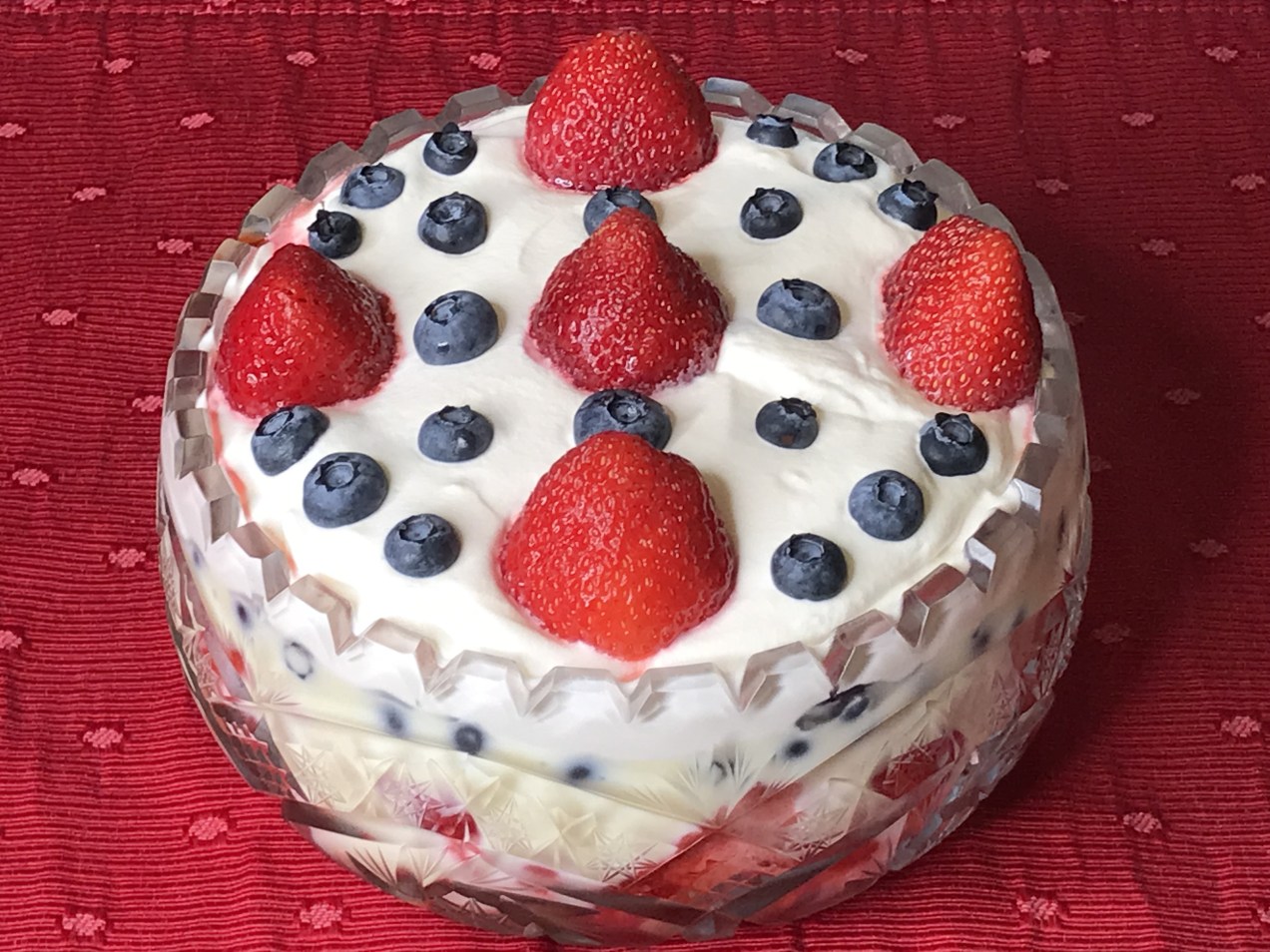
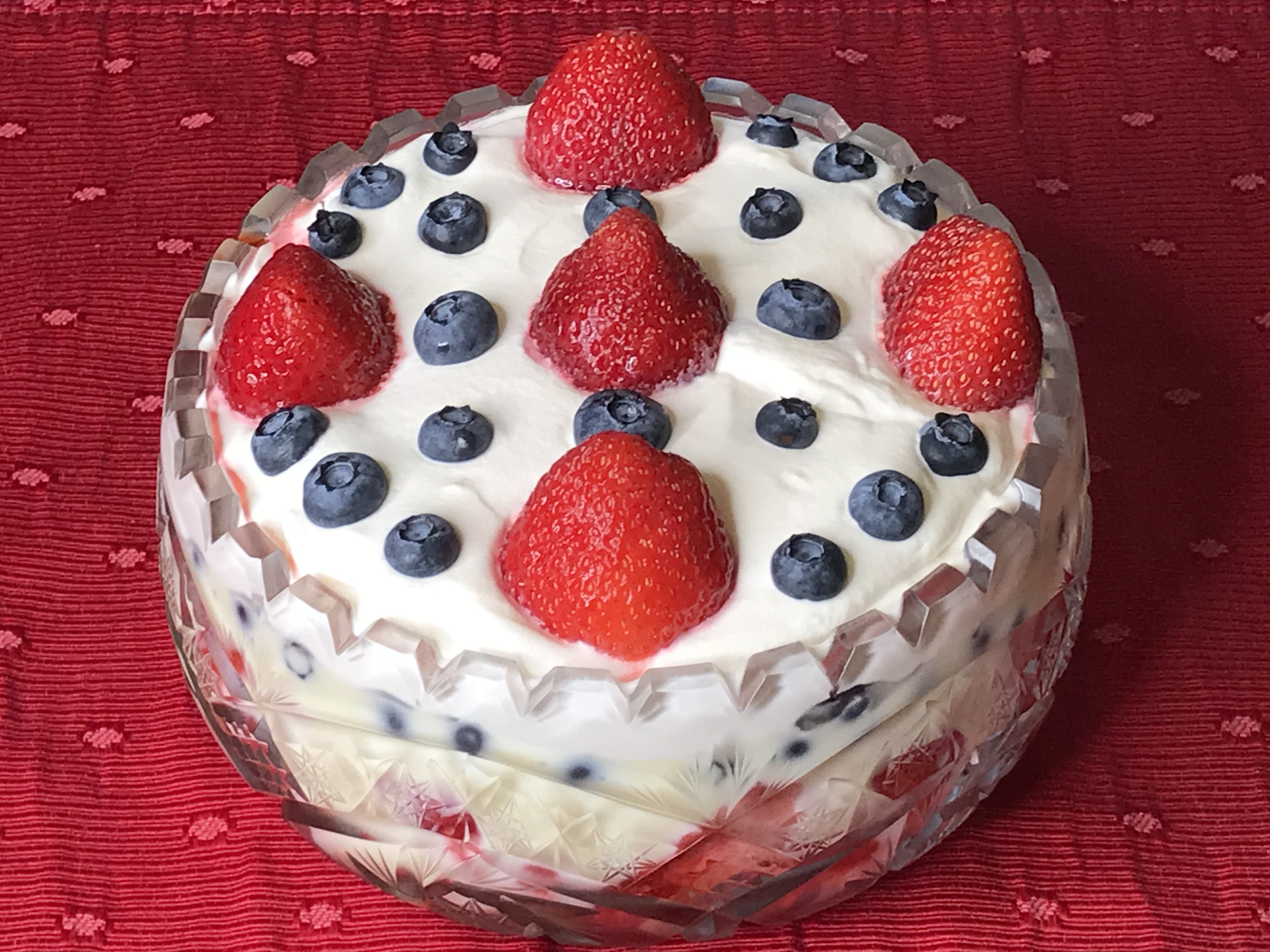
Patriotic pound cake trifle
american cuisine, british cuisine, dessert, food history, recipes

Patriotic Trifle: An American Spin on a British Classic

1000 Foods (pgs. 31 – 32) for information, recipe is my own creation

            While British cuisine doesn’t have a great reputation abroad, desserts are an exception to this rule. Drool-worthy examples abound on the Great British Baking Show (which you should never watch while hungry), and one of the classics is trifle. Trifles also appear multiple times in the Harry Potter series, typically at celebrations, and in the second book, Harry even ends up wearing one.

            The specifics vary by recipe, but they always include cake or ladyfinger biscuits, custard and/or whipped cream, and fruit and/or jam. Basically something starchy, something creamy, and something fruity. British versions usually include sherry or another fortified wine. Originally, this was to help revive stale cake. With modern recipes this is unnecessary, but a lot of people like the taste. I omit this for a family-friendly version and clearer fruit flavor, bursting with berries and vanilla.

            Wine and liquor were once extremely common dessert flavorings. Since the 19th Century, perhaps because of the temperance movement, vanilla has largely taken their place. Despite its boring reputation, vanilla blends extremely well with fruit, chocolate, caramel, cream, and pretty much anything else you might put in a dessert. For a beautiful, fresh, and surprisingly easy centerpiece, the essentials are a good pound cake, seasonal or frozen fruit, vanilla pudding, and homemade whipped cream.

            Strawberries make a particularly good trifle, because as the trifle sits in the refrigerator, the lightly sugared berries release lots of flavorful juice that soaks into the cake. If they aren’t in season, it’s better to use frozen, which tend to have a better flavor (and price) than the out-of-season fresh berries, which are usually picked underripe so they ship better and last longer on the shelf. This applies for any fruit, not just strawberries.

            Pound cake is another crucial ingredient, and you don’t have to make your own for success. The frozen Sara Lee pound cakes are excellent quality. I like to make my own vanilla pudding, but an instant mix still produces a special dessert if you’re crunched for time. Just avoid the sugar-free kind, and don’t make it with skim milk. And make your own whipped cream. It makes a huge difference, and with the cost of the spray bottles, it’s actually cheaper when you need a lot.

            For a full red, white, and blue effect, blueberries can be sprinkled over the top of the trifle or added between the layers. Since they don’t produce much juice, I usually stick with a strictly strawberry trifle, but I added them this time because they were in season and it was for the 4th of July. Just make sure to layer the trifle in a glass bowl if at all possible, to show it off to full effect.

To impress your guests, decorate the top with fruit.

            Note that the quantities in the recipe are not always specified. This is because different serving bowls have varying capacity, and everyone has their own preference for how much of each ingredient to add.

            Ingredients:

  • 1 pound cake, homemade or Sara Lee
  • Strawberries
  • 2 tablespoons sugar per quart of strawberries
  • Vanilla pudding, homemade or from a mix
  • Blueberries, optional
  • 1 cup whipping cream
  • 1 tablespoon powdered sugar per cup whipping cream
  • ½ teaspoon vanilla per cup whipping cream

            Directions:

  1. Hull and halve the strawberries, cutting any larger berries into quarters. Toss with the sugar and let stand while you prepare the other ingredients.
  2. Cut enough of the pound cake into cubes to cover the bottom of the serving bowl.
  3. Whip the cream with the powdered sugar and vanilla until soft peaks form.
  4. Layer the cake cubes in the bottom of the serving dish. Top with the strawberries and drizzle any liquid over all.
  5. Add the pudding over the strawberries, and top with the blueberries if using.
  6. Finish the trifle with the whipped cream, decorating the top with fruit if desired.

            If strawberry season is over but you have fresh peaches or raspberries, I’m sure they would also make an excellent trifle. And as always, don’t forget to subscribe to get posts sent to your inbox for free.

One-Time
Monthly
Yearly

Make a one-time donation

Make a monthly donation

Make a yearly donation

Choose an amount

$5.00
$15.00
$100.00
$5.00
$15.00
$100.00
$5.00
$15.00
$100.00

Or enter a custom amount

$

Your contribution is appreciated.

Your contribution is appreciated.

Your contribution is appreciated.

DonateDonate monthlyDonate yearly
Standard