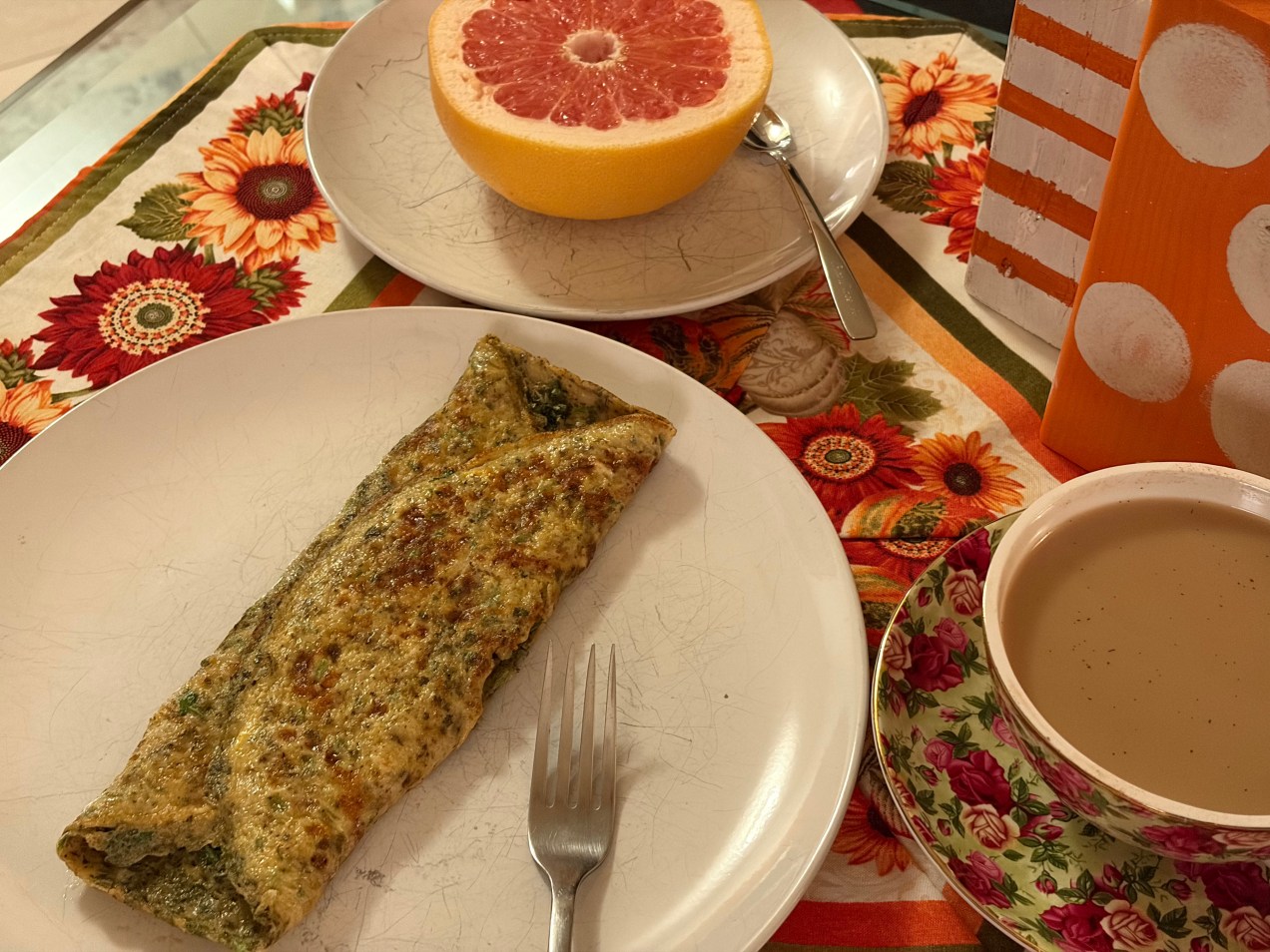
Omelette ux fines herbes
breakfast/brunch, fall, french cuisine, summer, vegetarian

Using Up Herb Plants: Omelette aux Fines Herbes (with basic recipe)

Omelette ux fines herbes
High cuisine, not a simple attempt to use things up before going out of town for Thanksgiving

            Every fall, I bring my potted herb plants in from outside to enjoy using them for a bit longer. It works well enough for a while, but eventually they start to suffer from the limited sunshine. Since most of them are annuals, the time comes to use up what I can before starting again when summer returns. Everything except the rosemary is either done or fading. To use up as much as possible, I made a French classic, omelette aux fines herbes.

            Fines herbes is a mix of parsley, chives, tarragon, and chervil, common in French cuisine. The first three are widely available in the US, but chervil might require a specialty spice store or the internet. Supposedly it tastes like a milder parsley with a bit of a licorice undertone, but I couldn’t taste much difference. To compensate for all the herbs except parsley being dried, I also added some minced scallions to brighten things up.

            For many French chefs, making a perfect omelet is one of the primary tests of skill. After following the basic directions on pages 107 – 108 of 1000 Foods to Eat Before You Die, mine turned out pretty well. The flavor is distinctly understated, but the freshness from the herbs was nice as fall turns to winter. The slight licorice flavor from either the tarragon or chervil is definitely there. Perhaps it just needs a little heat to release its flavor. Chefs disagree on how much browning, if any, is ideal. Personally, I like more browning, both for flavor and the fact that it helps the egg unstick itself from the pan.

Advertisements

            For each omelet, I used three eggs, beaten together with salt, pepper, and a tablespoon of milk. The herb mix contained three large parsley sprigs, minced, one minced scallion, and a teaspoon each dried chives, tarragon, and chervil. Half of the herb mixture gets added into the eggs before cooking. After melting about a tablespoon butter in a skillet over medium heat, the egg mixture is added to cook.

            To make sure that none of the eggs end up runny, I like to tilt the pan and lift up the edges of the cooked portion, letting the uncooked egg flow underneath. After this, sprinkle the remaining herb mixture over the surface. When the top is almost set, fold the right and left thirds of the omelet over onto the center. If this doesn’t work and you end up with a half-moon shaped omelet, don’t worry about it, it will still taste good. Let the omelet cook for another minute, covering the pan if desired to help it set, then slide it onto a plate.

            To make this simple mix of eggs and herbs sound extra fancy, serve with pommes de terre frits, compote de pomme, fruits frais, café au lait, or any combination thereof. In English, these are fried potatoes, applesauce, fresh fruit, and coffee with milk. To make anything sound fancy, say it in French, even if you have to use a translation app.

One-Time
Monthly
Yearly

Make a one-time donation

Make a monthly donation

Make a yearly donation

Choose an amount

$5.00
$15.00
$100.00
$5.00
$15.00
$100.00
$5.00
$15.00
$100.00

Or enter a custom amount

$

Your contribution is appreciated.

Your contribution is appreciated.

Your contribution is appreciated.

DonateDonate monthlyDonate yearly
Standard
Ashkenazi charoset
dessert, fall, jewish cuisine, recipes, spring

Healthy Spring (or fall) Dessert: Ashkenazic Charoset

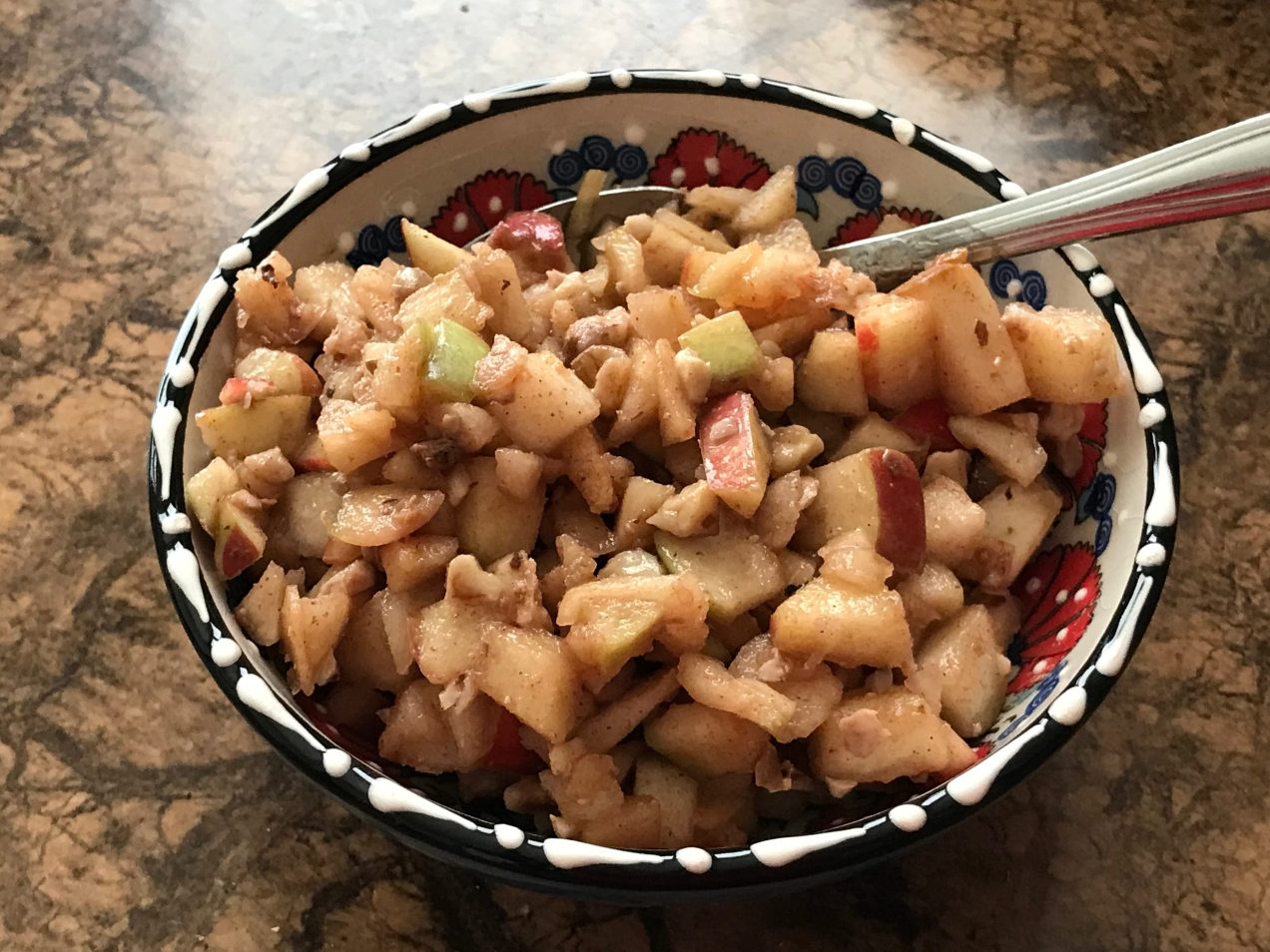
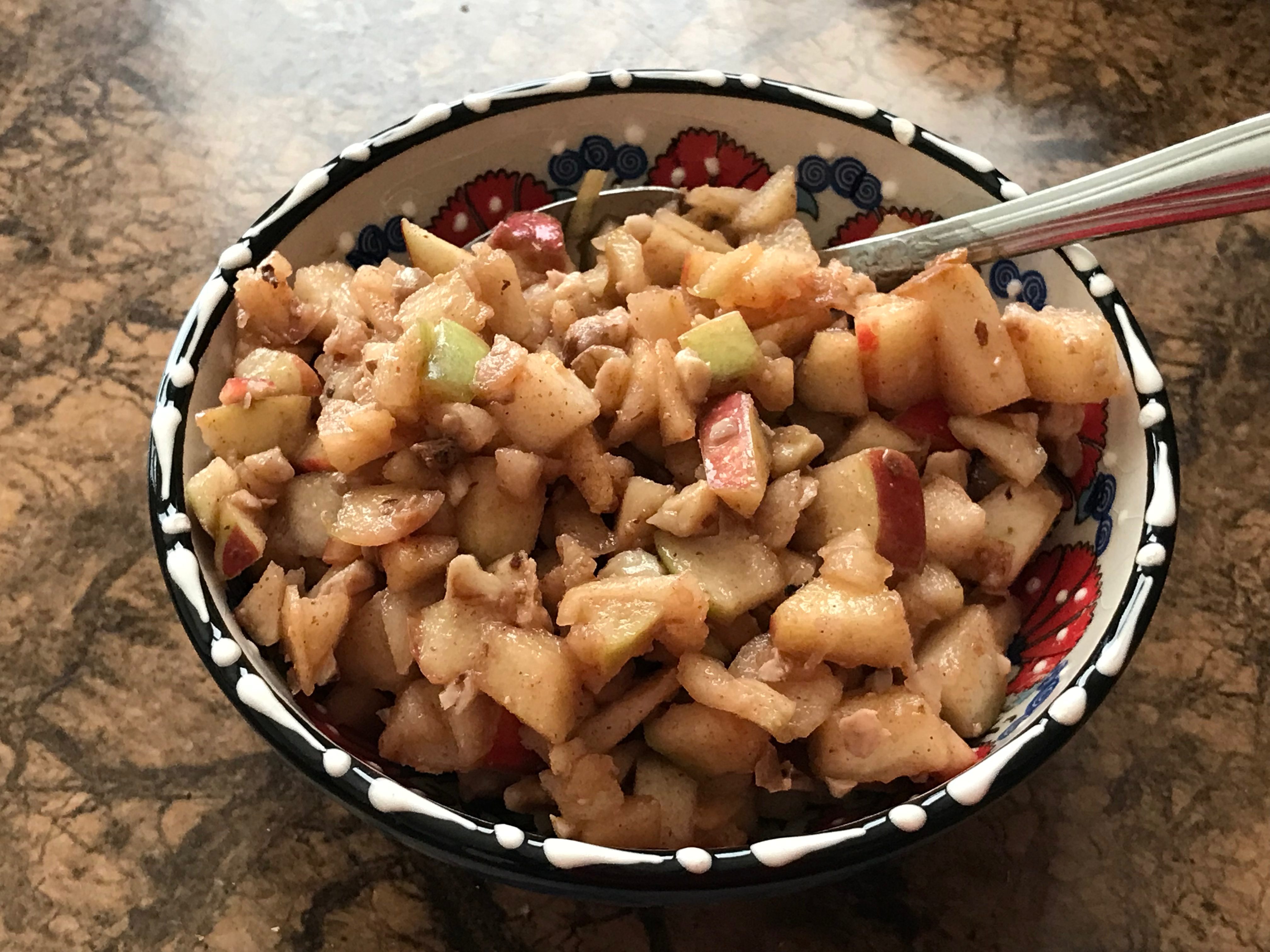
Ashkenazi charoset

            At first, it might seem strange to have apples in a dish for a spring holiday. Passover, the most important holiday on the Hebrew calendar, celebrates the Israelites’ Exodus from Egypt. It always occurs in the spring (in the Northern Hemisphere), while apples are a symbol of fall. On further reflection, the use of apples actually does make sense.

            Charoset is a blend of chopped fruit and nuts, representing the mortar enslaved Israelites used in Egypt, and is an essential element on the Passover Seder plate. Historically, most Ashkenazi Jews lived in Central and especially Eastern Europe. Not many fruits are in season there in March or April, but apples could be stored in a cold cellar over the winter. The only other option might be rhubarb, at least when there is plenty of sugar to counter the acid. Holiday food traditions seem to change more slowly than what people eat every day, so even with modern shipping and preservation, apples remain the base fruit.

            There are many recipes out there, typically including walnuts, sugar, spices, and an acidic liquid to keep the apples from oxidizing and turning brown. Most common is sweet, kosher red wine. Not all kosher wines are sweet, but Manischewitz, the most common brand (for all sorts of kosher products, in fact), is. With at least 51% concord grapes and a bit of extra sweetener, it tastes exactly like the classic non-fermented grape juice, with the alcohol flavor only coming in at the end. Naturally, grape juice would be the perfect non-alcoholic substitute.

Advertisements

            If you’re wondering why wine isn’t all kosher (as I was), it’s because ancient pagan people often used it in their rituals. To ensure their wine hadn’t previously been used in these rituals, the production from picking to transportation to serving had to be done by kosher-observant Jews. Unless, if I understand things correctly, it gets heated, which renders it unsuitable for pagan rituals. Once that’s done, anyone can handle it.

            Ashkenazi charoset is delicious, regardless of faith or season. It’s sweet, tart, two different kinds of crunchy, juicy, and especially tasty during the fall, when apples are freshest. Walnuts make the mix more substantial, and spices like cinnamon and ginger make it taste like crustless apple pie.

Ingredients:

  • 4 medium sweet-tart apples (I used 2 cortlands and 2 zestars)
  • ½ cup walnut pieces
  • A few drops of lemon juice, if desired
  • ½ teaspoon ground cinnamon
  • ¼ teaspoon ground ginger
  • ¼ cup (4 tablespoons) sweet kosher red wine or red concord grape juice
  • Sugar to taste

Directions:

  1. Core the apples, slice, and mince as finely as you can with a knife. (One of those devices that cores an apple and cuts it into 8 or 10 slices works perfectly for the first part, and I don’t bother peeling. If using a food processor for the second part, be careful not to overprocess.) Place in a large bowl. Toss with a few drops of lemon juice if desired.
  2. Mince the walnuts and stir in, distributing evenly. Add the spices and wine and stir again.
  3. Taste for sweetness. Depending on the apples, you may or may not need sugar. If the mix needs it, add sugar a tablespoon at a time, tasting as you go.
  4. Let rest in the refrigerator for 24 hours for the best flavor.

            If you enjoyed this, please like, share, and/or subscribe.

One-Time
Monthly
Yearly

Make a one-time donation

Make a monthly donation

Make a yearly donation

Choose an amount

$5.00
$15.00
$100.00
$5.00
$15.00
$100.00
$5.00
$15.00
$100.00

Or enter a custom amount

$

Your contribution is appreciated.

Your contribution is appreciated.

Your contribution is appreciated.

DonateDonate monthlyDonate yearly
Standard
appetizers, fall, recipes, salad

Guess the Color: Pumpkin Seed Oil (dressing recipe for potato or kale salad)

pumpkin seed kurbiskernol vinaigrette
Looks more appetizing on the kale

            Over the course of my culinary exploration, I’ve been amazed by just how many different types of oil there are. Some are pretty standard and widespread. Canola and vegetable (often soybean) oils are neutrally flavored, easy-to-find, affordable, and widely used in baking and frying. Some cooks prefer corn or peanut oil for deep frying. For sautéing and salad dressings, olive oil is a favorite. In a well-stocked grocery store, you often find sunflower, sesame, flaxseed, grapeseed, avocado, and coconut oils.

            Certain oils are largely restricted to particular cuisines or uses. Sunflower is popular in Eastern Europe due to Orthodox fasting rules and the inability to grow olives. Toasted sesame oil is common in East Asia, especially China, while Middle Easterners prefer untoasted. Nut oils like almond or walnut are sometimes used in European salad dressings. And bright reddish-orange palm oil gives many West African dishes their distinctive flavor.

Advertisements

            In Austria, a local specialty is pumpkin seed oil, called kurbiskernol, made from the appropriately-named oilseed pumpkin. It’s typically used in salad dressings and as a dip for bread. Due to its low smoke point, it’s not suitable for cooking, which damages its distinctive flavor. But here’s a question for you. If the stereotypical pumpkin is orange and inner seed kernels (pepitas) are green, what color is pumpkin seed oil?

            Answer: It’s a lovely deep purple, with yellow-green undertones.

            In 1000 Foods to Eat Before You Die (pgs. 323 – 324), Mimi Sheraton describes pumpkin seed oil as resembling liquid amethysts. If it had been available during the Middle Ages, sophisticated diners would have been all over it. They loved bright, even tacky colors, and very few foods are naturally that shade of purple. For people who created elaborate gilded dishes with egg yolks and saffron, liquid jewels sound right up their alley.

            Pumpkins arrived in Europe after Columbus. Exactly when Europeans began eating them or pressing their seeds is unclear, but the oil makes a great vinaigrette base. To boost its color, I added red wine vinegar, minced shallots, a little salt, and a dash of mustard and honey to keep the dressing from separating. If you find the flavor of the pumpkin seed oil a little strong, try replacing about half of it with sunflower oil, which is typically pale, for a lighter shade of amethyst. Yellow or greenish olive oil will make it look muddy.

            Thinner layers of the oil can look muddy anyway, but the taste, clearly that of roasted pumpkin seeds, is worth it. It’s a fantastic complement to potatoes, and makes salads much more satisfying. Kale is especially good, because its strong flavor is less likely to be overwhelmed. It also holds up in the fridge for a few days, even with dressing.

Advertisements

            To dress about six medium potatoes or one bunch of kale, just combine 6 tablespoons of pumpkin seed oil, 2 tablespoons red wine vinegar, a minced shallot, and a little salt. Mix in a teaspoon each of Dijon mustard and honey and whisk until combined. Toss with cubes of hot cooked potatoes (waxy varieties like reds or Yukon golds are best, peeled or not is up to you) or chopped kale and let rest for an hour at room temperature. Store leftovers in refrigerator, bringing potato salad back to room temperature before serving. If desired, rewarm for about 30 seconds in the microwave. The kale salad is ready right out of the fridge.

            Vinaigrette-based vegetable salads are perfect year-round. They stay crisp (if applicable) better than lettuce, are more interesting than a veggie tray, and provide a pleasantly light counterpoint to grilled or roasted meats, heavy sides, and desserts. With no egg or dairy, they’re safer on hot days than those with mayonnaise. And during the winter, sturdy vegetables like potatoes and kale (or even frozen vegetables like green beans) are more consistent than fresh sweet corn, tomatoes, or lettuce.

            And with how popular pumpkin spice is, pumpkin seed dressing would be perfect on a fall or Halloween theme menu. Perhaps a kale or other cabbage salad with pumpkin seed vinaigrette and toasted pumpkin seeds to start, followed by pumpkin or squash ravioli with butter and sage, and concluding with a pumpkin or apple dessert. With plain coffee or tea, though. Pumpkin spice belongs in desserts, not beverages.

One-Time
Monthly
Yearly

Make a one-time donation

Make a monthly donation

Make a yearly donation

Choose an amount

$5.00
$15.00
$100.00
$5.00
$15.00
$100.00
$5.00
$15.00
$100.00

Or enter a custom amount

$

Your contribution is appreciated.

Your contribution is appreciated.

Your contribution is appreciated.

DonateDonate monthlyDonate yearly
Standard