egyptian cuisine, food history, recipes, vegetarian

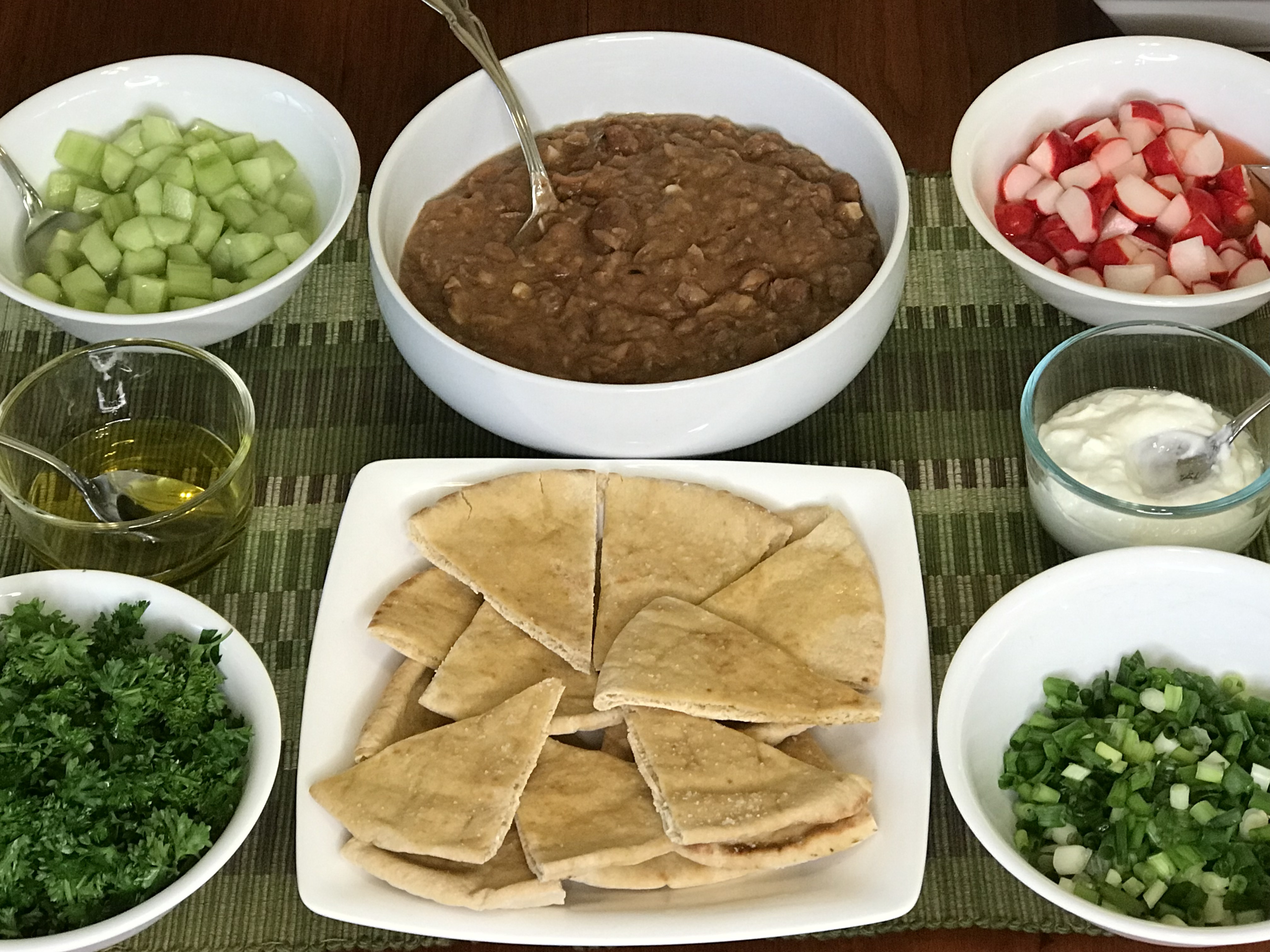
Egyptian Rice and Beans: Kosheri

1000 Foods (pg. 711) for information, recipe is my own creation

            Kosheri or Kushari has nothing to do with kosher rules, but the Israelites may well have eaten an early variant in Egypt. Their Egyptian neighbors may have been eating it over a thousand years earlier, in the 3rd Millennium BC. Records indicate that wheat, barley, lentils, garlic, and onions were cooked together in clay pots for a combination of starch and protein. Ancient Egyptians may have added flavorings like butter, fat, or vinegar to make things more interesting, depending on what they could afford. At a time and place when most people ate little meat, the lentils were an essential source of protein.

            Even today, the starch/lentil combination is common in Egypt, particularly among those with less disposable income. Kosheri is a popular street food, often eaten for lunch. Rice, introduced at some point in the early centuries AD, is now the grain, pasta is added, sometimes browned in butter, and spicy tomato sauce is an essential flavoring. Interestingly, even though hot peppers didn’t really catch on in most of Europe when they were introduced from the Americas, Africans and Asians adopted them quickly and in much greater quantities. And presumably, early modern Egyptians found that tomatoes thrived in the sun and rich soil by the Nile.

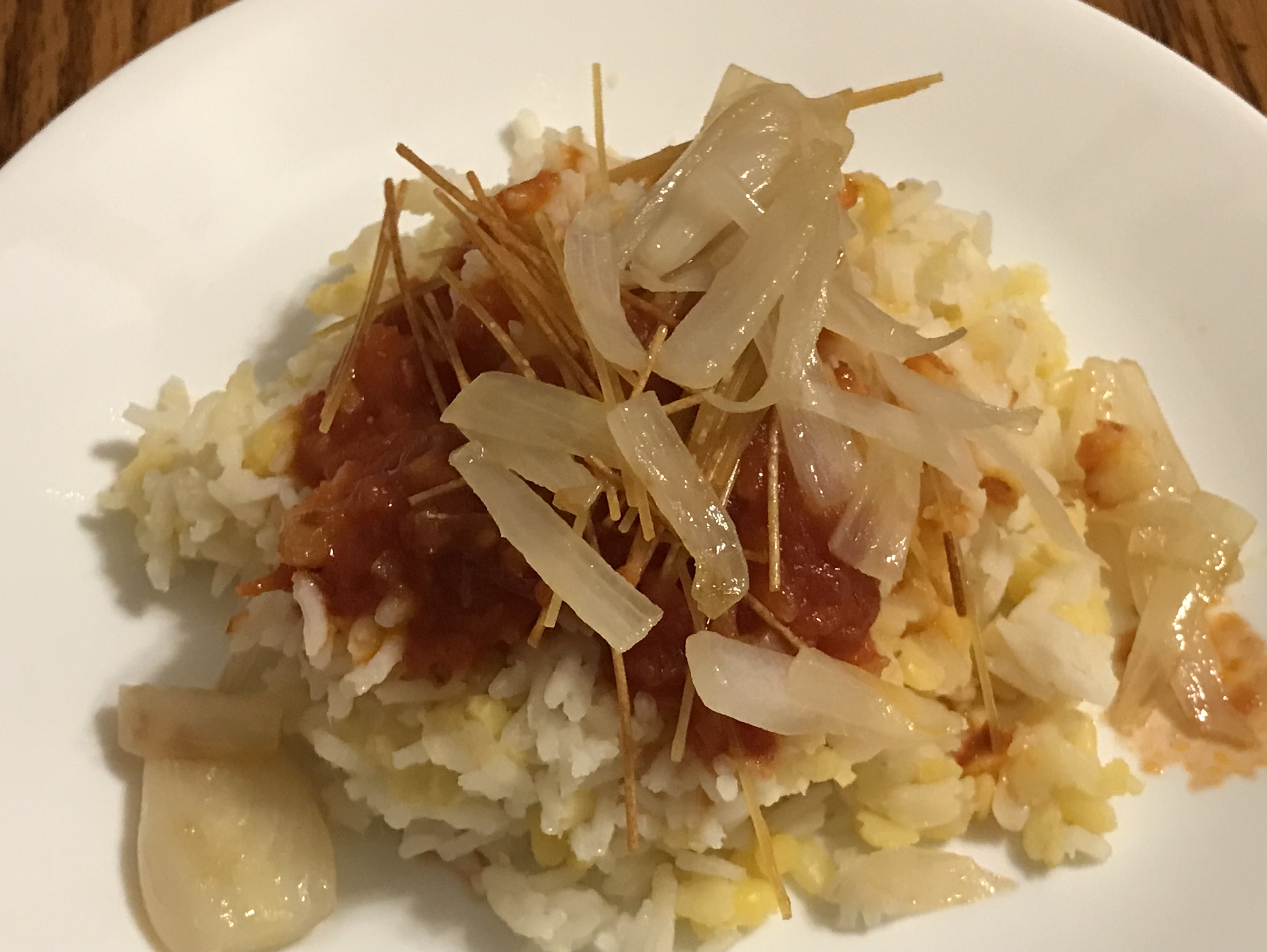
            To make kosheri, there are four elements needed: the rice/lentil mixture, tomato sauce flavored with garlic, vinegar, and hot pepper, onions browned in butter, and broken vermicelli (angel hair pasta), also browned in butter. Mimi Sheraton suggested that mastic was an essential flavoring so I tried it, but personally I think the kosheri is better without. It’s a balanced and flavorful vegetarian dish, and if the butter is replaced with oil, could even be made vegan.

            Here’s the recipe I developed. You need:

  • 2 cups long-grain rice
  • 1 cup lentils (I used the yellow variety, but other kinds would work)
  • Pinch mastic (optional, has a bit of a piney flavor)
  • Pinch salt
  • 1 tablespoon canola or vegetable oil
  • 6 cloves garlic, crushed and minced
  • ¼ cup vinegar (any kind but balsamic, which is too sweet)
  • 1 can crushed tomatoes, about 16 ounces
  • 1 yellow onion, peeled and thinly sliced
  • 4 tablespoons butter
  • 4 ounces vermicelli, broken into roughly 1-inch pieces

            To make it:

  1. For the sauce, heat the oil in a saucepan. When hot, add the garlic and cook until it starts to brown. Then add the vinegar and scrape the bottom of the pan.
  2. Stir in the crushed tomatoes, and leave sauce to simmer, stirring occasionally, while you prepare the rest of the ingredients.
  3. If using the mastic, grind it with a pinch of salt to reduce sticking.
  4. Bring 4 cups water to a boil, then add the lentils, salt, and optional mastic, partially cover the pot, and cook for 15 minutes.
  5. Add the rice and another cup of water, fully cover the pot, and cook another 15 minutes.
  6. Melt 2 tablespoons of the butter in a skillet over medium heat. Add the vermicelli and cook, stirring frequently, until the pasta browns. Empty the pasta onto a plate, but don’t wipe out the pan.
  7. Add the rest of the butter. When it’s melted, add the onions and cook, stirring frequently, until browned and reduced in volume.
  8. To serve the kosheri, add a portion of the rice/lentil mixture to each plate. Top with tomato sauce, sauteed onions, and browned vermicelli to taste.

            For more recipes, be sure to subscribe. It’s free, and you’ll get a notification whenever there’s a new post.

Standard
beverages, food history, italian cuisine, recipes

Northwestern Italy’s Afternoon Pick-Me-Up: Bicerin

1000 Foods (pgs. 165 – 166) for information, recipe is my own creation

            Italians seem to love their coffee, but have some interesting opinions about what kind of coffee to drink when. Any coffee with milk, such as cappuccino, should only be drunk in the morning. Maybe that’s because many Italians don’t eat much breakfast and need the calories. Unless they’re drinking gallons of café lattes or adding sweeteners, they probably won’t be getting many, but maybe black coffee is too irritating on an empty stomach. It seems like adding milk to coffee in the afternoon, or after dinner, would cut the caffeine and allow for better sleep, but apparently that’s culinary heresy. But I don’t care for coffee unless it has a fair amount of milk and sugar, so what do I know?

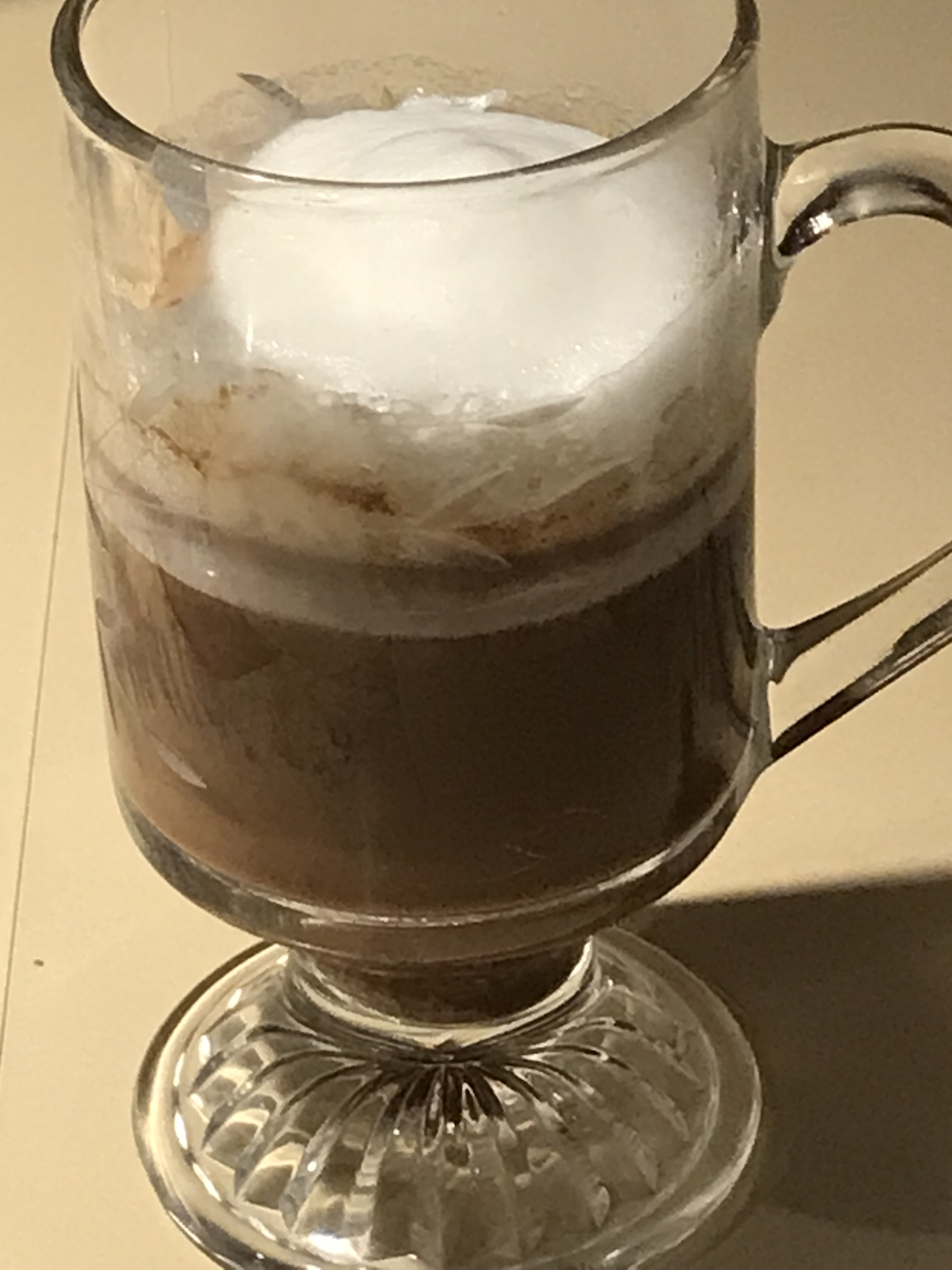
            One particularly delicious coffee drink is bicerin, essentially a fancy layered mocha native to Turin. A number of 19th Century authors loved it. To enjoy it at home, a heatproof glass is essential, as is “a steady hand,” in the words of Mimi Sheraton. The servings are small by American standards, but the drink is rich and meant to be savored. Espresso goes into the glass first, followed by thick hot chocolate. If this is done correctly and the chocolate is thick enough, it will sink to the bottom. Foamed milk goes on top, carefully, so it will stay separate, at least temporarily. Bicerin is not stirred. Rather, the layers mix as you drink it, and flavor gradually shifts from mostly coffee and milk to mostly chocolate.

            Charges of culinary heresy aside, bicerin is a great afternoon treat. Drinking it in the morning seems like a recipe for a sugar crash before lunch. Plus, it’s a bit fiddly to make, not ideal for someone who isn’t a morning person. For the right consistency, almost like a syrup, the hot chocolate should be made from scratch with chocolate pieces and milk. 2 ounces of bittersweet chocolate and 4 ounces (1/2 cup) of milk seems to be the right amount for two servings. Espresso needs to be made, and milk needs to be heated and foamed. For two servings, 6 ounces of espresso and 1 cup of a 50/50 mix of milk and half-and-half is about right. None of this is particularly difficult, but having all three elements hot and ready at the same time can be a logistical challenge to anyone still half-asleep.

            So in summary, you need: 2 ounces of bittersweet chocolate, 1 cup milk, 6 ounces espresso, and ½ cup half-and-half. Melt the chocolate in half of the milk, stirring frequently, until smooth. Remove from heat. Prepare the espresso however you choose. Combine the remaining milk with the half-and-half and heat, whisking almost constantly, until the mixture is foamy and steaming. The coffee goes in the glasses first, then the chocolate. Spoon the milk foam over the top, don’t stir, and serve. And enjoy by mid-afternoon at the latest. With three ounces espresso and an ounce of dark chocolate per serving, it will keep you up otherwise.

Standard
food history, italian cuisine

Italian Christmas Treats After Christmas

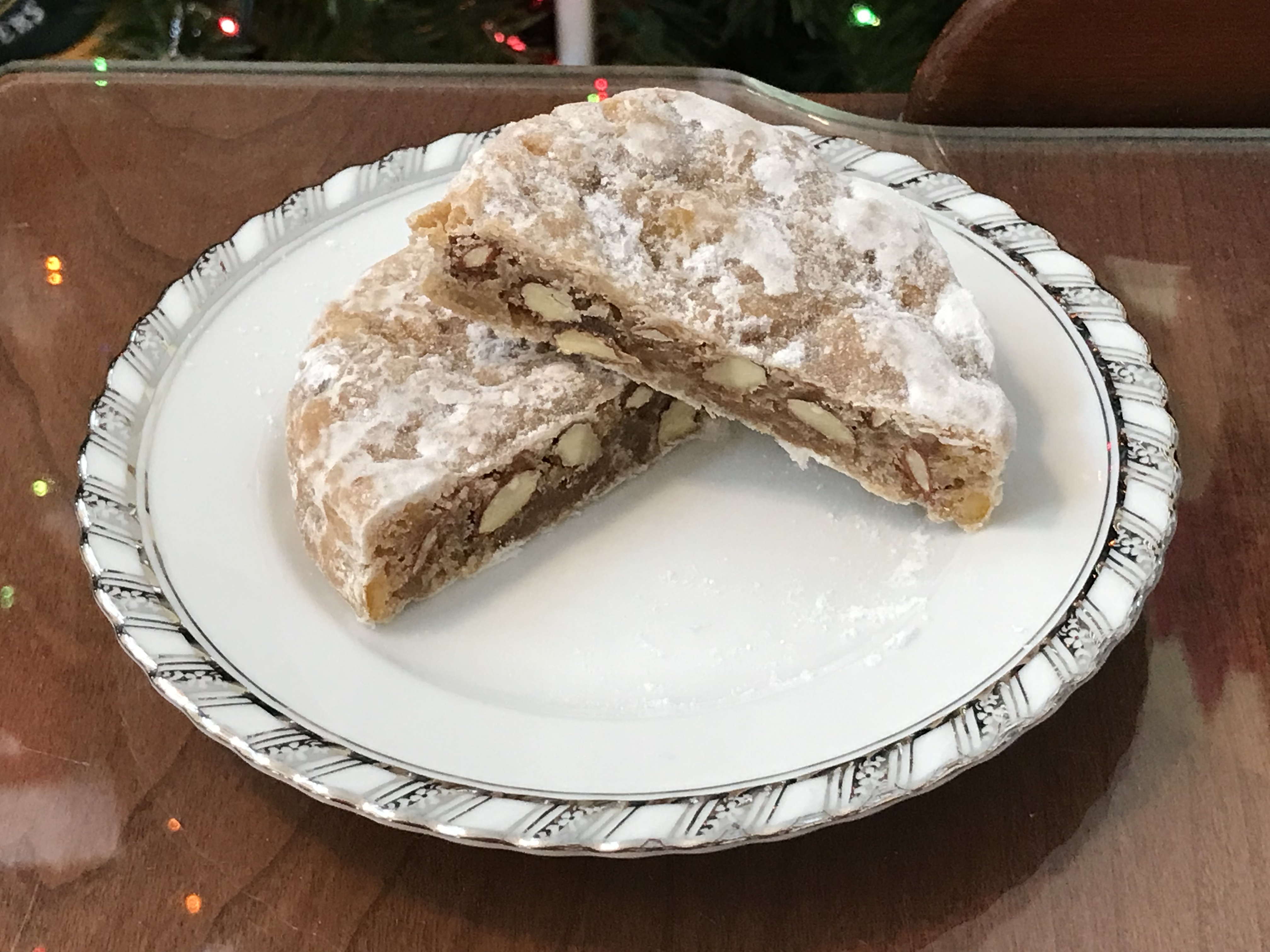
Panettone, Pandoro, Panforte

1000 Foods (pgs. 214, 215)

            Looking at the names of these three treats, you probably noticed something. The all start with the word part “pan,” Italian (and Spanish) for bread. Festive breads, especially sweet enriched breads, have long been Christmas specialties. Before baking powder was invented, breads and cakes were strictly leavened with yeast. As sugar was much more expensive in the past, dried fruits were a frequent addition to make them sweeter. Panforte isn’t actually a bread at all, but still has the name.

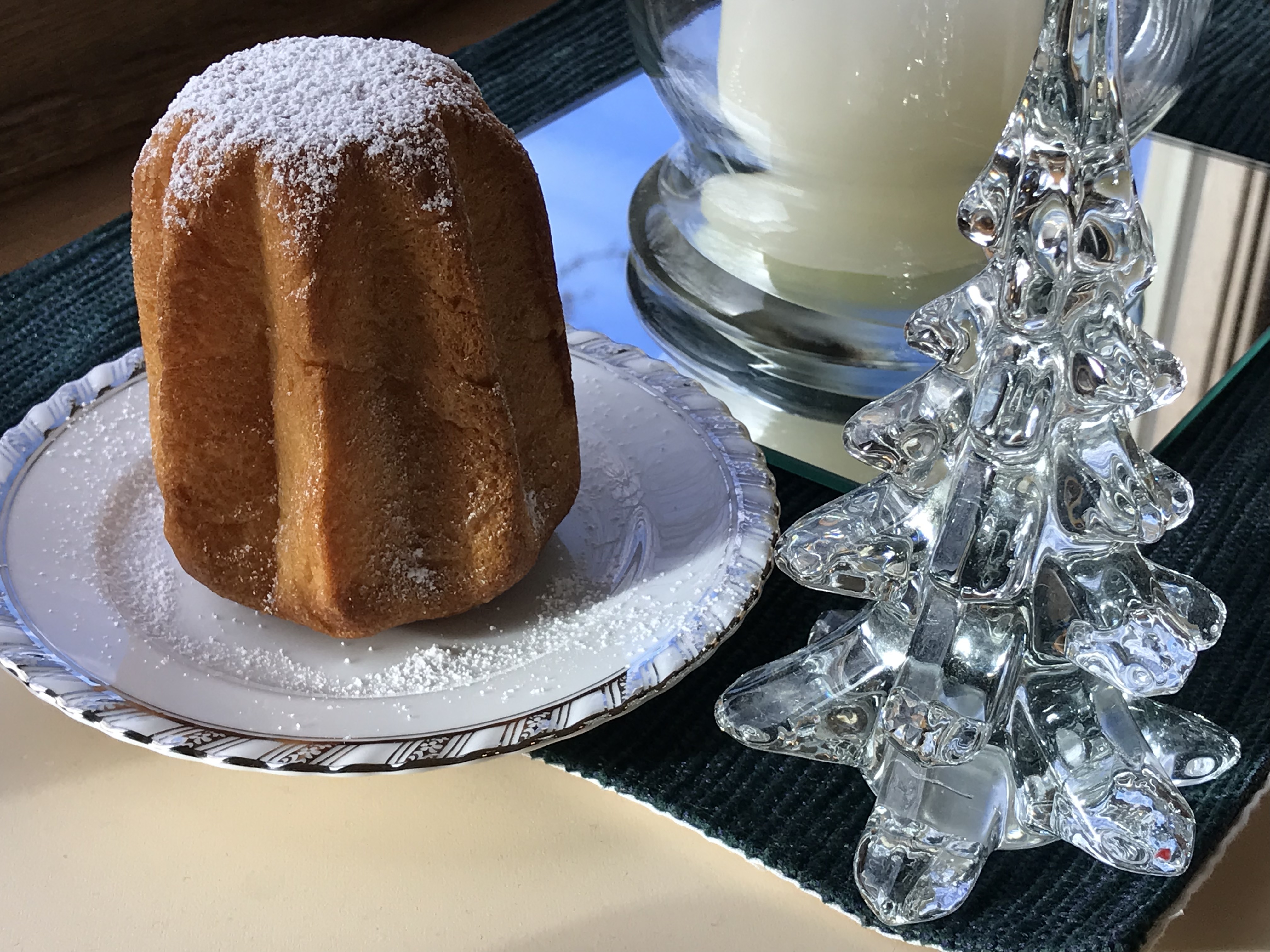
            Panettone is a perfect example of these sweet, special occasion breads. Its exact origin is unclear, and there are many stories, but one thing is certain: it was invented in Milan. The dough is enriched with lots of butter and egg yolks, which give the finished panettone a lovely golden color. Flavor comes from a combination of sugar, assorted dried and candied fruit, and warm spices. Occasionally saffron is included to make the yellow color even stronger. Over time, panettone spread from Milan to the rest of Italy, then to the rest of the world. In most places, people seem to purchase their panettone, rather than make it themselves. At World Market, I’ve seen pumpkin spice and chocolate varieties, but decided to stick to the original. They even have mini versions, for those who want a taste without a lot of extra.

            There were also mini versions of pandoro, native to Verona. It’s a vanilla-scented bread/cake, whose named literally translates to “golden bread.” Verona is located in the Veneto region of northern Italy along the Adige River, about halfway between Milan and Venice. In the Middle Ages, Verona was an influential city in its own right, trading and fighting with the other city-states that ruled most of Italy north of Rome. At one point, Milan ruled Verona, allowing another opportunity for Milanese culinary influences to spread. The Veronese not only adopted panettone, but developed their own variation.

            Further south is Siena, home of panforte. In the 13th and early 14th centuries, Siena vied with Florence and Pisa to dominate Tuscany. Florence pretty much always came out on top, but Siena managed to put up quite a fight. Some of the greatest artists of the Late Middle Ages, whose work would eventually pave the way for the Renaissance, lived and worked there. By 1348, construction was underway on what was to be the largest cathedral in Europe. Then the plague struck.

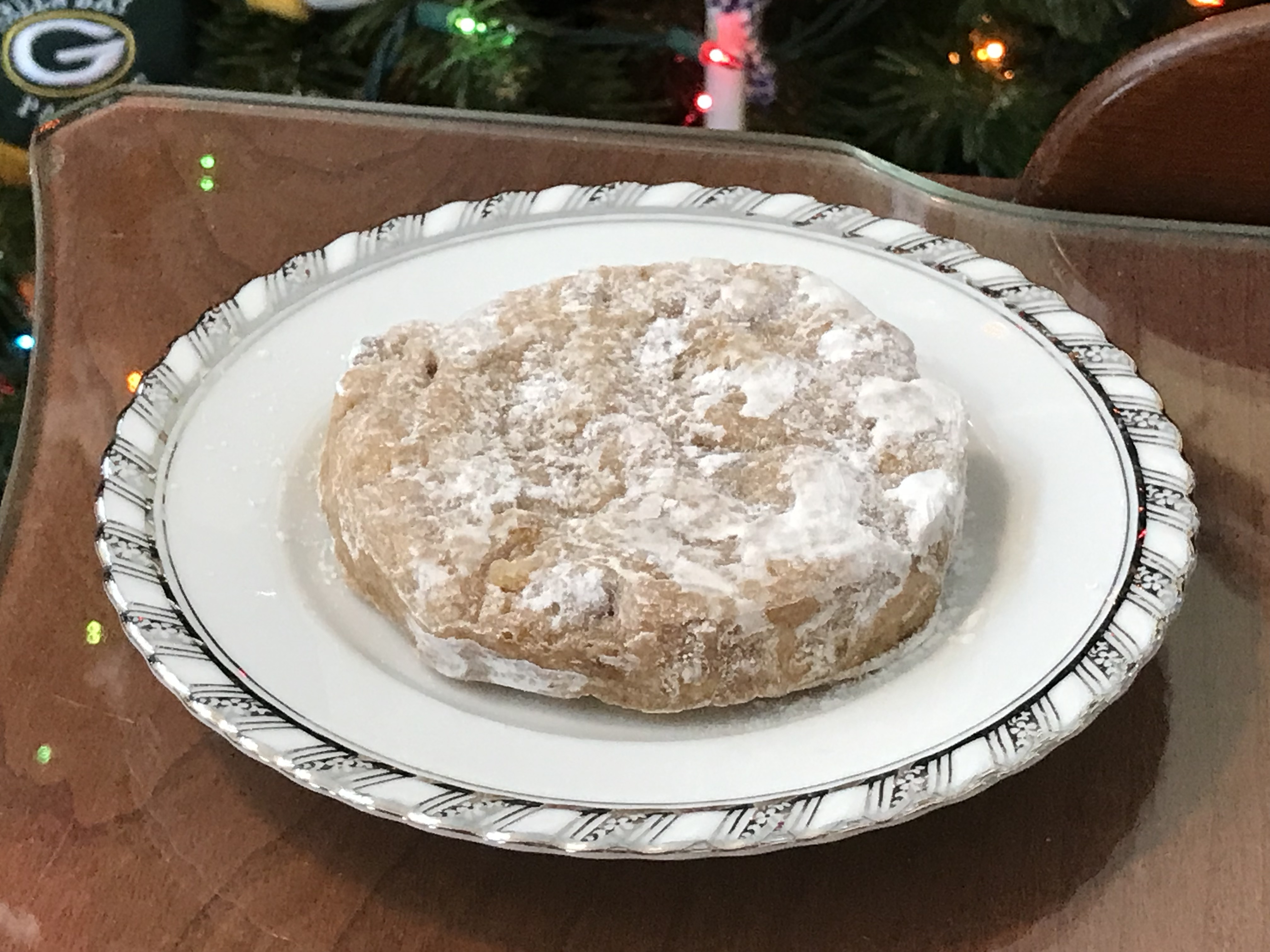
Not a rice cake

            The Black Death first arrived in Sicily in late 1347. Over the next six years, it reached every corner of Europe. Mortality rates varied, but tended to be higher in urban areas, where there were enough hosts for the bacteria responsible to keep circulating. Heavily urbanized Italy was among the worst affected. Many of the large cities had death tolls of 50 or 60 percent, compared to the continental average of about one third. Records suggest that Siena lost about 80 percent of its population. Even if some losses came from citizens fleeing to the countryside, the death toll was devastating. Siena never fully recovered. The cathedral remains unfinished to this day. Tuscany as a whole suffered greatly, but the story wasn’t over.

            Florence rebounded, becoming the birthplace of the Renaissance. Even Siena, despite its setbacks, produced a few more great artists of its own. In the culinary sphere, Siena contributed the almond cookies called riciarelli, and panforte. Despite its name, panforte is made of nuts and dried fruit, not bread. The mix is spiced much like panettone, and honey holds everything together. Conveniently, World Market also carries those in miniature.

            All three were pleasantly sweet and festive. It took a while to get used to the panettone and pandoro, since they were kind of a cross between bread and cake. With the exception of cinnamon rolls, sweet yeast-leavened breads are not as common in America as in Europe. The rich vanilla pandoro and warmly spicy, fruity panettone and panforte were enjoyable, but I still prefer the usual holiday treats – peppermint cookies, buttery cutouts, brownies with peppermint ice cream, the toffee-coated cereal the neighbors brought over, etc. And candy. Lots of candy.

Standard
food history, french cuisine

Delights of the Duty-Free Store: Paris

Macarons, Calissons, Nougat

1000 Foods (pgs. 80 – 82)

            Many people like to buy alcohol at the duty-free store. The Charles de Gaulle airport in Paris appears to be no exception, based on the relative amount of shelf space occupied. There were also an assortment of cheeses, pates, dried sausages, and confectionary. A few of the cheeses featured in 1000 Foods were in the cooler, but I wasn’t sure if they would be allowed through customs. Plus, the smell upon opening the cooler door was, for lack of a better term, “weird.” Kind of the like the camembert that I didn’t like. Attempting to carry it in my backpack for the 8-hour flight home, layover in Chicago, and then back to Green Bay didn’t seem like the best plan. Especially when there were so many amazing-looking sweet items. After perusing and admiring the displays, I settled on calissons and Montelimar nougat, which can be hard to find, plus macarons and a box of assorted mini chocolate batons, for good measure.

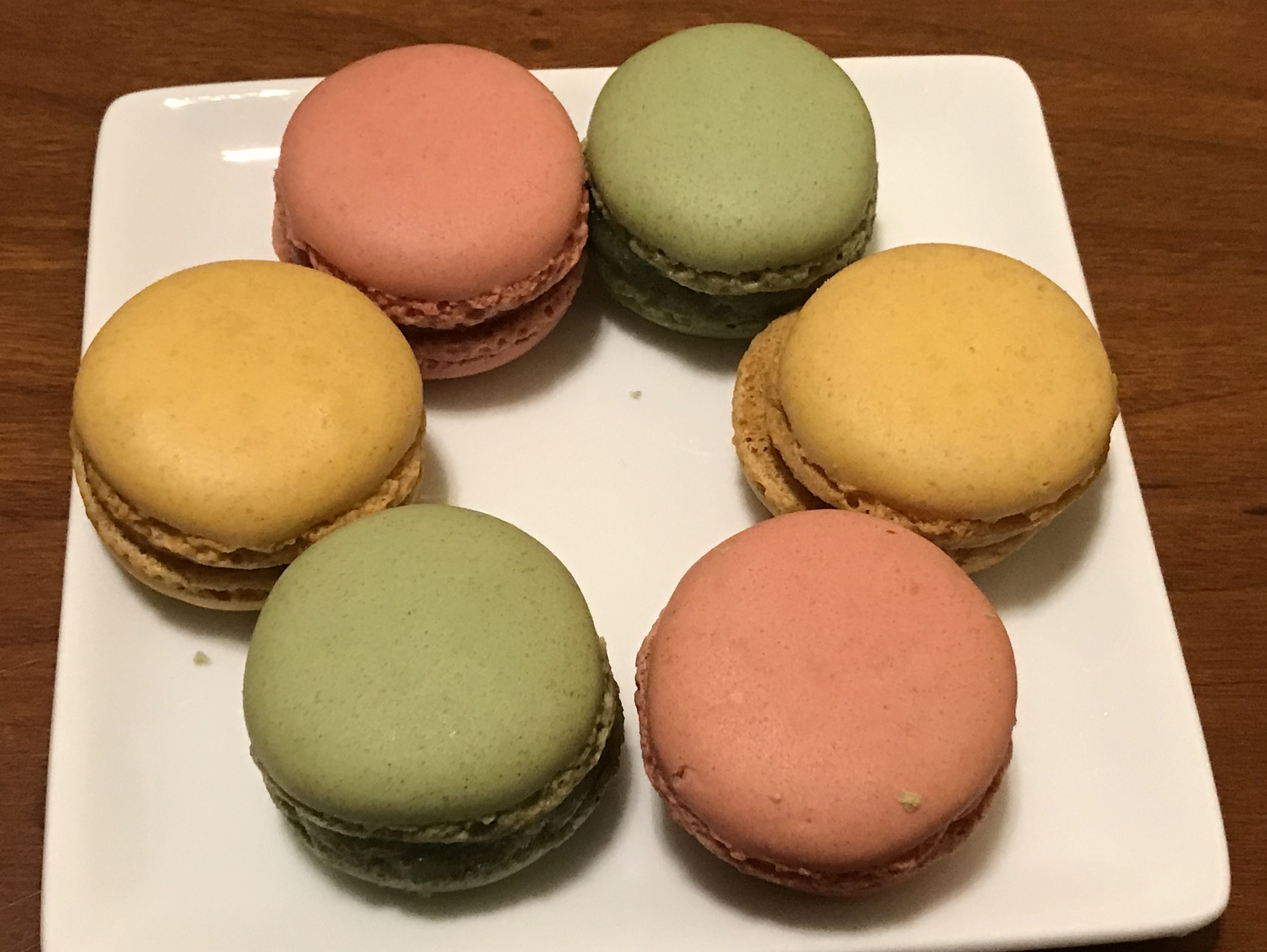
            Macarons have been extremely fashionable for the last decade or so. Their bright colors are cheerful, and the flavor possibilities are endless. The exact origin or macarons is unclear, but cookies have been made with ground almonds, sugar, and egg whites for centuries. At some point, the cookies became lighter and more meringue-like, and they began to be sandwiched together with a buttercream or ganache filling. As for the difference between macaron and macaroon, macaron = these colorful sandwich cookies, and macaroon = a simpler mix of almonds or coconut, sugar, and egg white. Usually. Both macarons or macaroons are easily made gluten-free, and the lack of wheat flour and chemical leavening make them a popular Passover dessert, when Jewish dietary laws forbid both.

            Properly made macarons are amazing, but are supposedly quite touchy to make. Relying on whipped egg whites for leavening is part of this. Another issue is that gluten makes it easier for a batter to trap air bubbles, which expand in the oven. Both of these factors increase the risk of the macarons not rising properly. Adding the fact they are based on expensive almond flour, macarons can be quite pricey. While a reasonably-priced, pre-packaged box cannot compare to the bakery variety, this mix of strawberry, lemon, and pistachio was pretty good.

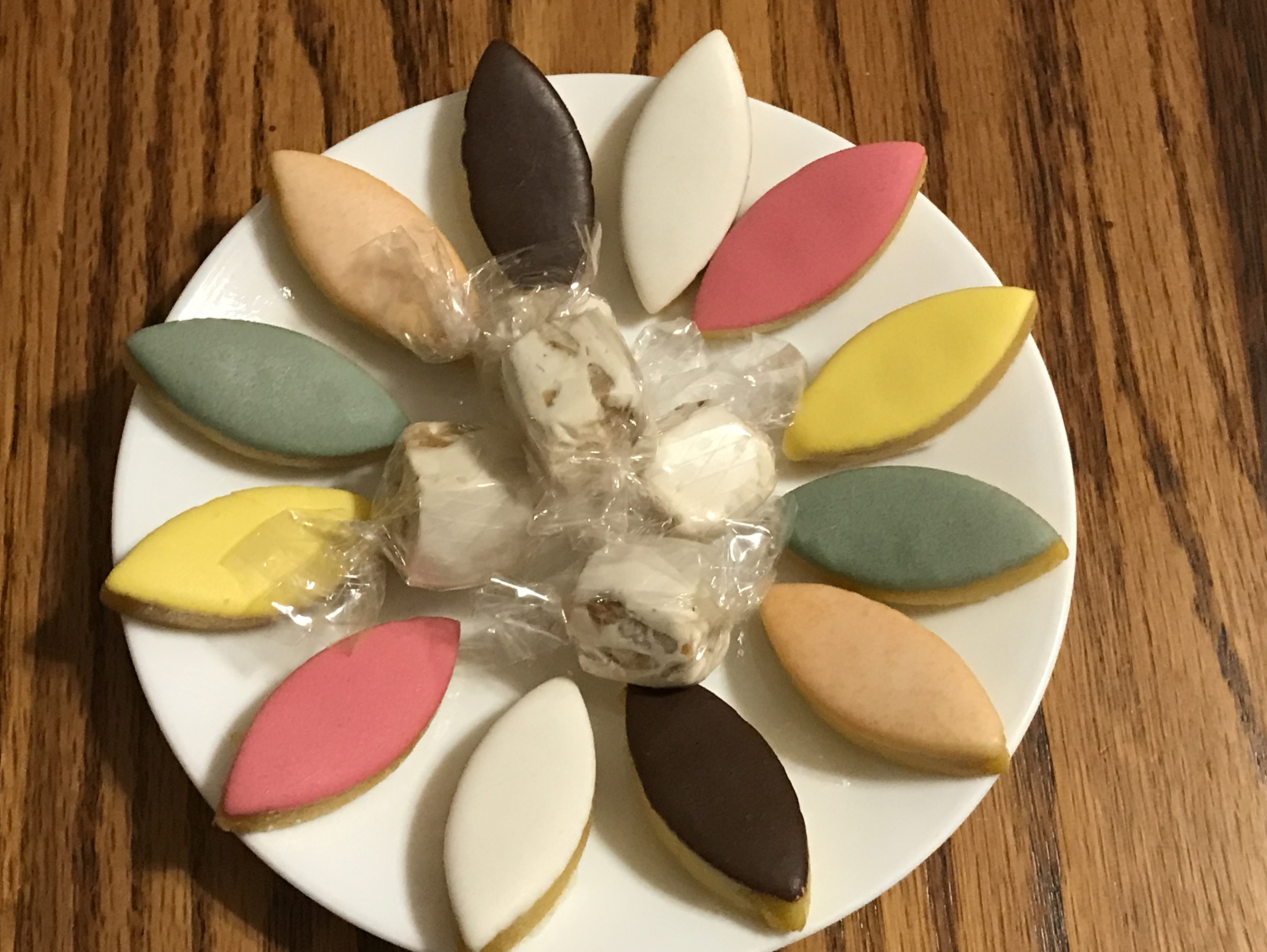
Color-coded for your convenience

            Calissons are also almond-based. In addition to almond paste, their defining ingredient is candied melon. The gold standards are calissons d’Aix, made in the Provence region of southern France for hundreds of years. To legally use the coveted name, the calissons can only include almonds, sugar, and the candied cantaloupe-like melon, egg whites as a binder, plus a royal icing of egg white and sugar. Sometimes a bit of rose or orange flower water is added, but no other flavorings are permitted. While the ones I got weren’t calissons d’Aix, the primary ingredients were almonds and candied melon, making them a good representation of the confection. The different icing colors all have a different flavor. The white is the plain original. The other flavors are chocolate, raspberry, tangerine, lemon, and pistachio. At first, I wasn’t sure if I liked them. The melon is hard to taste, the almond is very subtle, and the texture was stickier than I expected. But as I kept chewing, the almond flavor and somewhat marzipan-like texture came through. I’d rather have marzipan, but the calissons were not bad at all.

            Continuing on a similar theme, traditional nougat is based on egg whites and sugar, loaded with toasted almonds. It isn’t actually in the book, but the nougat looked good. The variety from Montelimar, which this was, happens to be a particular favorite, so was definitely worth trying. It was nice and chewy, with the almonds cutting the sweetness and adding a pleasant crunch. Hands down, it was the best of the three. All three of the almond/sugar/egg white confections were enjoyable, explaining why those ingredients have been used together for so long. The chocolate was good too. Who needs alcohol when you can have sugar?

Seriously, who can resist?
Standard
food history, french cuisine, recipes

French Pork and Beans: Cassoulet

1000 Foods (pgs. 70 – 71)

            As mentioned previously, despite its stuffy reputation, French cuisine has many unfussy, homestyle dishes. At one point, many of these were regional, country-style fare. Writers like Elizabeth David and especially Julia Child helped popularize them worldwide and make them “respectable.” Today, the likes of quiche, coq au vin, and cassoulet can be found at Michelin-starred restaurants alongside more traditional haute cuisine. Naturally, this means haute cuisine prices for dishes with often affordable ingredients.

            Often, cassoulet does contain pricier ingredients like mutton, game birds, or duck confit, but it doesn’t have to. The only necessities are pork, beans, a heavy vessel for a long, slow bake, and a topping of breadcrumbs to form a “crust.” Native to southern France, cassoulet was originally a peasant dish. The cook would toss in whatever meats were available, with white beans to add filler and soak up the flavor. The cassoulet would be taken to the baker, who, in the days before modern kitchens, often had the only oven in town. For a small fee, the baker would bake the mixture for a few hours. Typically, when the cook returned to pick it up, they would buy a loaf of bread to go with it.

            The exact recipe for cassoulet varied, no doubt based on personal preferences, what was available, and the economic resources to the family eating it. There are three main variations, all named after towns in southern France: Castelnaudry, Carcassonne, and Toulousain. Often Castelnaudry is pork-based, Carcassonne focuses on mutton and game fowl, and Toulousain on duck confit, or duck preserved in its own fat, but these are not hard and fast rules. If the last sounds strange for a peasant dish, preserving duck and other fowl like goose in its own fat was once a necessity, widespread in the region. More recently, it became trendy.

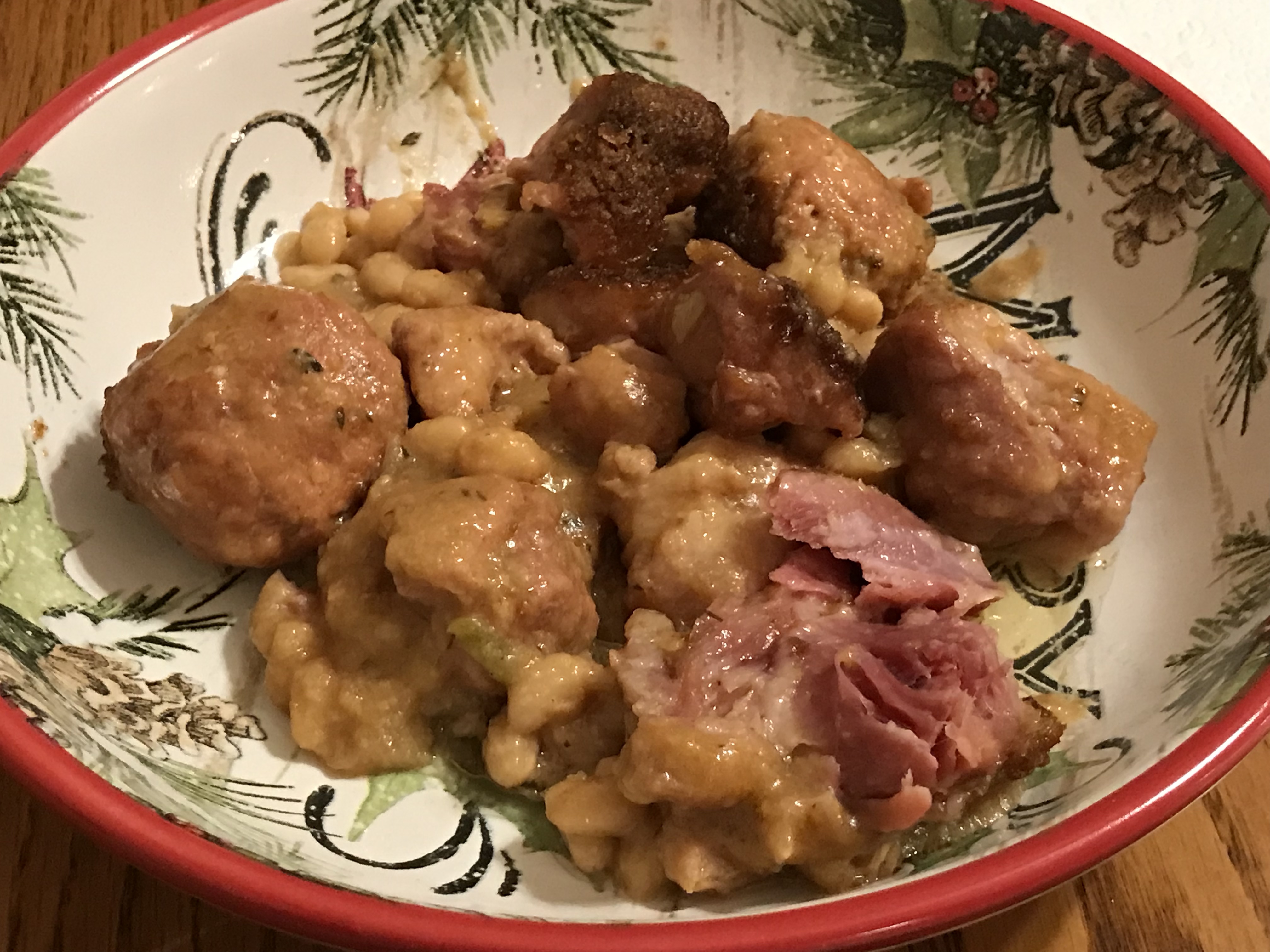
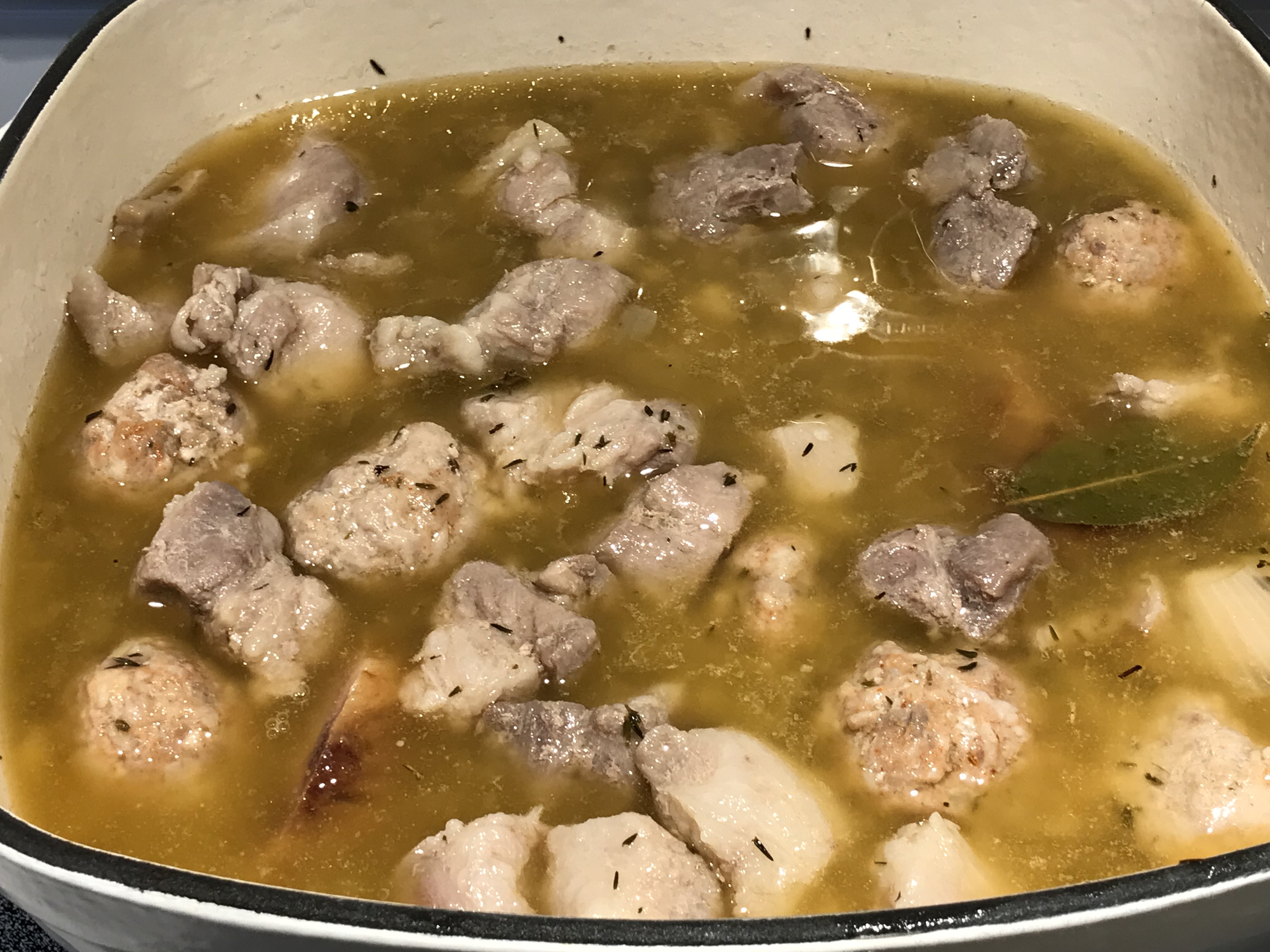
            To stay in the spirit of what was once a humble dish, I stuck with pork, partly because of cost, partly because I didn’t want to search high and low for mutton and duck confit. And getting up early to hunt game birds just wasn’t going to happen. For the meats, I thawed out some pork butt from the freezer, brushed the extra salt off a few slices of homemade pancetta/salt pork, and picked up a pack of smoked ham shanks and hot Italian sausage meat from the grocery. To distribute it more evenly but keep it distinct, I formed loose sausage meat into meatballs rather than using whole sausages.

Ready for the oven

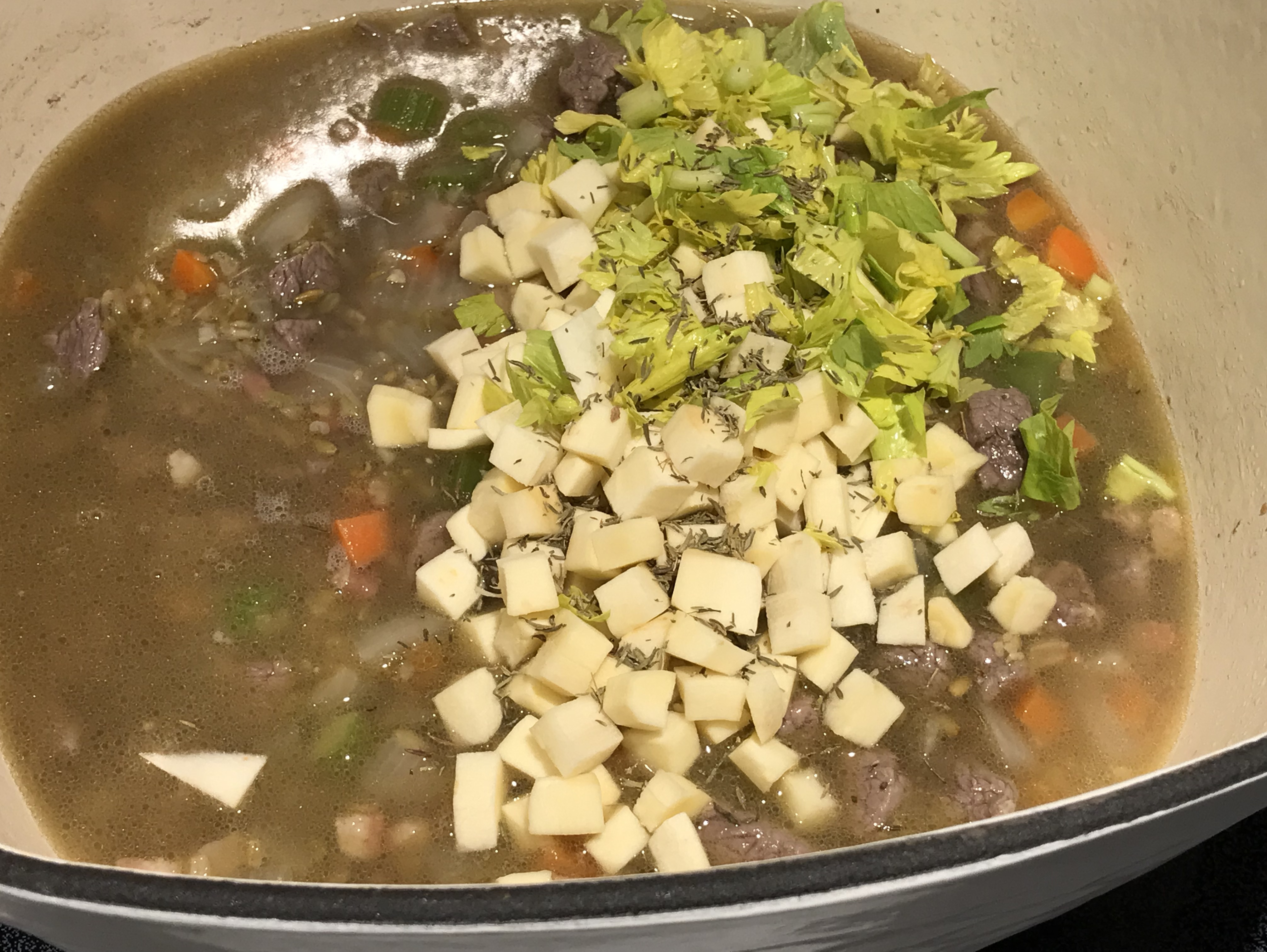
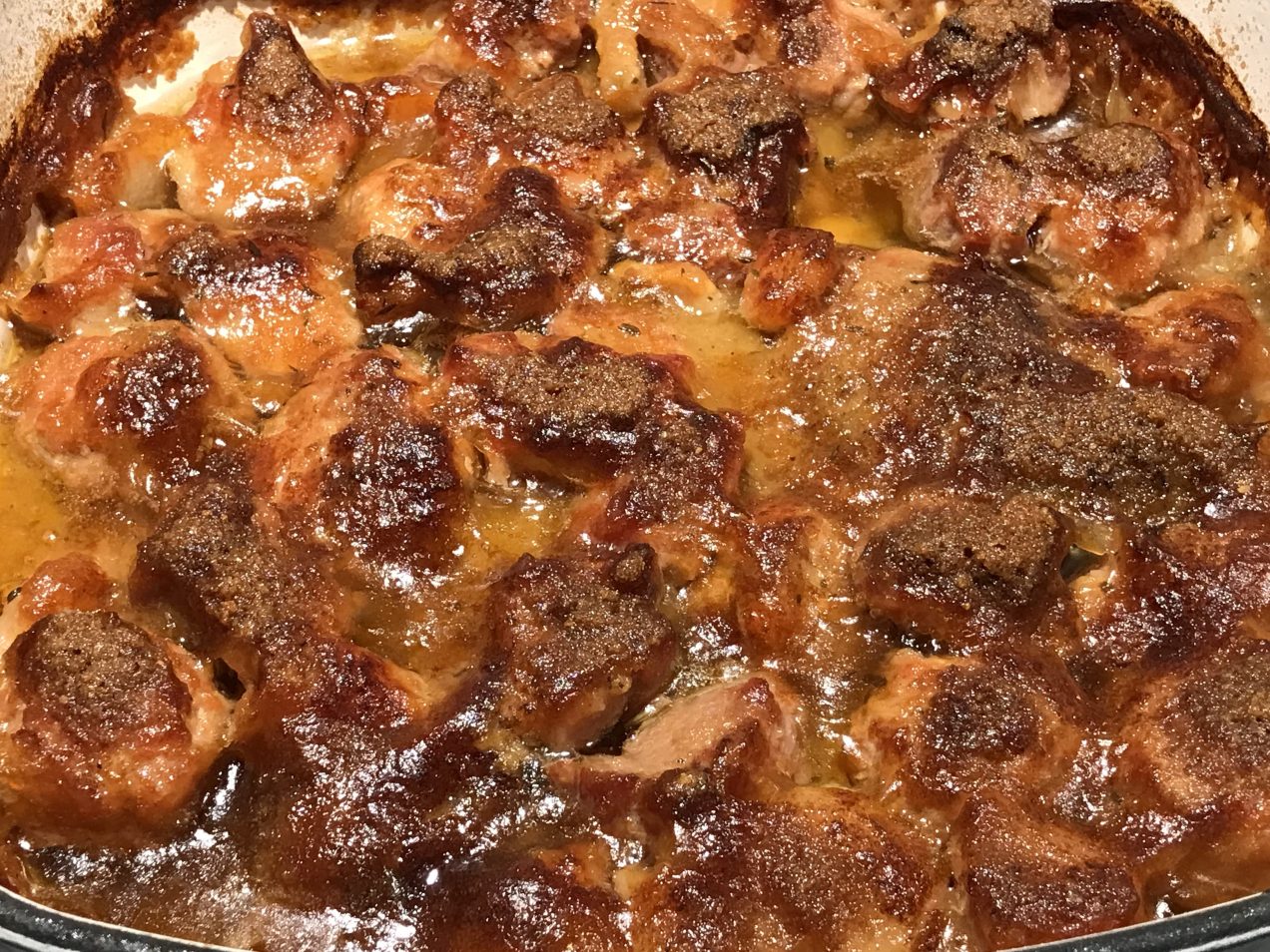
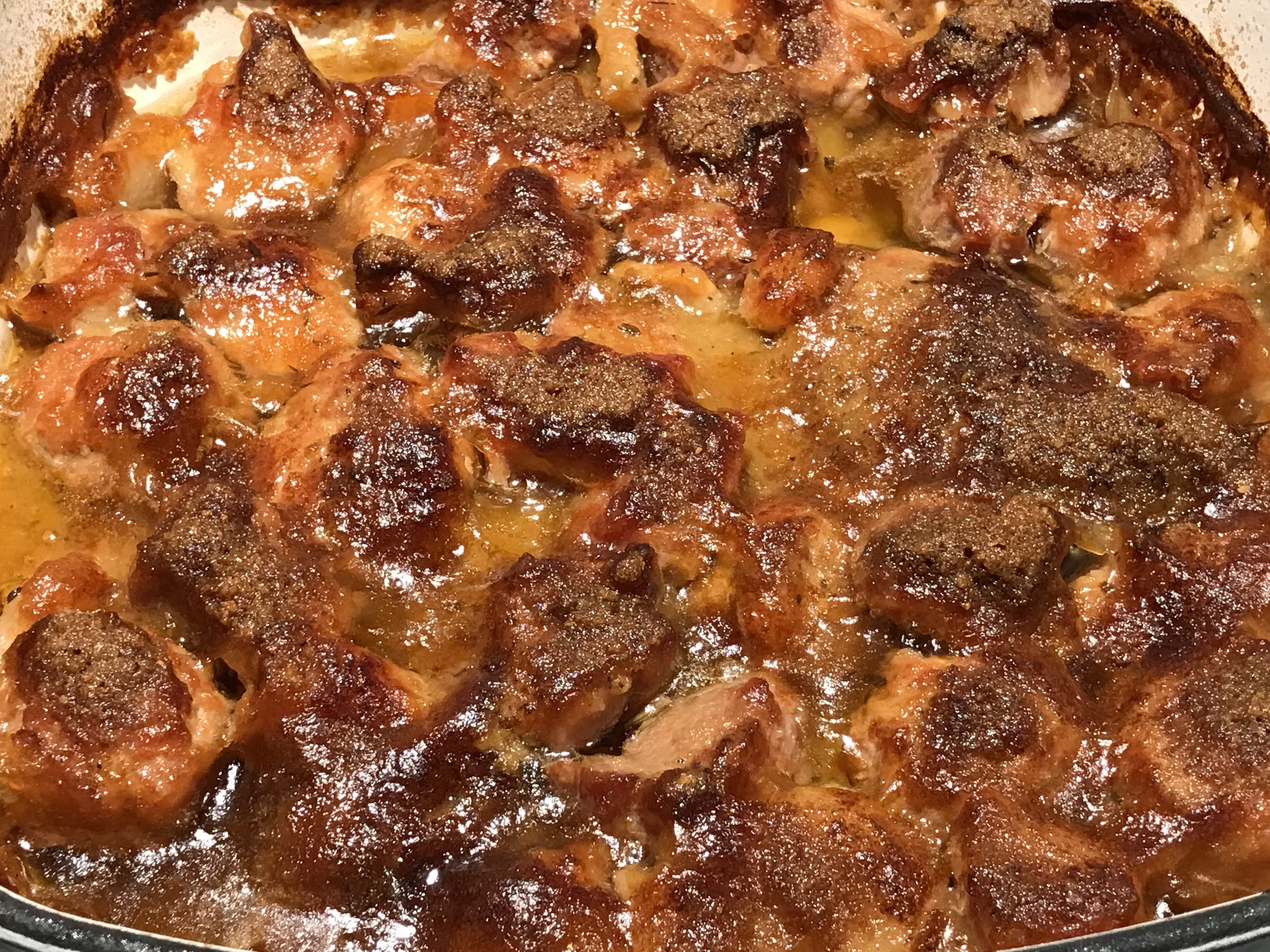
            Part of the reason for making cassoulet was to try out my new toy from Christmas – a Dutch oven. What’s great about it is that, because it can go directly from the stove to the oven, the contents don’t need to be transferred from one pan to another. After browning the meat, being careful not to break the meatballs, I added a chopped onion, six minced garlic cloves, three bay leaves, three actual cloves, some pepper, a pound of soaked navy beans, a cup of water, and a quart of low-sodium beef broth. Everything got a topping of plain bread crumbs, then went into the oven at 325 for about three hours.

My new toy, being put to good use

            The cassoulet was definitely good, but I still need to perfect the recipe. The only real issue was that it was very salty, even though I didn’t add any extra. The only reason I can think of is the homemade pancetta that I used in place of salt pork. Does it need to be rinsed or even soaked before use? I’m not sure, but with the pork butt and sausage there is plenty of fat, and from the smoked ham shanks the cured pork flavor, making the pancetta unnecessary. A minor problem was that the breadcrumbs tended to sink, thickening the liquid rather than forming a crust. The cassoulet was still nice and crispy on top, but there is work to be done before I have a postable recipe. But with two and a half months of winter ahead, there is plenty of time to experiment. To hear about those experiments, remember to subscribe for free.

Do I deserve a Michelin star? I think I do.
Standard
food history, italian cuisine

Cook’s Tour of Italy Menu 59 (Pgs. 189 – 192): Abruzzi Polenta Dinner

Region: Umbria/Marches

Menu: Spicy Polenta with Cheese, Broccoli Rabe, and Sausages, Fennel Salad with Parsley, Pineapple Sorbet

Recommended Wine: San Giorgio (full-bodied Lungarotti red, made in Torgiano [Note: I don’t actually know much about wine. This is just what the author recommends, but I haven’t actually tried it.])

            In a previous post, I wondered why corn-based polenta caught on widely in northern Italy, but not the south. Almost by accident, I came across the answer while watching a video on US geography. While discussing the tactical advantage provided by vast stretches of Midwest farmland, the narrator brought up an interesting point. Corn is more often grown in the eastern part of the region, around the Great Lakes, because this area has higher rainfall and corn needs more water. Wheat, with lower water requirements and greater drought tolerance, thrives on the drier Great Plains. Since southern Italy is drier than the north, I think I may have found the answer.

            Since ancient times, people across Italy have made polenta with a variety of grains, especially millet. Once corn was introduced from the Americas, it quickly became dominant due to its high yields. On the one hand, this was great, because it meant more available calories, but there was a problem. Much of the protein and niacin in corn is chemically “locked up,” unavailable to the body unless the grain is processed in an alkaline solution. This process, called nixtamalization, was widely used in the Americas, but didn’t find its way across the Atlantic. In places where the poor came to rely on corn, such as northern Italy, many people developed niacin deficiencies. This resulted in the disease pellagra. Those higher on the social scale may have eaten corn-based polenta, but consumed enough other foods to avoid getting sick.

            Here the polenta is chilled, sliced, and layered with other ingredients, almost like a lasagna. There are slices of hot Italian sausage, pork-infused tomato sauce, mustard greens for broccoli rabe, and grated provolone and pecorino cheeses. Scamorza cheese is popular in Abruzzi, a mountainous region along the Adriatic coast, but it was unavailable near me. Since provolone is similar, I used that, with good results. Personally, I still prefer pasta in lasagna, but the sliced polenta was an interesting change of pace.

            The fennel salad provided a fresh contrast to the strongly-flavored polenta, as did the sorbet. Interestingly, in addition to the pineapple juice, lemon juice, and sugar, this sorbet recipe had gelatin. It took a lot longer to solidify in the ice cream maker, but the texture was extra smooth and almost creamy. The sorbet also melted much more slowly than most. I omitted the strawberry sauce, but even plain, the pale-yellow sorbet looked beautiful in the coupe glasses. It tasted just as good.

Standard
food history

Pomegranates: The Actual Forbidden Fruit?

1000 Foods (pgs. 510 – 511)

            In art and drama, the forbidden fruit from the Garden of Eden is an apple. In reality, the Book of Genesis doesn’t specify what kind of fruit it was. It certainly could have been an apple, since apples were introduced early to the garden’s likely location in Mesopotamia, but there are other possibilities. Apricots, quinces, and dates all grew in the area, and because there were fig leaves in the garden, there must have been fig trees. Another possibility is the pomegranate.

            Pomegranates have long been associated with fertility. Delicious and beautiful, they are packed with vitamins and antioxidants. When superfoods were all the rage 10 or 15 years ago, pomegranates were given that label along with the likes of blueberries, kale, quinoa, and acai berries. Even if pomegranates aren’t the miracle food they were claimed to be, they are still a healthy treat that conveniently comes into season during the winter.

            They are also a pain to clean. Inside the fruit are a bunch of tiny red arils, which contain the seeds. To get to these, the membrane surrounding them must be removed. There are a number of ways to do this. One of the easiest ways is to put sections of the fruit in a bowl of water to loosen the membrane, which floats as it’s worked free. This method also prevents juice from any broken arils from spraying, another major benefit since pomegranate juice leaves bright red, hard-to-remove stains.

            The flavor makes all the trouble worth it. Pomegranate seeds are delicious sprinkled over yogurt, ice cream, other fruits, pudding, or trifle. In some middle eastern dishes, they are even used with meat or vegetables. But sometimes, it’s worth eating them on their own. As you bite into each aril, the sweet-tart, flavorful juice sprays onto the tongue, while the seeds provide a nice bit of texture. Thankfully, these delightful fruits are no longer forbidden, if they ever were.

Standard
food history, jamaican cuisine, recipes

Jamaican “Sorrel” Punch: Ruby Red for the January Blues

1000 Foods (pgs. 693 – 694)

            Let’s face it: January can be depressing. Thanksgiving, Christmas, and New Year’s are over, Valentine’s Day is six weeks off, and in much of the northern hemisphere, it’s cold and the landscape is barren. In some places, such as Venice and New Orleans, this is Carnival season, but in others, people are going on a diet to lose those Christmas pounds. Something cheery is needed.

            Hibiscus flowers are lovely. Native to India, British sailors and botanists introduced them to the other tropical and subtropical parts of their empire in the 18th and 19th Centuries. Once the flowers reached Jamaica, locals appreciated them for more than just their beauty. Hibiscus blossoms are also edible. For some reason, they are called “sorrel” in Jamaica, India, and the Middle East when they are eaten. Most likely, this is due to the herb sorrel and hibiscus flowers both having a sour flavor. Hibiscus is also fruity, and, when steeped in hot water, produces a lovely red infusion.

            In Jamaica, dried hibiscus blossoms are used to make a popular Christmas punch. In the US, many Latin American groceries carry them. Once the mixture is brewed, often with ginger and/or other spices, it is sweetened and sometimes spiked with rum. Even though Christmas is over, sorrel punch seems like a good new year’s or anytime beverage. And honestly, the bright color and flavor would be a great antidote for the “January blues” and a nice contrast with typically heavy winter dishes. Plus, hibiscus is rich in vitamin C, helpful after the germs you’ve probably been exposed to over the holidays. It’s also rich in iron, which the vitamin C helps the body absorb.

            For sorrel punch, I began with Jillian Atkinson’s recipe on Serious Eats (https://www.seriouseats.com/jamaican-sorrel-hibiscus-drink), but modified it to quantities and ingredients I had available. I used one quart (4 cups) of water, 2oz of dried hibiscus flowers, about 2.5oz sliced candied ginger, 3 whole cloves, and three small pinches of ground allspice. After boiling for 8 minutes, the mixture cools on the stove, then is chilled overnight to finish infusing. To prevent any metal flavor from leaching into the punch, I transferred it to a plastic container.

            After infusing overnight, the punch is strained and sweetened to taste. The recipe uses a simple syrup of sugar and water, but I just stirred four tablespoons of sugar into the mix, which seems to be about the right balance. It takes a bit longer to dissolve, but that quantity will dissolve eventually. The punch was best when diluted with about 1 part water to 2 parts hibiscus infusion, but that can be adjusted to taste. It’s often spiked with Jamaican rum, but is perfectly good without it, making sorrel punch a great festive drink for those who wish to abstain from alcohol.

Looks like red wine, probably stains like it

            Hibiscus has an interesting flavor, slightly floral, but distinctly fruity, almost like cranberry. The infusion is pretty sour on its own, so adding a bit of sugar balances it out. The ginger and cloves gave it a pleasant flavor like mulled cranberry cider, but a bit different. It’s hard to describe. The best way to find out more is to try it.

Standard
american cuisine, food history, recipes

Divine Citrus Refreshment: Ambrosia

1000 Foods (pgs. 519 – 520)

            According to Greek mythology, ambrosia was what the gods ate on Mt. Olympus. In the US, particularly the Southeast, it came to mean a mixture of oranges and grated coconut. It’s especially popular at Christmastime, peak season for oranges. In the past, difficulties with transportation made oranges and other citrus fruits relatively expensive in areas where they couldn’t be grown. As transportation improved in the late 19th Century and prices dropped, cooks in the US Southeast developed a layered dessert with sliced oranges and shredded coconut. A bit of powdered sugar helps the orange slices release some of their juices.

            Sometimes other fruits or a bit of liquor is added, but the oranges and coconut are always central. Presumably, this is the type of ambrosia featured in To Kill a Mockingbird, set in Alabama in the 1930s. Along with the ambrosia, Aunt Alexandra fixed three kinds of meat and two cakes. Presumably there was also bread, rolls, biscuits, or cornbread, and some sort of vegetables. In the 1950s, with the explosion in available convenience food, a mix of canned fruit, coconut, sometimes pecans and/or marshmallows, cool whip, and occasionally mayonnaise was developed. Without the mayonnaise, that actually sounds pretty good, but here we have the original, basic version.

Doesn’t that look divine?

            It’s super simple to make. All you need are oranges, shredded coconut, and powdered sugar. I used five oranges and about a cup of coconut, soaked in hot water for about fifteen minutes to soften. The oranges are peeled, quartered, sliced, and layered in a glass serving dish. The slices are sprinkled with a bit of powdered sugar, then a layer of coconut, repeated until the oranges are used up. On the last layer of oranges is just the powdered sugar. The ambrosia is so pretty, and tastes just as good.

Standard
food history, italian cuisine

Cook’s Tour of Italy Menu 12 (Pgs. 48 – 52): Restaurant-Style Dinner in Pisa

Region: Tuscany

Menu: Yellow Pepper Soup, Chicken with Ricotta and Tarragon Under the Skin, Green Beans with Pancetta and Savory, Tiramisu with Amaretto

Recommended Wine: Young Chianti (Tuscan red) or Lacrima d’Arno (local white)

            The world-famous Leaning Tower of Pisa was originally designed to be a bell tower. In the Middle Ages, Pisa was one of Europe’s leading naval powers, rivaling Genoa and Venice. Pisan fleets battled Arab emirs in Sicily and Sardinia, eventually gaining control over much of the latter. During the 11th and 12th centuries, Pisa was flourishing from trade and ready to show off. To do so, they built a fabulous cathedral complex. As was common at the time, the baptistry and bell tower were built separate from the main cathedral. The bell tower was built on soft soil and soon began to tilt, hence the nickname.

            The main cathedral is a prime example of Romanesque architecture, characterized by heavy construction, rounded arches, and relatively small windows. It was built in the late 11th and early 12th Century, around the same time as St. Mark’s in Venice. I haven’t been to Pisa, but based on pictures, the interiors are similar. Byzantine-style mosaics and gold leaf decoration are reminders of just how important both trade and the Ancient Roman influence were on Medieval architecture. In the 13th Century, Gothic architecture, with soaring ceilings, pointed arches, flying buttresses, and dazzling stained glass windows, came to dominate Europe, but many Romanesque elements made a comeback in the Renaissance. In the 19th Century, there was a neo-Gothic trend. Who knows what the future might bring?

            As far as food is concerned, Pisa seems to have a lot in common with the rest of Tuscany, with more seafood included. This is hardly surprising, since unlike Florence, Siena, and Lucca, Pisa is close to the coast, where the Arno River flows into the sea. By controlling this strategic port, the city was the gateway between western Mediterranean merchants and Tuscany’s hill towns. Here the protein is chicken, specifically Cornish hens, served with green beans, preceded by yellow pepper soup, and followed by tiramisu.

            Only the chicken dish could date back to Pisa’s Medieval glory days. The Ancient Romans had chicken, ricotta cheese, and a variety of herbs, as did later Tuscans. The wealthy, who were most likely to eat chicken or other poultry, often preferred spices or fruit with it, but may have eaten it with these less prestigious flavorings when they weren’t trying to impress someone. I replaced the halved Cornish hens with chicken thigh/leg quarters, since they’re easier to eat. The tarragon didn’t necessarily have a distinctive flavor, but the dish as a whole was enjoyable.

            The yellow peppers in the soup, plus the potatoes used to thicken it, came from the Americas, but the topping is Medieval in character. Half of each serving is topped with grated parmesan, half with crushed amaretti. This combination of sweet and savory is less common than it once was, at least in western cuisines, but it worked well here. The soup tasted good, though I would have preferred a bit more texture.

            Pancetta is much like unsmoked bacon, and green beans with bacon are hard to mess up. I used bacon pieces that I already had rather than buy pancetta. The marjoram/savory didn’t affect the flavor much, but the dish wasn’t lacking in it. New world green beans and old world cured pork work perfectly with each other.

Tasted better than it looked

            The coffee in tiramisu originally came from East Africa, then spread to the Middle East. Coffee seems to have reached Europe in the late 16th Century via Venetian trade with the Ottoman Empire. Tiramisu came later, in the 20th Century. Supposedly, the layered dessert of ladyfinger biscuits, coffee, mascarpone custard, and grated chocolate or cocoa powder was invented in the Veneto region around the middle of the century. Its name means “pick-me-up,” which the coffee, sugar, and chocolate achieve. Presumably, the common variation where liquor or fortified wine is added with the coffee is less effective in this regard. Since I didn’t have amaretto and didn’t want to buy a whole bottle for one recipe, I added a few drops of almond extract to the coffee instead.

Ladyfingers, swimming in a custard lake

            The flavor was great, but the custard was runny. That was my fault. Rather than mix the egg yolks/sugar/mascarpone first, clean the mixer bowl, then whip the egg whites separately before folding them in, I mixed everything together and assumed some extra mixing time would whip in enough air. It didn’t work as hoped. The custard was runny, becoming a lake under the ladyfingers, instead of a blanket over them. I guess that’s what I get for cutting corners. It was still delicious.

Standard