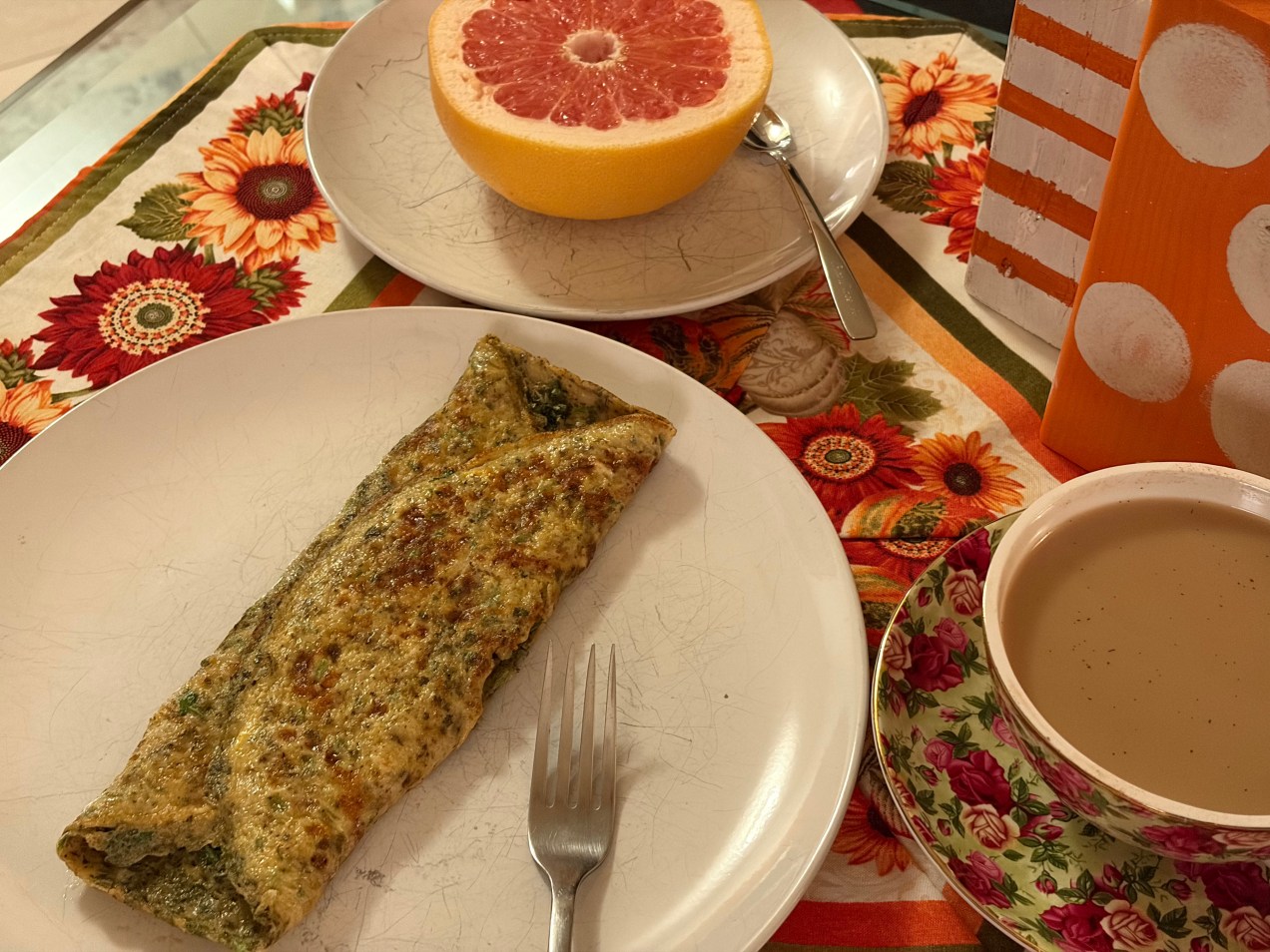
Omelette ux fines herbes
breakfast/brunch, fall, french cuisine, summer, vegetarian

Using Up Herb Plants: Omelette aux Fines Herbes (with basic recipe)

Omelette ux fines herbes
High cuisine, not a simple attempt to use things up before going out of town for Thanksgiving

            Every fall, I bring my potted herb plants in from outside to enjoy using them for a bit longer. It works well enough for a while, but eventually they start to suffer from the limited sunshine. Since most of them are annuals, the time comes to use up what I can before starting again when summer returns. Everything except the rosemary is either done or fading. To use up as much as possible, I made a French classic, omelette aux fines herbes.

            Fines herbes is a mix of parsley, chives, tarragon, and chervil, common in French cuisine. The first three are widely available in the US, but chervil might require a specialty spice store or the internet. Supposedly it tastes like a milder parsley with a bit of a licorice undertone, but I couldn’t taste much difference. To compensate for all the herbs except parsley being dried, I also added some minced scallions to brighten things up.

            For many French chefs, making a perfect omelet is one of the primary tests of skill. After following the basic directions on pages 107 – 108 of 1000 Foods to Eat Before You Die, mine turned out pretty well. The flavor is distinctly understated, but the freshness from the herbs was nice as fall turns to winter. The slight licorice flavor from either the tarragon or chervil is definitely there. Perhaps it just needs a little heat to release its flavor. Chefs disagree on how much browning, if any, is ideal. Personally, I like more browning, both for flavor and the fact that it helps the egg unstick itself from the pan.

Advertisements

            For each omelet, I used three eggs, beaten together with salt, pepper, and a tablespoon of milk. The herb mix contained three large parsley sprigs, minced, one minced scallion, and a teaspoon each dried chives, tarragon, and chervil. Half of the herb mixture gets added into the eggs before cooking. After melting about a tablespoon butter in a skillet over medium heat, the egg mixture is added to cook.

            To make sure that none of the eggs end up runny, I like to tilt the pan and lift up the edges of the cooked portion, letting the uncooked egg flow underneath. After this, sprinkle the remaining herb mixture over the surface. When the top is almost set, fold the right and left thirds of the omelet over onto the center. If this doesn’t work and you end up with a half-moon shaped omelet, don’t worry about it, it will still taste good. Let the omelet cook for another minute, covering the pan if desired to help it set, then slide it onto a plate.

            To make this simple mix of eggs and herbs sound extra fancy, serve with pommes de terre frits, compote de pomme, fruits frais, café au lait, or any combination thereof. In English, these are fried potatoes, applesauce, fresh fruit, and coffee with milk. To make anything sound fancy, say it in French, even if you have to use a translation app.

One-Time
Monthly
Yearly

Make a one-time donation

Make a monthly donation

Make a yearly donation

Choose an amount

$5.00
$15.00
$100.00
$5.00
$15.00
$100.00
$5.00
$15.00
$100.00

Or enter a custom amount

$

Your contribution is appreciated.

Your contribution is appreciated.

Your contribution is appreciated.

DonateDonate monthlyDonate yearly
Standard
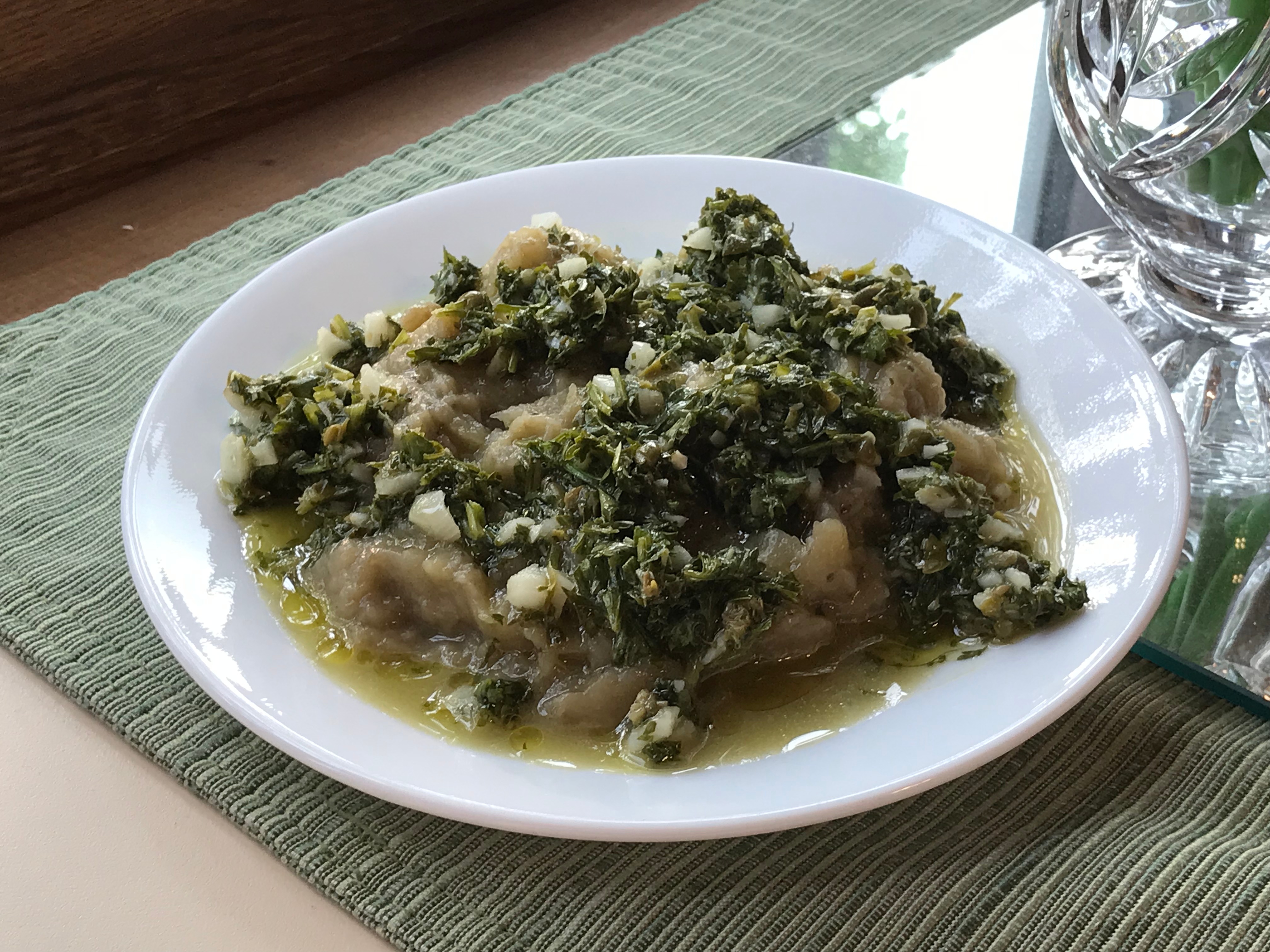
Aubergine en caton
appetizers, french cuisine, recipes, summer, vegetarian

French Baba Ghanoush: Aubergine en Caton

Aubergine en caton

            By European standards, France is a large country. As with any nation with varied terrain and climate, it has a number of regional specialties. There are the dairy-heavy cuisines of Normandy and Brittany, Germanic-inspired dishes of Alsace in the northeast, and wine-based sauces and stews from the wine-growing regions of Burgundy and Bordeaux. And in the south, along the Mediterranean, is Provence, where many dishes resemble those from neighboring Liguria in Italy.

            Provence is one of the few French regions where olive trees can produce fruit. The oil is ubiquitous, including in a sauce for roasted eggplant. Other Mediterranean flavors come from lemon juice, capers, and a bit of anchovy. Before you get grossed out, it’s just a small amount of paste used as a flavor booster, not enough to make it taste “fishy.” All these other flavors, which are rather strong on their own, plus garlic and plenty of fresh parsley, balance it out.

            Aubergine is the French word for eggplant. Here it is cooked and pureed just like in baba ghanoush, except in the oven instead of over a wood fire, producing a lighter color and mild, slightly sweet flavor. Rather than mixed into the puree, the sauce is served over the top, for a greater contrast.

            As Mimi Sheraton suggested in 1000 Foods to Eat Before You Die on page 54, a simple description is sufficient to compose a recipe, at least for the sauce. It was the eggplant itself that gave me trouble. When cooking whole, which is necessary to keep the pulp a greenish color instead of browning, it takes a surprisingly long time to soften. At 400 degrees Fahrenheit (or just under 205 degrees Celsius), it took nearly an hour. Since it was a cool day that was fine, but on a hot summer day that would never be an option. Plus, using the oven for that long for one fairly small item doesn’t seem energy efficient.

            I considered ways to “pre-cook” the eggplant before finishing it off in the oven. After poking holes all over (to release steam and avoid an explosion), boiling or steaming would probably introduce too much water. But what about the microwave? They work by making water molecules move faster, creating friction and raising the temperature. And since the rays pass through the food, the center warms up much faster than with other cooking methods.

            For a vegetable like eggplant, which has a high water content, this worked like a charm. To avoid an explosion and mess, I poked the holes all the way through with the pointy end of a meat thermometer, giving plenty of openings for steam to escape. Just heat on a microwave safe plate, turn every two minutes, and be careful when handling. The eggplant steams inside the skin, creating the perfect silky texture with just the right amount of moisture.

            As it turned out, the oven wasn’t even required, making this interesting dish perfect for a hot day. When the eggplant is cool enough to handle, just cut in half, scoop out the pulp, puree it, and serve warm or at room temperature with the sauce. Accompany with bread, crackers, or crunchy vegetables.

            The sauce recipe is easy to double and can be kept in the refrigerator for several days. Don’t worry if the oil solidifies; it will turn liquid again as it warms up. This is common for vinaigrette-type dressings and sauces. Just get them out of the fridge half an hour to an hour or so before using, and they’ll be fine.

Ingredients:

  • 1 large eggplant, about 2 pounds
  • 3 tablespoons olive oil
  • Juice from ½ lemon
  • 1 clove garlic, minced
  • 2 tablespoons capers, minced
  • ¼ teaspoon anchovy paste
  • ½ bunch parsley, minced
  • Salt to taste

Directions:

  1. Combine all ingredients except eggplant, parsley, and salt in a bowl and whisk to dissolve anchovy paste and combine.
  2. Whisk in the parsley and taste for salt. The anchovy paste and capers are both salty, so you might not need it.
  3. Set sauce aside at room temperature, or refrigerate overnight. Bring to room temperature before serving.
  4. Poke holes all over the eggplant, all the way through. Place on a microwave-safe plate and cover with a paper towel. Microwave on high for 8 to 10 minutes, turning every 2 minutes, until a skewer slides easily into the flesh. Let rest until cool enough to handle.
  5. Cut eggplant in half and scoop flesh into bowl of a food processor. Process until smooth.
  6. Scoop eggplant puree onto a plate, spoon sauce over, and serve with bread, raw vegetables, and/or crackers.

            For more recipes and food history, sent right to your inbox, please like, subscribe, and/or share.

One-Time
Monthly
Yearly

Make a one-time donation

Make a monthly donation

Make a yearly donation

Choose an amount

$5.00
$15.00
$100.00
$5.00
$15.00
$100.00
$5.00
$15.00
$100.00

Or enter a custom amount

$

Your contribution is appreciated.

Your contribution is appreciated.

Your contribution is appreciated.

DonateDonate monthlyDonate yearly
Standard
Pork Chop Marengo
food history, french cuisine, italian cuisine, recipes

Napoleonic Entree: Chicken or “Veal” (Pork) Marengo

Pork Chop Marengo
Pork Chop Marengo

            Despite his remarkable career, Napoleon Bonaparte had several close calls on his rise to power. One such case was at the Battle of Marengo in June 1800. Napoleon had seized power in a coup the previous year. To secure his rule, he needed military victories. At the time, he was fighting the Austrians for control of northern Italy. They met in battle near the city of Alessandria, in the Piedmont region.

            At first, the battle didn’t go well for the French, but Napoleon managed to snatch victory from the jaws of defeat. His control over Italy was secured, skeptics in France were reassured, and other ambitious generals were discouraged from turning on him. To celebrate, or simply because he was hungry after a long and no doubt stressful battle, Napoleon requested a special dish. Or so the story goes.

            Recipes for chicken marengo vary enormously. The only constants seem to be chicken (or occasionally veal) browned in olive oil, onions, and tomatoes, braised together to make a sort of stew. There’s usually garlic, mushrooms, and white wine. Many recipes include shallots and parsley, and a few use brandy instead of wine. Great chef Auguste Escoffier recommended including fried eggs and crayfish. Regardless of specifics, toasts fried in butter traditionally accompany chicken marengo.

            To make things even more complicated, there seems to be a debate about whether chicken marengo is French or Italian. In Mimi Sheraton’s 1,000 Foods to Eat Before You Die, it’s in the French section, but I’ve also seen recipes in Italian cookbooks. Since the Piedmont region was historically part of the Duchy of Savoy, a realm straddling the Alps between France and Italy and right on the trade routes between them, it’s hardly surprising that a Piedmontese dish would be adopted into French cuisine, or vice-versa. And it’s fitting that an entrée associated with Napoleon should be considered both French and Italian. After all, he himself was a native of Corsica, then ruled by Genoa, but made his career in France.

            For my own recipe, I combined the different strands into one, with no eggs or crayfish. The nice thing about chicken or “veal” marengo is that after browning the meat and making the “sauce,” it can be kept overnight and cooked the following day. Everything can be done in a Dutch oven, but if you don’t have one, a skillet and slow-cooker will also work. If you want to reduce fat and calories, the bread can be toasted dry in the oven or toaster, instead of in the buttered skillet. Or don’t toast it, if you prefer, but whatever you do, don’t skip it. You need bread to soak up the sauce.

Here’s how to make it:

Ingredients:

  • 1 chicken, cut up, or roughly 3 pounds bone-in pork (or veal) chops
  • 2 tablespoons olive oil
  • 4 tablespoons butter, plus more to brown toasts
  • 1 medium onion, quartered and thinly sliced
  • 2 shallots, halved and thinly sliced
  • 4 garlic cloves, crushed with the side of the knife and minced
  • 1 bunch parsley, thick stems separated from leaves and thinner stems, and both parts minced separately (don’t discard the thick stems)
  • 3 tablespoons dry white wine, mixed with 1 tablespoon brandy
  • 2 tablespoons flour
  • 1 (roughly 15 oz) can crushed tomatoes, or about 2 lbs fresh tomatoes, chopped
  • 1 pound mushrooms, cut into thick slices, with larger pieces halved
  • Baguette or Italian bread, to serve

Directions:

  1. Brown meat in the olive oil and two tablespoons of the butter in the skillet or Dutch oven over medium heat. Set aside on a plate.
  2. Add onion and shallots and sauté, stirring frequently, for about 5 minutes, or until they start to turn golden. Add the garlic and parsley stems and cook for 2 more minutes (garlic is added later because it cooks faster and burns more easily).
  3. Stir in the wine/brandy mix, making sure to scrape up any browned bits at the bottom of the pan. Cook until the liquid is mostly evaporated, 5 to 10 minutes.
  4. Add the flour and stir until incorporated. Follow with the tomatoes, and water if using canned. Bring sauce mixture to a boil. If using fresh tomatoes, reduce heat and simmer for 10 to 15 minutes, until the tomatoes break down and release their juice. Add salt and pepper to taste.
  5. Place the meat, skin side up if using chicken, in the Dutch oven or slow-cooker, and cover with the sauce. At this point, the chicken/pork/veal marengo can be refrigerated overnight if desired.
  6. Preheat oven to 325 degrees Fahrenheit, if using Dutch oven. Bake for 2 to 3 hours, until the meat is tender (if the stew was chilled overnight, it will probably be at the longer end of the time range).
  7. If using a slow-cooker, cook for about 4 hours on high or 6 – 8 on low. If it’s a little longer, like if you put it on before leaving for work, that’s completely fine.
  8. Half an hour before serving (with either cooking method), melt the remaining butter in a skillet over medium heat. Add the mushrooms and a little salt and cook, stirring frequently, until soft and aromatic, about 10 to 15 minutes. Add to the stew, pressing them down into the sauce, and leave to cook while browning the toasts (or for 15 minutes if you decide to use untoasted bread).
  9. Toast the bread pieces in a buttered skillet over medium low heat until browned.
  10. Sprinkle the stew with the parsley leaves and serve, toasts on the side.

And as always, please like, subscribe, and/or share to support my work.

One-Time
Monthly
Yearly

Make a one-time donation

Make a monthly donation

Make a yearly donation

Choose an amount

$5.00
$15.00
$100.00
$5.00
$15.00
$100.00
$5.00
$15.00
$100.00

Or enter a custom amount

$

Your contribution is appreciated.

Your contribution is appreciated.

Your contribution is appreciated.

DonateDonate monthlyDonate yearly
Standard
french cuisine, recipes, vegetarian

French Meze/Tapa: Green Lentil Salad

            Lentils are an excellent source of plant-based protein and full of vitamins. Besides soup, some varieties make excellent salads. Green lentils are particularly good for this, since they hold their shape the best. Common brown lentils will also work. Yellow or red lentils fall apart when cooked, and are better in dal or as a thickener for curries.

            Green lentils are most associated with France, where a particularly fine variety grows in the volcanic soil of the south-central Auvergne region. In 1000 Foods to Eat Before You Die, Mimi Sheraton suggests trying the authentic lentilles de puy. These are dark green, speckled, and smaller than regular lentils. The genuine article is rather pricey, but I found French-style green lentils at Woodman’s and decided to give them a try.

            They were amazing. Somehow, the green lentils tasted vaguely like sausage, peppery with a suggestion of sage, even though none of those ingredients were present. Naturally, they would make an excellent vegetarian main course. Not only are they delicious, but I was able to make a few salads with multiple servings in each from one affordable bag.

            The bag had a recipe for French-style warm lentil salad, which I’m sure would be great during the winter with mashed potatoes and/or a pork chop. For summer meze, I created my own simple recipe, dressed with vinegar and oil and flavored with onions. It can be enjoyed warm, room temperature, or cold.

            If you can’t find green French-style lentils by the dried beans and peas, look in the health food section. Bob’s Red Mill is the most common brand, and is what I used. They also carry specialty grains like bulgur, buckwheat, rice flour, and so on.

            Ingredients:

  • 1 cup green lentils
  • 2 bay leaves
  • ¼ red onion, thinly sliced
  • ¼ cup olive oil
  • 2 tbsp red or white wine vinegar
  • Salt and pepper to taste

            Directions:

  1. Cook and drain the lentils according to package directions, adding a pinch of salt and the bay leaves to the water. Cool slightly.
  2. Toss the cooked lentils with the onion, oil, and vinegar. Taste for salt, and add pepper if desired.
  3. Let rest for at least an hour before serving for flavors to meld.

Next time, I’ll post another meze recipe, for chicken with walnut sauce.

Standard
food history, french cuisine, recipes, stew, vegetarian

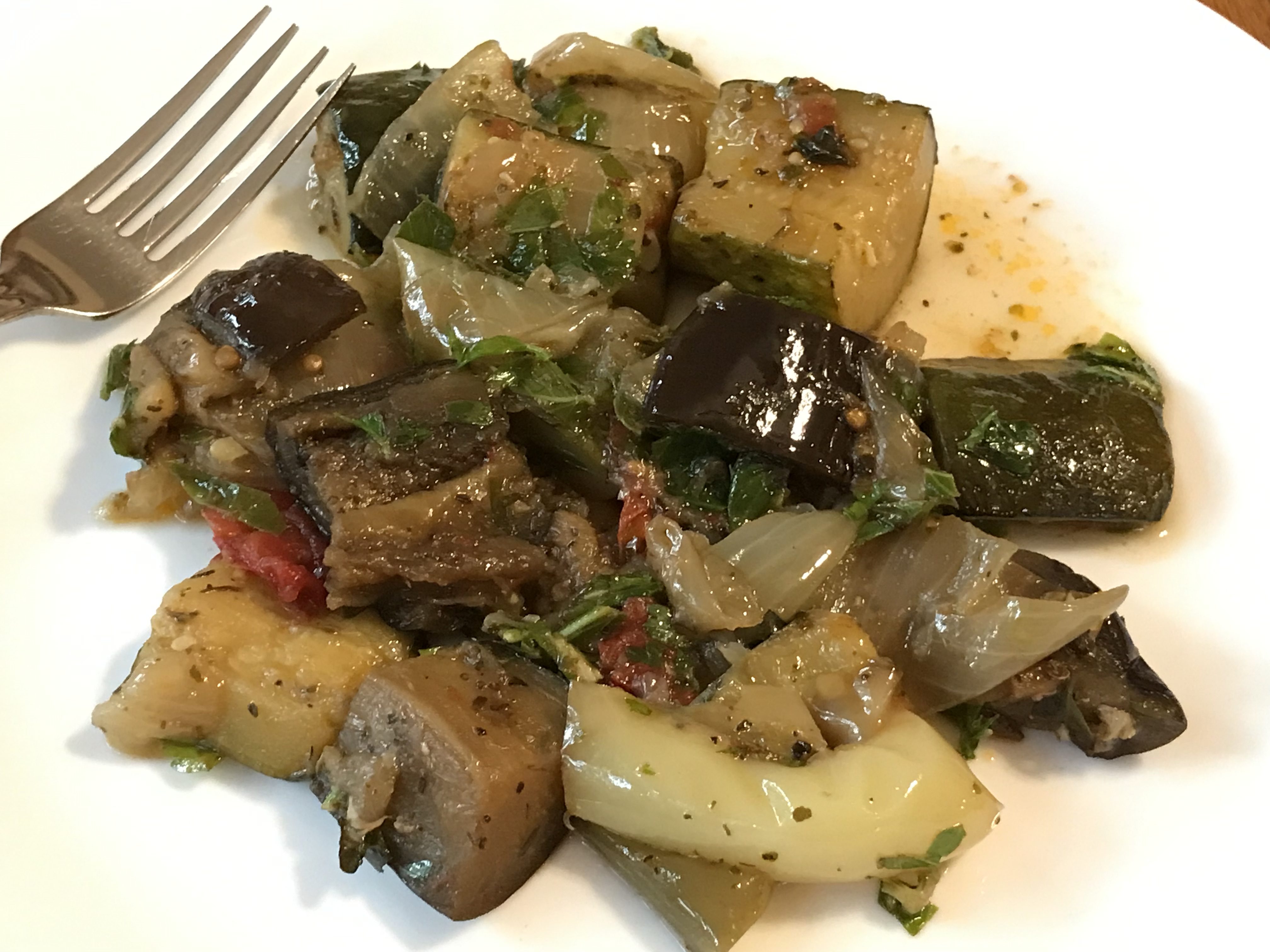
Ratatouille + Recipe

Ratatouille, not made by rats

            Let’s revisit another late summer dish I made last year. Ratatouille, a rustic vegetable stew hailing from the same region of Southern France as soupe au pistou, is even easier to make. Mimi Sheraton describes it as one of 1,000 Foods to Eat Before You Die in the book of the same name. Unlike some of the foods in the book, no travel or specially ordered ingredients are required. It’s just vegetables commonly available at the store or farmer’s market, served with bread, pasta, or alongside meat, if desired.

            Many of the same ingredients, like eggplant, zucchini, tomatoes, garlic, and olive oil, are combined in similar ways all around the Mediterranean. One example is the Sicilian caponata, which also includes capers, vinegar, and typically celery. But you don’t have to be anywhere near the Mediterranean to enjoy ratatouille. Just make sure to make it in the summer, when the vegetables are at their best (and most affordable).

            Note that ratatouille can be baked in the oven, and many recipes use that method. I prefer the stovetop because it heats the kitchen less. Like most stews, ratatouille reheats very well, and leftovers make a great omelet filling.

            Ingredients:

  • 1 medium eggplant, cut into 1-inch cubes, tossed with 1 teaspoon salt, and left to sit for half an hour
  • 2 medium zucchini, sliced into roughly half-inch thick rounds
  • 1 green bell pepper, coarsely chopped
  • 1 yellow onion, coarsely chopped
  • 4 Roma tomatoes, coarsely chopped
  • 6 cloves garlic, peeled, crushed with the edge of a knife, and minced
  • ½ cup olive oil
  • 4 sprigs parsley, thick stems minced separately from leaves
  • 4 fresh basil leaves or more to taste, left whole until needed

            Directions:

  1. Combine the eggplant, zucchini, bell pepper, onion, tomatoes, garlic, olive oil, and minced parsley stems in a large pot with 2 tablespoons water.
  2. Bring to a simmer over medium low heat, then cook, stirring occasionally, for about 30 to 35 minutes.
  3. Mince the basil and add to the pot with the parsley leaves. Taste for salt, adding more if necessary, then simmer for 10 more minutes.
  4. Serve the ratatouille with bread, pasta, grilled meat, or all of the above. Sprinkle with additional parsley if desired.

            Eating the ratatouille while watching the movie of the same name is encouraged. It isn’t weird, I promise. For more recipes, subscribe below for free. And if you’re feeling extra generous and would like to support my work, I would be most grateful.

One-Time
Monthly
Yearly

Make a one-time donation

Make a monthly donation

Make a yearly donation

Choose an amount

$5.00
$15.00
$100.00
$5.00
$15.00
$100.00
$5.00
$15.00
$100.00

Or enter a custom amount

$

Your contribution is appreciated.

Your contribution is appreciated.

Your contribution is appreciated.

DonateDonate monthlyDonate yearly
Standard
food history, french cuisine, recipes, soup, stew, vegetarian

French Summer Vegetable Soup: Soupe au Pistou

Soupe au pistou, a southern French classic

            Last summer, in my exploration of 1000 Foods to Eat Before You Die by Mimi Sheraton, I made my own version of soupe au pistou, a southern French soup loaded with summer vegetables, and loved it. Now that it’s August and vegetables are at their peak, I made it again and recorded my recipe. Southern France is quite different from Paris, Normandy, Brittany, and the other northern regions, in climate, culture, and food. If a trip isn’t in the cards for the near future, some of the local cuisine will help us both imagine it. Maybe it will happen someday, but for now, think of rolling hills, olive trees, and enjoy the lack of crowds.

            Note that you can switch up the vegetables depending on what you like or have on hand. Just make sure to include tomatoes, onions, potatoes, white and green beans, pasta, and of course the pistou. Beyond that, feel free to add a sprinkle of cheese, or switch out the angel hair for other pasta, adjusting cooking time accordingly.

            Ingredients:

  • 8 ounces (about 1 ½ cups) navy or other small white beans, soaked and drained according to package directions
  • 1 onion, quartered and thinly sliced
  • 8 tablespoons (equal to ½ cup) olive oil
  • 2 Roma tomatoes, coarsely chopped
  • Salt
  • 6 small red or other waxy potatoes, cut into roughly ½ inch cubes
  • 2 carrots, sliced crosswise with the larger pieces cut in half
  • 2 zucchini, halved lengthwise and thinly sliced
  • 4 ounces green beans, cut into roughly 2-inch pieces
  • 4 ounces angel hair pasta, broken into roughly 2-inch pieces
  • 4 large cloves garlic, peeled and crushed with the side of a knife blade
  • 80 fresh basil leaves, about 2 cups loose
  • Grated parmesan cheese, if desired
  • Sprig of parsley, if desired

            Directions:

  1. Heat the olive oil in a large pot over medium heat. When hot, add the navy beans, onion, and a pinch of salt and sauté until the onions take on some color, stirring occasionally.
  2. Add the tomatoes and cook, stirring a few times, until they begin to break down.
  3. Add just enough water to cover the beans and vegetables and bring to a boil, then reduce heat to simmer. Cook with the lid tilted for 30 minutes, adding more water if necessary.
  4. Add the potatoes, carrots, another pinch of salt, and more water to cover the new additions. Simmer for another 30 minutes.
  5. For the pistou, combine the basil, garlic, ½ teaspoon salt, the remaining 4 tablespoons of olive oil, and, if desired, a bit of parmesan and a sprig of parsley, in a food processor and blend until smooth. It won’t look like a large amount, but a little goes a long way.
  6. Test the white beans. If they are soft, add the zucchini and green beans and taste for salt, adding more if necessary.
  7. Increase the heat to medium and cook for 5 minutes, add the angel hair, and cook for another 3 minutes. Serve the soup with the pistou and optional cheese.

            For more seasonal, global, and historical recipes, make sure to subscribe for free. Of course, if you want to donate and buy me some virtual vegetables, I’m not about to complain.

One-Time
Monthly
Yearly

Make a one-time donation

Make a monthly donation

Make a yearly donation

Choose an amount

$5.00
$15.00
$100.00
$5.00
$15.00
$100.00
$5.00
$15.00
$100.00

Or enter a custom amount

$

Your contribution is appreciated.

Your contribution is appreciated.

Your contribution is appreciated.

DonateDonate monthlyDonate yearly
Standard
food history, french cuisine, recipes

Using Up the Wine: Oeufs en Meurette (eggs poached in red wine)

1000 Foods (pg. 106) for information, recipe is my own creation

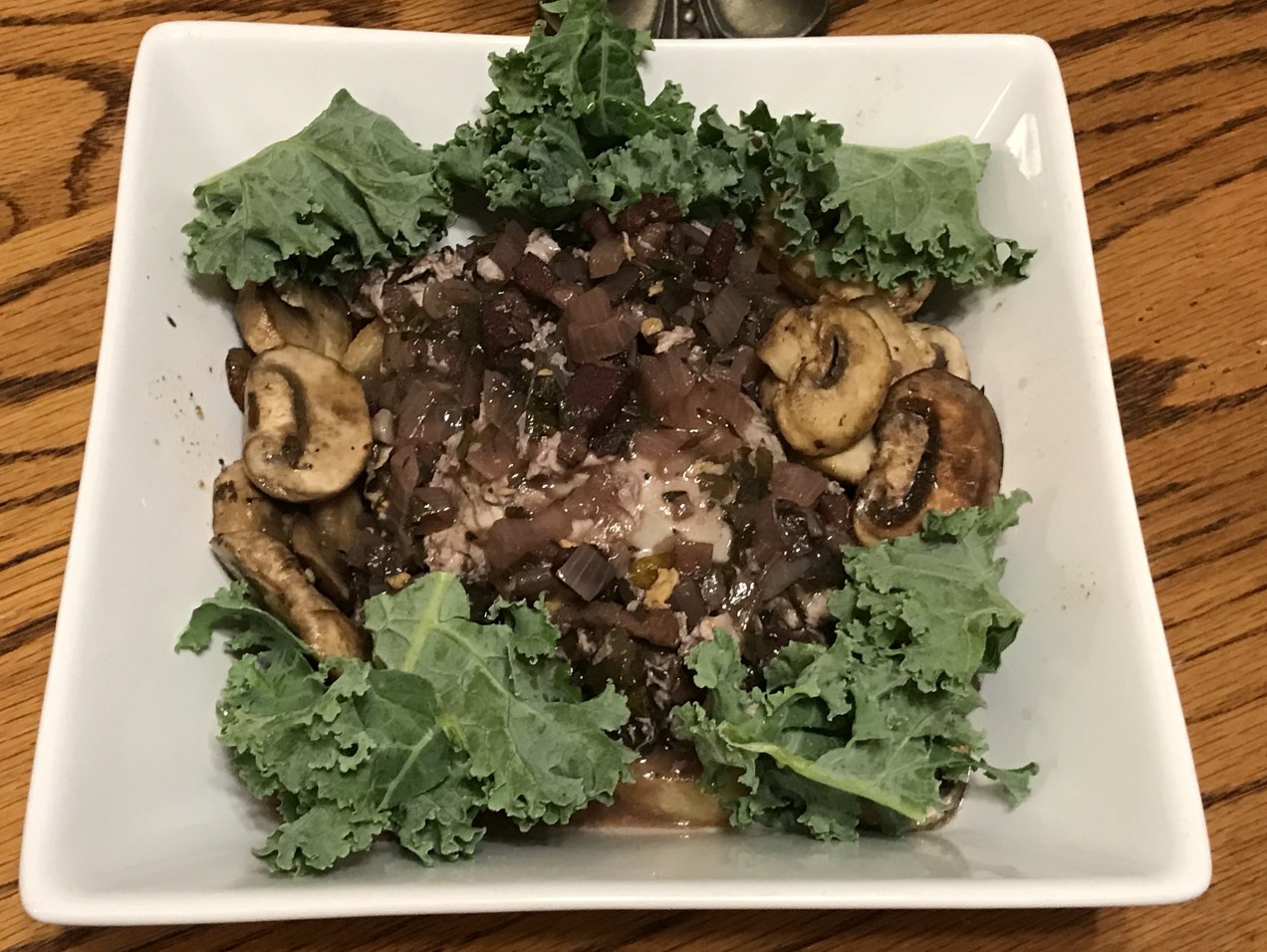
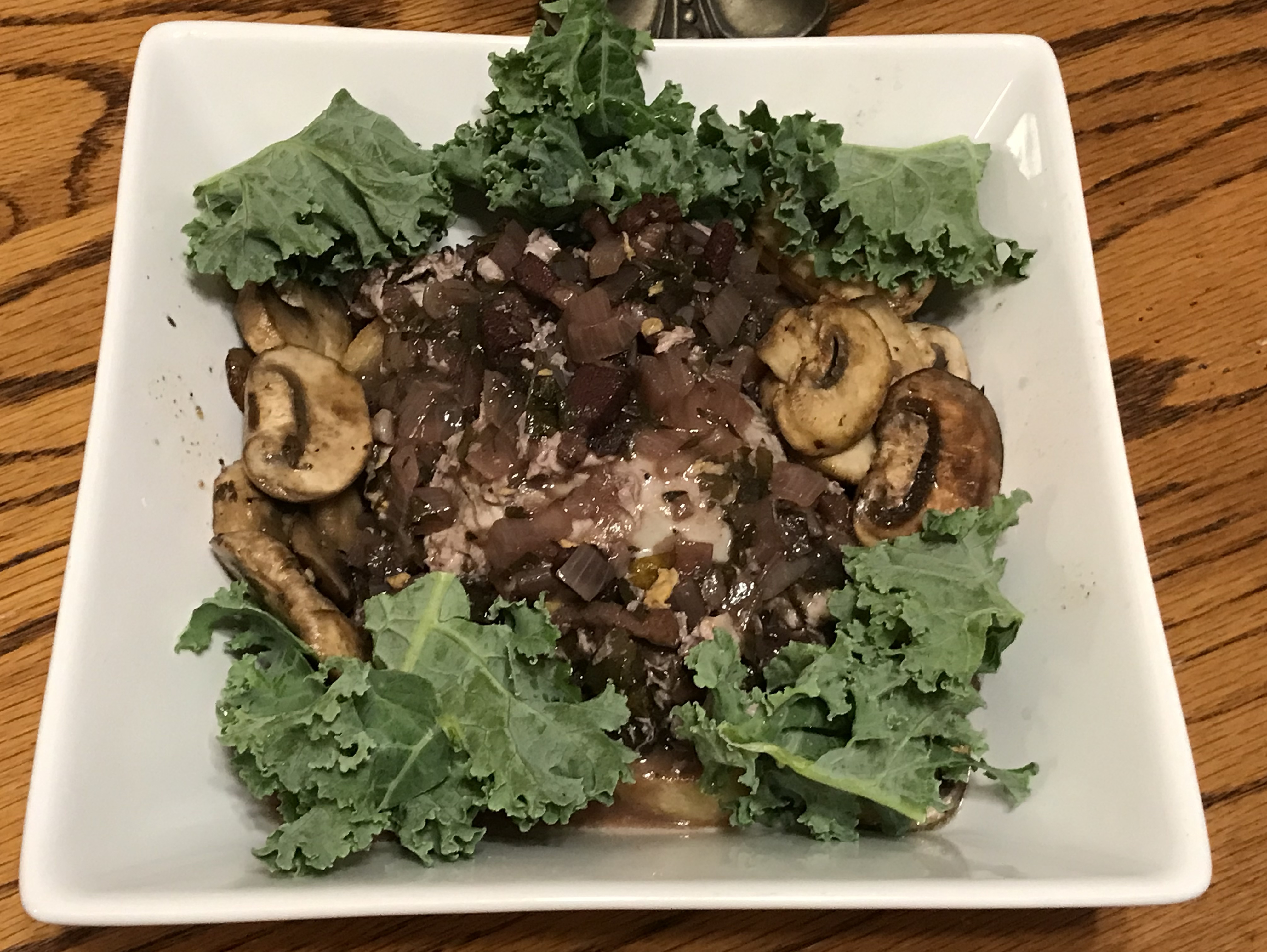
            After making the beef burgundy, I had about a third of a bottle of the wine left over. Not wanting to waste it but not really wanting to drink it either (too dry), I chose to make another dish from the French region of Burgundy: oeufs en meurette. These are basically eggs poached in a mix of wine, beef broth, and aromatics, which is then reduced to form a sauce. The eggs are served with toast to soak up the sauce and runny yolks, and are often garnished with sauteed onions or mushrooms.

            Even though I don’t usually like poached eggs, this was really good. The egg yolks blended into the sauce once the eggs were cut, making their runniness less apparent. All the butter, to toast the bread, sauté the mushrooms, and make roux to thicken the sauce probably helped too. The leftover sauce was even better with scrambled eggs. As an extra garnish, I added some kale, which holds up next to the hot ingredients much better than lettuce.

Ingredients:

  • 4 pieces thick-cut bacon, cut into matchsticks across the grain
  • 1 shallot, peeled, crushed with a chef’s knife, and minced
  • 2 cloves garlic, peeled, crushed with a chef’s knife, and minced
  • 1 cup red burgundy or other pinot noir (you don’t need an expensive bottle, mid or even medium-low priced is fine)
  • 2 bay leaves, broken in half
  • ½ teaspoon dried thyme or 1 ½ teaspoons fresh
  • Minced fresh parsley, if desired
  • 1 cup beef broth
  • 4 eggs
  • 1 tbsp softened butter, plus enough to coat skillet
  • 1 tbsp flour
  • 8 oz sliced mushrooms
  • 2 pieces thickly sliced white bread, such as Texas toast

            Directions:

  1. Brown the bacon over medium-low heat in a medium saucepan until enough fat has been rendered to coat the bottom. Add the shallots and cook until soft. Then add the garlic and cook until it takes on some color.
  2. Add the wine, bay leaves, and thyme to the saucepan and scrape the bottom with a rubber spatula. Add the broth and parsley, salt and pepper to taste, and bring to a simmer.
  3. Meanwhile, make a paste with a tablespoon each of butter and flour.
  4. Melt enough butter in the skillet to coat it, and brown the toast to the desired color over medium heat. Place each piece in a wide individual serving bowl.
  5. Add more butter to the skillet if needed along with the mushrooms. Salt and pepper to taste. Cook over medium-low heat, stirring occasionally, while you poach the eggs and reduce the sauce.
  6. Break the eggs into a bowl, and if strands of egg white in the sauce bother you, hold each in a fine-mesh strainer for a few seconds to let the loose part of the white drain.
  7. Carefully add the eggs to the wine and broth mixture, stirring gently. Poach just until the whites are firm, then remove them with a slotted spoon and place two over each piece of toast.
  8. Turn the heat up to medium, and add the butter and flour paste to the poaching liquid. Cook, stirring frequently, until the sauce is slightly thickened.
  9. Ladle sauce over each serving, adding mushrooms for garnish. If desired, you can also add some greens or parsley.

            And as always, to get recipes and posts sent straight to your inbox, make sure to subscribe for free. Or, if you’re feeling particularly generous, there’s a form for donations as well.

One-Time
Monthly
Yearly

Make a one-time donation

Make a monthly donation

Make a yearly donation

Choose an amount

$5.00
$15.00
$100.00
$5.00
$15.00
$100.00
$5.00
$15.00
$100.00

Or enter a custom amount

$

Your contribution is appreciated.

Your contribution is appreciated.

Your contribution is appreciated.

DonateDonate monthlyDonate yearly
Standard
food history, french cuisine, stew

Classic Julia Child: Boeuf Bourguignon

1000 Foods (pgs. 60 – 62), recipe found in text

            For centuries, from the 17th to the mid-20th and even beyond, French cuisine has had a stuffy, high-class reputation outside of France. The fanciest restaurants were almost all French, and they served elaborate, haute-cuisine creations that most home cooks would never attempt. Julia Child did more than any other English-language author to popularize French middle-class and provincial dishes. Even high-class French restaurants jumped on the bandwagon, often with a bit of fancying up.

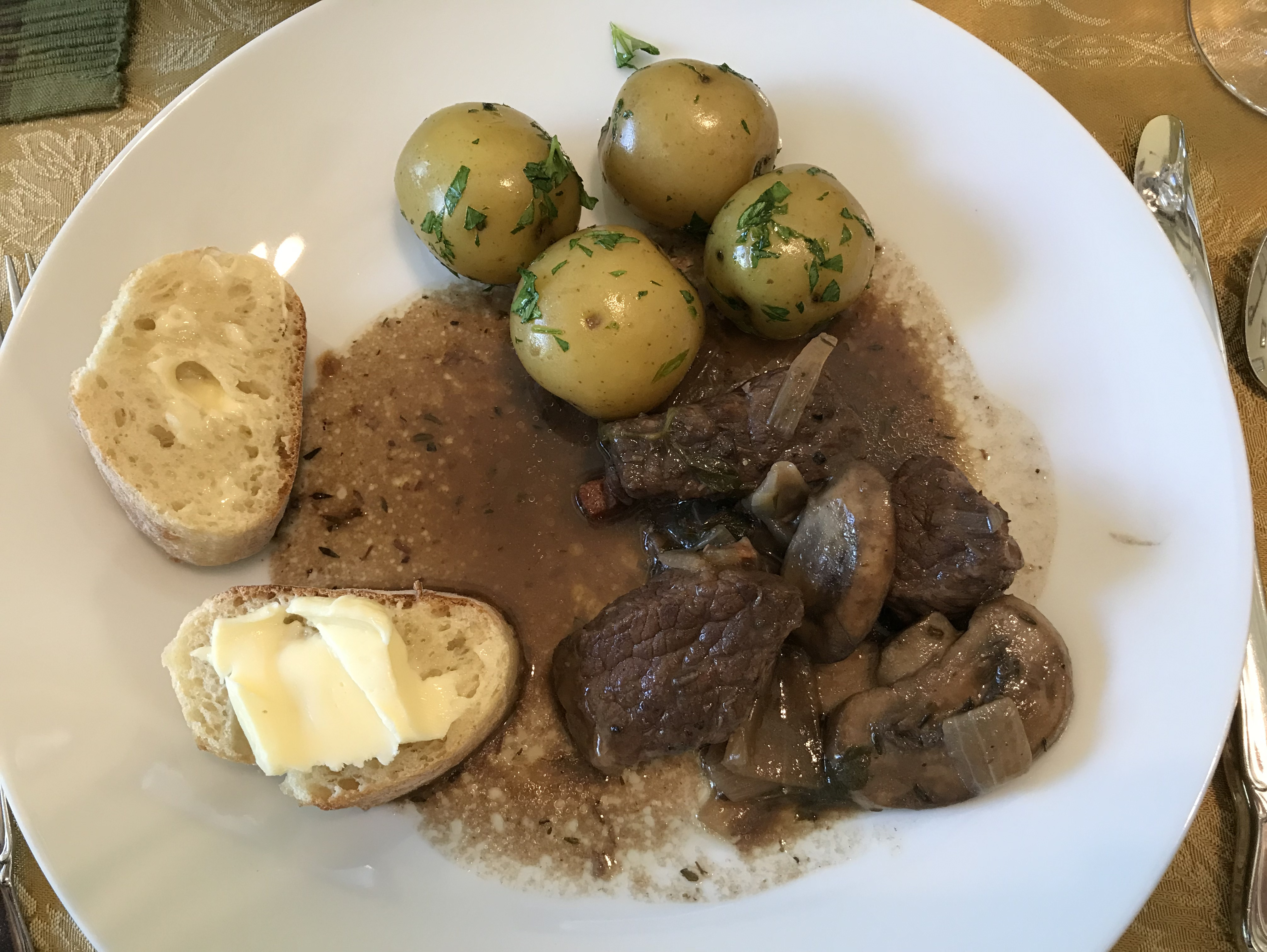
            Perhaps the most famous Julia Child dish of all is boeuf bourguignon, a beef stew starring the Burgundy region’s famous red wine. Low, slow cooking tenderizes economical beef cuts like chuck while creating a rich gravy. Even more flavor comes from onions, shallots, garlic, mushrooms, parsley, thyme, and dried orange peel. The recipe does take a bit more prep work and finessing than the typical American or British beef stew, separately cooking the onions, mushrooms, and bacon before adding them to the pot, but none of it is very difficult. Just set aside enough time, particularly for marinating the meat.

            Along with Bordeaux in the southwest, the area of Burgundy in the east has been one of France’s most prestigious wine regions since the Middle Ages. Vineyards there produce some of the most expensive pinot noir in the world, along with more affordable wine. The recipe calls for a good but not extravagant red burgundy. Since the local grocery store didn’t have French burgundy, I got a bottle of California pinot noir. Supposedly the vines were started with cuttings from Burgundy, and it was under $20 but not the absolute cheapest option. In other words, mid-priced by flyover country standards, and there was some leftover to serve with the stew.

            The French region of Burgundy has a long and complicated political history. Sandwiched between France and the Holy Roman Empire, wealthy and powerful Burgundy was often either fully or partially independent. Throughout the Middle Ages, the dukes there had a love-hate relationship with the kings of France and caused them all sorts of headaches. During the Hundred Years’ War, King Jean II granted the duchy to his youngest son Philippe the Bold. Through his own and his son’s marriages, the duke of Burgundy gained control of the Flanders, Holland, Brabant, and Hainaut in the Low Countries.

            For much of the 15th Century, the dukes of Burgundy were almost as powerful as the French kings themselves. Due to a conflict over who got to act as regent whenever Charles VI experienced an episode of psychosis, which happened almost annually, for months at a time, over a 30-year period, Burgundy ended up siding with the English for part of the Hundred Years’ War. Without their help, Henry V of England would probably not have had such spectacular success, and Burgundy’s later return to French allegiance helped turn the tide back toward France once and for all. Meanwhile, the dukes of Burgundy had one of the most dazzling courts in Europe.

            Burgundy’s rise was stopped abruptly when Duke Charles the Bold was killed in battle without a male heir in 1477. Louis XI of France seized his French territories, but his attempt to take Flanders and force Charles’ daughter Marie to marry his own son, the future Charles VIII, backfired. Burgundy and the Holy Roman Emperor Frederick III had previously worked together to counter Louis XI, to the point of negotiating a marriage between his Marie and Frederick’s son Maximilian. For political reasons, and since the future Charles VIII was only 8 years old while Maximilian was 18, the 20-year-old Marie chose the latter. Their son later married the daughter of Ferdinand and Isabella, bringing the Habsburgs to Spain and leading to three more centuries of conflict with France.

            This dish is a good project for a day off work, when you can take your time and enjoy the process. Boeuf bourguignon, or beef burgundy, is also a great dish for entertaining, and not just because it can be made ahead. It makes you seem classy without breaking the bank. And the taste is a revelation. Beef burgundy is probably one of the best dishes I’ve made so far. The flavors of beef, wine, onions, and mushrooms all blend together in perfect harmony.

            Mimi Sheraton recommends serving it with little potatoes, tossed with butter and parsley after cooking. Since this was already a special meal, I added two more items. A simple green salad is a nice fresh contrast, and with the amount of flavorful gravy, you definitely want bread to soak it up. Naturally, since this is a French dish, a crusty baguette is the way to go.

            To get recipes and posts sent straight to your inbox, don’t forget to subscribe.

Standard
food history, french cuisine, italian cuisine

Foods Not Eaten: Prohibitive Cost

Poularde en Demi-Deuil (chicken with black truffles), Insalata de Ovoli e Tartufi (oval mushroom and white truffle salad), Risotto Piedmontese (with white truffles)

1000 Foods (pgs. 118, 198, 233)

            You’ll probably notice a theme here. Truffles, particularly from the Perigord region of France and Piedmont region of Italy, are really expensive. There are two reasons for this. First, they are highly sought after. Second, these varieties have resisted all attempts to farm. Truffles generally only grow among the roots of oak and chestnut trees, but not with any predictability. They must be foraged by truffle hunters with trained dogs. Based on the laws of economics, a limited supply plus high demand equals high prices. Truffles’ reputation as an aphrodisiac, whether accurate or not, only increases their allure.

            At one time, truffle hunters used pigs, which are great at sniffing out the elusive fungi, even under several inches of soil. Problem was, pigs also like to eat the truffles, so the industry switched to dogs, who are content with a treat and some petting. Since pigs also disturb the soil when rooting out the truffles, making it harder for the spores to grow new tubers, their use has since been banned in many areas.

            While actual truffles from Perigord and Piedmont are too expensive, especially for a fungus that grows in the dirt, the chocolate variety is another story. Made of chocolate and cream and rolled in cocoa powder, they only resemble the fungus in appearance. The great thing about chocolate truffles, aside from how easy they are to make, is how customizable they are. Dark chocolate orange, milk chocolate mint, white chocolate mocha, rolled in chopped almonds, the possibilities are endless.

Standard
food history, french cuisine

Delights of the Duty-Free Store: Paris

Macarons, Calissons, Nougat

1000 Foods (pgs. 80 – 82)

            Many people like to buy alcohol at the duty-free store. The Charles de Gaulle airport in Paris appears to be no exception, based on the relative amount of shelf space occupied. There were also an assortment of cheeses, pates, dried sausages, and confectionary. A few of the cheeses featured in 1000 Foods were in the cooler, but I wasn’t sure if they would be allowed through customs. Plus, the smell upon opening the cooler door was, for lack of a better term, “weird.” Kind of the like the camembert that I didn’t like. Attempting to carry it in my backpack for the 8-hour flight home, layover in Chicago, and then back to Green Bay didn’t seem like the best plan. Especially when there were so many amazing-looking sweet items. After perusing and admiring the displays, I settled on calissons and Montelimar nougat, which can be hard to find, plus macarons and a box of assorted mini chocolate batons, for good measure.

            Macarons have been extremely fashionable for the last decade or so. Their bright colors are cheerful, and the flavor possibilities are endless. The exact origin or macarons is unclear, but cookies have been made with ground almonds, sugar, and egg whites for centuries. At some point, the cookies became lighter and more meringue-like, and they began to be sandwiched together with a buttercream or ganache filling. As for the difference between macaron and macaroon, macaron = these colorful sandwich cookies, and macaroon = a simpler mix of almonds or coconut, sugar, and egg white. Usually. Both macarons or macaroons are easily made gluten-free, and the lack of wheat flour and chemical leavening make them a popular Passover dessert, when Jewish dietary laws forbid both.

            Properly made macarons are amazing, but are supposedly quite touchy to make. Relying on whipped egg whites for leavening is part of this. Another issue is that gluten makes it easier for a batter to trap air bubbles, which expand in the oven. Both of these factors increase the risk of the macarons not rising properly. Adding the fact they are based on expensive almond flour, macarons can be quite pricey. While a reasonably-priced, pre-packaged box cannot compare to the bakery variety, this mix of strawberry, lemon, and pistachio was pretty good.

Color-coded for your convenience

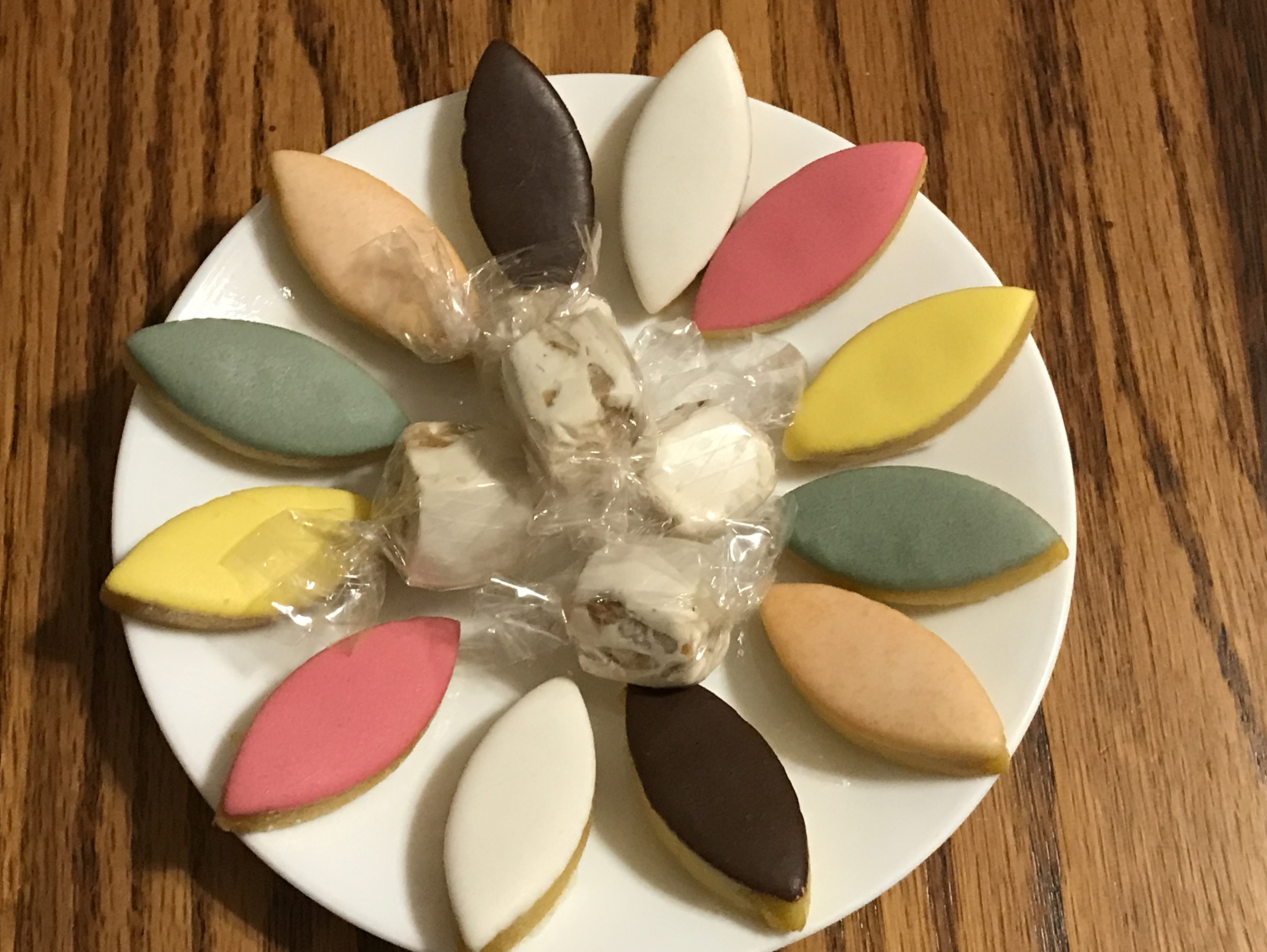
            Calissons are also almond-based. In addition to almond paste, their defining ingredient is candied melon. The gold standards are calissons d’Aix, made in the Provence region of southern France for hundreds of years. To legally use the coveted name, the calissons can only include almonds, sugar, and the candied cantaloupe-like melon, egg whites as a binder, plus a royal icing of egg white and sugar. Sometimes a bit of rose or orange flower water is added, but no other flavorings are permitted. While the ones I got weren’t calissons d’Aix, the primary ingredients were almonds and candied melon, making them a good representation of the confection. The different icing colors all have a different flavor. The white is the plain original. The other flavors are chocolate, raspberry, tangerine, lemon, and pistachio. At first, I wasn’t sure if I liked them. The melon is hard to taste, the almond is very subtle, and the texture was stickier than I expected. But as I kept chewing, the almond flavor and somewhat marzipan-like texture came through. I’d rather have marzipan, but the calissons were not bad at all.

            Continuing on a similar theme, traditional nougat is based on egg whites and sugar, loaded with toasted almonds. It isn’t actually in the book, but the nougat looked good. The variety from Montelimar, which this was, happens to be a particular favorite, so was definitely worth trying. It was nice and chewy, with the almonds cutting the sweetness and adding a pleasant crunch. Hands down, it was the best of the three. All three of the almond/sugar/egg white confections were enjoyable, explaining why those ingredients have been used together for so long. The chocolate was good too. Who needs alcohol when you can have sugar?

Seriously, who can resist?
Standard