Before modern shipping and preservation, fresh vegetables were only available for part of the year. From late fall into the following spring, people had to rely on canned, frozen, dried, salted, and pickled options. Sometimes roots, cabbages, and apples could be kept over the winter in a cold cellar. After months of a monotonous diet, variety reappeared as fresh produce came into season. By late summer, there were so many vegetables people had to search for creative ways to use them. Even with modern technology, some things have not changed.
In Romania and Bulgaria, one way to take advantage of/use up the late summer bounty is to make the vegetable stew ghivetch. The specific vegetables can vary, but according to the text, ideally there should be at least 20 of them. I counted 18 in the recipe which is supposed to serve 12 as a side dish. The side dish portions must be huge, because even after eliminating the okra and reducing the quantity of leeks and cabbage, the recipe still made enough to fill an entire roasting pan 6 to 8 inches deep. Even after putting half in the freezer and giving a container of it to a neighbor, it was hard to eat it all. Fortunately it tasted good, especially with a sprinkle of feta cheese.
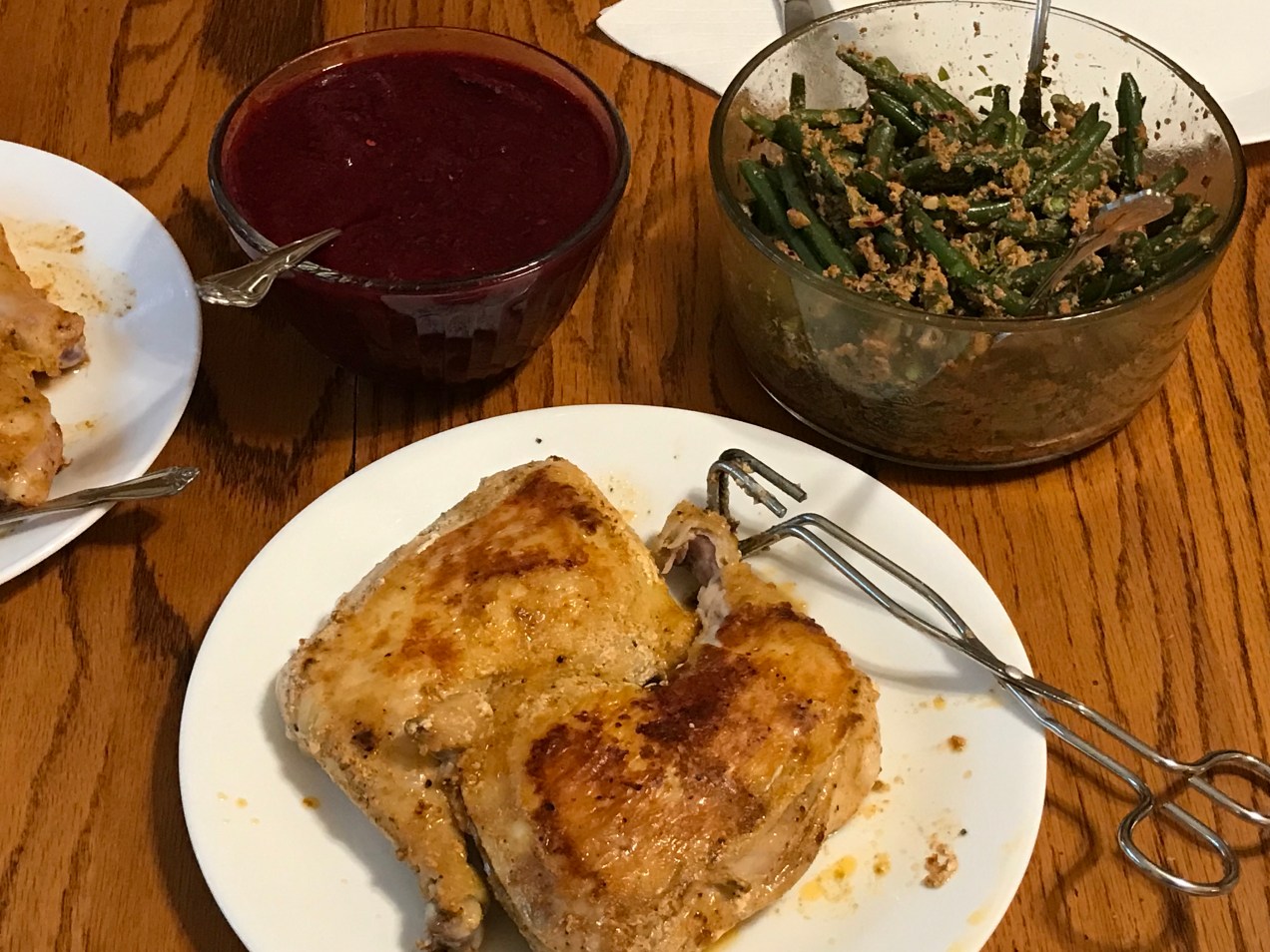
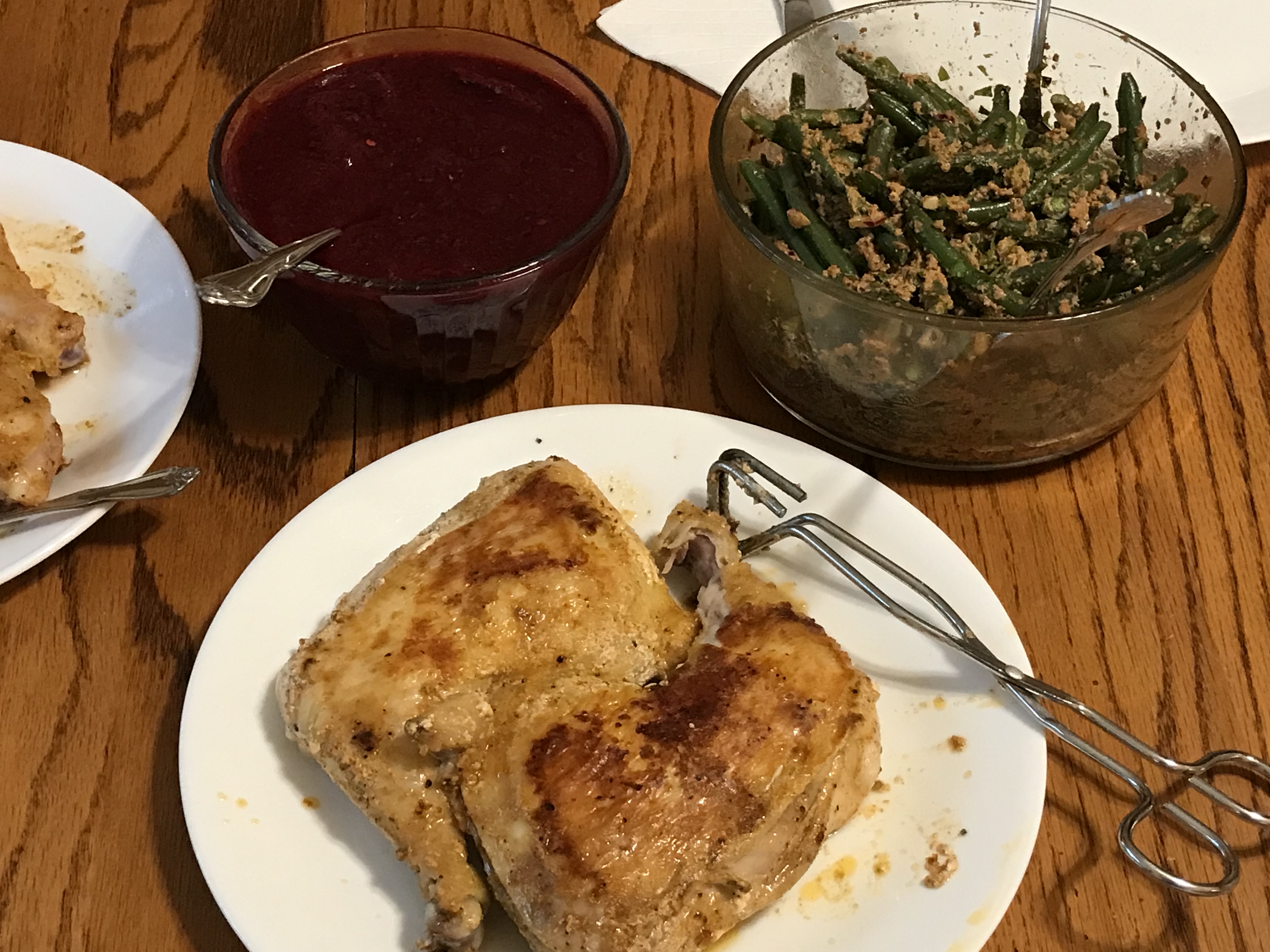
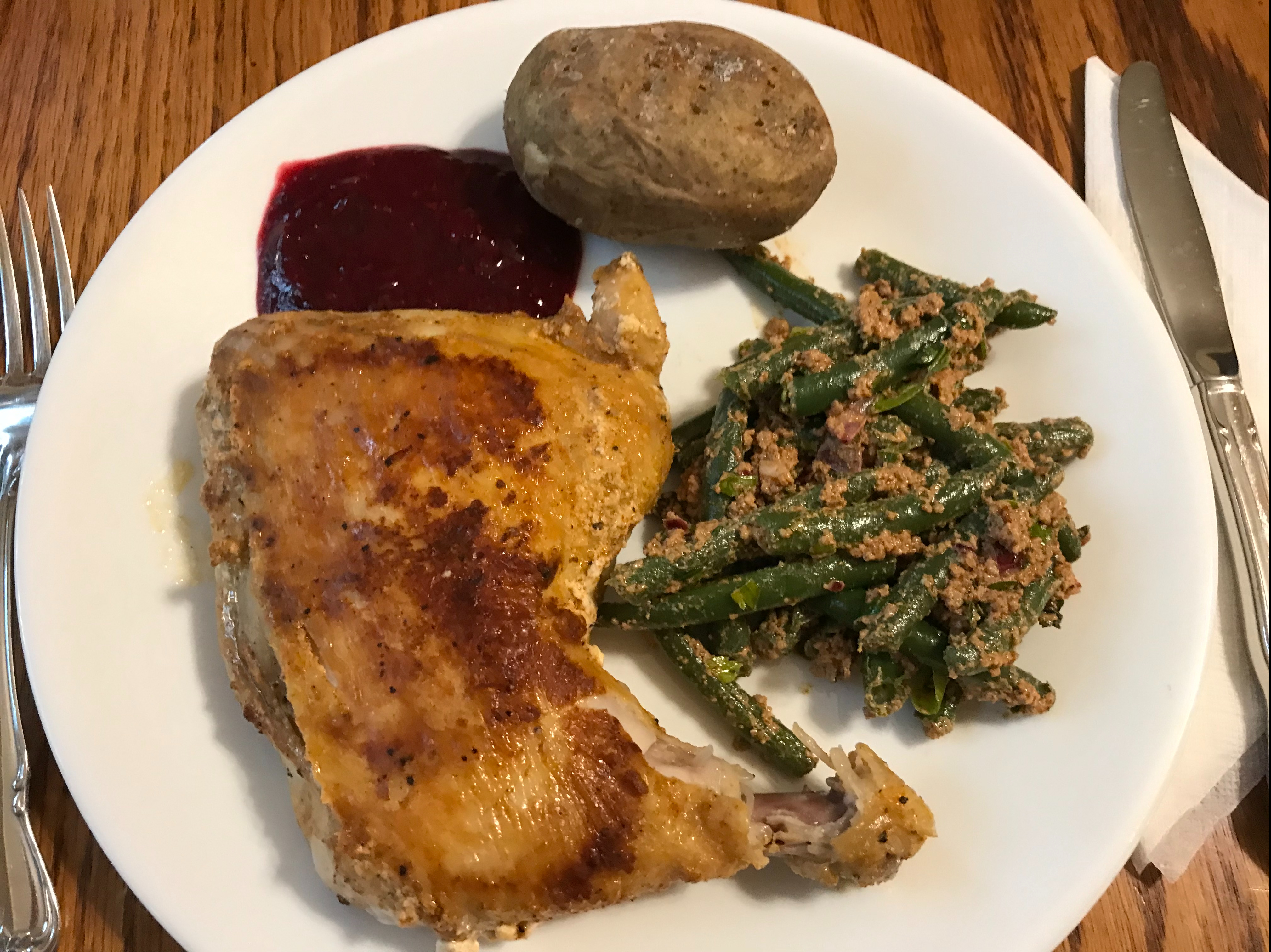
Menu: Chicken Tabaka with Tkemali (plum sauce), Lobio Satsivi (green beans with walnut sauce)
Source: 1000 Foods (pgs. 389 – 392)
In this case, the word Georgian does not refer to the British historical period of the 18th and early 19th Centuries. Nor does it refer to the state in the Southeastern United States known for its peaches. Rather, we are referring to the country of Georgia, located in the Caucasus on the eastern edge of the Black Sea, between Russia, Turkey, Armenia, and Azerbaijan. The terrain is mountainous, but the climate is moderated by proximity to the sea, creating a favorable environment for growing vegetables, fruits, and nuts.
Sour plums are the base of Georgia’s most popular sauce, tkemali. Ms. Sheraton refers to it as a sort of “Georgian ketchup” that can be used with pretty much anything. The sweet-tart plums are cooked and combined with garlic, fresh herbs, spices, and chili pepper for a fascinating mix of sweet, savory, and aromatic. Based on the recipes I looked at, it is not a major issue if the usual sour plums are not available. The sauce didn’t taste overly sweet, probably because the plums are cooked with the skin, where most of the sour flavor is. Another benefit of cooking plums with the skin is to release the red and purple pigments found there.
An interesting thing about the tkemali was how its flavor evolved over a few days in the fridge. At first the garlic and cilantro were the strongest flavors, but gradually it became fruitier and more minty. I’m not sure why this happened, but at all points the sauce was a flavorful accompaniment to the chicken. While adding a fruity sauce to vegetables is uncommon in the US, it is often added to green beans in Georgian cuisine (text, pg. 390). They already had walnut sauce here, but the idea sounds good. It even worked well with baked potatoes.
The chicken was less successful, but improved on the second day. A flattened whole chicken is rubbed with salt, garlic, hot paprika, and sour cream, placed in a skillet to fry, and another skillet is placed on top, weighted down with something heavy. Since I didn’t feel comfortable trying to flatten a whole chicken, I used thigh/drumstick quarters and weighted them down with a heavy pot half full of water.
For some reason, after the given amount of time plus a little extra, the chicken was nowhere near done. At first I was confused, since the quarters are smaller than whole chickens, but I think there is a scientific explanation. Water has a very high specific heat, meaning that it can absorb (or release) a lot of energy without its temperature changing much. That makes it a great industrial coolant, but probably not the best choice for weighting down chicken being cooked. Most likely, some of the heat that was supposed to be going into the chicken went into the water instead. This process might have worked if the water was heated first, but after some time in the oven to reheat the texture and flavor were much better.
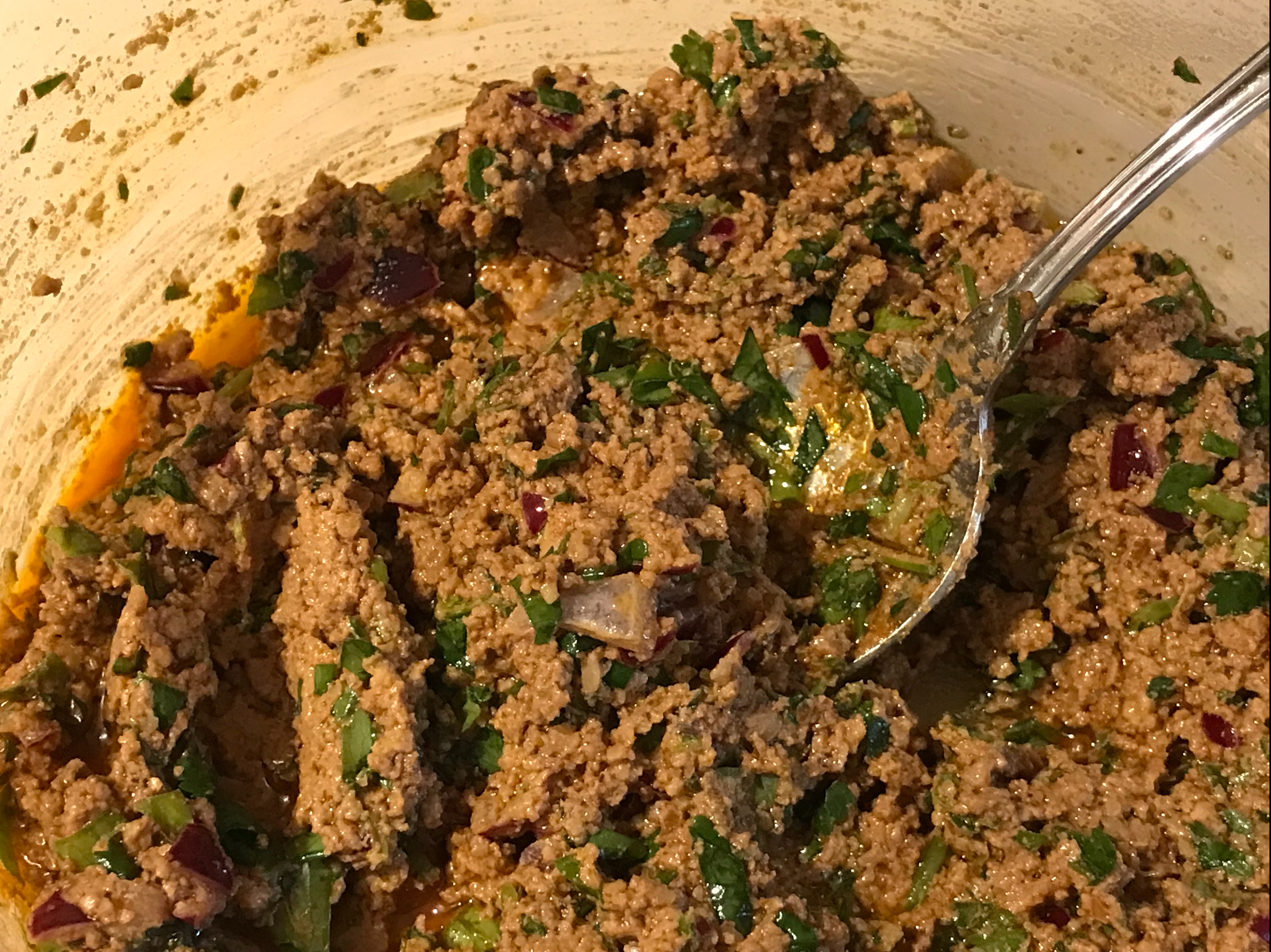
My favorite dish here was the green beans. After being lightly cooked, they are tossed with a sauce that resembles pesto without the basil. These types of sauces, where ingredients are chopped or ground together with a small amount of liquid, have a long history. Ancient Romans combined things like herbs, spices, dried fruit, vinegar, oil, and the fish sauce garum with a mortar and pestle to make thick, strongly-flavored sauces. Medieval cooks did much the same, but ditched the garum and often added almonds, walnuts, or bread crumbs as thickeners. At a time when people ate with their fingers, this all made perfect sense. Thinner sauces would be a lot messier.
Not cat food
The walnuts are dominant in the sauce, enhanced by garlic, cilantro, and paprika, which seem to be core flavors in Georgian cuisine. Vinegar and oil add another layer of flavor, and bits of chopped red onion and parsley add extra crunch and color. The sauce was amazing on fresh seasonal beans, and would probably make out-of-season frozen beans a lot more interesting. Ms. Sheraton suggests serving them with “southern fried chicken or barbecued beef and pork in the other Georgia.” (Pg. 389) This good idea becomes even better when compared to salads coated in the bacterial breeding ground known as mayonnaise.
Corn on the cob is a classic taste of summer. Or is it? Outside of the US, and even in some parts of this country, it is uncommon. This interesting quirk of regional cuisine was brought up at a family reunion recently. Relatives from New York and Virginia were especially excited about the fresh corn on the cob because it is harder to come by there. We were even told that if you imagine the worst corn in Wisconsin, you’re also imagining the best corn in New York. I was surprised, but it does make sense. Sweet corn becomes starchy very quickly after being picked, so getting it to market as soon as possible is essential. With cities more sprawled together on the East Coast, there are fewer places to grow corn and those places are farther from the markets. This means less availability and longer transport times, with the sugar turning to starch all along the way.
Meanwhile, one of the stereotypes about the Midwest is true. There really are cornfields everywhere. Though most of this is field corn destined to feed animals, particularly cows, sweet corn is widely grown. While there are big cities, they tend to be more spaced out and often have cornfields in between, making timely shipping feasible. Very good corn is available in supermarkets from late July through August, and farm stands sell corn picked only hours ago. Some will even peel it for you. Then you can go home, melt some butter while the corn cooks, and dig in. It does tend to be a bit messy, but that’s part of the fun. Enjoy it while the season lasts.
Another particularly seasonal treat is watermelon. Originating in Southern Africa, it gradually made its way north, eventually reaching Europe and the Americas. Over the centuries, it was bred to be larger, sweeter, and more brightly colored. The reasons for its popularity are clear. It’s sweet, juicy, and generally refreshing in hot weather. Prices are fairly low during the summer. Before it is cut, the rind provides protection against spoilage, another benefit in the hot Southeast and Midwest before widespread refrigeration. As mentioned in a previous post, watermelon is one of the best healthy desserts out there. But like summer, watermelon season eventually comes to an end. The expensive, out-of-season melons just don’t compare. Come fall, you’re better off switching to apples.
Clockwise from top: baguette, brioche, comte, brie, pain au chocolat (chocolate croissant)
About two months ago, I took a trip to France. We visited Paris, Normandy, Brittany, and the Loire Valley. Among the highlights were a tour of Paris with a colorful local guide, the Joan of Arc church in Rouen, storytelling by the tour director of his previous tours, the D-Day landing beaches in Normandy, and the Apocalypse Tapestry in Angers. There was a lot of amazing history packed into everything we saw, and that was just the northwest quarter of the country. Naturally there is a lot more to experience on a future trip, but for now, let’s consider the food.
French cuisine is highly regarded around the world and has been for hundreds of years. But even while people speak of classical haute cuisine or classically trained French chefs, there is no single “French” cuisine that covers the whole country. Like any other country with varied terrain and climate, food in France is regional. Each area has its own specialties and preferences, which have persisted even with modern travel and shipping. People in Normandy eat differently than those in Provence, but one food found throughout the country is the baguette.
For something seen as a symbol of French cuisine, the baguette is a relatively recent invention. The story goes that in the 19th century, bakers designed the thin loaves to bake faster, meaning that they didn’t have to get up quite as early to prepare for the breakfast rush. The formula is straightforward: it’s a lean dough (meaning no added butter, oil, milk, or eggs) made of just white flour, water, and yeast. Actually making it is the tricky part, as demonstrated on The Great British Baking Show, but bakeries across France have mastered it. In less than 200 years, baguettes went from something that didn’t exist to a presence in every mini-grocery, café, and hotel breakfast spread. And why not? They’re plain but comforting, and very versatile.
Brioche is completely different. The dough is enriched with butter and eggs and lightly sweetened, which creates a softer texture and finer crumb. Historically, when the price of bread varied dramatically depending on the type of flour and what was added to the dough, it was a luxury or holiday bread. As prosperity increased, brioche became more popular, although it doesn’t seem to have surpassed baguettes and croissants. Of the four hotels we stayed at, they all had the latter two on the breakfast buffets, but I only remember seeing brioche at one, though it’s entirely possible that I missed it at the others.
Croissants are a quintessentially French pastry, but may not have come from France at all. One story is that they were first made in Austria to commemorate the failed Siege of Vienna by the Ottomans in 1683. After the Turkish army was driven off by the forces of King Jan Sobieski of Poland, a new pastry was created in the shape of a crescent, found on the Ottoman flag. Perhaps there was some satisfaction in eating the symbol of their enemy. But however they originated, croissants are made with a yeast puff pastry, where thin layers of yeasted dough are layered with butter, producing a rich, flaky delight. Regular croissants are delicious enough, but adding chocolate to make pain au chocolat takes them to a whole new level.
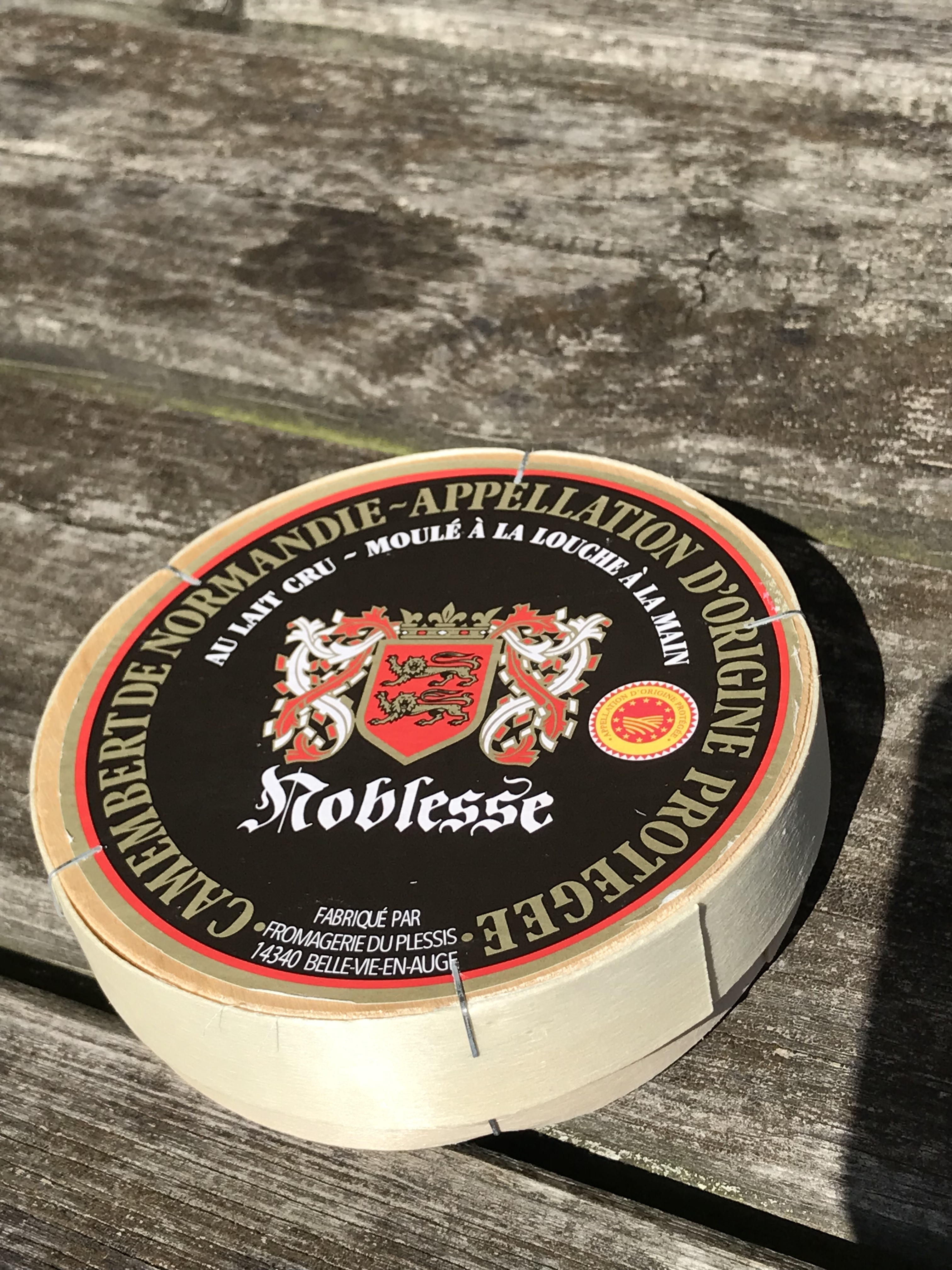
While I loved the various breads and pastries, I was less impressed with the cheeses in France. Two of the most famous are Brie, from the Ile de France region around Paris, and Camembert, from Normandy. Both are semi-soft cheeses with edible rinds, authentically made with unpasteurized cow’s milk. Because US law does not allow the production or import of raw milk cheeses aged less than 60 days, true Camembert and most Brie are not available stateside. Many connoisseurs bemoan this, but after tasting both cheeses, I struggle to understand what all the fuss is about.
Normandy is famous for its dairy products, as is neighboring Brittany. Grass thrives in the rainy, mild climate, and apples grow much better than grapes. With all its farm fields and cows, the countryside felt very familiar, almost Midwestern, except with more wheat, potatoes, and vegetables than corn. And more medieval churches. You don’t see too many of those in the US. But dairy-heavy food is another story entirely. Cheese toasted on sandwiches, especially the ham and cheese croque monsieur, buttery pastries and cookies, and salted butter caramels are definite cousins to what can be found in Wisconsin.
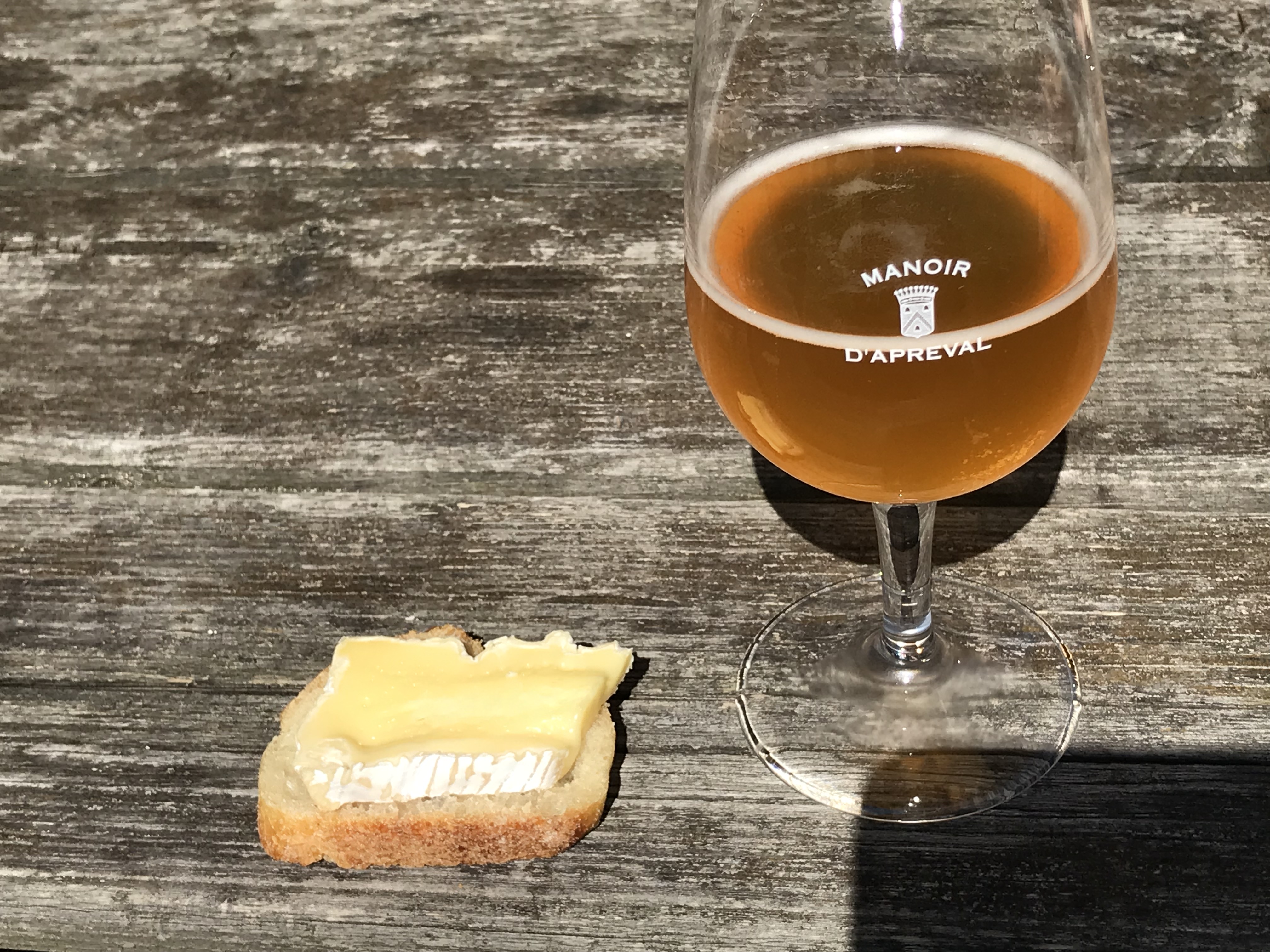
On our first day in Normandy we had an interesting tour of an orchard/cider production facility. The guide talked about how the fermentation process worked, how juice vs. sweet vs. dry cider was made, and how cider could be distilled and aged, producing calvados. This was followed by a cheese and cider tasting. We began with the mildest samples: camembert and sweet cider. In theory, camembert is supposed to be a mushroomy delight, according to Ms. Sheraton. It wasn’t necessarily bad, but I didn’t enjoy it either. It was an ok snack with a bit of bread, but the flavor, though mild, definitely had some “funky” undertones, for lack of a better word. The texture also felt a little off. Part of this might be what I’m used to, but I didn’t care for the camembert or the other two cheeses (I can’t remember the names at the moment).
Markings on container designate authenticityCamembert and cider
The cider was much better; very light and sweet. Fermentation is a chemical reaction where sugars are turned into alcohol. The longer the process continues, the stronger and drier the cider becomes. For sweet cider, the apple juice is only lightly fermented, resulting in an alcohol content of about 2%. Dry cider, which we didn’t taste, is about 5.5%, about the same or slightly stronger than most beer. Pommeau is sort of like apple “wine,” and calvados is a distilled apple brandy. I didn’t care for either of those. The alcohol content made it hard to taste the apple flavor, and was uncomfortably strong for the calvados.
I don’t think the cheese agreed with my stomach either. The disagreement was not enough to make me sick, but I did feel a bit queasy. It’s possible that was just my imagination based on what I was expecting, but I prefer cheese without that effect. Supposedly cheeses with pasteurized milk have less flavor, but if funky/mushroomy is a flavor the process destroys, so be it. A nice cheddar from the local farmer’s market beats the famous Camembert de Normandie, hands down. The same is true with the Brie de Meaux found on one of the breakfast buffets. The Comte cheese from the same buffet was a lot better; much firmer, a bit saltier, and a tasty non-funky bit of morning protein to stick in a baguette.
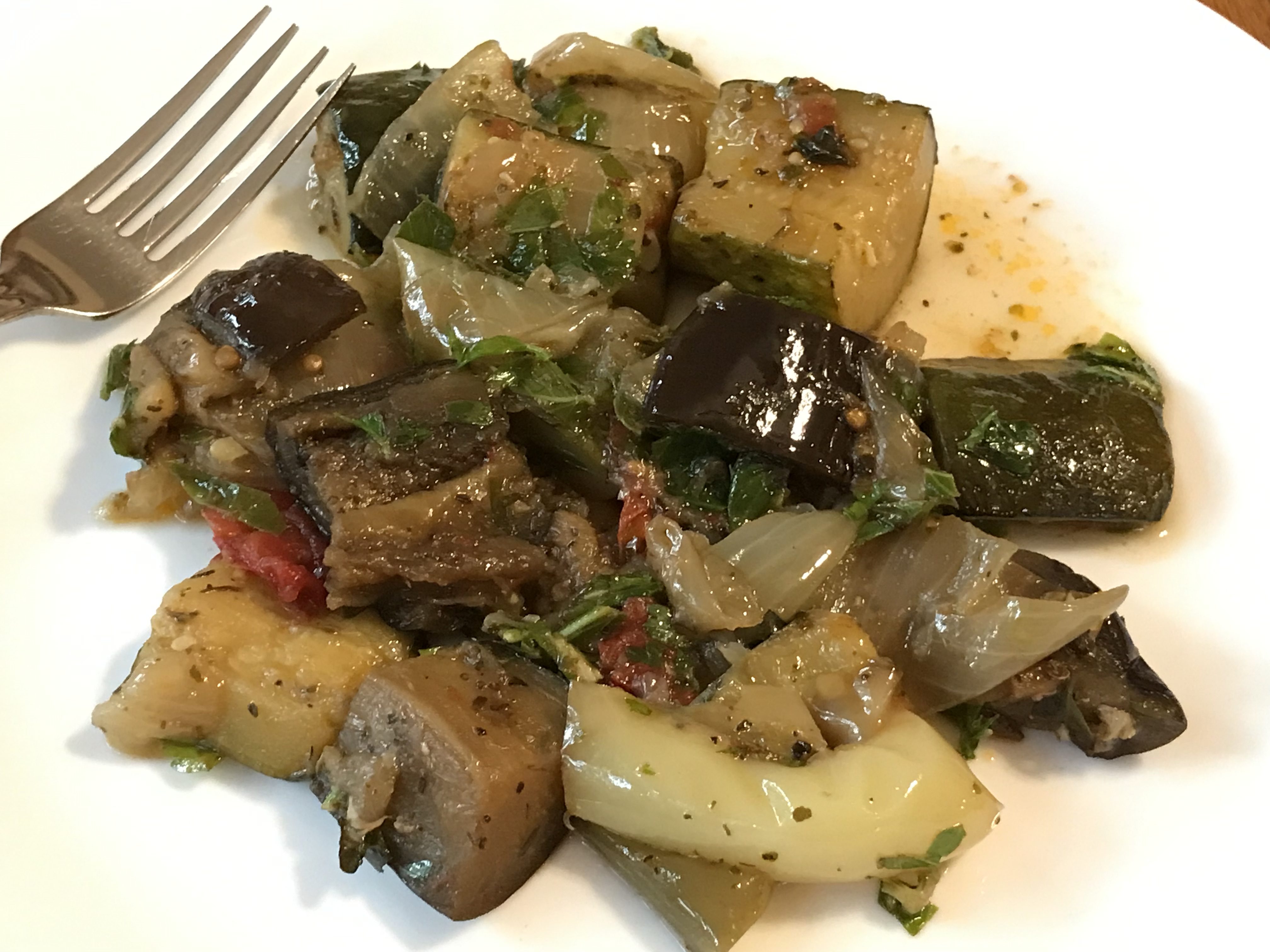
Ratatouille is a hilarious movie. It is also a delicious demonstration of Southern French history in a single dish. The garlic, onions, parsley, and olive oil were all available from the time Rome controlled the region, if not before. During the Middle Ages, dukes and counts in Southern France were as wealthy and powerful as the king in Paris, if not more so. Much of this wealth came from the area’s agricultural productivity, but trade was also important. Eggplants arrived via trade with the Arab world and became widespread around the Mediterranean. Basil also came from the East. The peppers, tomatoes, and zucchini came from the Americas before becoming traditional in Provence.
Clafoutis is sort of like a cross between a cake and a custard. It begins with a batter similar to crepe batter to which fruit is added. Cherries are the most popular, but are not the only option. Unlike in cherry pie or black forest cake, sweet cherries are used. What’s most interesting about clafoutis is that traditionally, the cherries are unpitted to keep the red juice from running into and staining the cake. Supposedly the pits provide a bit of almond flavor due to compounds related to cyanide, which sounds scary but is in such small quantities that it’s not an issue. In fact, the quantities were so small that I couldn’t taste the almond flavor at all, but it wasn’t really necessary. The lightly sweet, soft crepe/custard with just a hint of vanilla was the perfect foil for the stronger flavor of the cherries. Not getting poisoned was nice too.
Southeastern France has a lot in common with the northwest corner of Italy, and it’s not just that they’re both called their country’s Riviera. The neighboring regions share a similar climate and terrain, and even share a lot of history. In 218 BC, Hannibal crossed the region as he marched his army from Carthaginian territory in Spain to Italy. While he is most famous for marching his army and elephants over the Alps, there is an interesting story about when he crossed the Rhone River in Provence. Modern day France was mostly occupied by the Gauls, who were Celtic peoples organized into chiefdoms. Most of the chiefs felt more threatened by Rome than by Carthage (as Rome had recently conquered other Celtic peoples in the Liguria/Piedmont region) so they aided or tolerated Hannibal’s army. The problem was that there was a hostile group near a strategic river crossing and a Roman army was on its way to try and ambush him. A bit of trickery bought Hannibal enough time to get his army across, but when the elephants found themselves on specially-built rafts they freaked out and jumped off and/or capsized them. Fortunately for the Carthaginians, elephants are actually quite good swimmers and all made it across. By the time the Romans arrived, Hannibal and his army had disappeared into the Alps.
Over the course of the war, which lasted from 218 to 202 BC, Rome conquered the French Riviera and most of Spain. It’s not clear how many grapevines were already grown in the region, but the Romans certainly introduced new varieties and encouraged their cultivation, along with olive trees. From Provence (the name came from the Latin provincia) vines spread northward, particularly once Julius Caesar conquered the rest of Gaul (modern France) in the 50s BC. Olive trees, though restricted to the coast that far north, were also introduced and became important to Provence’s economy.
Pesto-type sauces were part of Ancient Roman cuisine and basil appeared in the Medieval Era, but what’s interesting about this soup is that most of the ingredients deemed essential originated in the Americas. White beans, green beans, potatoes, and tomatoes were all introduced after Columbus, and the latter two took a few centuries to catch on. Fortunately they did, because this soup is a balanced meal in a bowl. There’s starch in the potatoes, protein in the beans, vitamins and minerals in the vegetables, and a bit of fat from the olive oil.
Ms. Sheraton explains that as long as there are both types of beans, potatoes, and tomatoes, the other vegetables can vary based on what’s available. Since it sounded like a chef’s choice kind of dish, I created my own plan from the general description. Onions, tomatoes, and white beans went in first, with enough water to cover by about an inch. For meatless vegetable soups it is important not to add too much water to avoid diluting the flavor. I added the potatoes about halfway through, then added the zucchini and green beans in the last few minutes to keep them from overcooking. The pistou, which is like a French pesto without pine nuts or walnuts, is added to the individual bowls at serving time.
The soup was an amazing taste of summer. While the ingredients are generally available out of season, they both taste better and are more affordable at their summer peak. Tomatoes are especially seasonal, since shipping them any distance is much easier when they are underripe. At local farm stands they are ripe and red all the way through, all the vegetables are fresh, and the basil is my own. It thrives during the summer but does not do well when moved inside. I’ve tried that in the past without much success. It’s better to make maximum use of it now.
In cold climates, the first spring vegetables and greens are particularly appreciated. Often, they appear around Easter as edible symbols of renewal. Seeing the landscape coming back to life after a long winter seems like the perfect celebration of the Resurrection. This does make the idea of celebrating Easter in the Southern Hemisphere, where it occurs during the fall, a little bit strange. My grandparents once told me that when they were in Australia one year for Easter, there were chrysanthemums on the altar at mass. While I understand why the seasons are reversed south of the Equator, thinking about a fall Easter with harvest decorations or a Christmas summer barbecue is still somewhat mind-bending.
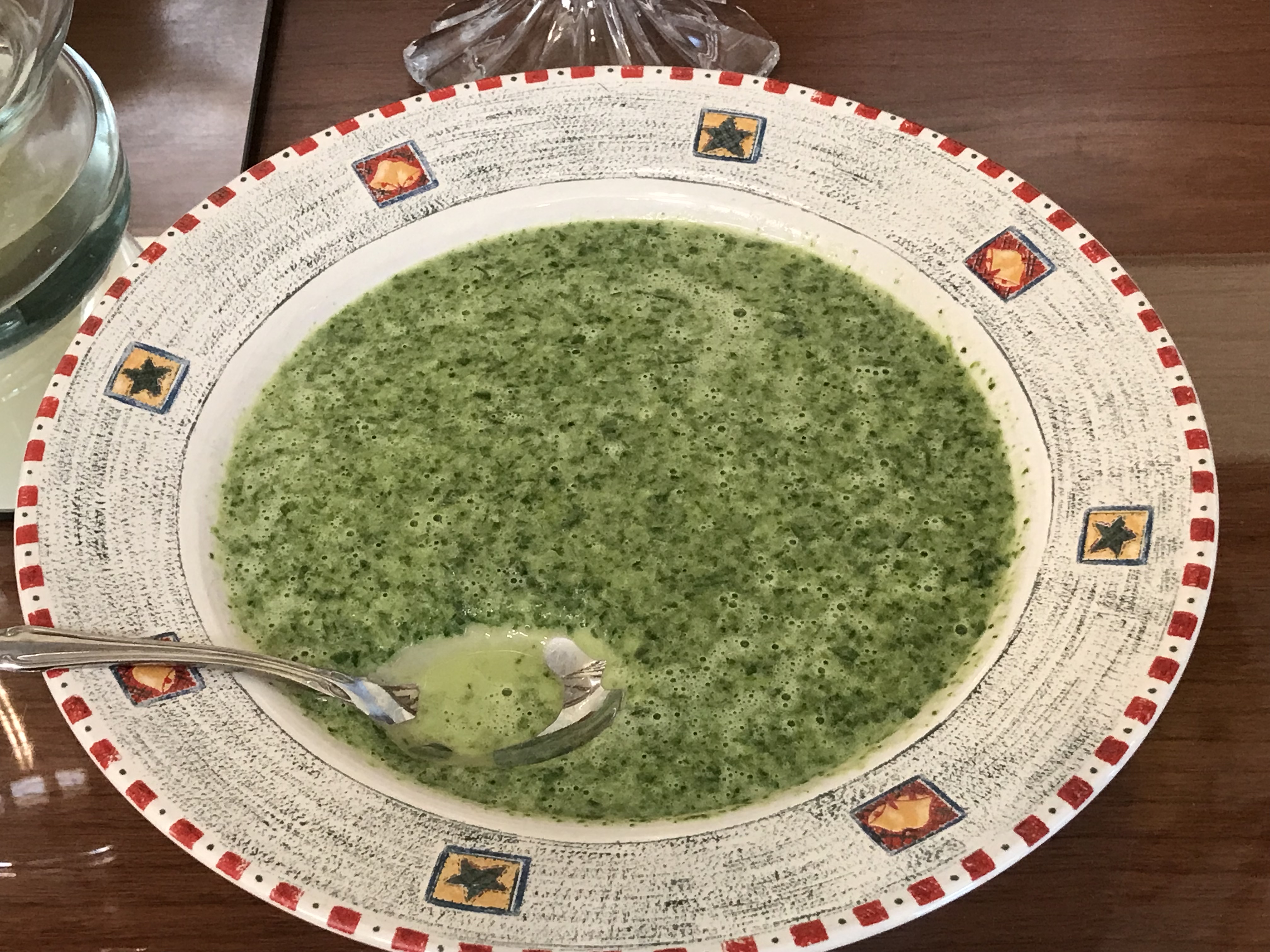
Anyway, back to green herbs. Traditionally, seven-herb soup was a German dish for Holy Week, right before Easter. Historically, fasting rules for Lent were a lot stricter than today. In early Christian communities, meat, fish, eggs, and dairy products were all forbidden. Fish was permitted from the Early Middle Ages onward. While this may seem surprising given the relative cost of fish today compared to most types of meat, it makes sense in the historical context. When fasting rules were first established in the later Roman Empire, most Christians lived around the Mediterranean, where grazing land was limited but fish was relatively abundant. As a result, fish was cheaper than meat.
This changed once the people of northern Europe became Christian. Here there was plenty of land to pasture cattle and forests where pigs could forage. This made meat and dairy products more abundant and thus cheaper than they were further south. In many cases, meat was even cheaper than fish. Another issue was that north of the area where olive trees grew, people relied on lard, butter, and suet as their main cooking fats. This could be why, from the 15th Century onward, restrictions against dairy products (and eggs) during Lent and on Fridays began to be relaxed.
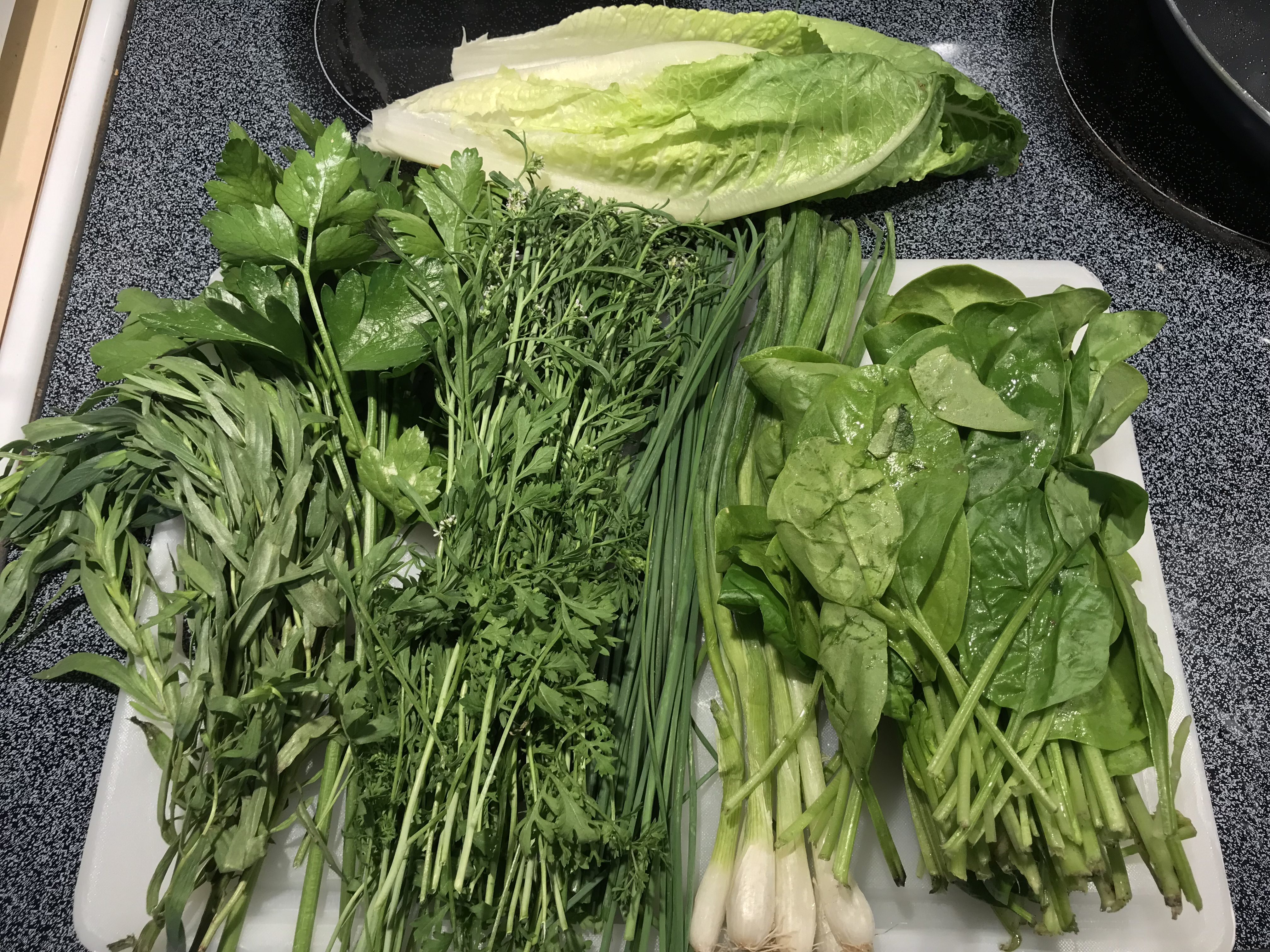
The seven “herbs” I used were parsley, tarragon, watercress, chives, scallions, spinach, and lettuce. Cooked and pureed with vegetable broth and enriched with potato and cream, it was very fresh tasting. The only issue I had was that since I had never cooked with watercress before, I didn’t realize that the tougher stems needed to be removed, resulting in tough bits in the soup. Personally, I liked the extra texture they provided, but they weren’t supposed to be there.
After Lent is over, an option is to use chicken or meat broth and add meatballs to the soup. Even though I made this in July, I stuck with the traditional Holy Week version to let the herbs shine. Served with some multigrain crackers, it was a light but complete meal, perfect to celebrate spring or summer.
Here’s a cherry recipe I had more success with. Rodgrod med flode, which is apparently very difficult for non-Danish speakers to pronounce, is a translucent dessert made with red summer fruit. In Denmark red currants, sometimes in combination with other fruits, are the most popular, but they are a lot harder to come by in America. At one point, it was actually illegal to plant currant bushes due to concerns about them carrying white pine blister rust, which threatened the logging industry. While the bans have since been repealed, currants never became popular here and are usually only available in jam form.
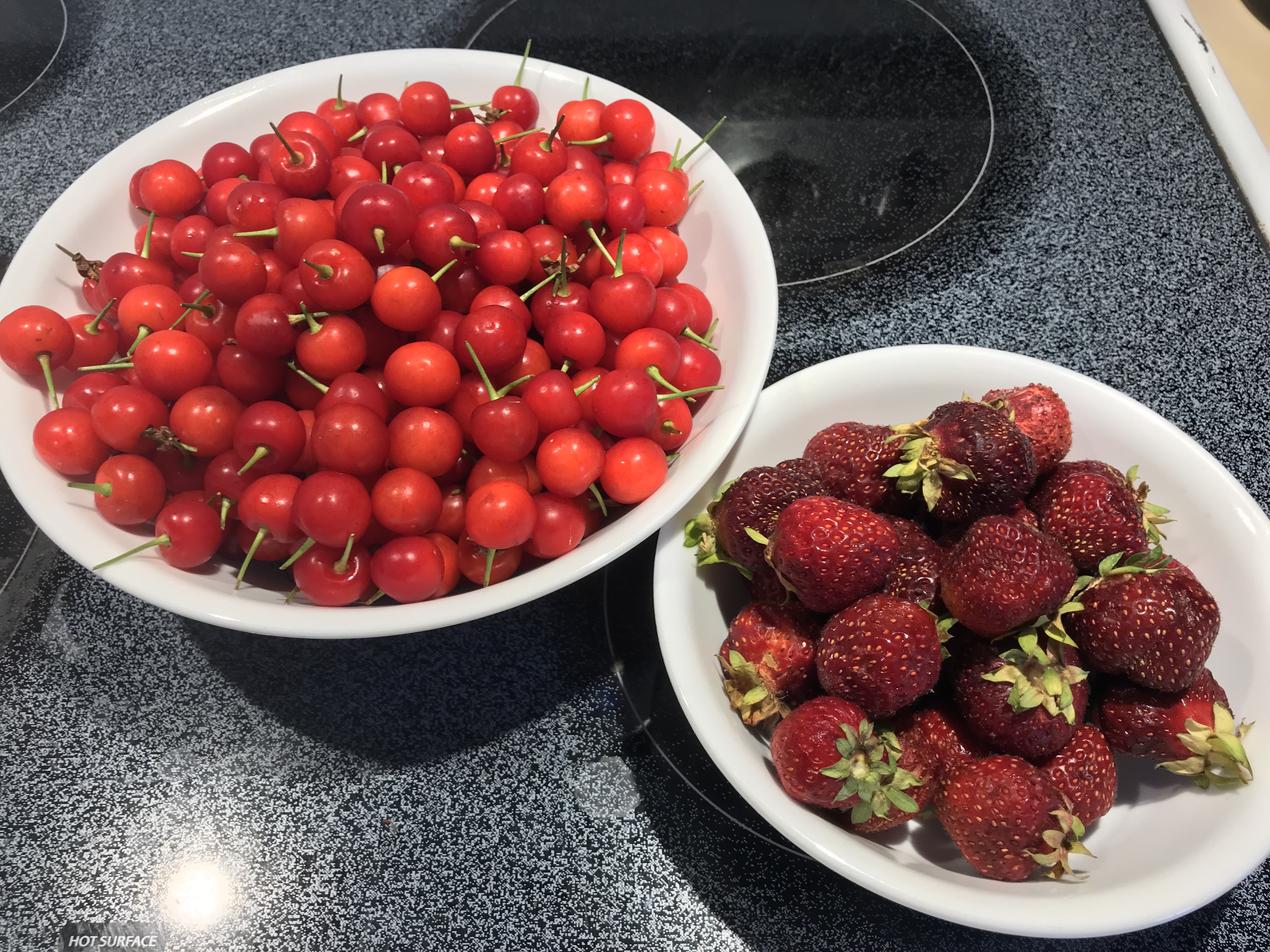
The raw ingredients
Since red currants are often supplemented by other berries or cherries, I combined four parts tart cherries with one part overripe strawberries and a bit of black currant jam. Everything is briefly simmered, strained for juice, sweetened, and thickened with cornstarch. The texture is similar to gelatin but smoother, with a garnet-like color and shine. It tasted kind of like cherry pie, but the strawberry flavor was there too. A bit of whipped cream balanced out the sweet-tart pudding and added a nice contrast in color. If I find some currants, it would be interesting to try again and compare.
In the meantime, cherry season is over. There are several bags of pitted frozen cherries and jars of jam in the deep freeze, ready for experimentation, and the robins have finished off those left on the tree. In the process, they have distributed the cherry pits over a surprisingly wide area. If conditions are right, maybe some of those seeds will grow into new trees. Cue the music to “The Circle of Life.”
There are two main types of cherries. The type sold seasonally in supermarkets and eaten fresh are sweet cherries, such as Bing or Rainier. They tend to be larger, firmer, and often (though not always) darker in color. But it is tart cherries that we are focusing on today. While they are too sour to eat on their own and too soft to ship long distance, sour varieties like Montmorency and North Star can be preserved effectively. These are the cherries that, combined with sugar, give cherry pies and jams their distinctive flavor. They also freeze well.
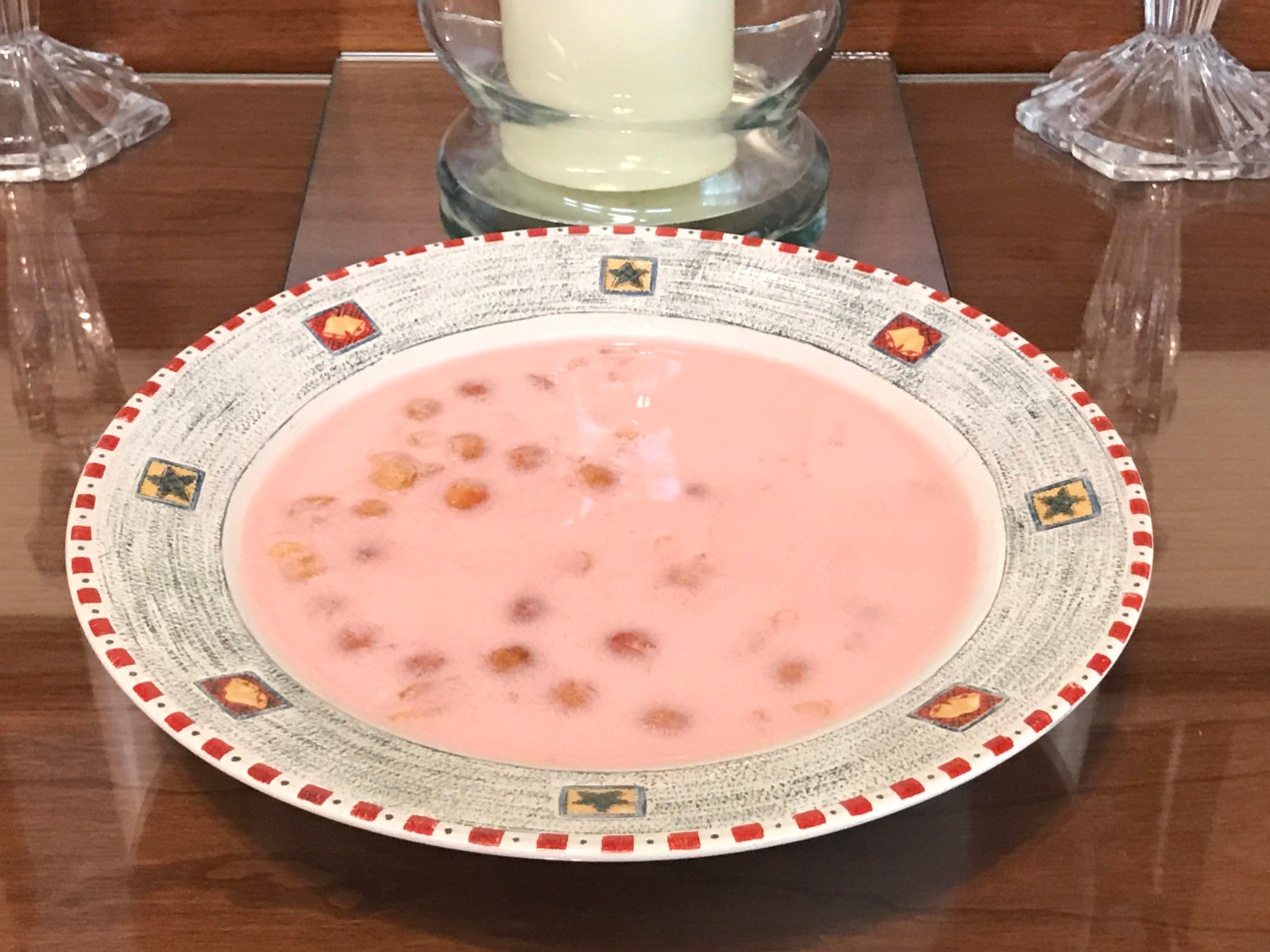
This year, I was able to harvest a bumper crop from the tree in the backyard, even without being able to reach many of the branches. Normally birds eat all the fruit before it is fully ripe, but this year the tree was so loaded they couldn’t eat them all. After making a pie and a batch of jam, I took advantage of the bounty to try a few new recipes. The most unusual was a Hungarian recipe for sour cherry soup, sweetened with sugar, flavored with cinnamon, and thickened with sour cream.
It sounded good, but to be completely honest, I didn’t care for it. It wasn’t bad and the cherry flavor came through well, but the particular recipe was a bit over sweetened and rather thin. I did find another recipe with less sugar and water that might be worth trying in the future, but we’ll see. With all the other possibilities out there, I’m not sure if I would actually make this again. But it was worth a try.
In temperate climates, strawberries are one of the first fruits to ripen each season. While modern farming and shipping methods have made them available year-round, the fresh, ruby-red berries that come onto the market in early summer are special. Because fully ripe strawberries don’t ship or keep well, they are usually either flash-frozen or picked underripe for grocery store shelves. When the aromatic beauties appear at farm stands and farmers’ markets, people still go crazy for them. Many are eaten plain as a delicious, healthy snack or dessert. To preserve the bounty, they can be turned into jam (freezer jam is easy and maintains the aroma) and freeze very well. In fact, for winter desserts and smoothies, thawed frozen berries usually have a better flavor than out-of-season fresh berries.
Of course, there are many ways to take advantage of the summer berries while they last. Every year I make at least one chocolate-strawberry pie with a cream cheese filling. Not only is it delicious, but it has an important virtue as a summer treat: the oven only needs to be turned on for long enough to bake the pie shell. For the same reason, if serving strawberries with pound cake, I’ve learned not to bake my own. During the winter I can use the oven to my heart’s content, but during summer the hour-long baking time almost inevitably leads to complaints. Luckily Sara Lee pound cakes are readily available in every grocery store, don’t heat up the kitchen, and have a quality level to complement the exquisite fruit.
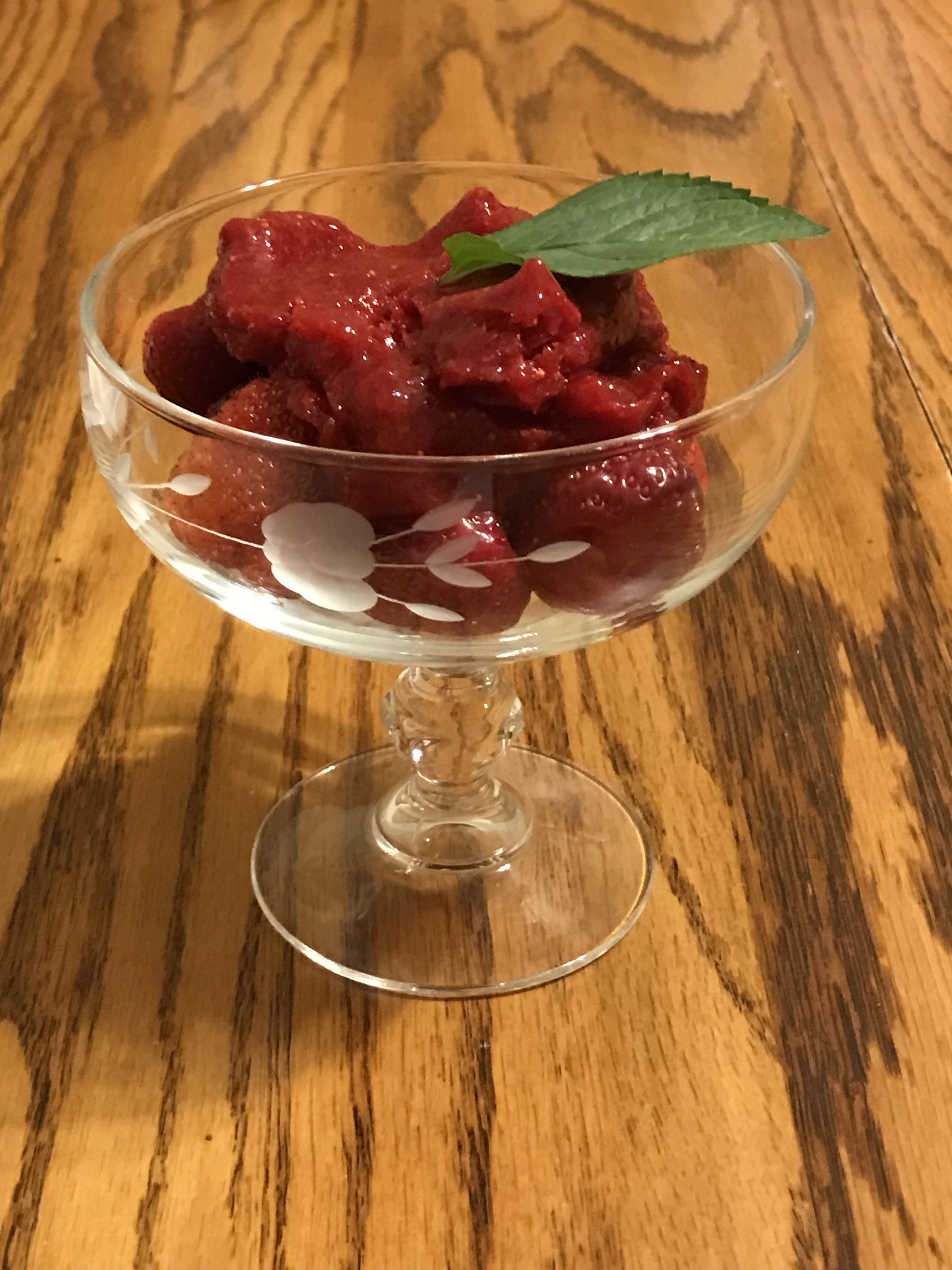
This year, in addition to the aforementioned pie, I tried a new recipe suggested by Mimi Sheraton. Fraises au jus glace (otherwise known as strawberries Ali-Bab) is simple to make, just hull the strawberries, puree a few of the least pretty with a bit of sugar and lemon juice, partially freeze the mix, then toss with the rest of the berries. Adding a bit of orange liqueur to the frozen mix is optional, but I opted not to use any for a pure strawberry flavor. Good quality strawberries are essential, as pointed out by Ms. Sheraton.
When the best strawberries are in season, this recipe was an excellent way to let them shine. Enhanced with just a bit of sugar (a few teaspoons among multiple people), there was nothing to overpower them, and the addition of the frozen puree as a “sauce” was a nice touch for summer. Between the flavor and very limited sugar, this will definitely make it into my annual recipe rotation.











 Feasting Through Time