Arter med Flask - Swedish yellow pea soup
food history, recipes, soup, swedish cuisine

Swedish Thursday Night Special: Yellow Pea Soup and Swedish Pancakes with Lingonberries (with soup recipe)

Information is found in 100 Foods to Eat Before You Die pages 366, 371 – 372, and 340 – 341, soup recipe is my own

            Sometimes, it’s hard to figure out where food traditions come from. According to legend, the Swedish tradition of eating yellow pea soup on Thursday nights came about because on one Thursday night in 1577, that’s how King Eric XIV was poisoned, which raises a few questions. Is eating pea soup a way to memorialize a good king, or the assassination of a bad one? Why was a king eating pea soup anyway? In most countries that was commoner’s fare. Kings and princes, especially in northern Europe, favored piles of meat and fish. Perhaps his doctor recommended a lighter diet, which would add a layer of irony to the story. And how did pancakes become the traditional dessert?

            Regardless of how it happened, yellow pea soup and pancakes are still a Swedish Thursday night tradition, even if not every week. And why not? The soup is a simple mix of dried yellow peas, water, onions, salt, dried thyme, and a little ginger, with optional pork. The recipe on the bag suggested pork ribs, Mimi Sheraton mentioned cured pork in her description on page 366 in 1000 Foods to Eat Before You Die, so I used a smoked ham shank. It added an incredible richness of flavor to the soup, though it would still be good without it.

Arter med Flash - Swedish yellow pea soup
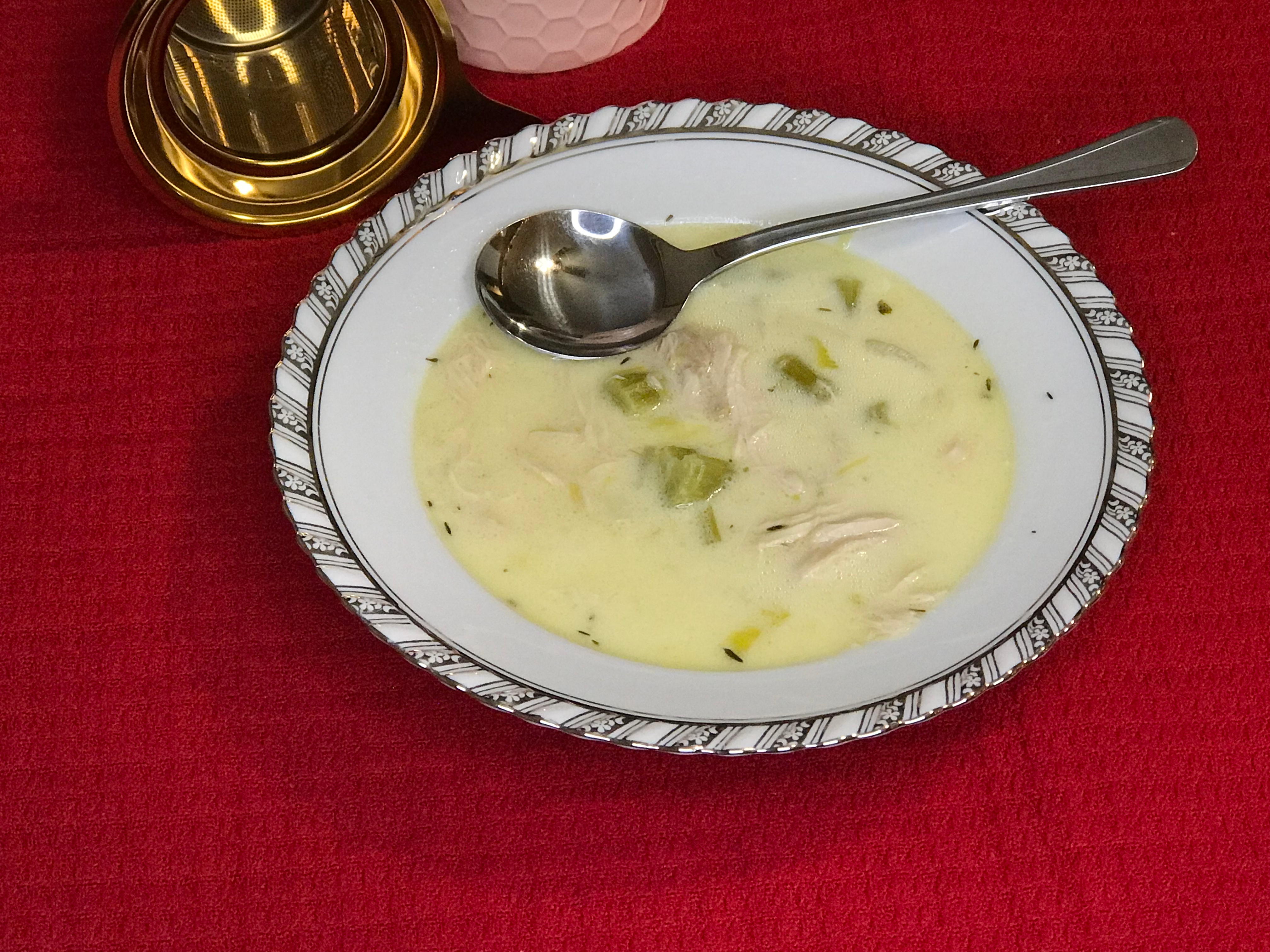
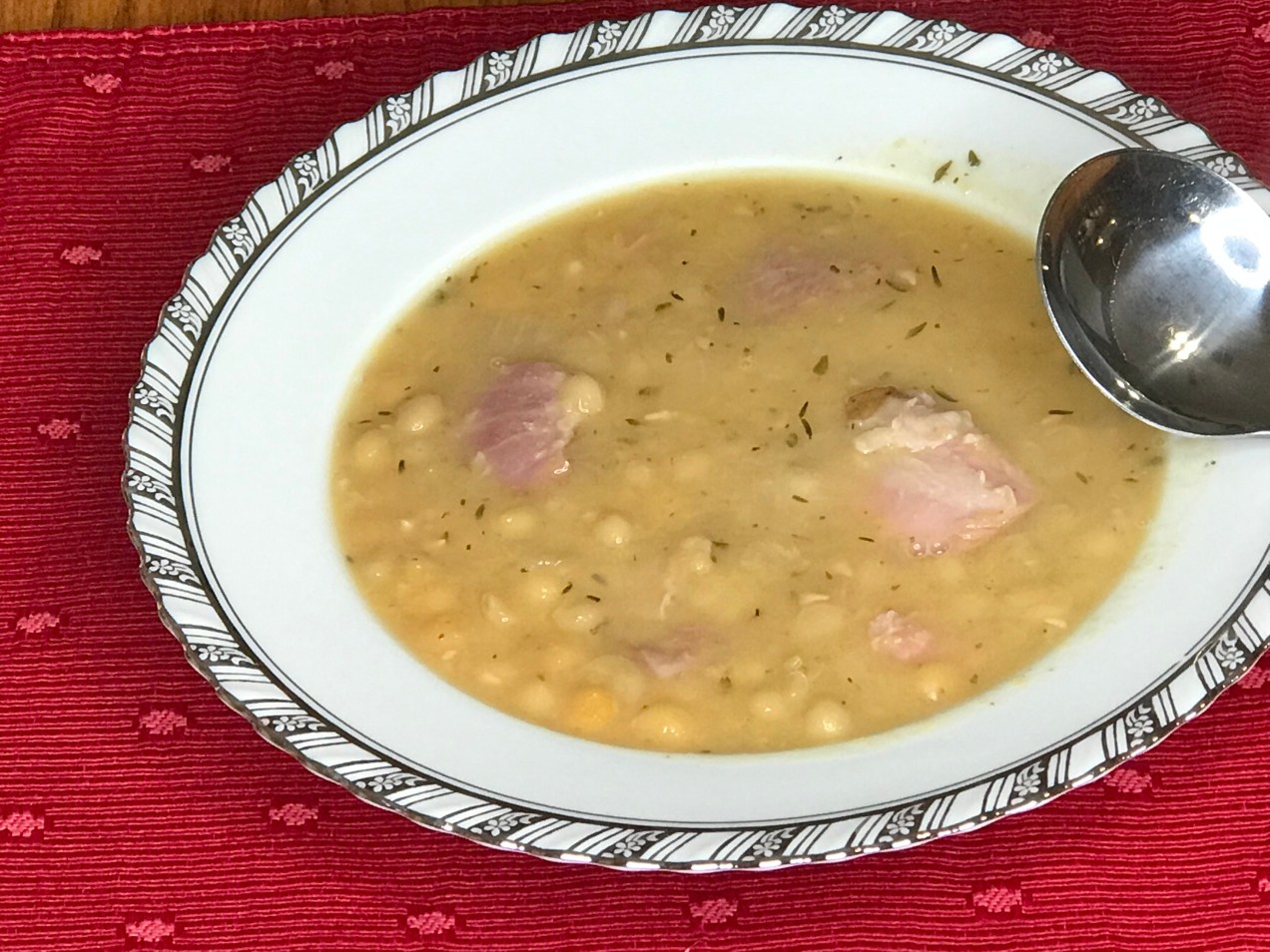
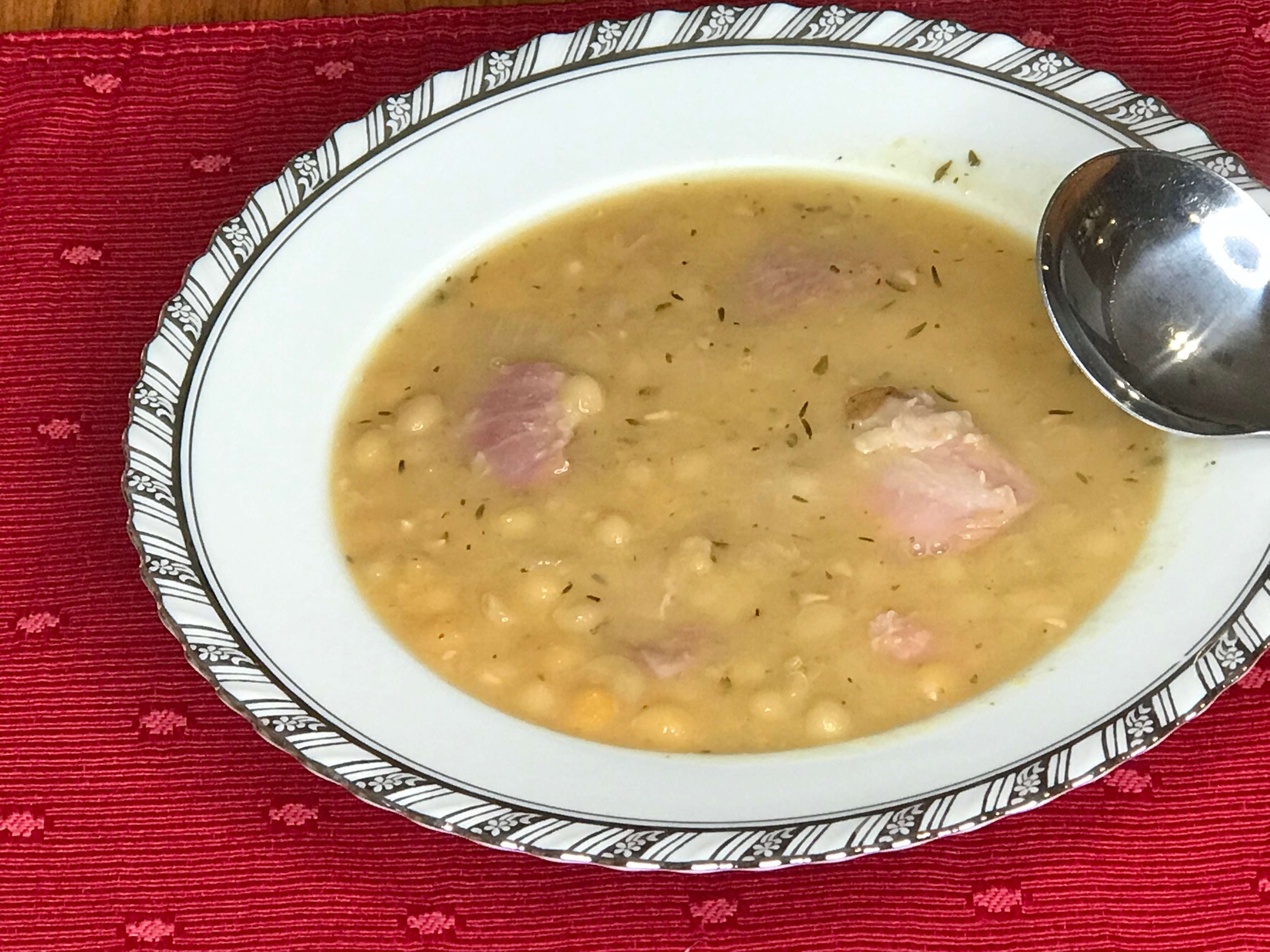
Yellow pea soup with ham

            An interesting thing about the dried peas, aside from being yellow when many Americans are more used to green, is that they aren’t hulled or split. They take a bit longer to cook, but give the soup a much better texture and appearance. The flecks of thyme and ham pieces also improve the presentation. The soup was delicious as is, though a few rye crisps certainly wouldn’t hurt.

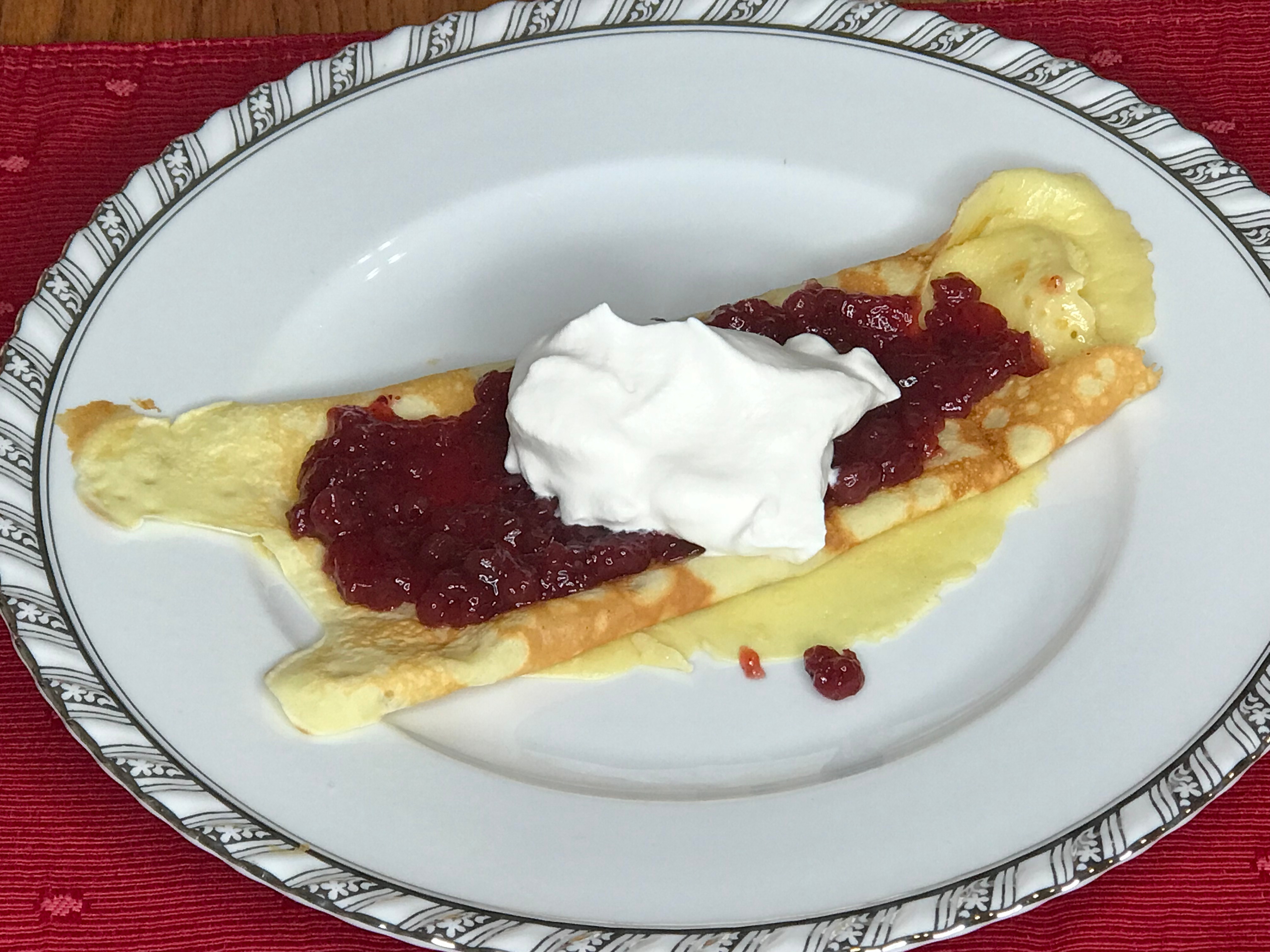
            I had a slight problem with the Swedish pancakes. Because the batter is so thin, making multiple small pancakes at once wasn’t working. They just ran together, making one big crepe-like pancake. Since browning is more important, I rolled with it. The finished pancakes are served with lingonberry jam and often whipped cream.

            Lingonberries are small, very tart berries native to Scandinavia. The best way to describe their flavor is about two thirds cranberry, one third sour cherry. Preserved lingonberries have a texture sort of like cranberry sauce, but the berries have softer skins. Jars of lingonberry preserves are available at most stores with an international aisle, and at some larger supermarkets next to the jam. The whole dessert, with lightly browned pancakes, reddish-purple lingonberries, and off-white whipped cream, is just beautiful.

Platter - Swedish pancakes with Lingonberries
Whipped cream is optional, but highly recommended with Swedish pancakes and lingonberries

            Here’s how to make the soup. You will need:

  • 1 lb (or 500g, which is fairly close) dried yellow peas, soaked overnight
  • 1 package (2 pieces, roughly 2 lbs) smoked ham shanks (optional)
  • 1 medium yellow onion, finely chopped
  • 1 tbsp salt (reduce to 1 ½ tsp if using the ham shanks)
  • 1 tsp dried thyme
  • Dash powdered ginger
  • Rye crisps or rye bread to serve, optional but recommended
  1. Combine all ingredients in a pot with 8 cups of water and bring to a boil.
  2. Reduce heat and simmer, with the lid tilted, until peas start to fall apart and ham shanks are tender, about 1 hour. Stir a few times toward the end of cooking.
  3. Turn off the heat, remove the ham shanks to a cutting board, and cover the pot.
  4. Once the ham shanks have cooled enough to handle, pull meat from the bone and cut into bite-sized pieces. Return ham chunks to pot.
  5. Bring soup back to a simmer over low heat, stirring frequently.
  6. Ideally serve with rye bread or crisps, even more ideally followed by Swedish pancakes.

As always, subscribe for free for recipes and trivia, sent right to your inbox. And if you want to buy me another jar of lingonberry preserves, I would be most grateful.

One-Time
Monthly
Yearly

Make a one-time donation

Make a monthly donation

Make a yearly donation

Choose an amount

$5.00
$15.00
$100.00
$5.00
$15.00
$100.00
$5.00
$15.00
$100.00

Or enter a custom amount

$

Your contribution is appreciated.

Your contribution is appreciated.

Your contribution is appreciated.

DonateDonate monthlyDonate yearly
    Standard
    "Sea Bass" in wine with saffron
    food history, italian cuisine

    Cook’s Tour of Italy Menu 56 (Pgs. 178 – 180): “Sea Bass” Menu Near Ancona

    Italian Marches fish dinner

    Region: Umbria/Marches

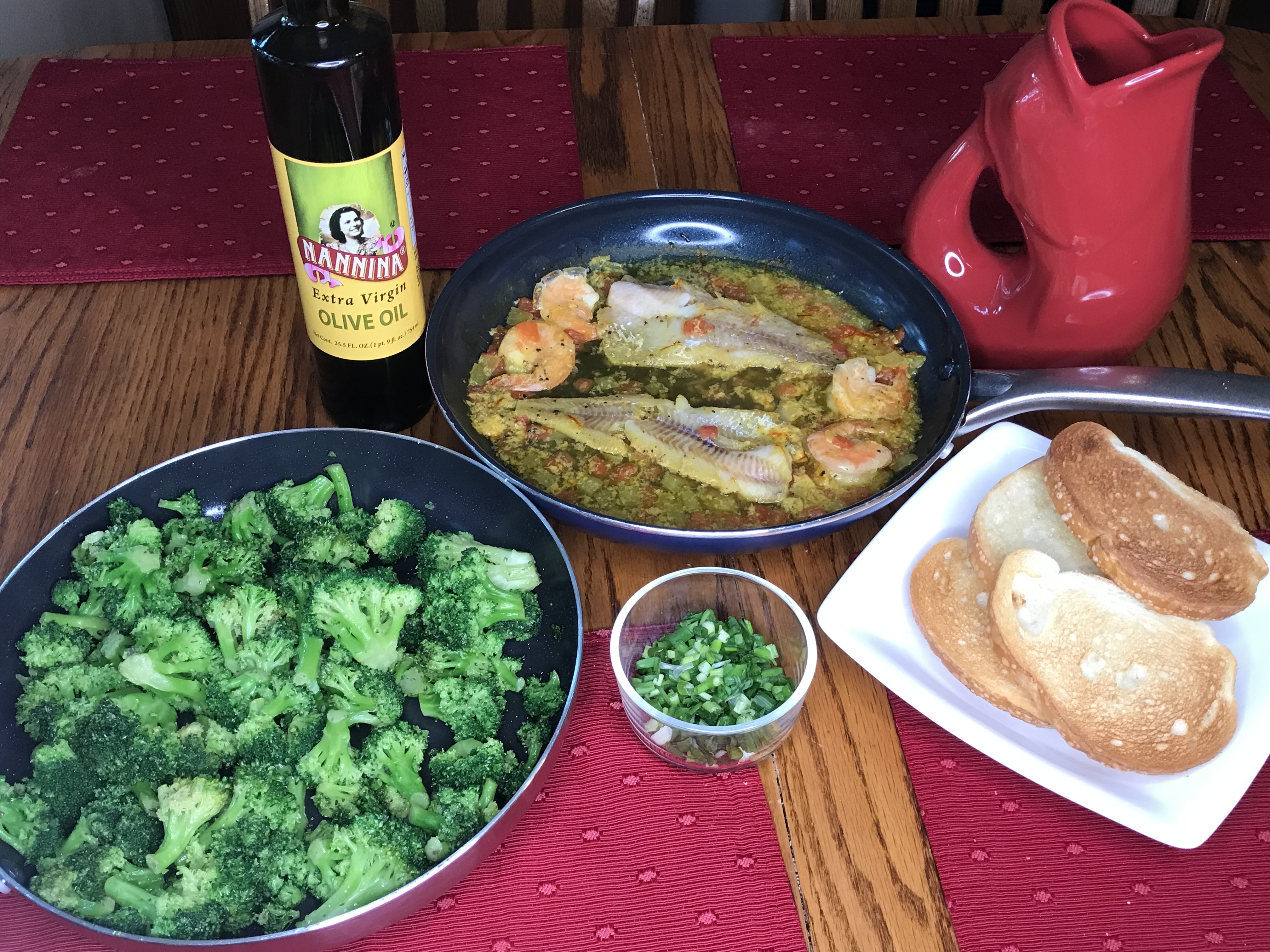
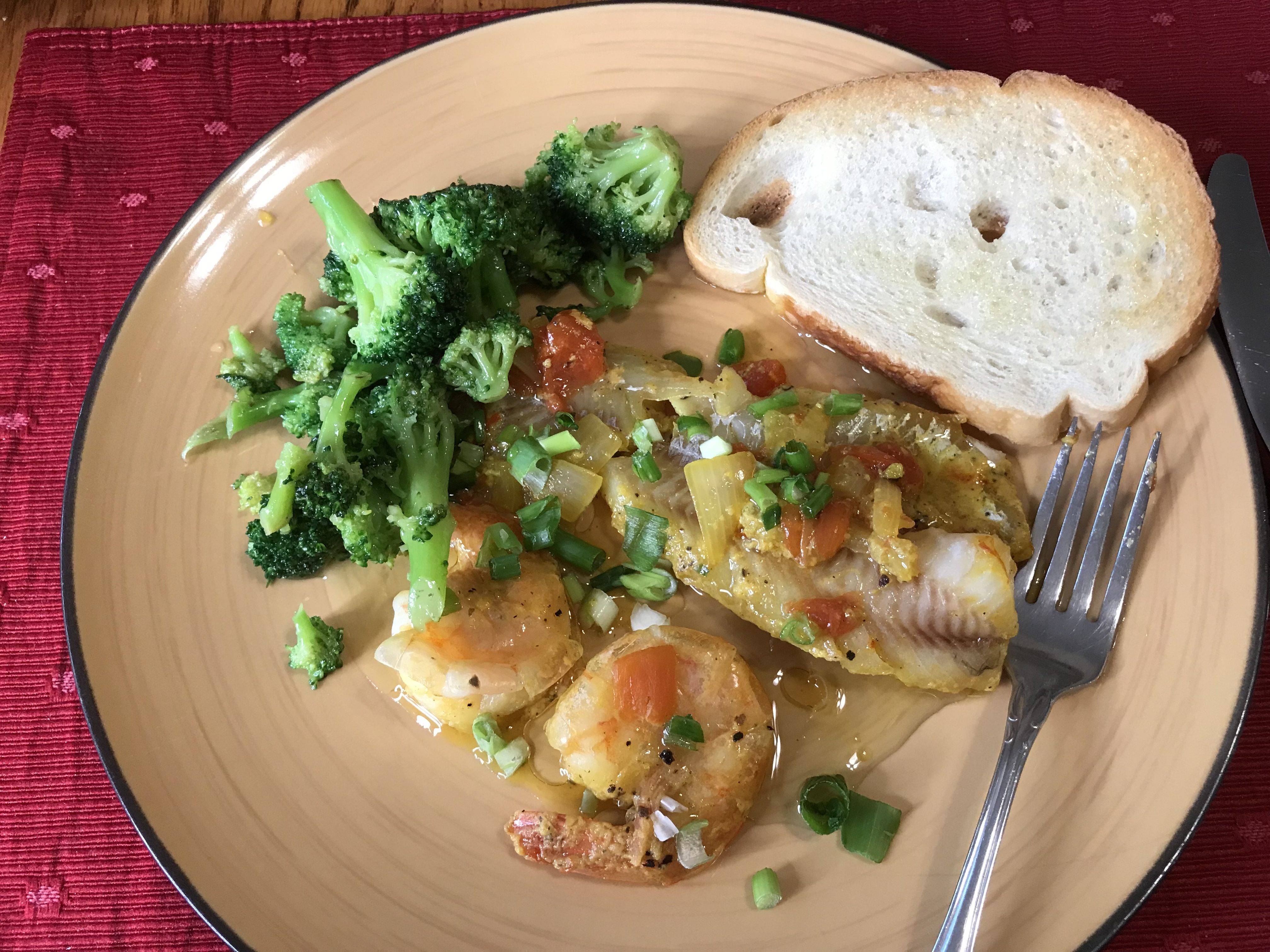
    Menu: Poached “Sea Bass” with Wine and Saffron, Bruschetta, Broccoli Cooked in Garlic-Flavored Oil, Ricotta with Honey and Thyme

    Recommended Wine: Orvieto (a dry or slightly sweet white)

                In the 8th Century BC, rising population in their homeland led many Greeks to set out and establish colonies. They settled along the coasts of southern Italy, Sicily, Turkey, and the Black Sea, in some cases going as far as southern France, the Spanish coast, and north Africa. Over time, these colonies began setting up their own colonies. For some reason, the process slowed to a trickle by 500 BC. Had the Greeks run out of favorable locations? Did grain imports from Egypt and the Black Sea reduce population pressure in their city-states? Were local populations getting better at resisting the colonists? Or were the colonies, now grown into city-states in their own right, too busy fighting each other to keep expanding?

                Whatever the reason, most colonization was finished when the Golden Age of Athens began in the 470s BC. There were a few exceptions. One of these was the city of Ancona, on Italy’s central Adriatic coast. It was founded by colonists from Syracuse in the 4th Century BC, several decades after the Syracusans crushed the Athenian invasion of Sicily. Ancona prospered but was never a great power, and was absorbed into the expanding Roman Republic in the 3rd Century BC.

                Along Italy’s Adriatic (eastern) coast, various cities and regions feature seafood stews in their cuisine. Supposedly this is a remnant of Greek influence. Regardless, they are an interesting change of pace from grilled, fried, and baked fish, and cook much faster than meat or bean-based stews. It’s typical to serve these fish stews and chowders with bruschetta, to soak up the broth.

    Fish chowder from the Italian Marche region

                Since I couldn’t find sea bass, I used tilapia (I think). With the strong flavors of wine, tomatoes, garlic, and saffron, any affordable white fish would probably work. As promised in the introduction, this is one of the easiest main dishes in the book. Prep is just chopping a few vegetables, and cooking time is under 30 minutes. Personally, saffron is not my favorite flavoring, but the other ingredients balanced its somewhat medicinal flavor. Broccoli, lightly precooked and sauteed in garlic-infused oil, was a pleasant accompaniment, and the green was a pretty contrast with the red tomatoes and yellow saffron.

                Dessert was rather interesting, fresh ricotta drizzled with honey and sprinkled with thyme. I have no problem with supermarket ricotta in lasagna, stuffed pasta, cheesecake, or cannoli filling, but don’t necessarily want to eat straight spoonfuls of it. Since fresh Italian-style ricotta was unavailable, I made my own. To serve, I had a trio of Italian honeys from World Market, chestnut, acacia, and millefiori (wildflower).

    Fresh ricotta with honey and thyme
    Notice the three different colors of honey

                The acacia and millefiori honeys both paired well with the cheese (honestly, I couldn’t tell much difference). The chestnut took some getting used to. It’s dark in color, almost like maple syrup, and has a distinctly bitter edge. Like the saffron, it wasn’t my favorite, but overall, this was a tasty and balanced dinner.

    Standard
    Lindt chocolate bars and truffles
    dessert

    Lindt Chocolate: Mardi Gras Treat

    Lindt chocolate bars and truffles

                Valentine’s Day was a few weeks ago, which meant chocolate was on sale everywhere. With Swiss Lindt chocolate half-price at the grocery store, I couldn’t resist getting a selection. According to Mimi Sheraton on pages 331 – 332 in 1000 Foods to Eat Before You Die, only the plain dark chocolate bars and those with sea salt are worth buying, as are the liquor-filled batons the company makes. Flavored bars and especially milk chocolate are not, apparently. But for the ultimate chocolate experience, the super-dark 90 or 95 percent cocoa bars are the most complex, if you can get past the bitterness.

                Personally, I disagree. No matter how complex and interesting, barely-sweetened chocolate doesn’t taste good. The bitter flavor is unbalanced on its own. It needs enough sugar to counteract it. The idea isn’t to overwhelm the chocolate, but to create a sweet-bitter harmony. Milk chocolate adds another layer of complexity, being sweet, bitter, and creamy. It is no better or worse than dark chocolate, just different.

                I also disagree about the flavored bars and confections. The Lindt dark chocolate with sea salt does taste good, but so does the dark chocolate orange and dark chocolate chili. The milk chocolate is delicious with chopped hazelnuts. And the chocolate truffles are spectacular, with a crunchy shell and smooth, creamy filling. My personal favorite are the dark chocolate ones (in the dark blue bags), but the milk chocolate and a few of the flavored varieties are also worth trying. A bowl full of Lindt truffles, color-coded in brightly-colored wrappers, would be great fun at a holiday party.

                Adults might also enjoy the batons. As far as I can tell, current varieties are filled with kirsch, plum brandy, or orange liqueur. The fruit flavors sound like they would work with the chocolate, but I worry about the alcohol overwhelming the taste. Since they’re only available online in the US and are quite pricey, I didn’t bother. Not when Lindt truffles are easy-to-find.

                During the 19th Century, Swiss confectioners were among the first to produce solid chocolate, and they are still among the best. I would hold off on the chocolate sandwich, though. Supposedly, alpine skiers sometimes snack on a piece of chocolate between two pieces of sourdough bread. If it was a baguette or ciabatta, sure, but not sourdough. And between trips down the bunny hill, not world-class slopes.

    Rating: 10/10 for the truffles, 9.5/10 for the various chocolate bars

    Standard
    Flaeskeaeggekage - Danish bacon and egg pancake
    breakfast/brunch, danish cuisine, food history, recipes

    Danish Bacon-Egg Pancake (Flaeskeaeggekage)

    Flaeskeaeggekage - Danish bacon-egg pancake whole
    Just look at how pretty it is. And it tastes as good as it looks.

    Information found in 1000 Foods to Eat Before You Die (pg. 347), recipe is my own

                Bacon and eggs have been combined for centuries, probably because they both cook quickly on the stove. Most likely, this is why they are often considered breakfast food. I’m not going to get up early enough to make eggs and bacon for breakfast, but some morning people might. It will taste just as good for brunch, lunch, or dinner.

                There are a number of recipes for this difficult-to-pronounce Danish recipe. Variations include the amount of milk to use and whether or not to dice the bacon. I went with Mimi Sheraton’s suggestion to leave the bacon strips whole and arrange them in a star pattern. Another unique touch is to use a bit of potato starch as a binder instead of the flour used in most of the online recipes. It gives the pancake a special, subtle flavor that makes it stand out from all the other recipes involving eggs and bacon.

                According to the internet, most Danish bacon is leaner than American bacon and is sold in cans. When using American bacon, it’s a good idea to pour off about half of the fat from the skillet after cooking it. The egg mixture cooks in the bacon fat, but it doesn’t need the full amount. This is particularly true if you’re cooking the whole package and not just the six slices needed for the recipe. You may as well and have some extra to munch on, since everyone nearby will be drawn to the smell.

    Flaeskeaeggekage - Danish bacon-egg pancake wedge
    Can’t you just smell the bacon through the screen?

                Traditionally, the pancake is flavored with white pepper, sprinkled with chives, and served with buttered rye bread. Depending on what you have, black pepper, green onions, and regular toast with butter and jam are other good options. Such an easy, comfort food dish like this shouldn’t require an extra trip to the store.

                To make it, I simply combined six eggs, a quarter cup 2% milk, a tablespoon potato starch, and a bit of salt and pepper to taste. The omelet/pancake cooks in the still-hot bacon fat over low heat until the bottom starts to brown and the top is almost set. Then add the bacon strips in a star pattern, sprinkle with chives or scallions, and cover the pan to help it set completely. Slice into wedges and serve with toast or rye bread. As a main course, each “pancake” serves two people.

    One-Time
    Monthly
    Yearly

    Make a one-time donation

    Make a monthly donation

    Make a yearly donation

    Choose an amount

    $5.00
    $15.00
    $100.00
    $5.00
    $15.00
    $100.00
    $5.00
    $15.00
    $100.00

    Or enter a custom amount

    $

    Your contribution is appreciated.

    Your contribution is appreciated.

    Your contribution is appreciated.

    DonateDonate monthlyDonate yearly
    Standard
    Canada geese with goslings
    food history, spring

    Foods Not Eaten: Animal Welfare Concerns

    Canada goose and goslings

    Foie Gras, Truite au Bleu (blue trout)

    Source: 1000 Foods to Eat Before You Die (pgs. 89 – 90, 141 – 142)

                Look how cute those goslings are. Adorable right? These are wild geese, but some domestic species are raised on farms. People still do eat goose and it’s something of a specialty item, but the real money in raising geese is for their livers. Specifically, the fatty livers that result from forcibly overfeeding the birds, which is called foie gras. Geese naturally store extra fat in their livers right before migration, but I’m not comfortable with the force-feeding done commercially. Besides, foie gras is expensive, hard to find, and, again, is liver. Do you recall what the liver does? (It cleans toxins from the blood, which is why most people don’t need cleansing tea/juice/supplements. Your liver has you covered.)

    Pair of Canada geese and goslings
    Semi-wild, anyway. They’re definitely not domesticated, but can be found hanging out on golf courses, in corn fields after the harvest, on the football field just through the trees, etc.

                Trout aren’t as cute as fluffy goslings, but the process of preparing truite au bleu is even more horrifying. To get the distinctive blue color and make the whole fish curl into circles, the fish need to be quick-cleaned immediately before cooking, then placed in the boiling water while technically still alive. The curling up comes from automatic nerve impulses, and the blue color from a reaction between still-living skin cells and the boiling acidic water. No matter how much it improves the fish’s flavor, it isn’t worth it. Super-fresh fish is a remarkable ingredient in itself. There’s no reason not to dispatch it quickly and humanely. It will still be good. For a blue color, try food coloring.

    Standard
    Tagliatelle baked with two cheeses
    food history, italian cuisine, pasta

    Cook’s Tour of Italy Menu 54 (Pgs. 170 – 171): Tagliatelle Baked with Two Cheeses

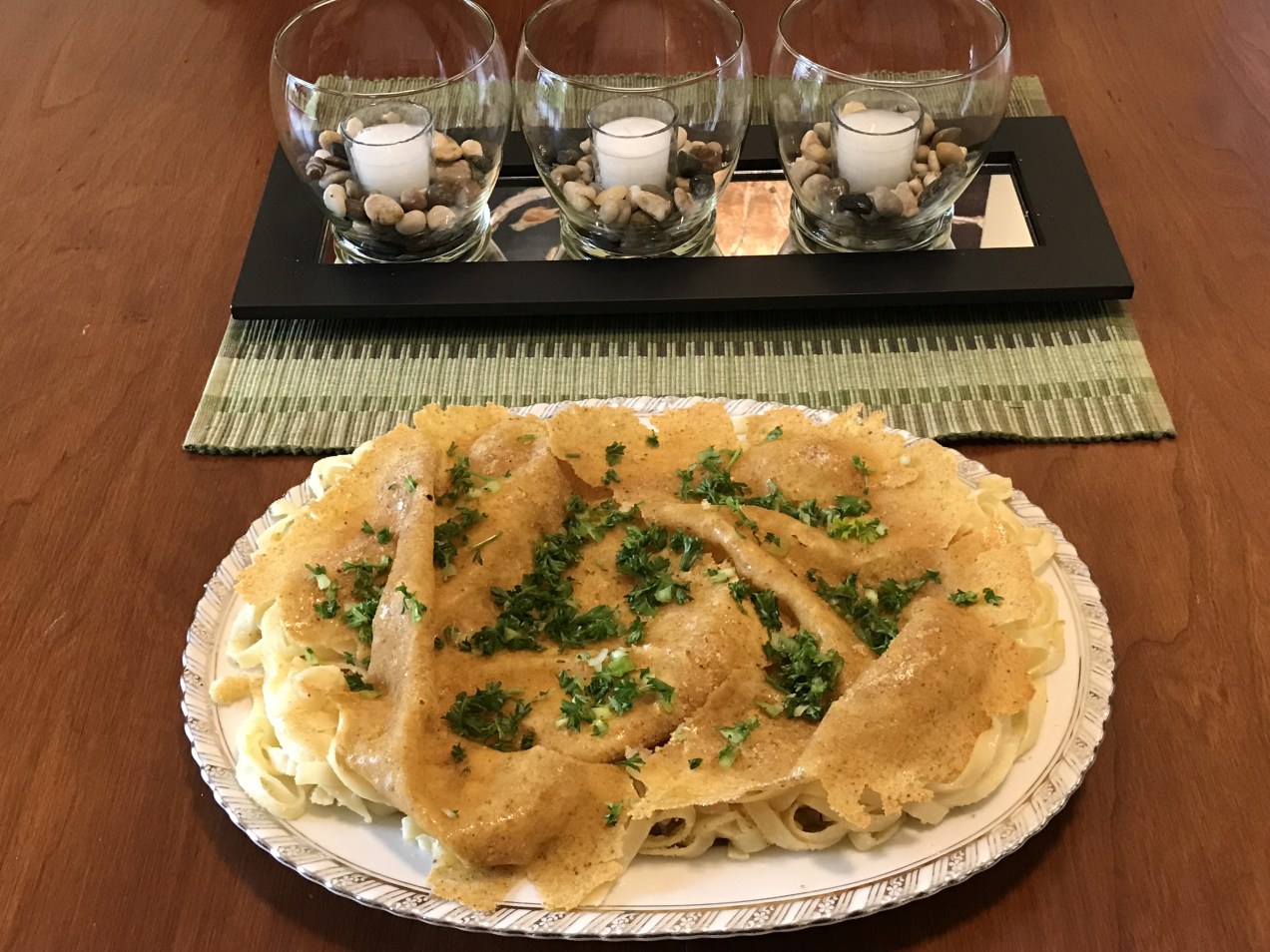
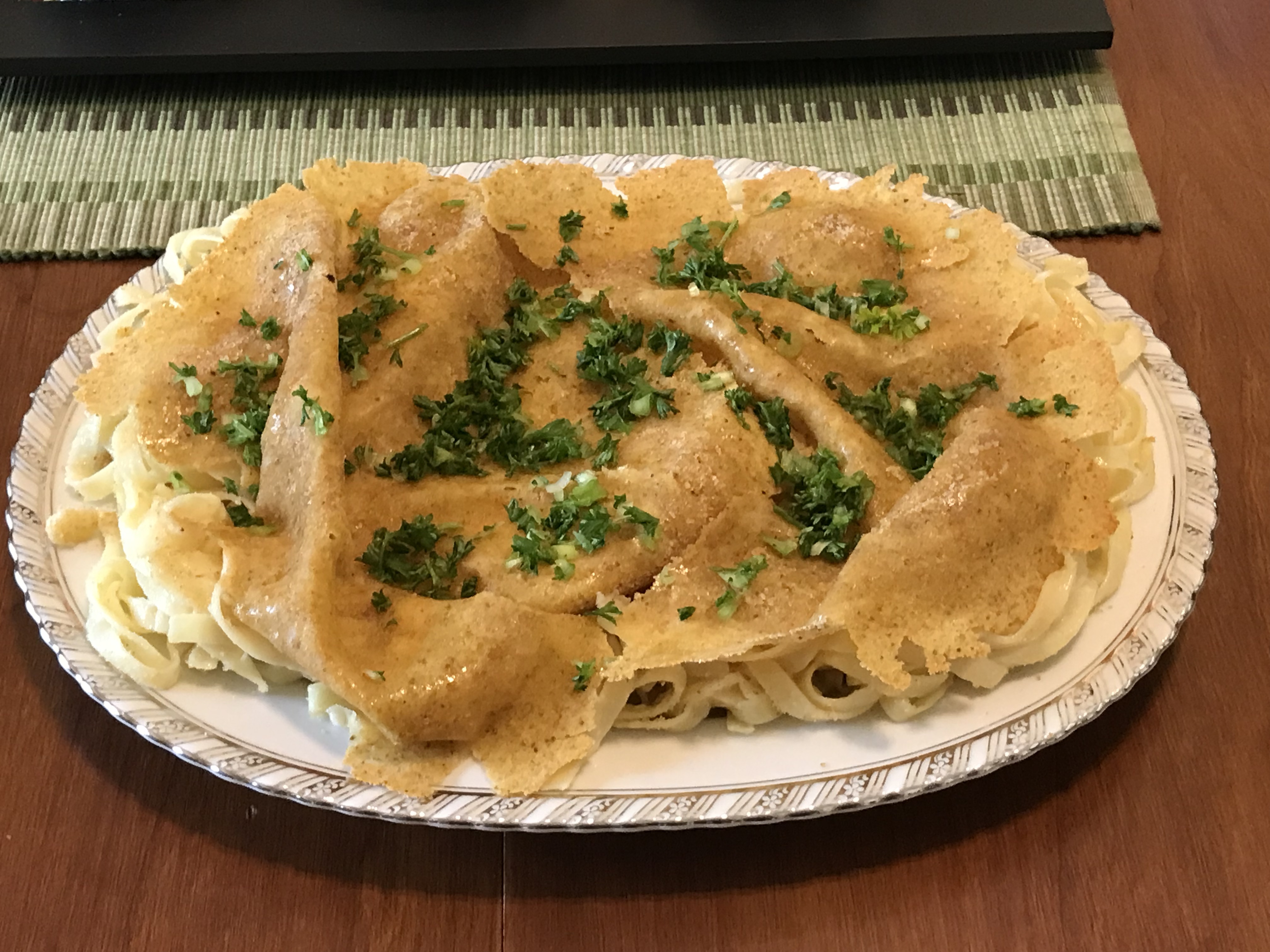
    Two cheese baked tagliatelle

    Region: Emilia-Romagna

                As mentioned before, Emilia-Romagna is known for its fresh pasta and dairy products. Fettuccine-like tagliatelle is frequently served with Bolognese ragu, which is never served with spaghetti. Wider pasta strands hold the sauce better. Tagliatelle can also be baked with cheese, as it is here. In this case, the two cheeses are Emilia-Romagna’s native parmesan, as well as fontina. More dairy is supplied by butter and cream.

                Parmesan and fontina are both cow’s milk cheeses, which predominate in northern Italy. Here, the cheese is front and center. The only contrast comes from breadcrumbs lining the baking dish and a mix of scallions and parsley minced together. Interestingly, instead of sprinkling the breadcrumbs over the top, the baking pan is buttered, coated in a layer of crumbs, then a layer of egg, then another layer of crumbs. After baking, the whole pan is inverted onto a serving platter.

                I had an issue with the crumb layer sticking to the pan. It was easy to peel off, but the presentation wasn’t as pretty as it could be. And the texture wasn’t what I expected. It was more of an eggy film than the crisp crust I anticipated. Maybe it was supposed to be this way, maybe the extra egg I added because one didn’t fully coat the pan affected the texture. It was good, but in the future, I would just sprinkle the bread crumbs over the top. It’s easier and ensures that they stay crisp.

                This dish reminded me of alfredo pasta, but lighter and with a stronger flavor. The scallions and parsley added a pleasant fresh contrast, and a salad would balance things out nicely. So would a cooked vegetable like green beans, and/or a bowl of fruit for dessert.

    Standard
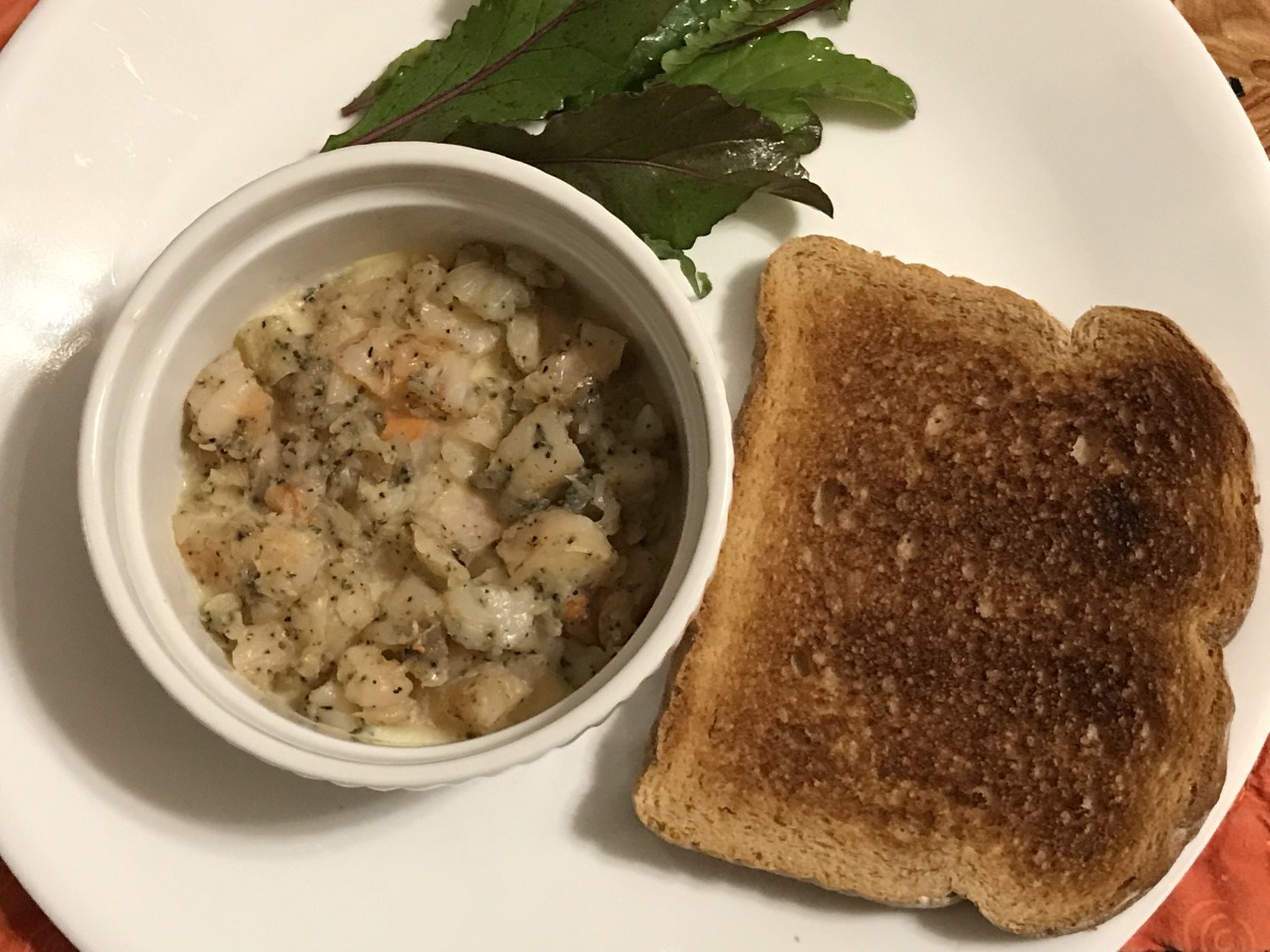
    Potted shrimp with toast and greens
    british cuisine, food history

    Unplanned British Treat: Potted Shrimp

    Potted shrimp with toast and greens

    Recipe can be found in 1000 Foods to Eat Before You Die on pages 18 – 19

                Before refrigeration, preserving food was always a challenge, particularly for highly perishable things like shellfish. Besides salting, pickling, smoking, and controlled fermentation, cooked meat and fish could be covered in a layer of fat to keep out the oxygen. The French preserved pork in its own fat for rillettes, and duck or goose as confit. For leaner proteins like ham or shrimp, the British “potted” them in ceramic dishes. This process involved mixing the chopped shrimp with melted butter and covering everything with more butter.

                Since shrimp were reduced price for quick sale at the store, I thought I would give this recipe a try. Interestingly, though British cuisine has a reputation for being dull and bland, potted shrimp is traditionally seasoned with cayenne pepper and mace. Once the mixture of shrimp and flavored butter is chilled and solidified, it is served on either salad greens or toast.

                Mace and cayenne pepper might seem odd for a traditional British dish, but both became popular in the 18th Century. Most likely, this has to do with Britain’s growing influence in India. Modified “curry” dishes began to appear in cookbooks, and the long-term Dutch monopoly on nutmeg (mace comes from the same plant) was broken, allowing the British East India Company to bring cargoes of both spices to Europe. A little spice goes a long way in a generally bland diet, especially when fresh food was unavailable for much of the year.

                Note that mace isn’t widely available in grocery stores, but is easy to find in specialty spice stores and online. Because you’ll probably have to buy more than you need, it’s a good idea to buy whole mace and grind it yourself. Whole spices stay fresh for longer.            

    The potted shrimp was interesting, but not my favorite preparation. Overnight in the refrigerator, the butter became, for lack of better terms, crumbly and waxy. This may have been due to adding more than the recipe called for, which was not enough to cover the shrimp. Another issue was that the little flecks of ground mace darkened in the refrigerator overnight, which looked alarming since I wasn’t prepared for what looked like ground pepper to appear. Spreading the mixture on hot toast helped with the texture, and the flavor was a nice mix of shrimp, butter, and spice. Not bad at all, though I would prefer the shrimp hot with garlic butter.

    Standard
    british cuisine, recipes, soup, stew, welsh cuisine, winter

    Medieval-Inspired Welsh Soup: Leek Broth

    Idea comes from 1000 Foods to Eat Before You Die, pg. 35, recipe is my own

                For some reason, leeks are a Welsh symbol. They are particularly associated with St. David’s Day, dedicated to Wales’s patron saint. Exactly how this happened is unclear, and history doesn’t provide many clues. At some point after 500 BC, Celtic peoples came to dominate the British Isles, including Wales. Starting in 43 AD, the Roman Empire conquered England and Wales, staying until the 5th Century.

                During these centuries, the native population became somewhat Romanized, adopting many Roman customs and, from the 4th Century onward, Christianity. These Romano-Britons spoke a Celtic language similar to Welsh. After the legions left to deal with everything else going on in the 5th Century, Anglo-Saxons from modern Germany began invading the island. The Romano-British chieftains put up a spirited defense, but were gradually pushed west into Wales, which is why the land to the east came to be called “Angle-Land,” later England. Did the proto-Welsh use leeks, which were a favorite of the Romans, to distinguish themselves from the Saxons? It’s possible.

                One of these proto-Welsh chieftains became the basis of the King Arthur legends. In other words, the man behind the myth was Welsh, not English. Perhaps because Wales is hillier and less fertile than England, or perhaps because they were busy fighting first each other and later the Vikings, the Anglo-Saxons mostly left the Welsh alone. After the Norman Conquest in 1066, so did the descendants of William the Conqueror. They were busy fighting rebellious Saxons, building an empire in France larger than what was controlled by the French king, and fighting their relatives over shares in that empire. There were some incursions into Wales, Scotland, and Ireland, but the Anglo-Norman kings of England were mostly occupied elsewhere.

                This changed in the 13th Century, probably because the kings of England lost most of their land in France. With the French kings much stronger than before, reconquest was a difficult proposition. So the English kings turned their energy towards the rest of the British Isles. King Edward I conquered Wales in the 1280s, and from then on heirs to the English throne were called the Prince of Wales. One story goes that the Welsh asked King Edward for a prince that spoke neither English nor French, so he presented them with his infant son, the future Edward II, who did not yet speak any language.

                Unlike Scotland and Ireland, Wales merged into the English monarchy with only a few early rebellions. It remained a culturally distinct backwater, but Welsh longbowmen played an essential role in the Hundred Years’ War. Without them, the English could not have won so many battles against much larger French forces.

                In Wales’s cool, wet climate, raising livestock was more profitable than growing most crops. Oats, barley, rye, and root vegetables grow more easily than wheat. Traditional Welsh dishes tend to be homey and comforting, not spicy and exciting. Not many Welsh specialties are known outside the British Isles, but one of the more famous is leek broth, called cawl cennin in Welsh. It’s a simple mix of leeks, carrots, potatoes, and cabbage, flavored with bacon and thickened with oatmeal.

                Except for the potatoes, this sounds a lot like the thick soups, called pottages, eaten by most medieval Europeans. The ingredients varied by social class and the occasion, but for the common people, vegetable-based soups and bread were the core of the diet. These were supplemented with butter and cheese, some meat and fish (usually salted), fruit in season, and beer, cider, or wine, depending on the region. Leeks and salted pork products like ham or bacon gave pottages more flavor, and vegetables like carrots and cabbages kept reasonably well over the winter. Grains, particularly those like oats and barley that were less useful for making bread, were often added as thickeners.

                Once potatoes became common in the 17th Century, they went into the pot too. Before soup bases and bouillon cubes, water would have been the liquid. Until the 20th Century, chicken was more expensive than beef, mutton, or pork, so there would be no chicken broth in a common, everyday dish. Today, a bit of bouillon or soup base is typical in leek broth, adding extra flavor for just a few cents.

                As far as affordable home cooking goes, leek broth is a great choice. The root vegetables are full of vitamins, and the oats make it taste sort of creamy and surprisingly filling. The soup/stew has a fair amount of starch, but carbohydrates are not the enemy, especially in the form of carrots and whole grains like oats. A chunk of whole grain bread would be a great accompaniment, maybe with a piece of cheese or glass of milk for extra protein. And don’t skip the bacon. Per serving, it does not add that much fat, and a little bit adds a ton of flavor. Which makes a popular New Year’s resolution a bit easier.

    Ingredients:

    • About 8 ounces bacon, diced
    • 2 large leeks, halved lengthwise, cleaned, and thinly sliced crosswise
    • 8 ounces carrots, thinly sliced
    • 6 medium-sized red potatoes, cut into roughly ½ inch cubes
    • Half of a small green cabbage, thinly sliced
    • About ½ cup to 1 cup rolled oats (not steel-cut or instant)
    • Chicken broth or water (broth from a soup base is perfectly good here)

    Directions:

    1. Place the bacon in a large soup pot over medium heat. Cook until starting to crisp, then add the leeks, carrots, and potatoes. Do not drain the fat. All the other ingredients are healthy, and it is essential for the best flavor.
    2. Cook the root vegetables in the bacon fat with the bacon, stirring occasionally, until the vegetables start to cook down and release their moisture.
    3. Add enough water to cover, about 12 cups. If desired, add 1 teaspoon soup base or bouillon per cup of water.
    4. Bring the soup to a boil, then reduce the heat and simmer, stirring occasionally, until the potatoes are soft.
    5. Stir in the cabbage and oats. Cook on low heat, stirring frequently, until the cabbage softens and the soup begins to thicken.
    6. Ladle the soup into bowls and serve hot. Don’t worry about presentation; leek broth tastes a lot better than it looks.

                For more warming recipes over the next few months, don’t forget to subscribe for free.

    One-Time
    Monthly
    Yearly

    Make a one-time donation

    Make a monthly donation

    Make a yearly donation

    Choose an amount

    $5.00
    $15.00
    $100.00
    $5.00
    $15.00
    $100.00
    $5.00
    $15.00
    $100.00

    Or enter a custom amount

    $

    Your contribution is appreciated.

    Your contribution is appreciated.

    Your contribution is appreciated.

    DonateDonate monthlyDonate yearly
    Standard
    british cuisine, food history, recipes, winter

    Shepherd’s and Cottage Pie: The Surprising Reason for a Mashed Potato “Crust”

    Idea comes from 1000 Foods to Eat Before You Die, pg. 24, recipe is my own

                Strictly speaking, shepherd’s pie involves mutton or lamb. If ground beef is used, as is often the case, it is technically cottage pie. Technicalities aside, the term shepherd’s pie is widely used for either. The important thing is that the ground meat and vegetable filling is baked under a thick layer of mashed potatoes. Whenever it’s dreary, snowing flakes the size of your palm, or 0 degrees outside, either is a great home-cooked dinner.

                The ingredients are simple enough. As for why what is clearly a casserole is called a pie, the answer has to do with grain shortages in 18th Century Britain. Stick with me, I promise the explanation will be brief. At the time, population was rising rapidly. So were agricultural yields, but not as quickly. This meant higher prices for bread and other flour-based products, the essential staple for most of the population.

                Fortunately, residents of the British Isles accepted the potato earlier than most Europeans. They still preferred grain, but potatoes provided some protection from bad harvests and rising food prices, and became increasingly important during the 18th Century. Most sources suggest that shepherd’s and cottage pie originated then. Cooking a meat filling in a pastry crust had long been popular. As a cost-saving measure, Britons began to ditch the pastry, top the filling with mashed potatoes, and call it a pie. These new “pies” were easy to make, stretched pricey meat with the cheapest foodstuff available, and tasted good.

                Then came the 1790s. The grain harvests of 1794 and 1795 were low, leading to widespread hunger and unrest. Nervous because of the recent French Revolution, Britain’s upper classes decided to voluntarily reduce their consumption of flour, particularly refined white flour. While this would have only been a drop on the bucket in terms of actual grain saved, it was an important symbolic gesture. Even the royal family got in on the action. Not wanting to give up their beloved pies, well-off Britons took the shepherd’s/cottage pie idea and fancied it up, baking the meat and potato mix in ceramic dishes designed to look like elaborately molded pie crusts.

                The popularity of the mashed potato pies continued long after the grain shortage was over. During the Victorian Era, recipes were widespread in the cookbooks targeted toward comfortably off but not wealthy women. At the time, it was common to buy a large piece of meat for a big Sunday roast dinner, then use the leftovers in other dishes for the rest of the week. Since raw meat could not safely be stored in the days before refrigeration, and daily trips to the butcher were a hassle, these recipes utilized leftover cooked meat, typically mutton or beef.

                As one poem put it, “hot on Sunday, cold on Monday, hashed on Tuesday, minced on Wednesday, curried Thursday, broth on Friday, cottage pie Saturday,” was a way to reuse and repurpose leftovers. This seems like an extreme example for several reasons, including the size of a roast needed to last for an entire week, and more importantly, keeping it edible without refrigeration FOR SIX DAYS. Even when cooked, that seems like a tall order, especially during the summer. Why not visit the butcher twice a week, and have more variety with beef for 3 – 4 days, and mutton for the other 3 – 4?

                Today beef is more common for shepherd’s pie, and the meat usually starts out raw. While I enjoy repurposing leftovers, using raw meat allows the beef or lamb fat to flavor the gravy, which is why I don’t drain it in this recipe. This can be made right in the skillet with the meat and vegetables. Just add a bit of flour to form a roux with the fat, then some broth to make a gravy.

                Like many popular British dishes, shepherd’s pie falls firmly in the comfort food category. It can even be assembled ahead of time and refrigerated, though this will mean a longer baking time. Leftovers are equally delicious. Just don’t store them for days at room temperature.

    Ingredients:

    • About 1.5 pounds ground chuck (or lamb/mutton)
    • 8 ounces carrots (about 3 large ones), sliced, with larger pieces halved
    • 1 onion, halved and thinly sliced
    • Several sprigs parsley, minced
    • Worcestershire sauce and black pepper to taste
    • Several dried mushrooms, broken into small pieces (optional)
    • 8 oz frozen peas (optional)
    • ¼ cup flour
    • About 2 cups beef broth (I use reduced sodium broth from a carton. It’s convenient, and regular often makes dishes too salty)
    • About 3 pounds potatoes, peeled if desired (I typically peel russets but not red or yellow potatoes)
    • Milk and butter for mashing potatoes
    • Cheddar cheese

    Directions:

    1. Cut the potatoes into large chunks and bring to a boil in salted water. Cook until easily pierced with a fork, about 10 – 15 minutes. Drain, return to pot, and mash with butter, milk, and salt to taste. Set aside.
    2. Meanwhile, place the ground meat in a large skillet over medium heat, leaving in one chunk at first. This allows for better browning.
    3. Once the meat is browned on the one side, break it up with a spatula or a potato masher and cook, stirring occasionally, until only a little pink remains. Don’t drain the fat, because it flavors the gravy.
    4. Add the onions, carrots, parsley, and, if desired, peas and mushrooms to the skillet. Season with several dashes or Worcestershire sauce and plenty of freshly-ground black pepper. Cook until vegetables have softened and begun to cook down.
    5. Sprinkle flour over meat and vegetable mix and stir to combine. Add the broth, a little at a time, until a gravy forms. Taste for salt, pepper, and Worcestershire, adding more if desired.
    6. Preheat the oven to 350 (degrees Fahrenheit) if eating right away. Spread the meat mixture evenly over the bottom of a 13 x 9 baking pan. Top with the mashed potatoes, smoothing to the edges with a spatula. Top with the cheese.
    7. Bake for about 20 minutes, until the cheese is melted and bubbly. If made ahead and chilled, this will take 40 – 50 minutes.
    8. Let the shepherd’s pie rest for a few minutes before enjoying.

                More baked and stewed comfort will be coming over the next few months, so be sure to subscribe.

    One-Time
    Monthly
    Yearly

    Make a one-time donation

    Make a monthly donation

    Make a yearly donation

    Choose an amount

    $5.00
    $15.00
    $100.00
    $5.00
    $15.00
    $100.00
    $5.00
    $15.00
    $100.00

    Or enter a custom amount

    $

    Your contribution is appreciated.

    Your contribution is appreciated.

    Your contribution is appreciated.

    DonateDonate monthlyDonate yearly
    Standard
    dessert, food history, recipes

    Medieval Fall Treat: Baked Apple Compote

                Apples have been associated with fall and the harvest for thousands of years. Many varieties can be kept in a cool cellar over the winter, but they are at their best when fresh and crisp. In a historical fiction book I’m in the process of writing, Marguerite of France enjoys a variety of apple dishes when she arrives at the English court to marry King Edward I in September 1299. Apple pies already existed, but the pastry crust was not meant to be eaten. It was used as a vessel to cook and store the filling.

                With that in mind, I opted to recreate the recipe in a covered ceramic dish. The apples steam just like they would in a pastry crust, with a lot less effort. Medieval cooks baked apples with cinnamon just like cooks do today, but it wasn’t the only spice. The 14th Century cookbook The Forme of Cury features a recipe seasoned with cinnamon, sugar, ginger, and dates. Presumably the dates balanced the flavor at a time when apples were not as sweet and less sugar was used.

                As strange as ginger and dates sound with baked apples, they’re actually delicious. Minced candied ginger is especially good, creating little bits of aromatic heat. It can be found in many grocery stores with the little bags of bulk spices.

                Like with a pie, the apples take a while to bake, at least 45 minutes, but are worth the wait. They taste a lot like apple pie without the crust. And with only 1.5 teaspoons of sugar per apple, plus a little bit in the ginger, they are pretty healthy too. As far as peeling the apples, I prefer not to. The pectin in the peel helps thicken the syrup as the compote stands.

    Ingredients:

    • 4 large apples (I like Cortlands, but any relatively firm, not-too-sweet apple will do)
    • 6 pitted dates, halved and chopped
    • 2 tablespoons cinnamon sugar
    • 4 pieces candied ginger, minced

    Directions:

    1. Preheat the oven to 350 degrees.
    2. Peel the apples if desired, and cut into large cubes, about ¾ inch to 1 inch. If you have one of the tools that cores an apple and cuts it into wedges, that’s perfect. Cut each wedge into 3 or 4 pieces.
    3. Place the chopped apples into an oven-proof ceramic dish. Sprinkle with the cinnamon sugar, dates, and ginger, and stir to combine.
    4. Cover the dish with a glass cover or aluminum foil and bake for 45 minutes to an hour. For semi-authenticity, do not stir while baking.
    5. When the apple mixture is soft and aromatic, remove from the oven. Carefully remove the lid. Stir to distribute the liquid collected at the bottom of the dish.

                For more recipes, stories, fun facts, and maybe some historical fiction excerpts, make sure to subscribe for free.

    One-Time
    Monthly
    Yearly

    Make a one-time donation

    Make a monthly donation

    Make a yearly donation

    Choose an amount

    $5.00
    $15.00
    $100.00
    $5.00
    $15.00
    $100.00
    $5.00
    $15.00
    $100.00

    Or enter a custom amount

    $

    Your contribution is appreciated.

    Your contribution is appreciated.

    Your contribution is appreciated.

    DonateDonate monthlyDonate yearly
    Standard