1000 Foods (pgs. 507 – 508), recipe is in the text
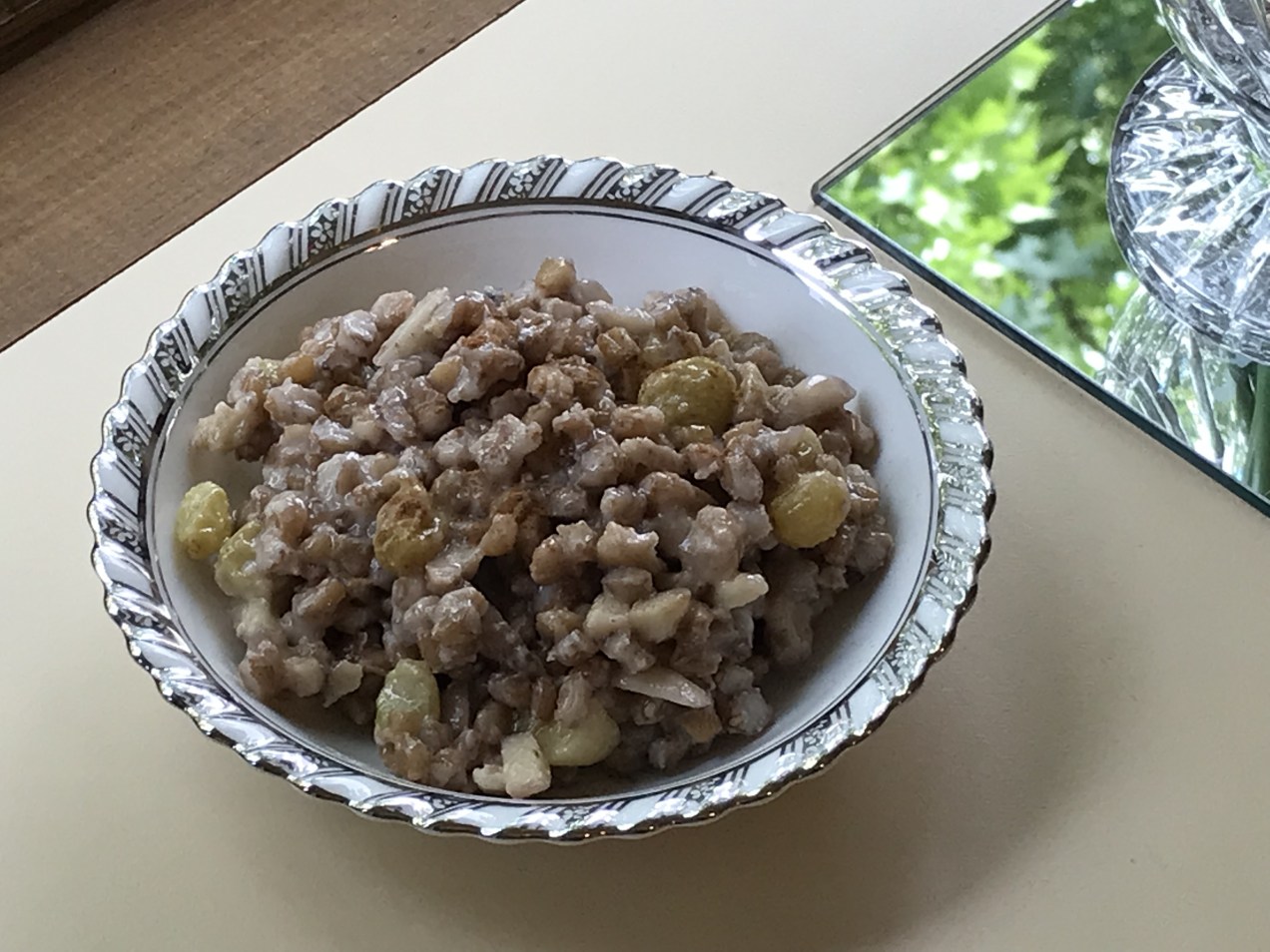
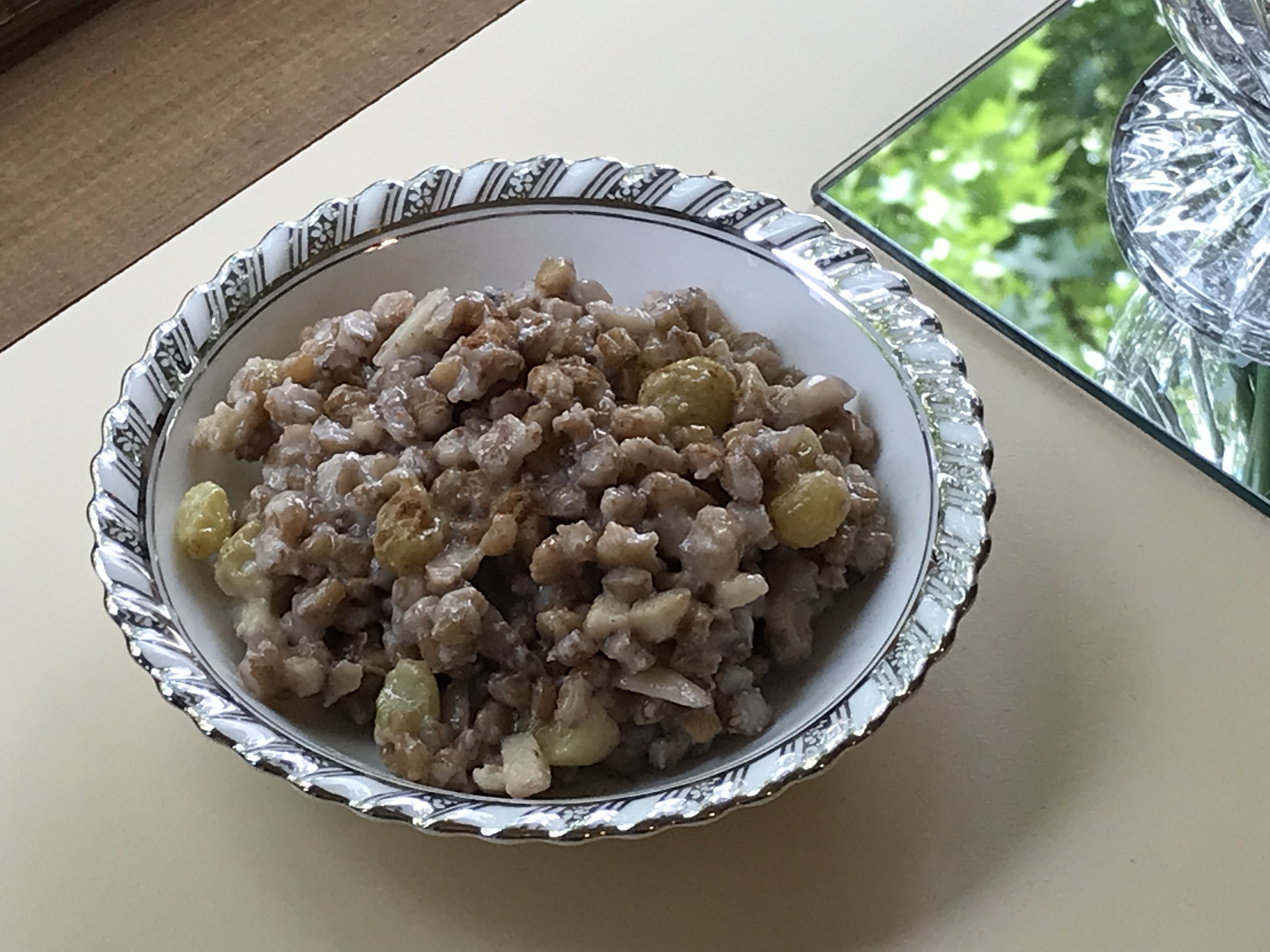
If you’re wondering why I made a Christmas pudding in the middle of summer, it’s because I had all the ingredients in the pantry and wanted to use up what I could. The mix of wheat berries, dried apricots and golden raisins, nuts, and honey sounded like a healthy, tasty alternative to heavy desserts while still satisfying the craving for something sweet and starchy.
Particularly popular at Christmas, anoush aboor is eaten year-round in both Armenia and Turkey. With the exception of the sugar and cinnamon, all the ingredients have been grown in the region for thousands of years. Situated in eastern Anatolia, near the headwaters of the Tigris and Euphrates rivers, this area was home to some of the earliest farmers. They grew wheat, barley, peas, and beans, raised sheep, goats, and cattle, and soon began selectively breeding and cultivating a variety of fruits, vegetables, and nuts.
Apricots, an essential part of the dish, were originally domesticated somewhere in Turkey or Armenia. When the fruit was introduced to Rome, the Romans called it prunus armeniacus, meaning roughly “Armenian plum,” or praecox for early, since they ripen before most other stone fruits. Fresh apricots are delicious in the early summer, but are highly perishable and rarely available out of season. To have apricots year-round, people have been sun-drying them for millennia. In the Middle East’s hot dry summers, this was easy and didn’t require the use of often-scarce fuel. Even today, Turkey produces much of the world’s supply.
Literally, the name anoush aboor translates to “sweet soup,” probably because of its porridge-like consistency. The wheat berries are cooked until they “pop” and release their starch into the water, thickening it. Despite being cooked in just water, the pudding had an almost creamy texture and even taste, sweetened with a mix of sugar, honey, and dried fruit. Chopped almonds and walnuts (I skipped the pine nuts and added extra of the others) gave it a nice crunch, and a sprinkle of cinnamon was a nice finishing touch.
I had one problem with the recipe. It called for a teaspoon of salt. Since I made a half batch, I used half a teaspoon, which didn’t sound like much. Unfortunately, even that amount made the pudding taste distinctly briny and a bit unpleasant. The pudding was much better stirred into unsalted hot wheat cereal to cut the salt while adding texture, but to be honest, I don’t think I would make this again. Back before modern cakes, cookies, and brownies it might have been a nice treat. Today, it’s pretty lackluster.
Menu: Eggs with Tuna Mayonnaise, Greek-Style Lamb and Vegetables, Apricots with Amaretti Crumbs and Cream
Recommended Wine: Primitivo di Manduria (red from Southern Italy)
Finally, we venture to Sicily, home of some of the most well-known Italian food. There are two sides to traditional Sicilian cuisine. One is the rich, elaborate fare traditionally reserved for the small elite, featuring pies, meats, molded dishes and pastries. The other is the ingenious peasant fare, designed to make the most of humble ingredients. Bread, pasta, vegetables, and legumes, accented with things like vinegar, olives, capers, anchovies and citrus fruits, helped compensate for the low levels of animal protein. Despite the island being a sought-after (and fought-over) breadbasket, featuring some of the most dazzling royal and noble courts from ancient times onward, the peasantry has frequently been among the poorest in Europe.
This may seem like a paradox at first glance, but this pattern is common throughout history. Highly productive agricultural regions, like Naples, Sicily, and the Ile-de-France region around Paris have had some of the wealthiest and most sophisticated elites of their time, but not usually the most prosperous peasants. Higher yields meant higher taxes and greater social inequality. In some cases, commoners had lower standards of living than those in more marginal areas. Throughout its history, Sicily has been one of those cases.
The history of Sicily could fill several scholarly volumes, but here’s a brief summary. As a large, fertile, centrally located island, it was unsurprisingly fought over by every power that passed through the area. From antiquity there were native Italic peoples plus all the usual suspects: Greeks, Phoenicians, Carthaginians, and Romans. The island played a crucial role in turning the tide of the Peloponnesian War, which lasted from 431 – 404 BC, pitting Athens and its not-always-willing allies against Sparta and other states that felt threatened by Athenian expansion over the course of the 5th Century BC. Until Athens overreached with the Sicilian Expedition from 415 – 413 BC, it had generally held the upper hand. After an attempted conquest of Syracuse went disastrously wrong (I’ll go into details in a later post, since it’s a fascinating story), Athens was predominantly on the defensive and was ultimately defeated.
A battleground for centuries between Greeks and Phoenicians, Sicily was conquered by the Romans during the First Punic War between 264 and 241 BC. It was an important and wealthy Roman province until the 5th Century AD, when it was captured by Vandals, a Germanic people who had found a new home in North Africa. The Byzantine Empire (the surviving eastern half of the Roman Empire after the western half fell) under Emperor Justinian I recaptured the island in the 6th Century, only to lose it again in the 9th and 10th, this time to the Arabs. A spectacular flowering of arts, culture, and scholarship occurred during the century and a half or so of Arab rule. It was also during this time that citrus fruits, for which the land is so famous today, were introduced, alongside rice, sugar, spinach, and eggplants. Pasta also appears to have been introduced during this period. Then came the Normans, who conquered much of Southern Italy and the Middle East as well as England. In 1282, a revolt called the Sicilian Vespers allowed the Kingdom of Aragon to capture the island and hold it into the 18th Century.
It was during the late 15th and early 16th Centuries, when Aragon was united with Castile, that New World crops and animals began crossing the Atlantic. While Castile sponsored expeditions to the Americas, Aragon was drawn into the Italian Wars, starting when Charles VIII of France invaded Naples in 1494. Columbus and his men brought plant and animal specimens back to the court of the famed Ferdinand and Isabella, from where they were presumably transported to Naples and Sicily over the next few decades. While not all of the new arrivals were quickly embraced (turkeys were within a decade, tomatoes and potatoes took a few centuries), by the end of the 18th Century, maize, tomatoes, peppers, zucchini, and chocolate had transformed Sicilian cuisine.
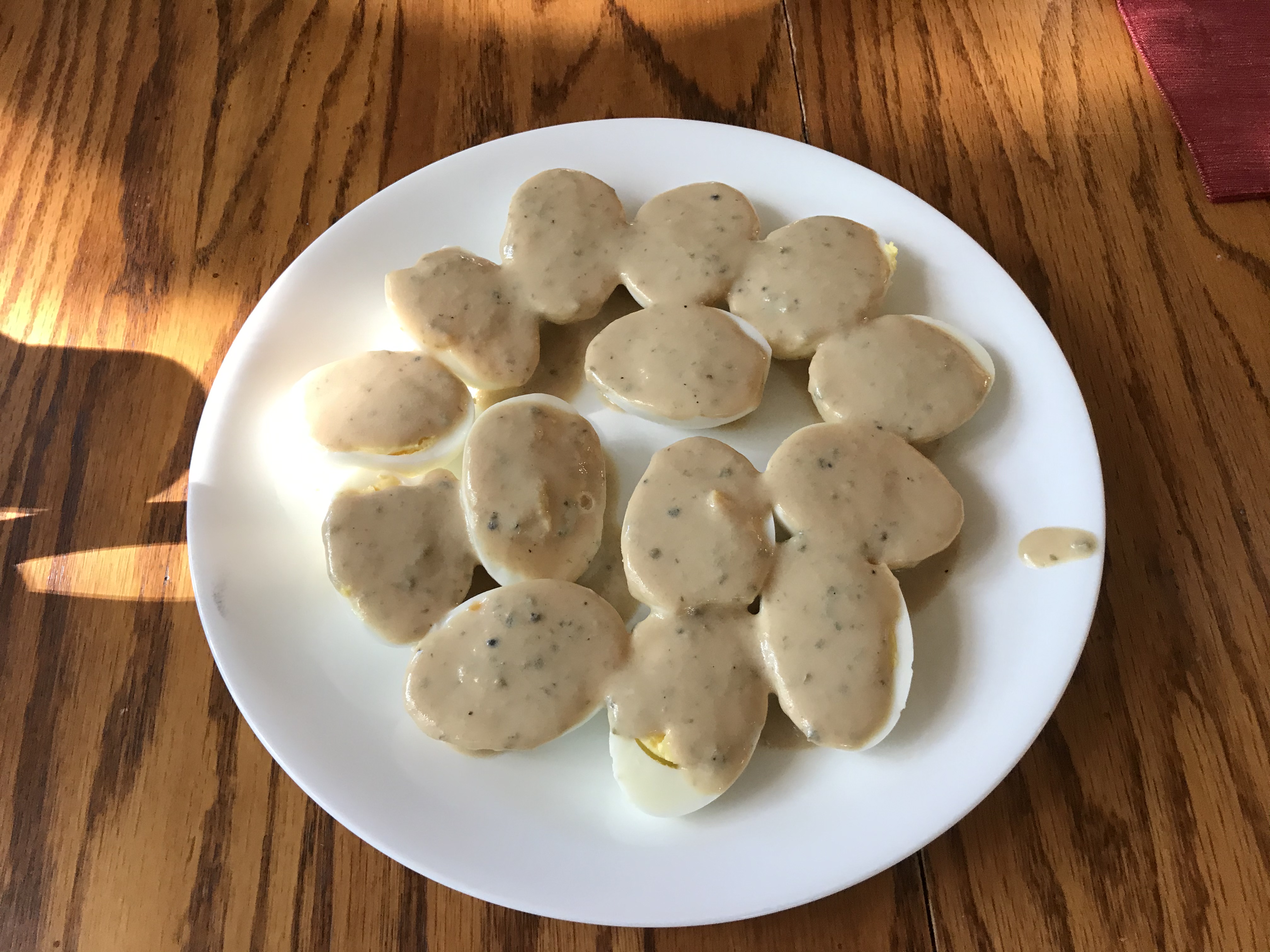
Turning from history to food, we start with the only dish from this project that I truly hated: eggs with tuna mayonnaise. It may not sound too bad if you like hard-boiled eggs, which I do not. Their taste is objectively fine, but the smell is too much for me to get over. The kitchen and fridge ended up reeking of sulfur, and the sauce didn’t improve things. It starts with mayonnaise, another food I don’t like, though the homemade kind used here is better than store-bought. After using egg yolks to emulsify vinegar and lemon juice with oil, canned tuna and capers are blended in. The end result is an unappealing light tan sludge, full of classic Sicilian flavors. If you’re wondering why I made this, given my distaste for hard-boiled eggs and mayonnaise, there are two reasons. First, it’s part of the menu, which for this project I try to follow as closely as possible. Second, these are supposedly a classic Italian appetizer, so I thought they were worth a try. As it turned out, they weren’t. My fellow diner thought they were pretty good and really liked the sauce, but I could only manage a little nibble. While foods that stick around tend to do so because some people like them, nothing suits everyone’s personal taste. Lesson learned, never again. From here, things could only improve.
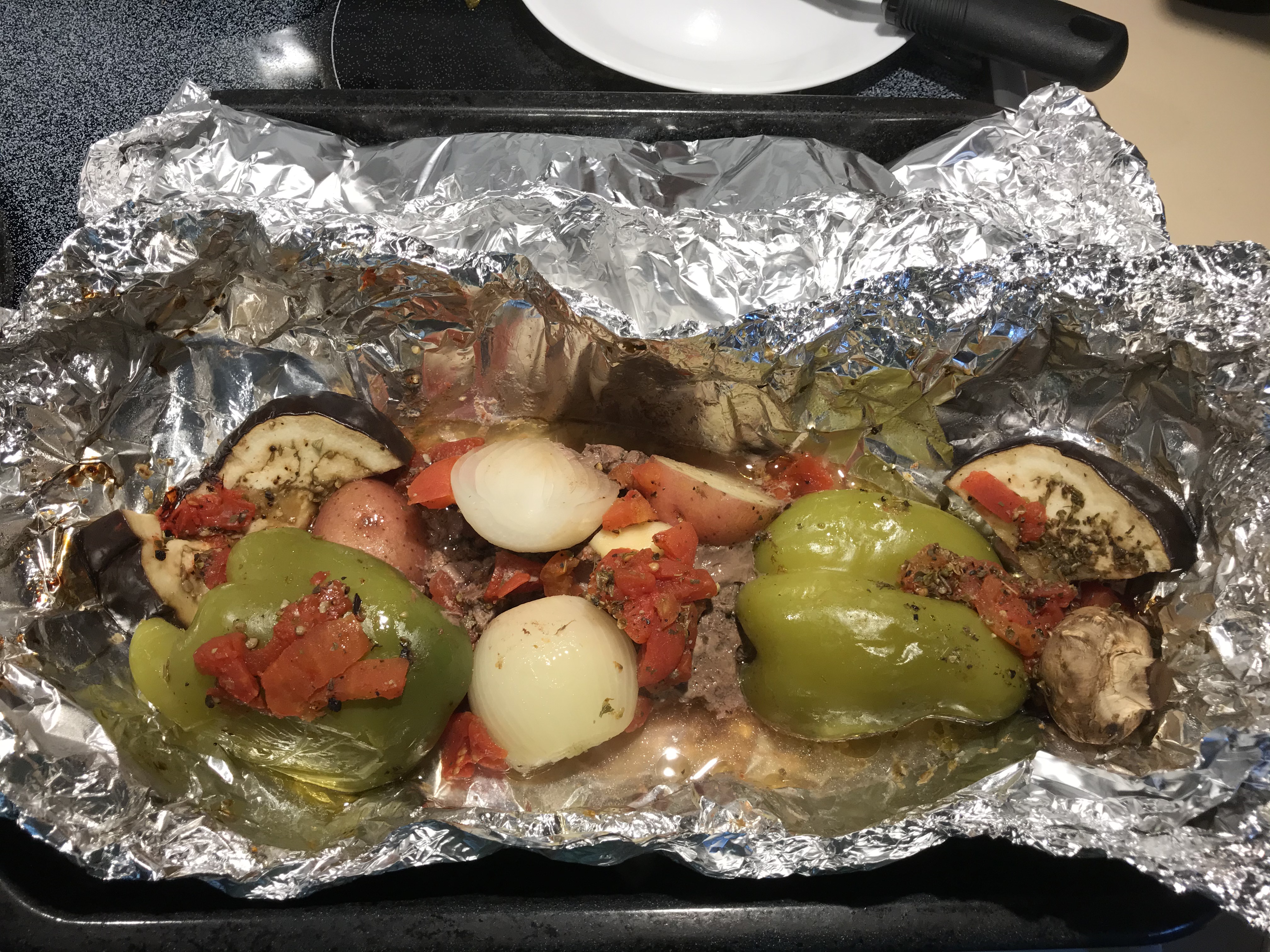
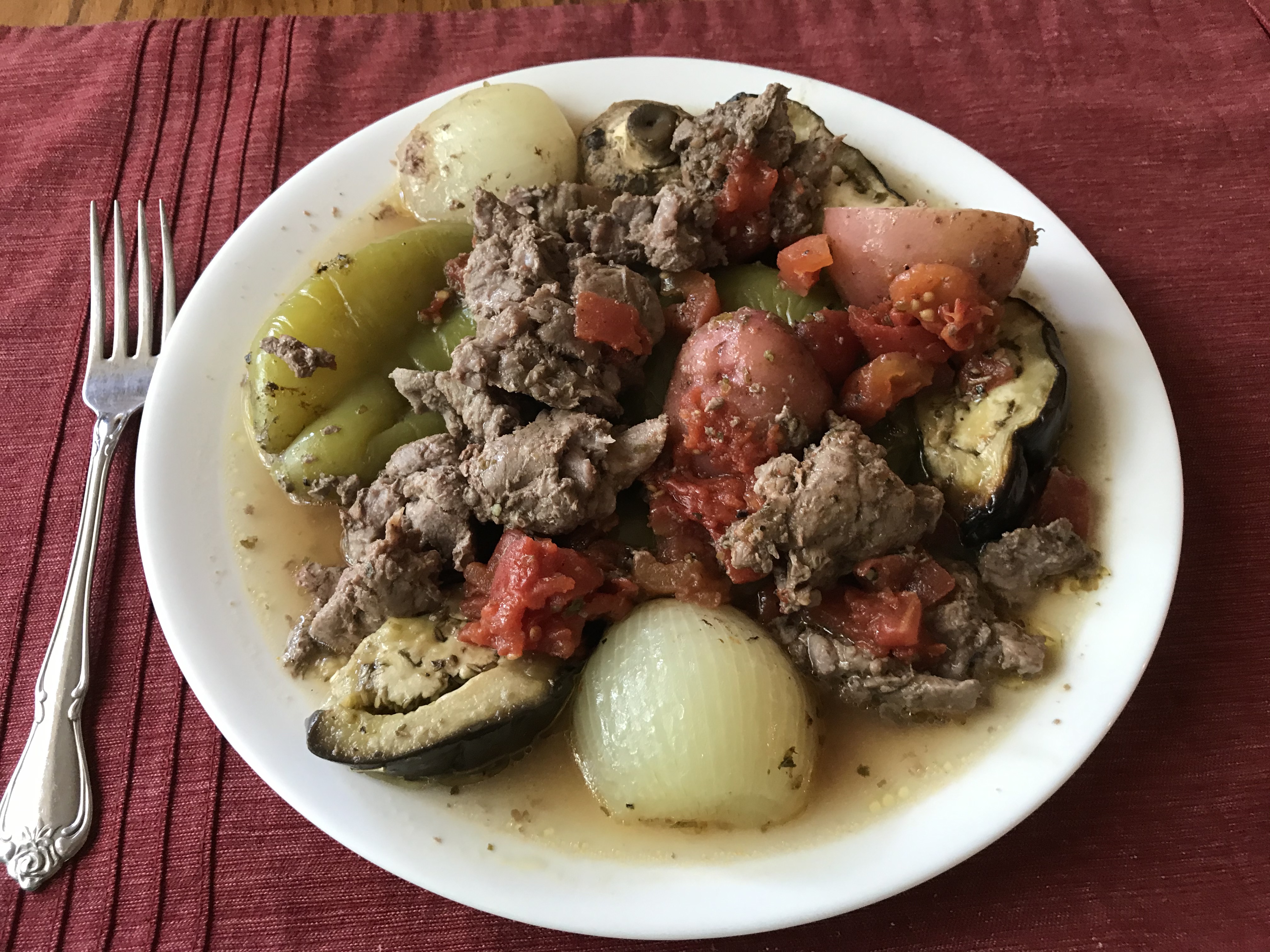
And they did improve. The main course was a lamb “stew,” cooked in foil packets. The meat and vegetables were flavored with salt, pepper, oregano, and a bit of garlic. I personally thought it could use a little more seasoning, but that’s just a matter of personal preference. Maybe mincing the garlic, rather than just halving it, would help the flavors meld a bit more. Still, the meat was nice and tender and the vegetables were neither under nor overcooked. This dish would be worth making again, experimenting with a few minor modifications.
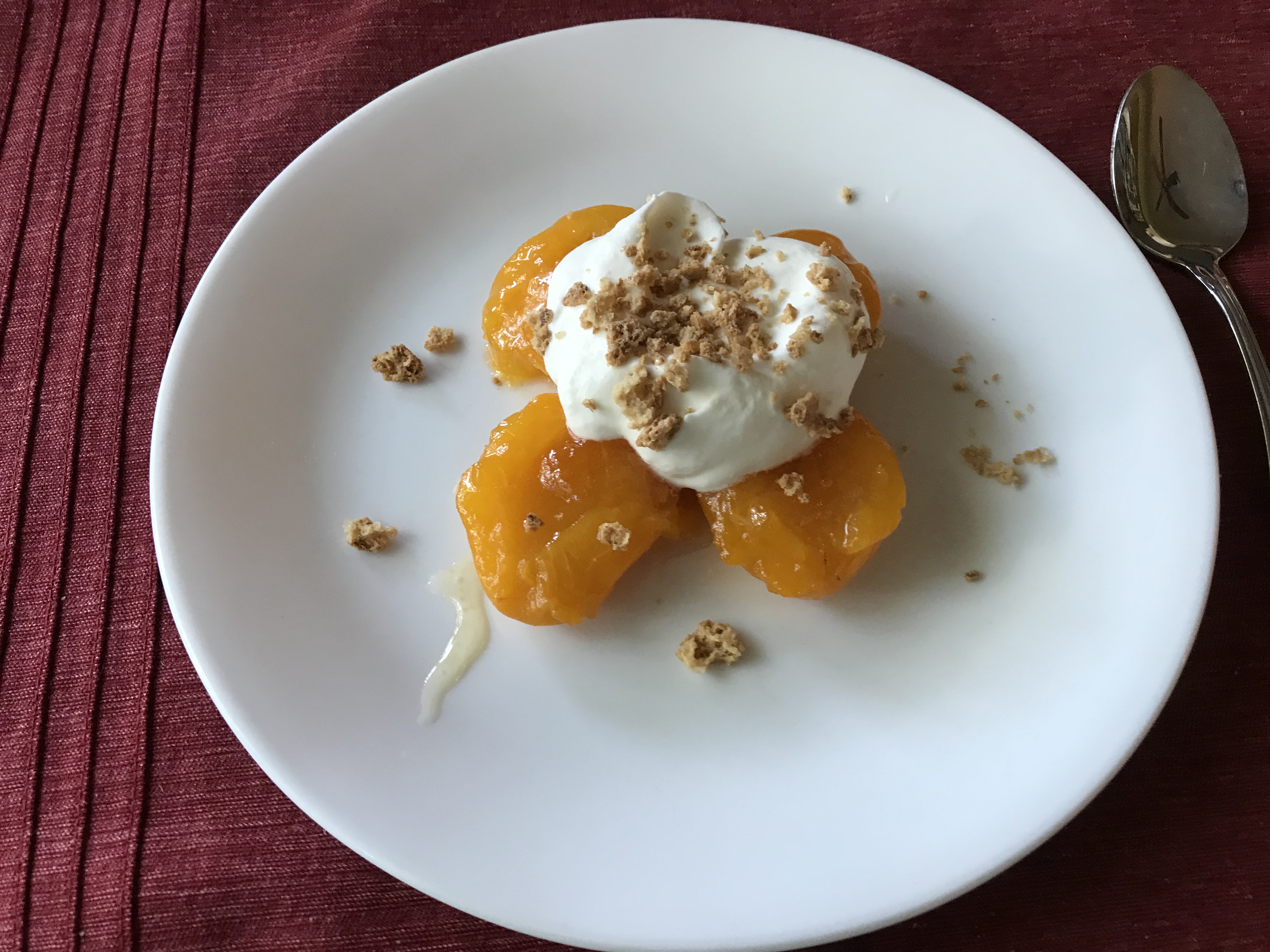
Finally, there was a spectacular dessert, which is actually why I decided to make the menu in the first place. It features poached apricots, which get their name from the Latin word praecox, meaning early, since they ripen before most other fruits. The fresh variety, which Mr. Famularo recommends, is not always available where I live, so when I saw them in the store, I decided I had to try them. In the original recipe, they are poached in a mixture of wine and hazelnut liqueur and more liqueur is added to flavor the whipped cream. As I didn’t want to buy an entire bottle of either, I substituted grape juice and hazelnut syrup, reducing the sugar to compensate. The result was fantastic. The balance between the sweet-tart apricots, syrupy sauce, cream and amaretti crumbs was just perfect, and the hazelnut flavor infused throughout made the dish. I’m sure that other fruits would work in this dessert, possibly with adjusted poaching time. It is too good to restrict to apricot season.

 Feasting Through Time