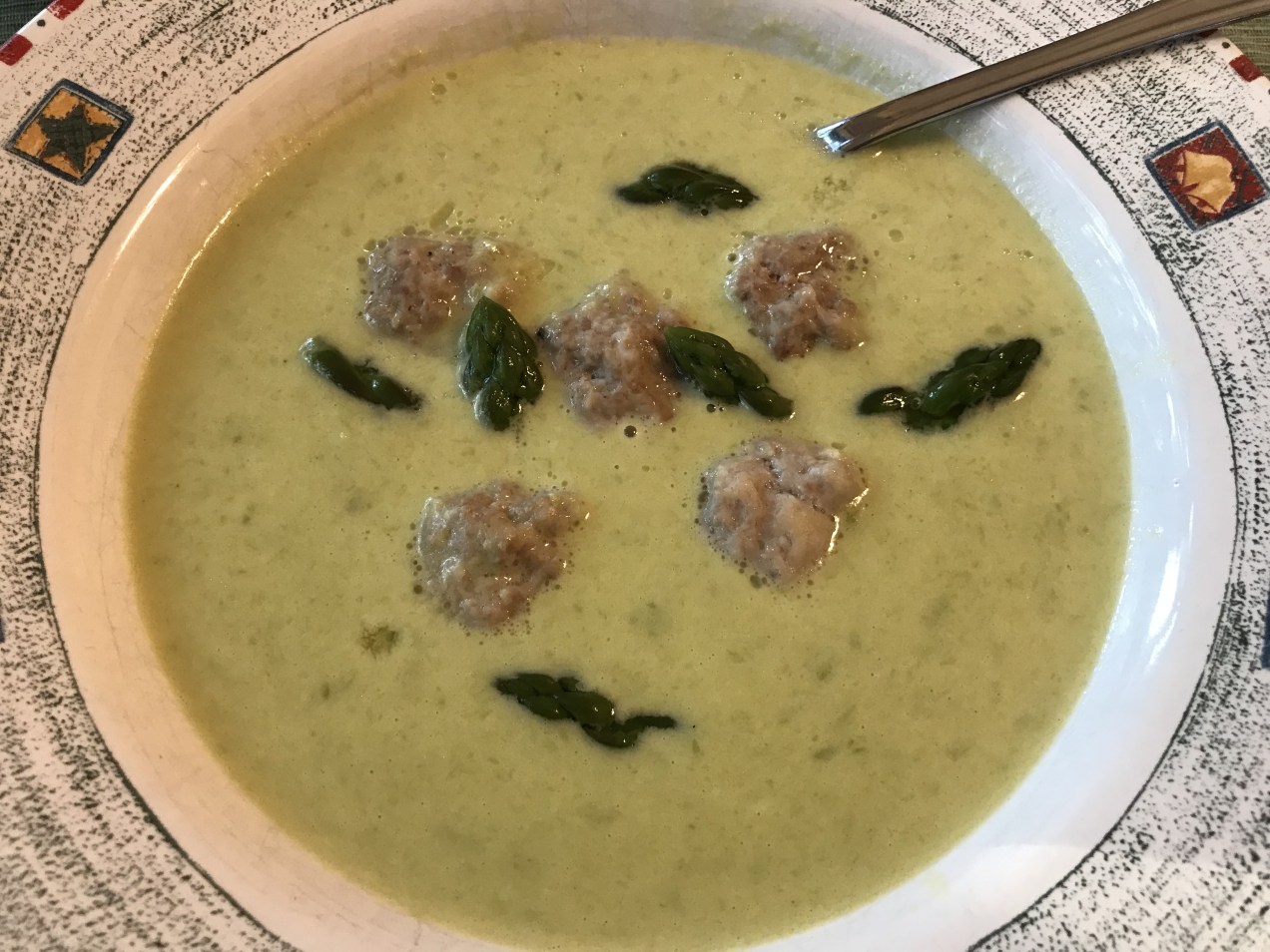
Aspargessuppe - Danish asparagus soup with mock veal dumplings
danish cuisine, food history, soup

Aspargessuppe: Danish Spring Asparagus Soup

1000 Foods (pgs. 344 – 346), recipe found in text

            Ever since the days of Ancient Rome, asparagus has been a symbol of spring and early summer. Ready sooner than most other vegetables, it seems to be especially popular in northern Europe, where long winters mean a longer season without fresh produce. Perhaps this makes people eager to enjoy everything about summer while they can.

            An interesting Danish recipe for asparagus is a soup enriched with veal dumplings and garnished with asparagus tips. Supposedly, it is not as common as it used to be, at least in restaurants. Most likely, this has to do with how fiddly it is to make. The recipe in the text requires at least five saucepans – one to cook and puree the asparagus, one to heat cream or half-and-half, one to heat broth, one to make a combination bechamel/velouté sauce, and one to cook the dumplings. Egg yolks are added at the last minute. Once they are, the soup has to be heated very carefully to prevent curdling.

            I don’t have five saucepans, and I assume most other people don’t either. If the broth and cream are heated in the microwave, the number can be reduced to a more manageable three. You can save another step by not straining the pureed asparagus. The soup won’t be as smooth, but I personally prefer for it to have a bit more texture.

            The first thickener is a combination of two of the French “mother sauces,” bechamel and velouté. Both use a butter and flour mix called roux to thicken a liquid. For bechamel, or white sauce, the liquid is milk, and for velouté, it is a light broth, typically poultry or fish. Yes, velouté is essentially gravy, but using the French term makes it sound fancy. Additional thickening comes from tempered egg yolks. About half of the soup is gradually whisked into the beaten egg yolks to bring them up to temperature, then the mix is added to the pot and heated carefully.

            This was an excellent soup. The asparagus flavor was clear and distinct, enriched but not overpowered by the bechamel/velouté and egg yolks. For some reason, the combined beef and pork “veal” dumplings didn’t puff up like they were supposed to. I suspect this was because I had previously frozen them and didn’t allow adequate time to thaw before cooking, but they still tasted good. For an easier recipe, the soup would be just as good plain. As with most asparagus soup recipes, the asparagus tips are set aside after cooking, reserved as the perfect garnish.

One-Time
Monthly
Yearly

Make a one-time donation

Make a monthly donation

Make a yearly donation

Choose an amount

$5.00
$15.00
$100.00
$5.00
$15.00
$100.00
$5.00
$15.00
$100.00

Or enter a custom amount

$

Your contribution is appreciated.

Your contribution is appreciated.

Your contribution is appreciated.

DonateDonate monthlyDonate yearly
Standard
Uncategorized

Cook’s Tour of Italy Menu 40 (Pgs. 128 – 132): Bachelor Party with Romeo, Verona

Menu 40 (Pgs. 128 – 132): Bachelor Party with Romeo, Verona

Region: Veneto

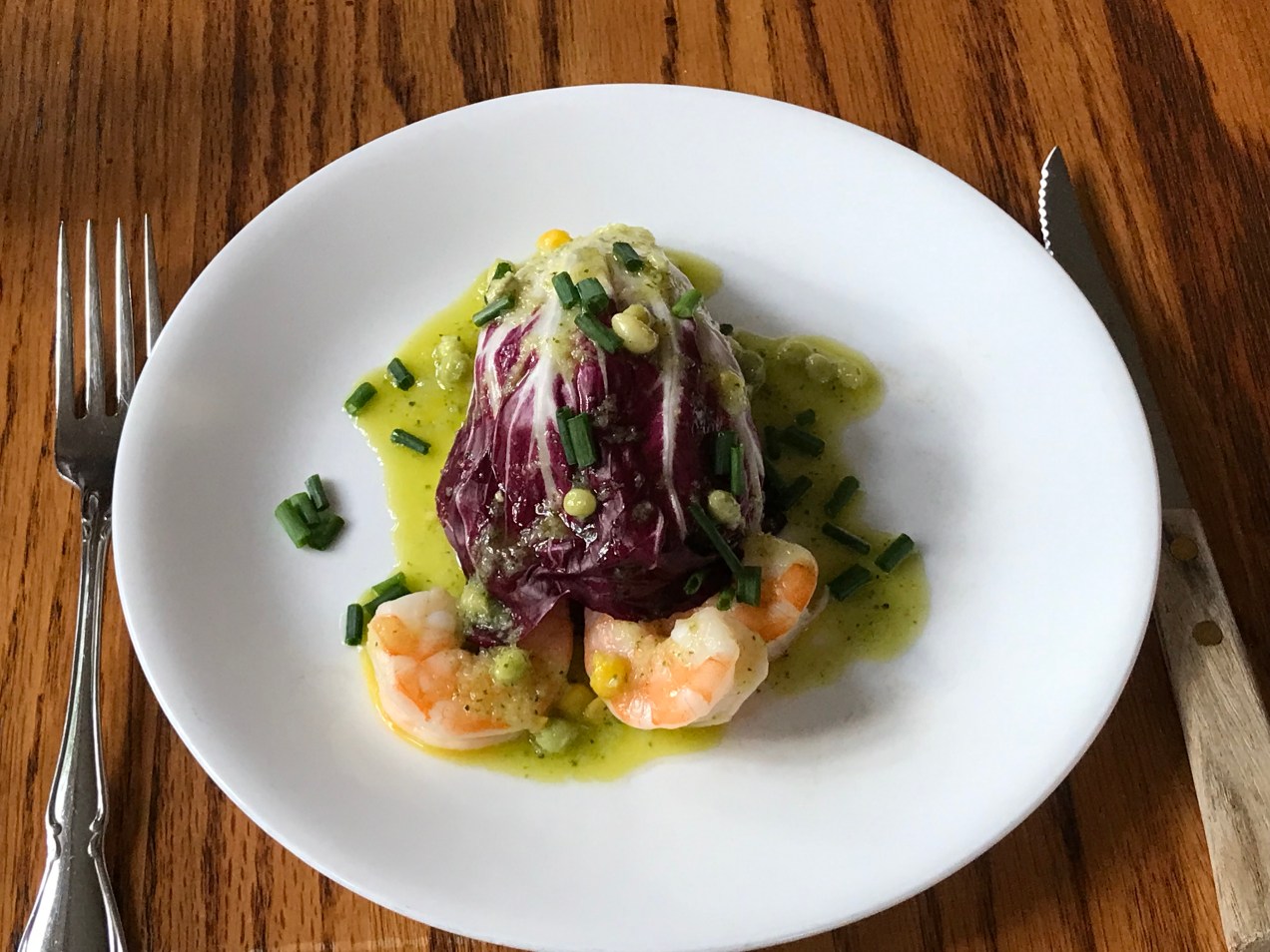
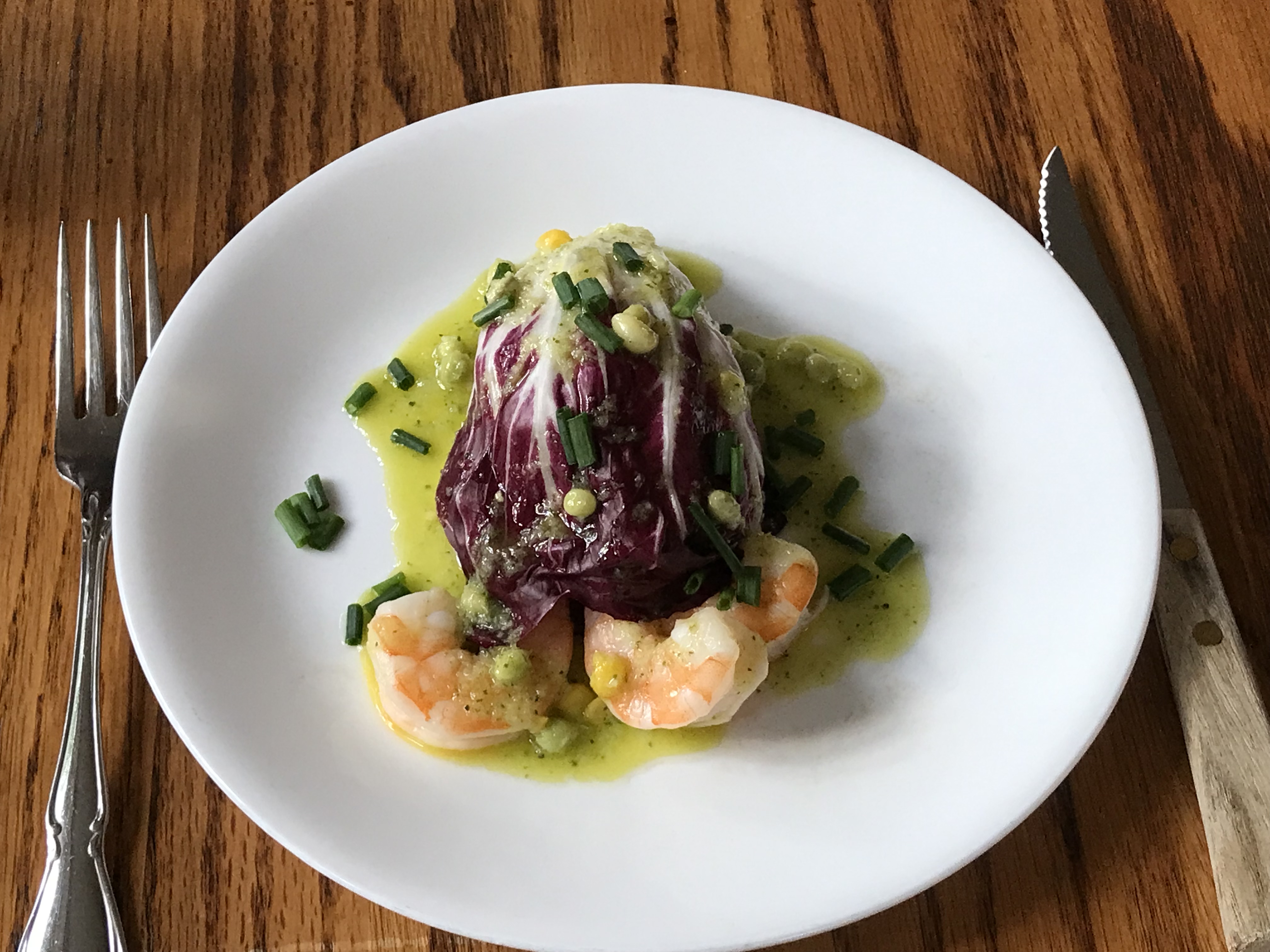
Menu: Shrimp and Radicchio with a Sweet and Sour Sauce, Fried “Soft-Shell Crabs,” Asparagus with Oil, Vinegar, and Fried Eggs on Radicchio, Sweet Semolina Cookies with Grana and Honey

Recommended Wine: Frontego (Soave, bright yellow with citrus aroma)

            If you’ve ever read Romeo and Juliet, you’ll know that the title characters’ secret wedding did not allow for a bachelor party, but here we can imagine one. Pizza, hot wings, and lots of beer seem more likely fare for such a party, but maybe Romeo preferred the specialties of the Veneto region. These include fish, shellfish, and cephalopods of all sorts, including soft-shell crabs and cuttlefish, a variety of sweet and sour sauces, and radicchio. While this menu does not match up to the story’s Medieval origins very well, it was tasty and interesting.

            Note that I did make a few substitutions for economy, convenience, and personal preference. The recipe called for using smoked salmon to form a “cornucopia” for the shrimp and vegetable pieces, but with all the other flavors in the mix it would be hard for the fish to shine. While the smoky flavor probably would have been a nice contrast with the sweet corn, peas, and sauce, the benefit didn’t justify the added cost. The contrast was provided by radicchio instead. Its bitter flavor worked well with the other ingredients, and it looked pretty on the plate. Even though I care more about how food tastes, having it look good is a nice bonus.

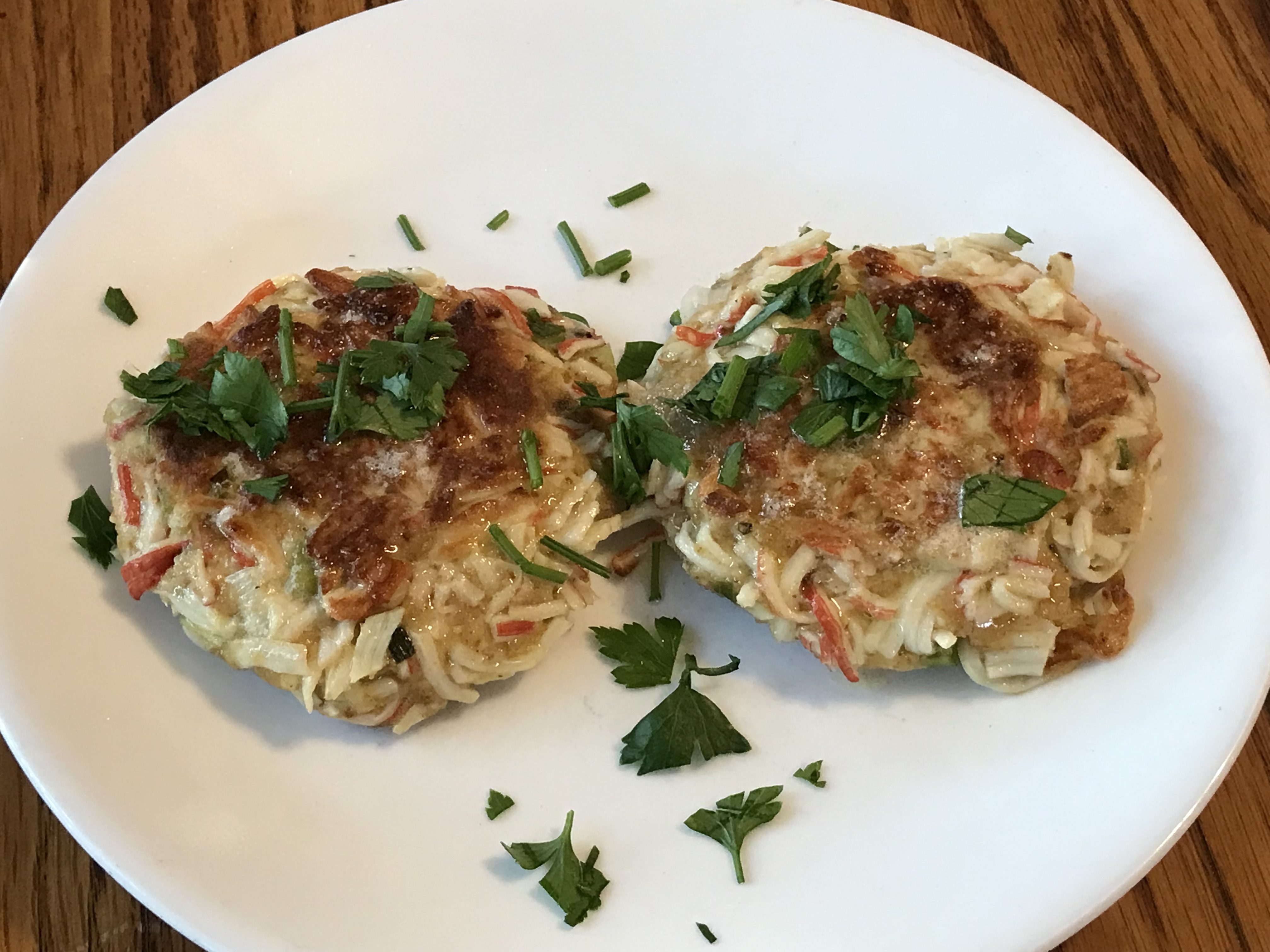
            Soft-shell crabs are hard to come by when you live several states away from the nearest ocean. The two options are 1) have them delivered (which is impractical unless buying a large quantity of items) or 2) drive three hours to one of the fish markets in Chicago (possibly at night to accommodate their early hours). As neither option was feasible, I decided to make crab cakes instead. Specifically, imitation crab cakes, because frozen crab was too expensive and I didn’t trust the canned variety. So I combined chopped imitation crab, bread crumbs, and eggs, shaped them into cakes about the width of a palm (roughly the size of actual soft-shell crabs), and made those the main course. They were delicious.

            The asparagus was closer to the recipe in the book. I cooked and marinated it as directed and plated it on radicchio. The difference was in the topping. The recipe calls for working chopped hard-boiled egg into the sauce. Since I don’t like hard-boiled eggs, I used another common method mentioned in the recipe: topping the asparagus with butter, fried eggs, and parmesan cheese. This all worked very well together and isn’t as weird for a bachelor party as it might seem.

            Asparagus has been viewed as an aphrodisiac since the days of Ancient Rome. After falling out of favor for several centuries, it became popular again in the Renaissance. There was even a way to tell if someone was eating it in secret: by the distinctive odor it left in their chamber pot. People have noticed for centuries that asparagus made their urine smell funny. Both Benjamin Franklin and Marcel Proust mention it at least once in their writings, and one 18th Century club insisted that gentlemen not urinate in the coat rack during asparagus season. Why that was too much to ask for during the rest of the year is unclear, but it was a different time.

            Moving on from aphrodisiacs and asparagus pee, we have dessert. These cookies are made crunchy and slightly gritty with semolina flour, flavored with rum and raisins, and served with parmesan-like grana cheese and honey. I’m not usually a raisin fan, but they were a good match with the light sweetness of the cookie and texture from the semolina. There is actually a Medieval connection here. At the end of a feast, it was common to serve wafers and cookie-like sweets, along with aged cheese, dried fruit, and spiced wine sweetened with honey. While the idea that this helped close the stomach and aid digestion was incorrect, the cookies, cheese, and honey worked surprisingly well together for a treat that stands the test of time.

Standard