

appetizers, fall, recipes, salad

Guess the Color: Pumpkin Seed Oil (dressing recipe for potato or kale salad)

pumpkin seed kurbiskernol vinaigrette
Looks more appetizing on the kale

            Over the course of my culinary exploration, I’ve been amazed by just how many different types of oil there are. Some are pretty standard and widespread. Canola and vegetable (often soybean) oils are neutrally flavored, easy-to-find, affordable, and widely used in baking and frying. Some cooks prefer corn or peanut oil for deep frying. For sautéing and salad dressings, olive oil is a favorite. In a well-stocked grocery store, you often find sunflower, sesame, flaxseed, grapeseed, avocado, and coconut oils.

            Certain oils are largely restricted to particular cuisines or uses. Sunflower is popular in Eastern Europe due to Orthodox fasting rules and the inability to grow olives. Toasted sesame oil is common in East Asia, especially China, while Middle Easterners prefer untoasted. Nut oils like almond or walnut are sometimes used in European salad dressings. And bright reddish-orange palm oil gives many West African dishes their distinctive flavor.

Advertisements

            In Austria, a local specialty is pumpkin seed oil, called kurbiskernol, made from the appropriately-named oilseed pumpkin. It’s typically used in salad dressings and as a dip for bread. Due to its low smoke point, it’s not suitable for cooking, which damages its distinctive flavor. But here’s a question for you. If the stereotypical pumpkin is orange and inner seed kernels (pepitas) are green, what color is pumpkin seed oil?

            Answer: It’s a lovely deep purple, with yellow-green undertones.

            In 1000 Foods to Eat Before You Die (pgs. 323 – 324), Mimi Sheraton describes pumpkin seed oil as resembling liquid amethysts. If it had been available during the Middle Ages, sophisticated diners would have been all over it. They loved bright, even tacky colors, and very few foods are naturally that shade of purple. For people who created elaborate gilded dishes with egg yolks and saffron, liquid jewels sound right up their alley.

            Pumpkins arrived in Europe after Columbus. Exactly when Europeans began eating them or pressing their seeds is unclear, but the oil makes a great vinaigrette base. To boost its color, I added red wine vinegar, minced shallots, a little salt, and a dash of mustard and honey to keep the dressing from separating. If you find the flavor of the pumpkin seed oil a little strong, try replacing about half of it with sunflower oil, which is typically pale, for a lighter shade of amethyst. Yellow or greenish olive oil will make it look muddy.

            Thinner layers of the oil can look muddy anyway, but the taste, clearly that of roasted pumpkin seeds, is worth it. It’s a fantastic complement to potatoes, and makes salads much more satisfying. Kale is especially good, because its strong flavor is less likely to be overwhelmed. It also holds up in the fridge for a few days, even with dressing.

Advertisements

            To dress about six medium potatoes or one bunch of kale, just combine 6 tablespoons of pumpkin seed oil, 2 tablespoons red wine vinegar, a minced shallot, and a little salt. Mix in a teaspoon each of Dijon mustard and honey and whisk until combined. Toss with cubes of hot cooked potatoes (waxy varieties like reds or Yukon golds are best, peeled or not is up to you) or chopped kale and let rest for an hour at room temperature. Store leftovers in refrigerator, bringing potato salad back to room temperature before serving. If desired, rewarm for about 30 seconds in the microwave. The kale salad is ready right out of the fridge.

            Vinaigrette-based vegetable salads are perfect year-round. They stay crisp (if applicable) better than lettuce, are more interesting than a veggie tray, and provide a pleasantly light counterpoint to grilled or roasted meats, heavy sides, and desserts. With no egg or dairy, they’re safer on hot days than those with mayonnaise. And during the winter, sturdy vegetables like potatoes and kale (or even frozen vegetables like green beans) are more consistent than fresh sweet corn, tomatoes, or lettuce.

            And with how popular pumpkin spice is, pumpkin seed dressing would be perfect on a fall or Halloween theme menu. Perhaps a kale or other cabbage salad with pumpkin seed vinaigrette and toasted pumpkin seeds to start, followed by pumpkin or squash ravioli with butter and sage, and concluding with a pumpkin or apple dessert. With plain coffee or tea, though. Pumpkin spice belongs in desserts, not beverages.

One-Time
Monthly
Yearly

Make a one-time donation

Make a monthly donation

Make a yearly donation

Choose an amount

$5.00
$15.00
$100.00
$5.00
$15.00
$100.00
$5.00
$15.00
$100.00

Or enter a custom amount

$

Your contribution is appreciated.

Your contribution is appreciated.

Your contribution is appreciated.

DonateDonate monthlyDonate yearly
Standard
Uncategorized

Austrian Boiled Beef: Tafelspitz

1000 Foods (pgs. 328 – 329)

            Austrian Emperor Franz Joseph had an eventful and often tragic life. He ascended the throne at 18 in 1848, a year of revolutions across Europe. The emperor at the time was his uncle Ferdinand, who suffered from various health issues, probably as a result of Habsburg inbreeding. Although revolution was quickly suppressed in Austria, there were concerns about his ability to handle any future unrest. Supposedly, when told that the people were revolting, he asked an advisor “are they allowed to do that?” Emperor Ferdinand was persuaded to abdicate, and since he was childless, Franz Joseph became emperor, with his mother Sophie of Bavaria acting as the power behind the throne.

            Between industrialization, continuing political unrest, a disastrous war with Prussia, the rise of anarchism, rising tensions in the Balkans, and eventually WWI, Franz Joseph had a lot to deal with during his reign. In 1889, his only son died in a murder-suicide with his mistress. Nine years later, his wife, the famously beautiful Empress “Sisi,” was fatally stabbed by an anarchist. In 1914, his heir Franz Ferdinand (nephew, I believe) was assassinated in Sarajevo, starting WWI. With all the stress ruling must have involved, it’s no wonder former Emperor Ferdinand’s health improved during his retirement in Prague.

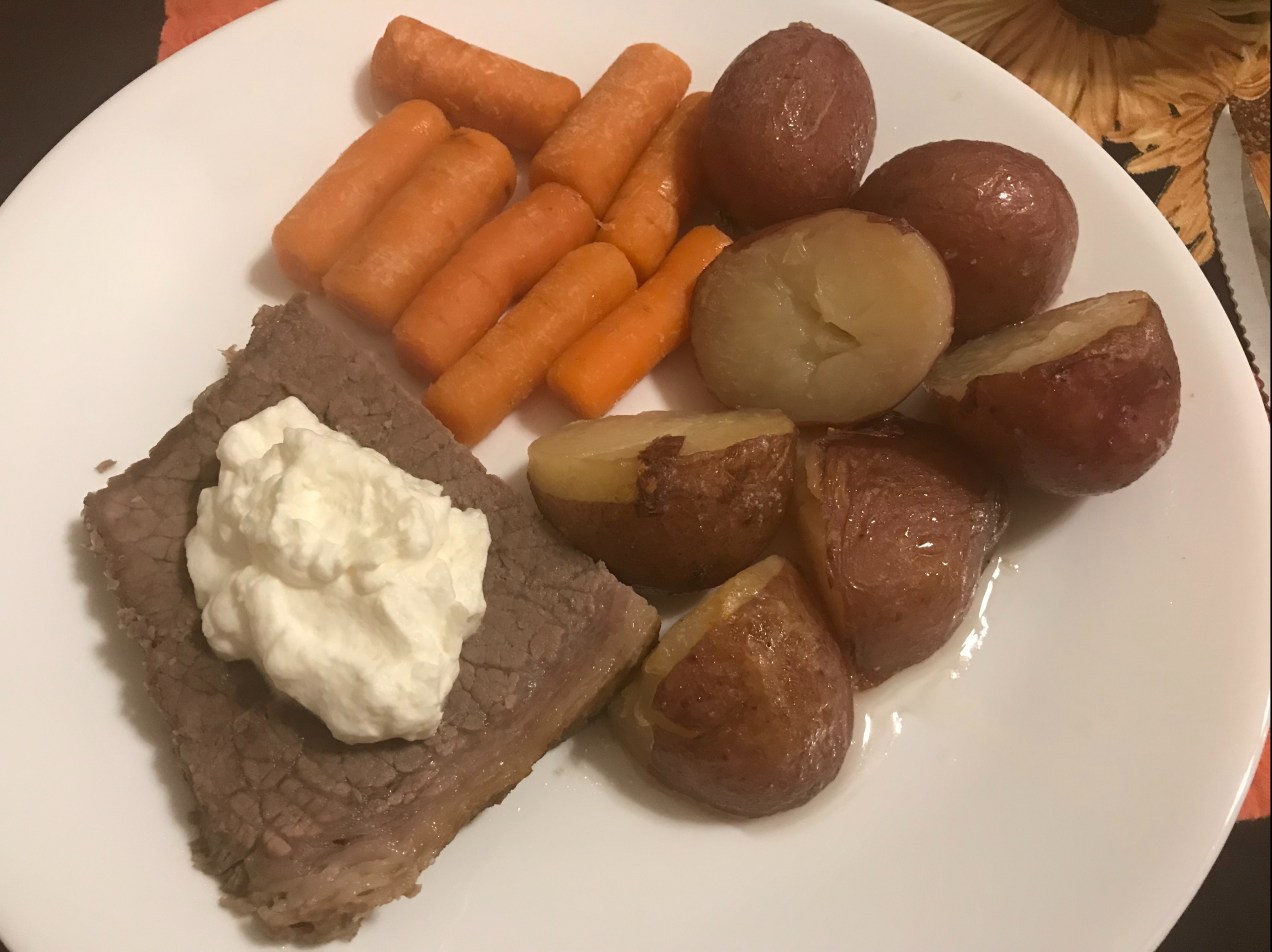
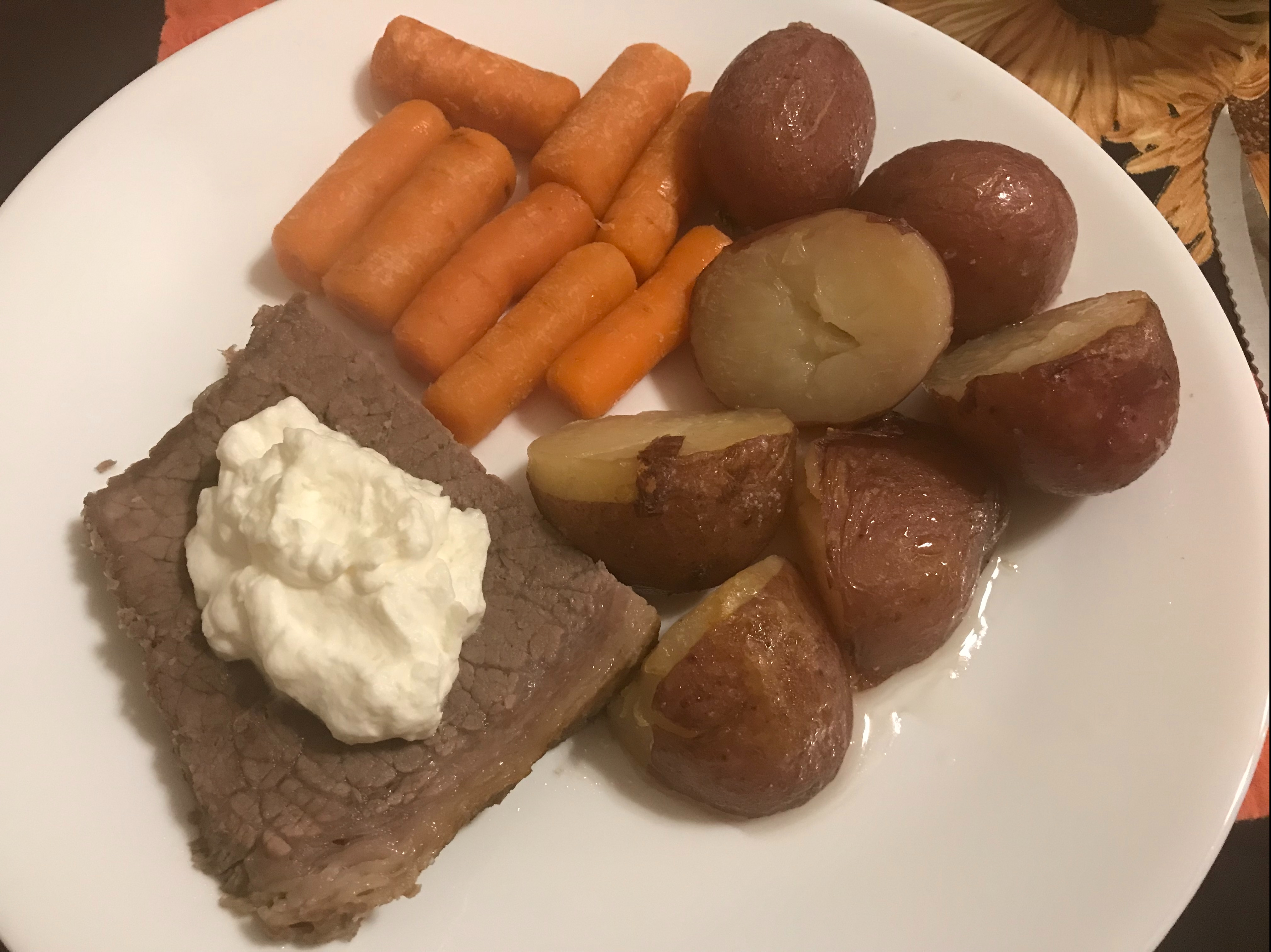
            Perhaps all the stress and heartbreak he endured drove Franz Joseph to comfort foods. One of his favorites was tafelspitz. A large piece of beef is slowly braised with root vegetables, tenderizing the meat and producing a rich consommé. Constant skimming is supposed to ensure a clear bouillon to serve in cups as a first course. The beef is then served with potatoes, vegetables, and some form of a horseradish sauce. I oven-roasted some leftover red potatoes with oil and salt to crisp them up and added fresh carrots, cooked in a bit of broth, to the plate (the braising vegetables get too soft for serving). Other options might include braised onions or leeks, or pickled beets. I followed the recommendation to mix the horseradish with unsweetened whipped cream, adding grated apples to half, chives to the other half. Either is typical, as is plain horseradish.

            Things did not go according to plan. Despite frequent skimming, the broth was not as clear as it was supposed to be, but that was a minor issue. It was also somewhat bland, though definitely not bad. The much bigger problem was the beef. I used a piece of chuck, which is common for tafelspitz, and slowly simmered it, which is supposed to make it tender. This didn’t work at all. The beef was extremely tough, almost like leather, and was even difficult to cut. I’m not sure what went wrong. Was the water too close to a boil? Did it need more cooking time? Whatever the problem was, slicing and simmering the meat again didn’t help much. Even without the texture issue, the flavor was a bit boring. The horseradish cream sauce was good, but it didn’t help the beef much. Exactly why the emperor loved tafelspitz so much is still a mystery.

            I hadn’t expected this, but I was prepared. Temperatures were dropping rapidly and respiratory illnesses were spreading, so I already had plans to make beef mushroom barley soup with the leftovers. With less eaten on the first night, there was extra meat and broth for a bigger batch of soup. Three or four meals for two people, as it turned out, so it wasn’t all bad.

If you like this blog, please consider making a donation to help the fun continue.

One-Time
Monthly
Yearly

Make a one-time donation

Make a monthly donation

Make a yearly donation

Choose an amount

$5.00
$15.00
$100.00
$5.00
$15.00
$100.00
$5.00
$15.00
$100.00

Or enter a custom amount

$

Your contribution is appreciated.

Your contribution is appreciated.

Your contribution is appreciated.

DonateDonate monthlyDonate yearly
Standard