
Region: Naples/Adriatic South (Along the Adriatic Coast)
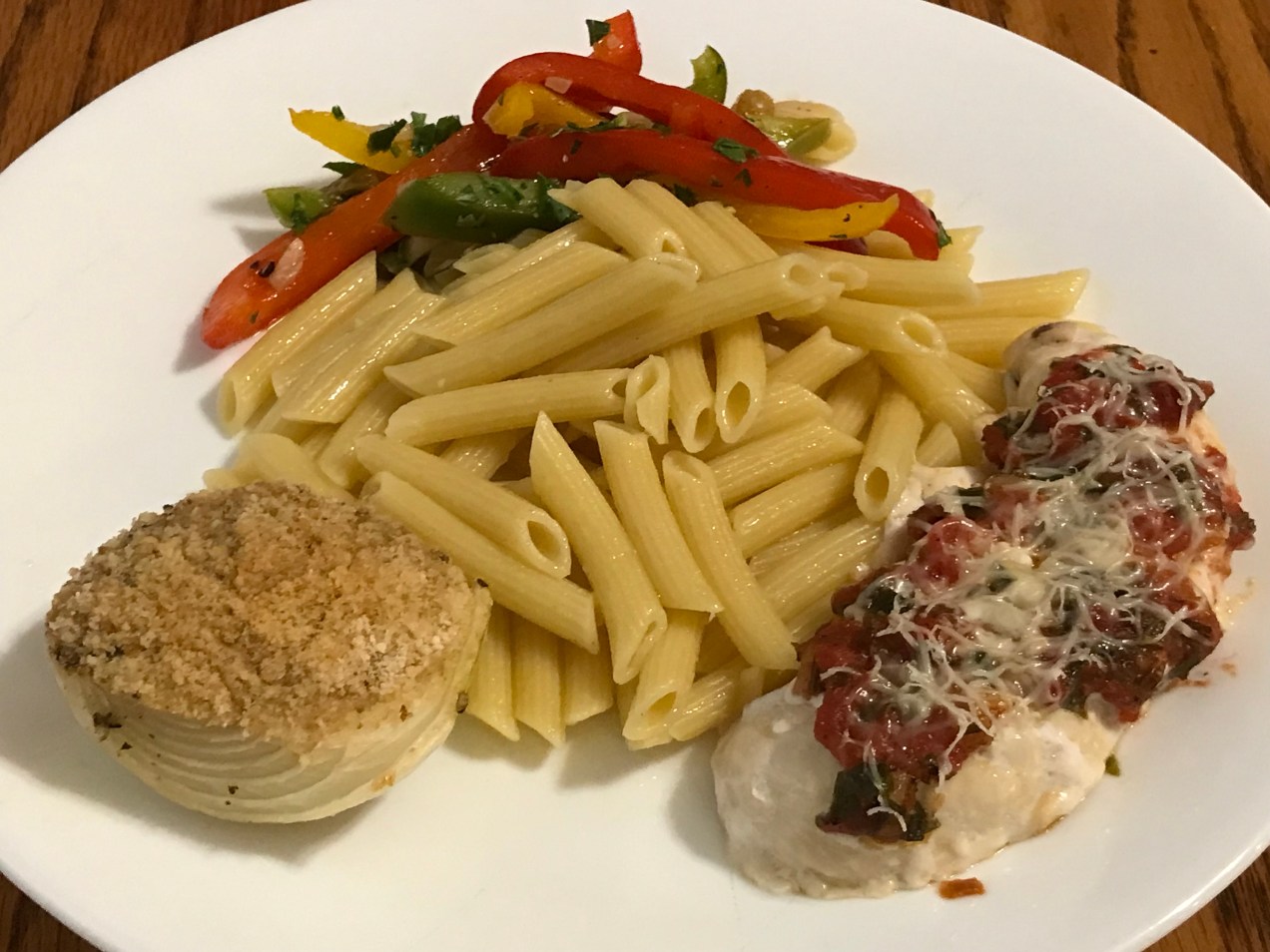
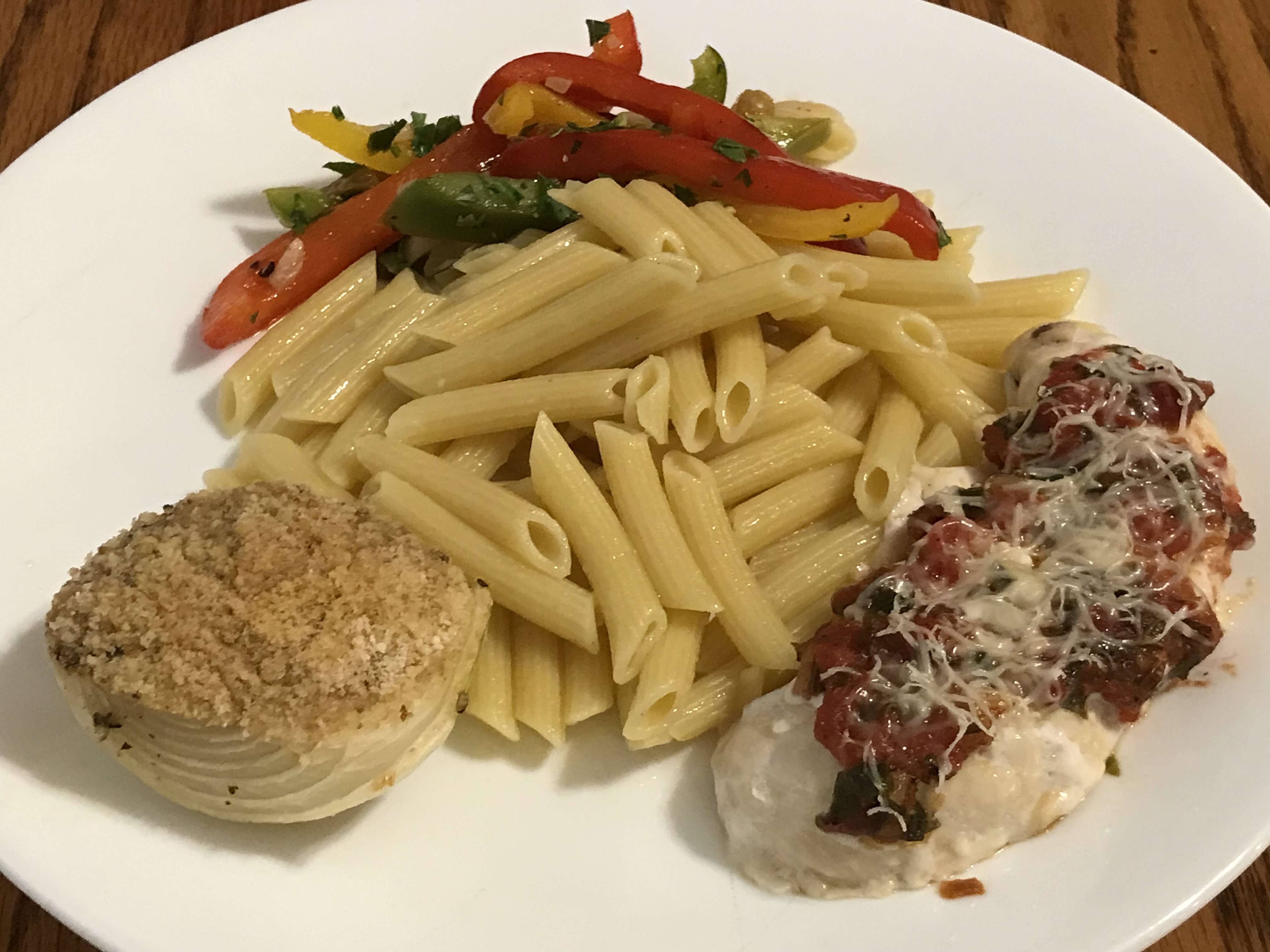
Menu: Peppers with Almonds, Basilicata Style, Chicken with Spicy Herbed Tomatoes, Baked Caramelized Onions, Tangerine Sherbet with Lemon
Recommended Wine: Campanaro Fiano di Acellino (from near Naples) or Greco di Tufo Vignadangelo
The Adriatic Coast has a long history. The area was home to a number of Greek city-states in the first millennium BC, as was most of Southern Italy. During the 3rd Century BC, as the Romans moved into the area, the city-states brought in their ally Pyrrhus of Epirus. Despite a series of tactical victories, King Pyrrhus lost too many troops to sustain the war, thus giving rise to the term Pyrrhic victory. The region was subsequently part of the Roman Empire, then the Gothic Kingdom of Italy. In the 6th Century AD, it was the launching point of Byzantine Emperor Justinian’s attempt to retake the Western Empire. Though the Lombards took the region soon after, followed by the Franks under Charlemagne, Byzantine enclaves remained into the 11th Century, when the Normans captured the region.
On a side note, the rise and fall of the Normans is one of the more fascinating stories in Medieval history. After a spectacular rise in the 11th Century, they reached the peak of their power in the 12th. At one point, they controlled not only their native Normandy, but also England, much of Western France, Southern Italy, Sicily, and the Crusader States in the Holy Land. But in the 1180s, territories began slipping from their grasp. After the loss of the Kingdom of Jerusalem in 1187, the rest of the Crusader States followed by 1291, when their final stronghold of Acre was captured by the Mamluk forces, who were based in Egypt. The Anglo-Norman kings lost Normandy itself in 1204. Sicily was lost in 1282. In the late 14th Century, during the Hundred Years’ War between France and England, the Normans living in France began to see themselves as French, while the Anglo-Normans became truly English. By the end of the Middle Ages, the Normans were what they were a few hundred years before: a unique local culture, but restricted to Northwestern France and subject to the French king.
In the 15th Century, the forces of Aragon, who had conquered Sicily in the 13th Century, conquered the Kingdom of Naples, gaining control of the southern half of mainland Italy. Soon after, in 1480, the Ottoman Empire attempted to invade Italy through the region, occupying the city of Otranto. Though the arrival of reinforcements halted the invasion and the death of Sultan Mehmed II ended it for good, hundreds of the local population were martyred during the yearlong occupation. For most of the next 400 years, Spanish Habsburgs and then Bourbons controlled the area. Italy was finally unified in the 1860s.
The cuisine here is much like in the rest of Southern Italy, with lots of olive oil, vegetables, citrus fruits, and some seafood. To be completely honest, this was not my favorite menu, although I would make the chicken again. The spicy tomato sauce added a nice flavor and kept the meat from drying out. As I have in the past, I replaced the pricey seafood (in this case lobster) with chicken. Pretty much any protein tastes good with tomato sauce and cheese, so there’s no reason to break the bank. As the menu seemed to lack a starch, I added some plain pasta to accompany the stronger-flavored dishes.
While typically associated with meat or seafood, sweet and sour sauces can and historically have been used on a wide range of foods, including vegetables. Personally, though, the sweet and sour peppers were not to my taste. There was nothing wrong with them, but I like peppers better in an omelet, stuffed, or in stuffed pepper soup. The onions were also a bit of a disappointment. It may have been due to the type of onions, but they never became melt-in-your-mouth soft in the oven like they were supposed to, even with some extra time. Despite this, the leftover peppers and onions made a pretty good omelet filling the next day.
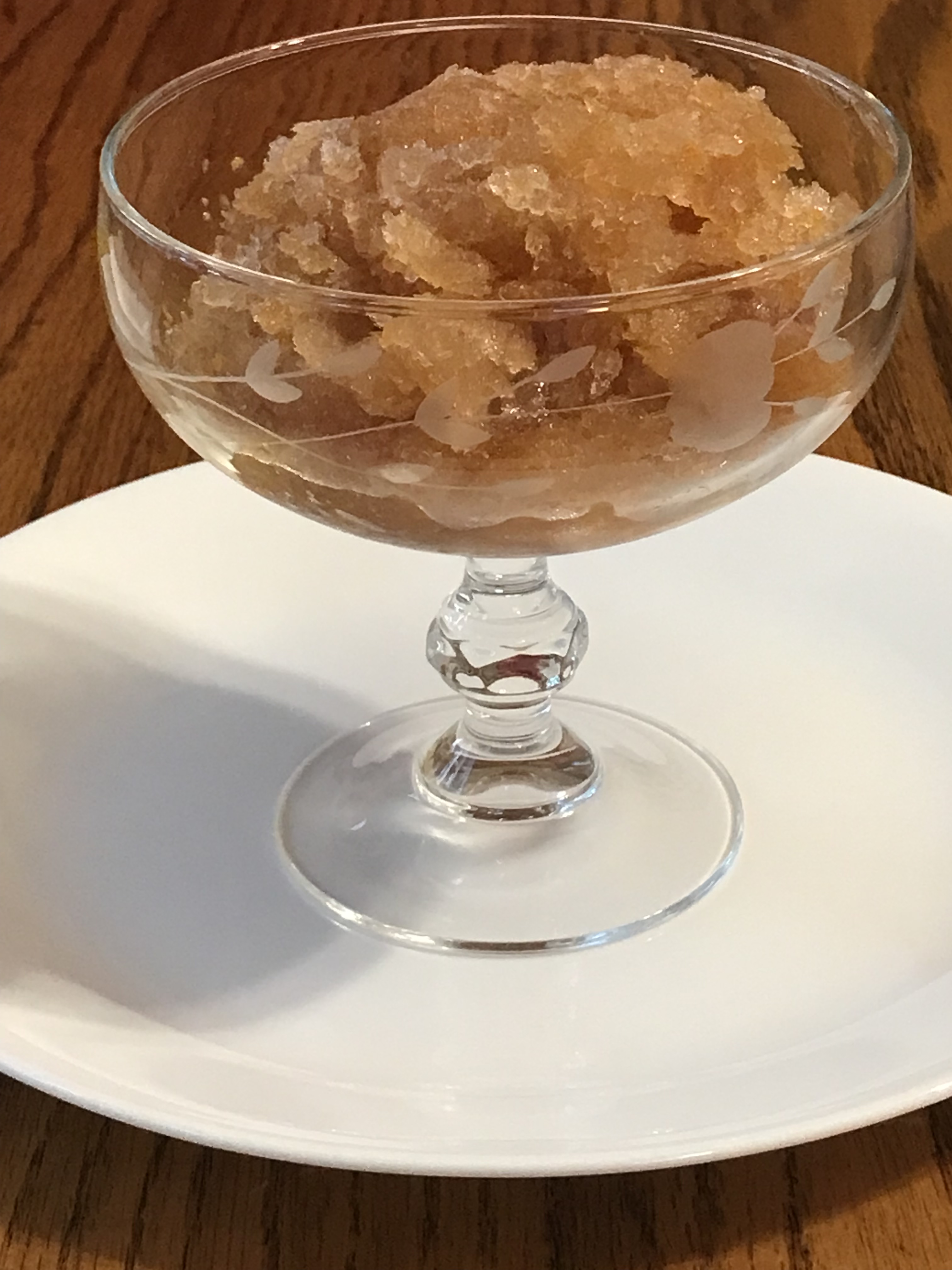
The sherbet/sorbet didn’t turn out quite like I would have hoped, though some modifications I made may be to blame. To make it non-alcoholic, I replaced the lemon liqueur with a lemon syrup and the wine with sparkling juice. I was concerned that removing the alcohol would make the mixture freeze too solid, but the extra sugar in the syrup was enough to avoid that problem, which is why it was included. If you’re curious, both alcohol and sugar lower the freezing point of water-based liquids. The final flavor was decent, but too sweet to eat on its own, almost like marmalade. When combined with lemon-flavored sparkling water, however, it became like a slush and was fairly enjoyable, though I’m not sure I’d go through the trouble of making it again.
 Feasting Through Time