
Source: 1000 Foods (pgs. 386 – 387)
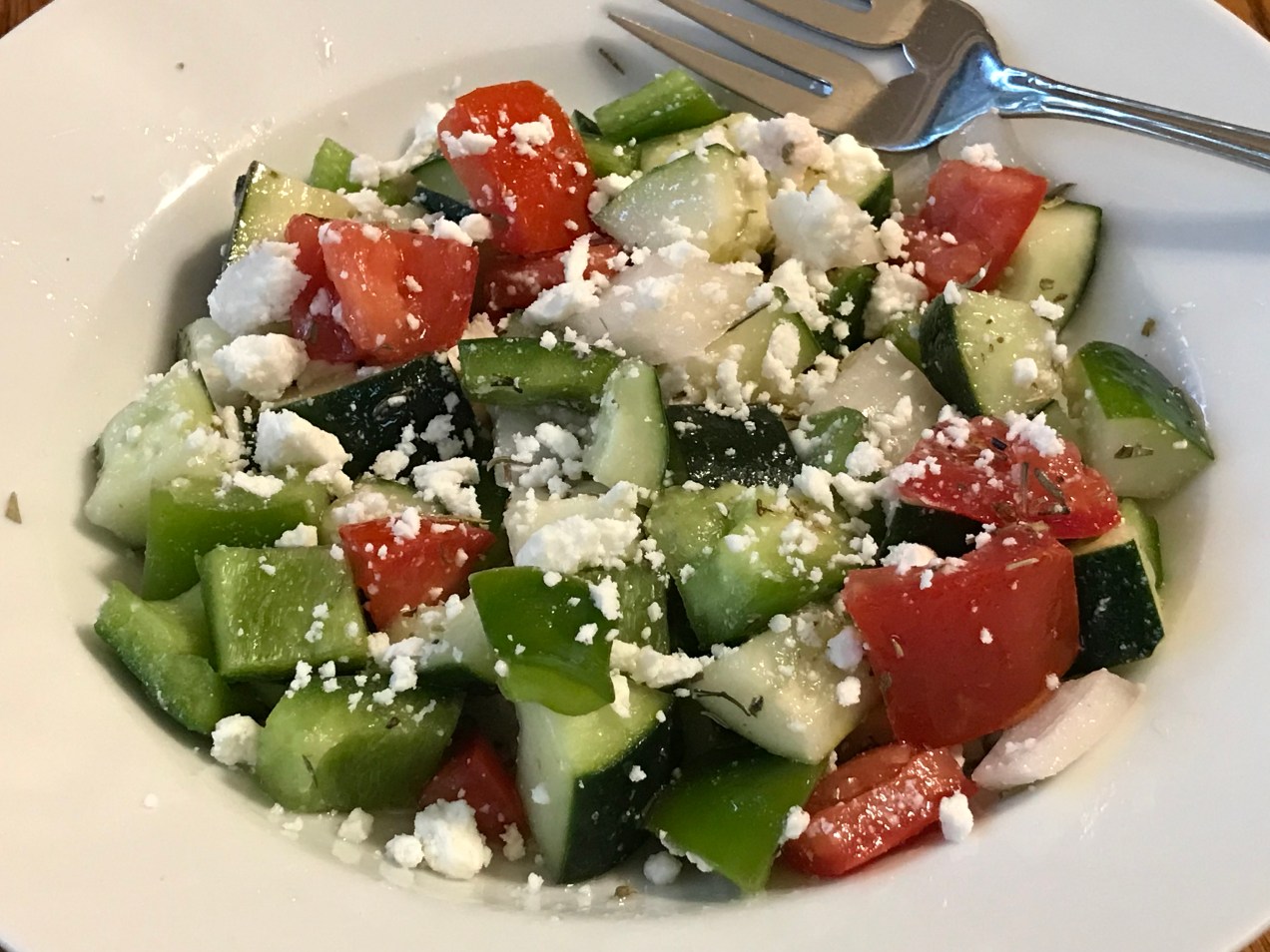
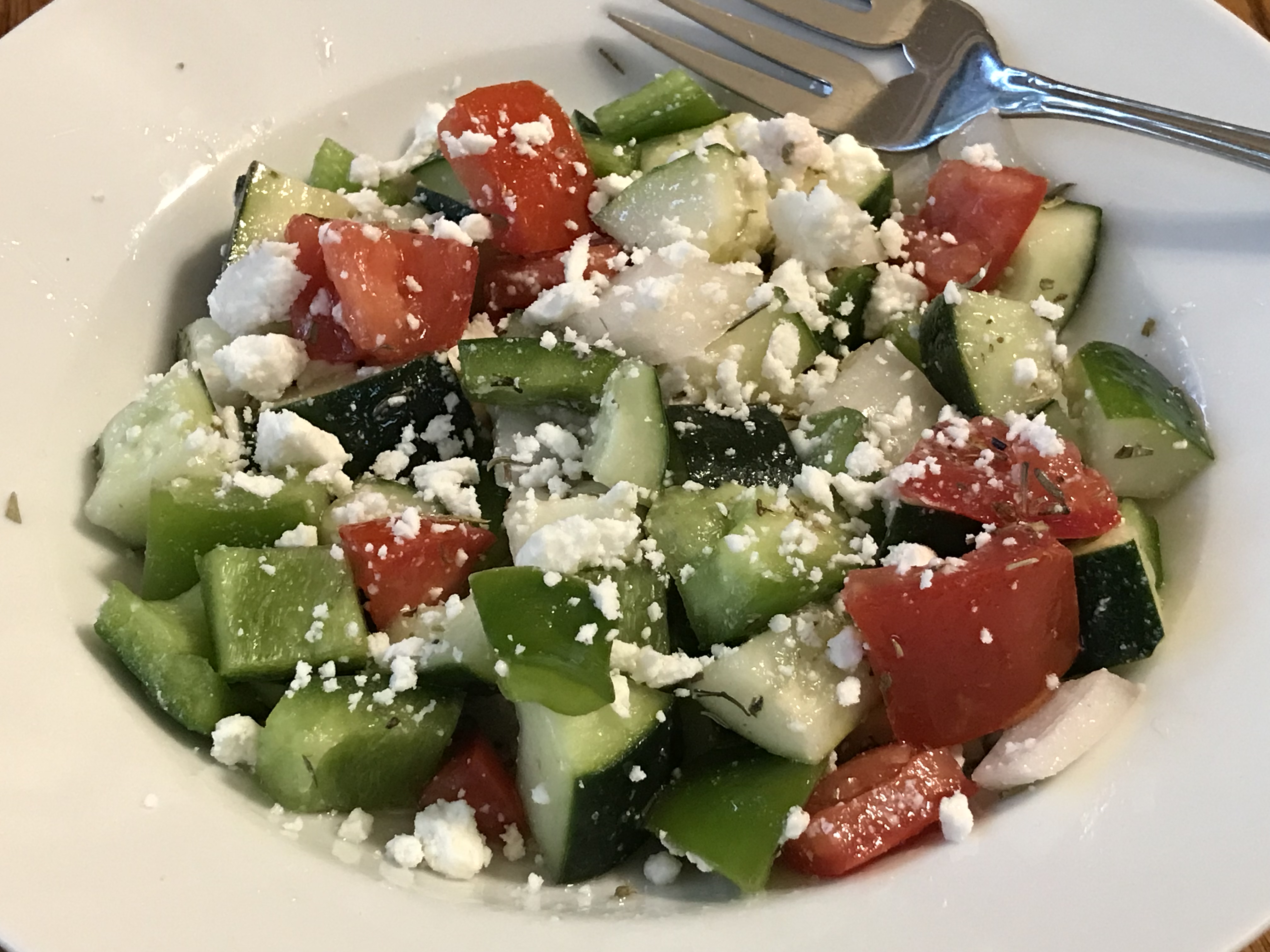
Another popular vegetable dish in Bulgaria in Shopska Salata, a brightly-colored salad topped with feta cheese. Loaded with cucumber, tomato, green pepper, and onion, it’s a crunchy and flavorful blend that invokes summer (or early fall, when there are still fresh vegetables in season). This mixture is enhanced with salt, pepper, garlic, vinegar, oil, and the herb savory, which is called chubritsa in Bulgarian. The oil can be olive or sunflower. In a region at the juncture of the Mediterranean and Eastern Europe, either would be common.
One factor that often distinguishes particular cuisines is the type of fat used to cook with. Around the Mediterranean, olive oil has been predominant for millennia. In Northern and Central Europe, lard was the primary fat, supplemented with butter. The same was true in Eastern Europe, but there was an issue. While the Catholic Church allowed butter during Lent from the Late Middle Ages onward, the various Eastern Orthodox churches continued to prohibit it. This was a problem in mostly Orthodox regions north of where olives could grow, such as Russia and Ukraine. When a cheerful plant with lots of oily seeds was introduced from the Americas, it quickly filled entire fields.
Sunflowers are annuals. Since they go through their entire life cycle in one growing season, cold winters don’t matter. As long as there is good soil, adequate water and space, and plenty of sun during the summer, they will be ready to harvest in a matter of months. Sunflower oil is popular in salad dressings across Eastern Europe, which is a custom worth copying. It’s low in saturated fat, and more oil production means more fields of joy. Any cut for decoration last for several days in a vase (or at least mine did), and sunflowers can even remove toxins from the soil. Once the spent heads dry out, I’m hoping to save the seeds for next year. Then I’ll need to find space for them. Not to produce my own oil, just to have.
Feta cheese enriches the chopped vegetables nicely. It makes the salad more substantial, adds a nice salty/tart flavor, and the white topping contrasts with the red and green vegetables. Bulgarian cheesemakers produce their own version of feta, similar to the Greek method. Usually made from sheep’s milk, the cheese is submerged in a salty brine to cure and preserve it. I had the opportunity to try Bulgarian feta at the farmers’ market but didn’t care for its strong, funky flavor. Here I used a milder feta from the goat’s milk cheese stand and it worked really well.


 Feasting Through Time