Uncategorized

Summer in the South of France: Ratatouille, Cherry Clafoutis

Source: 1000 Foods (pgs. 124 – 125, 79 – 80)
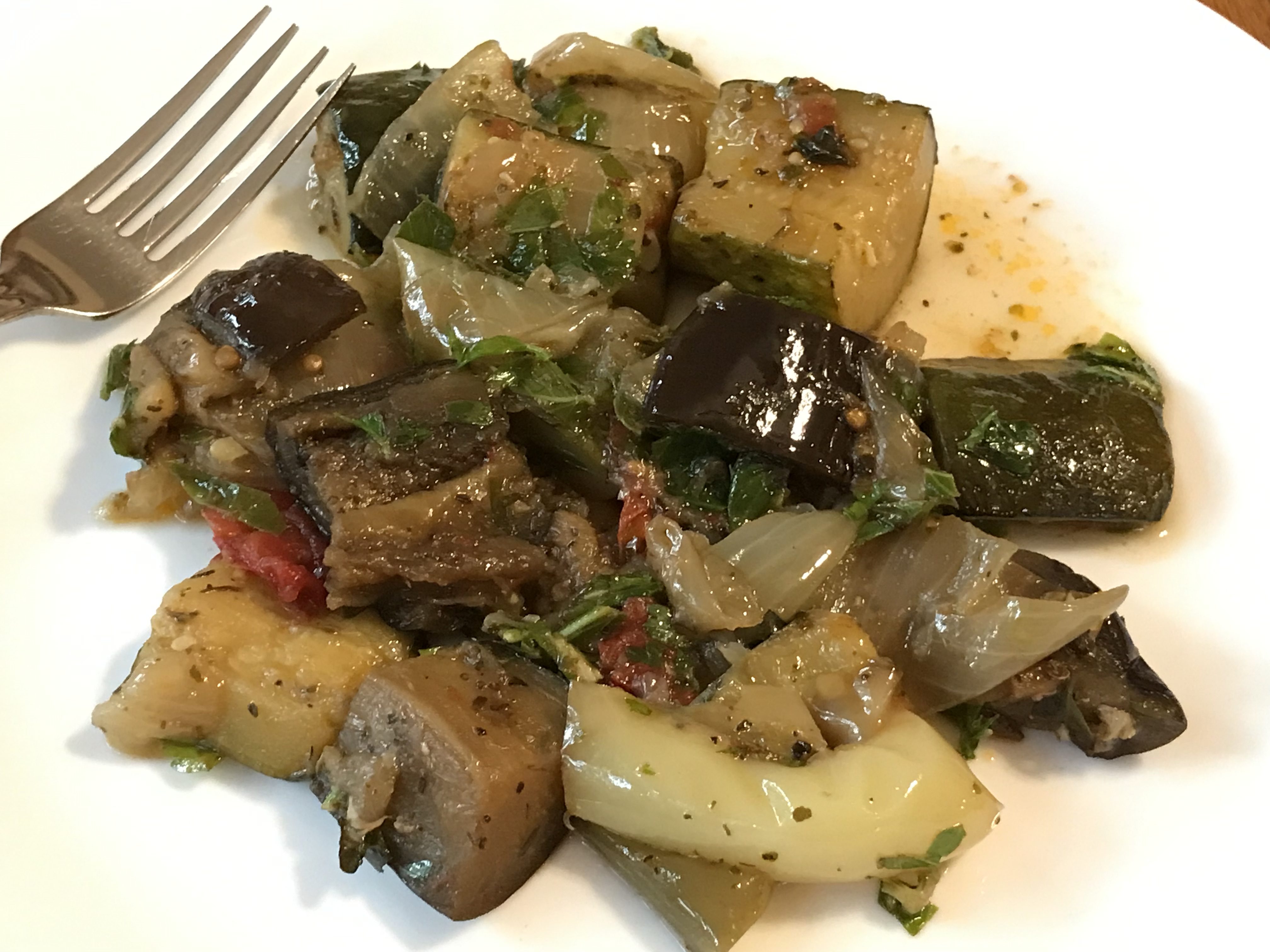
            Ratatouille is a hilarious movie. It is also a delicious demonstration of Southern French history in a single dish. The garlic, onions, parsley, and olive oil were all available from the time Rome controlled the region, if not before. During the Middle Ages, dukes and counts in Southern France were as wealthy and powerful as the king in Paris, if not more so. Much of this wealth came from the area’s agricultural productivity, but trade was also important. Eggplants arrived via trade with the Arab world and became widespread around the Mediterranean. Basil also came from the East. The peppers, tomatoes, and zucchini came from the Americas before becoming traditional in Provence.

            Clafoutis is sort of like a cross between a cake and a custard. It begins with a batter similar to crepe batter to which fruit is added. Cherries are the most popular, but are not the only option. Unlike in cherry pie or black forest cake, sweet cherries are used. What’s most interesting about clafoutis is that traditionally, the cherries are unpitted to keep the red juice from running into and staining the cake. Supposedly the pits provide a bit of almond flavor due to compounds related to cyanide, which sounds scary but is in such small quantities that it’s not an issue. In fact, the quantities were so small that I couldn’t taste the almond flavor at all, but it wasn’t really necessary. The lightly sweet, soft crepe/custard with just a hint of vanilla was the perfect foil for the stronger flavor of the cherries. Not getting poisoned was nice too.

Standard
Uncategorized

Rodgrod med Flode (Danish red berry pudding with cream)

Source: 1000 Foods (pgs. 357 – 358)

            Here’s a cherry recipe I had more success with. Rodgrod med flode, which is apparently very difficult for non-Danish speakers to pronounce, is a translucent dessert made with red summer fruit. In Denmark red currants, sometimes in combination with other fruits, are the most popular, but they are a lot harder to come by in America. At one point, it was actually illegal to plant currant bushes due to concerns about them carrying white pine blister rust, which threatened the logging industry. While the bans have since been repealed, currants never became popular here and are usually only available in jam form.

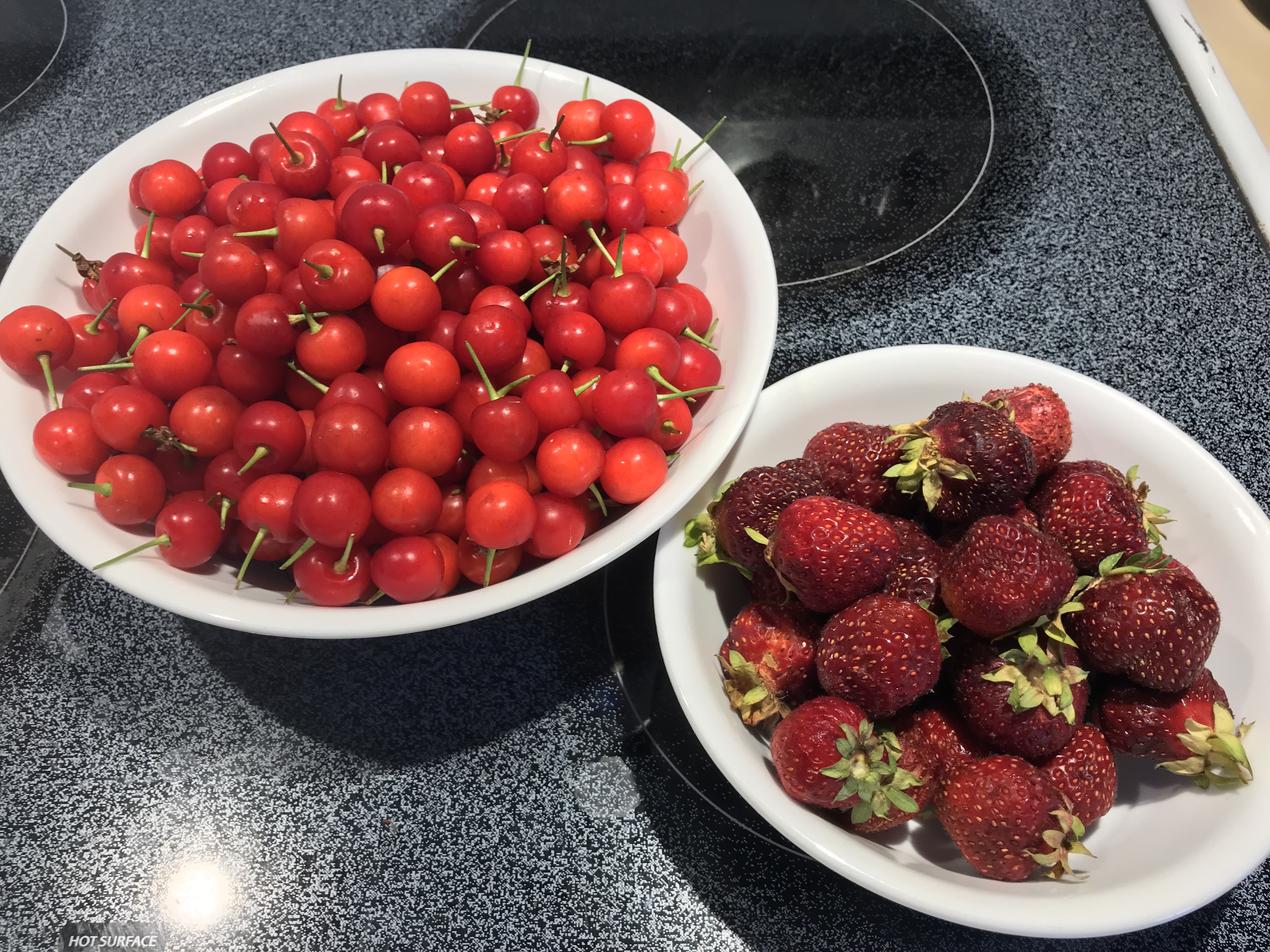
The raw ingredients

            Since red currants are often supplemented by other berries or cherries, I combined four parts tart cherries with one part overripe strawberries and a bit of black currant jam. Everything is briefly simmered, strained for juice, sweetened, and thickened with cornstarch. The texture is similar to gelatin but smoother, with a garnet-like color and shine. It tasted kind of like cherry pie, but the strawberry flavor was there too. A bit of whipped cream balanced out the sweet-tart pudding and added a nice contrast in color. If I find some currants, it would be interesting to try again and compare.

            In the meantime, cherry season is over. There are several bags of pitted frozen cherries and jars of jam in the deep freeze, ready for experimentation, and the robins have finished off those left on the tree. In the process, they have distributed the cherry pits over a surprisingly wide area. If conditions are right, maybe some of those seeds will grow into new trees. Cue the music to “The Circle of Life.”

Standard
Uncategorized

Hideg Meggyleves (Hungarian sour cherry soup)

Source: 1000 Foods (pgs. 393 – 394)

            There are two main types of cherries. The type sold seasonally in supermarkets and eaten fresh are sweet cherries, such as Bing or Rainier. They tend to be larger, firmer, and often (though not always) darker in color. But it is tart cherries that we are focusing on today. While they are too sour to eat on their own and too soft to ship long distance, sour varieties like Montmorency and North Star can be preserved effectively. These are the cherries that, combined with sugar, give cherry pies and jams their distinctive flavor. They also freeze well.

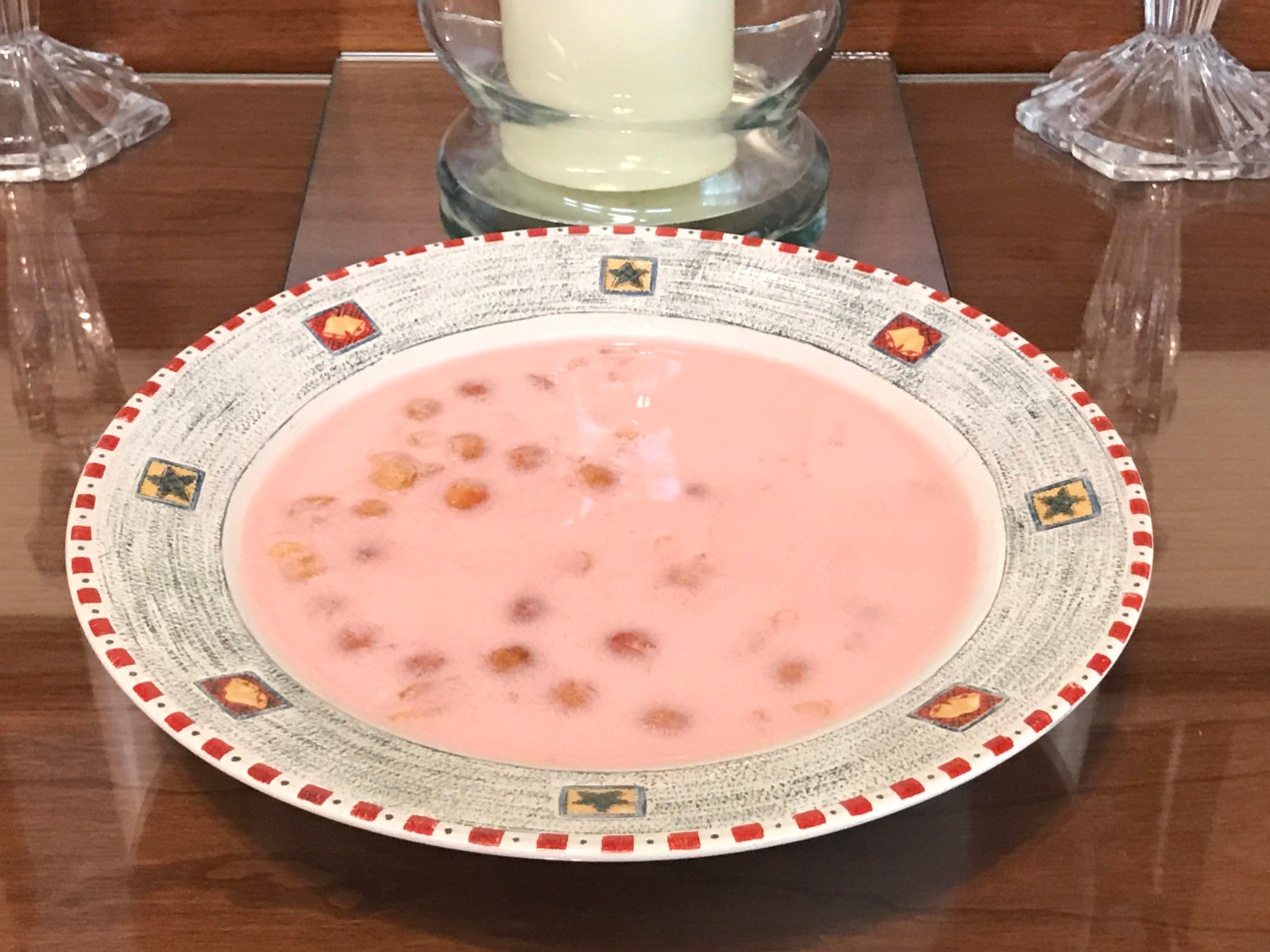
            This year, I was able to harvest a bumper crop from the tree in the backyard, even without being able to reach many of the branches. Normally birds eat all the fruit before it is fully ripe, but this year the tree was so loaded they couldn’t eat them all. After making a pie and a batch of jam, I took advantage of the bounty to try a few new recipes. The most unusual was a Hungarian recipe for sour cherry soup, sweetened with sugar, flavored with cinnamon, and thickened with sour cream.

            It sounded good, but to be completely honest, I didn’t care for it. It wasn’t bad and the cherry flavor came through well, but the particular recipe was a bit over sweetened and rather thin. I did find another recipe with less sugar and water that might be worth trying in the future, but we’ll see. With all the other possibilities out there, I’m not sure if I would actually make this again. But it was worth a try.

Standard