Lindt chocolate bars and truffles
dessert

Lindt Chocolate: Mardi Gras Treat

Lindt chocolate bars and truffles

            Valentine’s Day was a few weeks ago, which meant chocolate was on sale everywhere. With Swiss Lindt chocolate half-price at the grocery store, I couldn’t resist getting a selection. According to Mimi Sheraton on pages 331 – 332 in 1000 Foods to Eat Before You Die, only the plain dark chocolate bars and those with sea salt are worth buying, as are the liquor-filled batons the company makes. Flavored bars and especially milk chocolate are not, apparently. But for the ultimate chocolate experience, the super-dark 90 or 95 percent cocoa bars are the most complex, if you can get past the bitterness.

            Personally, I disagree. No matter how complex and interesting, barely-sweetened chocolate doesn’t taste good. The bitter flavor is unbalanced on its own. It needs enough sugar to counteract it. The idea isn’t to overwhelm the chocolate, but to create a sweet-bitter harmony. Milk chocolate adds another layer of complexity, being sweet, bitter, and creamy. It is no better or worse than dark chocolate, just different.

            I also disagree about the flavored bars and confections. The Lindt dark chocolate with sea salt does taste good, but so does the dark chocolate orange and dark chocolate chili. The milk chocolate is delicious with chopped hazelnuts. And the chocolate truffles are spectacular, with a crunchy shell and smooth, creamy filling. My personal favorite are the dark chocolate ones (in the dark blue bags), but the milk chocolate and a few of the flavored varieties are also worth trying. A bowl full of Lindt truffles, color-coded in brightly-colored wrappers, would be great fun at a holiday party.

            Adults might also enjoy the batons. As far as I can tell, current varieties are filled with kirsch, plum brandy, or orange liqueur. The fruit flavors sound like they would work with the chocolate, but I worry about the alcohol overwhelming the taste. Since they’re only available online in the US and are quite pricey, I didn’t bother. Not when Lindt truffles are easy-to-find.

            During the 19th Century, Swiss confectioners were among the first to produce solid chocolate, and they are still among the best. I would hold off on the chocolate sandwich, though. Supposedly, alpine skiers sometimes snack on a piece of chocolate between two pieces of sourdough bread. If it was a baguette or ciabatta, sure, but not sourdough. And between trips down the bunny hill, not world-class slopes.

Rating: 10/10 for the truffles, 9.5/10 for the various chocolate bars

Standard
beverages, food history, italian cuisine, recipes

Northwestern Italy’s Afternoon Pick-Me-Up: Bicerin

1000 Foods (pgs. 165 – 166) for information, recipe is my own creation

            Italians seem to love their coffee, but have some interesting opinions about what kind of coffee to drink when. Any coffee with milk, such as cappuccino, should only be drunk in the morning. Maybe that’s because many Italians don’t eat much breakfast and need the calories. Unless they’re drinking gallons of café lattes or adding sweeteners, they probably won’t be getting many, but maybe black coffee is too irritating on an empty stomach. It seems like adding milk to coffee in the afternoon, or after dinner, would cut the caffeine and allow for better sleep, but apparently that’s culinary heresy. But I don’t care for coffee unless it has a fair amount of milk and sugar, so what do I know?

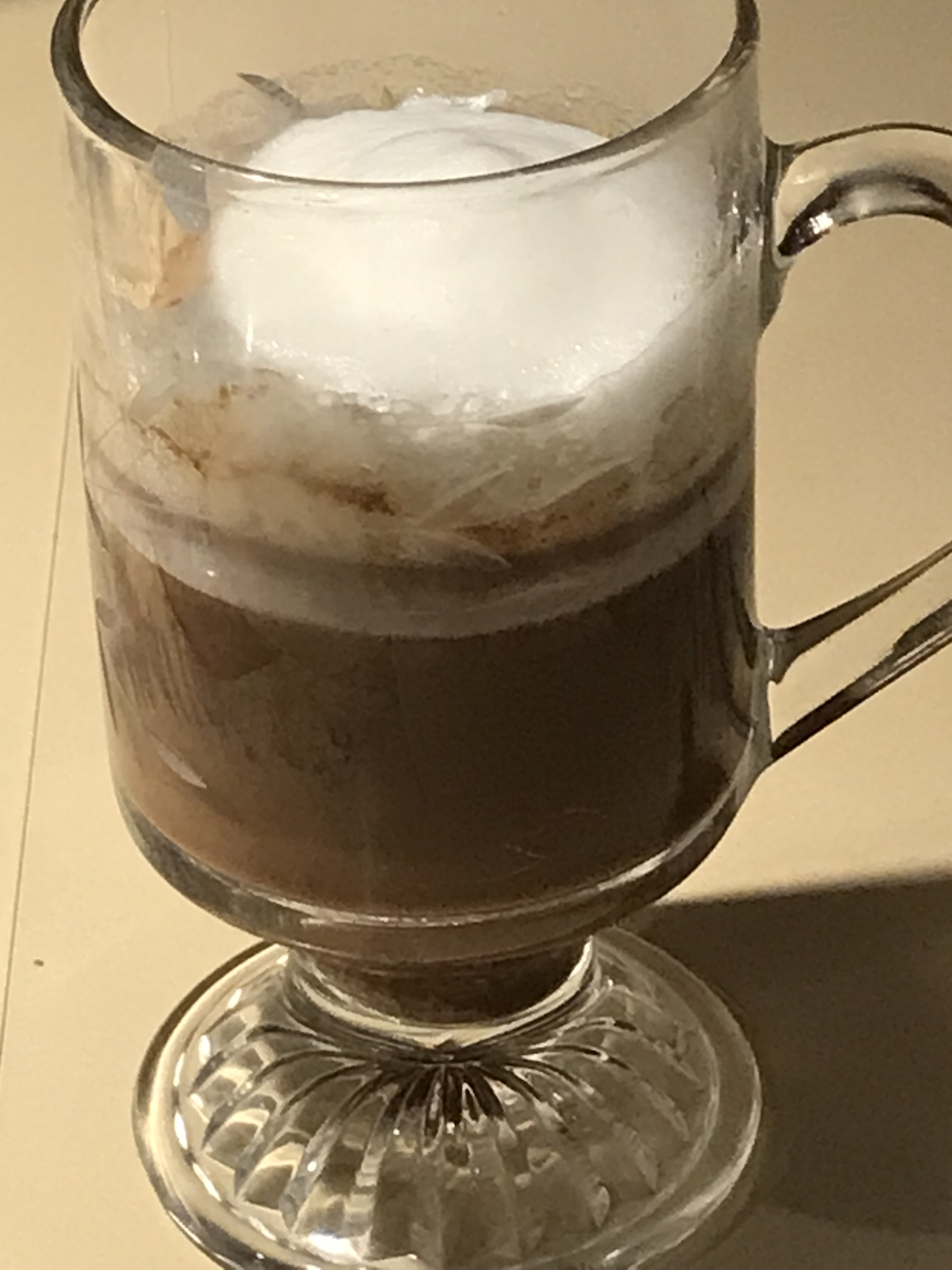
            One particularly delicious coffee drink is bicerin, essentially a fancy layered mocha native to Turin. A number of 19th Century authors loved it. To enjoy it at home, a heatproof glass is essential, as is “a steady hand,” in the words of Mimi Sheraton. The servings are small by American standards, but the drink is rich and meant to be savored. Espresso goes into the glass first, followed by thick hot chocolate. If this is done correctly and the chocolate is thick enough, it will sink to the bottom. Foamed milk goes on top, carefully, so it will stay separate, at least temporarily. Bicerin is not stirred. Rather, the layers mix as you drink it, and flavor gradually shifts from mostly coffee and milk to mostly chocolate.

            Charges of culinary heresy aside, bicerin is a great afternoon treat. Drinking it in the morning seems like a recipe for a sugar crash before lunch. Plus, it’s a bit fiddly to make, not ideal for someone who isn’t a morning person. For the right consistency, almost like a syrup, the hot chocolate should be made from scratch with chocolate pieces and milk. 2 ounces of bittersweet chocolate and 4 ounces (1/2 cup) of milk seems to be the right amount for two servings. Espresso needs to be made, and milk needs to be heated and foamed. For two servings, 6 ounces of espresso and 1 cup of a 50/50 mix of milk and half-and-half is about right. None of this is particularly difficult, but having all three elements hot and ready at the same time can be a logistical challenge to anyone still half-asleep.

            So in summary, you need: 2 ounces of bittersweet chocolate, 1 cup milk, 6 ounces espresso, and ½ cup half-and-half. Melt the chocolate in half of the milk, stirring frequently, until smooth. Remove from heat. Prepare the espresso however you choose. Combine the remaining milk with the half-and-half and heat, whisking almost constantly, until the mixture is foamy and steaming. The coffee goes in the glasses first, then the chocolate. Spoon the milk foam over the top, don’t stir, and serve. And enjoy by mid-afternoon at the latest. With three ounces espresso and an ounce of dark chocolate per serving, it will keep you up otherwise.

Standard