Anoush Aboor - Armenian wheat and apricot pudding
armenian cuisine, dessert, food history

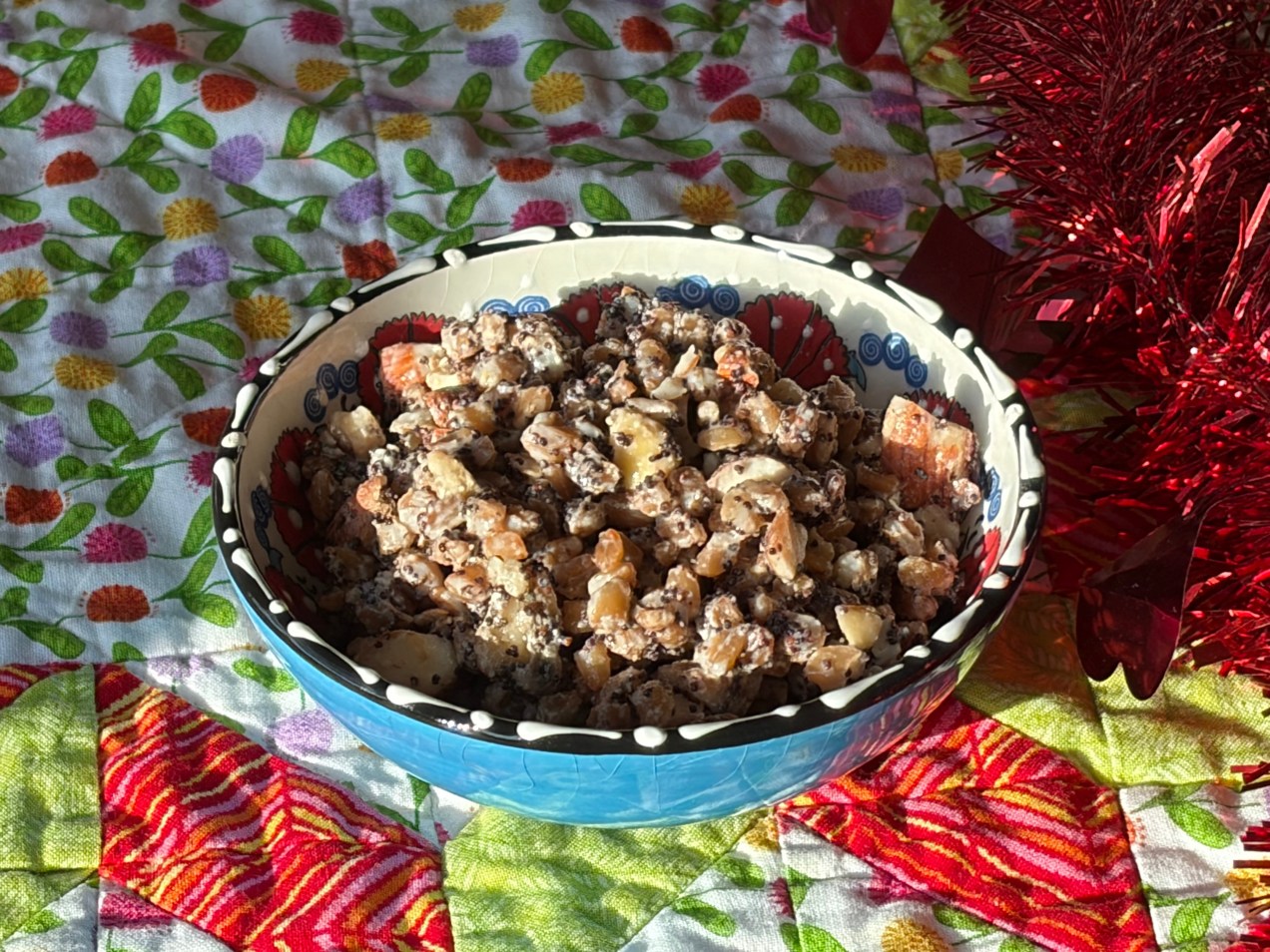
Armenian Christmas Pudding: Anoush Aboor (wheat berry and dried apricot pudding)

1000 Foods (pgs. 507 – 508), recipe is in the text

            If you’re wondering why I made a Christmas pudding in the middle of summer, it’s because I had all the ingredients in the pantry and wanted to use up what I could. The mix of wheat berries, dried apricots and golden raisins, nuts, and honey sounded like a healthy, tasty alternative to heavy desserts while still satisfying the craving for something sweet and starchy.

            Particularly popular at Christmas, anoush aboor is eaten year-round in both Armenia and Turkey. With the exception of the sugar and cinnamon, all the ingredients have been grown in the region for thousands of years. Situated in eastern Anatolia, near the headwaters of the Tigris and Euphrates rivers, this area was home to some of the earliest farmers. They grew wheat, barley, peas, and beans, raised sheep, goats, and cattle, and soon began selectively breeding and cultivating a variety of fruits, vegetables, and nuts.

            Apricots, an essential part of the dish, were originally domesticated somewhere in Turkey or Armenia. When the fruit was introduced to Rome, the Romans called it prunus armeniacus, meaning roughly “Armenian plum,” or praecox for early, since they ripen before most other stone fruits. Fresh apricots are delicious in the early summer, but are highly perishable and rarely available out of season. To have apricots year-round, people have been sun-drying them for millennia. In the Middle East’s hot dry summers, this was easy and didn’t require the use of often-scarce fuel. Even today, Turkey produces much of the world’s supply.

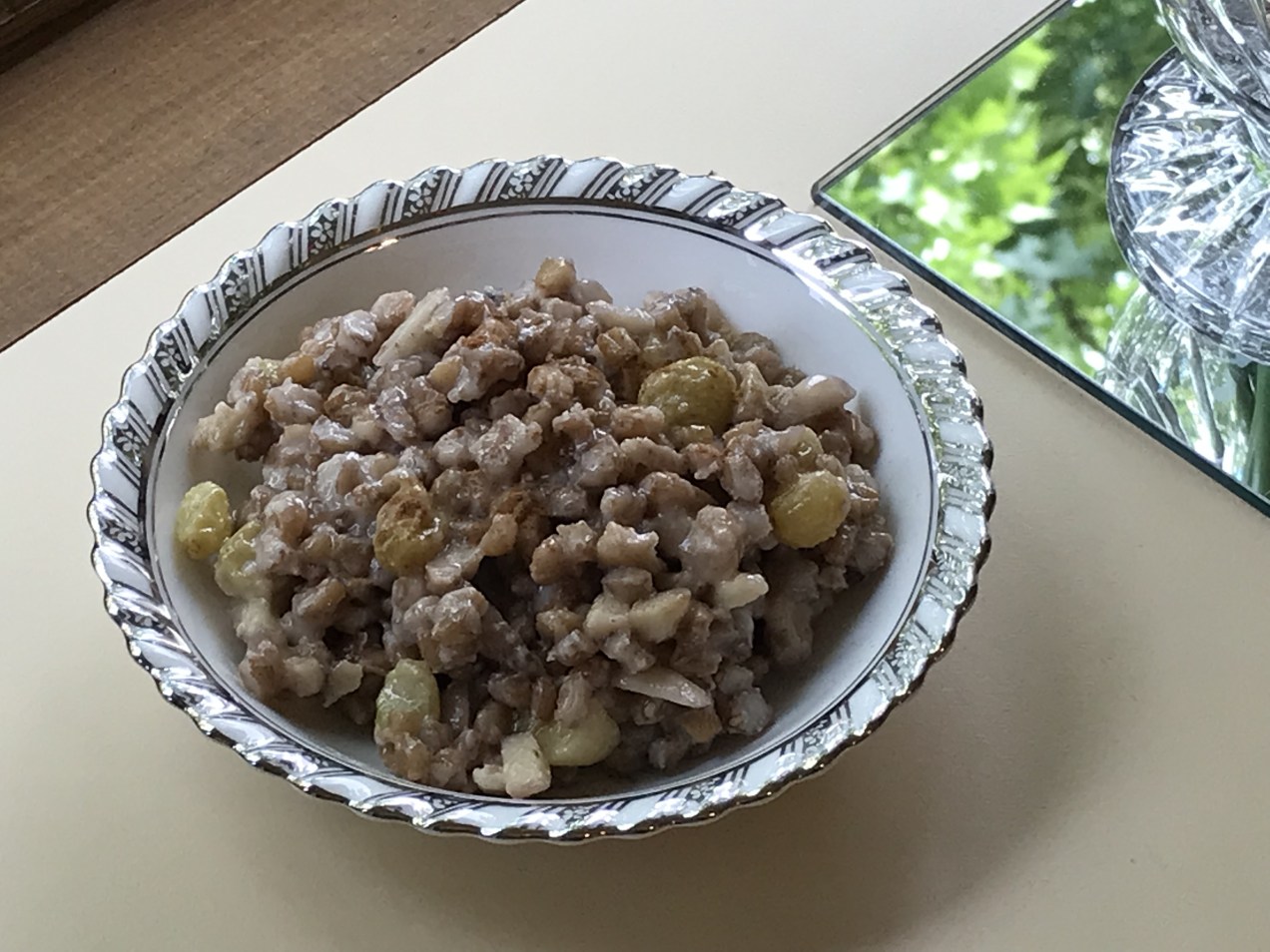
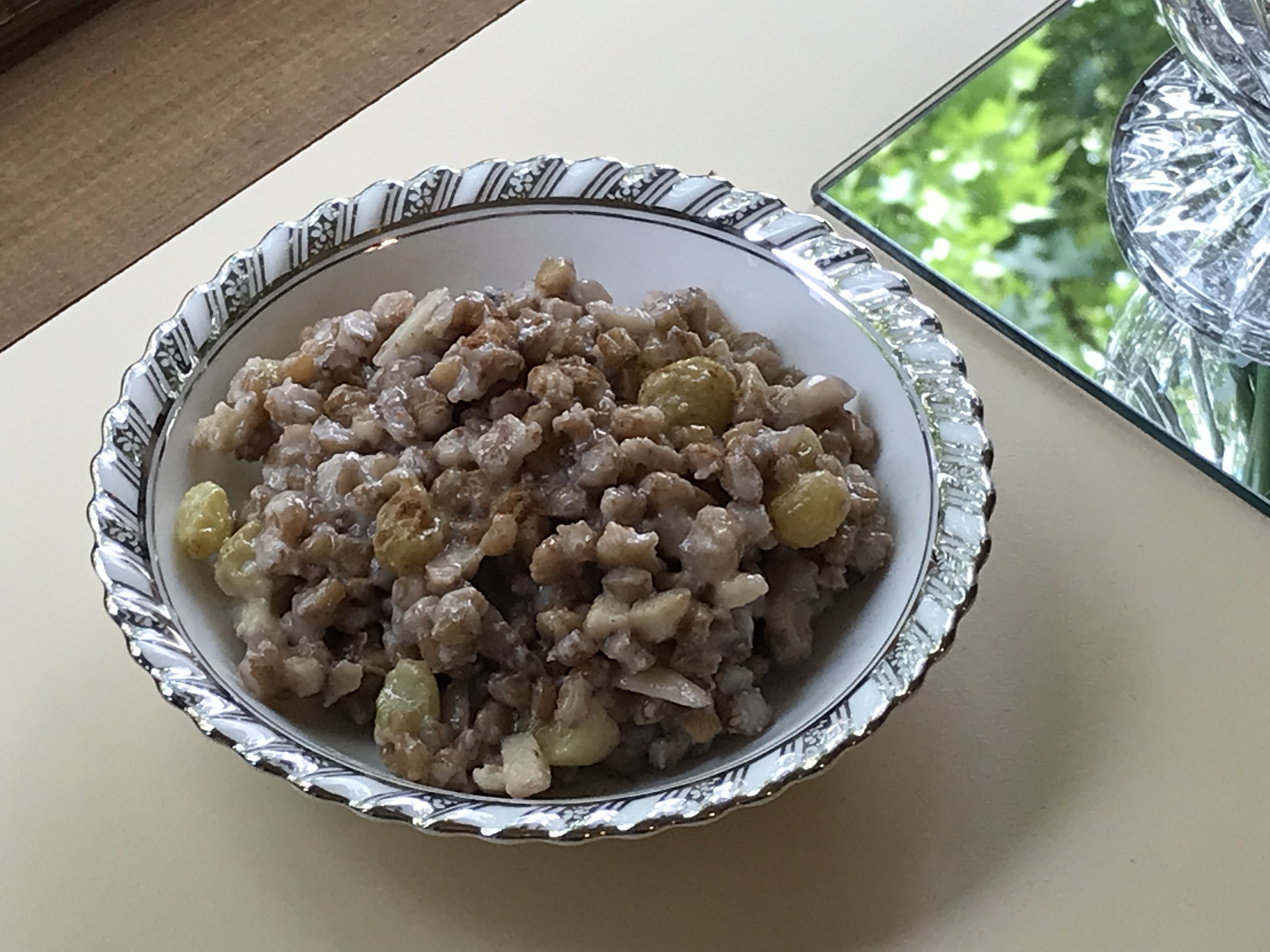
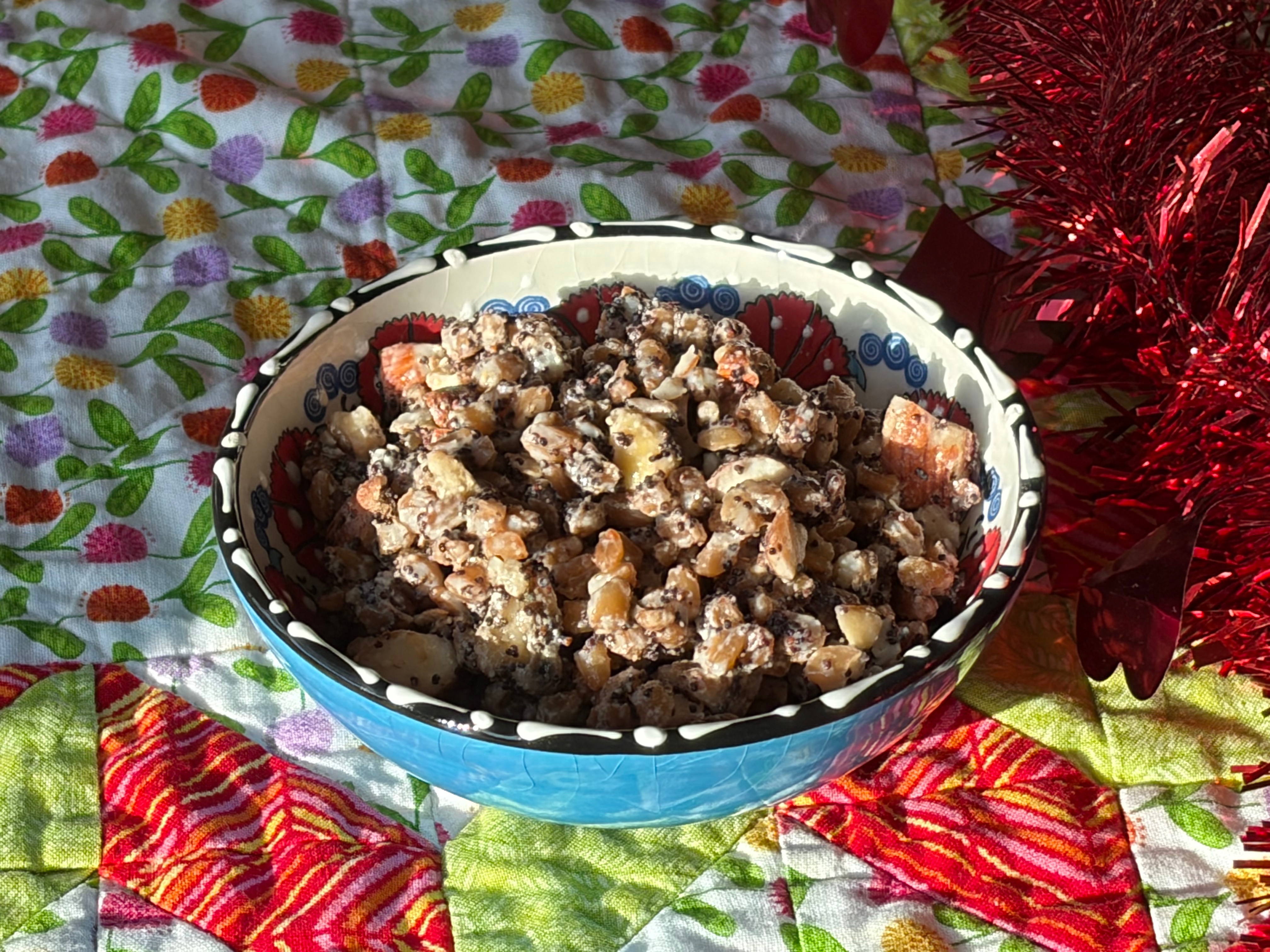
            Literally, the name anoush aboor translates to “sweet soup,” probably because of its porridge-like consistency. The wheat berries are cooked until they “pop” and release their starch into the water, thickening it. Despite being cooked in just water, the pudding had an almost creamy texture and even taste, sweetened with a mix of sugar, honey, and dried fruit. Chopped almonds and walnuts (I skipped the pine nuts and added extra of the others) gave it a nice crunch, and a sprinkle of cinnamon was a nice finishing touch.

            I had one problem with the recipe. It called for a teaspoon of salt. Since I made a half batch, I used half a teaspoon, which didn’t sound like much. Unfortunately, even that amount made the pudding taste distinctly briny and a bit unpleasant. The pudding was much better stirred into unsalted hot wheat cereal to cut the salt while adding texture, but to be honest, I don’t think I would make this again. Back before modern cakes, cookies, and brownies it might have been a nice treat. Today, it’s pretty lackluster.

One-Time
Monthly
Yearly

Make a one-time donation

Make a monthly donation

Make a yearly donation

Choose an amount

$5.00
$15.00
$100.00
$5.00
$15.00
$100.00
$5.00
$15.00
$100.00

Or enter a custom amount

$

Your contribution is appreciated.

Your contribution is appreciated.

Your contribution is appreciated.

DonateDonate monthlyDonate yearly
Standard
food history, italian cuisine

Italian Christmas Treats After Christmas

Panettone, Pandoro, Panforte

1000 Foods (pgs. 214, 215)

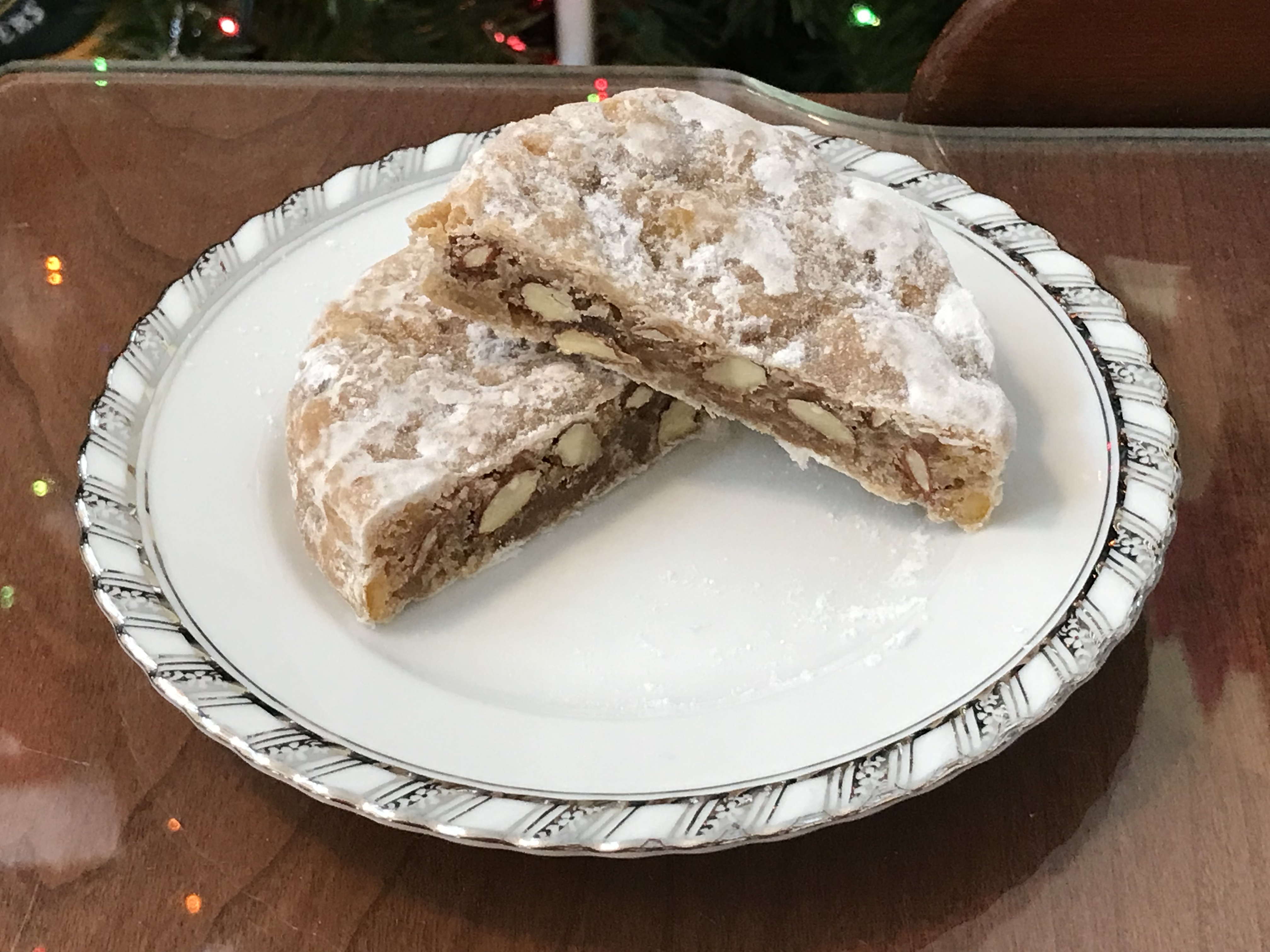
            Looking at the names of these three treats, you probably noticed something. The all start with the word part “pan,” Italian (and Spanish) for bread. Festive breads, especially sweet enriched breads, have long been Christmas specialties. Before baking powder was invented, breads and cakes were strictly leavened with yeast. As sugar was much more expensive in the past, dried fruits were a frequent addition to make them sweeter. Panforte isn’t actually a bread at all, but still has the name.

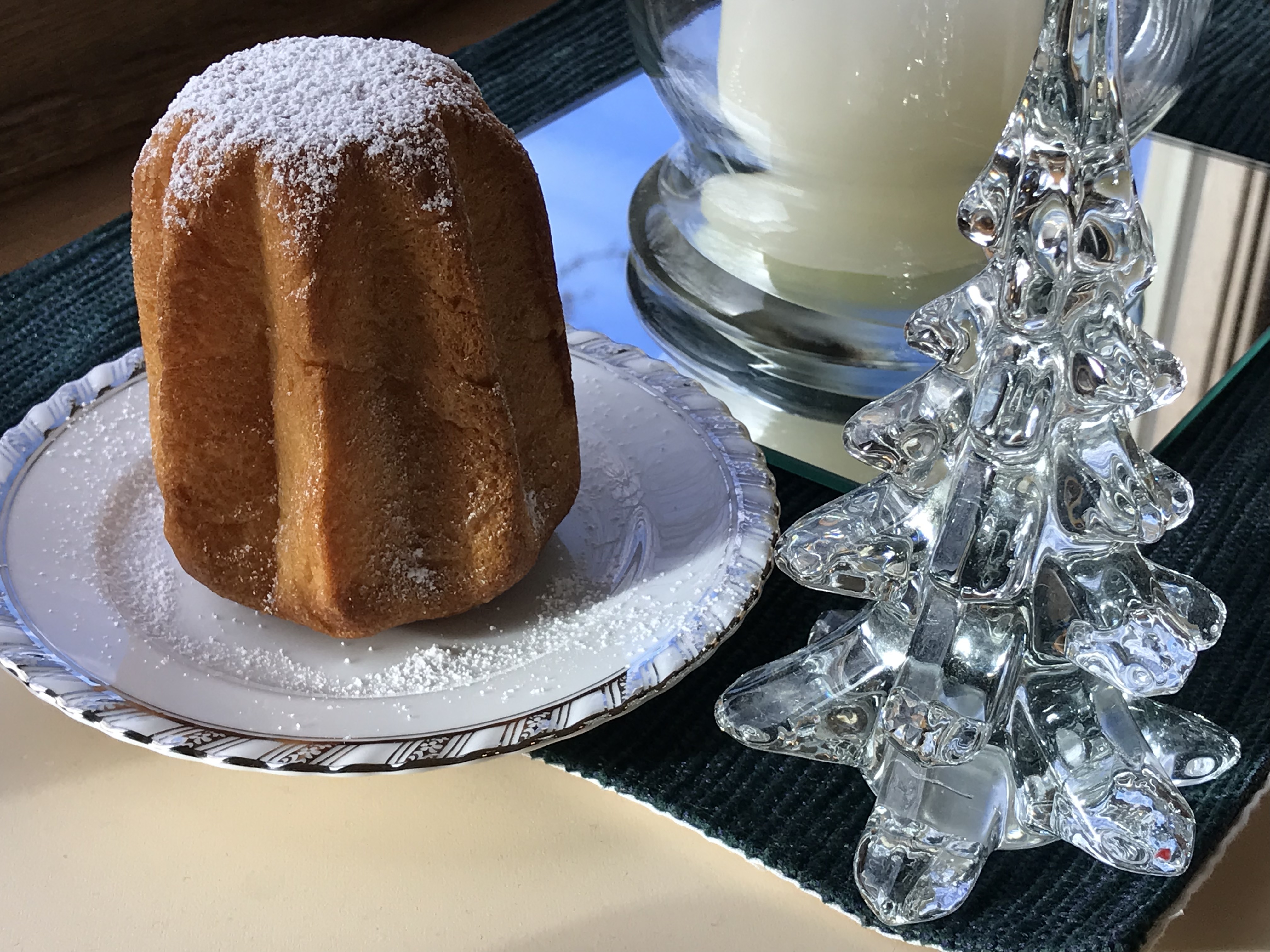
            Panettone is a perfect example of these sweet, special occasion breads. Its exact origin is unclear, and there are many stories, but one thing is certain: it was invented in Milan. The dough is enriched with lots of butter and egg yolks, which give the finished panettone a lovely golden color. Flavor comes from a combination of sugar, assorted dried and candied fruit, and warm spices. Occasionally saffron is included to make the yellow color even stronger. Over time, panettone spread from Milan to the rest of Italy, then to the rest of the world. In most places, people seem to purchase their panettone, rather than make it themselves. At World Market, I’ve seen pumpkin spice and chocolate varieties, but decided to stick to the original. They even have mini versions, for those who want a taste without a lot of extra.

            There were also mini versions of pandoro, native to Verona. It’s a vanilla-scented bread/cake, whose named literally translates to “golden bread.” Verona is located in the Veneto region of northern Italy along the Adige River, about halfway between Milan and Venice. In the Middle Ages, Verona was an influential city in its own right, trading and fighting with the other city-states that ruled most of Italy north of Rome. At one point, Milan ruled Verona, allowing another opportunity for Milanese culinary influences to spread. The Veronese not only adopted panettone, but developed their own variation.

            Further south is Siena, home of panforte. In the 13th and early 14th centuries, Siena vied with Florence and Pisa to dominate Tuscany. Florence pretty much always came out on top, but Siena managed to put up quite a fight. Some of the greatest artists of the Late Middle Ages, whose work would eventually pave the way for the Renaissance, lived and worked there. By 1348, construction was underway on what was to be the largest cathedral in Europe. Then the plague struck.

Not a rice cake

            The Black Death first arrived in Sicily in late 1347. Over the next six years, it reached every corner of Europe. Mortality rates varied, but tended to be higher in urban areas, where there were enough hosts for the bacteria responsible to keep circulating. Heavily urbanized Italy was among the worst affected. Many of the large cities had death tolls of 50 or 60 percent, compared to the continental average of about one third. Records suggest that Siena lost about 80 percent of its population. Even if some losses came from citizens fleeing to the countryside, the death toll was devastating. Siena never fully recovered. The cathedral remains unfinished to this day. Tuscany as a whole suffered greatly, but the story wasn’t over.

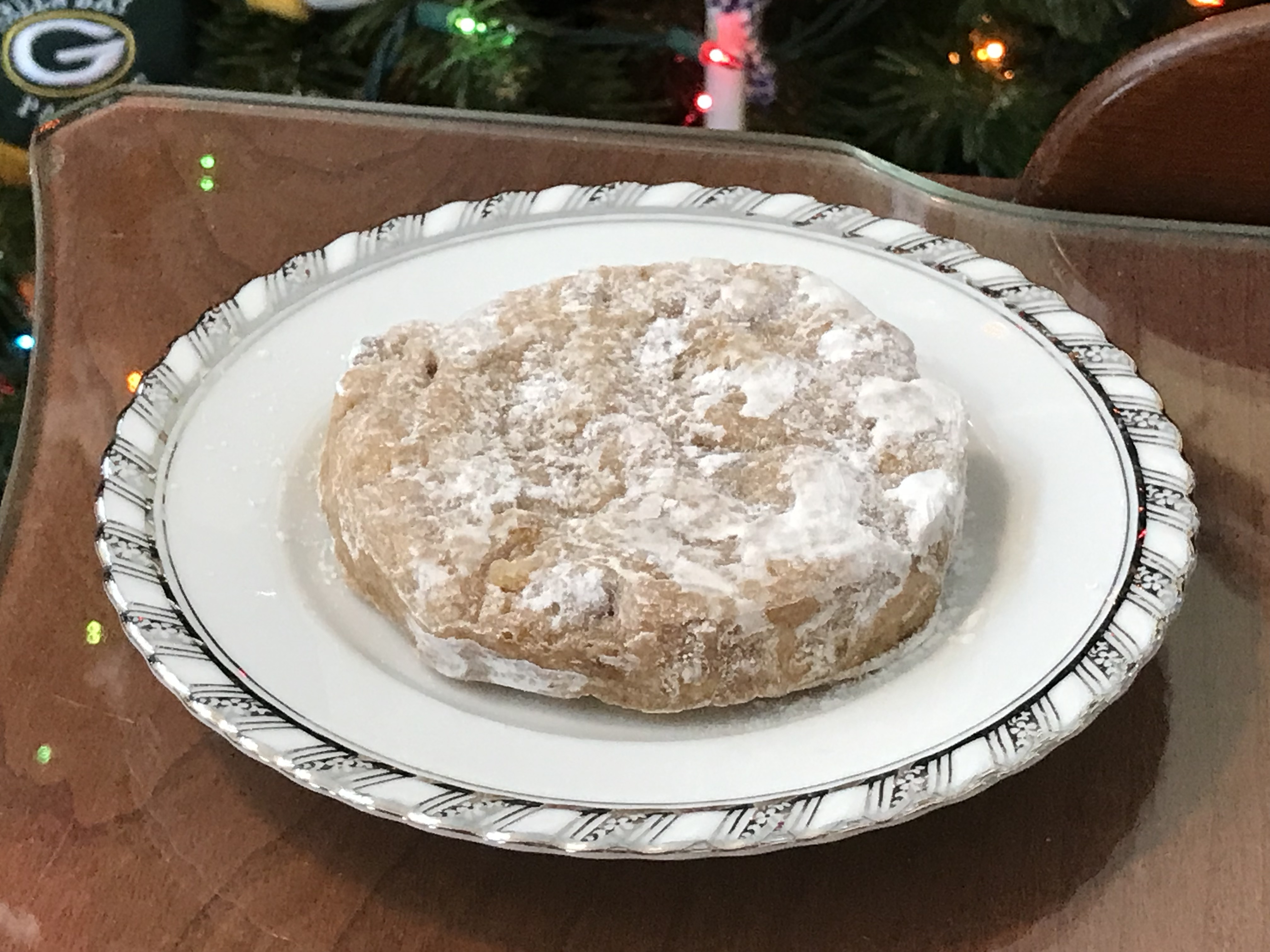
            Florence rebounded, becoming the birthplace of the Renaissance. Even Siena, despite its setbacks, produced a few more great artists of its own. In the culinary sphere, Siena contributed the almond cookies called riciarelli, and panforte. Despite its name, panforte is made of nuts and dried fruit, not bread. The mix is spiced much like panettone, and honey holds everything together. Conveniently, World Market also carries those in miniature.

            All three were pleasantly sweet and festive. It took a while to get used to the panettone and pandoro, since they were kind of a cross between bread and cake. With the exception of cinnamon rolls, sweet yeast-leavened breads are not as common in America as in Europe. The rich vanilla pandoro and warmly spicy, fruity panettone and panforte were enjoyable, but I still prefer the usual holiday treats – peppermint cookies, buttery cutouts, brownies with peppermint ice cream, the toffee-coated cereal the neighbors brought over, etc. And candy. Lots of candy.

Standard
food history, jamaican cuisine, recipes

Jamaican “Sorrel” Punch: Ruby Red for the January Blues

1000 Foods (pgs. 693 – 694)

            Let’s face it: January can be depressing. Thanksgiving, Christmas, and New Year’s are over, Valentine’s Day is six weeks off, and in much of the northern hemisphere, it’s cold and the landscape is barren. In some places, such as Venice and New Orleans, this is Carnival season, but in others, people are going on a diet to lose those Christmas pounds. Something cheery is needed.

            Hibiscus flowers are lovely. Native to India, British sailors and botanists introduced them to the other tropical and subtropical parts of their empire in the 18th and 19th Centuries. Once the flowers reached Jamaica, locals appreciated them for more than just their beauty. Hibiscus blossoms are also edible. For some reason, they are called “sorrel” in Jamaica, India, and the Middle East when they are eaten. Most likely, this is due to the herb sorrel and hibiscus flowers both having a sour flavor. Hibiscus is also fruity, and, when steeped in hot water, produces a lovely red infusion.

            In Jamaica, dried hibiscus blossoms are used to make a popular Christmas punch. In the US, many Latin American groceries carry them. Once the mixture is brewed, often with ginger and/or other spices, it is sweetened and sometimes spiked with rum. Even though Christmas is over, sorrel punch seems like a good new year’s or anytime beverage. And honestly, the bright color and flavor would be a great antidote for the “January blues” and a nice contrast with typically heavy winter dishes. Plus, hibiscus is rich in vitamin C, helpful after the germs you’ve probably been exposed to over the holidays. It’s also rich in iron, which the vitamin C helps the body absorb.

            For sorrel punch, I began with Jillian Atkinson’s recipe on Serious Eats (https://www.seriouseats.com/jamaican-sorrel-hibiscus-drink), but modified it to quantities and ingredients I had available. I used one quart (4 cups) of water, 2oz of dried hibiscus flowers, about 2.5oz sliced candied ginger, 3 whole cloves, and three small pinches of ground allspice. After boiling for 8 minutes, the mixture cools on the stove, then is chilled overnight to finish infusing. To prevent any metal flavor from leaching into the punch, I transferred it to a plastic container.

            After infusing overnight, the punch is strained and sweetened to taste. The recipe uses a simple syrup of sugar and water, but I just stirred four tablespoons of sugar into the mix, which seems to be about the right balance. It takes a bit longer to dissolve, but that quantity will dissolve eventually. The punch was best when diluted with about 1 part water to 2 parts hibiscus infusion, but that can be adjusted to taste. It’s often spiked with Jamaican rum, but is perfectly good without it, making sorrel punch a great festive drink for those who wish to abstain from alcohol.

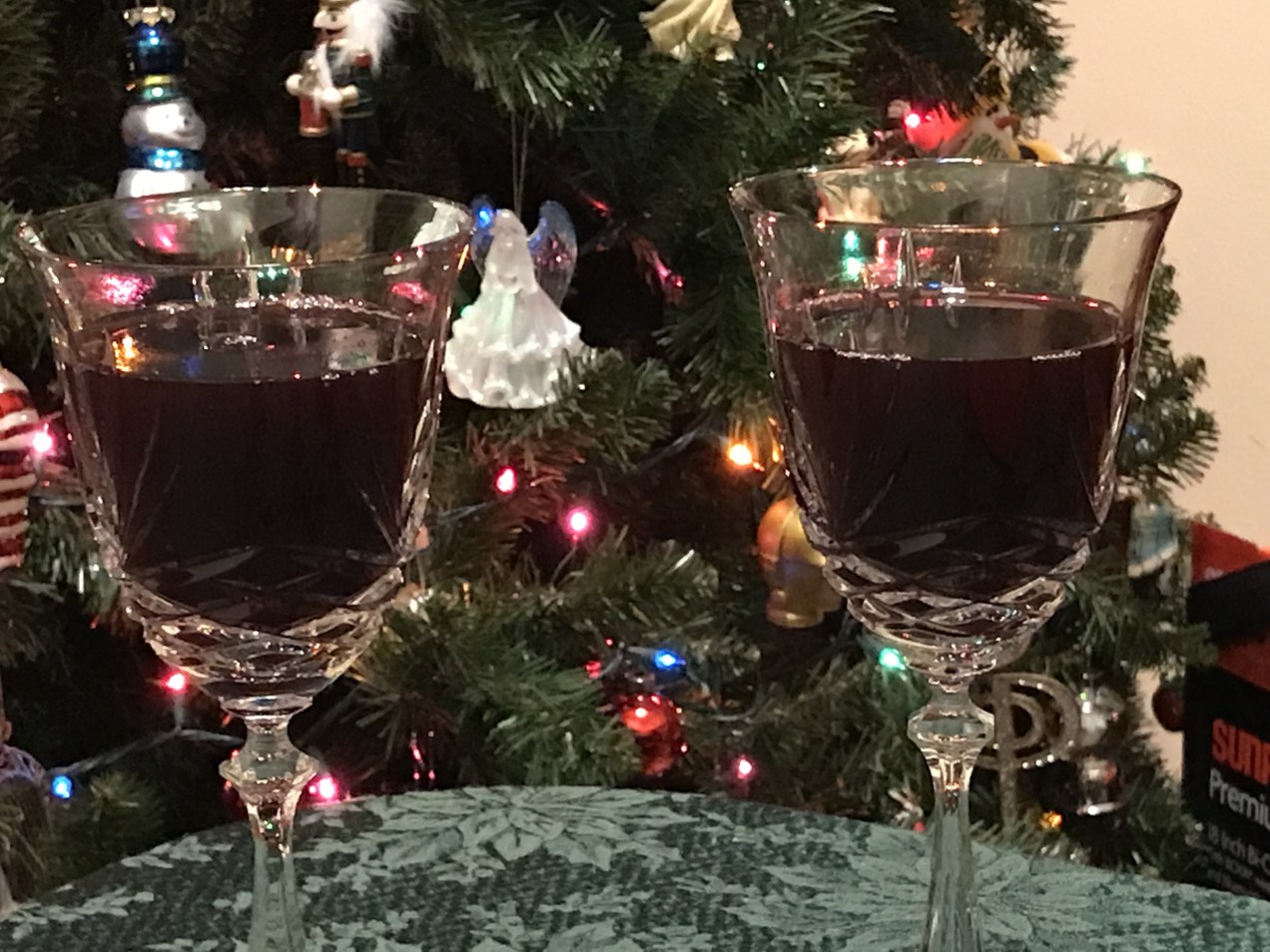
Looks like red wine, probably stains like it

            Hibiscus has an interesting flavor, slightly floral, but distinctly fruity, almost like cranberry. The infusion is pretty sour on its own, so adding a bit of sugar balances it out. The ginger and cloves gave it a pleasant flavor like mulled cranberry cider, but a bit different. It’s hard to describe. The best way to find out more is to try it.

Standard
american cuisine, food history, recipes

Divine Citrus Refreshment: Ambrosia

1000 Foods (pgs. 519 – 520)

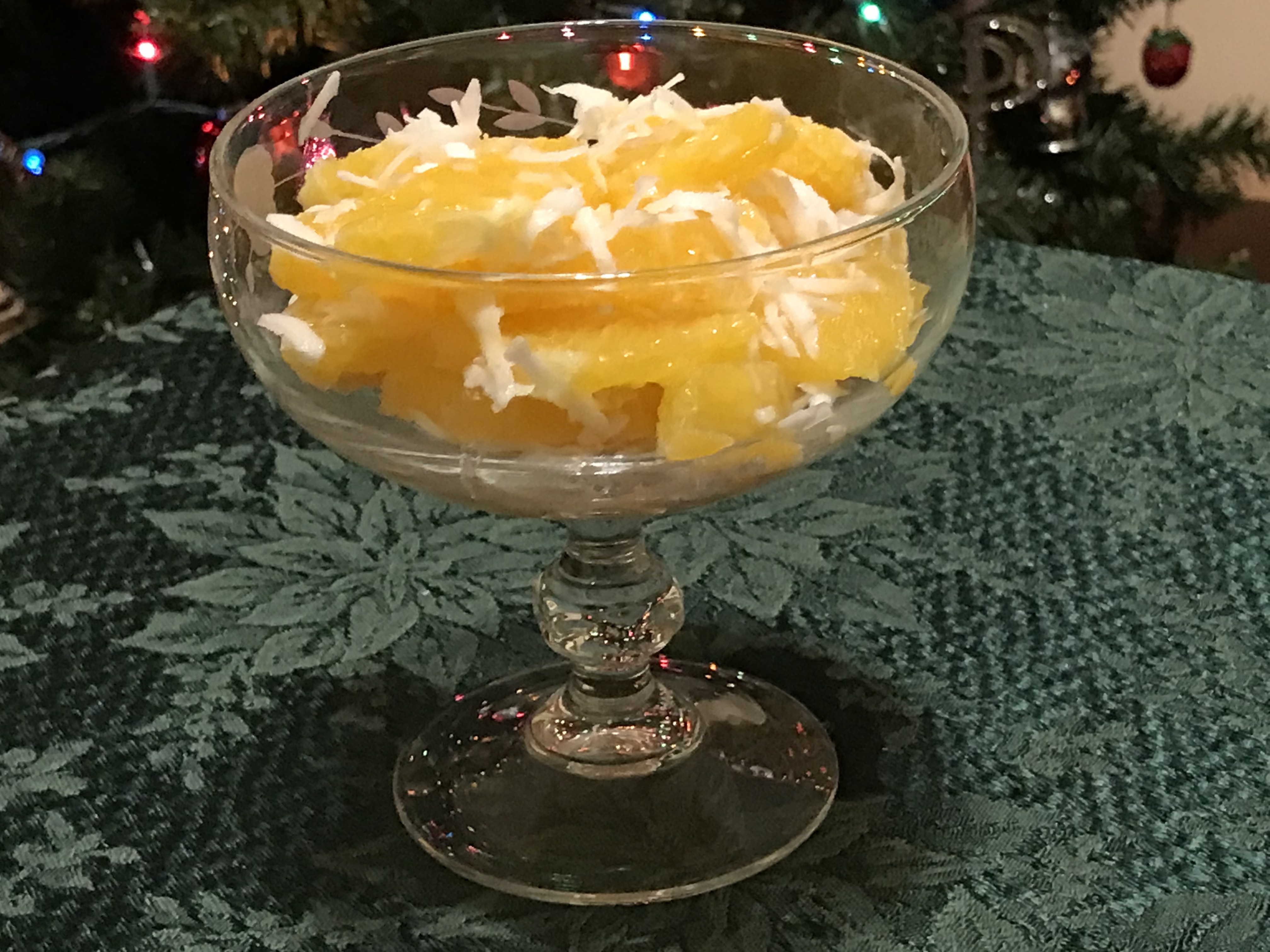
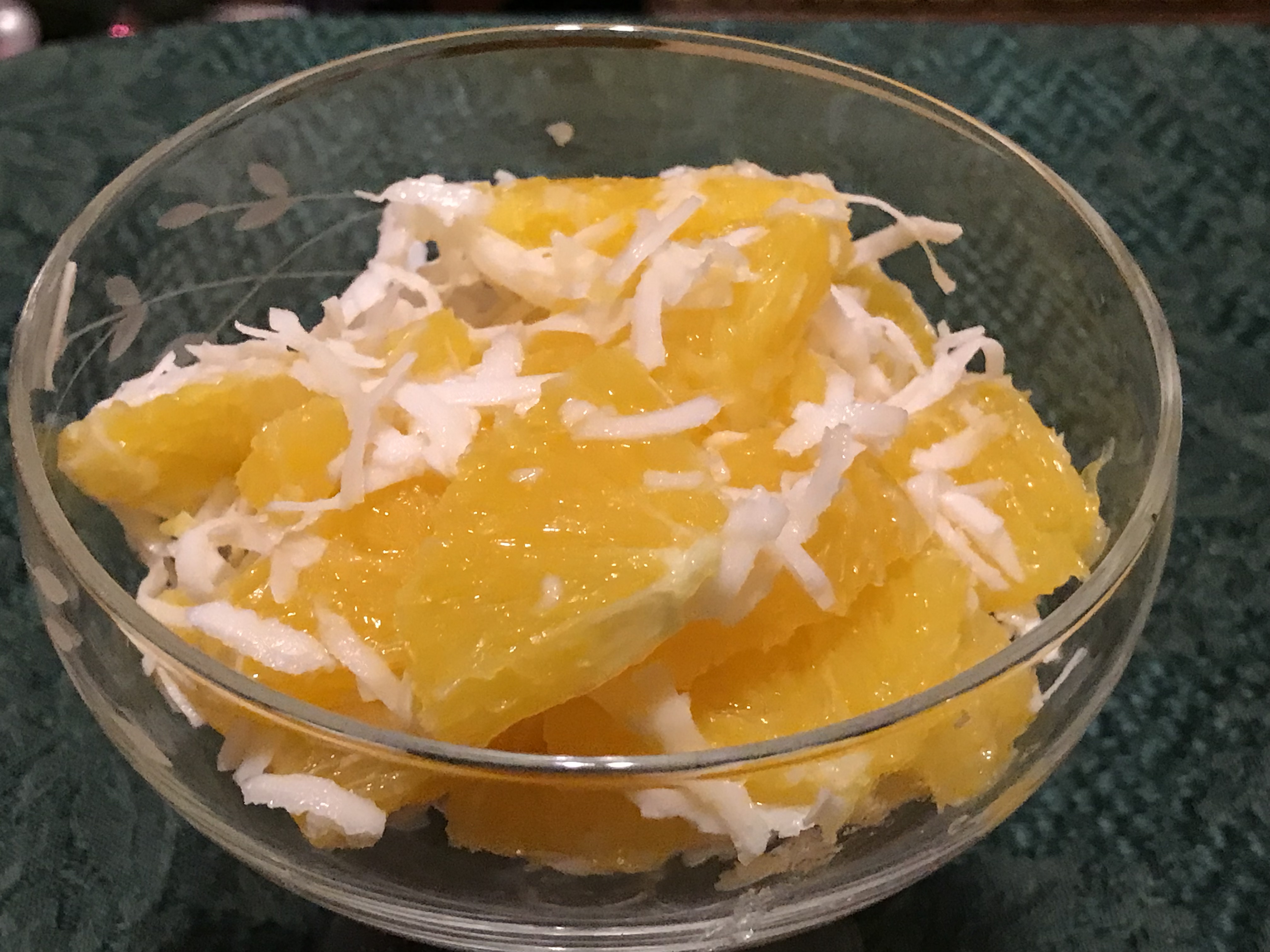
            According to Greek mythology, ambrosia was what the gods ate on Mt. Olympus. In the US, particularly the Southeast, it came to mean a mixture of oranges and grated coconut. It’s especially popular at Christmastime, peak season for oranges. In the past, difficulties with transportation made oranges and other citrus fruits relatively expensive in areas where they couldn’t be grown. As transportation improved in the late 19th Century and prices dropped, cooks in the US Southeast developed a layered dessert with sliced oranges and shredded coconut. A bit of powdered sugar helps the orange slices release some of their juices.

            Sometimes other fruits or a bit of liquor is added, but the oranges and coconut are always central. Presumably, this is the type of ambrosia featured in To Kill a Mockingbird, set in Alabama in the 1930s. Along with the ambrosia, Aunt Alexandra fixed three kinds of meat and two cakes. Presumably there was also bread, rolls, biscuits, or cornbread, and some sort of vegetables. In the 1950s, with the explosion in available convenience food, a mix of canned fruit, coconut, sometimes pecans and/or marshmallows, cool whip, and occasionally mayonnaise was developed. Without the mayonnaise, that actually sounds pretty good, but here we have the original, basic version.

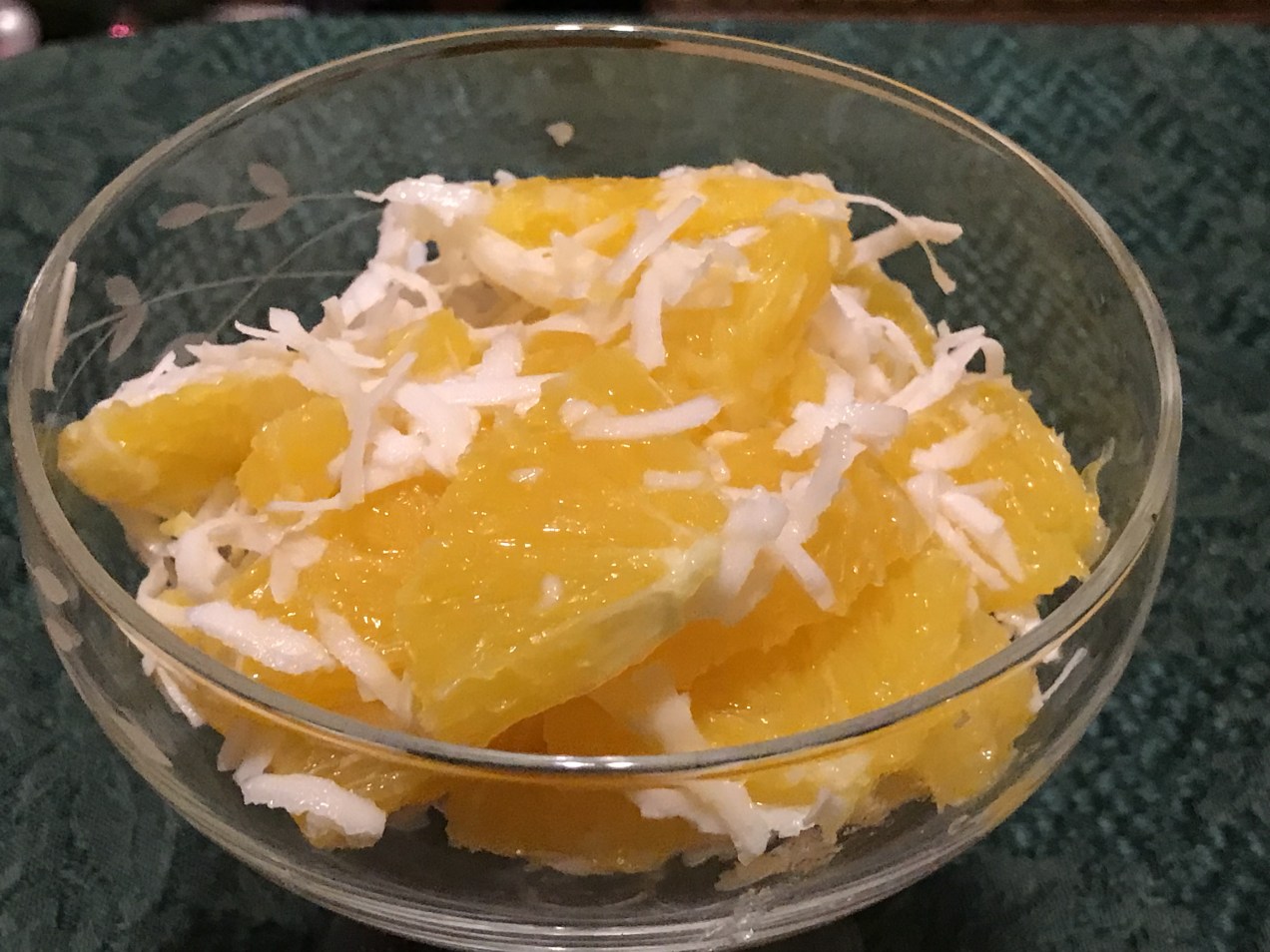
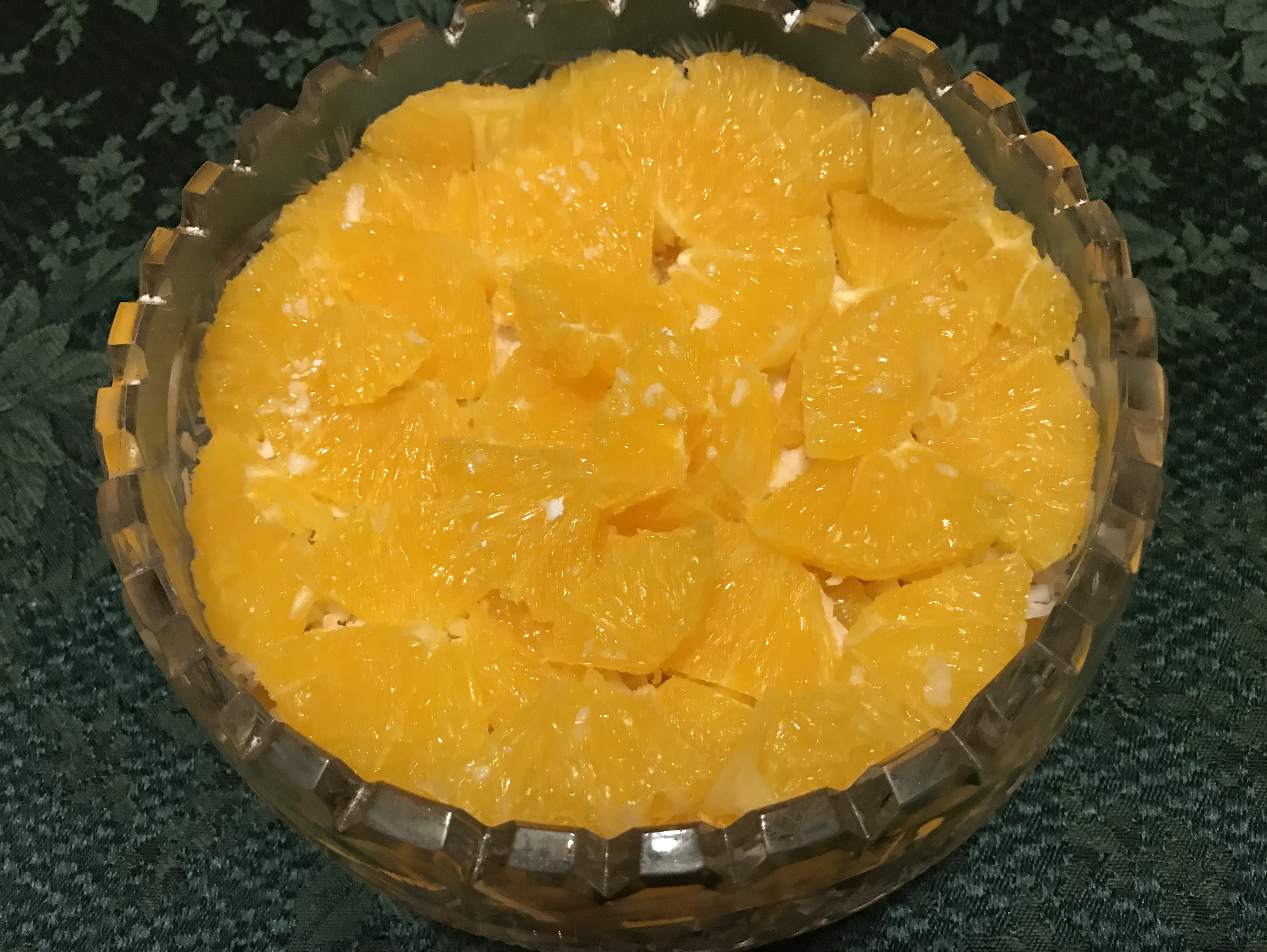
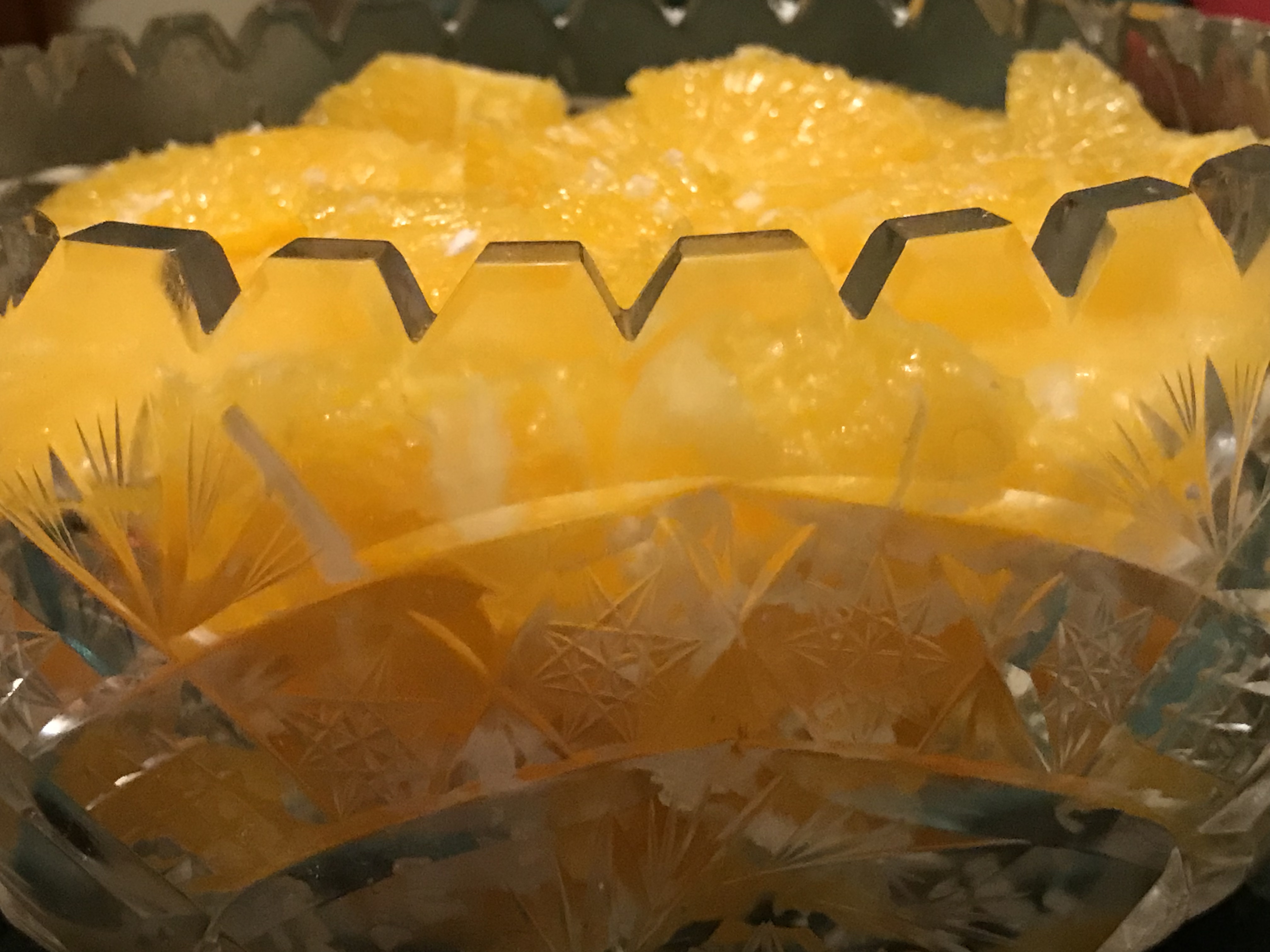
Doesn’t that look divine?

            It’s super simple to make. All you need are oranges, shredded coconut, and powdered sugar. I used five oranges and about a cup of coconut, soaked in hot water for about fifteen minutes to soften. The oranges are peeled, quartered, sliced, and layered in a glass serving dish. The slices are sprinkled with a bit of powdered sugar, then a layer of coconut, repeated until the oranges are used up. On the last layer of oranges is just the powdered sugar. The ambrosia is so pretty, and tastes just as good.

Standard
Uncategorized

Visions of sugarplums – which are what, exactly?

Portuguese, Byzantine, and English Sugarplums

1000 Foods (pgs. 271 – 272)

            Visions of sugarplums dance in children’s heads in The Night Before Christmas. The Sugarplum Fairy is one of the most, if not the most, famous character in The Nutcracker ballet. But many people don’t know what a sugarplum is, yet alone eaten one. To make things complicated, the word means different things in different countries. And to make things confusing, not all varieties contain plums. Some don’t even contain fruit.

            Plums are sometimes candied in a sugar syrup, and they are beautiful to look at. Crystallized fruits seem to be especially popular in Italy and southern France, where anything from cherries and pears to melons, pineapple, and even pumpkin form lovely, jewel-like displays. Sugar has been used as a preservative for hundreds of years, allowing fruit to be kept for months after its usual season ends. This process works by pulling some of the water out of the fruit. Since bacteria need water to survive, candying (or salting, for that matter) can dramatically slow the rate of spoilage. Plus, humans are naturally inclined to enjoy sweet flavors. A few months back, I attempted to candy some plums from the local apple orchard, but they had softened too much after several days in the fridge and fell apart in the hot sugar syrup. Maybe next year.

Advertisements

            On the other end of the spectrum, in British English, sugarplums were usually nuts or spices, covered in layer after layer of a hard sugar coating, often brightly colored. The price of the core ingredients, plus the time it took to build up all those layers, made these sugarplums an occasional treat, suitable for Christmas and other special occasions. The best modern example, although they are no longer called sugarplums, are Jordan almonds. Besides almonds, candied fennel, caraway, or coriander seeds were popular. As for why they were called sugarplums, supposedly it was because they were roughly the size of many dried fruits. All dried fruits were called plums at one time, even if they were actually figs or apricots. To make things even more confusing, sometimes sugarplums were a mix of chopped dried fruit and nuts, spiced and rolled in sugar.

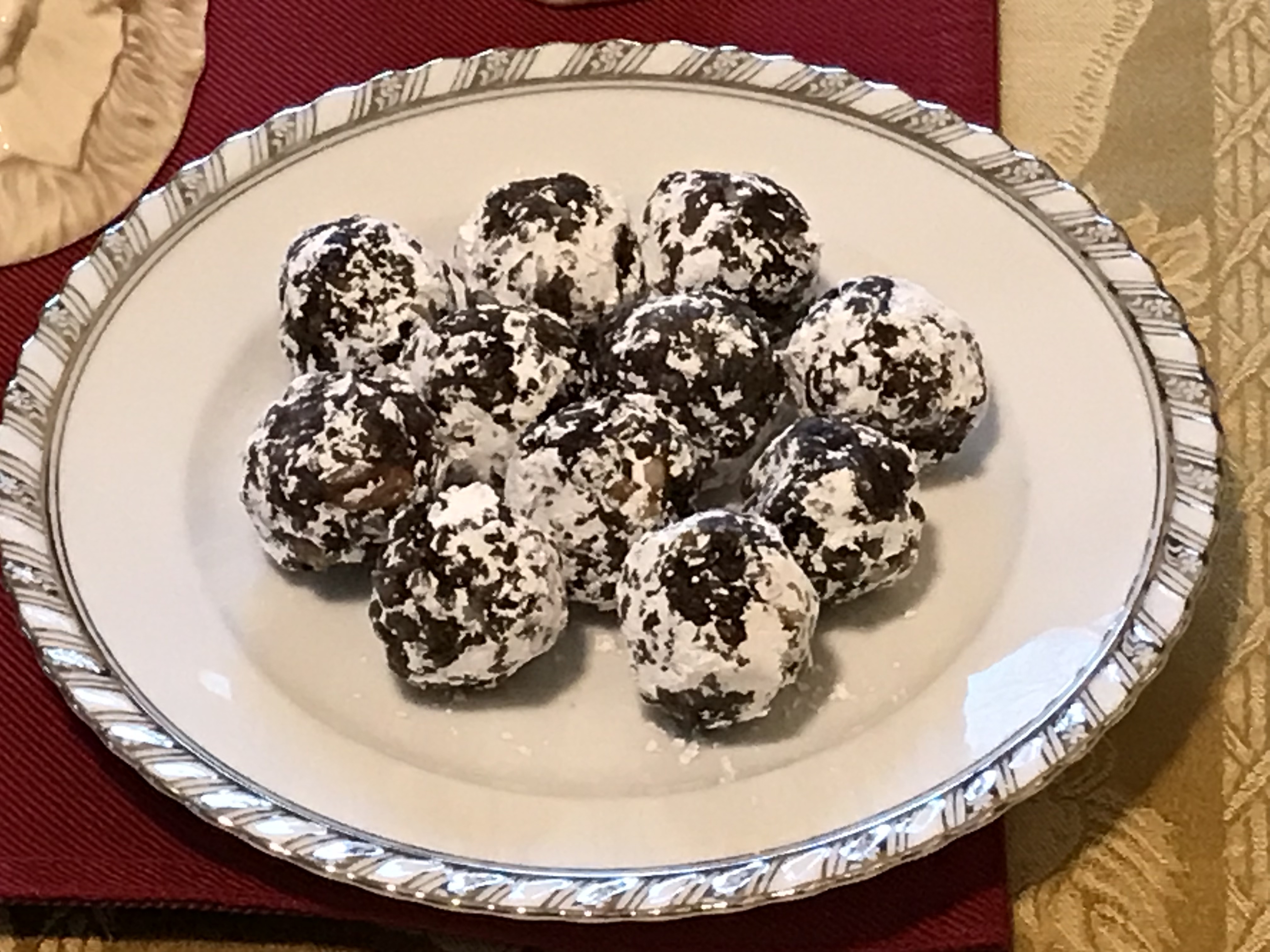
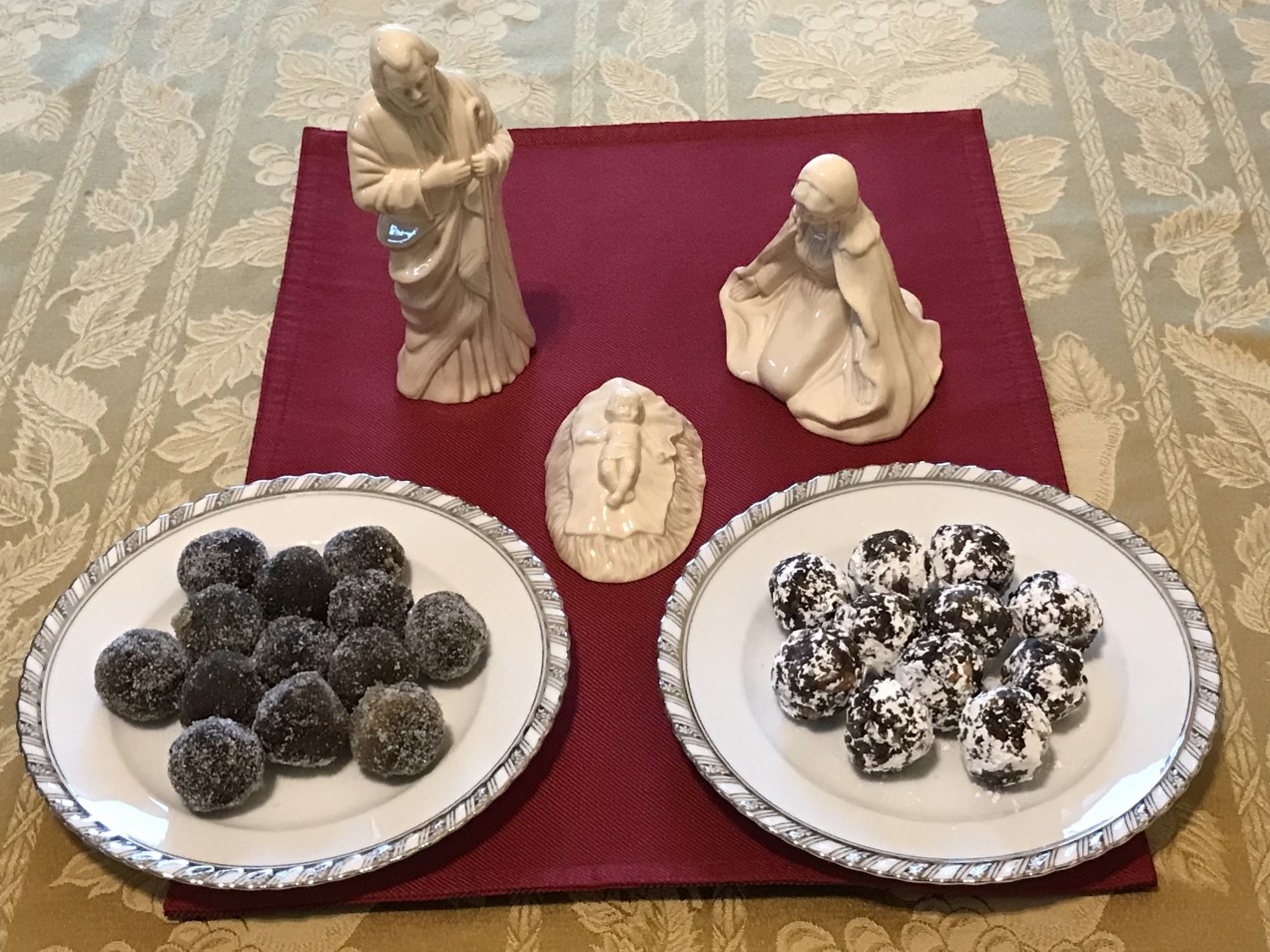
            Portuguese sugarplums, or bombos de figo, are made with dried figs or prunes, which are dried plums. I used a mix of two thirds figs, one third prunes. The fruit is steamed to soften, ground up, and seasoned with cinnamon and cloves. A ball of this mixture is formed around a toasted almond, which takes the place of a pit. They are then rolled in sugar. According to the text, Byzantine sugarplums don’t contain plums. Usually, they have figs, dates, and raisins, chopped rather than ground. Walnuts and pistachios add more texture, and they are flavored with cinnamon and cloves, plus candied ginger and orange zest. These are rolled in powdered sugar for a snowball-like appearance.

            I made both varieties, and enjoyed them both. The dried fruit was nice and sweet without too much added sugar, and the spices made things interesting. The extra flavor from the ginger and orange zest, plus the chunky and chewy texture, gave the Byzantine variety a bit of an edge, but the toasted almond “pit” in the Portuguese variety was a nice touch. How much sugarplums were originally associated with Christmas is unclear. They may have been just a special-occasion treat in general. Regardless, the warm spices are perfect for this time of year.

If you liked this post, please subscribe! It’s free and you’ll receive an email whenever I create a new post. No cost, ensure that you’ll never miss a post, what do you have to lose?

Standard