
For many people, the days leading up to Christmas are cookie-baking season, and they finish eating them around New Year’s. Crunchy butter cookies are especially great. Not only are the delicious, but they can be kept longer than most cookies without getting stale. This enables a cook with sufficient willpower to make a variety over the course of a few weeks to a month. When I worked at a bakery for a year right after graduating college, we made and assembled the boxes of assorted butter cookies before Thanksgiving, and they held up fine. This year, I decided to make my own selection to give as gifts.
Marzipan is another popular Christmas treat, especially in Europe. At its simplest, it’s just a mixture of blanched almonds, sugar, and enough water to form a paste. Many homemade versions add egg white as a binder. Historically, a few bitter almonds were used to add the distinctive aromatic almond flavor, since the more common sweet almonds have a pleasant but very mild taste, but it was hard to get the ratio right. Bitter almonds contain a small amount of cyanide, dangerous in the hands of an inept or unscrupulous cook, so almond extract is typically used today. Rosewater is a traditional flavoring, though perhaps not as common today.
Almonds, sugar, and rosewater were elite, prestigious ingredients in the Middle Ages, especially in Northern Europe where there were more middlemen between the source and final destination. Exactly when and where marzipan came from is unclear, though the Middle East is a likely candidate. Sweet dishes with nuts and rosewater can be found from Morocco to India. Through a combination of trade and warfare, Europeans discovered and adapted these specialties.
In Sicily, shops sell stunningly realistic-looking marzipan fruit. English Christmas cake and Swedish princess torte are covered with a layer of rolled marzipan. All over Europe, marzipan is covered in chocolate, stuffed into festive breads and cakes, and made into figurines, including the pigs that are supposedly good luck for the New Year. Germans seem to be particularly fond of it, and specialize in two main kinds, both originating in trading ports on the Baltic Sea. Lubeck-style is soft and typically lower in sugar, while Konigsberg-style is browned under a broiler for a caramelized flavor. (For more information, see 1,000 Foods to Eat Before You Die, pg. 304)
Homemade marzipan is easier to make than you might expect, and has a much better flavor than most store-bought varieties. The only somewhat tricky part is blanching the almonds, but it’s more time-consuming than difficult. Just put the almonds in a bowl, cover with boiling water and stir, let stand a minute, pour off most of the boiling water, and add cool water until you reach a comfortable working temperature. The skins slip right off when squeezed, especially if the almonds are kept in the warm water until ready. Individually squeezing each almond takes a while, but it’s a satisfying process, especially with something to listen to. If you can rope in your spouse, child, guest, or any combination, it will go even faster.
There’s one thing to note before beginning. Rosewater is a common flavoring in marzipan and goes very well with almond, but be careful with it. Depending on the brand and how fresh it is, rosewater varies in strength. Generally, brands with an alcohol base are stronger and keep their flavor better after being opened than those distilled with just water, but this is far from an absolute rule. Add it slowly, a teaspoon at a time, tasting as you go, until desired flavor is reached. You want a light floral taste, not edible perfume.
Ingredients:
- 1 pound almonds, blanched
- 1 cup powdered sugar
- 1 – 2 teaspoons almond extract (use more if not also using rosewater)
- 1 teaspoon or more rosewater
- 2 – 4 tablespoons water
- Sugar for rolling out dough
- Parchment paper (essential for getting baked marzipan off cookie sheet)
Directions:
- Coarsely grind almonds in a food processor, add sugar and flavorings, and grind again to reach a sandy texture.
- Add 2 tablespoons water, process again, and taste for rosewater. Add more if you think it needs it.
- Pinch some of the mix together to see if it comes together as a sticky dough. If not, add more water, a tablespoon at a time, until it does. The texture won’t be as fine as store-bought marzipan.
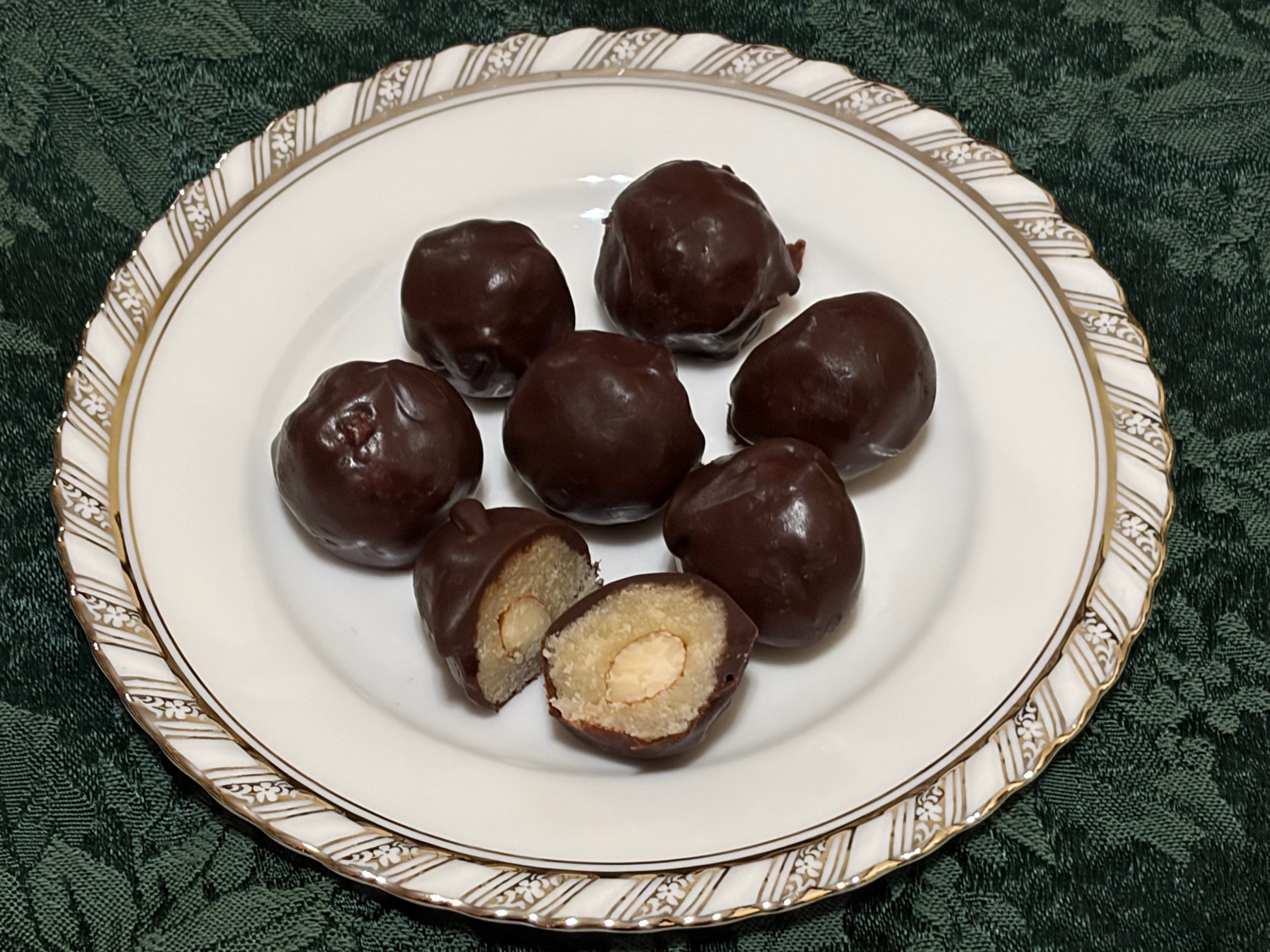
- For Lubeck-style marzipan, the mixture is ready to form into shapes, coat in chocolate, mold around whole almonds, and so on.
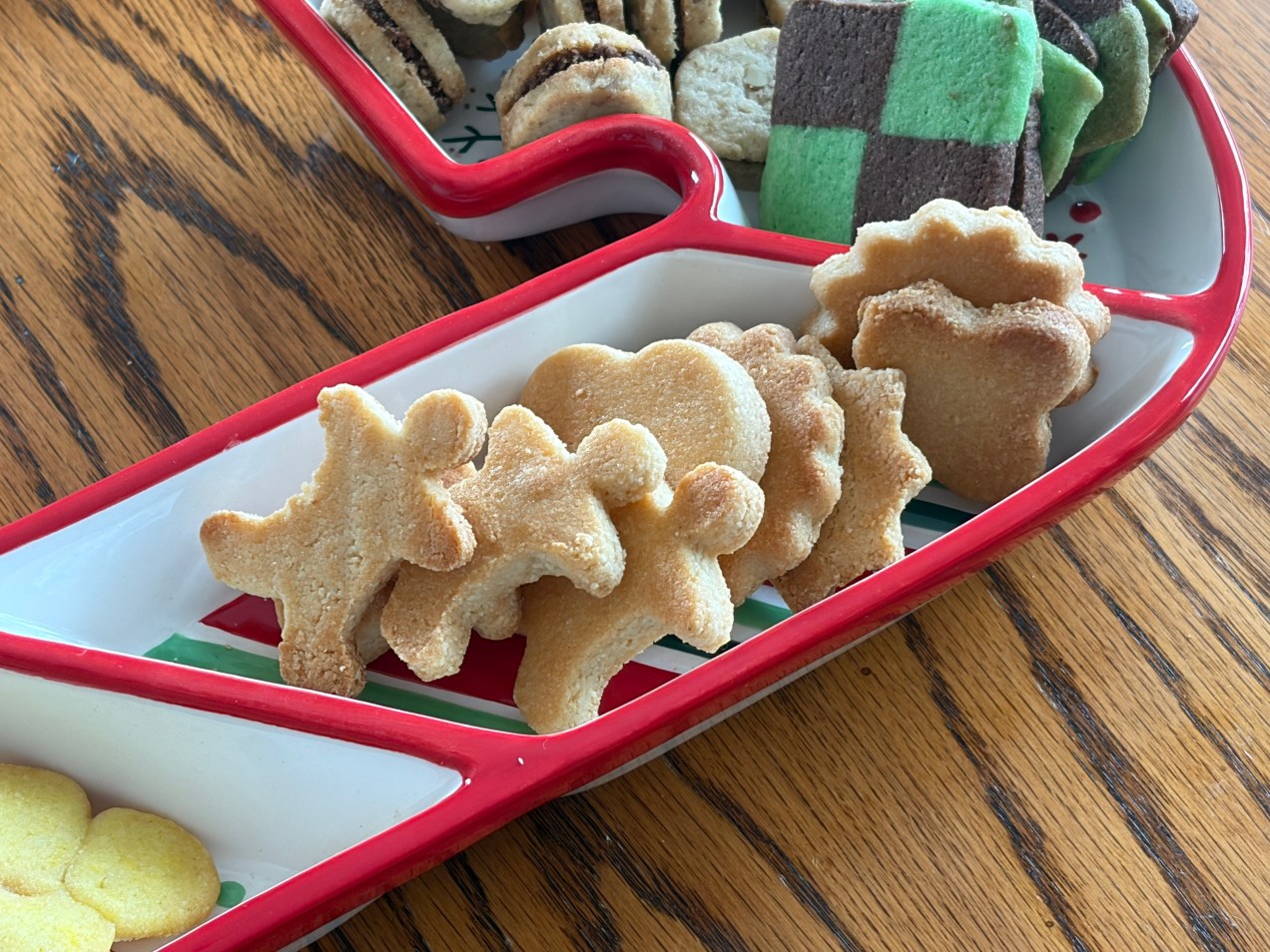
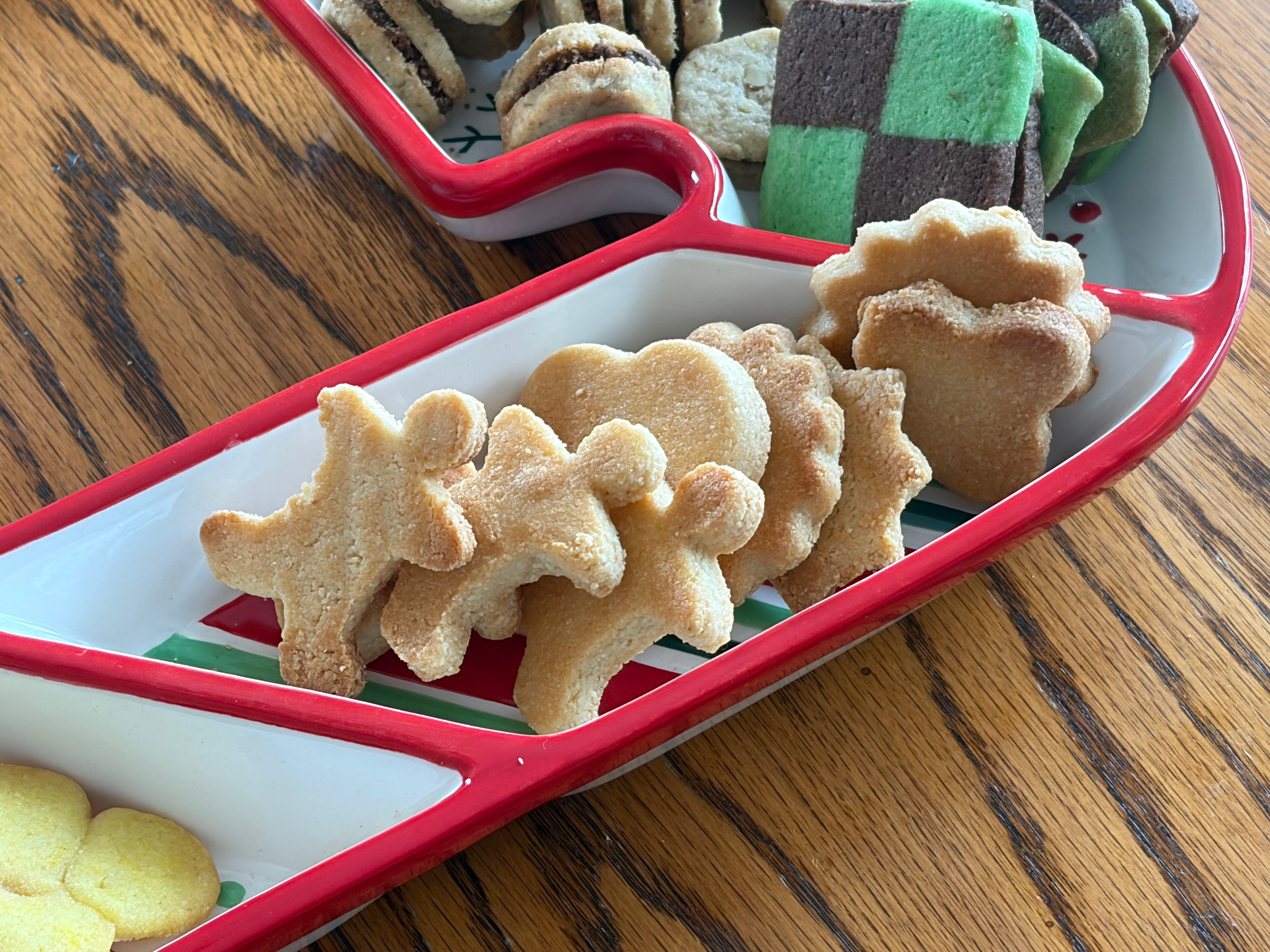
- For Konigsberg-style marzipan, lightly sugar a flat surface, pat the marzipan into a disk, sugar the top, roll out about a quarter-inch thick, and cut out shapes with cookie cutters. Since the dough has no flour, it can be rerolled without toughening.
- Bake on parchment paper-lined baking sheets at 350 for 12 – 15 minutes, just until set.
- To brown the marzipan, place each cookie sheet under the broiler for two minutes, with the oven door cracked (which keeps the broiler from overheating). Then, watching constantly, broil for another minute or two, until the tops are golden brown.
As an added bonus, eggless marzipan such as this is gluten-free, dairy-free, vegan, pareve, and Passover-friendly. Assuming the parchment paper is clean, that is, and not previously used for several batches of butter-and-flour-based cookies.
Make a one-time donation
Make a monthly donation
Make a yearly donation
Choose an amount
Or enter a custom amount
Your contribution is appreciated.
Your contribution is appreciated.
Your contribution is appreciated.
DonateDonate monthlyDonate yearly
 Feasting Through Time