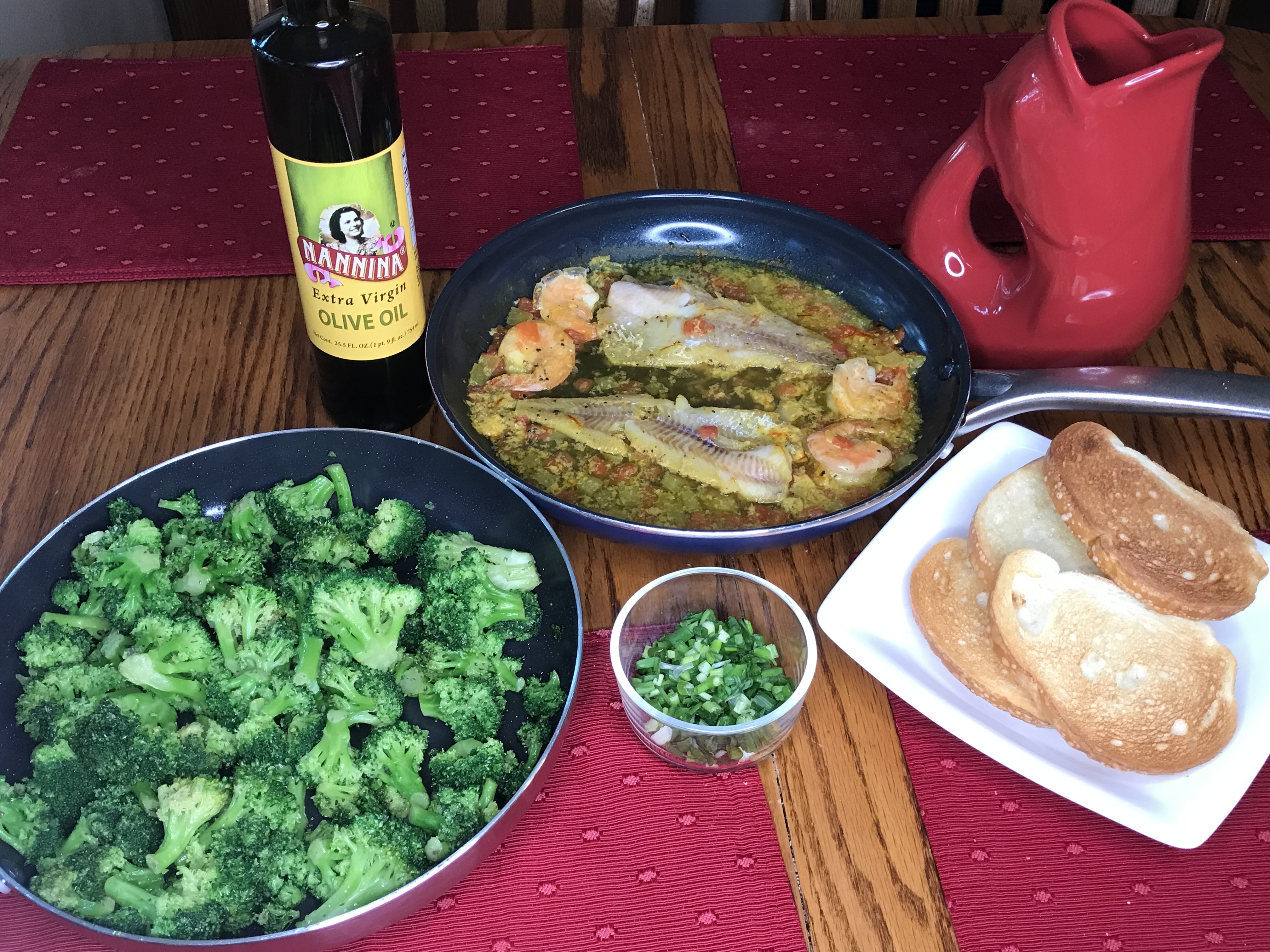
"Sea Bass" in wine with saffron
food history, italian cuisine

Cook’s Tour of Italy Menu 56 (Pgs. 178 – 180): “Sea Bass” Menu Near Ancona

Italian Marches fish dinner

Region: Umbria/Marches

Menu: Poached “Sea Bass” with Wine and Saffron, Bruschetta, Broccoli Cooked in Garlic-Flavored Oil, Ricotta with Honey and Thyme

Recommended Wine: Orvieto (a dry or slightly sweet white)

            In the 8th Century BC, rising population in their homeland led many Greeks to set out and establish colonies. They settled along the coasts of southern Italy, Sicily, Turkey, and the Black Sea, in some cases going as far as southern France, the Spanish coast, and north Africa. Over time, these colonies began setting up their own colonies. For some reason, the process slowed to a trickle by 500 BC. Had the Greeks run out of favorable locations? Did grain imports from Egypt and the Black Sea reduce population pressure in their city-states? Were local populations getting better at resisting the colonists? Or were the colonies, now grown into city-states in their own right, too busy fighting each other to keep expanding?

            Whatever the reason, most colonization was finished when the Golden Age of Athens began in the 470s BC. There were a few exceptions. One of these was the city of Ancona, on Italy’s central Adriatic coast. It was founded by colonists from Syracuse in the 4th Century BC, several decades after the Syracusans crushed the Athenian invasion of Sicily. Ancona prospered but was never a great power, and was absorbed into the expanding Roman Republic in the 3rd Century BC.

            Along Italy’s Adriatic (eastern) coast, various cities and regions feature seafood stews in their cuisine. Supposedly this is a remnant of Greek influence. Regardless, they are an interesting change of pace from grilled, fried, and baked fish, and cook much faster than meat or bean-based stews. It’s typical to serve these fish stews and chowders with bruschetta, to soak up the broth.
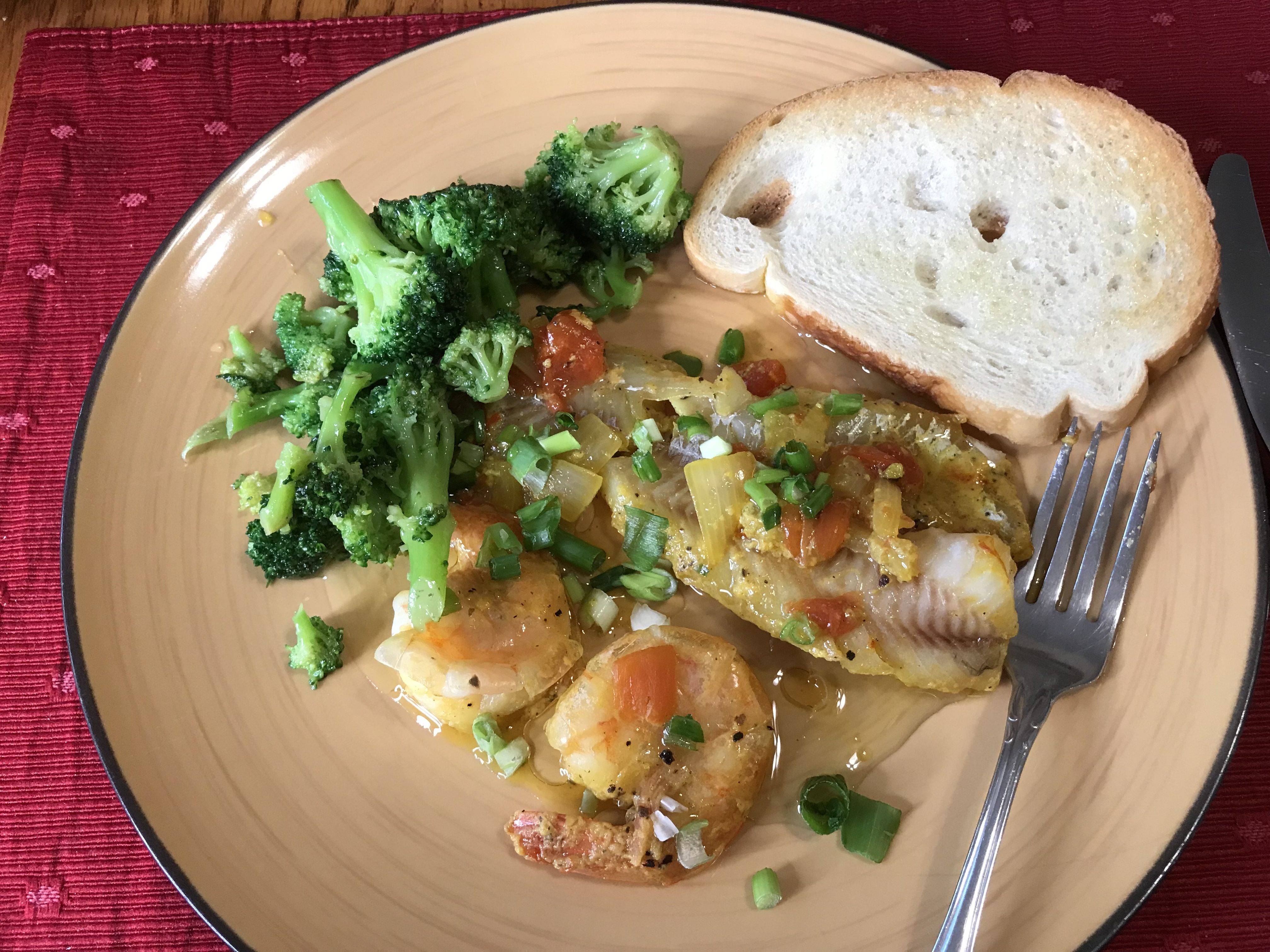
Fish chowder from the Italian Marche region

            Since I couldn’t find sea bass, I used tilapia (I think). With the strong flavors of wine, tomatoes, garlic, and saffron, any affordable white fish would probably work. As promised in the introduction, this is one of the easiest main dishes in the book. Prep is just chopping a few vegetables, and cooking time is under 30 minutes. Personally, saffron is not my favorite flavoring, but the other ingredients balanced its somewhat medicinal flavor. Broccoli, lightly precooked and sauteed in garlic-infused oil, was a pleasant accompaniment, and the green was a pretty contrast with the red tomatoes and yellow saffron.

            Dessert was rather interesting, fresh ricotta drizzled with honey and sprinkled with thyme. I have no problem with supermarket ricotta in lasagna, stuffed pasta, cheesecake, or cannoli filling, but don’t necessarily want to eat straight spoonfuls of it. Since fresh Italian-style ricotta was unavailable, I made my own. To serve, I had a trio of Italian honeys from World Market, chestnut, acacia, and millefiori (wildflower).

Fresh ricotta with honey and thyme
Notice the three different colors of honey

            The acacia and millefiori honeys both paired well with the cheese (honestly, I couldn’t tell much difference). The chestnut took some getting used to. It’s dark in color, almost like maple syrup, and has a distinctly bitter edge. Like the saffron, it wasn’t my favorite, but overall, this was a tasty and balanced dinner.
Standard
food history, french cuisine, recipes, stew, vegetarian

Ratatouille + Recipe

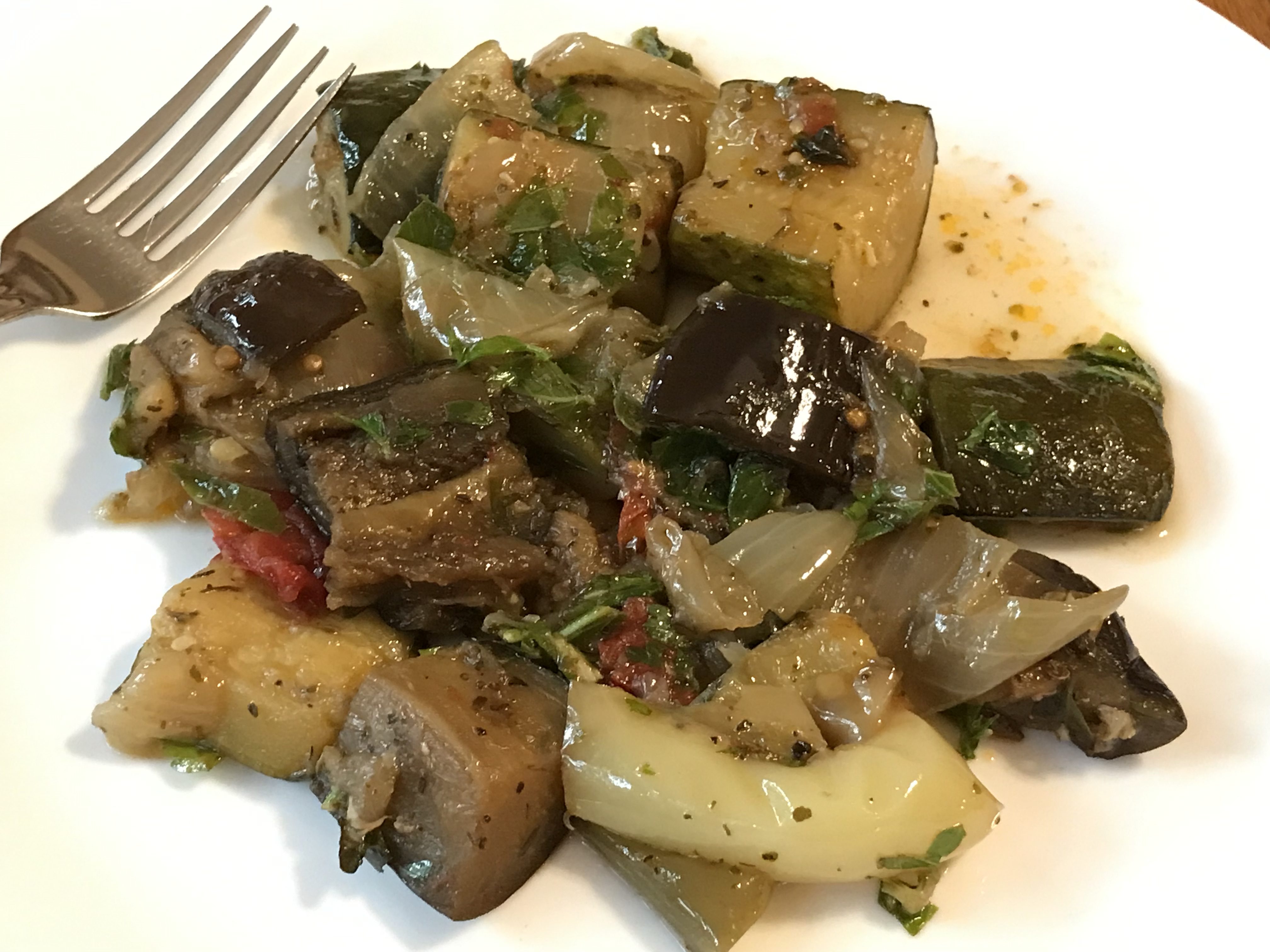
Ratatouille, not made by rats

            Let’s revisit another late summer dish I made last year. Ratatouille, a rustic vegetable stew hailing from the same region of Southern France as soupe au pistou, is even easier to make. Mimi Sheraton describes it as one of 1,000 Foods to Eat Before You Die in the book of the same name. Unlike some of the foods in the book, no travel or specially ordered ingredients are required. It’s just vegetables commonly available at the store or farmer’s market, served with bread, pasta, or alongside meat, if desired.

            Many of the same ingredients, like eggplant, zucchini, tomatoes, garlic, and olive oil, are combined in similar ways all around the Mediterranean. One example is the Sicilian caponata, which also includes capers, vinegar, and typically celery. But you don’t have to be anywhere near the Mediterranean to enjoy ratatouille. Just make sure to make it in the summer, when the vegetables are at their best (and most affordable).

            Note that ratatouille can be baked in the oven, and many recipes use that method. I prefer the stovetop because it heats the kitchen less. Like most stews, ratatouille reheats very well, and leftovers make a great omelet filling.

            Ingredients:

  • 1 medium eggplant, cut into 1-inch cubes, tossed with 1 teaspoon salt, and left to sit for half an hour
  • 2 medium zucchini, sliced into roughly half-inch thick rounds
  • 1 green bell pepper, coarsely chopped
  • 1 yellow onion, coarsely chopped
  • 4 Roma tomatoes, coarsely chopped
  • 6 cloves garlic, peeled, crushed with the edge of a knife, and minced
  • ½ cup olive oil
  • 4 sprigs parsley, thick stems minced separately from leaves
  • 4 fresh basil leaves or more to taste, left whole until needed

            Directions:

  1. Combine the eggplant, zucchini, bell pepper, onion, tomatoes, garlic, olive oil, and minced parsley stems in a large pot with 2 tablespoons water.
  2. Bring to a simmer over medium low heat, then cook, stirring occasionally, for about 30 to 35 minutes.
  3. Mince the basil and add to the pot with the parsley leaves. Taste for salt, adding more if necessary, then simmer for 10 more minutes.
  4. Serve the ratatouille with bread, pasta, grilled meat, or all of the above. Sprinkle with additional parsley if desired.

            Eating the ratatouille while watching the movie of the same name is encouraged. It isn’t weird, I promise. For more recipes, subscribe below for free. And if you’re feeling extra generous and would like to support my work, I would be most grateful.

One-Time
Monthly
Yearly

Make a one-time donation

Make a monthly donation

Make a yearly donation

Choose an amount

$5.00
$15.00
$100.00
$5.00
$15.00
$100.00
$5.00
$15.00
$100.00

Or enter a custom amount

$

Your contribution is appreciated.

Your contribution is appreciated.

Your contribution is appreciated.

DonateDonate monthlyDonate yearly
Standard
egyptian cuisine, food history, recipes, stew, vegetarian

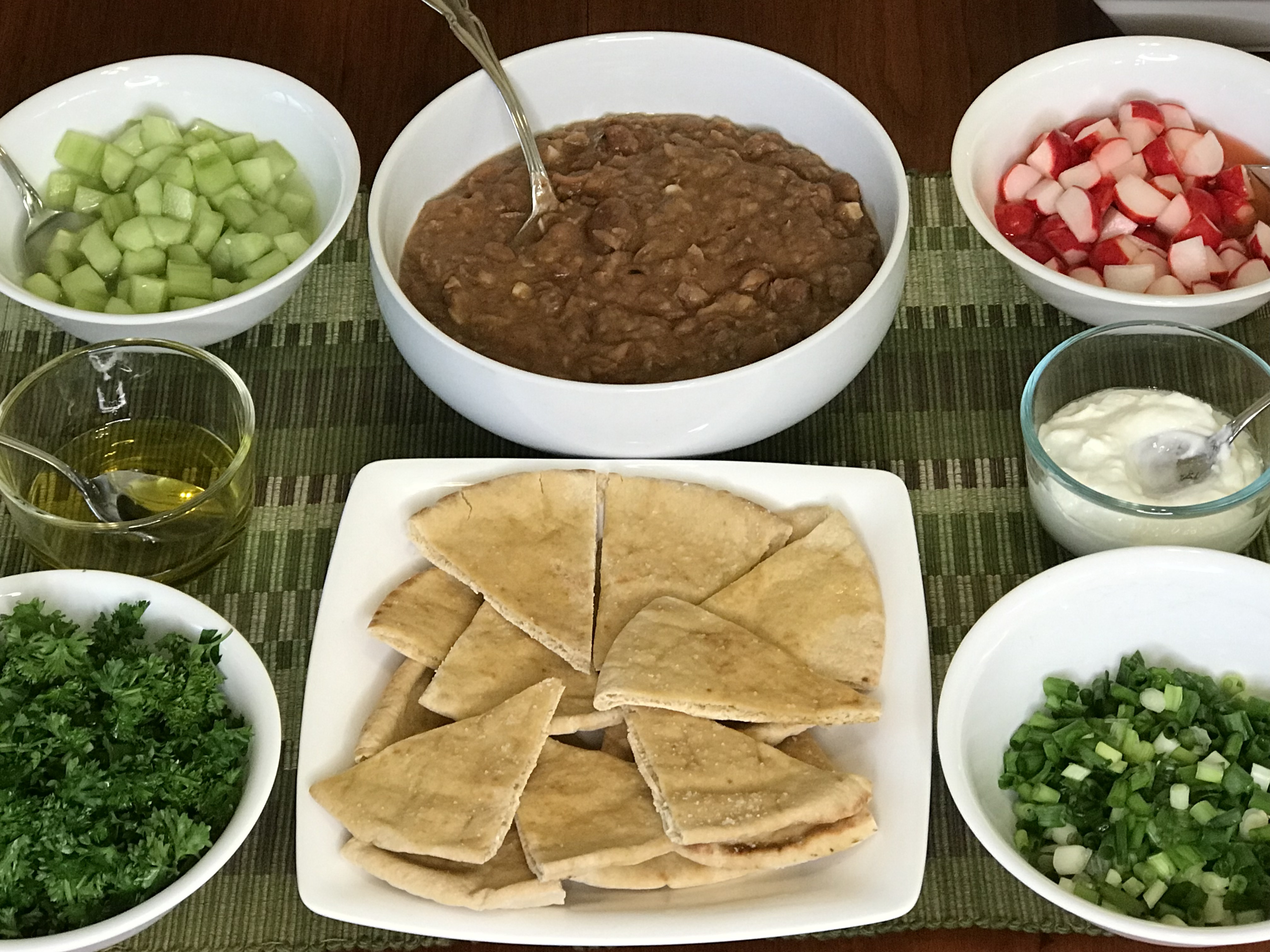
Egyptian “Tacos”: Ful Medames (fava bean stew)

1000 Foods (pgs. 708 – 709) for information, recipe is my own creation

            There’s no liver or chianti with these fava beans. To be honest, neither sounds appealing. The purpose of the liver is to filter toxins from the body, and supposedly chianti is a fairly dry wine. But fava beans on their own sound much better. Historically, most people across the Mediterranean and Middle East ate a largely vegetarian diet by necessity. Beans of all sorts provided essential protein and vitamins, which brings to mind an interesting story. Supposedly, the Ancient Greek mathematician Pythagoras hated beans but advocated a vegetarian diet. Balanced nutrition would still be possible if eggs and dairy were allowed, but Pythagoras definitely made things more difficult for himself.

            Supposedly, he even thought that beans were evil. Crazy as that probably sounds, there might have been a logical (okay, semi-logical) explanation. A small percentage of people don’t produce a particular enzyme that breaks down a chemical naturally occurring in fava beans. If someone with this gene does eat them, they become ill. Since this gene is most common in people living near the Mediterranean, Pythagoras likely knew a few people who suffered from it. It’s unclear why he decided that other types of beans were also evil, but maybe it was just a phobia. At a time and place where legumes were an essential source of protein, it would have been an unfortunate one.

            Fava beans, also called broad beans, have a long history in Egypt as a staple food, especially for the poor. Sometimes, when prices were high, the government would even subsidize them to ensure they remained affordable. Ful medames, a basic fava bean “porridge,” is often eaten for breakfast with a variety of toppings. The beans can be enhanced with butter, oil, onions, boiled eggs, and/or herbs, depending on what’s available and affordable. It seems like a strange choice for breakfast, but the protein helps keep you full until lunchtime. Some bread provides carbs for balance, as well as a vehicle for soaking up the juice. Pitas are the traditional choice.

            The beans, flavored with garlic and cumin and cooked until partially broken down, come to resemble refried beans. Combined with pita bread and assorted toppings, they bear a distinct resemblance to vegetarian tacos in a way, hence the description. While it’s a bit messy and time-consuming for breakfast, ful medames make a great vegetarian lunch or dinner, filling but fresh. And it’s customizable. Each person can add the toppings they wish.

            Ingredients:

  • 1 large can (about 30 ounces) fava beans, drained and rinsed
  • Water or broth
  • 2 cloves garlic, crushed and minced
  • ½ teaspoon cumin
  • Pinch hot pepper flakes, to taste
  • Salt and pepper to taste
  • Bread for serving (especially pitas, lightly warmed in oven with olive oil and salt)

Toppings (optional):

  • Flaxseed, olive, or untoasted sesame oil, or butter
  • Chopped parsley and/or cilantro
  • Minced onions, raw or sauteed, or scallions
  • Lemon juice
  • Plain yogurt
  • Vegetables (I used radishes and cucumbers), chopped, with vinegar and lemon juice to cover and a pinch of salt, and marinated in refrigerator for a few hours
  • Chopped hard-boiled eggs (I do not like them, but they are a common accompaniment, so enjoy (?) if desired)

            Directions:

  1. Place drained beans, garlic, cumin, and hot pepper flakes in a small to medium saucepan. Add enough water or broth to cover, about 1 ½ cups.
  2. Bring to a soft boil over medium heat, then reduce heat to low and simmer, uncovered, for about 20 minutes, stirring occasionally and gently breaking up the beans.
  3. When the beans have the texture of refried beans, remove from heat and serve in bowls. Pass desired toppings and plenty of bread.
  4. This recipe makes two good-sized servings, but is easy to multiply for larger groups. Make sure to have at least one pita per person.

            For free posts and recipes sent straight to your inbox, be sure to subscribe.

Standard
Uncategorized

Adding Another Source

            While I continue to cook my way through A Cook’s Tour of Italy, there is a lot more of the world to see and taste. Almost every country has its own regional cuisines, and what we eat says a lot about our history and values. A few months ago, I got a fascinating book as a birthday present from a friend: 1,000 Foods to Eat Before You Die by Mimi Sheraton. With its global scope plus history and folklore, it has been a remarkable read. Entries are grouped together by region, which is especially helpful in finding connections.      

As I read, I have been compiling a spreadsheet to keep track of everything, since a thousand entries is a lot to remember. To make things even more interesting, some of the entries are not specific foods at all, but restaurants and markets to visit, paintings to admire, and even a few books and movies. In some cases, imagination must fill in for tasting. While I do not plan to sample everything on the list (due to cost, ethics, availability, safety concerns, or personal taste), each item provides another snapshot into regional and global patterns.

Standard
Uncategorized

Cook’s Tour of Italy Menu 52 (Pgs. 168 – 169): Cannelloni from Peppino’s in Piacenza

Region: Emilia-Romagna

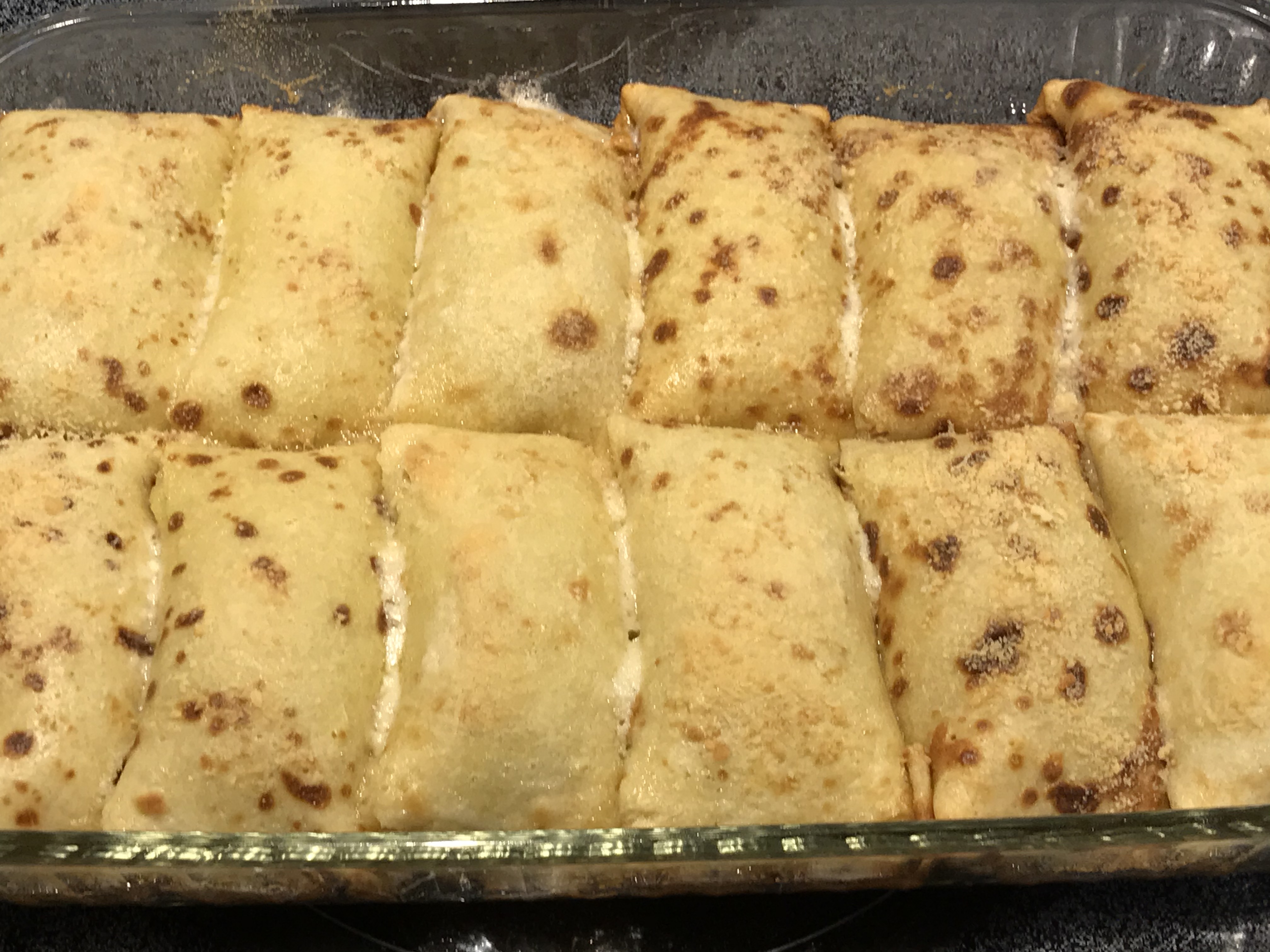
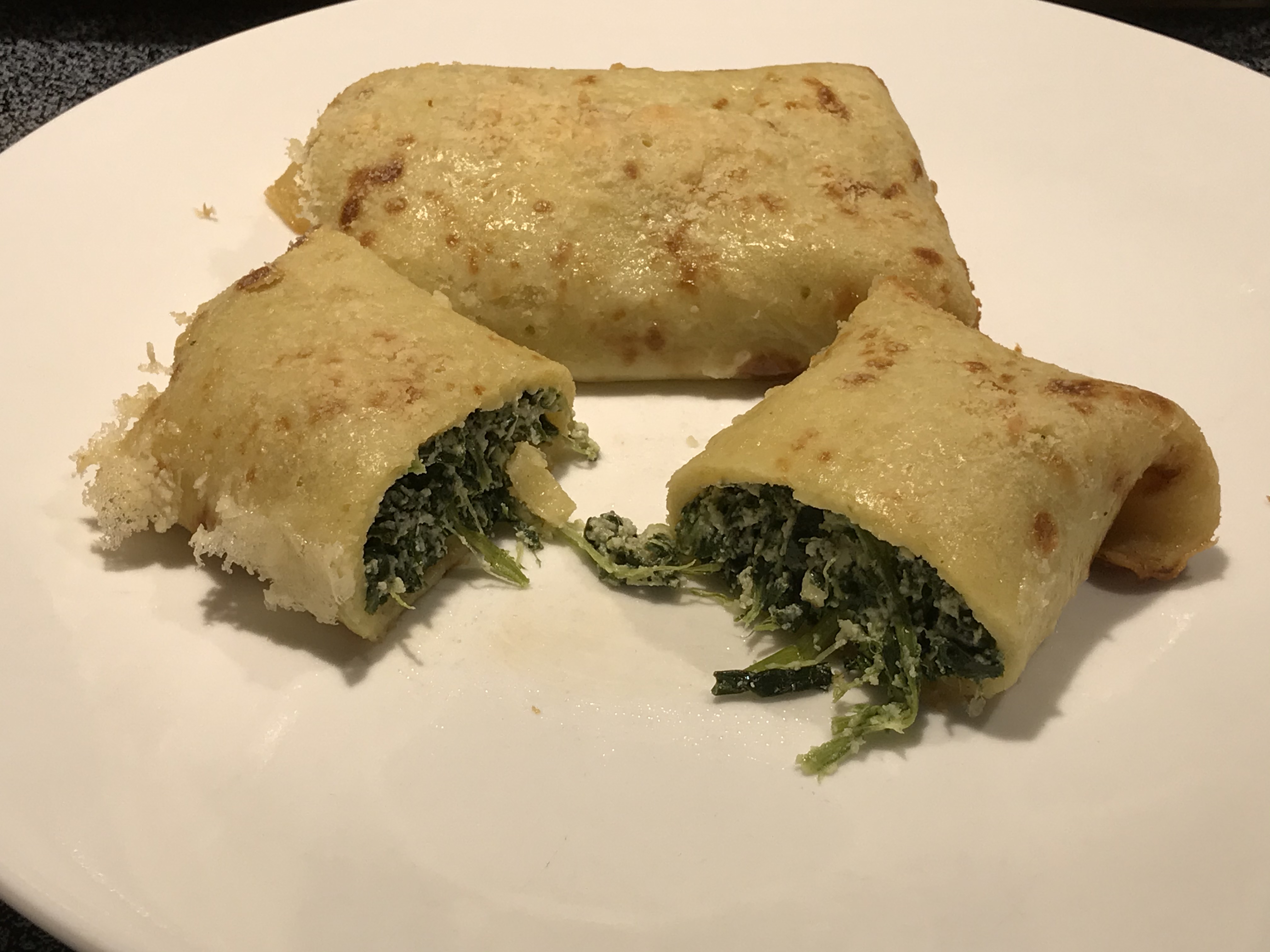
            Returning again to Emilia-Romagna, we have a wonderful stuffed, baked pasta dish called cannelloni. Like many other stuffed pastas, which are typically made with fresh egg dough, it was historically a luxury or an occasional treat. Possible fillings include various cheeses, meats, and spinach. Here we have a spinach, ricotta and mascarpone filling, bound with eggs and flavored with parmesan, parsley and nutmeg, all encased in a rather interesting “pasta.” Rather than ready to stuff tubes or rolled out dough, a thin batter is cooked in a skillet, becoming a crepe-like circle that is then stuffed.

            Spinach and nutmeg, so common is pasta dishes today, were not present in Ancient Roman times. Spinach was introduced to Europe by the Arabs during the Medieval period. Nutmeg arrived around the same time or slightly later, either through trade or via the Crusader States in the Eastern Mediterranean. For centuries it was one of the most sought-after spices in the Western World. The search for it helped encourage the voyages of exploration from the 15th Century onward. In the 16th Century, it and other spices were so profitable that Portugal, which had a monopoly on the trade, was one of the richest countries in Europe, despite its relatively small population and peripheral location. In the 17th Century the Dutch fought a series of bloody wars to seize the monopoly for themselves, only to lose it in the 18th when British and French agents managed to smuggle seedlings of various types off the “Spice Islands” and transplant them elsewhere.

            It might seem strange to include nutmeg in a non-sweet dish, but it is fairly common in white sauces and cheese dishes, and for good reason. The aromatic, slightly bitter flavor complements and cuts through the richness really well. That is especially necessary when the pasta “crepes” contain butter, are stuffed with a three-cheese mixture, and baked with more butter and cheese. Naturally, they are delicious, although quite rich. While not exactly a diet food, they made a great occasional treat.

Standard
Uncategorized

Cook’s Tour of Italy Menu 10 (Pgs. 41 – 44): Dinner in Radda-in-Chianti (Tuscany)

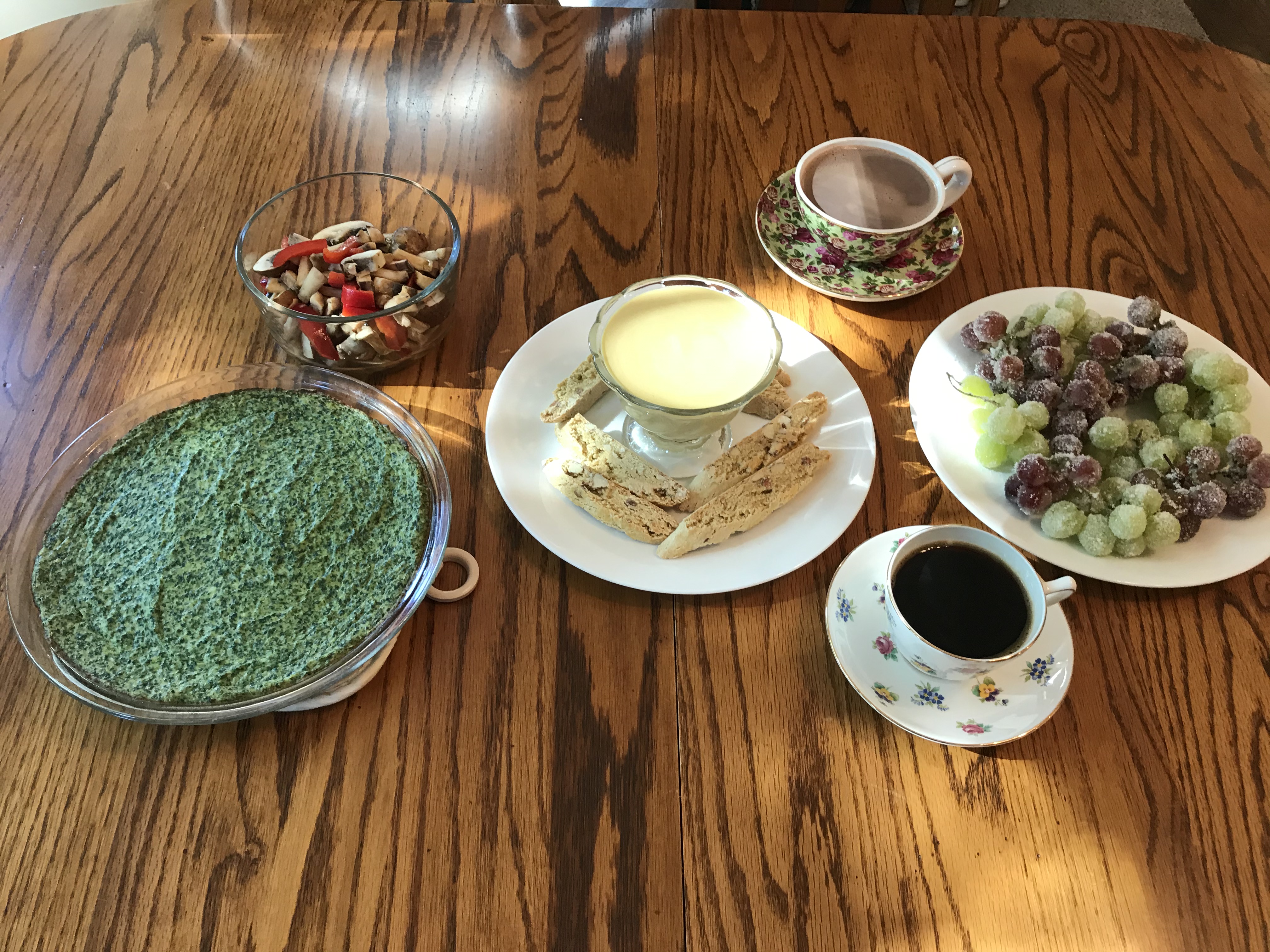
Menu: A Country Spinach Pie, Fettuccine with Smoked Salmon, Sugared Red and White Grapes, Almond Biscotti without Vin Santo

Recommended Wine: Dry White like Vernaccia di San Gimignano

IMG_2721

Due to a number of good summer menus, we remain in Tuscany for a meal in a pretty village in the Chianti region. Featuring a crustless, quiche-like spinach tart, something like fettuccine alfredo with smoked salmon, grapes with a crackly sugar coating, and biscotti, this menu demonstrates both Tuscan specialties and more national dishes. As stated in the text on page 43, the pasta dish is found across Italy. Grapes are as well, and not just in wine. The tart and the biscotti are more regional, as is the Vin Santo frequently served with the biscotti.

The crustless spinach tart seems to be a direct descendent of the Ancient Roman patina, something between an omelet or custard. There are several recipes for patinas in Apicius, often with pureed vegetables or vegetable juice mixed in with the eggs. The taste for green vegetables also goes back to Ancient times. While the spinach, basil, and nutmeg are Medieval introductions, similar recipes in Apicius feature lettuce or asparagus, almost always with pepper, and sometimes with ricotta cheese. Favorite vegetables in Tuscany today include spinach, chard, and especially black kale. (Text, Pg. 41 and 46) The optional mushrooms in the topping were another favorite of the Romans.

The biscotti is a more recent addition to the region’s cuisine and the cream sauce much more recent, but fruit and wine for dessert has a long history. A variety of ancient sources make clear that fresh and/or dried fruit were favorite desserts, and raisin wine similar to Vin Santo, pressed from partially dried grapes, is a frequent addition to sauces in Apicius. Vin Santo itself, along with sugared fruit, has been known since the Renaissance.

The tart was pretty good, though the texture was slightly odd. With only two eggs and an egg white to a pound of ricotta and 12 oz of spinach, it had a creamy texture but wasn’t quite like a quiche. It held together kind of like a cheesecake, but it was rather soft. The flavor was good, with onions, basil, and a bit of nutmeg, but the tart would have been better with a crust. The garnish of mushrooms (leftover stems from the last menu, mostly) and red bell pepper, dressed in olive oil and lemon juice, provided a flavor and texture contrast.

IMG_2725

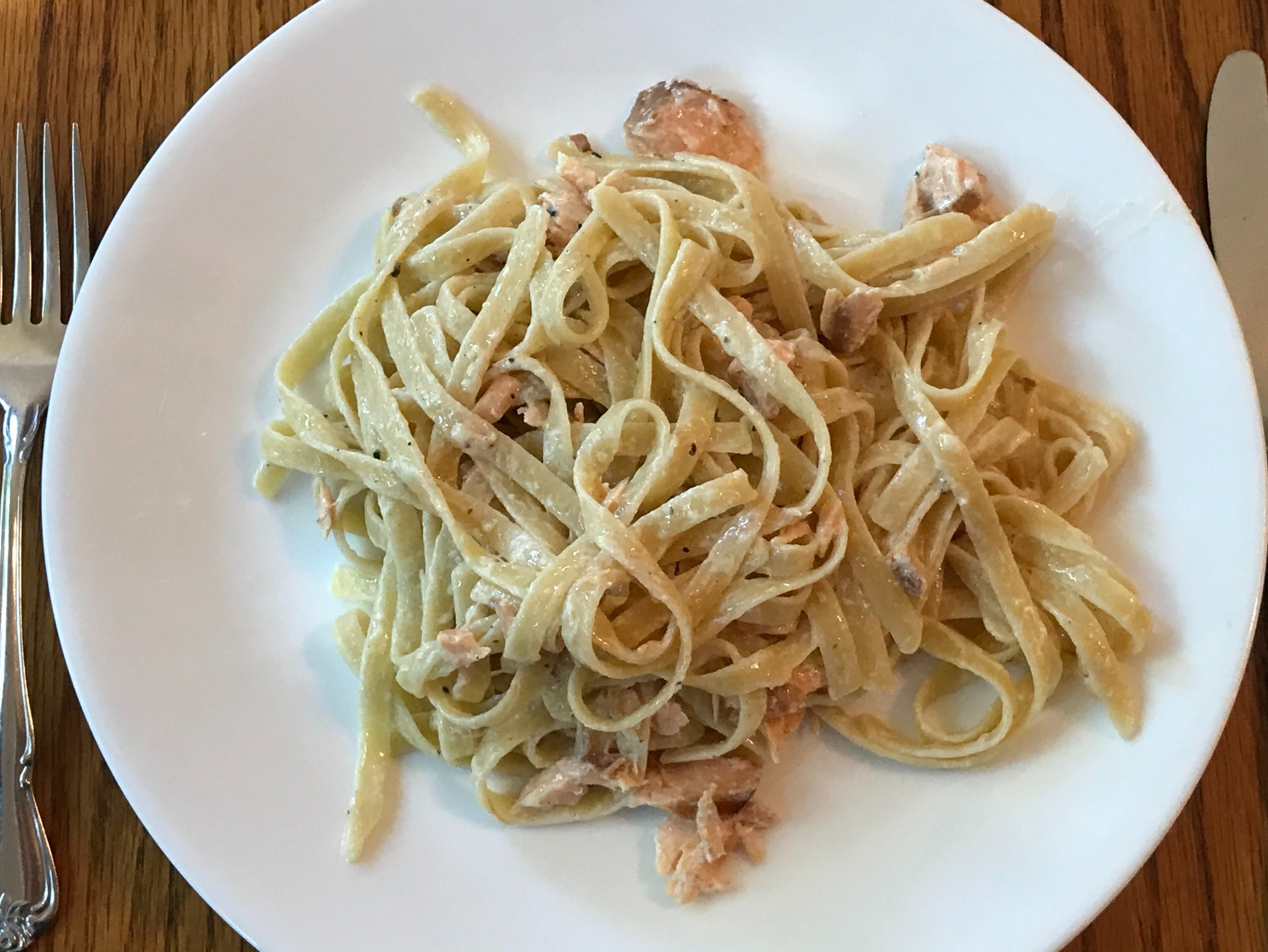
The pasta was also enjoyable, though the smoky flavor of the fish took some getting used to. Part of this may have been due to the type I used. The recipe called for thinly sliced smoked salmon cut into squares, but the only type I could find was in a small chunk. I adapted by flaking it with my fingers and continuing with the recipe, but maybe that kind is smoked more heavily. Or maybe I’m just not used to the taste of smoked fish. Regardless, it worked really well with the pasta, half and half, and parmesan cheese, and the flavor grew on me as I kept eating it.

IMG_2724

My favorite part, however, was dessert: sugared red and white grapes and almond biscotti. The grapes turned out to be quite a revelation. They are first dipped in beaten egg whites, then sugar to coat. The end product is just gorgeous, with a frosted, sparkly look. After a few hours, the sugar becomes like a crackly crust, and the grapes are even better the next day. While this is certainly not the healthiest way to enjoy fruit, it is a nice treat and would look beautiful on a cheese tray. The biscotti had a great flavor from the almonds, which got nice and toasty during the baking, and were quite addictive. Just be forewarned that the dough is really thick and takes a long time to come together if you mix it with a wooden spoon and knead it by hand. It even gave my stand mixer, which can handle just about anything, a bit of a workout.

In Tuscany, the biscotti are often served with Vin Santo, a sweet dessert wine with some similar flavors to marsala. As I didn’t want to go multiple places to try and find it, I made a custard with a small amount of marsala to dip it into. I also make a cup each of hot cocoa and coffee in case I didn’t like the custard. As it turned out, I’m glad I did. Even with a small amount of wine, added at the start to cook off the alcohol, and a fair amount of milk, I just can’t get used to the taste of wine custard. I much prefer the biscotti with coffee or cocoa. They retained a nice crunch even after dipping. It’s clear why these are so popular.

Standard
Uncategorized

Cook’s Tour of Italy Menu 14 (Pgs.57 – 62): Tuscan Picnic in Pienza

Menu: Bacon Frittata with Parsley, Fresh Beans with Tuna, Herbed Chicken on the Grill, Baked Mushrooms with Hazelnuts, Marinated Swiss Chard Stalks Wrapped in the Leaves, Sienese Ricciarelli Cookies

Recommended Wines: Terre di Tufi (straw-yellow, fruity white), Chianti Classico (red)

IMG_2719

Now imagine a Tuscan picnic, in the shade of a chestnut tree, near a Renaissance Papal residence. (Text, pg. 58) That is what we are to think of when enjoying this spread, which can be made entirely ahead of time. This would be quite a bit to make on one day, so spreading it out and bringing everything to room temperature before serving makes sense. I made the cookies and the biscotti for the next menu a few days beforehand, both at the same time to avoid wasting egg whites or yolks. The day before I put the chicken in to marinate, mixed together the beans and tuna, and made the swiss chard wraps. That just left the frittata and stuffed mushrooms to make the day of, plus grilling the chicken.

There were a few bumps in the road with this. I was under the impression that the herb/oil marinade would be more paste-like, rather than with visible pieces in the oil, but since the herbs were supposed to be minced, not put in the food processor, I stuck with it. The recipe also called for weighting the chicken down with a foil-wrapped brick or similar, which I did not have, so it went onto the grill without. This may have been a good thing, since that could have potentially forced out more of the oil, worsening the mini flare-ups that kept occurring. Due to this, I didn’t drizzle on a mix of olive oil and lemon juice periodically while cooking, just added a few splashes of lemon juice. While the chicken didn’t develop the herb “crust” it was supposed to, it was still tender and had a good flavor.

The marinated beans and tuna was an interesting and surprisingly good combination. In the past, the image of canned tuna I had in my mind was of a cat food-like homogeneous mass, but in reality it was flakes and bits of fish in a little bit of olive oil. I haven’t fully overcome the old mental image, but having it in dishes like this helps. The beans, tuna, vinegar, oil, onion, and herbs combine and balance each other out quite well.

IMG_2712

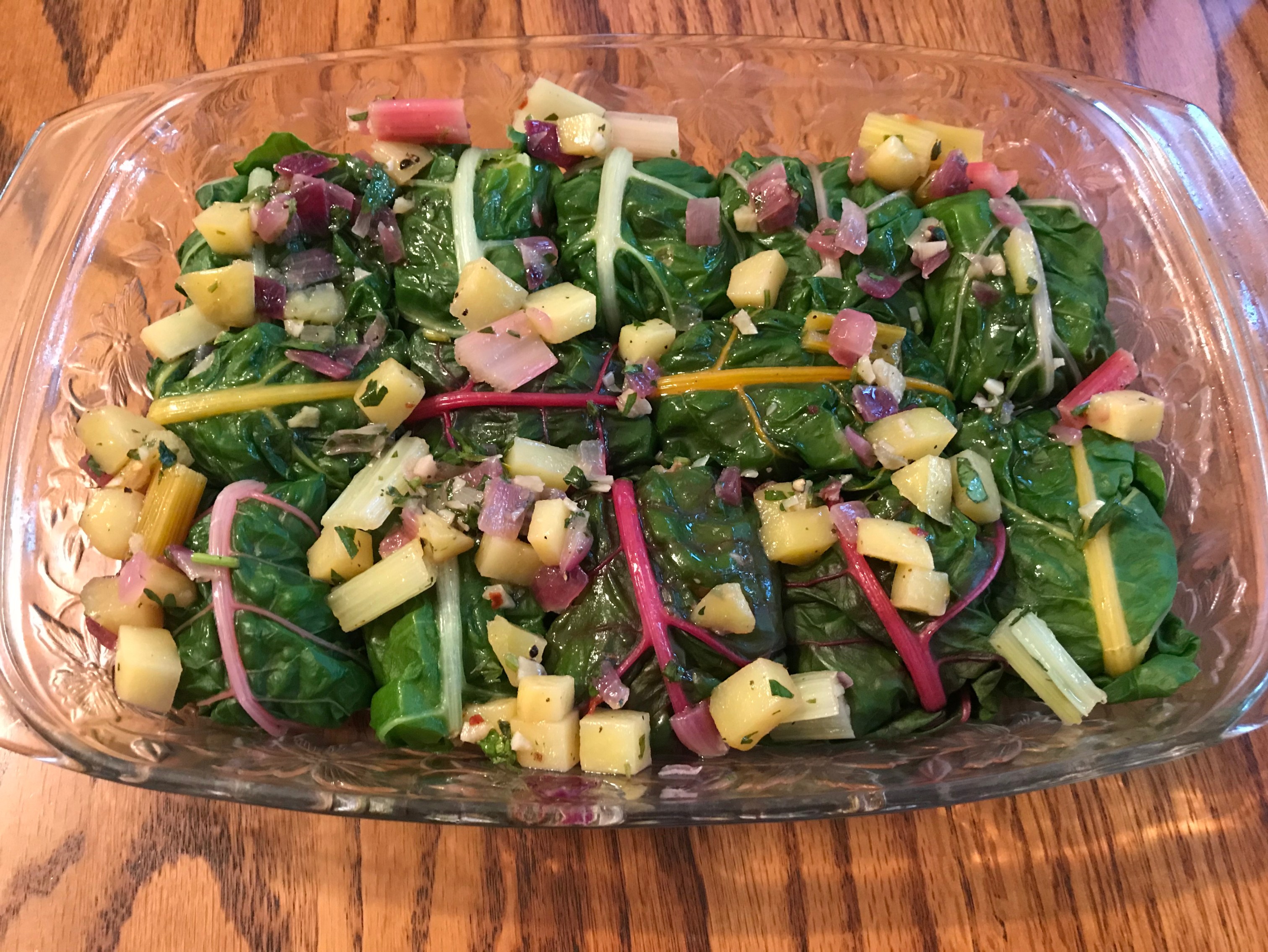
Perhaps the most interesting dish was the Swiss chard wraps, with a mix of lightly cooked stems, sautéed potatoes and onions, and a vinaigrette dressing wrapped in blanched Swiss chard leaves. The combination of potatoes, onions, and lightly sweetened dressing tasted a bit like German potato salad without the bacon. Wrapped in chard leaves with different colored veins, it was so pretty. I liked them best the first evening when still slightly warm, but they were still good when brought back to room temperature from the refrigerator the second day.

IMG_2709

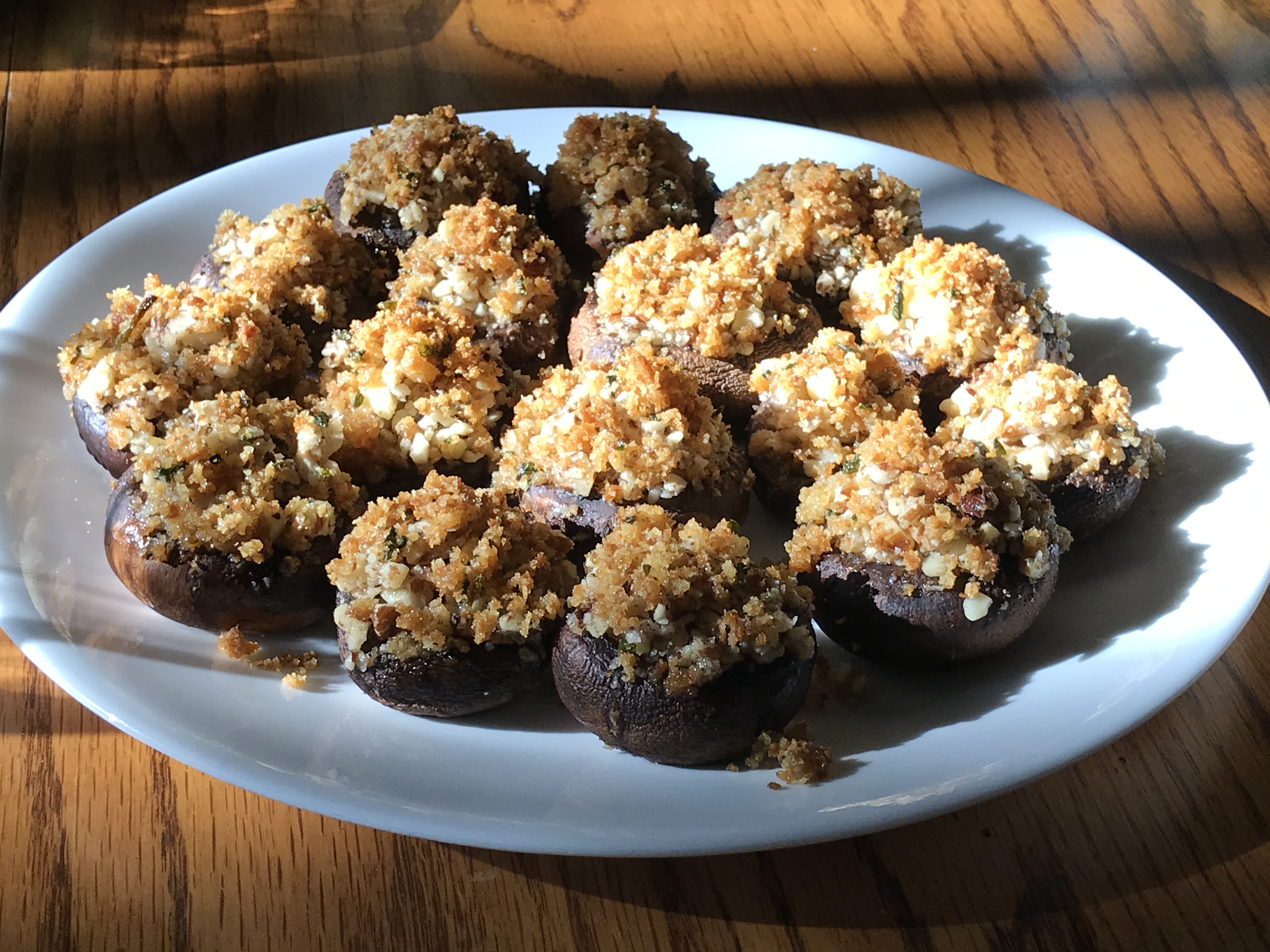
I think my favorite of the dishes was the baked mushrooms with hazelnuts. They’re basically mushroom caps sprinkled with lemon juice, salt, and pepper, filled with finely chopped hazelnuts sautéed in butter, topped with breadcrumbs, and baked. Since I had extra mushrooms and had made a big batch of breadcrumbs, I doubled the recipe. On tasting them, I was really glad I did. They take a little bit of time to assemble, but the taste is nothing short of incredible. With the meaty-tasting mushrooms and rich hazelnuts, they might even make a good vegetarian entrée.

IMG_2713

The menu notes suggest making the frittata the morning of the picnic and keeping it at room temperature until ready to eat. While frittatas are frequently eaten at room temperature or cold, particularly for picnics, the idea of something like a cold omelet does not sound particularly appealing. To save time in the afternoon/evening I did make it in the late morning, but served it for lunch, since there would be plenty of food at dinner time. Like the other dishes, it was very tasty. Bacon and eggs always go well together, and the parsley and parmesan cheese mixed in added even more flavor. I did accidentally over-salt the eggs given the amount of salt in the pancetta cubes and parmesan, but it was still good. I would definitely make it again, just being careful with the salt.

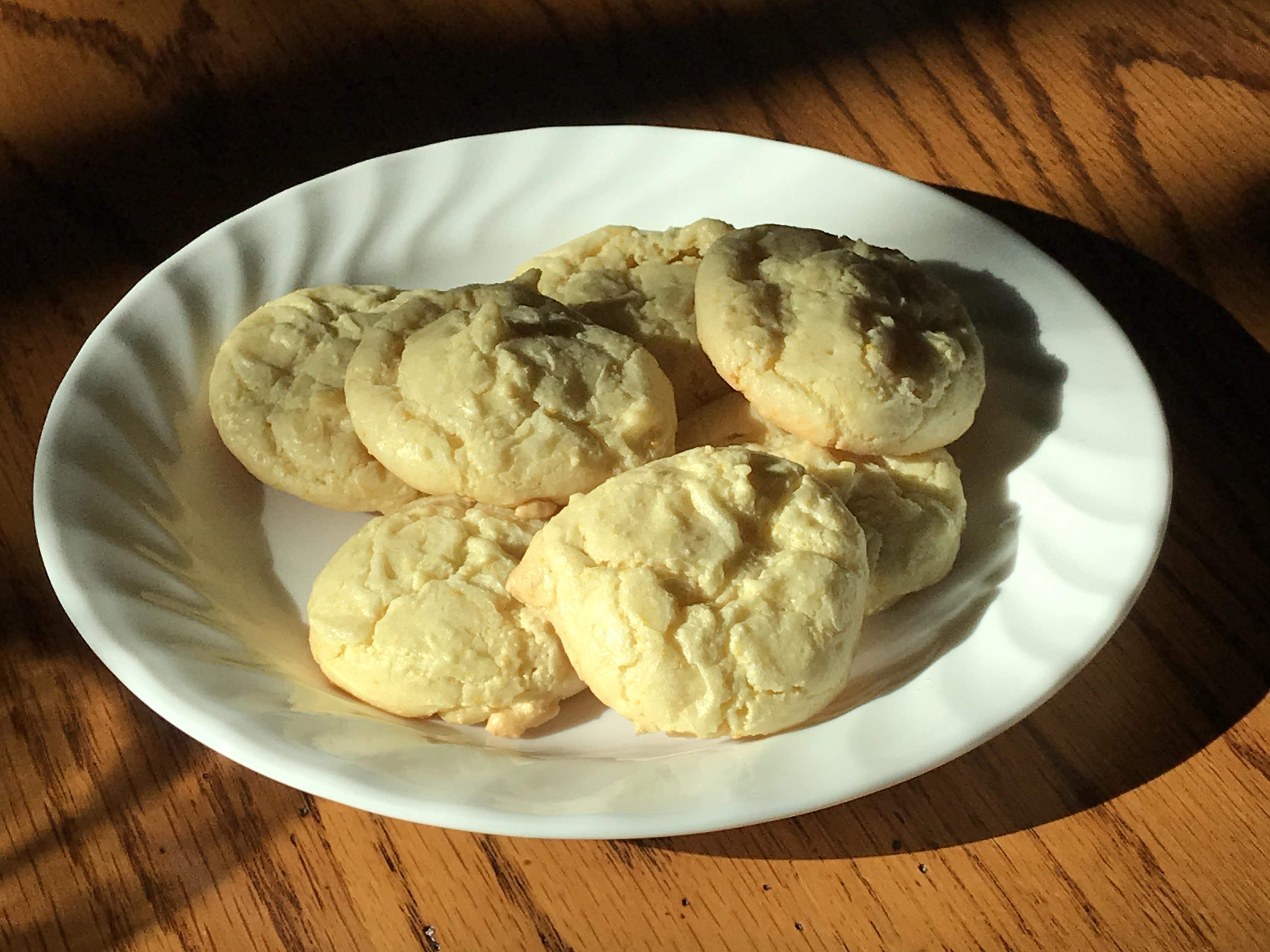
The cookies, called ricciarelli in Siena, were quite a hit. The recipe makes 20 of them, but you may notice that there are a lot fewer on the plate in the image. That’s what tends to happen when you make baked goods ahead of time. Based on almond paste and flavored with a bit of orange zest, they are given a meringue-like quality from powdered sugar and egg whites. Best of all, they are not difficult to make and hold up well in an airtight container for a few days.

IMG_2715

An overall review is as follows. The frittata would be good at a picnic, but also makes an excellent lunch for two or three people. Beans and tuna work surprisingly well together. The chicken has a great flavor and would suit most people’s tastes, even picky eaters. Hazelnuts and mushrooms seem like an odd combination, but the soft mushrooms and crunchy hazelnuts are an incredible match. The Swiss chard wraps are beautiful and tasty. For a finale, the cookies are one of the best recipes in a while.


Standard
Uncategorized

Cook’s Tour of Italy Menu 39 (Pgs. 125 – 128): Lunch with Juliet, Verona (Veneto)

Menu: Roasted Pepper and Eggplant Puree Appetizer, Pasta Bows with Fresh Spinach, Mushrooms, and Cream, Fruit Compote with Citrus Sauce

Recommended Wine: Chardonnay from Ronc di Juri in Friuli

IMG_2664

The Veneto region is not just Venice. Perhaps the most well-known of the region’s mainland cities is Verona, famous as the setting of Shakespeare’s Romeo and Juliet. While it is unclear exactly when the story was supposed to take place and Shakespeare probably never visited Italy, the feuding families really did exist and their mansions, now tourist attractions, still stand in the city today. It seems the story evolved over a few centuries, so perhaps the precise date is not important. For Shakespeare, the focus was always on the characters.

Variants of the tale of star-crossed lovers have existed for centuries if not millennia and the names Romeo and Giulietta/Juliet are used from around 1300 all the way to Shakespeare’s time in the late 16th/early 17th centuries (he probably wrote his version in the 1590s). If you want a semi-specific timeframe, I would place the story between 1349 and 1405, and here’s why. The mansions that supposedly belonged to the two families are late medieval, built in the 13th and 14th centuries (Text, pgs. 126 and 128). In addition, “Prince Escalus” is typically assumed to be a member of the Della Scala family, who ruled the city until 1405, when it was conquered by Venice. As the text implies him to be a ruler of an independent city-state with feuding aristocratic factions, it could therefore not be set later than 1405.

Due to mention of the plague, which first struck Verona in 1348 and is described in a familiar way, I would place the story in 1349 at the absolute earliest. This is further supported by the statement that Juliet is an only surviving child out of what is implied to have been several. While this would have been a tragically common occurrence at any point before the medical advances of the 19th and 20th centuries, the chance would have been even higher in the immediate aftermath of the plague, which recurred several times in the 14thcentury after the first outbreak. Thus, we have a timeframe of 1349 to 1405.

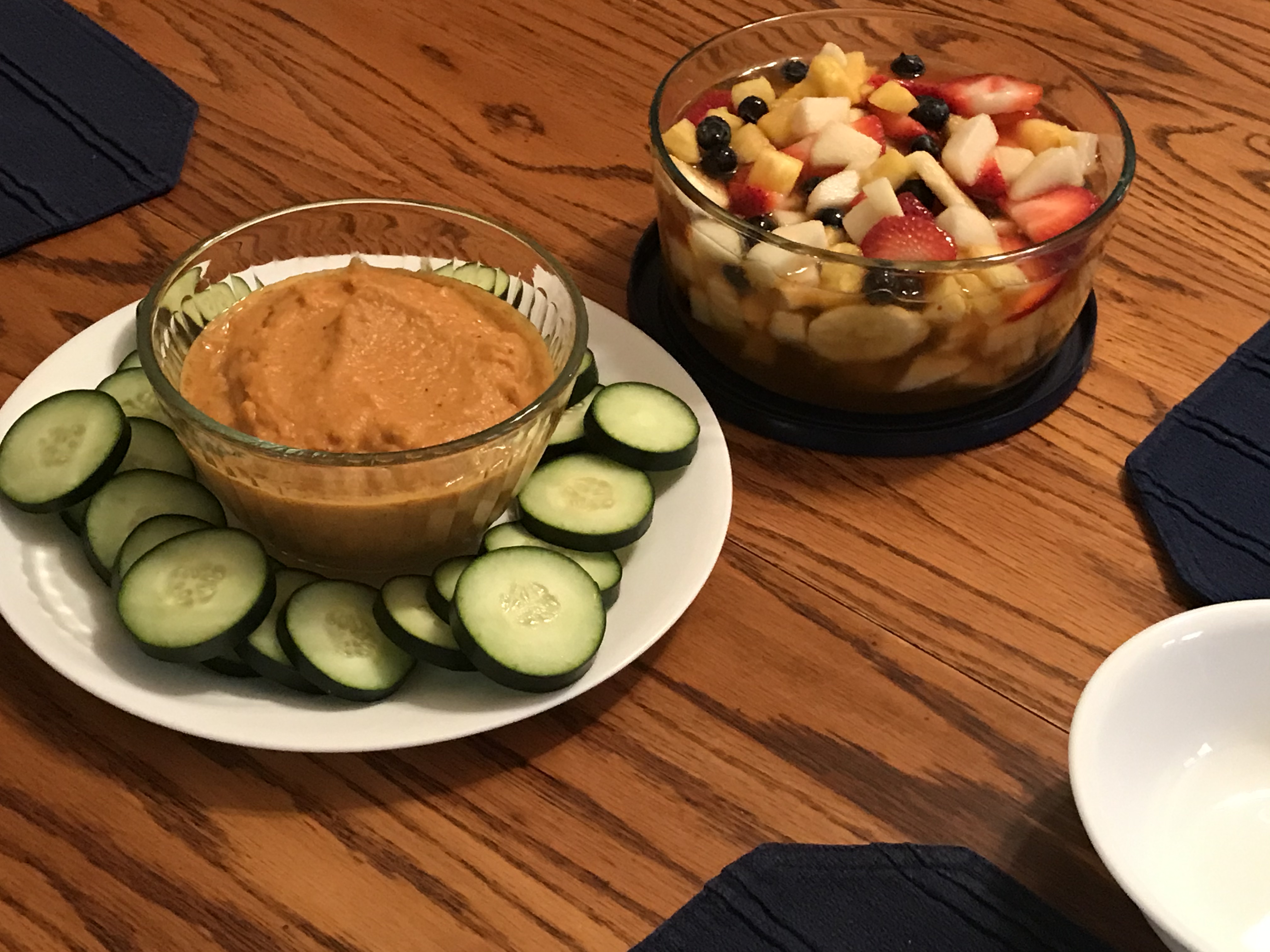
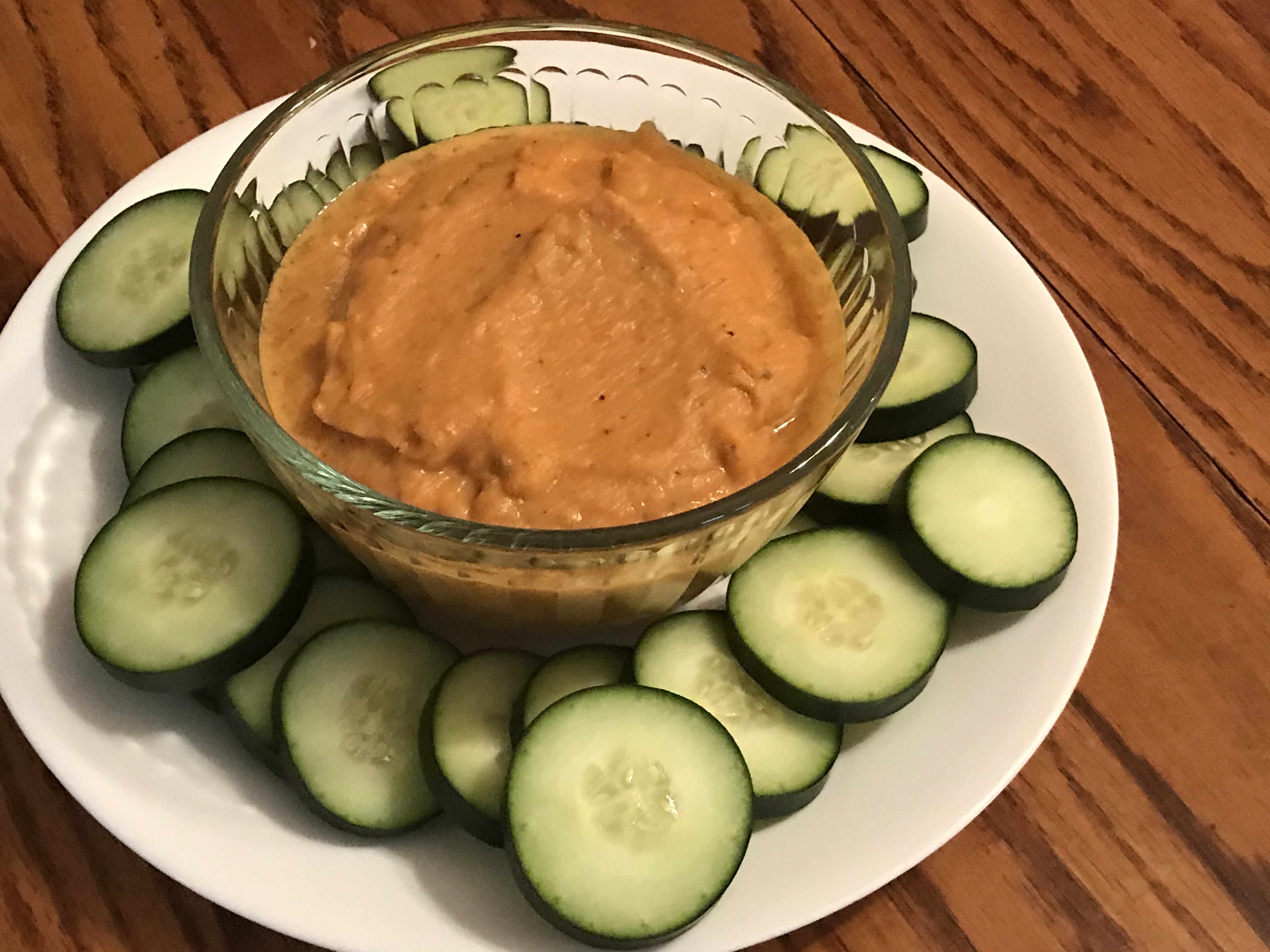
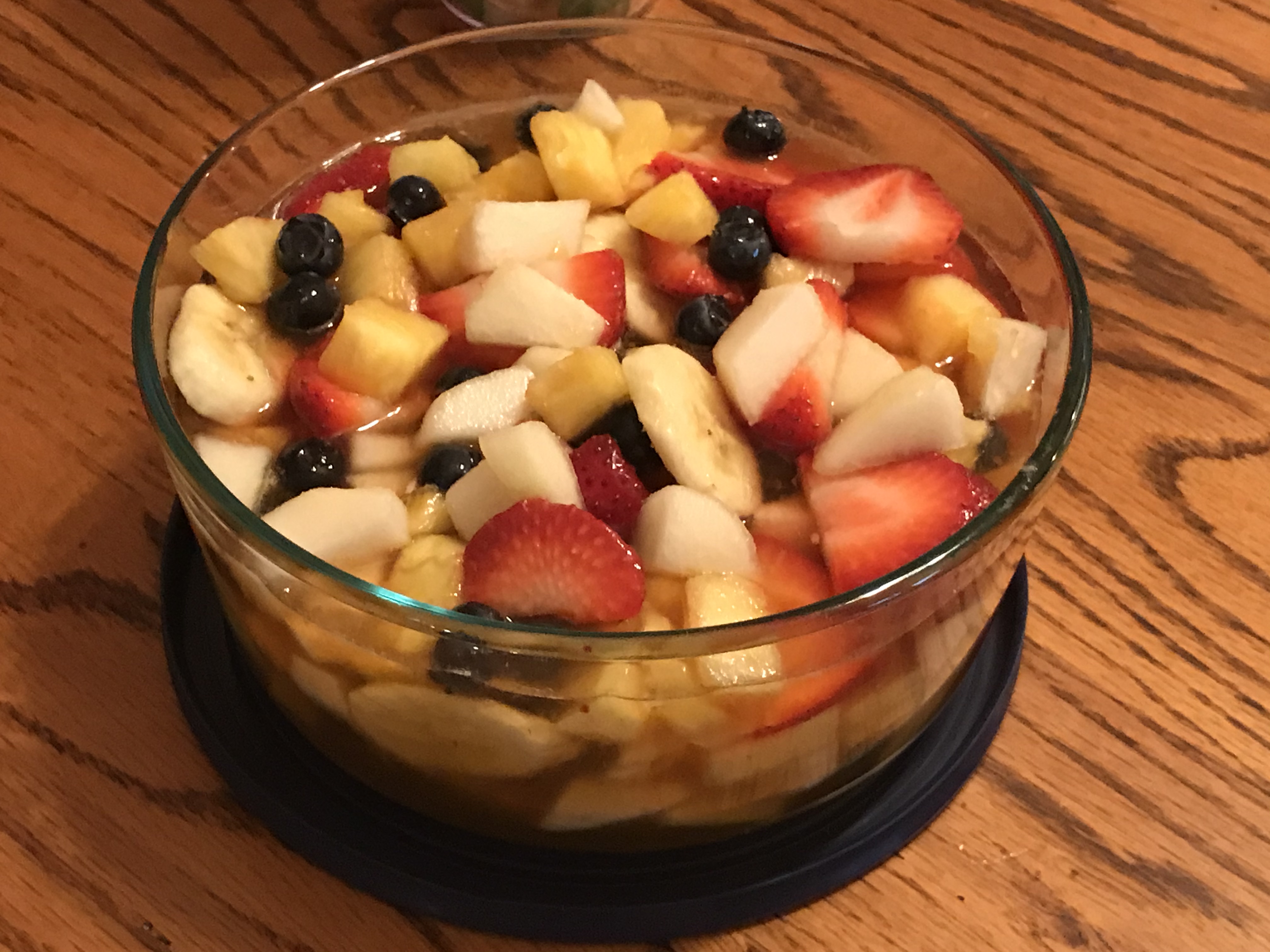
The history lesson aside, let’s turn to the menu. There’s a pureed mix of eggplant, roasted red peppers, garlic, and lemon that’s sort of like a red pepper baba ghanoush, served on slices of cucumber to start, followed by pasta bows and spinach with a mushroom cream sauce. Dessert is a mix of sliced strawberries and bananas, chopped pears and pineapple, and blueberries, dressed in a syrup of sugar, lemon, and orange juice.

Returning to history, most of this would not have been possible during the most likely historical timeframe or likely to be served even during Shakespeare’s time. The red peppers and pineapple were imports from the New World. Like tomatoes, peppers took a while to catch on in Europe (though hot peppers quickly became popular in Africa and Asia), and pineapples were still centerpieces at royal banquets in the late 17thCentury. Likewise, cream sauces were uncommon until the later part of the 17th Century and mushrooms were viewed with suspicion. It is unclear when eggplants and bananas reached Northern Italy, though the former had been introduced to Sicily centuries before by the Arabs and a few 17th and 18th Century still life banquet scenes depict bananas.

What would match with either the 14th or 16th Century, however, are the citrus juices and sugar. Sugar was a status symbol, beloved by all who could afford it, whose number gradually increased over the centuries. During the Middle Ages it was so expensive it was used like a spice. Even as supply expanded from the 15thCentury onward, it remained a luxury for a few more centuries. As mentioned in a previous post, sugar and citrus fruit fit right in with the Medieval taste for sweet and sour, inherited from the Ancient Romans. The popularity of lemons and oranges also increased over time, especially near the Mediterranean, where shorter shipping times and fewer stops meant lower prices. All of the dishes in this menu contain lemon juice, and the sauce for the fruit is fragrant with both lemon and orange juice.

Regardless of historical accuracy, this was all very enjoyable. I managed to roast the peppers without setting off the smoke alarm this time, and after briefly struggling to stuff two halved garlic cloves into cuts made in the eggplant, the baking, combining, and pureeing went without difficulty. The mix was good on the cucumbers, but I think I liked the leftovers even better on crackers the next day.

IMG_2665

Once the prep work was done, the pasta was super simple: just make the sauce, cook the pasta to al dente, toss the cooked pasta with the spinach to wilt it slightly, add the sauce, and toss to coat. The sauce started with a base of garlic and mushrooms sautéed in butter, to which a bit of marsala and lemon juice were added and allowed to cook for ten minutes to evaporate the alcohol. Cream was then added and allowed to heat through before combining with the pasta. All was then topped with a sprinkle of parmesan cheese. The pasta was excellent, though the sour taste from the lemon juice was maybe a little on the strong side. A slight reduction in lemon might benefit the sauce, but that would be a matter of personal taste. Mr. Famularo says on page 127 that he thinks Juliet would prefer this dish to potato gnocchi, and I am inclined to agree.

IMG_2669

The dessert was another treat. Though the mix here was strawberries, blueberries, pears, pineapple, and banana, anything in season would probably work. The lemon juice in the syrup prevents or slows browning, the sugar smooths out the taste of any especially tart fruit, and the juices combined add just a little more flavor. The recipe makes more syrup than is needed for the quantity of fruit, so any leftovers can be saved and used as needed. Just make sure not to add it too early, as sitting in the syrup too long can make the fruit turn soggy.

IMG_2666

Overall, this was a great menu to appreciate the summer produce coming into the stores. Even if not necessarily historical to Shakespeare’s time, that doesn’t really matter here. If given access to the foods mentioned here, there is every reason to believe Juliet would have enjoyed them.

Standard
Uncategorized

Cook’s Tour of Italy Menu 53 (Pg. 170): Pasta with Mascarpone, Sage, and Toasted Breadcrumbs (Emilia-Romagna)

Menu: Spaghetti with Mascarpone, Parmesan, and Sage-Flavored Breadcrumbs

IMG_2661

Heading back to Emilia-Romagna, we now focus on one of the things the region is most famous for: its pasta. Historically more prosperous than in some other regions, the populace was able to afford a richer diet. Along with prosciutto di Parma, mortadella (an ancestor of the American baloney, named after its supposed origin in the city of Bologna), Parmigiano-Reggiano, and true balsamic vinegar, fresh egg pasta was and still is a favorite. Eggs used to be more expensive relative to income than they are now, hence the luxury of the fresh pasta.

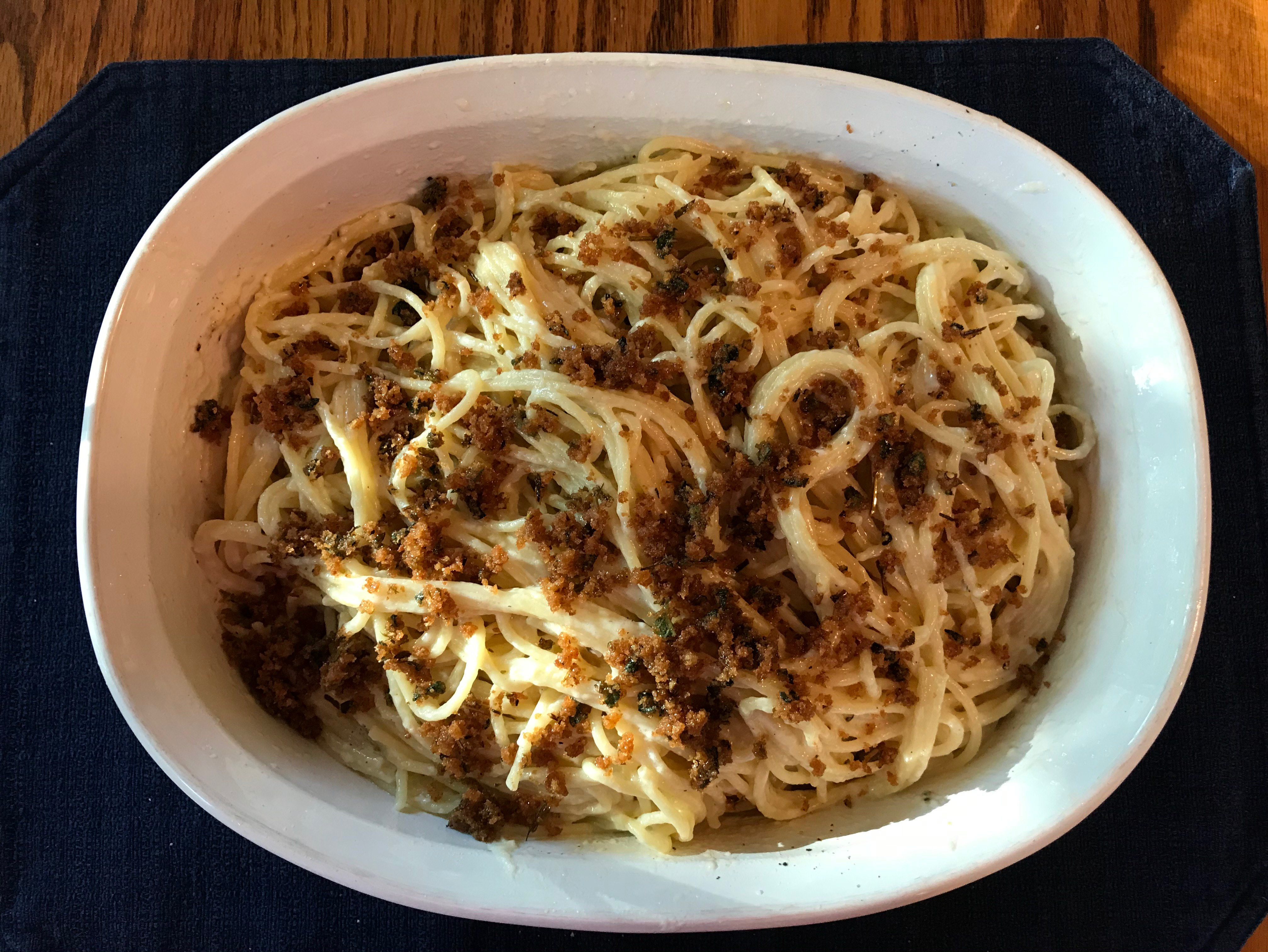
While this recipe uses dried spaghetti, the main component of the sauce is mascarpone cheese, a creamy cow’s milk cheese common in Northern Italy. Mixed with the mascarpone is grated Parmesan cheese, and the whole dish is topped with buttery, sage-scented breadcrumbs. With the rich, creamy, cheesy pasta, the contrasting crunch of the breadcrumbs really makes the dish. Another welcome contrast is to include a salad on the side, as the book recommends. In the text, Mr. Famularo says this is one of his favorite ways to make spaghetti. With how easy and tasty it is, I can see why.

IMG_2663


Standard
Uncategorized

Cook’s Tour of Italy Menu 44 (Pgs. 138 – 139): Chicken Risotto with Vegetables, Venetian Style (Venice)

Menu: Risotto with Chicken and Vegetables

IMG_2647

Heading northeast, we cross Emilia-Romagna to the Veneto region, most well-known for Venice, but also home to Verona, Vicenza, Trieste, and other notable cities. Unlike Rome, Florence, Milan, Naples, or their historical rival Genoa, Venice was not an established city in the Roman era. Exact dates of foundation vary, but the most common story seems to be that the city was established in the 5th Century AD by those fleeing barbarian raids on the mainland. After a century and a half or so of Byzantine rule in the 6th and 7th Centuries, the first Doge was elected either at the end of the 7th or start of the 8th Century (the jury is still out on whether the first Doge was real or legendary) and the republic began its rise.

From its earliest days, Venice relied on trade, and in his work The Venetians, author Paul Strathearn explains why. Essentially, it boiled down to the fact that space was limited on the islands in the lagoon, limiting how much food could be grown and, to a lesser degree, how many goods could be produced. Trade both provided the necessary food and made the republic wealthy. For centuries, Venice was the main point of import for “exotic” goods from Asia, including spices, sugar, incense, and silk.

Another luxury import during the Middle Ages was rice, which gradually began to be cultivated in Italy as its popularity grew. The wealthy loved it, particularly cooked in almond milk. As supply expanded, the price dropped, making rice widely available to all classes. Today, in many parts of Northern Italy, risotto and polenta are more popular than pasta, and this includes Venice. Rice, polenta, vegetables, and seafood in various combinations are staples in Venetian cookery, which is very different from what is typically thought of as “Italian.”

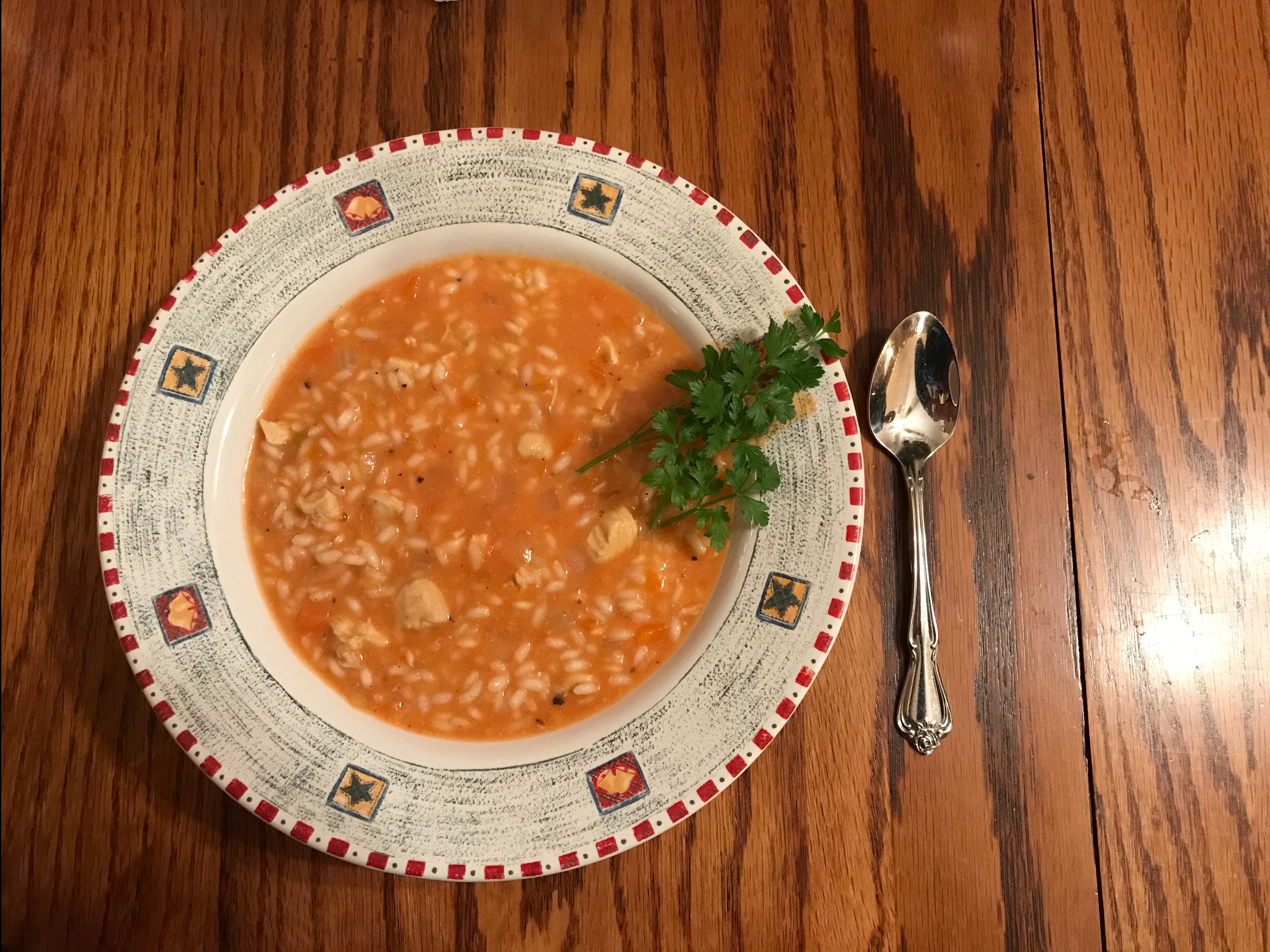
The best way to think of this dish is probably “Venetian chicken and rice.” With a flavoring base of carrot, onion, and celery, which occurs in many recipes in the book, the risotto includes chicken, chicken broth, tomato puree, butter, and parmesan cheese. The end result is creamy but not too rich, and flavorful without being overpowering. The tomato flavor is present but not dominant, melding into all the other flavors. Additional virtues for this recipe are that it is not very difficult to make and uses easy to find, affordable ingredients. I would definitely make this again.

Standard