food history, italian cuisine, pizza

Cook’s Tour of Italy Menu 72: Artichoke and Fontina Pizza (with ring bologna)

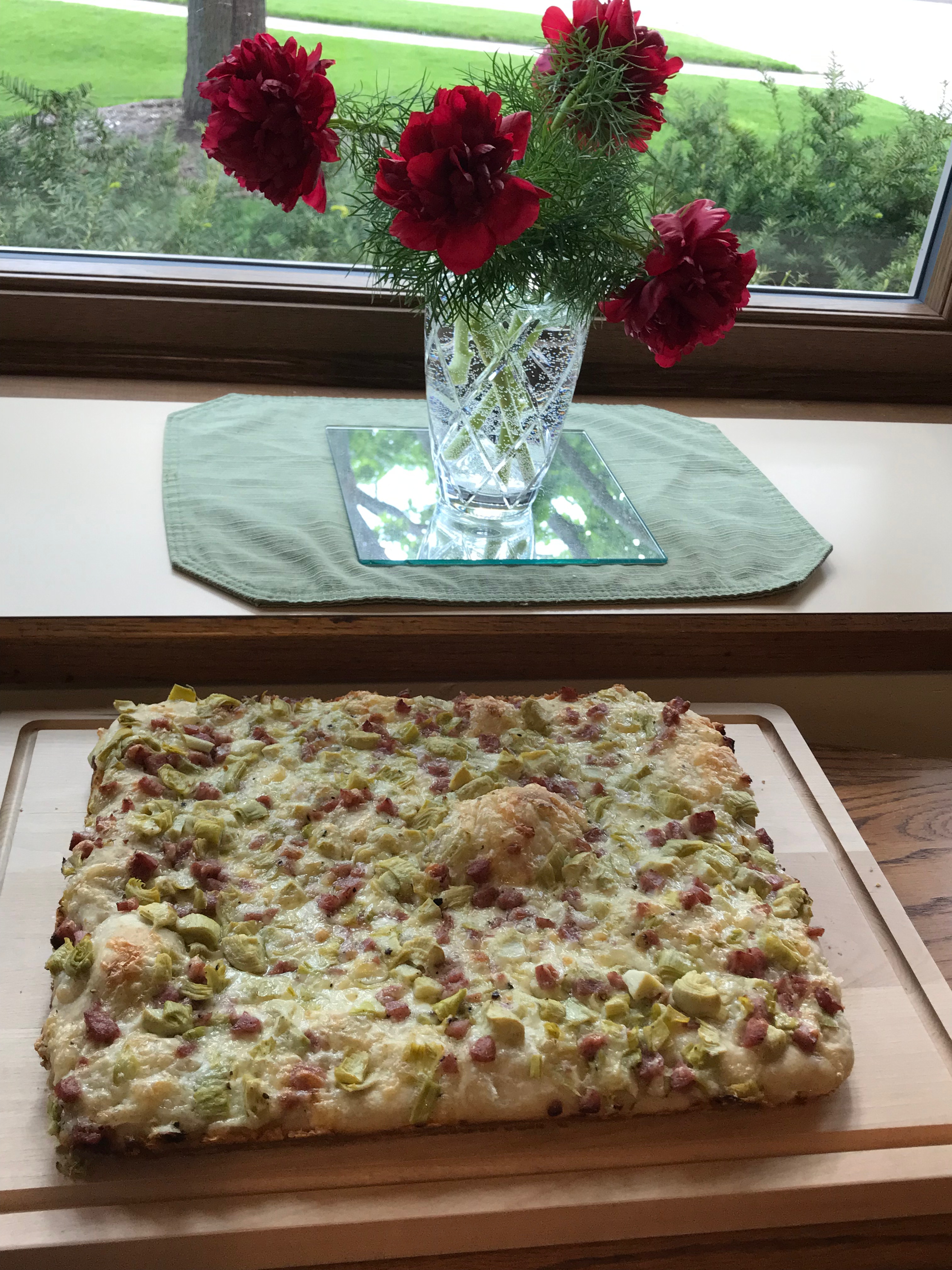
homemade artichoke pizza
Add seasonal flowers for a lovely modern still life

            Crazy as it sounds, ring bologna is actually a decent substitute for mortadella in a pinch. After all, mortadella originated in bologna. American “baloney” was an attempt to imitate it. The ring variety is better than the slices, and in either case, crisping it up in a pan gives the bologna a boost in flavor and texture. On this pizza, the oven takes care of that step for you.

            If you make the dough the night before and leave it in the fridge, and if you still have garlic oil on hand (the recipe makes enough for several pizzas), this is the easiest pizza in the book. No vegetables need to be precooked; no herbs need to be minced. Just shred the fontina, rinse and chop up the canned artichokes, chop up the mortadella (or bologna) and you’re good to go.

Advertisements

            The flavors and textures in this pizza are very well-balanced, between briny, slightly meaty artichokes, peppery bologna, creamy cheese, crispy crust, and garlic. On page 226, author Joe Famularo says the best way to get a good garlic flavor on a pizza without it scorching or being overwhelming is to use garlic-infused oil. And he’s absolutely right. The flavor is definitely there, but it doesn’t overpower the other flavors. Everything is in harmony.

Standard
Summer Pudding
british cuisine, food history

Summer Pudding: Britain’s No-Bake Specialty (and let’s talk about currants)

Summer Pudding

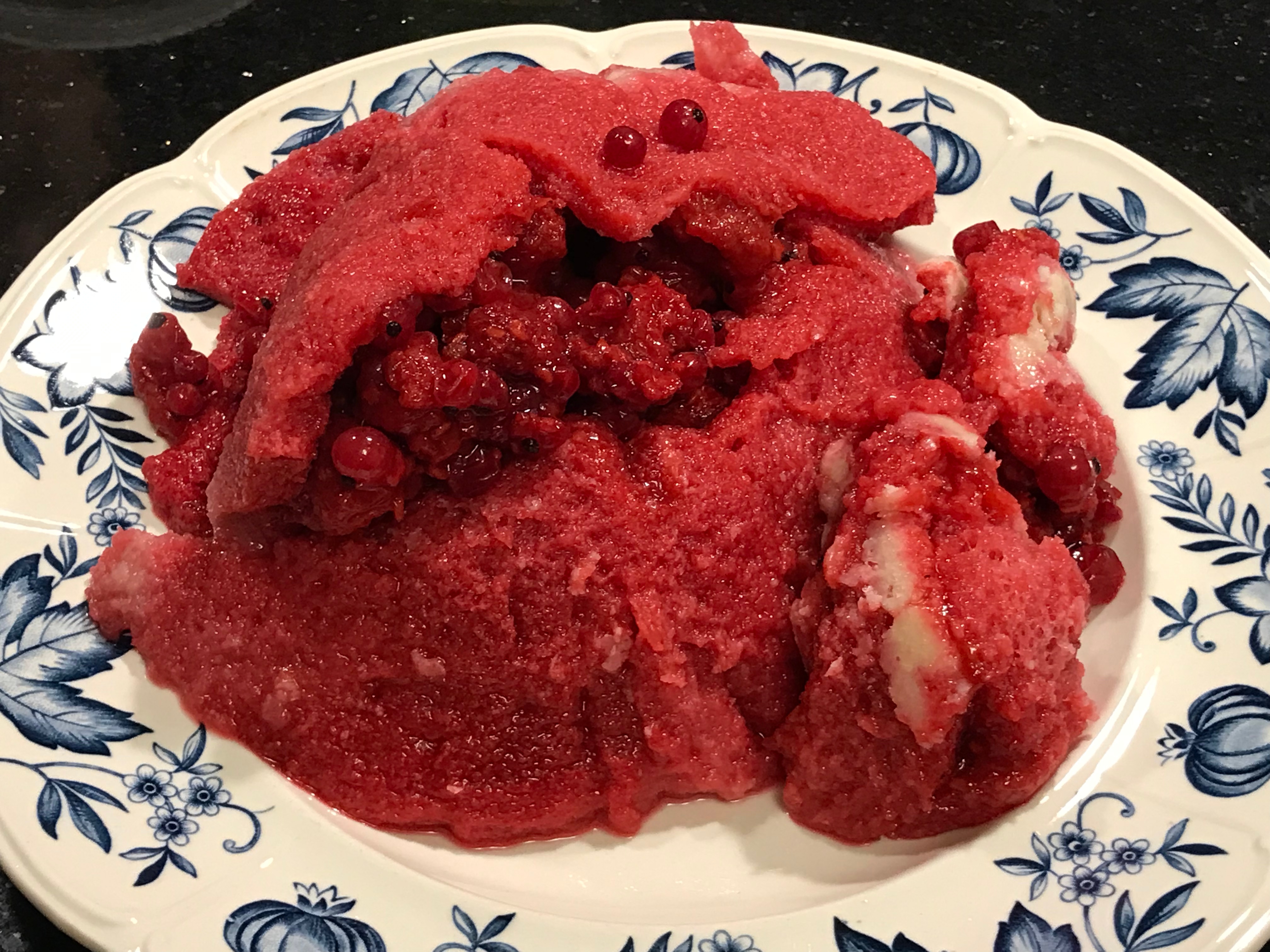
            No-bake desserts are great for special occasions during the summer. I’ve already discussed strawberry trifle, which uses frozen pound cake for beautiful and delicious results. Another showy use for berries and their juices is the British dessert summer pudding. It involves lining the bottom and sides of a bowl with white bread slices, filling the center with a mix of berries and sugar, covering the top with more bread, and pressing everything together with another bowl overnight. Excess juices are thus forced into the bread, coloring it a lovely hue between red, pink, and purple, depending on what fruit you use.

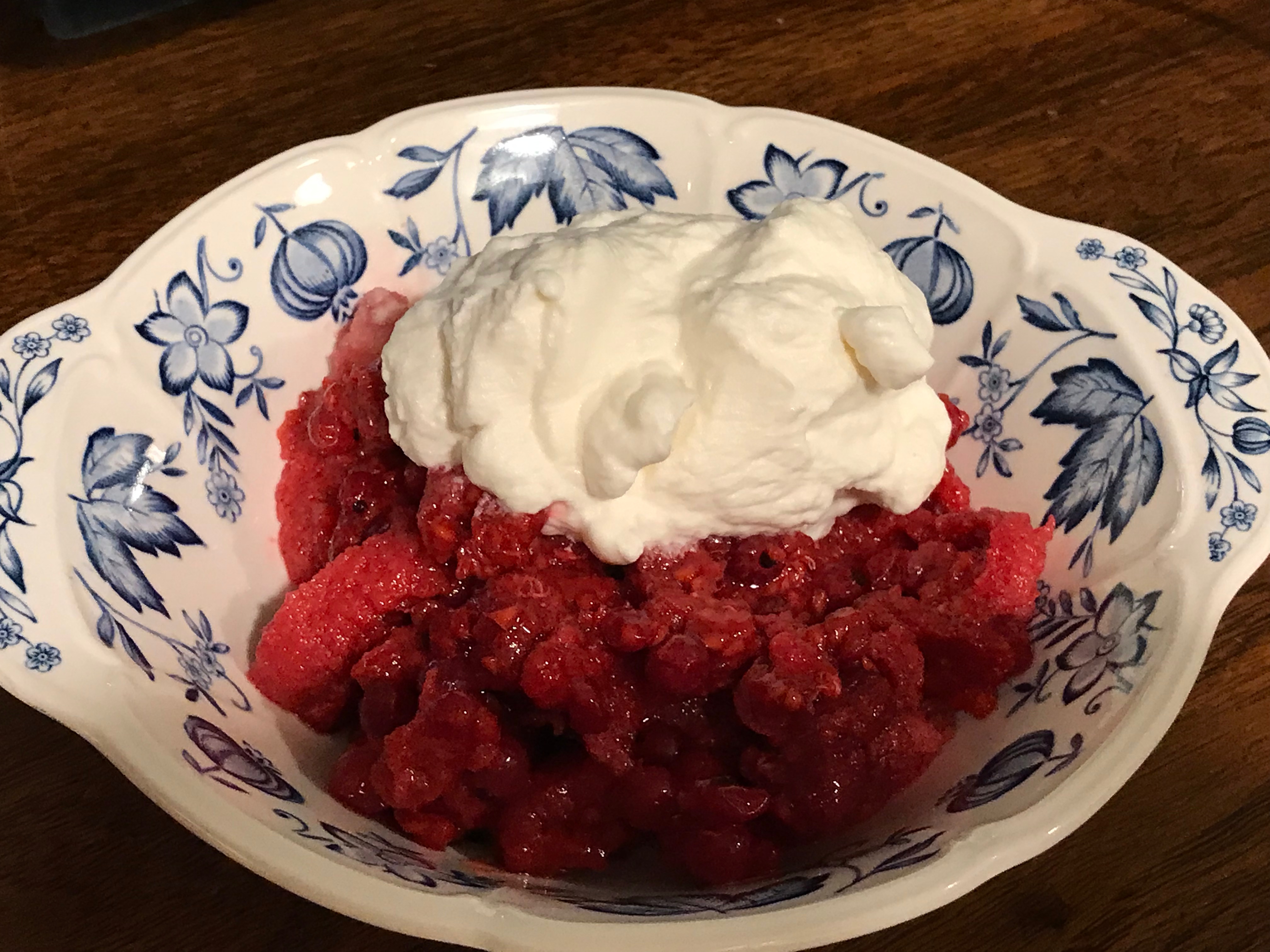
            I was a little skeptical at first. It sounded like a recipe for soggy bread, but if summer pudding is popular in the British Isles, there had to be a reason. After finding red currants at the farmer’s market, I decided to give it a try. If the bread part wasn’t good, the berry filling could be scooped out and served on its own with whipped cream.

            This turned out to be unnecessary. Odd as it sounded, the bread worked perfectly. Due to its gluten structure, it soaked up the juices like a sponge and held together even when fully saturated. Cake would typically fall apart in a similar situation. Beyond that, the bread balanced out the tart currants and raspberries very well. It was indeed soggy, but in a good way.

Advertisements

            Let’s pause here to talk about currants. The dried currants you can buy in boxes are not true currants at all. They are actually a type of small raisin. Most boxes now specifically refer to their contents as Zante currants to avoid confusion. These Zante currants are worth trying in their own right in scones, oatmeal, and the like. But they’re not what we’re talking about today.

            True currants come in three common colors: red, white, and black. All are much more common in Europe than in the US, though the red kind is occasionally found fresh in farmers’ markets and backyard gardens. White currants are a mutant form of the red variety. Black currants are even harder to find, and were in fact banned for several decades because they could carry white pine blister rust, which threatened the US logging industry. Even with new disease-resistant varieties, black currants are still illegal to grow in several states. Which is a pity, because they make great jams and juices.

Red currants
Red currants, with my hand for scale

            This history could explain the rarity of currants in the US. So too could be the fact that red currants, which were never banned, have to compete with native cranberries. Both are tart red fruits that make excellent juices and sauces, but cranberries are a lot cheaper and easier to store. And in the Midwest, where growing conditions are favorable for currant bushes, people prefer sour cherries in jams and desserts. Red and occasionally black currant jam can be found at stores and farmer’s markets, but beyond that, there are few traditional (or modern) American recipes for the fruit.

            British cuisine, by contrast, has plenty of uses for currants, especially, it seems, for the black variety, which are in fact dark purple. Blackcurrant jam is one of the favorite varieties. Many candies use the flavor. A sweetened concentrate called Ribena (which is not uncommon in the international food aisles in the US, at least in big stores) makes what tastes like currant-flavored Kool-Aid. It would taste better with a little less sugar, but is enjoyable nonetheless. And of course, there are numerous desserts made with all varieties of currant.

            One of the favorites is summer pudding, which Mimi Sheraton suggests is best made with a mix of red currants and raspberries. Taking the expert’s advice, I picked up some frozen raspberries, scaled down the recipe on pages 29 – 30 in 1000 Foods to Eat Before You Die by half, and got started. (Information about currants can be found on pages 12 – 13). Whether or not to cook the fruit or just briskly stir it with the sugar depends on how soft and/or ripe the fruit is. Since currants are firmer and tarter, even when ripe, I decided to cook them with the sugar for a few minutes, then stir in the raspberries, which are more prone to fall apart, after. This worked perfectly.

            The biggest challenge turned out to be finding a bowl that would fit perfectly inside the bowl with the pudding. This is important because pressing down on the surface with adequate weight (provided by a few cans of food) is what forces the excess syrup into the bread. The other issue was unmolding. I’m not sure why the recipe called for buttering the main bowl, since the butter completely solidifies when everything is chilled, unless it’s for flavor. The now-solid butter stuck the bread to the bowl, making for a slightly messy presentation.

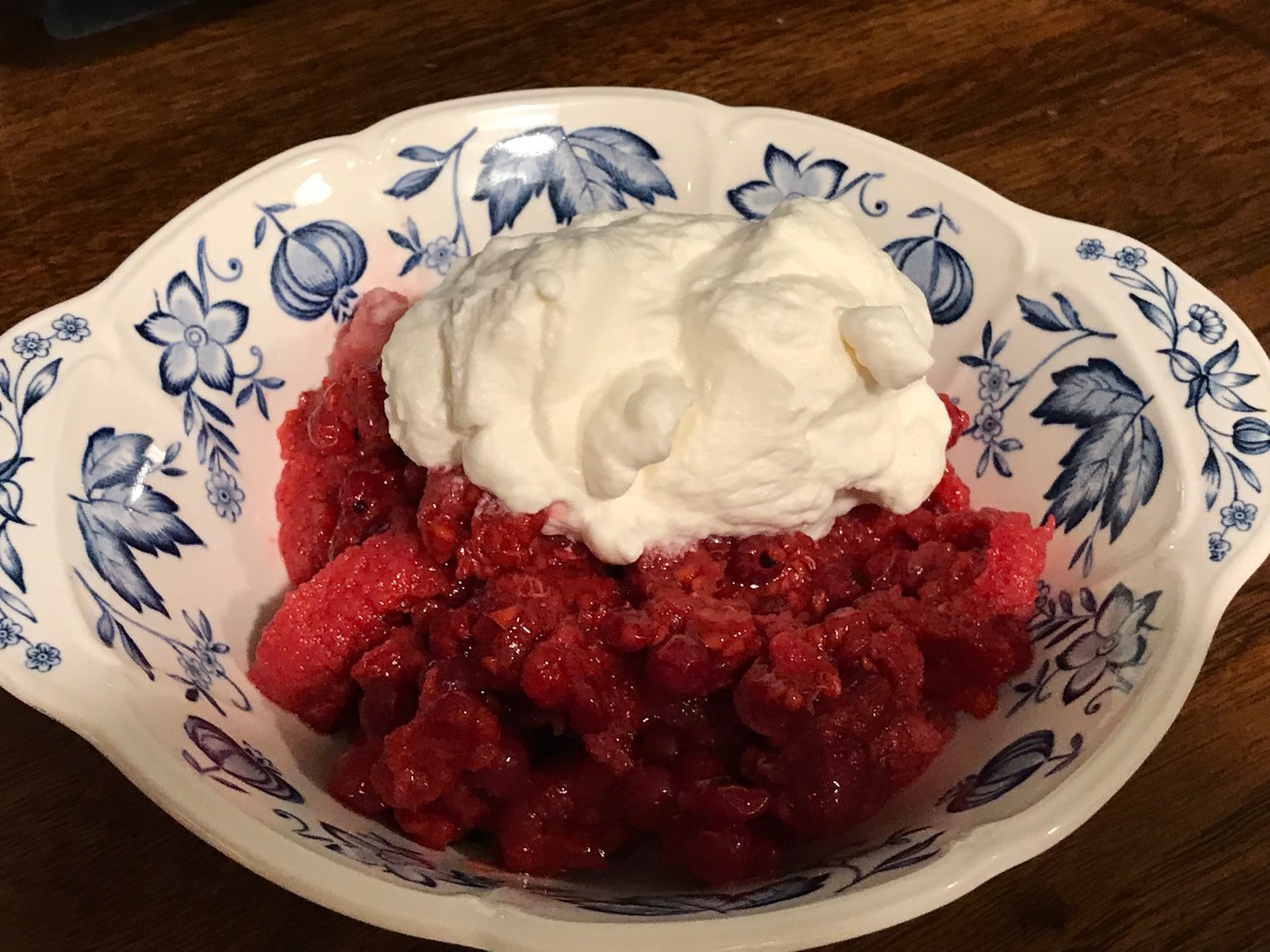
            Messy or not, the juice-stained bread and red fruits were pretty in their own way, especially with a contrast of whipped cream. Brits often serve summer pudding with either clotted or whipped cream. I’m not sure how the former is, but the latter is perfect, especially if you make it yourself. Homemade whipped cream is super easy to make, and it makes the odd-sounding but delicious summer pudding even better. To be honest, it makes any dessert better.

Standard
Parliament Big Ben
british cuisine, food history

Tastes of the British Isles: More Interesting Than People Think

Parliament Big Ben
Fun fact: Big Ben is technically not the name of the tower itself, but the bell inside it.

            British cuisine gets a bad rap. Jokes abound about it being bland, heavy, and sometimes bizarre. Even the island’s inhabitants make fun of it, and often don’t eat “traditional” British dishes on a daily basis. Partly due to immigration from the Indian Subcontinent, Brits love curry and other Indian dishes. You can find falafel, Italian, and Chinese food everywhere. Still, some local dishes are worth trying. Read through the Harry Potter series for some good examples.

            Last month, I went on a trip to Great Britain and Ireland. The history was fascinating and the scenery was lovely. There were just two surprising things. First, people don’t just drive on the left. They also keep to the left on sidewalks, staircases, and anywhere else people might be passing each other in opposite directions. It felt completely backwards and I couldn’t quite get used to it. Luckily we had a bus for long distances and didn’t have to drive.

Tower Bridge London
The Tower Bridge in London

            I was also surprised by how difficult some of the local accents were to understand. Despite having a fraction of the landmass and only about a fifth of the population, the British Isles have a greater number of distinct accents than the US. This makes sense, since people have been speaking some form of English there for around 1600 years instead of 400, giving the language a lot longer to develop various dialects.

            American English certainly has its diversity, but for the most part, a speaker of one dialect can understand another. This isn’t the case in Britain and Ireland, particularly in more rural areas. On several occasions, I could only get a rough idea of what someone was saying. If asking them to repeat themselves didn’t work, I would just say ok, nod, and hope for the best.

Swans in Avon River, Stratford
Swans in the Avon River in Stratford. They were a popular Medieval feast dish, but apparently don’t taste very good.

            The food was easier to understand. Most of the ingredients are familiar and easy to find. Fish and chips are just fried fish and French fries. Beef and Guinness stew is straightforward and delicious, even if you don’t usually like Guinness. Pasties are meat and vegetables in a pie crust. Think of them as cousins of empanadas. Cheeses like cheddar are imitated all over the world. There’s bangers and mash (sausages with mashed potatoes), shepherd’s pie, roast beef and what are essentially popovers, cheese sauce with toast, and a variety of jams and marmalades.

Advertisements

            Then there’s the desserts, which is where British cuisines excel. The best introduction can be found by watching the Great British Baking Show. The Victoria sponges, loaf cakes, shortbread, sticky toffee pudding, and cream-filled fruit tartlets look and sound delicious. There have definitely been some odd flavor combinations (like miso caramel and black sesame ice cream), but sometimes they turn out to be inspired. Other times, the classics done well are what impress the judges.

            That contrast seems to sum up British cuisine as a whole: willing to try new ingredients and dishes, but not forgetting the classics.

Standard
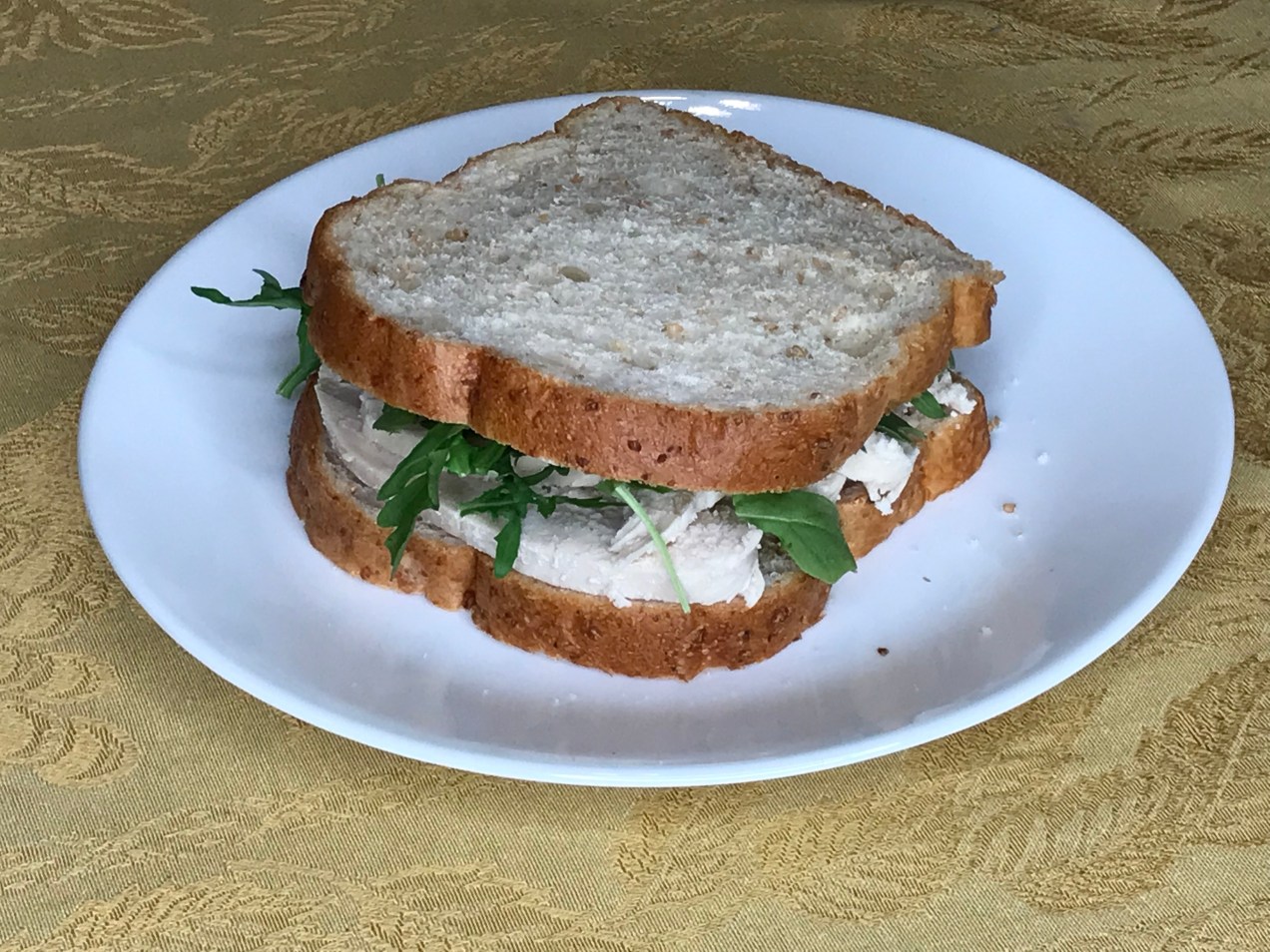
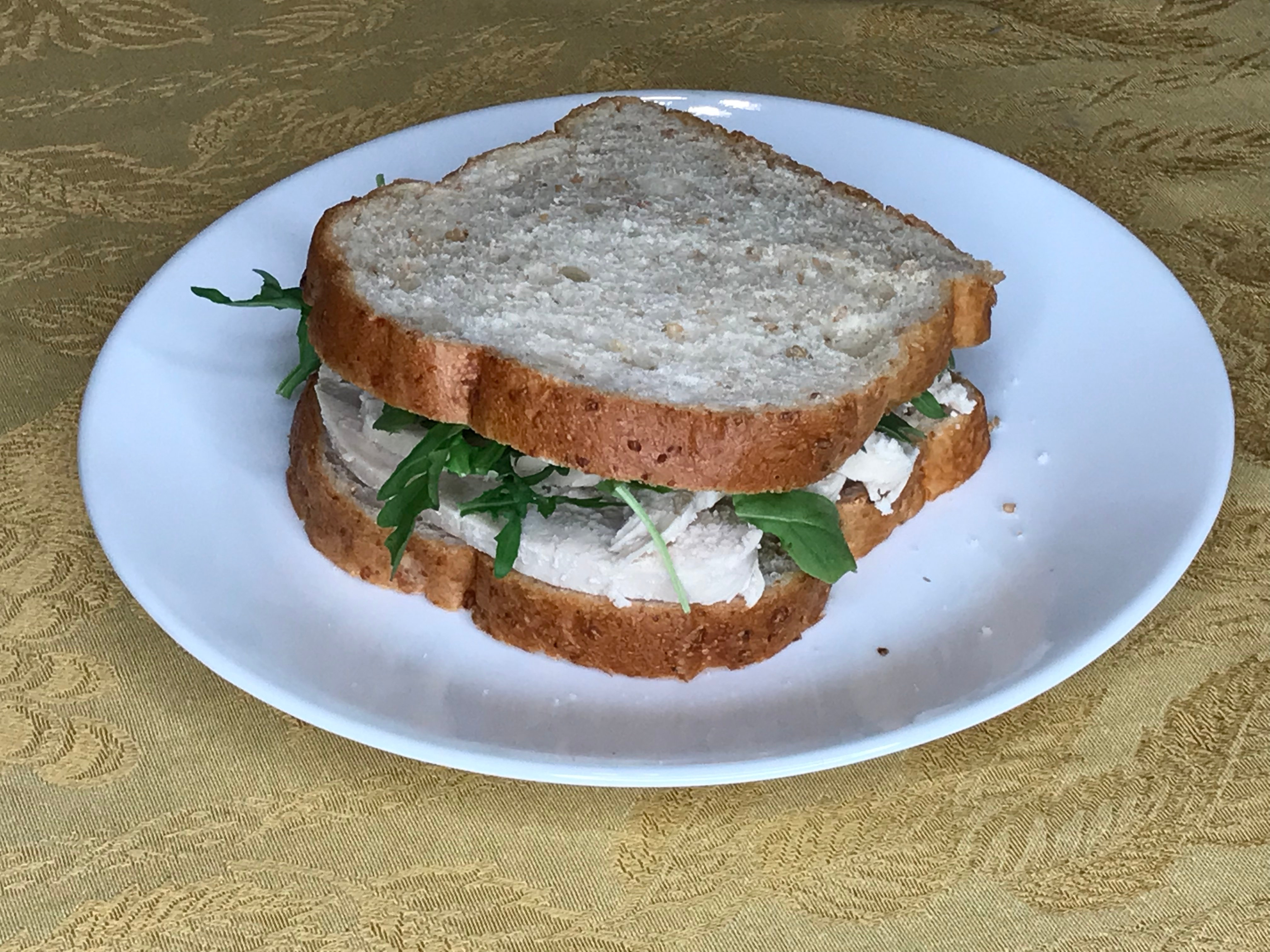
Poached chicken sandwich
american cuisine, lunch, sandwiches, summer

Poached Chicken Sandwich: An Interesting Change of Pace

Poached chicken sandwich

            Not all of the foods in 1000 Foods to Eat Before You Die are complicated. A basic chicken sandwich (description on pages 543 – 544) is quite simple and easy to make. All you need are roasted or poached chicken breast, good-quality bread, butter, and maybe some greens. It isn’t particularly exciting, but it does make a great lunch and is a nice change of pace from lunch meat and peanut butter. The only trick is making sure the chicken is tender.

            At a recent cooking demonstration, I learned a new trick for poaching chicken. For a whole chicken, you just boil in enough water to cover for fifteen minutes, turn off the heat, and let the pot sit, covered, for three hours. During that time, the residual heat will cook the meat all the way through without making it tough. Chicken pieces only need to be boiled for five minutes. To be on the safe side, I did ten.

            To poach about 3 pounds of chicken pieces (I did half boneless skinless breasts and half boneless skinless thighs), place them in a large pot with half a teaspoon salt. Add enough water to cover, about 6 to 8 cups. Bring to a soft boil, boil for 10 minutes, then turn off the heat and cover the pot. Let stand for 3 hours. Then the chicken is ready to enjoy, hot or cold. Save the broth for another use (like risotto).

            For each sandwich, spread two slices of bakery white or whole grain bread with softened butter. Add chicken, either sliced across the grain or pulled into chunks (slicing only seems to work well for the chicken breasts). If desired, add a sprinkle of sea or kosher salt, and/or some greens. Arugula has a nice peppery flavor. Then enjoy!

One-Time
Monthly
Yearly

Make a one-time donation

Make a monthly donation

Make a yearly donation

Choose an amount

$5.00
$15.00
$100.00
$5.00
$15.00
$100.00
$5.00
$15.00
$100.00

Or enter a custom amount

$

Your contribution is appreciated.

Your contribution is appreciated.

Your contribution is appreciated.

DonateDonate monthlyDonate yearly
Standard
Chicken Marbella
american cuisine, food history

Medieval Meets the 80s: Chicken Marbella

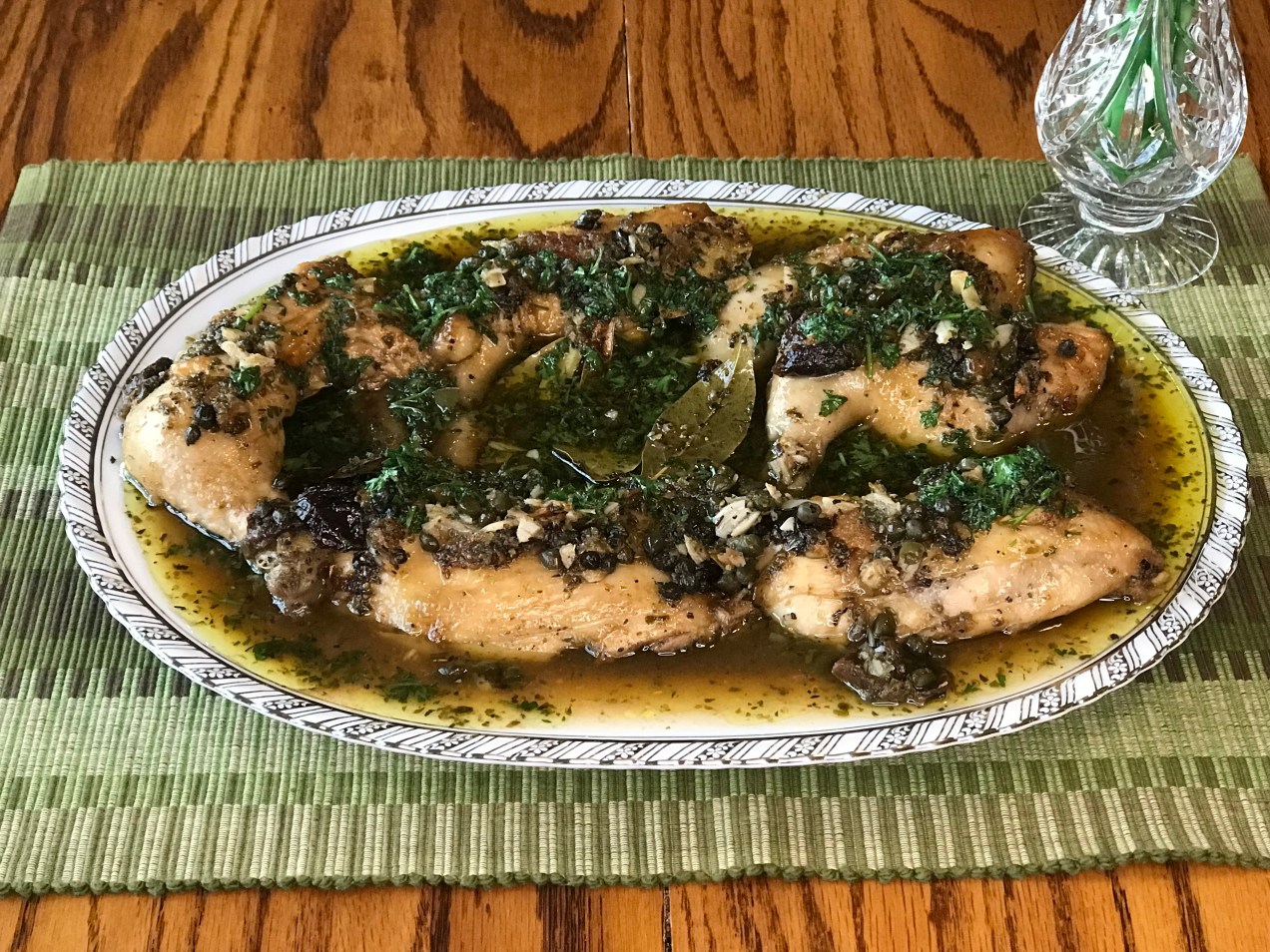
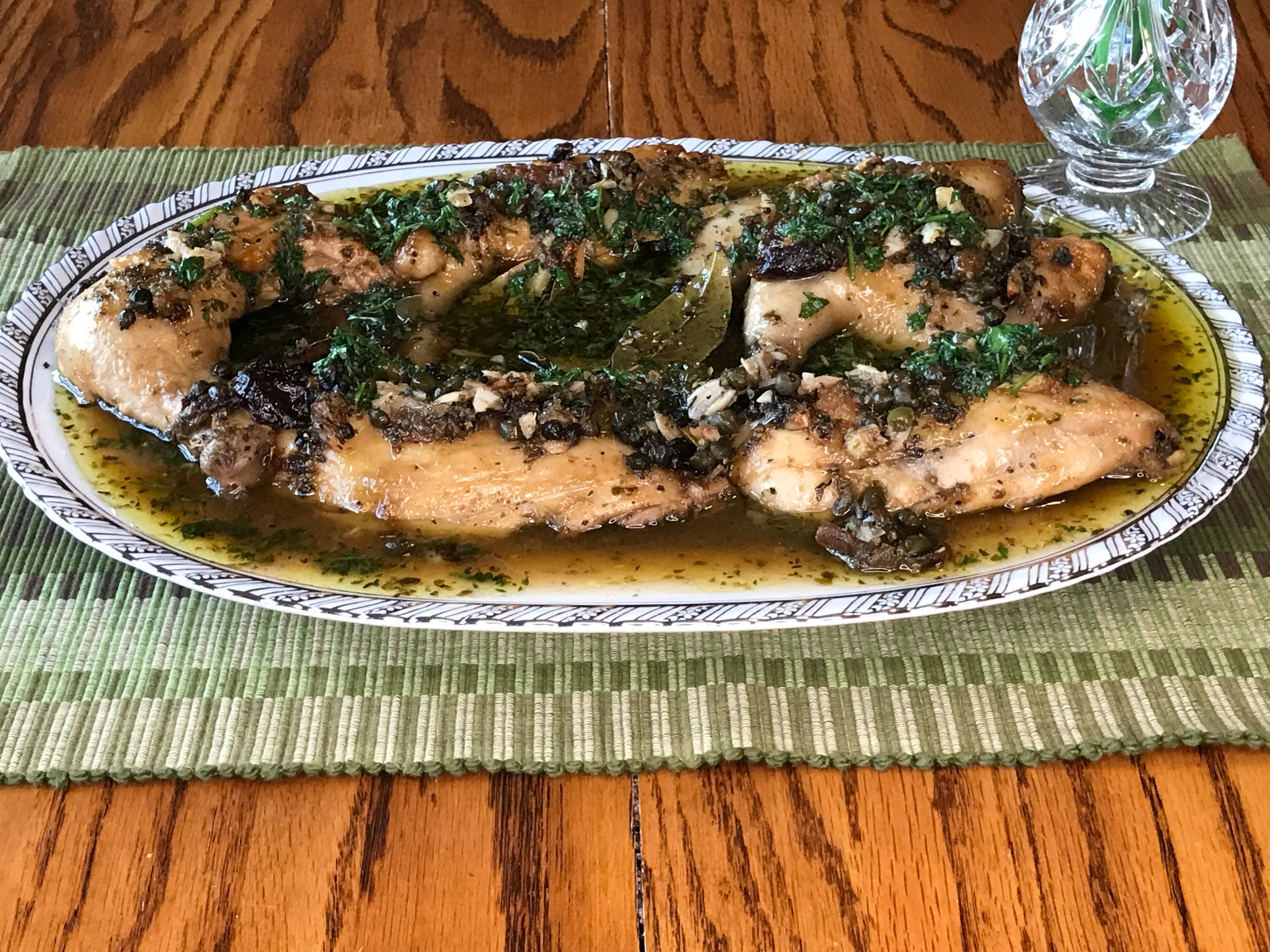
Chicken Marbella

            I’ll admit, I was a little skeptical when I first read about chicken Marbella. Prunes, olives, capers, vinegar, and brown sugar seemed like an odd combination with chicken. The dish was originally developed by the Silver Palette catering company in New York in the late 1970s/early 1980s. It’s very much in the 80s style, vaguely Italian or Mediterranean, and sophisticated for the time. Since the ingredients are fairly inexpensive, I decided to give it a try. Omit the olives (which aren’t generally my favorite) and it’s essentially sweet-and-sour chicken.

            There’s actually a long history of serving meat with sweet, sour, and fruity sauces, that goes beyond turkey with cranberry sauce or duck with orange sauce. Ancient Romans loved complex sauces with any combination of honey, vinegar, wine, fruit, herbs, spices, and the fermented fish sauce garum. Medieval cooks ditched the garum but added sugar, verjuice (pressed from unripe grapes), and citrus juices. If their sauces contained broth or meat juices, they would be combined with these other, strongly-flavored ingredients. Add a few spices and possibly some breadcrumbs to thicken, and the sauce for chicken Marbella sounds positively medieval. And it bears more than a passing resemblance to the agrodolce sauce still popular in Sicily today.

            The recipe on pages 542 – 543 of 1000 Foods to Eat Before You Die by Mimi Sheraton, originally from the Silver Palette Cookbook, was delicious and smelled amazing. The only changes I made were to skip the olives and use chicken leg quarters instead of quartered whole chickens, but I would tweak it a little further. Between the amount of marinade and the amount of liquid released by the chicken while cooking, the serving platter was swimming in sauce. The flavor was great, and the sugar gave the chicken a nice crunchy “crust,” but the mix was extremely sweet. That was despite the dramatic reduction in the quantity of prunes, for the simple reason that the bag, which I had bought for and used in another recipe, wasn’t as full as I thought.

            For a second attempt, I made a few changes. Because I only used about half the amount of chicken, I cut the other quantities in half, producing a pool of sauce instead of a lake. Reducing the amount of sugar from one half to one third cup created a better balance with the vinegar, capers, garlic, and oregano. And pretty much any dried fruit will work. I used a mix of dried apricots, golden raisins, and Zante currants (because that was what I had on hand), to successful results. Turns out the 80s culinary experimenters had some good ideas. I still don’t understand the pasta salads with bottled dressing, though. Or nouvelle cuisine.

Standard
Black-Eyed Susan Cocktail
american cuisine, beverages, food history, recipes

Preakness Stakes Mocktail: The Black-Eyed Susan

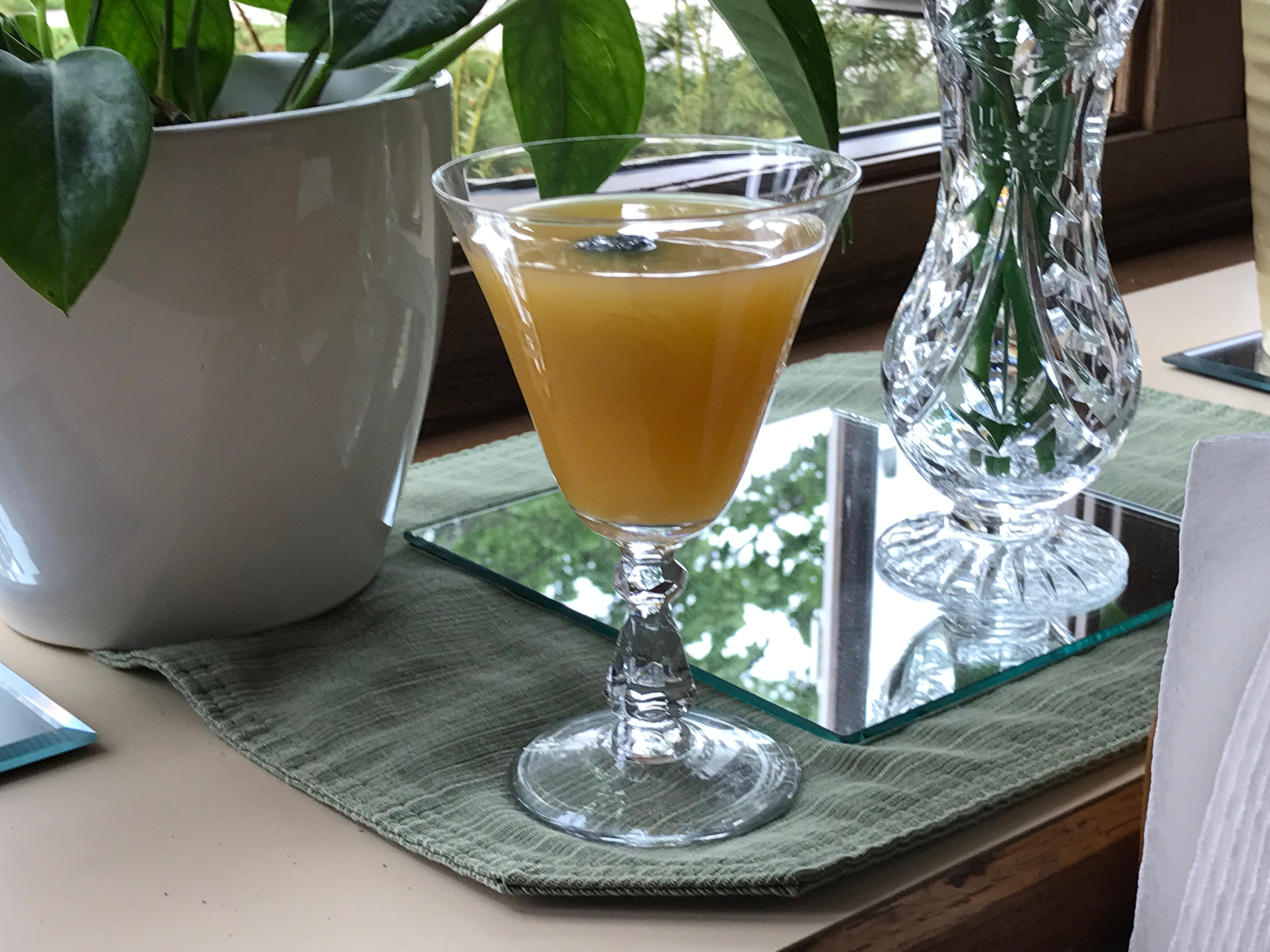
Black-Eyed Susan Cocktail

            Tomorrow is the Preakness Stakes, the second leg in the Triple Crown. The Preakness is always run on the third Saturday in May at Pimlico in Baltimore. Some trainers say the two-week turnaround time is not enough for the horses to recuperate, and sometimes the Kentucky Derby winner won’t race. Sovereignty will not race tomorrow, meaning there will not be a Triple Crown winner this year. While not as famous as the Derby, the Preakness is still an interesting event, with two associated food traditions. Since Maryland is associated with blue crab from the Chesapeake Bay, it’s no surprise that the Preakness is known for crab cakes.

            The Preakness Stakes also has its own signature cocktail, called the black-eyed Susan. Most likely, it was named for the blanket of flowers draped over the winner. The Kentucky Derby has red roses, the Preakness has black-eyed Susans, and the Belmont Stakes has white carnations. Ideally, the cocktail will be about the same yellow-orange color as the flowers. Interestingly, black-eyed Susans are not yet blooming in Maryland.

Photo from Pexels.com

            Unlike the mint julep, the black-eyed Susan never seems to have had an “official” recipe. Invented in the 1970s, ingredients varied over time, even at Pimlico, and according to the drinker’s personal taste. The only constants are orange juice and vodka. Other ingredients might include pineapple juice, grapefruit juice, peach schnapps, rum, or bourbon. Frequently the drink will be finished with a blueberry or blackberry for the characteristic “black eye.” As long as there are at least two fruit flavors, pretty much anything goes.

Black-Eyed Susan Cocktail
Black eye demonstrated here. Definitely a resemblance, in an abstract way.

            Fruity cocktails lend themselves well to non-alcoholic variations. For my own version, I keep things simple with equal parts orange juice, pineapple juice, and tonic water with a bit of peach syrup. The tonic water is the “secret ingredient” that makes non-alcoholic cocktails more complex, and its bitter edge tastes a bit like grapefruit.

Here’s how to make it:

            For each serving, combine 1/3 cup orange juice, 1/3 cup pineapple juice, and 1/3 cup tonic water with a few ice cubes. Stir in a tablespoon of peach syrup (like what’s used in Italian sodas), or more to taste. For a low-alcohol but not completely alcohol-free cocktail, the syrup can be replaced with peach schnapps. If desired, add a blueberry or blackberry. It’s that simple, unlike the system for betting on the race.

            To get notifications of new posts sent straight to your inbox, make sure to subscribe for free. Of course, if you want to make a contribution, you’re more than welcome to.

One-Time
Monthly
Yearly

Make a one-time donation

Make a monthly donation

Make a yearly donation

Choose an amount

$5.00
$15.00
$100.00
$5.00
$15.00
$100.00
$5.00
$15.00
$100.00

Or enter a custom amount

$

Your contribution is appreciated.

Your contribution is appreciated.

Your contribution is appreciated.

DonateDonate monthlyDonate yearly
Standard
Arter med Flask - Swedish yellow pea soup
food history, recipes, soup, swedish cuisine

Swedish Thursday Night Special: Yellow Pea Soup and Swedish Pancakes with Lingonberries (with soup recipe)

Information is found in 100 Foods to Eat Before You Die pages 366, 371 – 372, and 340 – 341, soup recipe is my own

            Sometimes, it’s hard to figure out where food traditions come from. According to legend, the Swedish tradition of eating yellow pea soup on Thursday nights came about because on one Thursday night in 1577, that’s how King Eric XIV was poisoned, which raises a few questions. Is eating pea soup a way to memorialize a good king, or the assassination of a bad one? Why was a king eating pea soup anyway? In most countries that was commoner’s fare. Kings and princes, especially in northern Europe, favored piles of meat and fish. Perhaps his doctor recommended a lighter diet, which would add a layer of irony to the story. And how did pancakes become the traditional dessert?

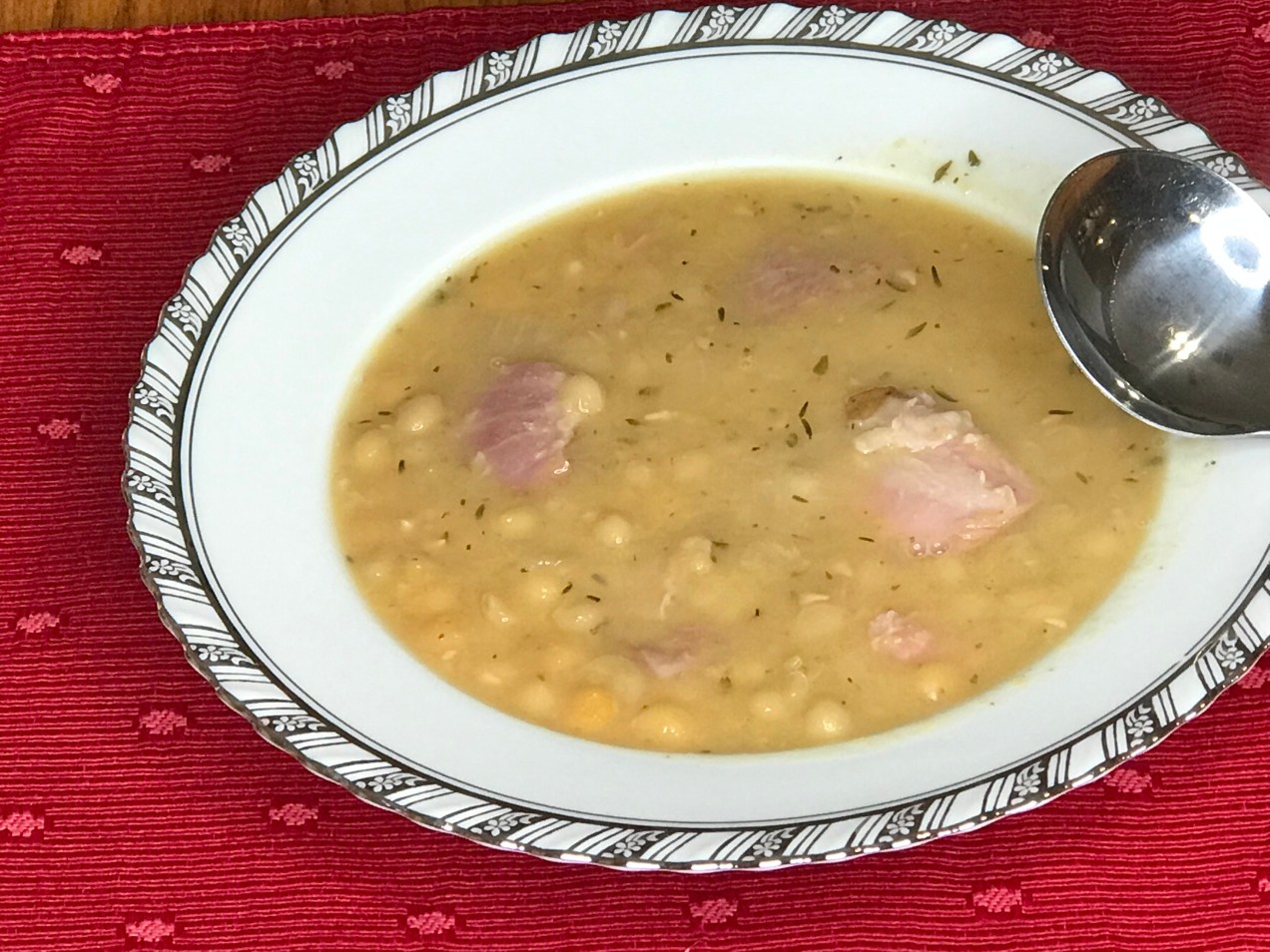
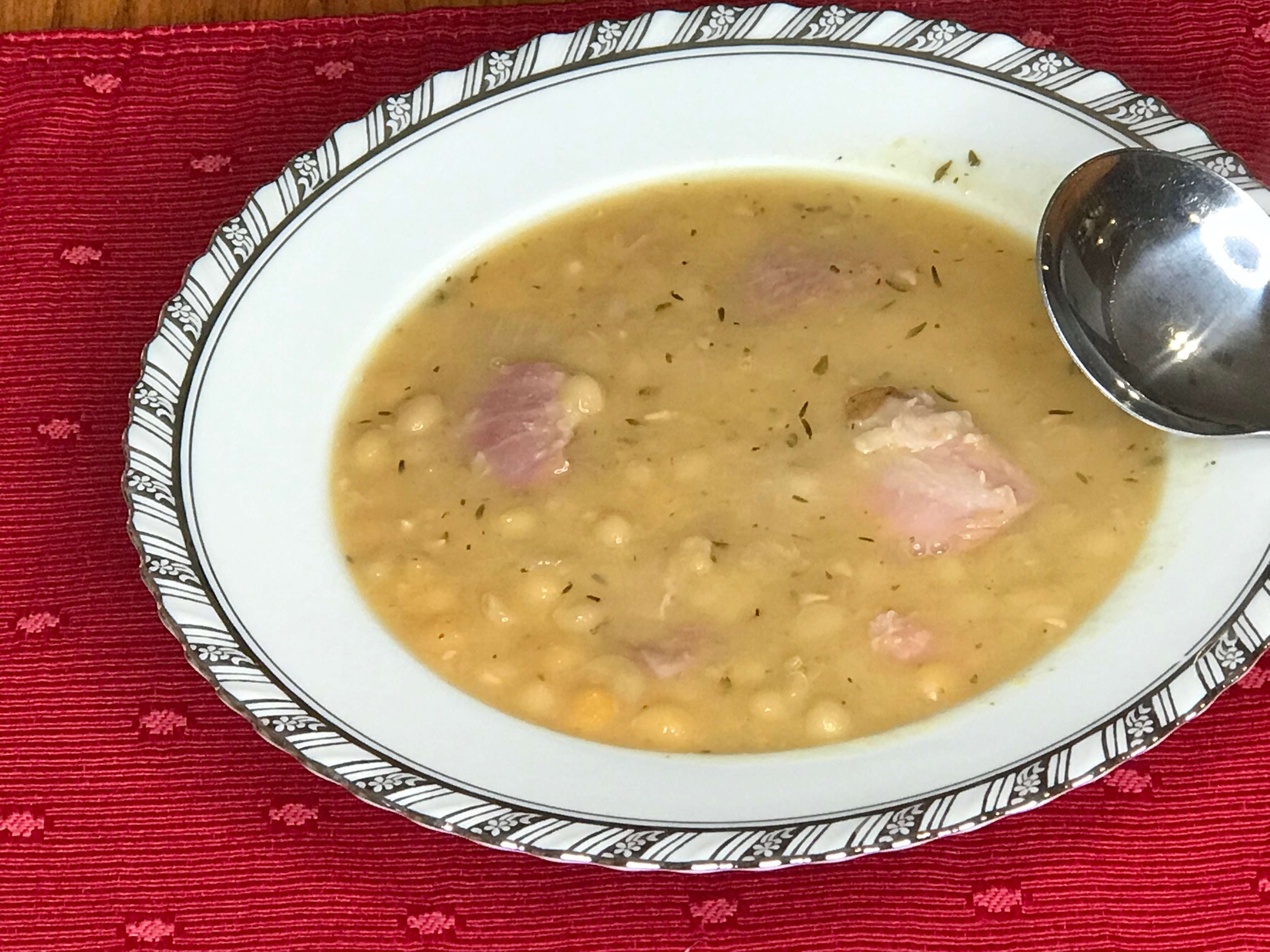
            Regardless of how it happened, yellow pea soup and pancakes are still a Swedish Thursday night tradition, even if not every week. And why not? The soup is a simple mix of dried yellow peas, water, onions, salt, dried thyme, and a little ginger, with optional pork. The recipe on the bag suggested pork ribs, Mimi Sheraton mentioned cured pork in her description on page 366 in 1000 Foods to Eat Before You Die, so I used a smoked ham shank. It added an incredible richness of flavor to the soup, though it would still be good without it.

Arter med Flash - Swedish yellow pea soup
Yellow pea soup with ham

            An interesting thing about the dried peas, aside from being yellow when many Americans are more used to green, is that they aren’t hulled or split. They take a bit longer to cook, but give the soup a much better texture and appearance. The flecks of thyme and ham pieces also improve the presentation. The soup was delicious as is, though a few rye crisps certainly wouldn’t hurt.

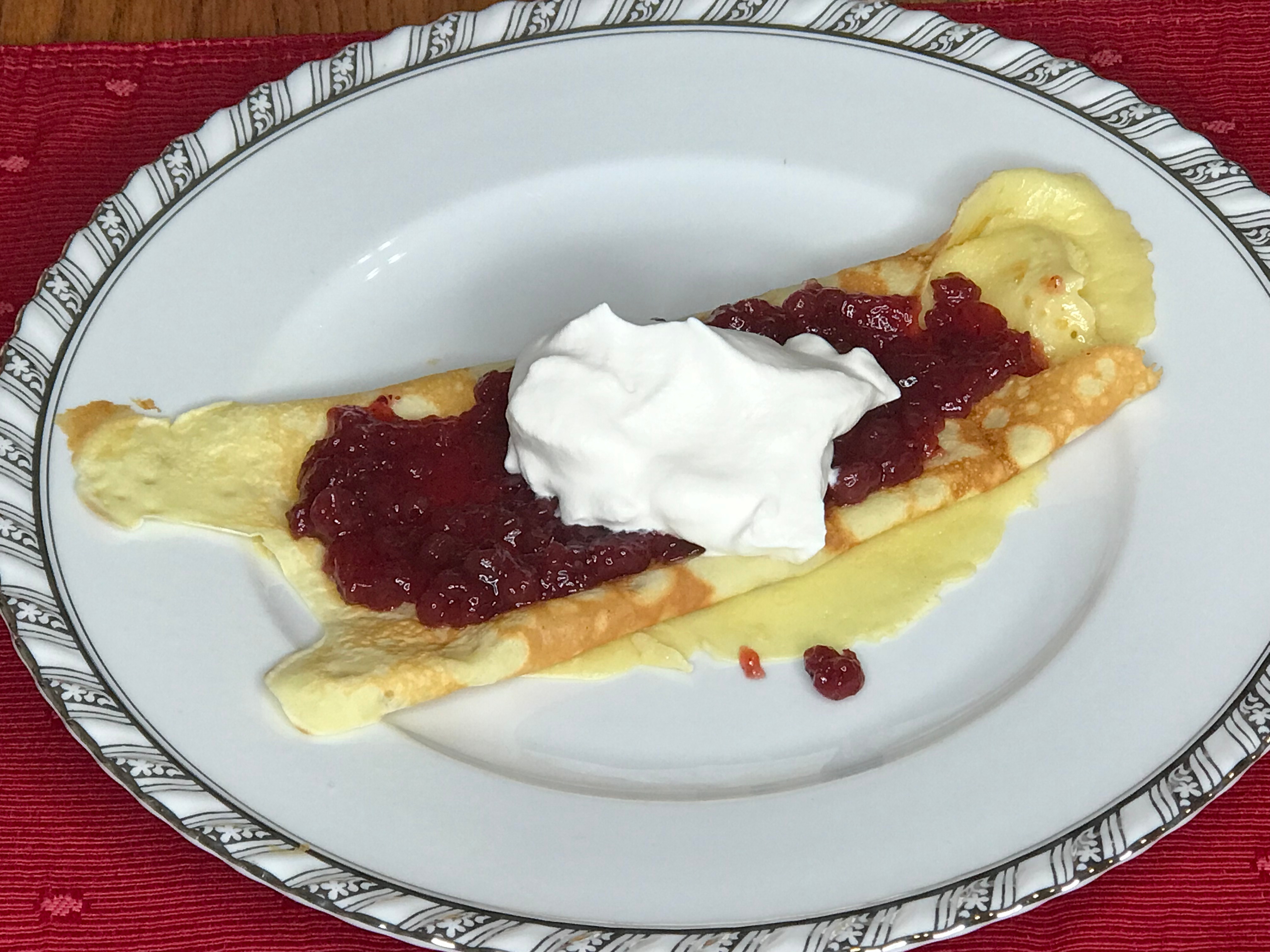
            I had a slight problem with the Swedish pancakes. Because the batter is so thin, making multiple small pancakes at once wasn’t working. They just ran together, making one big crepe-like pancake. Since browning is more important, I rolled with it. The finished pancakes are served with lingonberry jam and often whipped cream.

            Lingonberries are small, very tart berries native to Scandinavia. The best way to describe their flavor is about two thirds cranberry, one third sour cherry. Preserved lingonberries have a texture sort of like cranberry sauce, but the berries have softer skins. Jars of lingonberry preserves are available at most stores with an international aisle, and at some larger supermarkets next to the jam. The whole dessert, with lightly browned pancakes, reddish-purple lingonberries, and off-white whipped cream, is just beautiful.

Platter - Swedish pancakes with Lingonberries
Whipped cream is optional, but highly recommended with Swedish pancakes and lingonberries

            Here’s how to make the soup. You will need:

  • 1 lb (or 500g, which is fairly close) dried yellow peas, soaked overnight
  • 1 package (2 pieces, roughly 2 lbs) smoked ham shanks (optional)
  • 1 medium yellow onion, finely chopped
  • 1 tbsp salt (reduce to 1 ½ tsp if using the ham shanks)
  • 1 tsp dried thyme
  • Dash powdered ginger
  • Rye crisps or rye bread to serve, optional but recommended
  1. Combine all ingredients in a pot with 8 cups of water and bring to a boil.
  2. Reduce heat and simmer, with the lid tilted, until peas start to fall apart and ham shanks are tender, about 1 hour. Stir a few times toward the end of cooking.
  3. Turn off the heat, remove the ham shanks to a cutting board, and cover the pot.
  4. Once the ham shanks have cooled enough to handle, pull meat from the bone and cut into bite-sized pieces. Return ham chunks to pot.
  5. Bring soup back to a simmer over low heat, stirring frequently.
  6. Ideally serve with rye bread or crisps, even more ideally followed by Swedish pancakes.

As always, subscribe for free for recipes and trivia, sent right to your inbox. And if you want to buy me another jar of lingonberry preserves, I would be most grateful.

One-Time
Monthly
Yearly

Make a one-time donation

Make a monthly donation

Make a yearly donation

Choose an amount

$5.00
$15.00
$100.00
$5.00
$15.00
$100.00
$5.00
$15.00
$100.00

Or enter a custom amount

$

Your contribution is appreciated.

Your contribution is appreciated.

Your contribution is appreciated.

DonateDonate monthlyDonate yearly
    Standard
    Uncategorized

    Cook’s Tour of Italy Menu 13 (Pgs. 52 – 57): Menu for 4, Lucca (Tuscany)

    Menu: Lucca-Style Penne Pasta in Timbale, “Veal” Scallops with Ham and Sage, Roasted Broccoli and Cauliflower, Peach “Cobbler,” Purple Plum Ice Cream

    Recommended Wine: Tuscan Chianti

                Back in Tuscany, this time in Lucca, we have another interesting menu, based on dishes served at the home of two of Mr. Famularo’s American friends who live there. It starts with a mix of pasta with meat sauce, topped with bechamel and parmesan, and encased in a sweet pastry crust flavored with lemon peel. This is followed by “veal” scallops, pounded thin, rolled with ham and sage, and braised in a mix of vegetables, white wine, and tomatoes. To the side is oven-roasted broccoli and cauliflower, topped with breadcrumbs. For dessert, there is a peach cobbler-type dish and purple plum gelato.

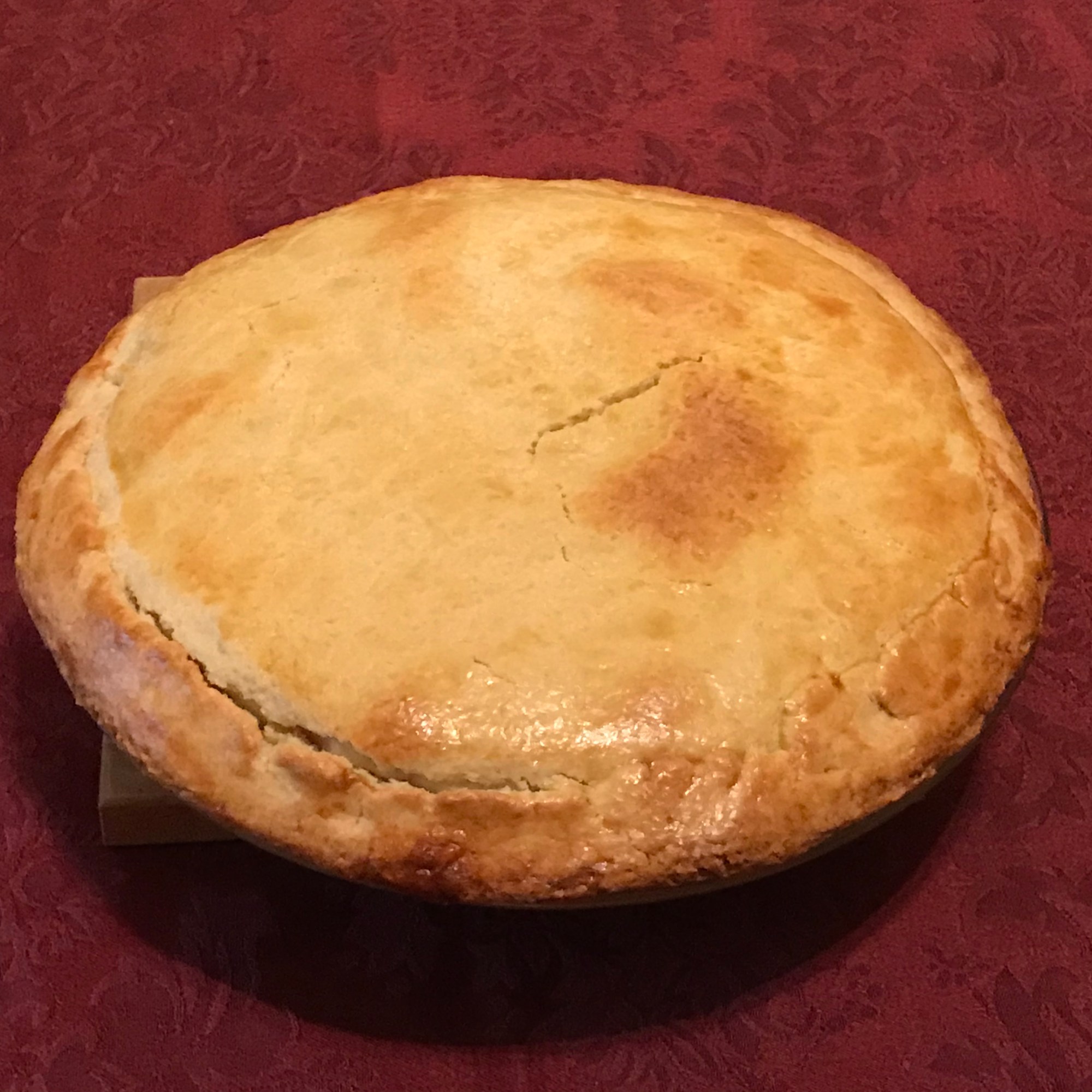
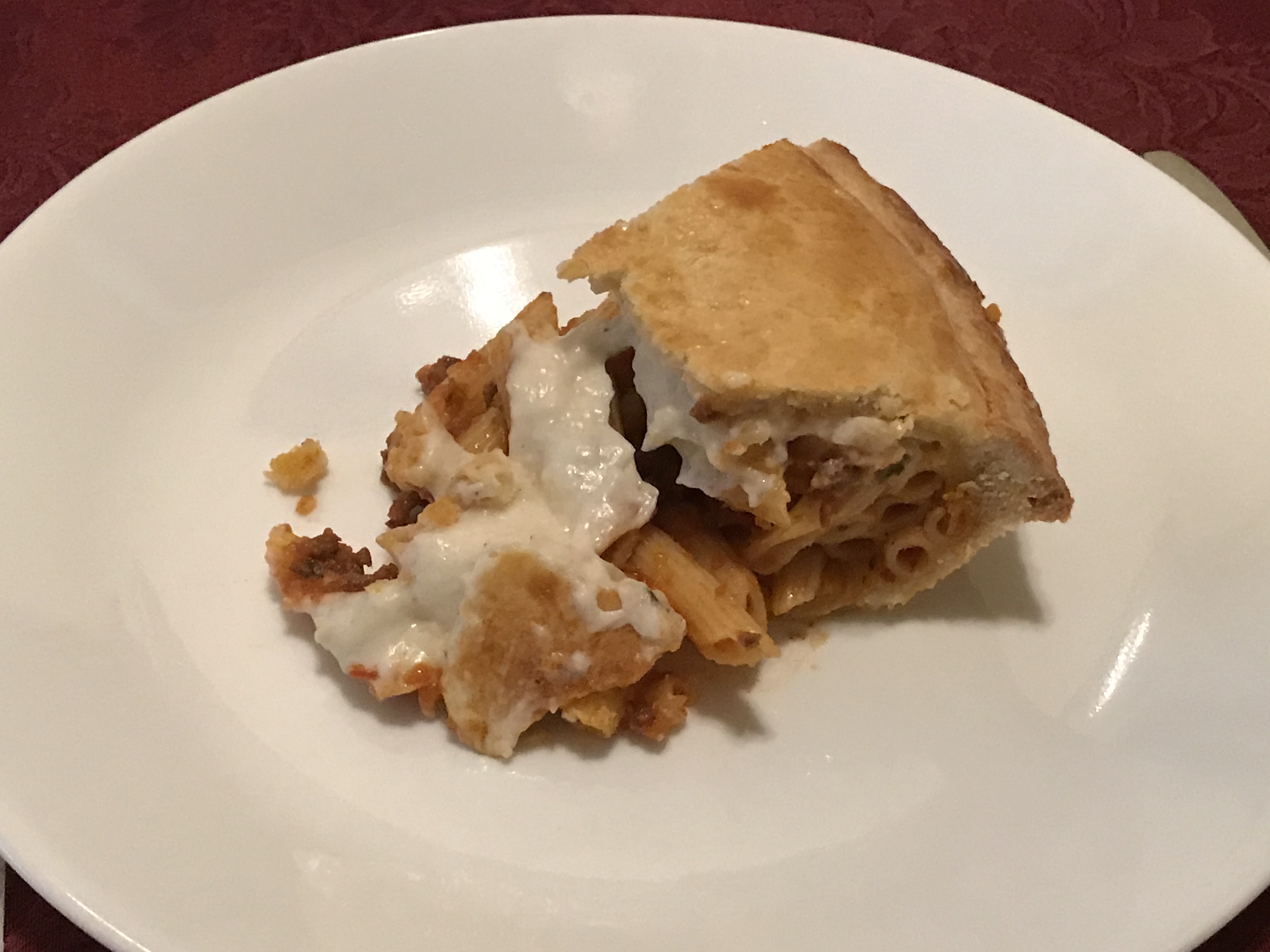
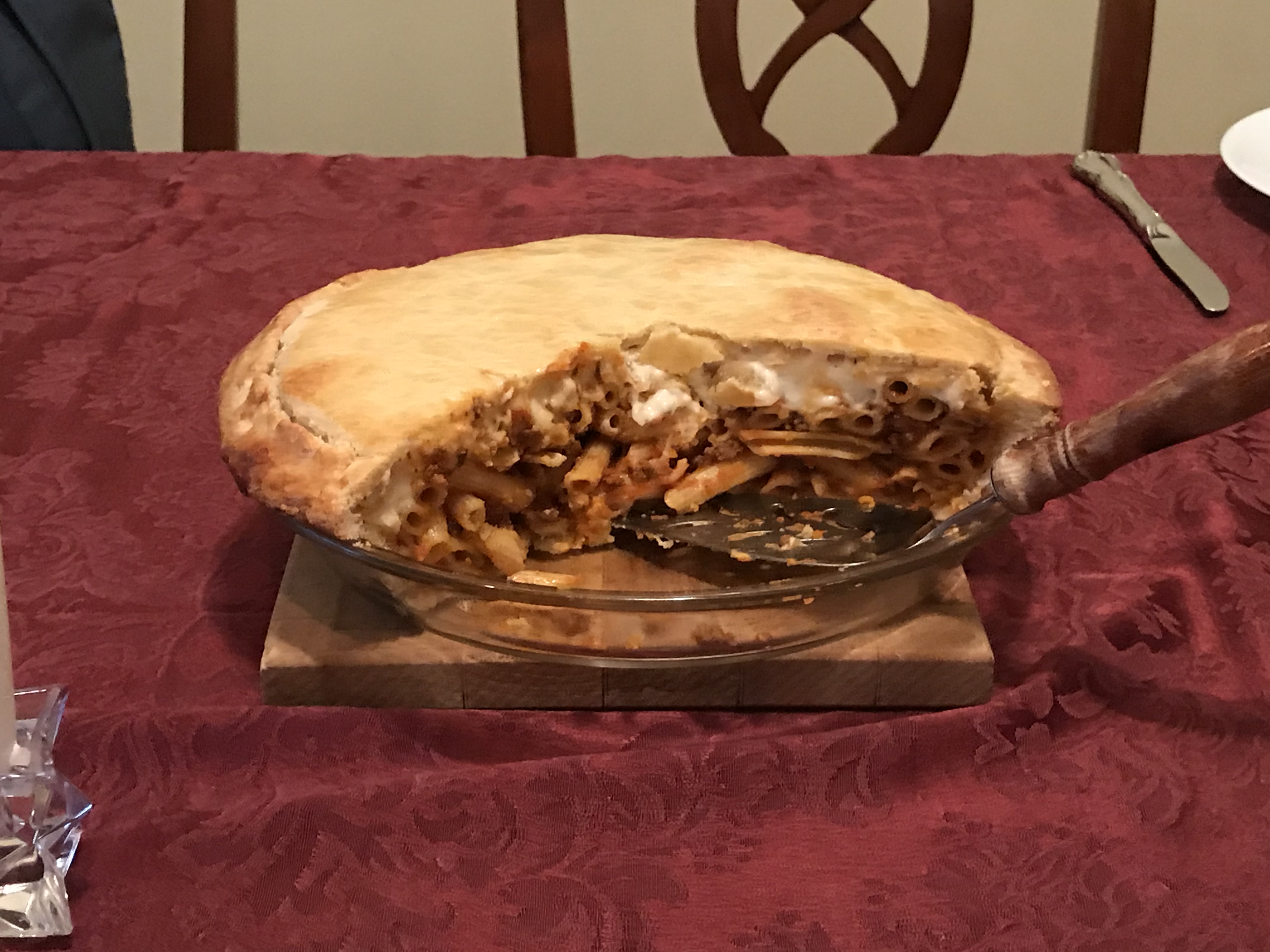
                The pie was really interesting. The pre-cooked penne pasta is combined with a tomato meat sauce, placed in a pastry shell, topped with a nutmeg-scented bechamel sauce, sprinkled with parmesan cheese, sealed with a second piece of pastry on top, and baked. The tomato sauce recipe makes a bit more than needed, but if the recipe is doubled you can get a second meal out of it with some extra pasta. Though I forgot to add the parmesan until after I’d already sealed the pie, it tasted just fine without. The crust was sweet, almost cookie-like, but it worked with everything else, the bechamel seemingly tying everything together. This crust recipe would be even better with a fruit filling.

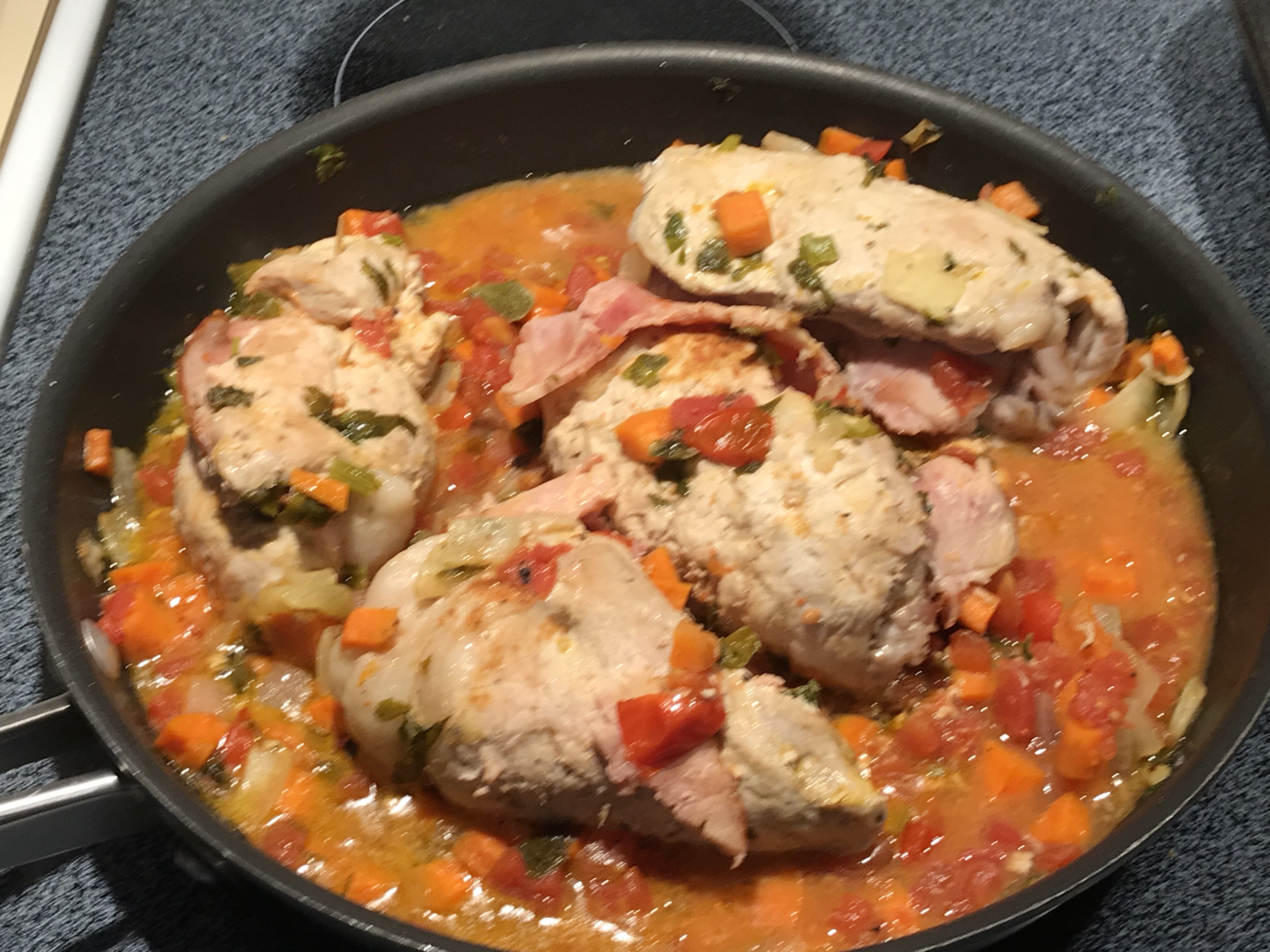
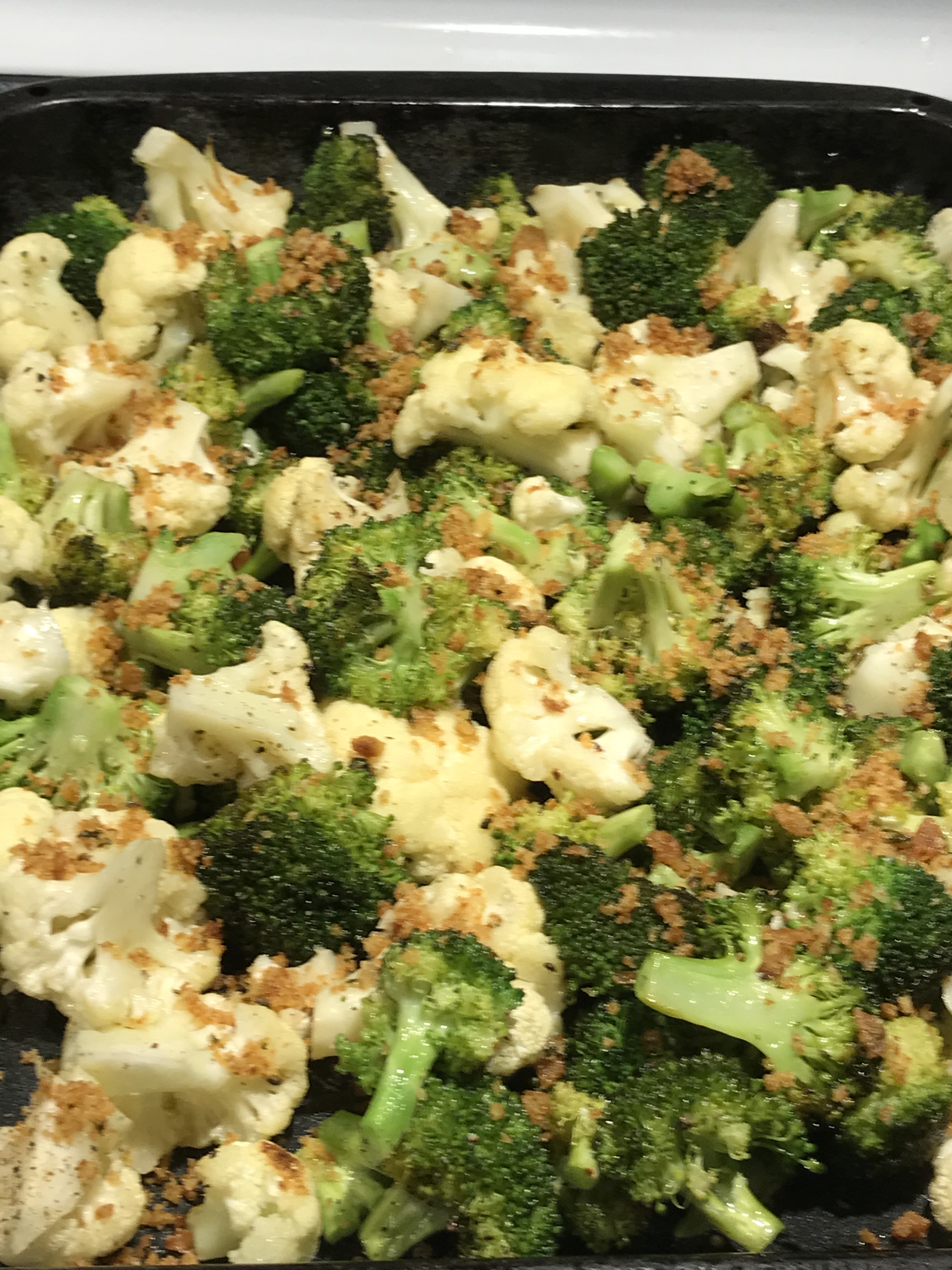
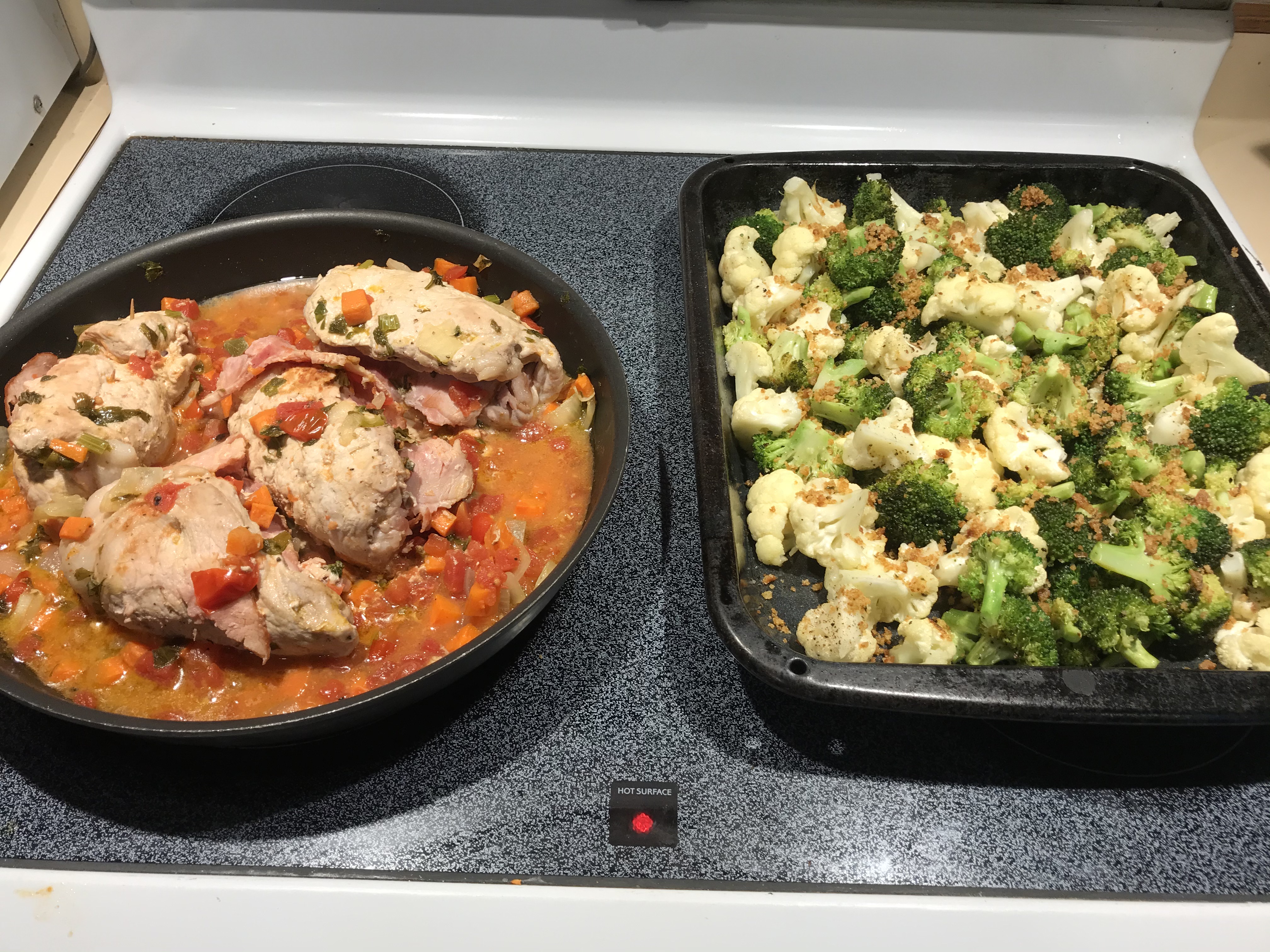
                After flattening and rolling the boneless pork chops (in place of veal scallops), the second course came together without difficulty. The carrots, onions, and celery flavored the braising liquid and pork. I’m not sure I would bother making the meat rolls again, though. They were good, but the vegetables and braising liquid would give just as good a flavor to plain pork or chicken pieces without the hassle of pounding and rolling. The broccoli and cauliflower, oven-roasted with just salt, pepper, and olive oil, then topped with toasted breadcrumbs, is simple and delicious. Just make sure that if the breadcrumbs are pre-made and frozen that they are brought to room temperature before sprinkling.

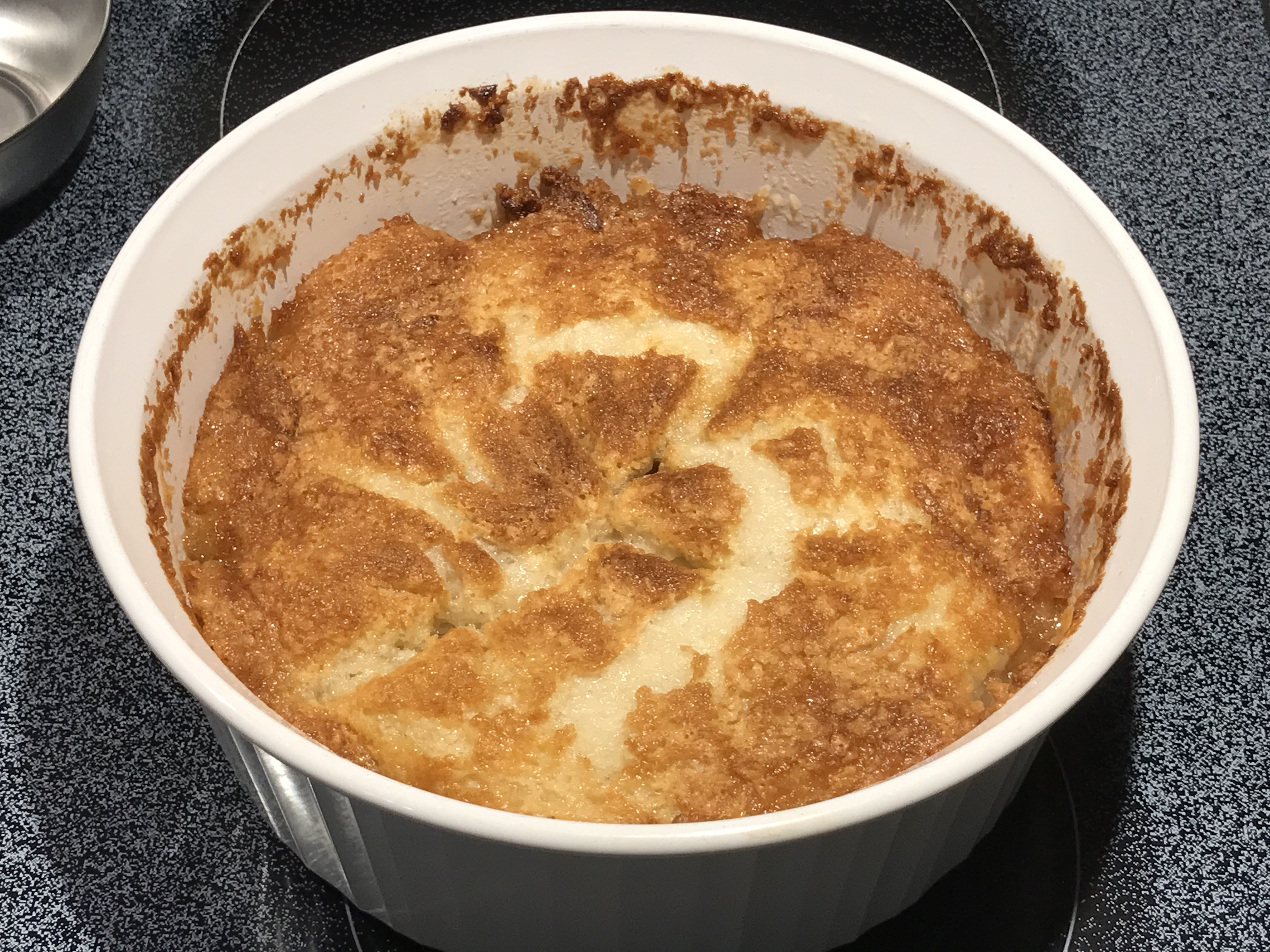
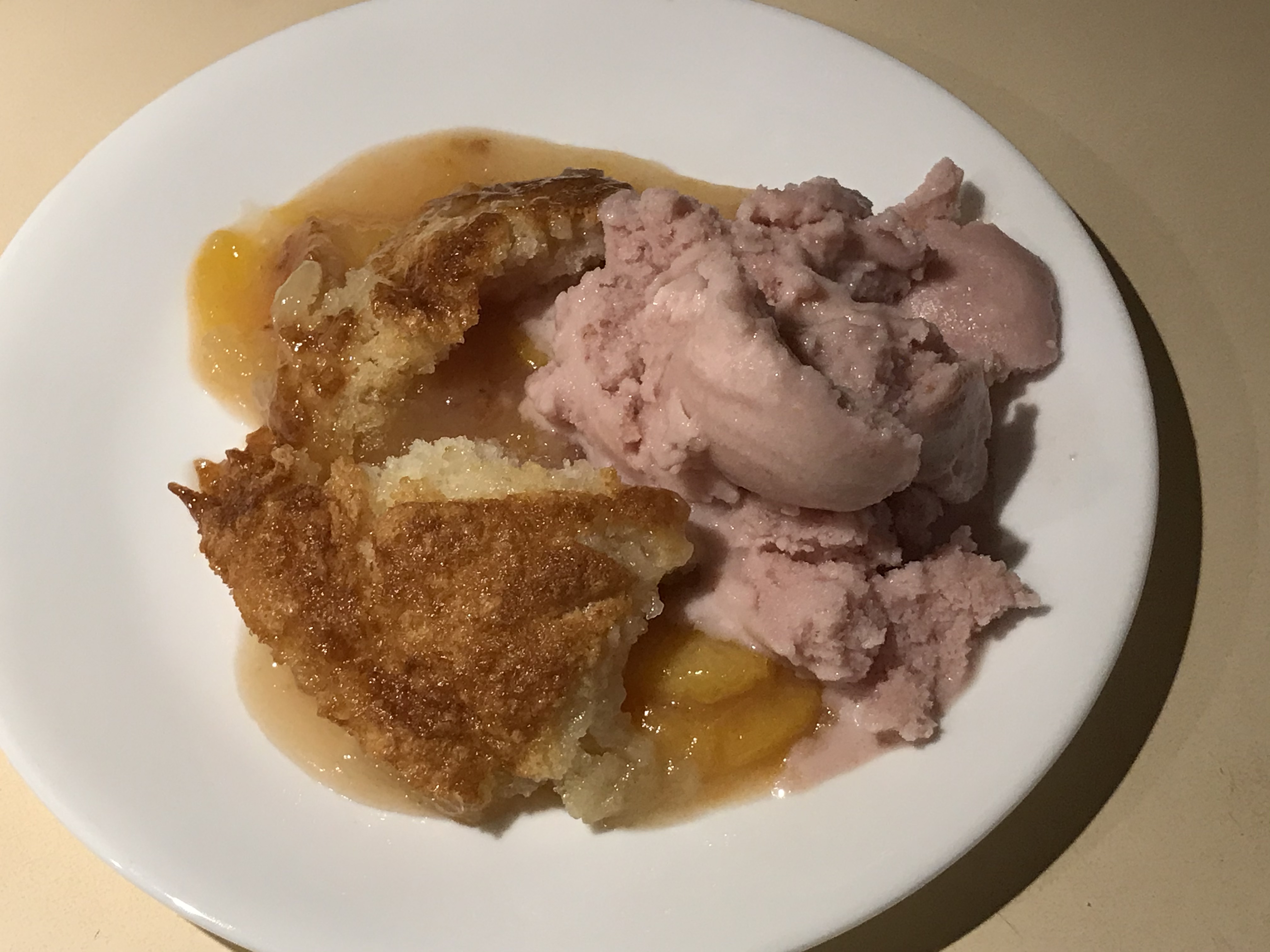
                Dessert was not quite as good as the other courses, though there was certainly nothing wrong with it. The issue was that the cobbler dish was a bit too sugary, both in the peaches and the topping, overwhelming the other flavors. The “crust” did end up with a nice angel food-like texture and the ice cream helped cut the sweetness, but I think fresh peaches would be better in a regular crust or, better yet, the pastry from which the pie was made. Made with just sweetened plum puree and milk, the ice cream had a flavor between sorbet and frozen yogurt. It was an interesting change of pace, but not as sweet or creamy as one might expect. Still, this all made for a highly enjoyable dinner.

    Standard
    Uncategorized

    Cook’s Tour of Italy Menu 21 (Pgs. 75 – 77): Dinner in Portofino (on the Ligurian Coast)

    Menu: Spaghetti with Basil Pesto, Ligurian Vegetable Salad, Ice Cream with “Sambuca” and Espresso

    Recommended Wine: Fresh, delicate white like Vermentino, and/or spicy red

    Northwest of Tuscany is the coastal region of Liguria. Situated on a narrow plain between mountains and the sea, the cities there have long turned to maritime enterprises. Foremost among them is Genoa, rival of Venice for centuries, from the High Middle Ages (and possibly even before) into the Early Modern Era. During a series of wars in the 13th and 14th Centuries the Genoese usually seemed to come out second-best but were always able to give the Venetians a run for their money. They wrestled over trading rights in Constantinople, Alexandria, the Levant, Cyprus, and the Black Sea. In the 14th Century, the Genoese even launched ships on the landlocked Caspian Sea and established trading colonies in Northern Europe as far east as Poland. During one battle in 1298, Genoa triumphed and captured several thousand Venetian prisoners, including Marco Polo. While imprisoned awaiting ransom, Polo began telling stories to entertain his fellow prisoners, including a chivalric romance author with whom he would later collaborate.

    By the end of the 14th Century, defeats at sea and internal strife led to Genoa becoming a satellite of its neighbors, alternatively France and Milan, while the Venetian trading (and later territorial) empire approached its zenith. Despite this loss of independence, Genoa’s trade and shipping remained vibrant. Genoese navigators, including Christopher Columbus, were instrumental in many of the Spanish and Portuguese voyages of exploration. A revival in Genoese banking brought renewed prosperity in the 16th Century, and a Genoese contingent was part of the Holy League’s fleet at the Battle of Lepanto in 1571. While the Ottoman Empire quickly rebuilt its fleet, the morale boost the victory gave to the European powers was substantial. Even in the 16th Century, though, rivalry between the Genoese and Venetian contingents led to significant tension.

    In addition to their historic rivalry, Venice and Genoa seem to have very different food traditions. From a historical and geographic perspective, this is surprising. Both cities were main points of import for “exotic” Asian goods like spices and sugar during the Middle Ages. Due to their coastal locations and maritime background, both regions’ cuisines feature a variety of seafood. But while Venetian cuisine featured and still features spices, sweet and sour sauces, seafood, rice, and polenta, Ligurian cuisine favors green herbs, vegetables, bread, particularly focaccia, pasta, olives and olive oil, and lower levels of seafood. The last part of this might be due to Venice’s location on a group of islands in a shallow, productive lagoon, while the seafloor near Genoa drops sharply, leading to lower levels of productivity. Why the Genoese tend to prefer herbs over spices is unclear, but as a result, the cities’ cuisines are distinct and unique.

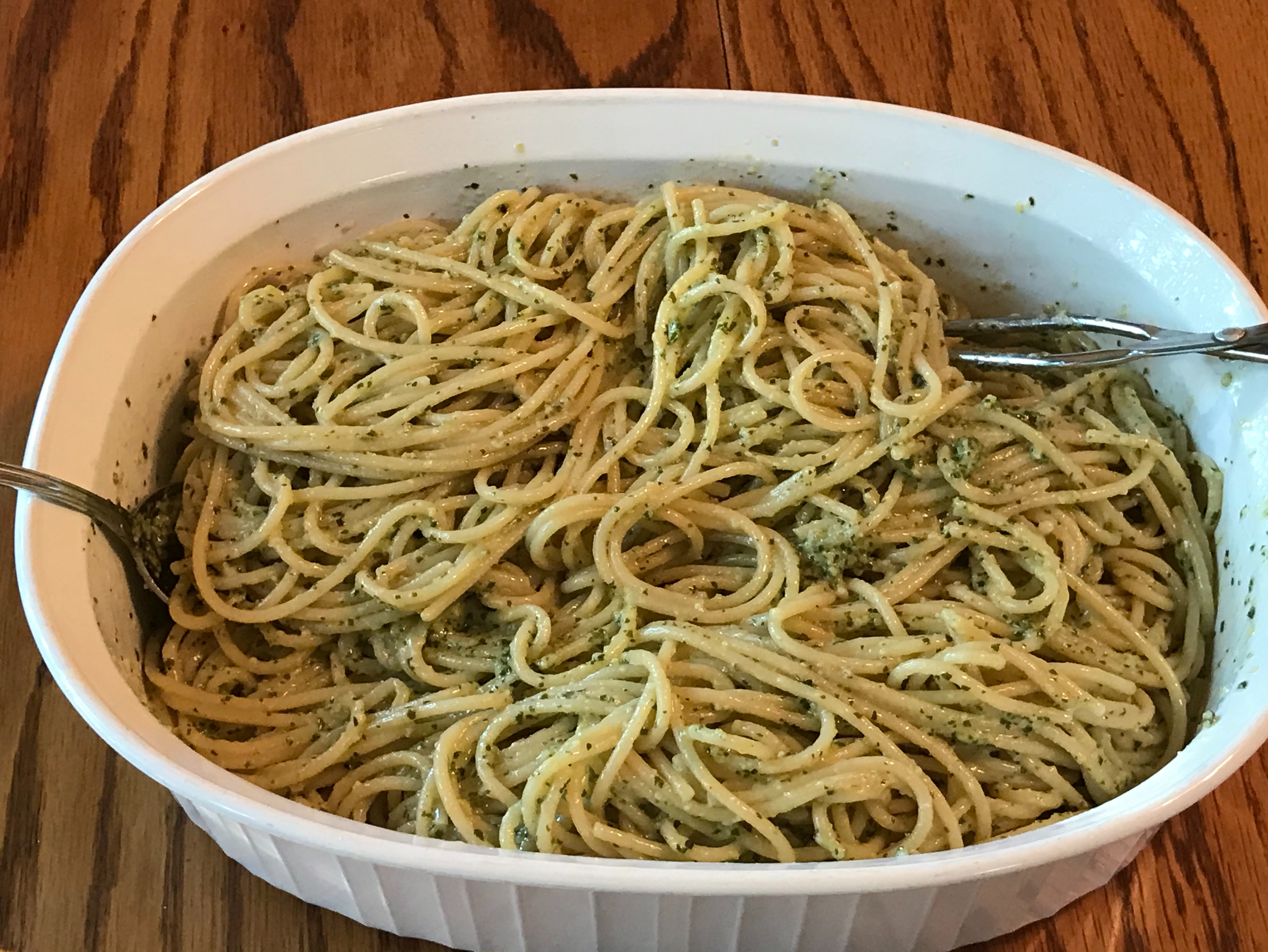
    This menu demonstrates the some of the highlights of Ligurian cuisine: pesto, fresh vegetables, olives, seafood, and lots of olive oil. Unlike the Umbrian pesto in a previous post, this pesto has parmesan and pecorino Romano cheese along with the basil, garlic, pine nuts, and olive oil, making it slightly richer. It comes together quickly in a food processor. Once the spaghetti is cooked, it is added to the prepared pesto and served immediately. Unsurprisingly, it was excellent. Really, it’s hard to go wrong with pasta and pesto, especially when the basil comes from your own plants. The sauce left a fair amount of oil on the plates, but if some bread is added alongside it can be a nice dipping oil.
    IMG_2726

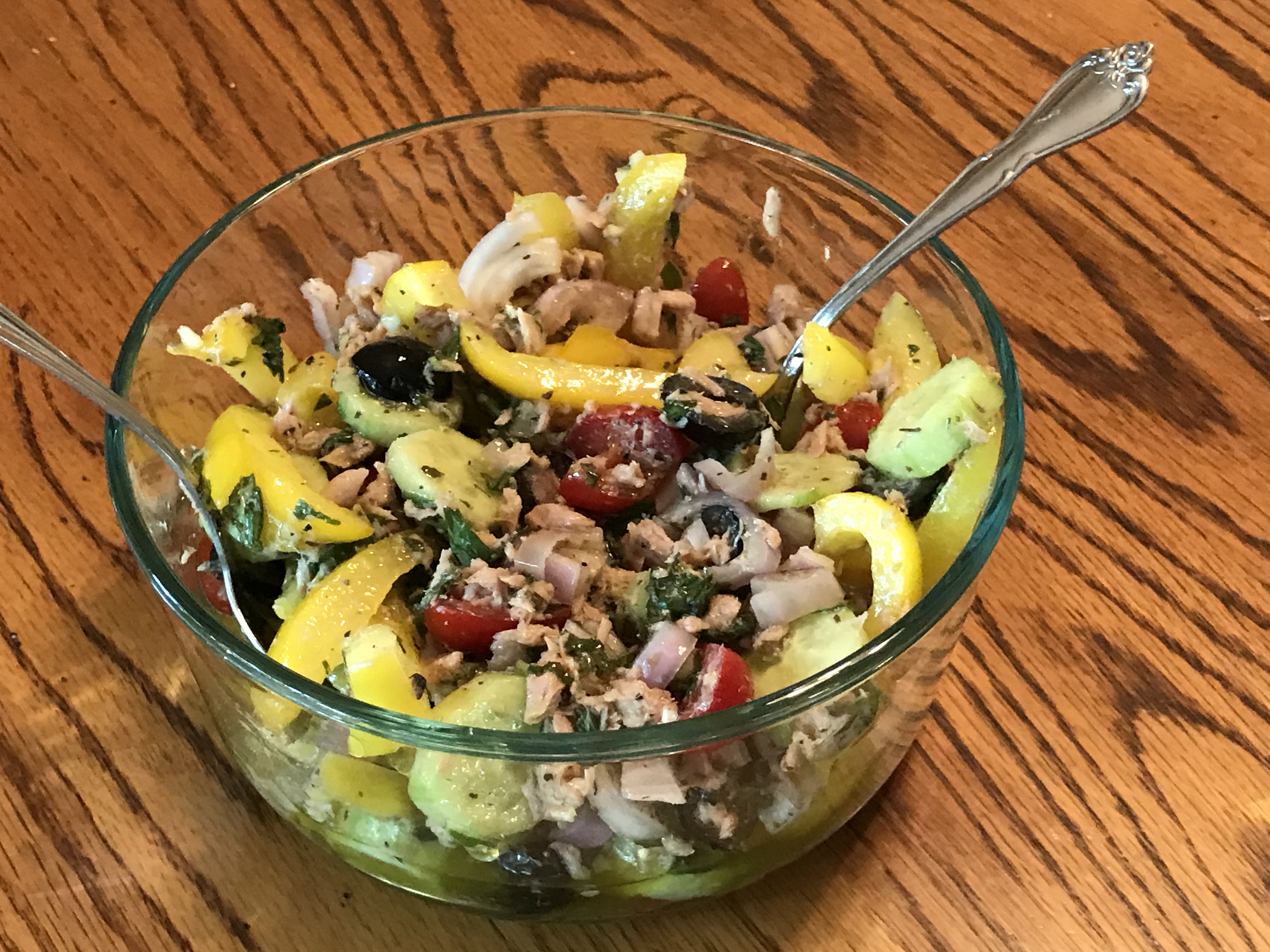
    The salad was an interesting mix of cucumbers, peppers, olives, tomatoes, hard-boiled eggs (that I omitted), and tuna in olive oil. It is dressed with olive oil but no vinegar, flavored with basil and a bit of anchovy. It was good, but I liked most of the other salads better. I liked the dressing on the peppers and cucumbers, but since I’m not a big fan of olives or tomatoes on their own I found the rest of the salad was not really to my taste. Plus, a lot of oil in the pesto, followed by a lot of oil in the salad seemed a bit much, especially without an acidic contrast from vinegar or lemon juice. Still, a smaller amount of dressing on some peppers and cucumbers would be worth trying.
    IMG_2727

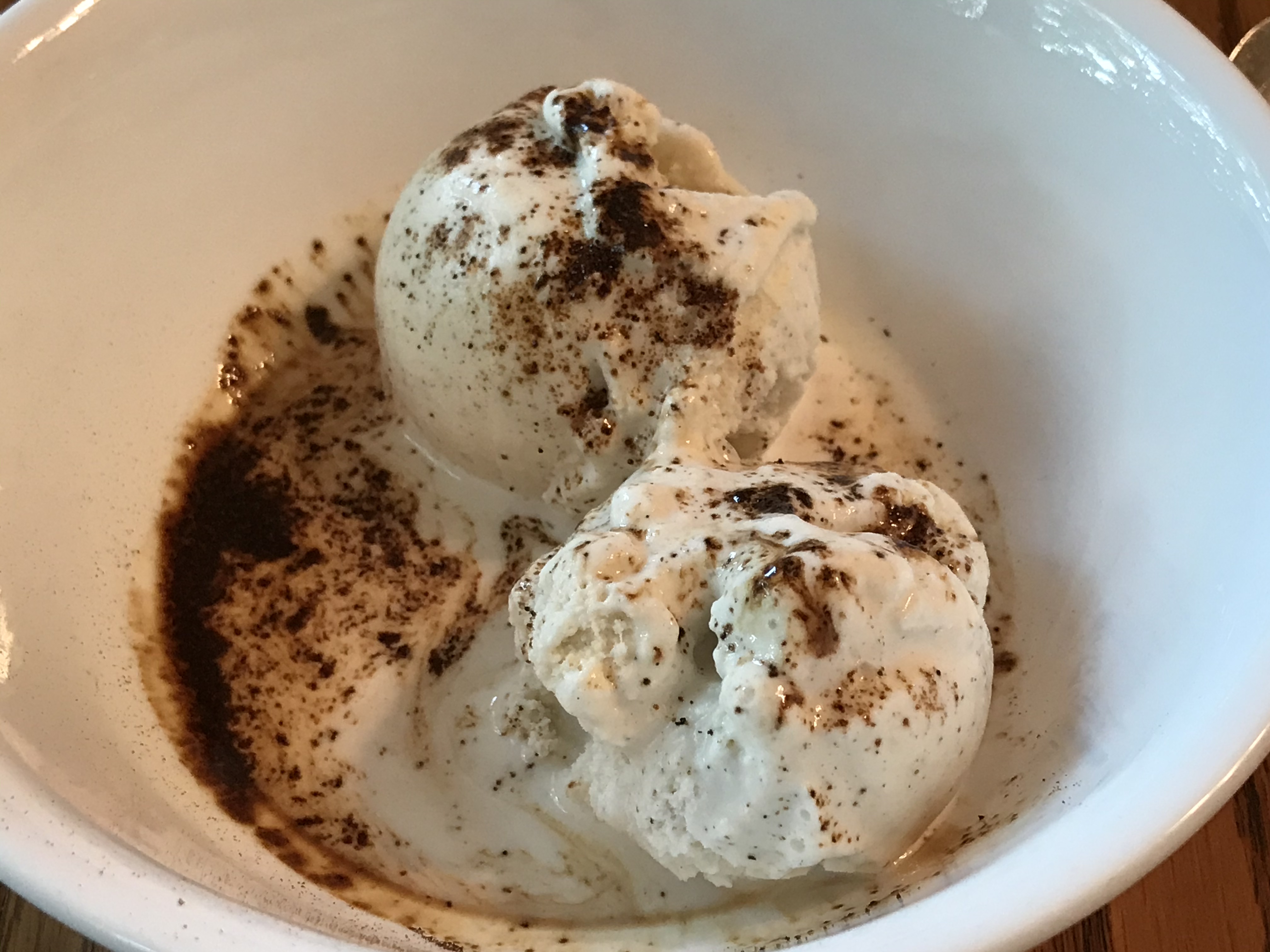
    Dessert was an interesting surprise. The recipe calls for pouring sambuca over vanilla ice cream and sprinkling it with instant coffee granules. Since I didn’t want to buy an entire bottle of sambuca, especially when I didn’t think I cared for the anise flavor, I improvised by mixing a bit of anise extract into some half-and-half to pour over the ice cream. To my surprise, I really liked the flavor. The bit of anise blends with the coffee and vanilla to create an excellent palate cleanser. As discussed in the text, it is a super-simple but elegant dessert. Now that I have the anise extract, I would definitely make this again.
    IMG_2728

    Standard
    Uncategorized

    Cook’s Tour of Italy Menu 10 (Pgs. 41 – 44): Dinner in Radda-in-Chianti (Tuscany)

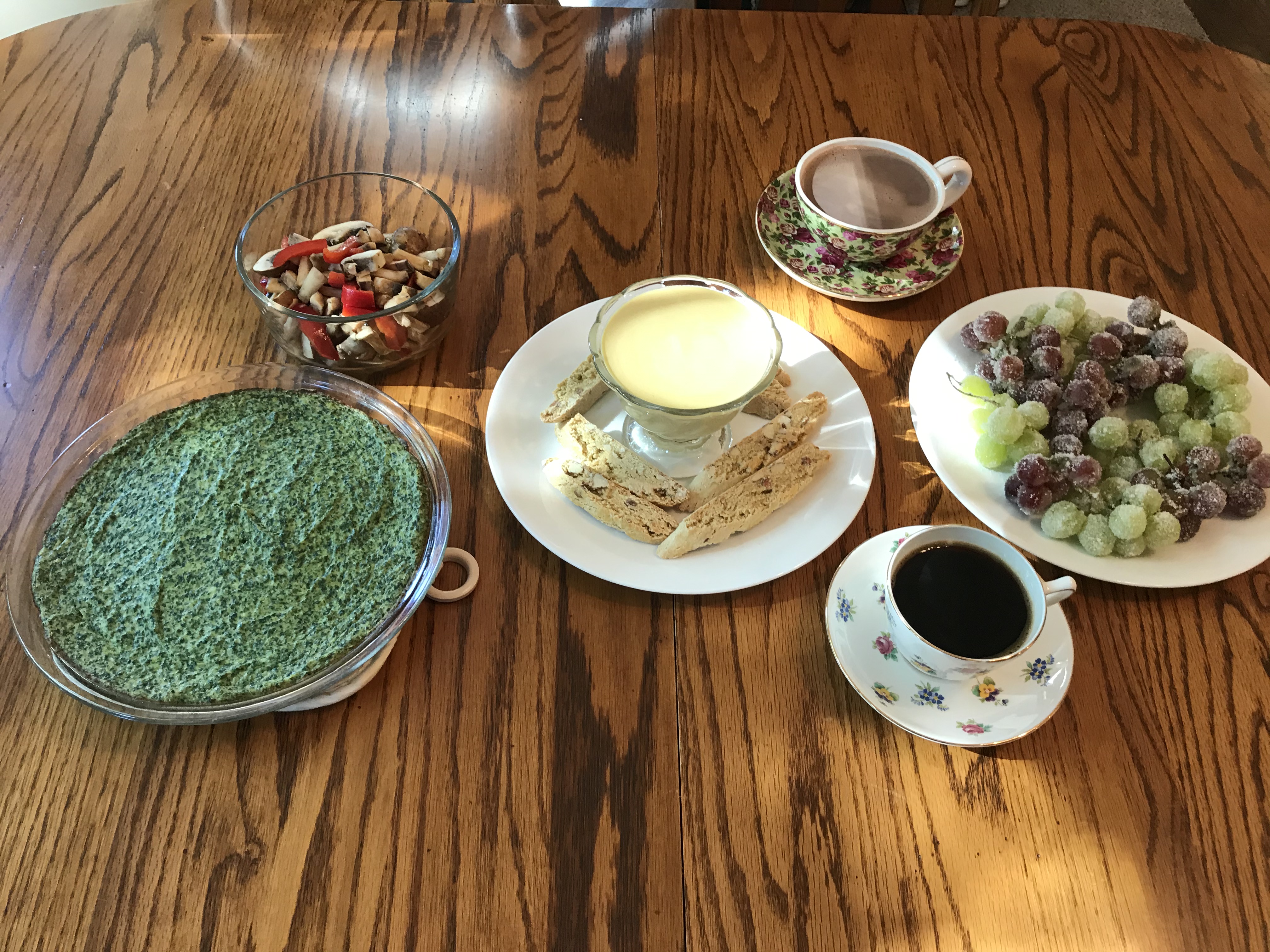
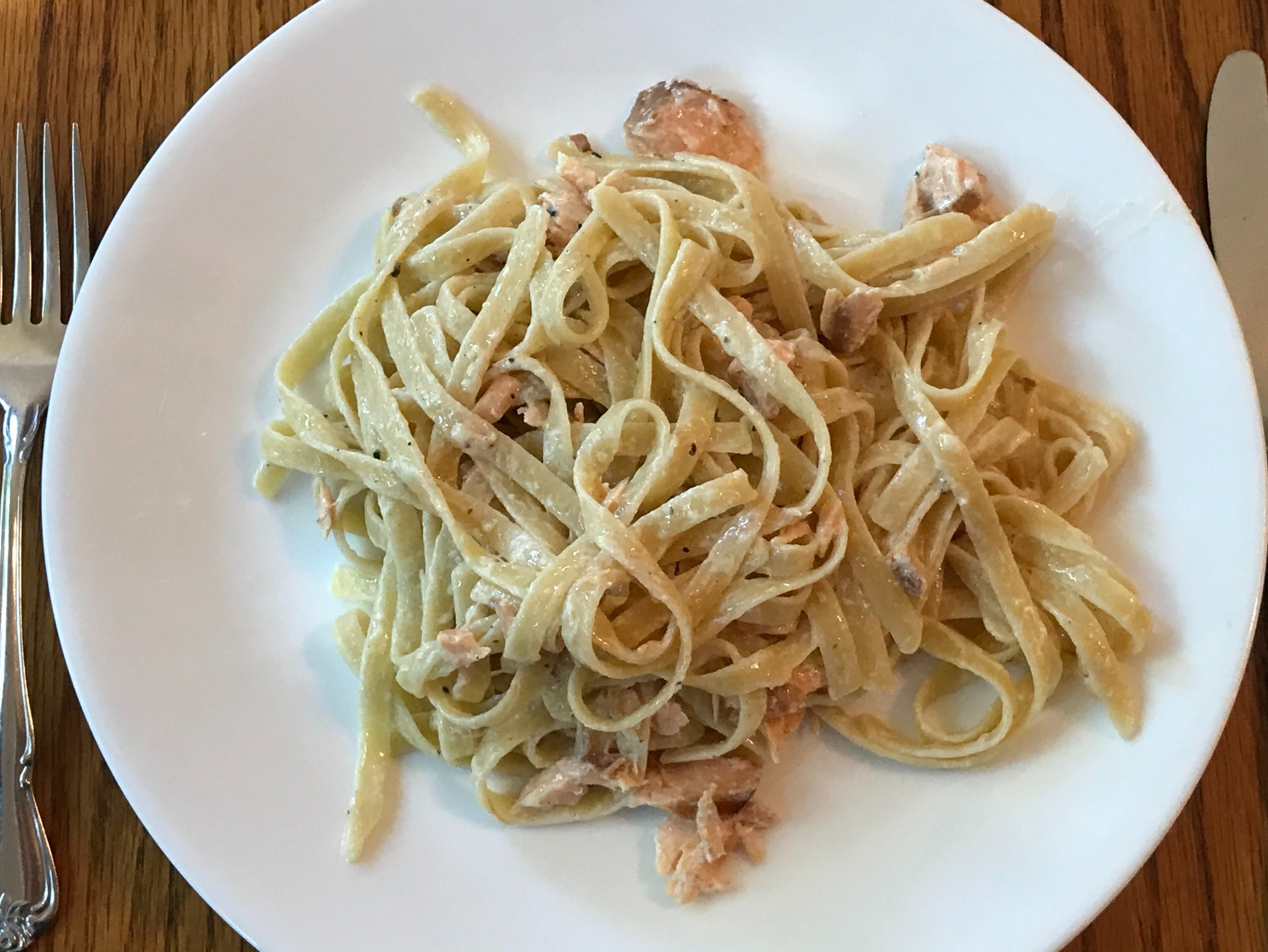
    Menu: A Country Spinach Pie, Fettuccine with Smoked Salmon, Sugared Red and White Grapes, Almond Biscotti without Vin Santo

    Recommended Wine: Dry White like Vernaccia di San Gimignano

    IMG_2721

    Due to a number of good summer menus, we remain in Tuscany for a meal in a pretty village in the Chianti region. Featuring a crustless, quiche-like spinach tart, something like fettuccine alfredo with smoked salmon, grapes with a crackly sugar coating, and biscotti, this menu demonstrates both Tuscan specialties and more national dishes. As stated in the text on page 43, the pasta dish is found across Italy. Grapes are as well, and not just in wine. The tart and the biscotti are more regional, as is the Vin Santo frequently served with the biscotti.

    The crustless spinach tart seems to be a direct descendent of the Ancient Roman patina, something between an omelet or custard. There are several recipes for patinas in Apicius, often with pureed vegetables or vegetable juice mixed in with the eggs. The taste for green vegetables also goes back to Ancient times. While the spinach, basil, and nutmeg are Medieval introductions, similar recipes in Apicius feature lettuce or asparagus, almost always with pepper, and sometimes with ricotta cheese. Favorite vegetables in Tuscany today include spinach, chard, and especially black kale. (Text, Pg. 41 and 46) The optional mushrooms in the topping were another favorite of the Romans.

    The biscotti is a more recent addition to the region’s cuisine and the cream sauce much more recent, but fruit and wine for dessert has a long history. A variety of ancient sources make clear that fresh and/or dried fruit were favorite desserts, and raisin wine similar to Vin Santo, pressed from partially dried grapes, is a frequent addition to sauces in Apicius. Vin Santo itself, along with sugared fruit, has been known since the Renaissance.

    The tart was pretty good, though the texture was slightly odd. With only two eggs and an egg white to a pound of ricotta and 12 oz of spinach, it had a creamy texture but wasn’t quite like a quiche. It held together kind of like a cheesecake, but it was rather soft. The flavor was good, with onions, basil, and a bit of nutmeg, but the tart would have been better with a crust. The garnish of mushrooms (leftover stems from the last menu, mostly) and red bell pepper, dressed in olive oil and lemon juice, provided a flavor and texture contrast.

    IMG_2725

    The pasta was also enjoyable, though the smoky flavor of the fish took some getting used to. Part of this may have been due to the type I used. The recipe called for thinly sliced smoked salmon cut into squares, but the only type I could find was in a small chunk. I adapted by flaking it with my fingers and continuing with the recipe, but maybe that kind is smoked more heavily. Or maybe I’m just not used to the taste of smoked fish. Regardless, it worked really well with the pasta, half and half, and parmesan cheese, and the flavor grew on me as I kept eating it.

    IMG_2724

    My favorite part, however, was dessert: sugared red and white grapes and almond biscotti. The grapes turned out to be quite a revelation. They are first dipped in beaten egg whites, then sugar to coat. The end product is just gorgeous, with a frosted, sparkly look. After a few hours, the sugar becomes like a crackly crust, and the grapes are even better the next day. While this is certainly not the healthiest way to enjoy fruit, it is a nice treat and would look beautiful on a cheese tray. The biscotti had a great flavor from the almonds, which got nice and toasty during the baking, and were quite addictive. Just be forewarned that the dough is really thick and takes a long time to come together if you mix it with a wooden spoon and knead it by hand. It even gave my stand mixer, which can handle just about anything, a bit of a workout.

    In Tuscany, the biscotti are often served with Vin Santo, a sweet dessert wine with some similar flavors to marsala. As I didn’t want to go multiple places to try and find it, I made a custard with a small amount of marsala to dip it into. I also make a cup each of hot cocoa and coffee in case I didn’t like the custard. As it turned out, I’m glad I did. Even with a small amount of wine, added at the start to cook off the alcohol, and a fair amount of milk, I just can’t get used to the taste of wine custard. I much prefer the biscotti with coffee or cocoa. They retained a nice crunch even after dipping. It’s clear why these are so popular.

    Standard