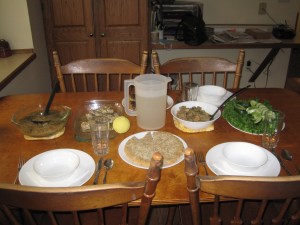
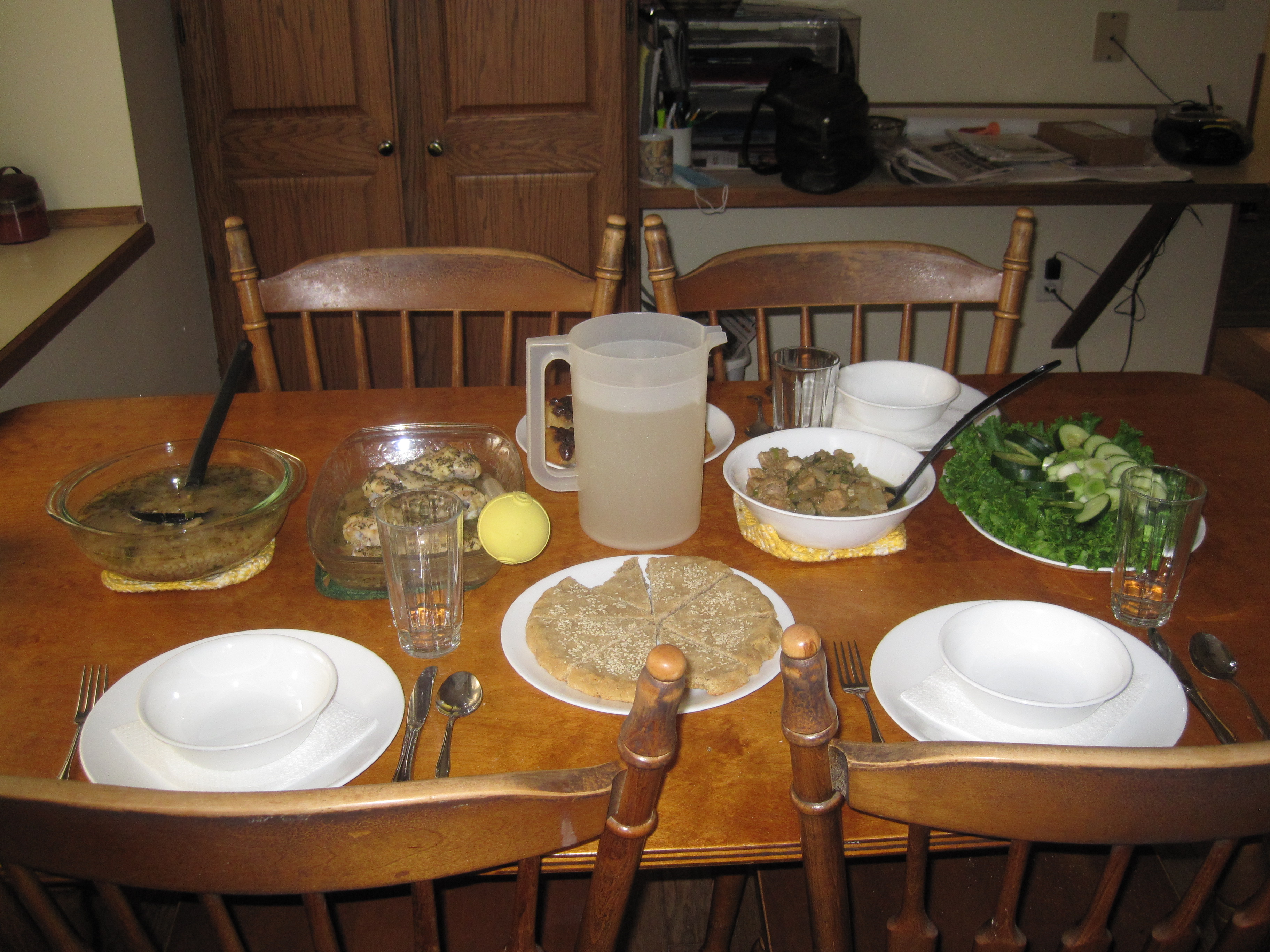
Table View From Side

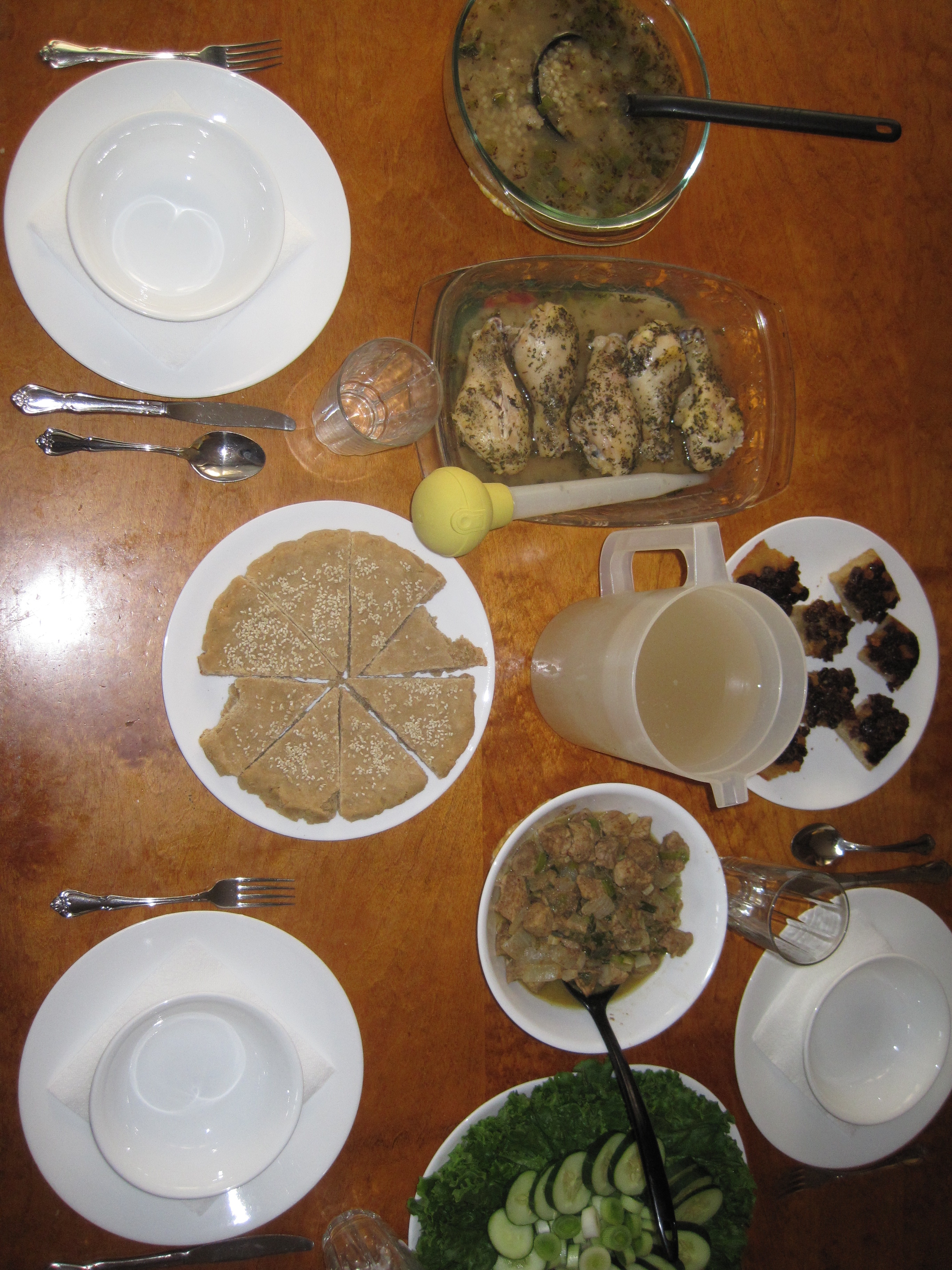
Table View From Above
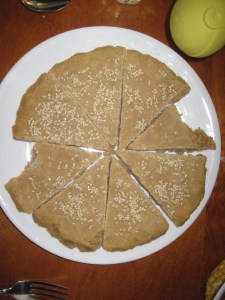
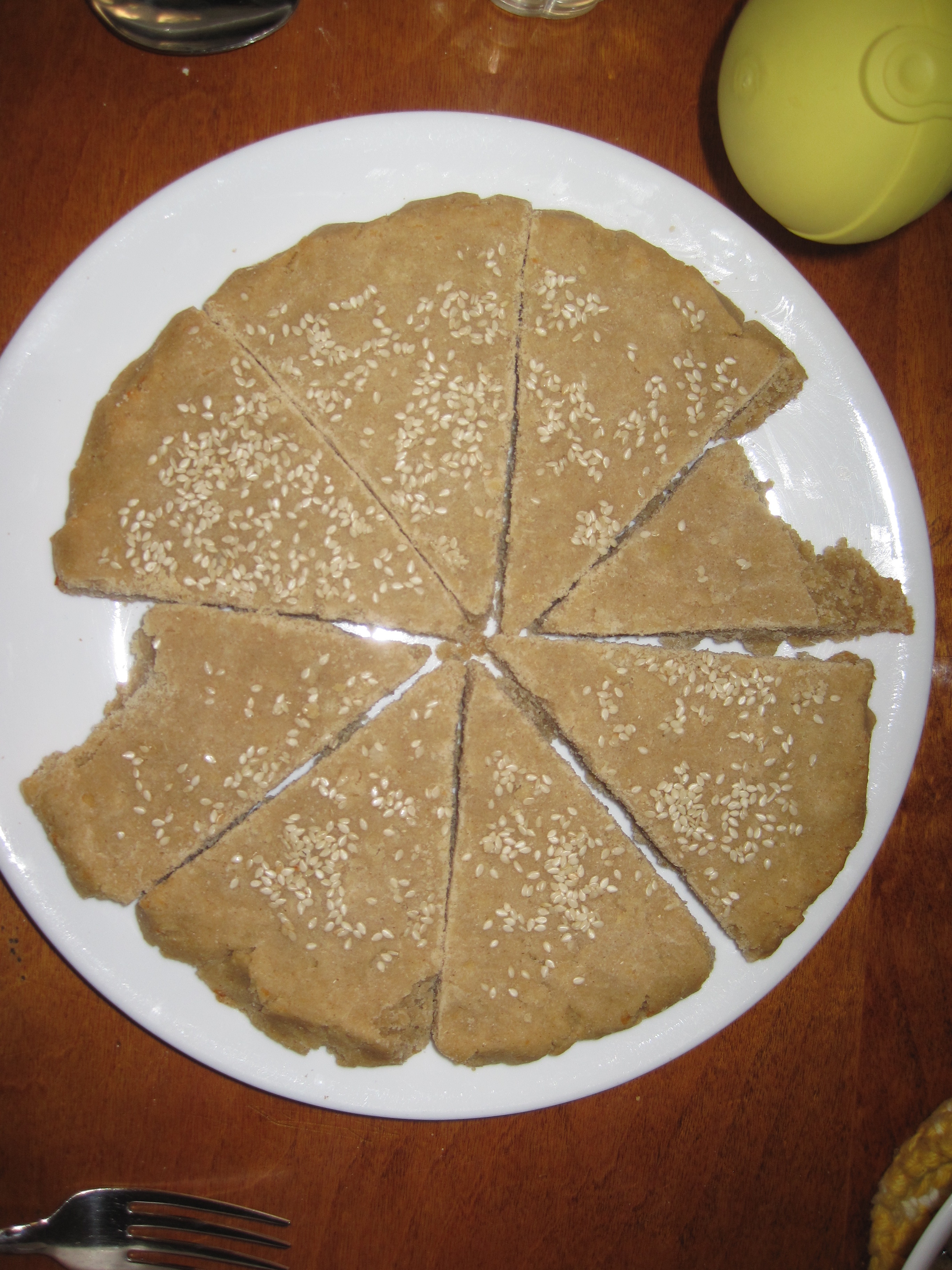
Barley Bread, Enriched with Cottage Cheese, Milk, Egg, and Sesame Seeds
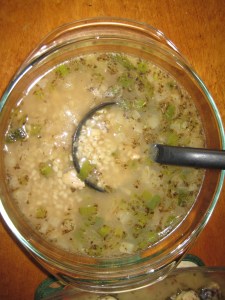
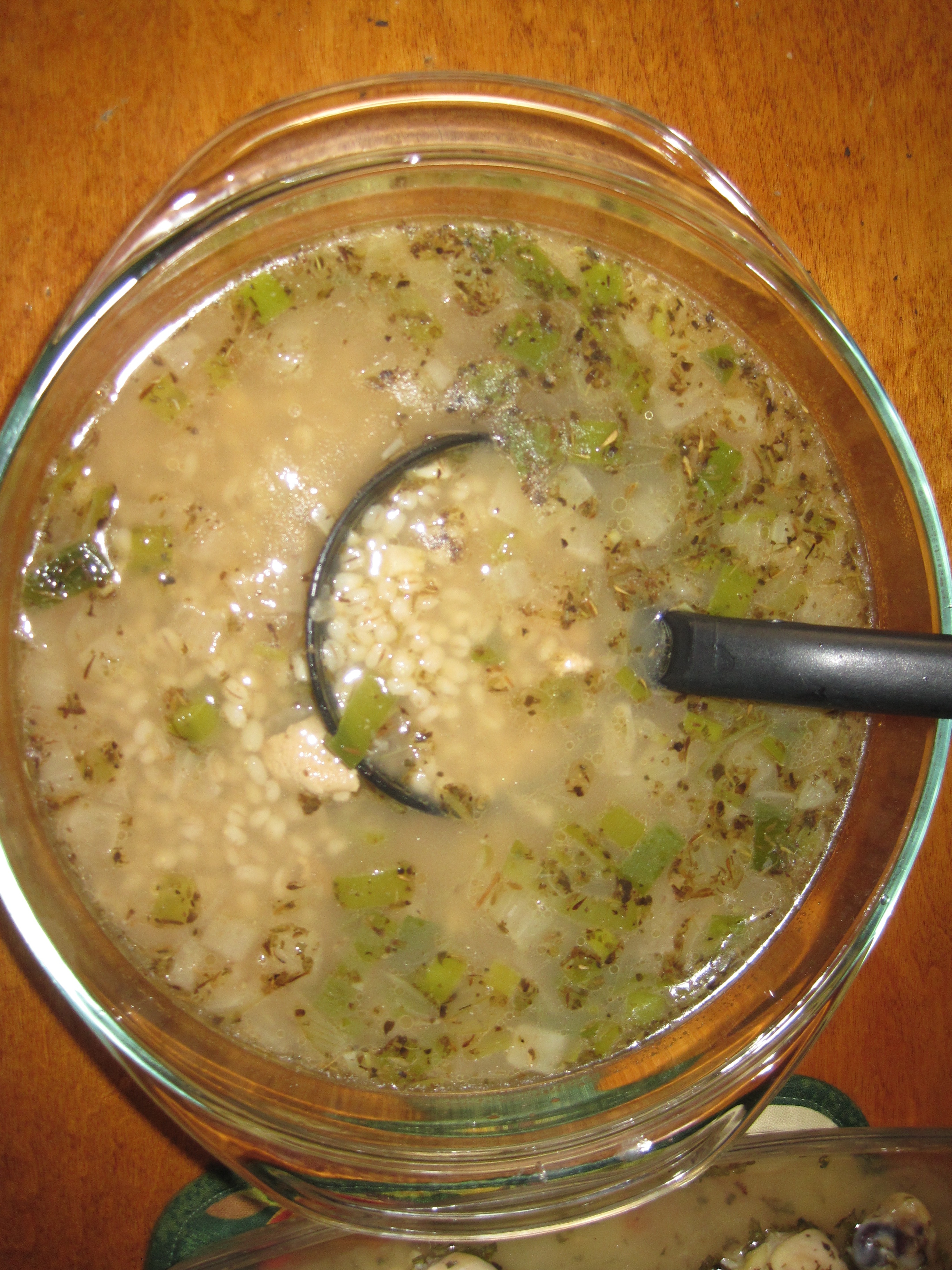
Barley Soup with Onion, Garlic, Leek, Pork, and Seasonings
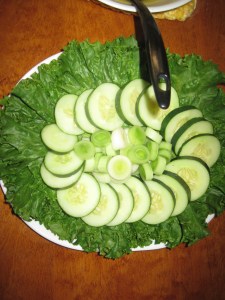
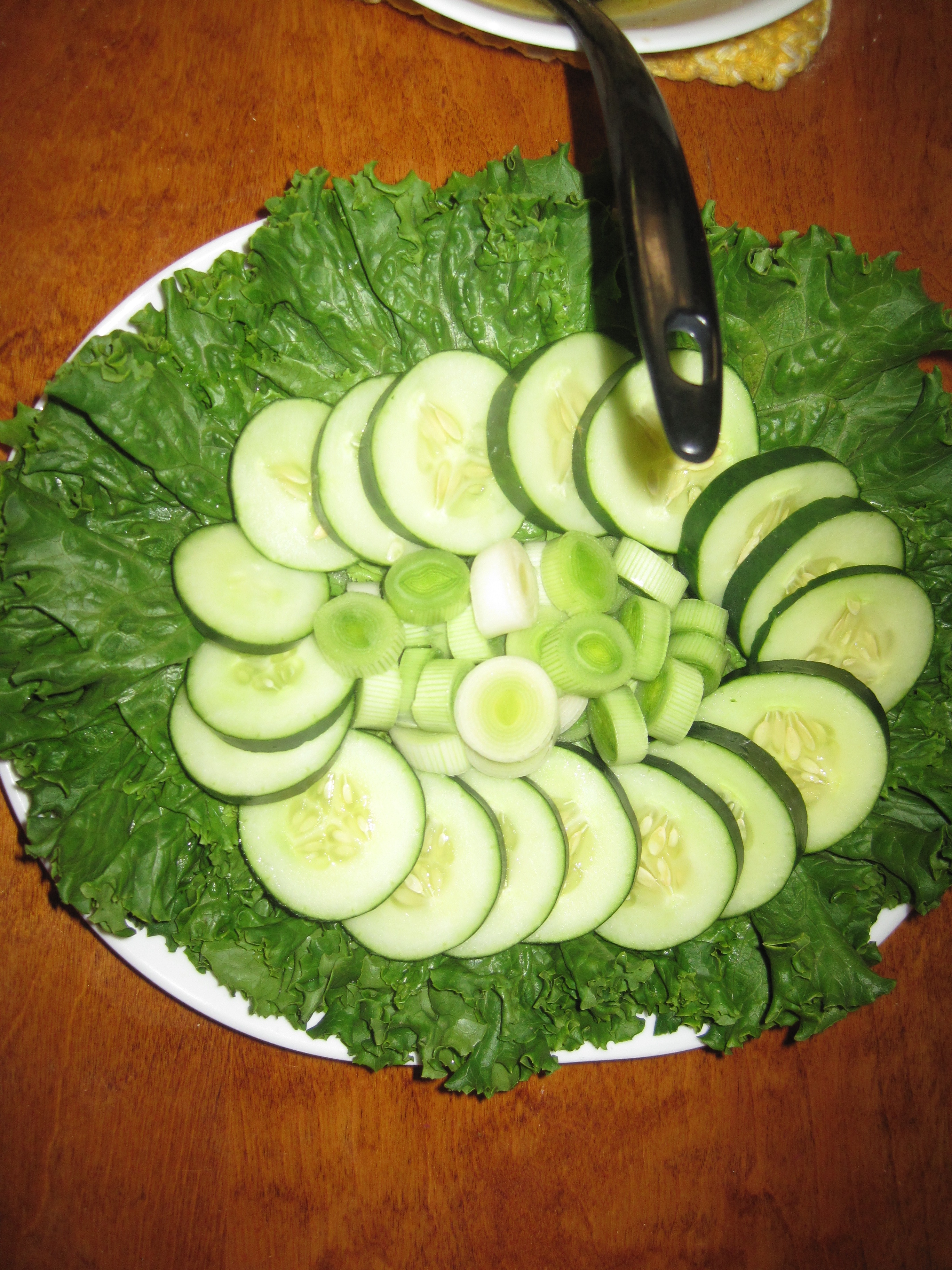
Vegetable Platter with Green Lettuce, Cucumbers, and Leeks
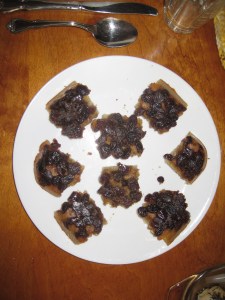
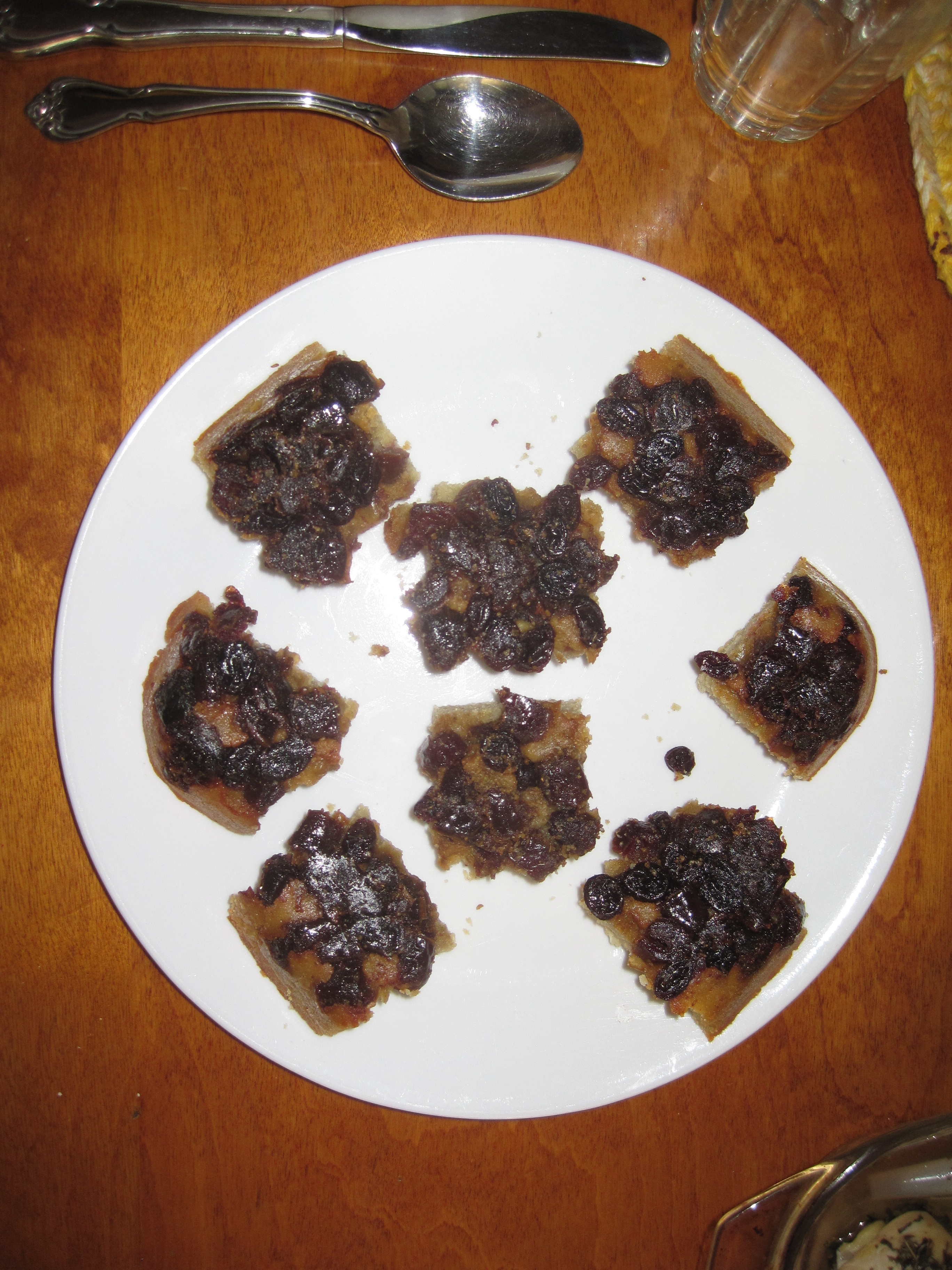
Palace Cake, Enriched with Cottage Cheese, Milk, and Lots of Butter, Flavored with a Bit of Fennel, and Sweetened with Raisins and Dates
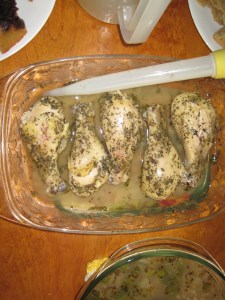
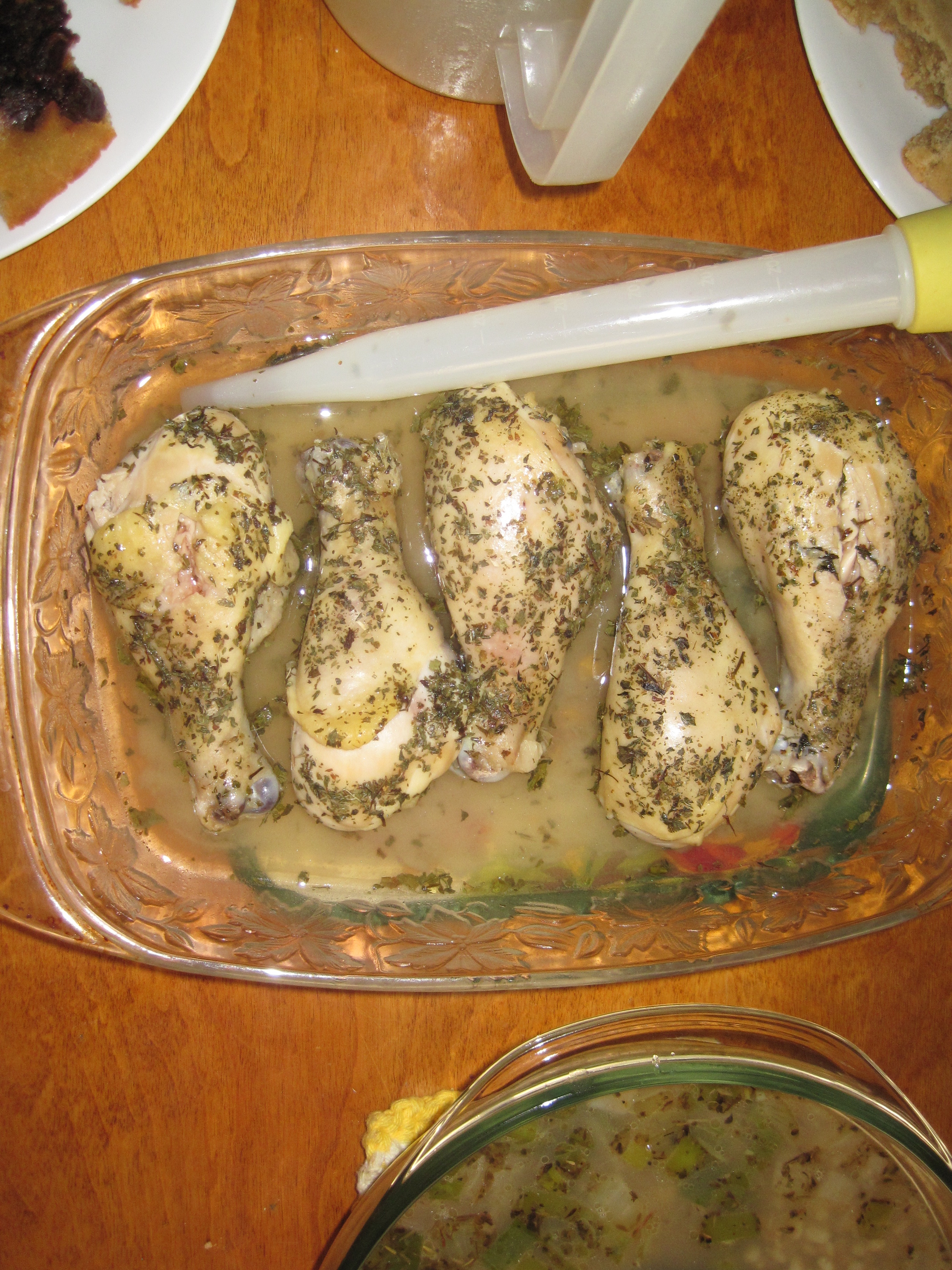
“Partridge” Basted in Vinegar and Coated with Spearmint and Salt
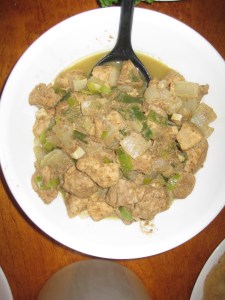
Pork with Onion, Garlic, Leeks, Cumin, Coriander, Salt, and Mustard Powder
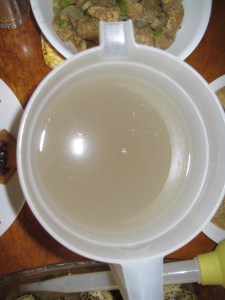
“Beer,” Actually Water in Which Barley Was Cooked
Place Represented: Sumer/Akkad, Modern-Day Iraq
Time Represented: Between 3000 BC and 2400 BC
Culture: Sumerian/Akkadian
Religion: Ancient Mesopotamian Polytheism
For the first feast, I went back to the dawn of civilization, ancient Mesopotamia. While I had originally considered a hunter-gatherer or Garden of Eden feast, I ultimately decided that those eras probably did not have feasts to represent. The hunter-gatherers probably ate especially well when they had especially good luck in their endeavors, while it would make sense that food was always plentiful in the Garden of Eden. Therefore, I would imagine that neither eras had planned feasts, in the first case due to lack of knowledge of when there would be the largest surplus, in the latter case due to lack of necessity. Therefore, since those holding significant wealth and power have always been the ones holding feasts, it would make sense that feasting would appear at the dawn of civilization, at the same time significant social inequality appeared.
That leads us to ancient Mesopotamia, home at the time being studied to the Sumerians and the Akkadians, and during the next millennium and later to the Assyrians and Babylonians, as well as countless other peoples. While the people and customs changed over time, I am focusing on the earliest time period, Sumer and Akkad in the 4th and 3rd Millennia BC. During this time, as was still done until modern times, crops were grown in the rich soil deposited by the annual floods of the Tigris and Euphrates rivers and watered by irrigation systems. Livestock were grazed on the more marginal land nearby, and fish and fowl were harvested from the rivers. Although inconsistency in the flooding fairly often led to poor harvests and famine, most of the time there was a healthy diet of grains, legumes, vegetables, and beer, supplemented by dairy, fruit, and fish. For the elite and for special occasions there would be meat and poultry as well.
From my research, mostly on foodtimeline.org, but also a few other sites, I found that the most common grain was barley, although emmer and spelt (varieties of wheat) were also grown, especially in northern Mesopotamia, where the soil was less saline. The grain was made into an enormous variety of breads, as well as porridge and beer. These were the staples of the ancient Mesopotamian diet, supplemented with a fair amount of legumes such as broad (fava) beans and lentils. The most popular vegetable varieties were lettuce, cucumbers, and especially onions, garlic, and leeks, whose flavor profile was dominant in the cooking style. Spices such as cumin, coriander, mustard, mint, dill, fennel, and salt were also used to flavor the food, along with vinegar and honey. Fruits, however, were the main sweetener, especially dates, although figs, apricots, and quinces were also native to the area. It seems that pomegranates and grapes were introduced slightly later, although they seem to be present relatively early in history, and grapes certainly by Akkadian times, since raisins are an ingredient in one of the recipes I ended up using. Fish and river fowl such as duck were the most common sources of animal protein, with goat, mutton, oxen, pork, and land fowl such as pigeon, partridge, and quail available after temple sacrifices, at feasts, and for the wealthy. Eggs, cheese, and butter were quite common, and butter was viewed especially highly.
Two items regularly associated with Middle Eastern cooking that were not present at first and less common later in this time period were olives and grapes, as well as their most common derivatives, olive oil and wine. The reason for this seems to be that those crops were not native to Mesopotamia and did not grow as well there as around the Mediterranean Basin. When they began to be grown there I am not sure, but despite beer being more common throughout ancient history in the region, especially in the south, wine, whether domestic or imported, was present in the north during Akkadian times, along with raisins. Olive oil, however, was not in use at this time in Mesopotamia, despite an already long history around the Mediterranean.
With the history lesson mostly concluded, I now move on to discuss the dishes served. To make the preparation manageable, I used a combination of dishes that could be prepared ahead and those to be made soon before dinner. Since I had originally planned on attempting to make a beer of the time period, I my first thoughts were on the beverage, since it needed time to ferment. However, I then remembered that alcohol does not mix with one of my medications, and thought about how the process would probably make the kitchen smell very unpleasant while it fermented. Thus, I found a reasonable non-alcoholic substitute on a medieval cookery website that involved infusing water with a light barley flavor by boiling water and adding barley as it cools. So I made the barley water a day ahead and put the barley, which was cooked by the process, in the refrigerator to use over the next few days. I then made a recipe from foodtimeline.org as a dessert. This was a royal cake recipe that, in addition to the flour, milk, and eggs, was enriched by a bit of white cheese (cottage cheese used) and a lot of butter, was flavored with ground fennel seeds, and was sweetened by raisins and dates. After that baked, I used the leftover barley flour and cottage cheese, as well as an egg and some milk, to make an approximation of a bread from the period, topped with sesame seeds.
The next day, I started preparation by starting the “partridge” recipe. Since I am not sure where to find partridges and if I could they would probably be fairly expensive, I originally planned to use Cornish hens as a rough approximation, since they are relatively close in size. However, when I got to the store I saw that they were frozen solid, and since the feast was that evening, there was no time to thaw them. Thus, I used a package of chicken drumsticks instead. Once I got home, I followed the recipe mentioned somewhere online (I can’t remember where) and basted them with apple cider vinegar (by the time they were familiar with grapes they were familiar with apples, even in the hot climate apples would be transportable in vinegar form, and that is the vinegar I am most familiar with). They were then rubbed with spearmint and salt and put in the oven to bake.
While the chicken cooked, I started the pork and the soup. Pork was not taboo for the ancient Mesopotamians, and there were a large variety of grain and legume soups, so those seemed like good options. The boneless pork ribs was cooked in oil with onions, garlic, leeks, salt, cumin, coriander, and mustard powder, and the soup was sautéed onions, garlic, and leeks, flavored with salt, cumin, coriander, and a bit of pork, and the barley added for the last few minutes to heat through. While that all cooked, I arranged a vegetable platter of green leaf lettuce, cucumber slices, and sliced leeks. By then, everything was ready, and it was time to eat.
Overall, the feast was a success. The pork and the soup had a good flavor, and the chicken was excellent, having an excellent flavor and being very tender. The salad was good and added a nice bit of freshness, and the cake was quite a hit. I had actually been a little worried that it would not be sweet enough without any added honey, but it turned out that the dates and raisins made it plenty sweet. It kind of tasted like really buttery biscuits with jam.
However, although they did not taste bad, the bread and barley water were just okay. The bread was kind of bland, and denser than I expected, and the barley water did not have as much flavor as I had anticipated. There was nothing to complain about, but since leavened white bread has been available to the elites of society almost as long as there have been elites, from now on I am using the fresh pizza dough from the grocery store to make the bread. In addition, since wine was preferred over beer where it was available, from now on almost every feast will have grape juice. Still, it was a good experiment, and I look forward to many feasts to come.



 Feasting Through Time