

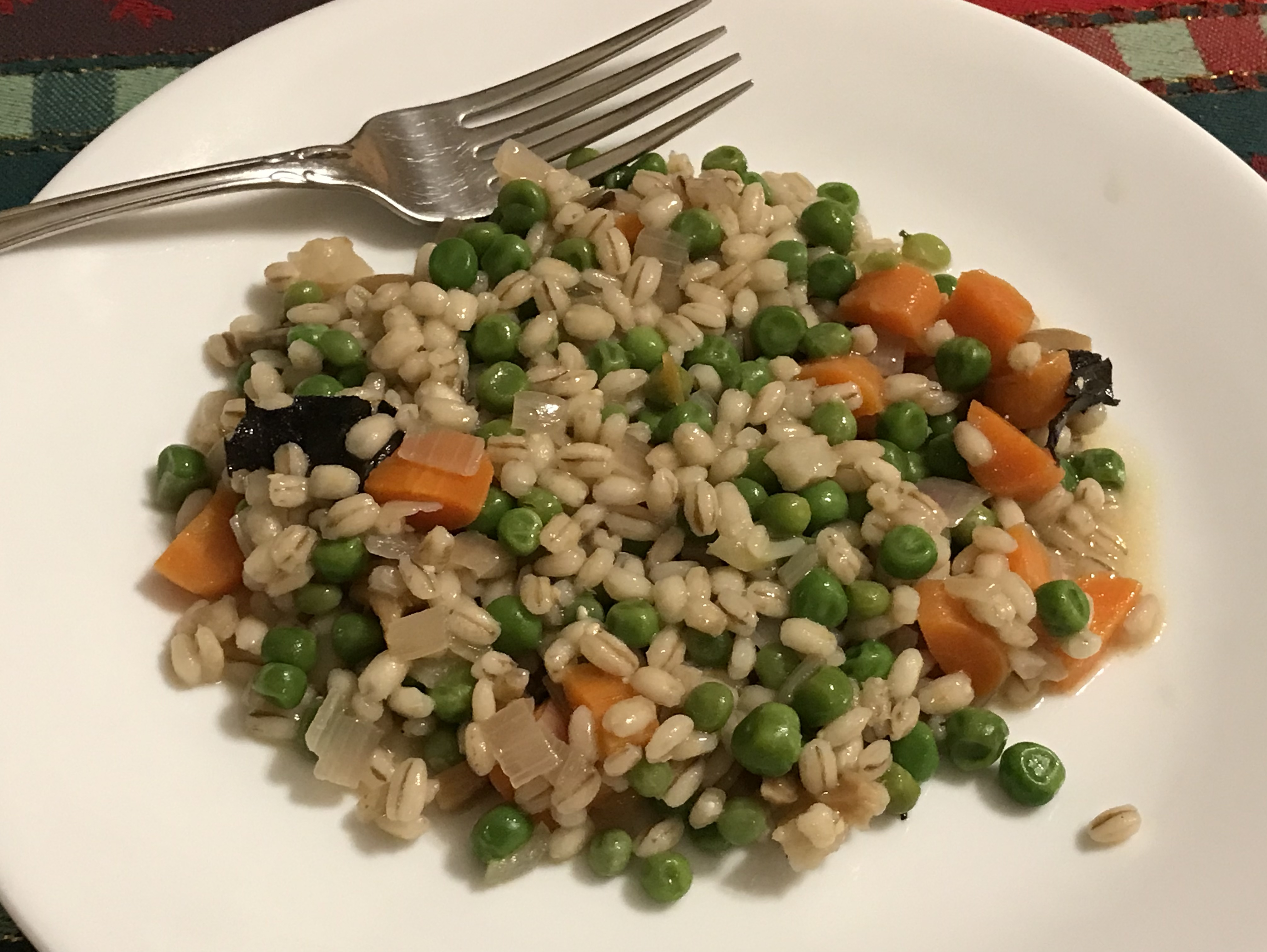
Friuli’s Twist on Risotto: Orzotto
1000 Foods (pgs. 211 – 212)
Risotto comes in many varieties. I’ve already made four of them as part of menus in A Cook’s Tour of Italy, and there are several more in 1000 Foods to Eat Before You Die. This particular version comes from the Friuli region near Venice. Close to the borders with Austria and Slovenia, Friuli was even controlled by Austria for much of the 18th and 19th Centuries. During this time, and from large-scale trade before and after, a number of Germanic dishes worked their way into the cuisine of northeastern Italy. Sauerkraut is found across the region, and in Trentino-Alto-Adige, apple strudel is a local specialty. The transfer went in the other direction, too, with Italian influences reaching Vienna and beyond.
Instead of using rice, a risotto-type dish is made in Friuli with barley, or orzo, hence the name. Exactly why barley replaces rice is unclear, but it seemed like an interesting variation. Since store-bought pancetta is somewhat pricey, I made my own with side pork and kosher salt, curing in the fridge for two days. Bacon is a decent substitute, but its smoked flavor is noticeably different. After sautéing the chopped pancetta with butter and shallots, the barley is added. Like with risotto rice, it soaks up the broth, which is added bit by bit. Constant stirring rubs starch off the barley grains and mixes it into the broth, creating a creamy texture. Vegetables can also be added. I used carrots, dried mushrooms, and frozen peas, all of which are consistently good over the winter. Other options might include asparagus in spring or zucchini in summer. A bit of local parmesan cheese, grated in at the last minute, finished everything perfectly.
The barley gave the orzotto a fascinating texture and flavor. It was chewier than rice and had a bit more flavor, but wasn’t overpowering. All the flavors were in balance except for the salt, which was, as in the caldo Gallego, a bit strong. Interestingly enough, I made the two recipes on the same day, ready for the next week’s lunches and weeknight dinners. Unlike the soup, I do know where the extra salt in the orzotto came from – the homemade pancetta. Not realizing how much salt the pork strips had absorbed, I didn’t even think to wipe the extra off the outside. With low-sodium broth and no added salt, I thought the balance would be right. It was still very good, and I have everything to make another batch except shallots.
 Feasting Through Time