Ashkenazi charoset
dessert, fall, jewish cuisine, recipes, spring

Healthy Spring (or fall) Dessert: Ashkenazic Charoset

Ashkenazi charoset

            At first, it might seem strange to have apples in a dish for a spring holiday. Passover, the most important holiday on the Hebrew calendar, celebrates the Israelites’ Exodus from Egypt. It always occurs in the spring (in the Northern Hemisphere), while apples are a symbol of fall. On further reflection, the use of apples actually does make sense.

            Charoset is a blend of chopped fruit and nuts, representing the mortar enslaved Israelites used in Egypt, and is an essential element on the Passover Seder plate. Historically, most Ashkenazi Jews lived in Central and especially Eastern Europe. Not many fruits are in season there in March or April, but apples could be stored in a cold cellar over the winter. The only other option might be rhubarb, at least when there is plenty of sugar to counter the acid. Holiday food traditions seem to change more slowly than what people eat every day, so even with modern shipping and preservation, apples remain the base fruit.

            There are many recipes out there, typically including walnuts, sugar, spices, and an acidic liquid to keep the apples from oxidizing and turning brown. Most common is sweet, kosher red wine. Not all kosher wines are sweet, but Manischewitz, the most common brand (for all sorts of kosher products, in fact), is. With at least 51% concord grapes and a bit of extra sweetener, it tastes exactly like the classic non-fermented grape juice, with the alcohol flavor only coming in at the end. Naturally, grape juice would be the perfect non-alcoholic substitute.

Advertisements

            If you’re wondering why wine isn’t all kosher (as I was), it’s because ancient pagan people often used it in their rituals. To ensure their wine hadn’t previously been used in these rituals, the production from picking to transportation to serving had to be done by kosher-observant Jews. Unless, if I understand things correctly, it gets heated, which renders it unsuitable for pagan rituals. Once that’s done, anyone can handle it.

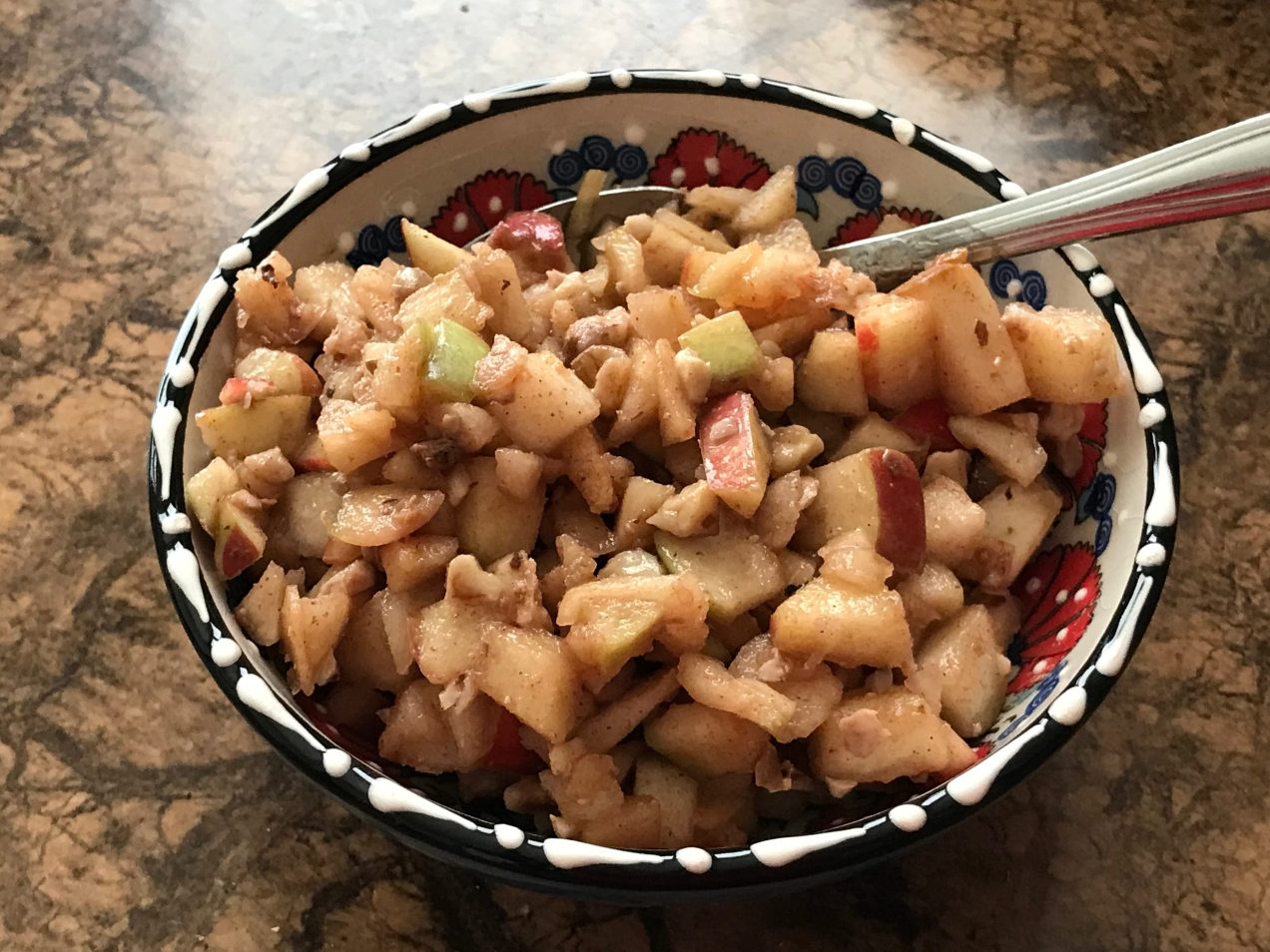
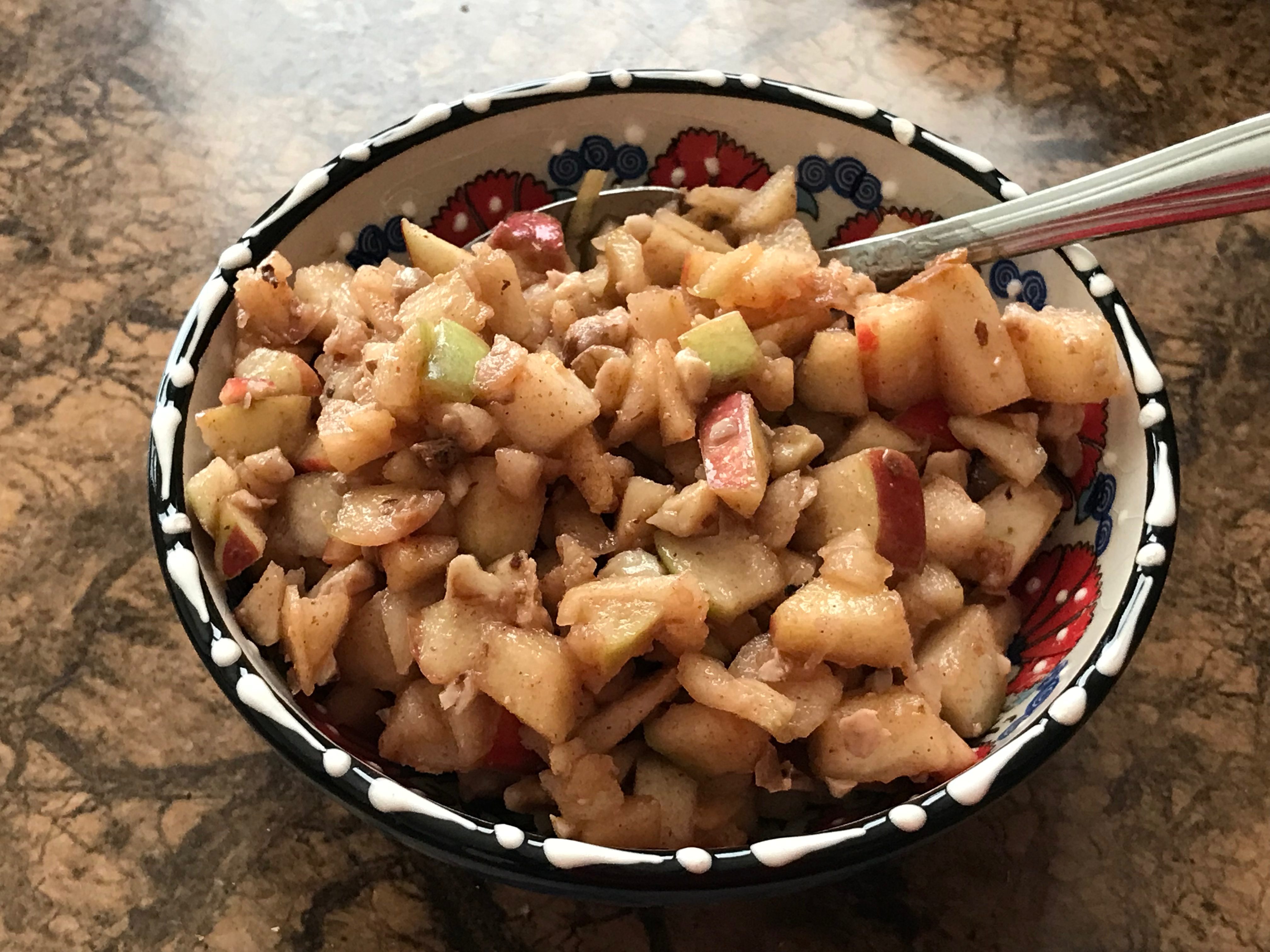
            Ashkenazi charoset is delicious, regardless of faith or season. It’s sweet, tart, two different kinds of crunchy, juicy, and especially tasty during the fall, when apples are freshest. Walnuts make the mix more substantial, and spices like cinnamon and ginger make it taste like crustless apple pie.

Ingredients:

  • 4 medium sweet-tart apples (I used 2 cortlands and 2 zestars)
  • ½ cup walnut pieces
  • A few drops of lemon juice, if desired
  • ½ teaspoon ground cinnamon
  • ¼ teaspoon ground ginger
  • ¼ cup (4 tablespoons) sweet kosher red wine or red concord grape juice
  • Sugar to taste

Directions:

  1. Core the apples, slice, and mince as finely as you can with a knife. (One of those devices that cores an apple and cuts it into 8 or 10 slices works perfectly for the first part, and I don’t bother peeling. If using a food processor for the second part, be careful not to overprocess.) Place in a large bowl. Toss with a few drops of lemon juice if desired.
  2. Mince the walnuts and stir in, distributing evenly. Add the spices and wine and stir again.
  3. Taste for sweetness. Depending on the apples, you may or may not need sugar. If the mix needs it, add sugar a tablespoon at a time, tasting as you go.
  4. Let rest in the refrigerator for 24 hours for the best flavor.

            If you enjoyed this, please like, share, and/or subscribe.

One-Time
Monthly
Yearly

Make a one-time donation

Make a monthly donation

Make a yearly donation

Choose an amount

$5.00
$15.00
$100.00
$5.00
$15.00
$100.00
$5.00
$15.00
$100.00

Or enter a custom amount

$

Your contribution is appreciated.

Your contribution is appreciated.

Your contribution is appreciated.

DonateDonate monthlyDonate yearly
Standard
Summer Pudding
british cuisine, food history

Summer Pudding: Britain’s No-Bake Specialty (and let’s talk about currants)

Summer Pudding

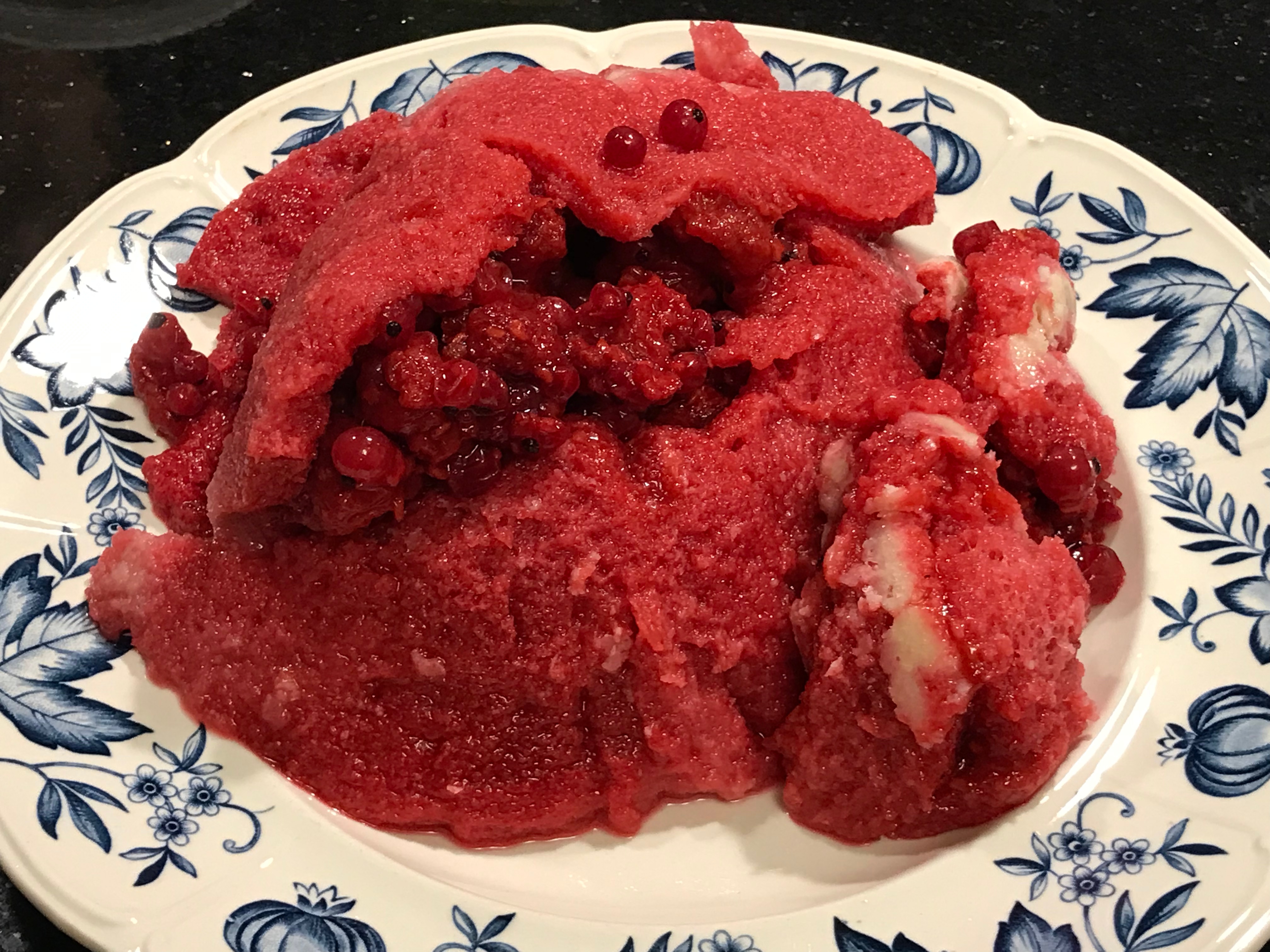
            No-bake desserts are great for special occasions during the summer. I’ve already discussed strawberry trifle, which uses frozen pound cake for beautiful and delicious results. Another showy use for berries and their juices is the British dessert summer pudding. It involves lining the bottom and sides of a bowl with white bread slices, filling the center with a mix of berries and sugar, covering the top with more bread, and pressing everything together with another bowl overnight. Excess juices are thus forced into the bread, coloring it a lovely hue between red, pink, and purple, depending on what fruit you use.

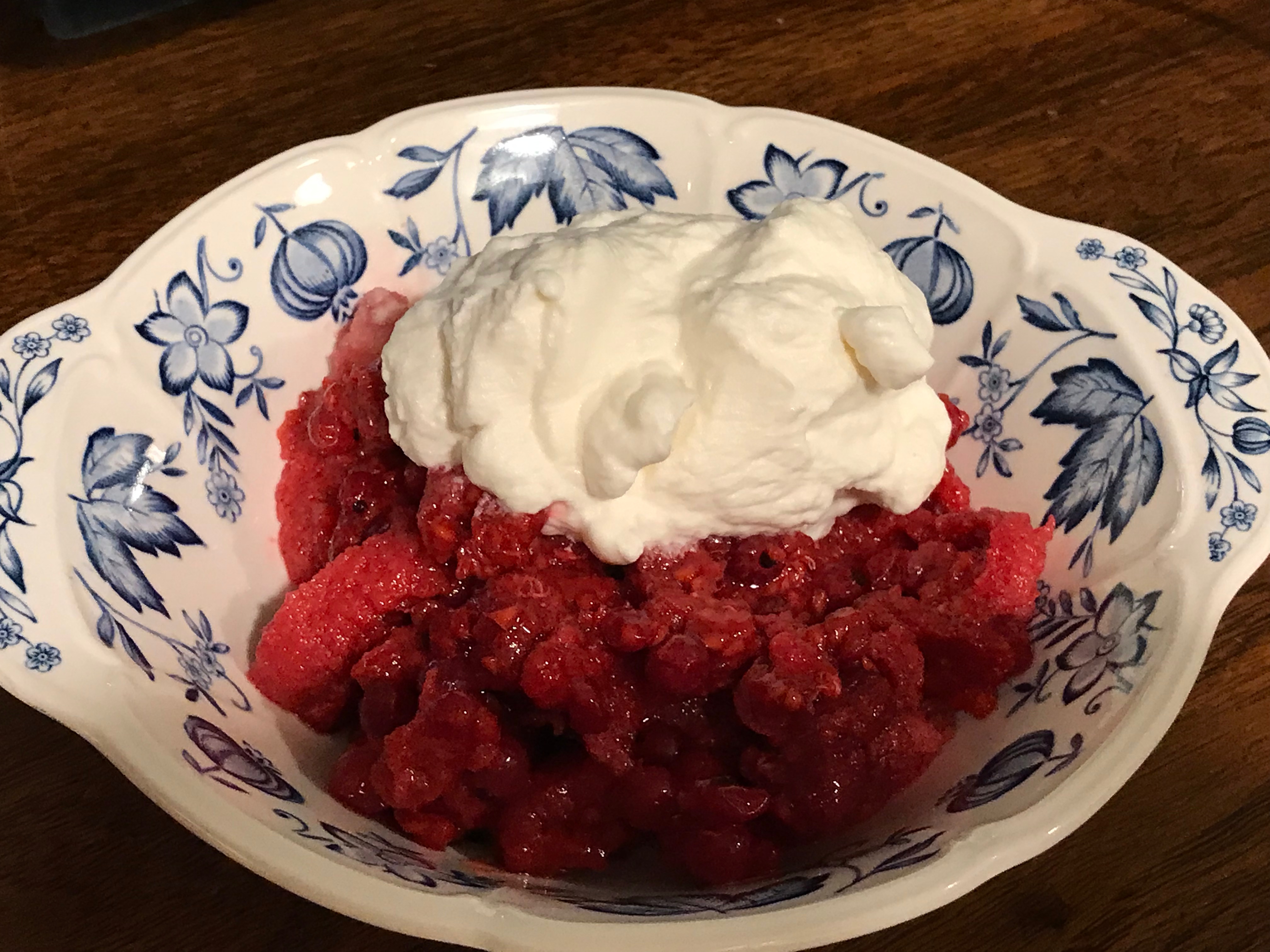
            I was a little skeptical at first. It sounded like a recipe for soggy bread, but if summer pudding is popular in the British Isles, there had to be a reason. After finding red currants at the farmer’s market, I decided to give it a try. If the bread part wasn’t good, the berry filling could be scooped out and served on its own with whipped cream.

            This turned out to be unnecessary. Odd as it sounded, the bread worked perfectly. Due to its gluten structure, it soaked up the juices like a sponge and held together even when fully saturated. Cake would typically fall apart in a similar situation. Beyond that, the bread balanced out the tart currants and raspberries very well. It was indeed soggy, but in a good way.

Advertisements

            Let’s pause here to talk about currants. The dried currants you can buy in boxes are not true currants at all. They are actually a type of small raisin. Most boxes now specifically refer to their contents as Zante currants to avoid confusion. These Zante currants are worth trying in their own right in scones, oatmeal, and the like. But they’re not what we’re talking about today.

            True currants come in three common colors: red, white, and black. All are much more common in Europe than in the US, though the red kind is occasionally found fresh in farmers’ markets and backyard gardens. White currants are a mutant form of the red variety. Black currants are even harder to find, and were in fact banned for several decades because they could carry white pine blister rust, which threatened the US logging industry. Even with new disease-resistant varieties, black currants are still illegal to grow in several states. Which is a pity, because they make great jams and juices.

Red currants
Red currants, with my hand for scale

            This history could explain the rarity of currants in the US. So too could be the fact that red currants, which were never banned, have to compete with native cranberries. Both are tart red fruits that make excellent juices and sauces, but cranberries are a lot cheaper and easier to store. And in the Midwest, where growing conditions are favorable for currant bushes, people prefer sour cherries in jams and desserts. Red and occasionally black currant jam can be found at stores and farmer’s markets, but beyond that, there are few traditional (or modern) American recipes for the fruit.

            British cuisine, by contrast, has plenty of uses for currants, especially, it seems, for the black variety, which are in fact dark purple. Blackcurrant jam is one of the favorite varieties. Many candies use the flavor. A sweetened concentrate called Ribena (which is not uncommon in the international food aisles in the US, at least in big stores) makes what tastes like currant-flavored Kool-Aid. It would taste better with a little less sugar, but is enjoyable nonetheless. And of course, there are numerous desserts made with all varieties of currant.

            One of the favorites is summer pudding, which Mimi Sheraton suggests is best made with a mix of red currants and raspberries. Taking the expert’s advice, I picked up some frozen raspberries, scaled down the recipe on pages 29 – 30 in 1000 Foods to Eat Before You Die by half, and got started. (Information about currants can be found on pages 12 – 13). Whether or not to cook the fruit or just briskly stir it with the sugar depends on how soft and/or ripe the fruit is. Since currants are firmer and tarter, even when ripe, I decided to cook them with the sugar for a few minutes, then stir in the raspberries, which are more prone to fall apart, after. This worked perfectly.

            The biggest challenge turned out to be finding a bowl that would fit perfectly inside the bowl with the pudding. This is important because pressing down on the surface with adequate weight (provided by a few cans of food) is what forces the excess syrup into the bread. The other issue was unmolding. I’m not sure why the recipe called for buttering the main bowl, since the butter completely solidifies when everything is chilled, unless it’s for flavor. The now-solid butter stuck the bread to the bowl, making for a slightly messy presentation.

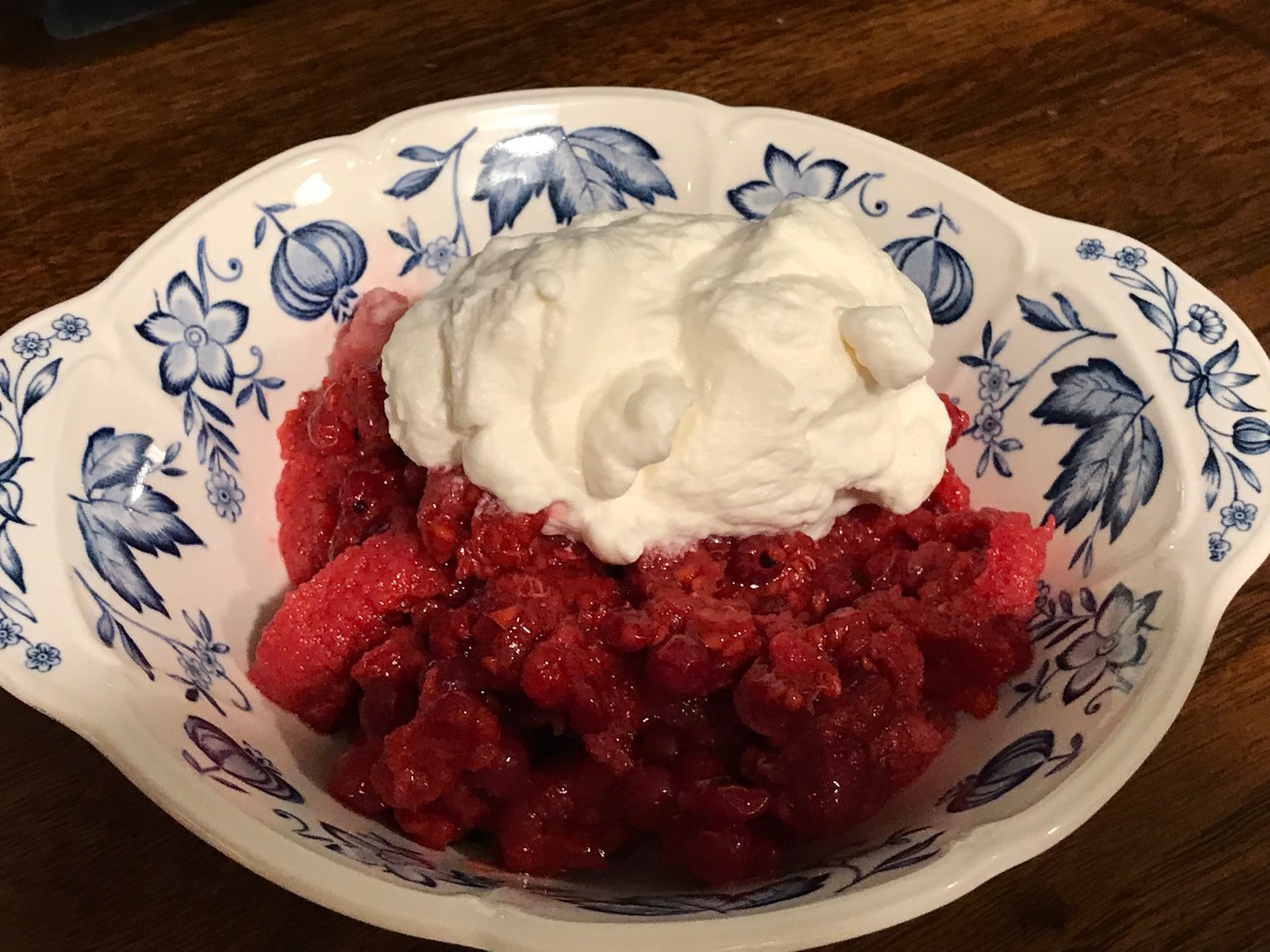
            Messy or not, the juice-stained bread and red fruits were pretty in their own way, especially with a contrast of whipped cream. Brits often serve summer pudding with either clotted or whipped cream. I’m not sure how the former is, but the latter is perfect, especially if you make it yourself. Homemade whipped cream is super easy to make, and it makes the odd-sounding but delicious summer pudding even better. To be honest, it makes any dessert better.

Standard