

food history

Foods Not Eaten: Personal Taste Part 1 (Blue Cheese, Boiled Eggs, and Raw Seafood)

Blue/Funky Cheeses: Stilton, Stinking Bishop, Epoisses de Bourgogne, Fourme d’Ambert, Roquefort, Gorgonzola, Cabrales, Picon Bejes-Tresviso, Kase mit Musik, Liederkranz Cheese

Boiled/Runny Eggs: Aselila (walnut egg salad), Deviled Eggs, Fried Eggs, Pidan (preserved duck egg)

Raw Seafood: The Oysters of Locmariaquer (farmed there or elsewhere in Brittany), Nieuwe Haring (new herring eaten raw), The Fine Art of Oysters (view but not eat), Sild (Scandinavian herring), Pickled Herring, North Atlantic Clams on the Half-Shell

1000 Foods (pgs. 27 – 28, 87, 91, 127 – 128, 195, 257, 298 – 299, 592 – 593, 381, 555 – 556, 571 – 572, 778 – 779, 108 – 109, 155 – 157, 342 – 344, 457 – 458, 604 – 605)

            Everyone has their own personal tastes, so we all have different opinions about what to eat at least once in our lifetimes. For the most part, I trust Mimi Sheraton’s advice on this, but there are a few things I just don’t like. Most notably, there’s strong cheese, hard-cooked egg yolks, runny eggs (usually), raw seafood (usually), meat or fish in gelatin, ketchup, mayonnaise, most bottled salad dressings, or anything with the “wrong” temperature or texture.

            If that sounds familiar, like it might be autism-related, that’s certainly possible. I am, in fact, on the autism spectrum, which might be how I’ve managed to stay obsessed with this project for so many years. It could be a sensory thing, and I do have sensory issues with loud noise and rough/itchy clothing. On the other hand, it could also be a learned behavior. My mom won’t eat most of those things either, except for bottled salad dressing.

            Let’s start with a common aversion: blue or stinky cheese. Even when it’s a type safe to eat, I find visible mold on or in cheese most unappetizing. It isn’t just the appearance. When ground into a burger, blue cheese messes up the taste. That means there’s no point trying Stilton (British), Fourme d’Ambert, Roquefort (both French), Gorgonzola (Italian), Cabrales, or Picon Bejes-Tresviso (both Spanish). Stinky cheeses are also out. No matter how good the flavor is, getting past a “mushroomy,” “barnyard,” or “putrid” (all descriptors used in the text) smell is a tall order. That eliminates four more cheeses: the British stinking bishop, French epoisses de Bourgogne, German kase mit musik, and American Liederkranz.

            For eggs, I don’t like hard-cooked yolks, which smell like sulfur and have a weird texture. Deviling the eggs doesn’t solve either issue, and even looking at egg salad grosses me out. A poached or fried egg is sometimes okay in soup or on a burger or rice bowl, as long as the yolk isn’t cooked hard (texture issue just like hard-boiled eggs), but I don’t usually like runny eggs either. Ideally, they should be scrambled and fully cooked, used in an omelet, quiche, or casserole, or mixed into baked goods. Two exceptions to this rule are Tollhouse chocolate chip cookie dough and my homemade brownie batter. Since I can’t taste the raw eggs, they are no longer gross. And no matter now good the Chinese preserved duck eggs, sometimes called century eggs, are, they look scary.

            The Dutch, Scandinavians, and New York Jewish population seem to like herring, either raw or pickled, but I do not. This might be a partially learned behavior, since my mom hates the smell of seafood (and is actually allergic). Regardless, the idea of eating whole raw herrings, bones, skin, and all, is not appealing. They have a fairly strong, “fishy” flavor, and the texture is off. Oily fish like (presumably) snoek are also too strong. Raw oysters have a slimy texture, and I can’t imagine raw clams being any better. They make a pretty still-life painting, but actually eating them is another story.

            Speaking of oysters in the French region of Brittany, here’s a story our tour director told us on the way back to Paris from Versailles. On a previous tour, most of the group decided to get (raw) oysters in the Breton former pirate city of Saint-Malo, since the area is famous for them. The tour director himself and a handful of people opted for crepes instead. You can probably guess where this is headed. The only people who didn’t get sick were the crepe group. Everyone else was miserable for the next few days. When we got to Saint-Malo a few days later, I went with the safe option. Brittany is also known for buckwheat crepes, with both sweet and savory fillings. The buckwheat crepe with ham, cheese, and egg was delicious and affordable, even in a touristy area. After eating some real food, I could enjoy a few buttery pastries and walk off the calories exploring. Bottom line: unless you really like oysters, stick with the crepes and pastries.

Standard
german cuisine, recipes, stew

Nothing to Do with Ground Beef: Hamburger Aalsuppe (Hamburg eel soup)

1000 Foods (pgs. 292 – 293) for information, recipe is my own creation, but lacks eels

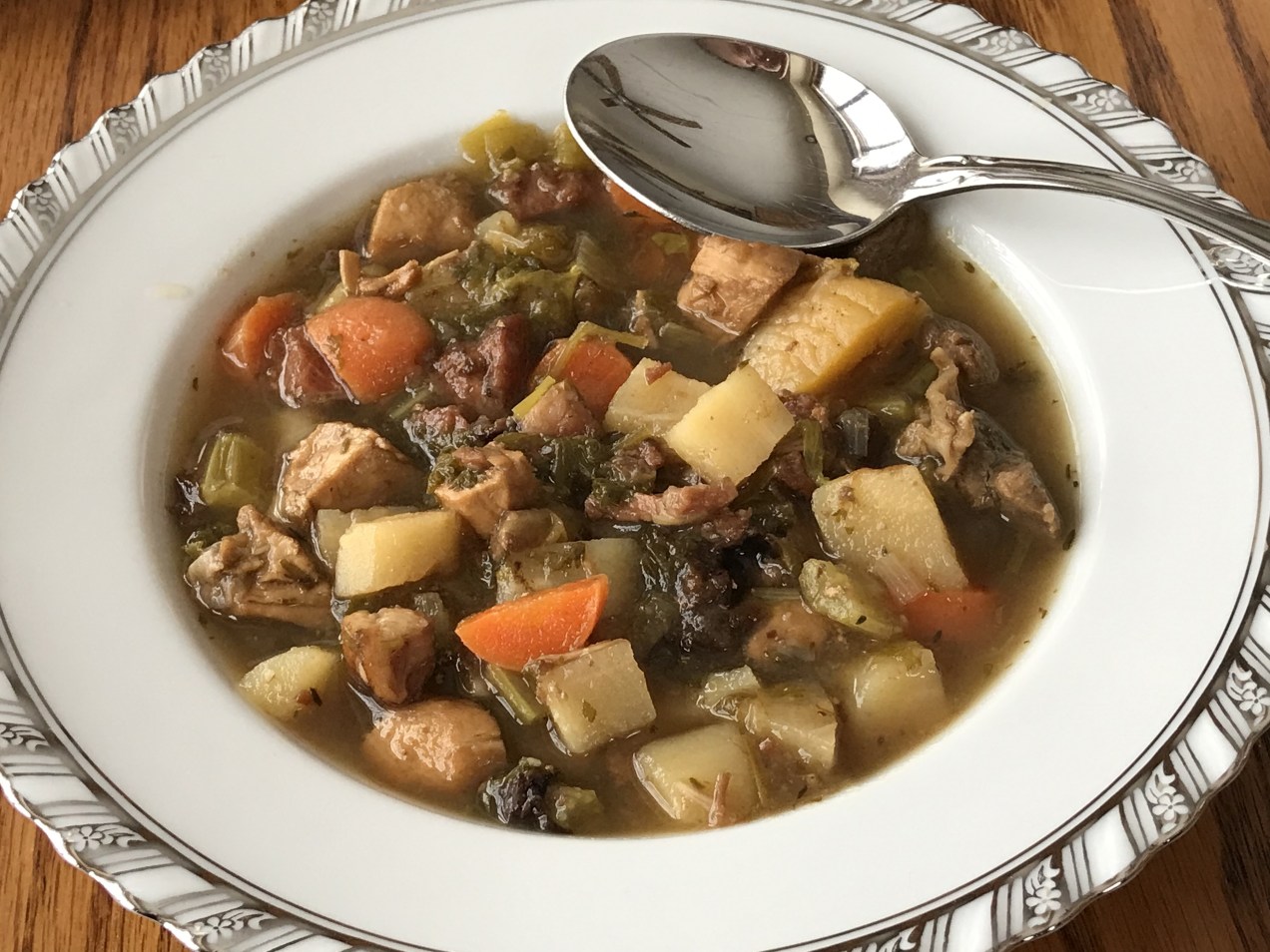
            Like other places in Northern Europe, the German city of Hamburg gets quite cold and dreary during the winter months. A specialty found there is eel soup, with chicken, beef, ham, vegetables, dried fruit, vinegar, and raspberry jam. If it sounds crazy, recall that combining sweet and savory flavors like meat and fruit used to be common in European dishes and is still popular in other parts of the world. Turkey and cranberry sauce, sauerbraten, and Swedish meatballs with lingonberry jam are some modern examples of this principle.

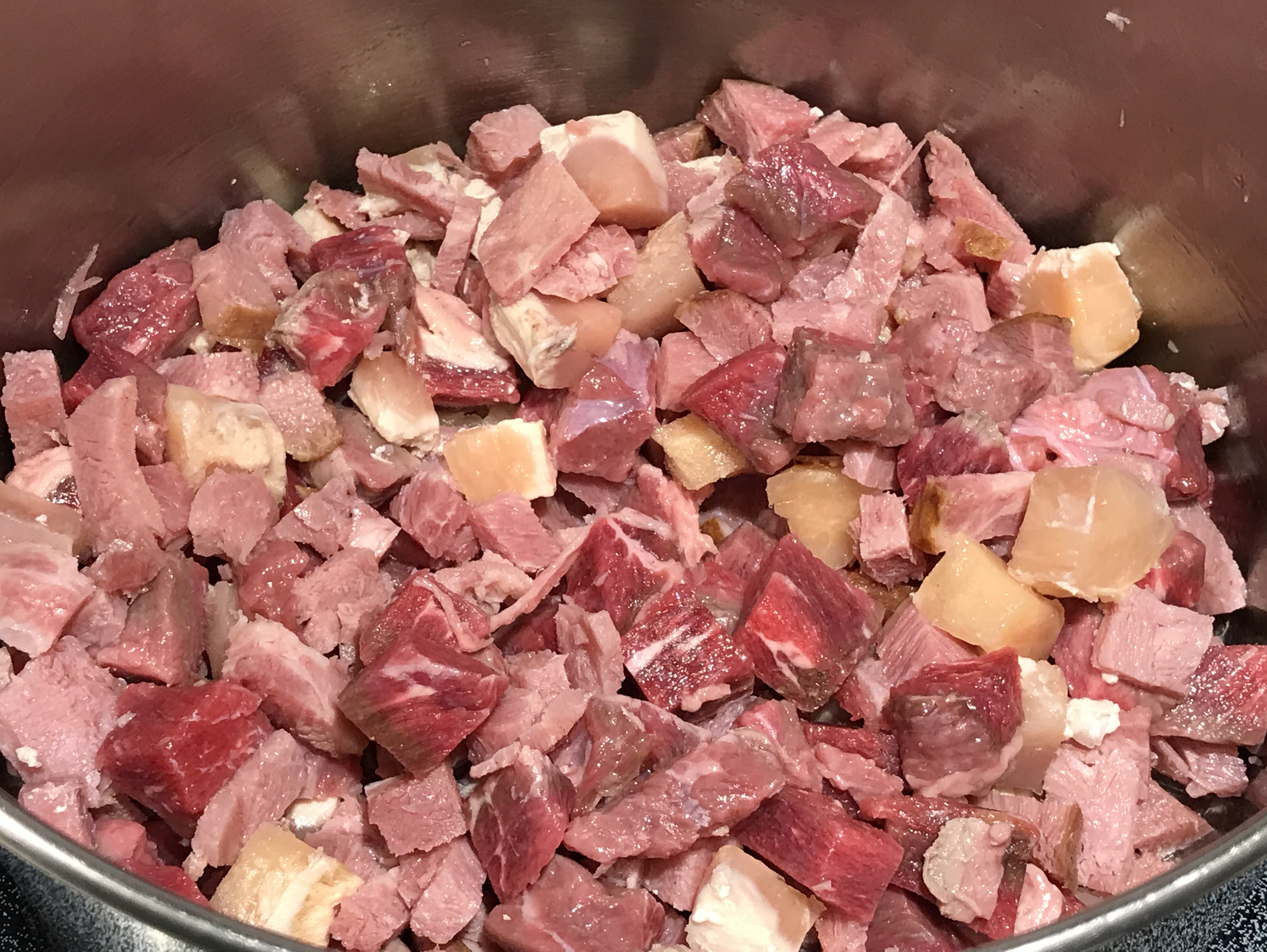
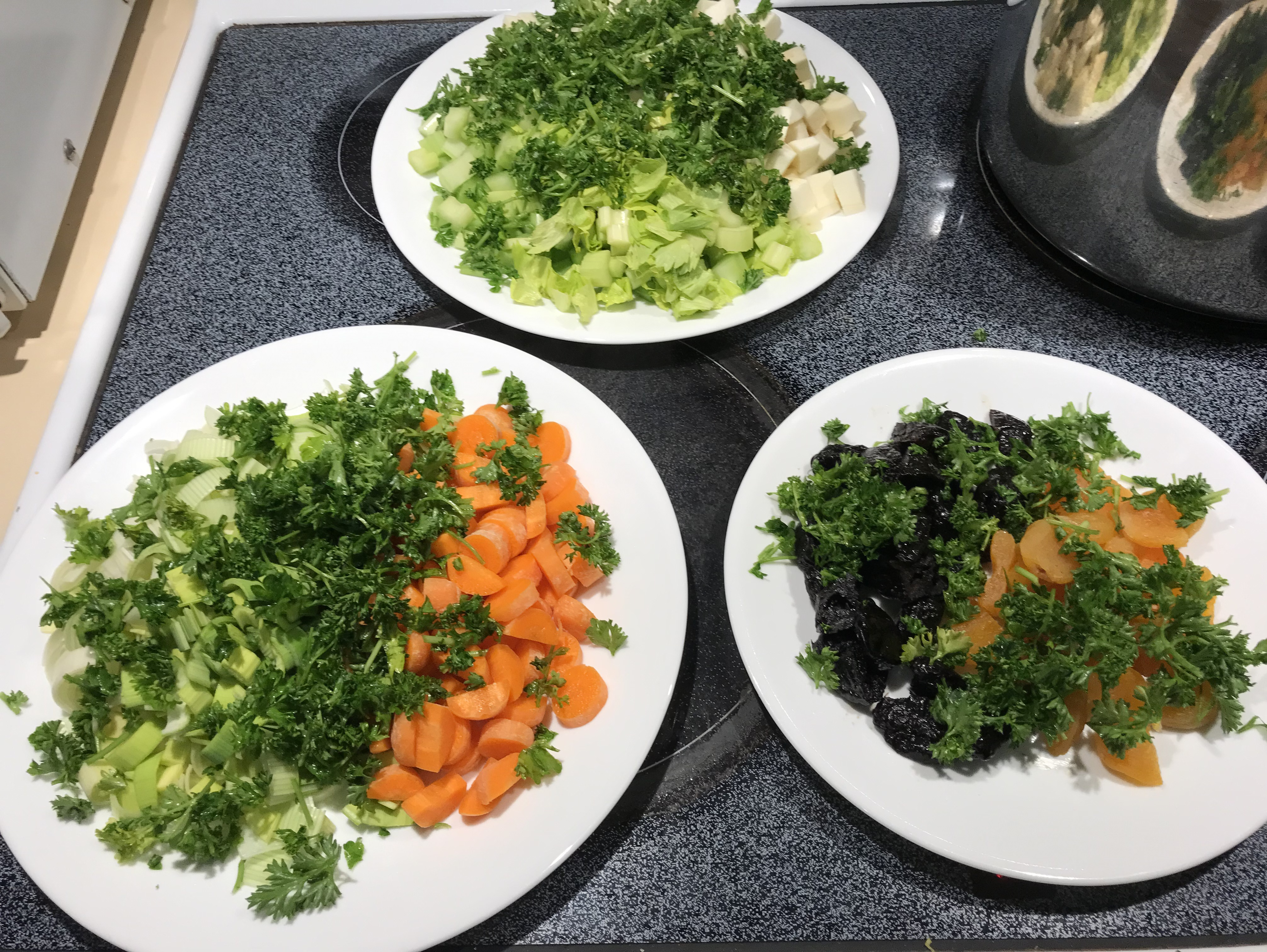
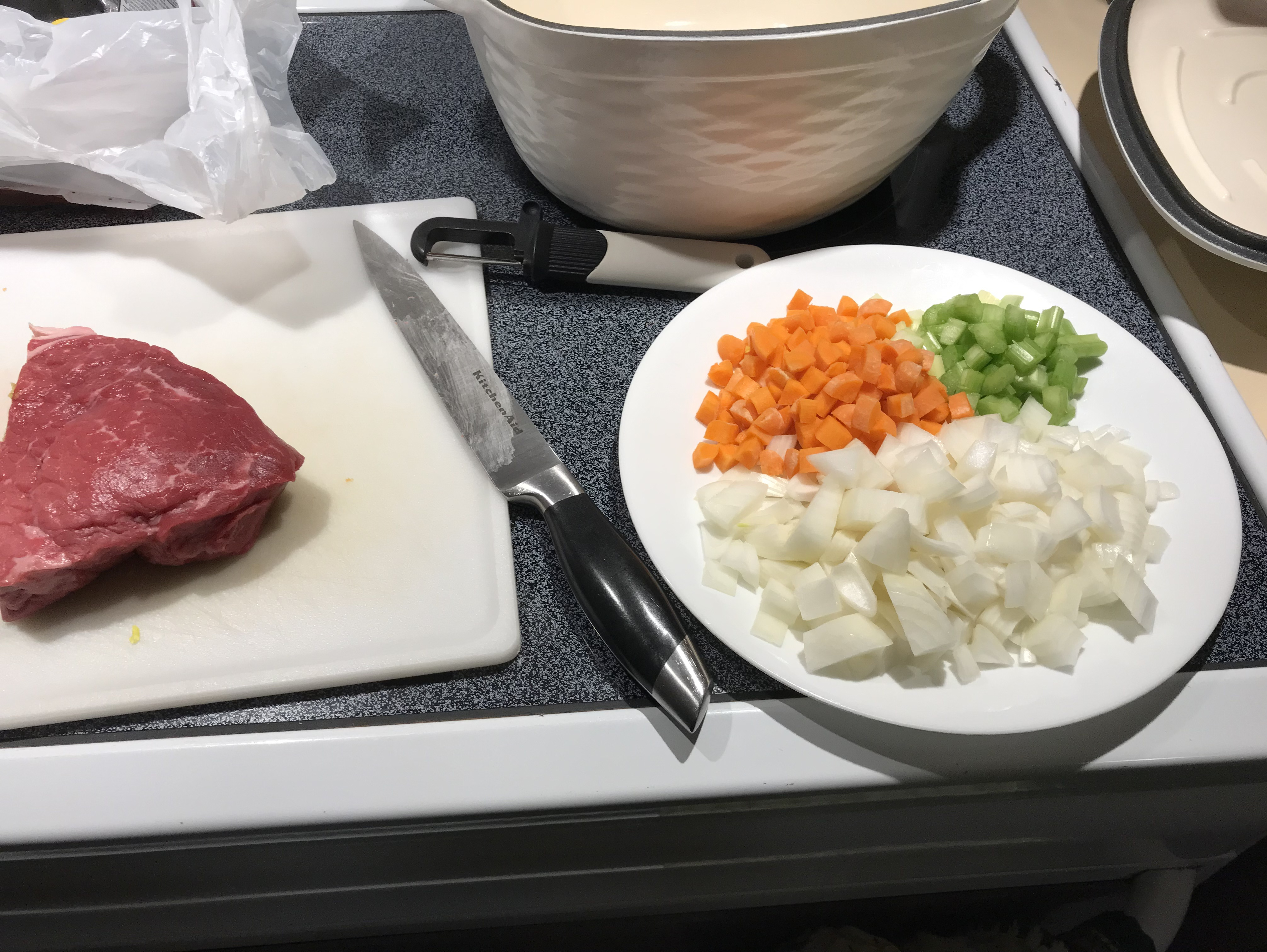
            Since eels are hard to find where I live, I decided to make “eel” soup without them, because the flavor combination sounded interesting. For the base, there’s beef chuck, ham, chicken, onions, bay leaves, and thyme. To prevent overcooking, carrots, celery, parsnips, leeks, parsley, prunes, and dried apricots are added a bit later. At the end of cooking, the soup gets a finishing touch of vinegar and jam. You can also add mini dumplings.

            For a dish that sounds so weird, the eel-less eel soup is actually delicious. The vinegar and jam give it a sweet-tart flavor resembling sauerbraten.

            Here’s what you need to make your own eel-less eel soup:

  • 1 pound beef chuck or similar cut, cubed
  • 2 chicken breasts or 4 thighs, cubed
  • 1 pound ham, chopped
  • 1 yellow onion, chopped
  • 2 bay leaves
  • 1 teaspoon dried thyme or 3 teaspoons fresh
  • 2 carrots, washed, halved, and sliced
  • 2 ribs celery, with some leaves if possible, sliced
  • 4 parsnips, peeled and chopped
  • 12 prunes, halved
  • 12 dried apricots, halved
  • 1 leek, halved and sliced crosswise
  • 1 bunch parsley, chopped
  • ¼ cup vinegar (I particularly like apple cider vinegar)
  • 2 tablespoons raspberry jam

            To make it:

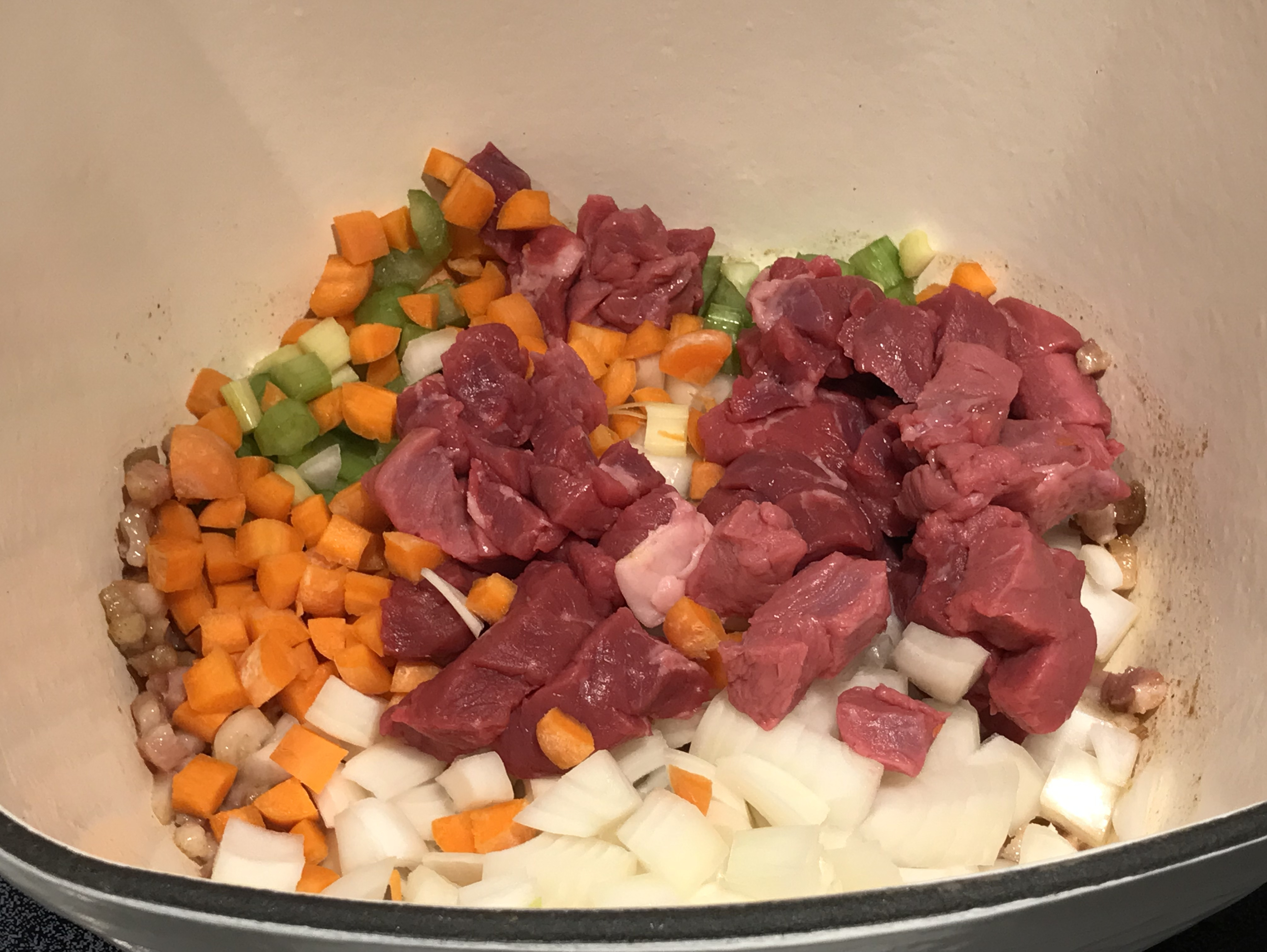
  1. Put the beef, chicken, and ham into a large pot and turn on the burner to medium, stirring frequently. When it starts to brown, add 1 cup of water and scrape any browned bits off the bottom of the pot.
  2. Add the onion, bay leaves, thyme, a pinch of salt, and enough water to cover. Simmer for about 45 minutes.
  3. Add the carrots, celery, parsnips, leek, prunes, apricots, and parsley. Stir and add more water to cover. Simmer for another 45 minutes.
  4. When the meat, vegetables, and fruit are tender, add the vinegar to the soup, followed by the jam, and stir to combine.

            And remember, subscribing is free, and you’ll get a notification whenever there’s a new post.

Standard
food history, german cuisine, stew

Pre-Potato Winter Stew: Frankischer Grunkern (with green spelt)

1000 Foods (pgs. 288 – 289)

            Imagine, for a moment, that you’re making stew on a cold day. It has beef, onions, carrots, celery, and parsnips, plus some butter and minced bacon to brown the meat and vegetables before adding liquid. Most people would think of adding potatoes at this point, and some cooks do, but they aren’t the key ingredient. That particular honor goes to grunkern, or green spelt. A specialty of Baden-Wurttemberg in the southwestern corner of Germany, the stew contains starch, protein, fat, vitamins, and flavor in one bowl.

            Spelt is an ancient variety of wheat that’s been grown for thousands of years. The German word grunkern sounds very similar to “green corn,” because the grain is harvested before it’s fully ripe. In Europe, corn can mean any type of grain, not just maize and sweet corn. Exactly how green spelt was discovered is unclear. Perhaps one summer grain supplies were running low and the harvest was still a few weeks or months away, so some farmers harvested a bit of their grain early. Interestingly, grunkern doesn’t seem to be widespread in European cuisines. Maybe it was more popular before potatoes, which are also ready before the main grain harvest, were introduced from the Americas, but that’s just speculation.

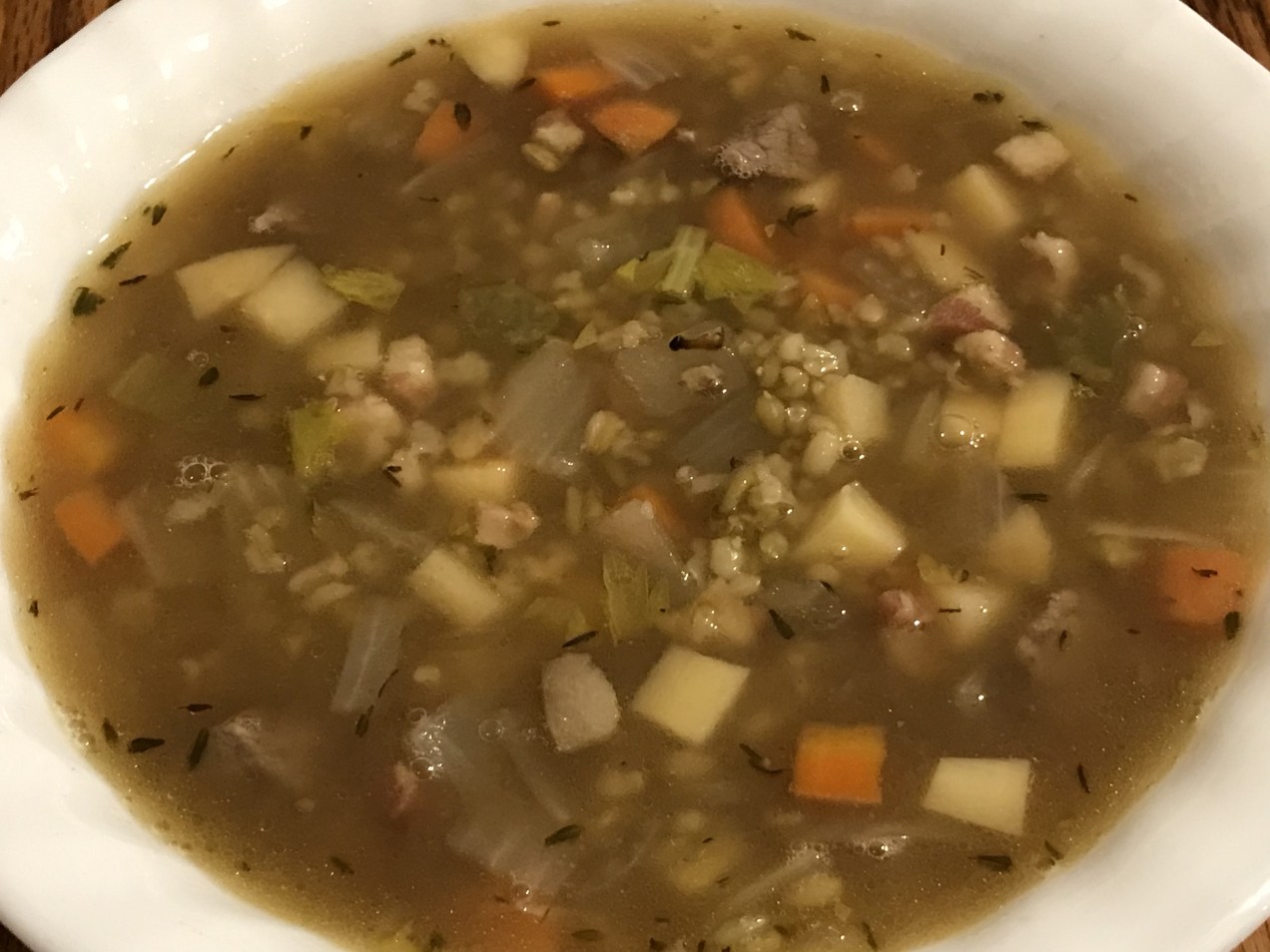
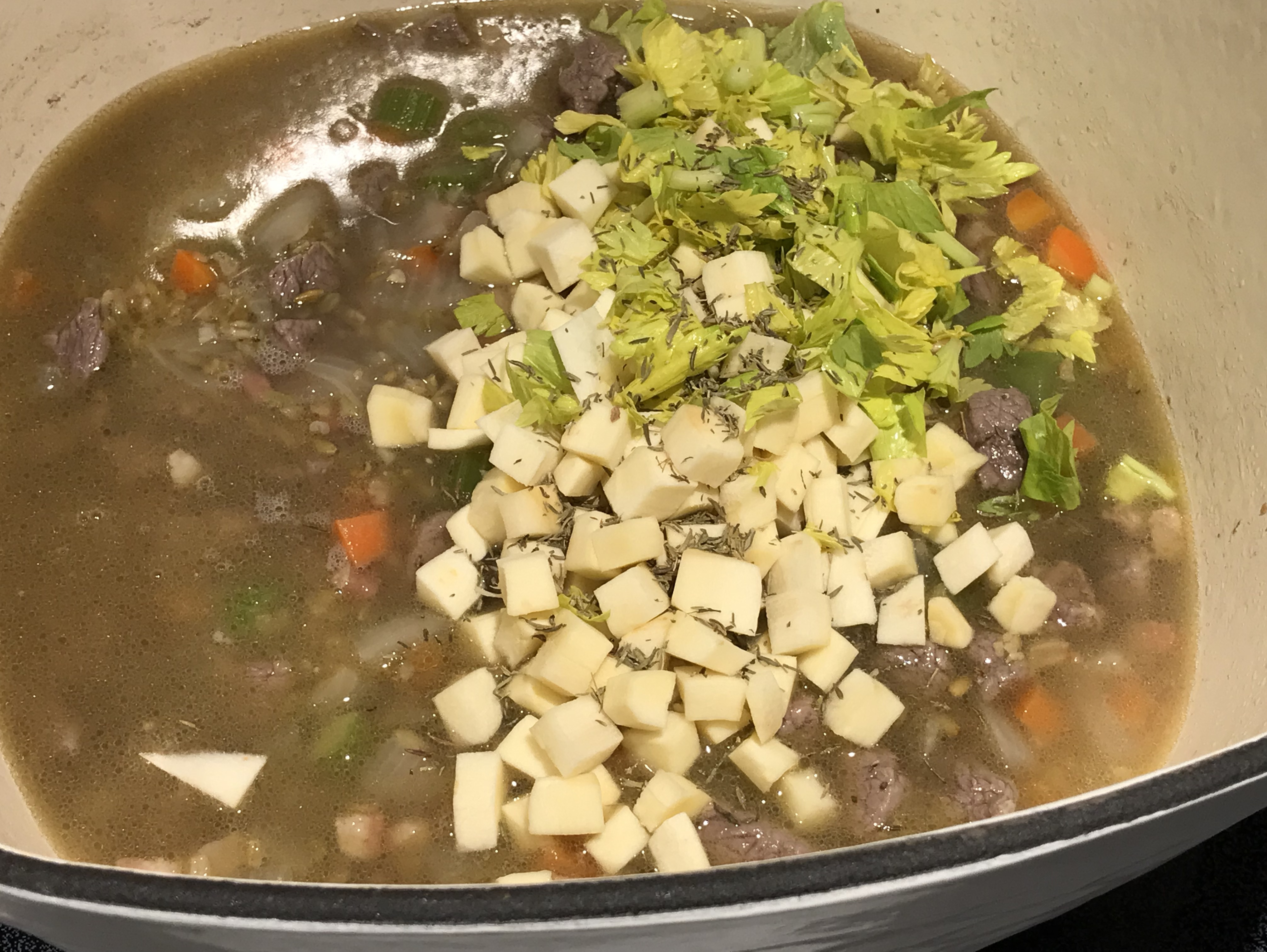
            The full recipe can be found in 1000 Foods to Eat Before You Die on pages 288 – 289, but here’s a summary. Butter is melted on the stove, then bacon, onion, carrots, and celery are added. You can add the beef or pork at this point to brown, which I did. Then soaked grunkern is added, with optional leek and parsnip, along with celery leaves and the meat, if it hasn’t been added already. This is followed by a bit of thyme, pepper, and either broth or water. I omitted the leek but added a minced parsnip, celery leaves, dried thyme, and beef broth. The recipe called for salt, but that can be added later to taste. Since I used salted butter and broth instead of water, adding extra at this point was unnecessary. Then everything simmers for a little over an hour.

            One thing that surprised me about this recipe was how little meat it uses. For 4 to 6 servings, it only called for 8 ounces beef or pork. That’s less than 2 ounces per serving, contrary to the stereotype of German food. Even though Germans have historically had more meat available per person that many other Europeans, large servings were an occasional treat, particularly during the Early Modern Era and into the 19th Century, after large-scale population growth and before industrial agriculture. So we have a stew with plenty of grain and root vegetables, with some beef and bacon as enhancements.

            Overall, this soup is highly enjoyable. My favorite from this project is still beef-mushroom-barley, but this was an interesting change of pace. Like barley, the grunkern swells up in storage and upon reheating, so a bit of extra broth or water might be necessary. If you have trouble finding green spelt or grunkern, which I couldn’t find even online, try looking in a Middle Eastern food store. There it’s called freekeh, but the product is the same. Ziyad brand is one of the most widely available.

            Next time there will be another soup recipe, so be sure to subscribe. Did I mention it’s free?

Standard
Uncategorized

Fruhlingssuppe (German seven-herb soup)

Source: 1000 Foods (pgs. 289 – 290)

            In cold climates, the first spring vegetables and greens are particularly appreciated. Often, they appear around Easter as edible symbols of renewal. Seeing the landscape coming back to life after a long winter seems like the perfect celebration of the Resurrection. This does make the idea of celebrating Easter in the Southern Hemisphere, where it occurs during the fall, a little bit strange. My grandparents once told me that when they were in Australia one year for Easter, there were chrysanthemums on the altar at mass. While I understand why the seasons are reversed south of the Equator, thinking about a fall Easter with harvest decorations or a Christmas summer barbecue is still somewhat mind-bending.

            Anyway, back to green herbs. Traditionally, seven-herb soup was a German dish for Holy Week, right before Easter. Historically, fasting rules for Lent were a lot stricter than today. In early Christian communities, meat, fish, eggs, and dairy products were all forbidden. Fish was permitted from the Early Middle Ages onward. While this may seem surprising given the relative cost of fish today compared to most types of meat, it makes sense in the historical context. When fasting rules were first established in the later Roman Empire, most Christians lived around the Mediterranean, where grazing land was limited but fish was relatively abundant. As a result, fish was cheaper than meat.

            This changed once the people of northern Europe became Christian. Here there was plenty of land to pasture cattle and forests where pigs could forage. This made meat and dairy products more abundant and thus cheaper than they were further south. In many cases, meat was even cheaper than fish. Another issue was that north of the area where olive trees grew, people relied on lard, butter, and suet as their main cooking fats. This could be why, from the 15th Century onward, restrictions against dairy products (and eggs) during Lent and on Fridays began to be relaxed.

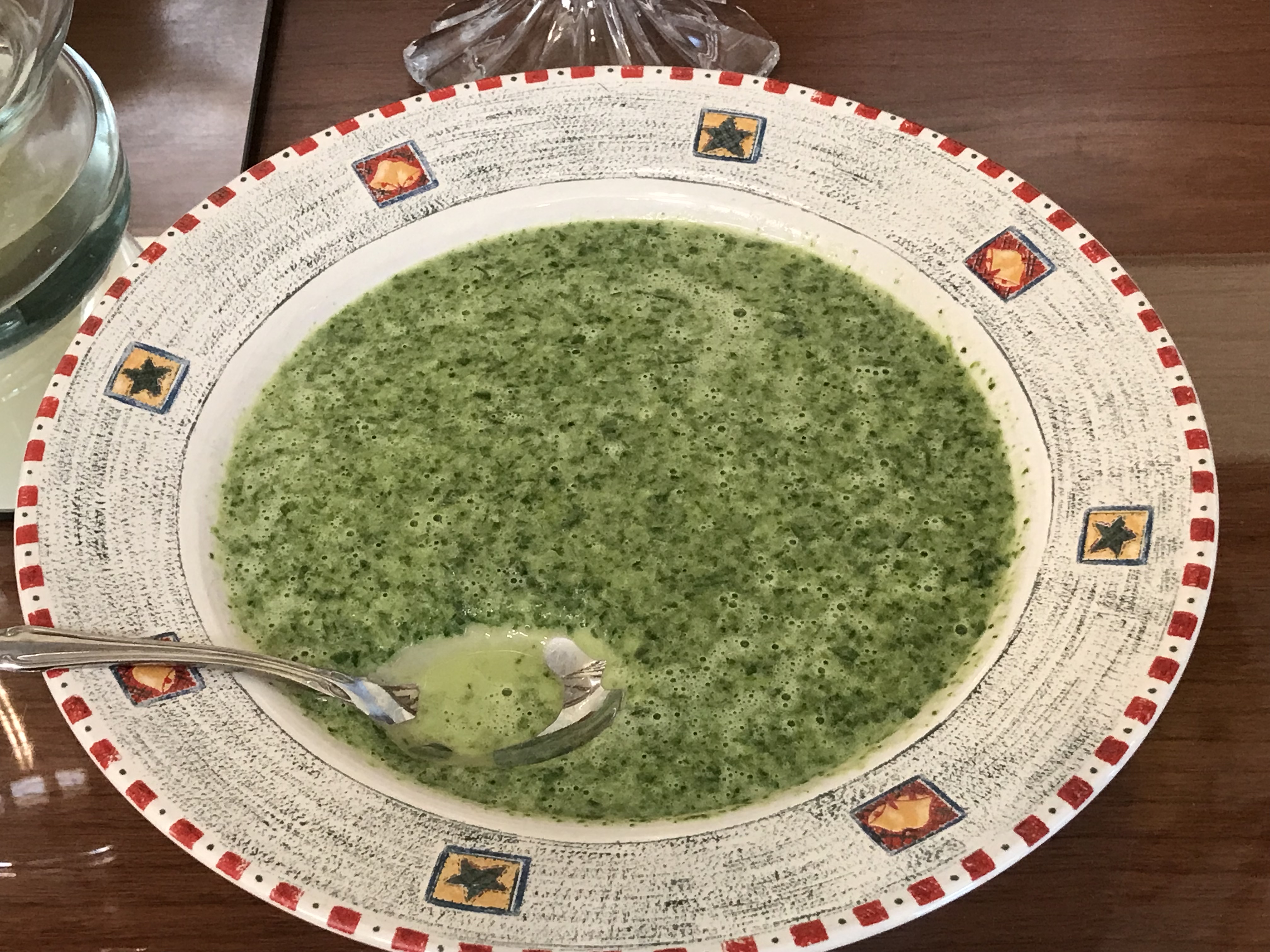
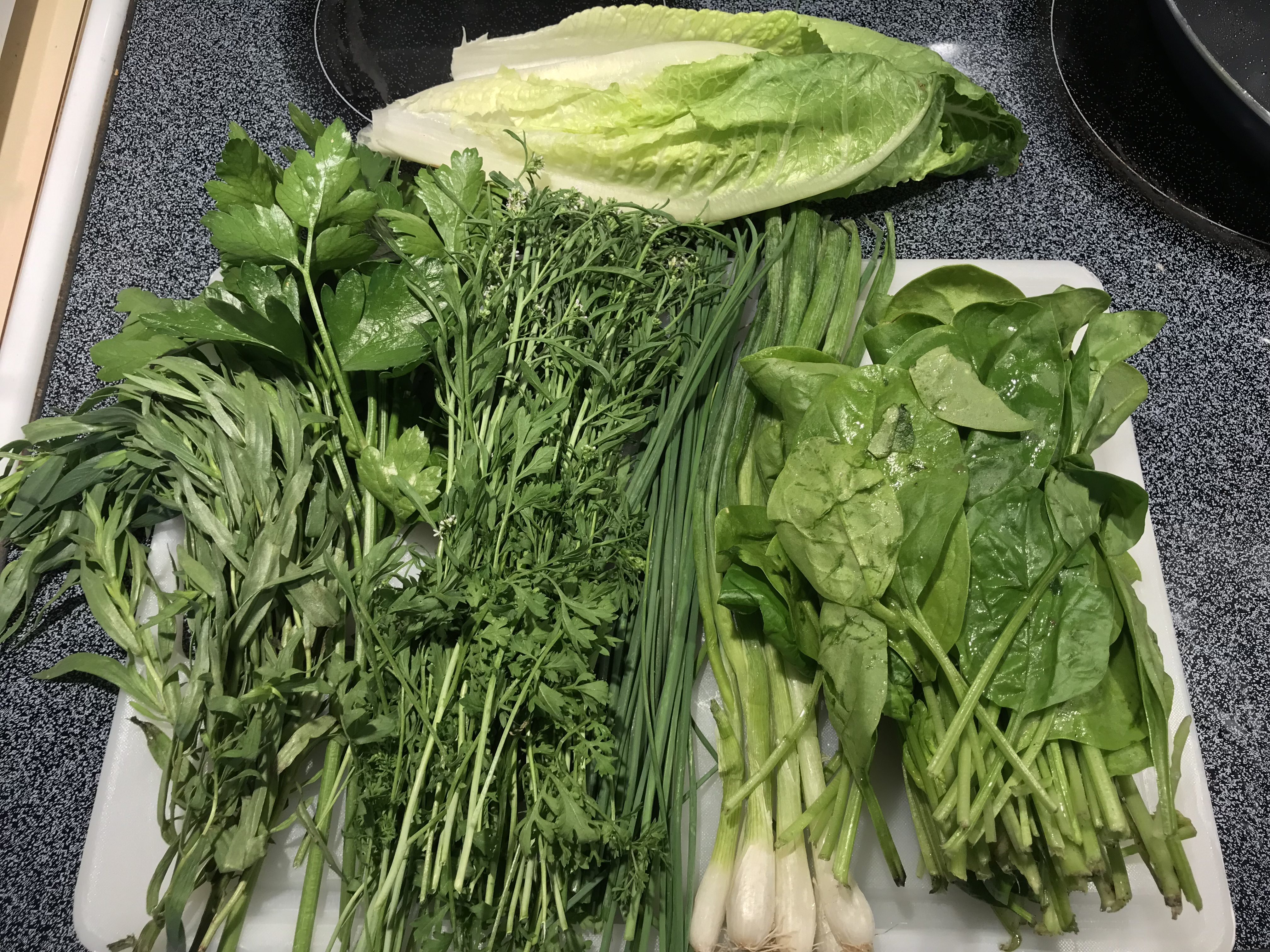
            The seven “herbs” I used were parsley, tarragon, watercress, chives, scallions, spinach, and lettuce. Cooked and pureed with vegetable broth and enriched with potato and cream, it was very fresh tasting. The only issue I had was that since I had never cooked with watercress before, I didn’t realize that the tougher stems needed to be removed, resulting in tough bits in the soup. Personally, I liked the extra texture they provided, but they weren’t supposed to be there.

            After Lent is over, an option is to use chicken or meat broth and add meatballs to the soup. Even though I made this in July, I stuck with the traditional Holy Week version to let the herbs shine. Served with some multigrain crackers, it was a light but complete meal, perfect to celebrate spring or summer.

Standard