
Menu: Arugula Salad with Bacon and Hazelnuts, Roman-Style Gnocchi, Fig, Walnut, and Almond Tart
Recommended Wine: Montepulciano d’Abruzzo, Purplish-Ruby with Berry and Spice Aromas
We are now invited to imagine dinner with a friend of Mr. Famularo’s at her home in Rome’s Trastevere district, across the Tiber from the historical city center. Though space is limited inside her apartment, it has a balcony overlooking a courtyard garden. For most of the year, it is warm enough to eat and socialize there, where the air is perfumed with roses and jasmine. (Text, page 22) Imagine that the pandemic is finally over and you can socialize without worry.
The original menu is one of indulgence for a small group, featuring foie gras, a favorite since ancient times. There are two options for how to serve this, both on an arugula salad garnished with toasted hazelnuts. The recipe has the foie gras sauteed in butter, then served on top the salad. Another option in the recipe header, for those who aren’t able to obtain or don’t want to work with pieces of foie gras, is to use slices of foie gras terrine. I found the statement that the slices of terrine “of course are not to be sauteed” somewhat amusing. This would not have been obvious to me, though I’m not an award-winning cookbook author whose taken multiple trips abroad with a career spanning decades. Or maybe I’m just an unsophisticated barbarian. Supposedly, the pieces of foie gras are frequently sold in convenient 2-ounce serving size containers and the terrine is available in most supermarket delis.
Maybe that’s true in New York City, but I have never seen either of those things at any supermarket or deli. Granted, I have never actually looked for them, but before the pandemic I browsed a number of grocery stores and meat markets to see what sort of interesting things they had. I’ve seen beef liver, chicken livers, beef tongue, whole Christmas geese, and even pigs’ feet, but no foie gras anything. At any rate, with the price and method of production, I wouldn’t buy it anyway. Thus, I needed to find a substitute ingredient.
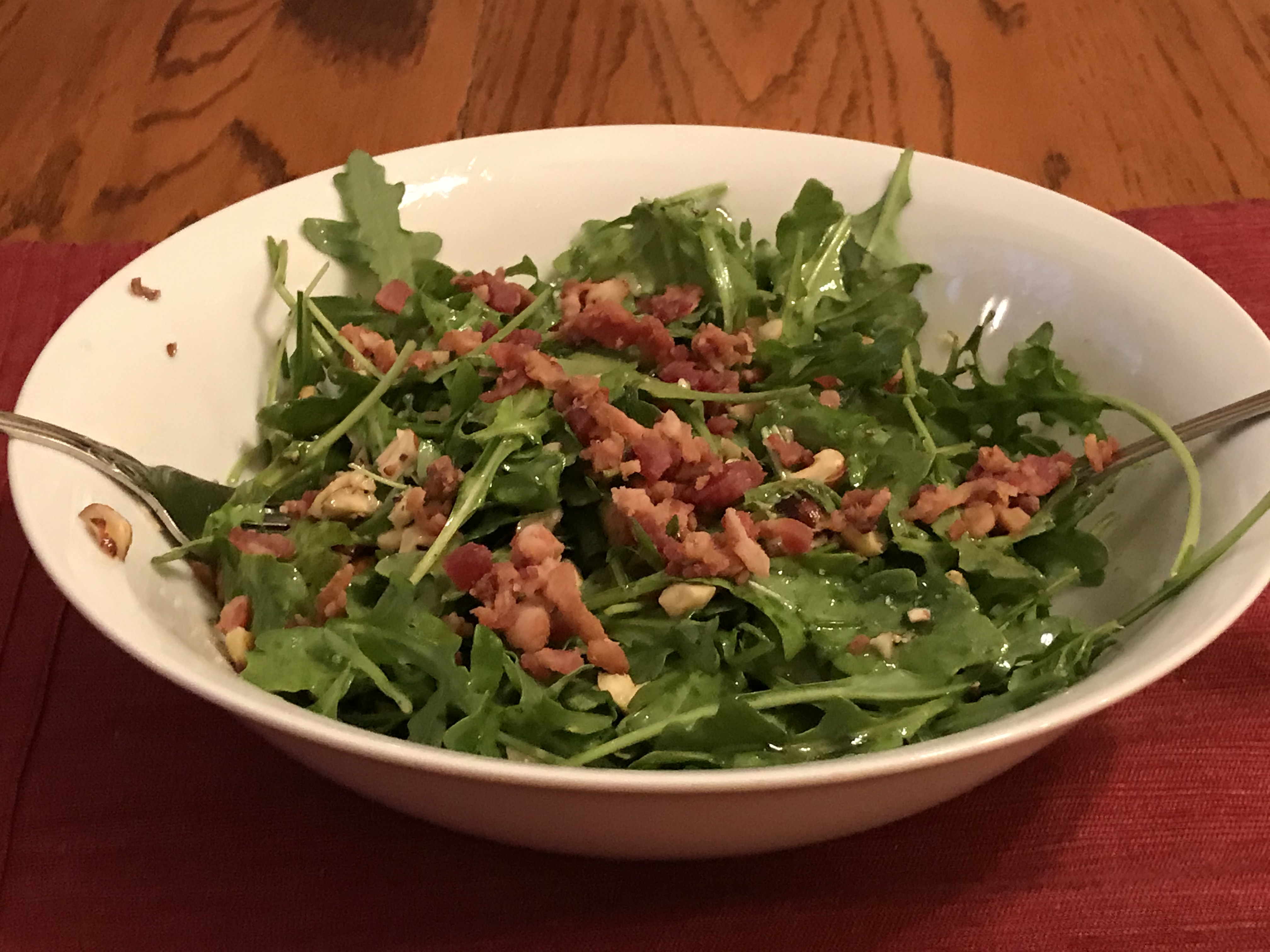
My first thought was to use chicken livers. Many large supermarkets have them, they aren’t expensive, and while not the same as fat-engorged duck or goose liver, they are still livers and still from poultry. If I could get over my squeamishness about eating liver, I could sauté them with extra butter to bring the fat level closer to that of actual foie gras. As it turns out, I’m not quite ready to go that far. As detailed in the previous post, I’ve eaten oxtail and loved it. I don’t think beef tongue would be an issue (it’s just another muscle). I’d even be willing to try pigs’ feet if they were cooked in a way to get the skin nice and crispy. Liver is still another story, though, especially knowing what the liver does. Besides, chicken livers look really unappetizing. In the end, I settled on bacon pieces. While not remotely the same thing as foie gras, it’s a good choice on almost any salad. All of the other salad ingredients were unchanged. Unsurprisingly, the blend of peppery arugula, salty bacon, and crunchy, toasty hazelnuts, accented with a vinaigrette, was delicious.
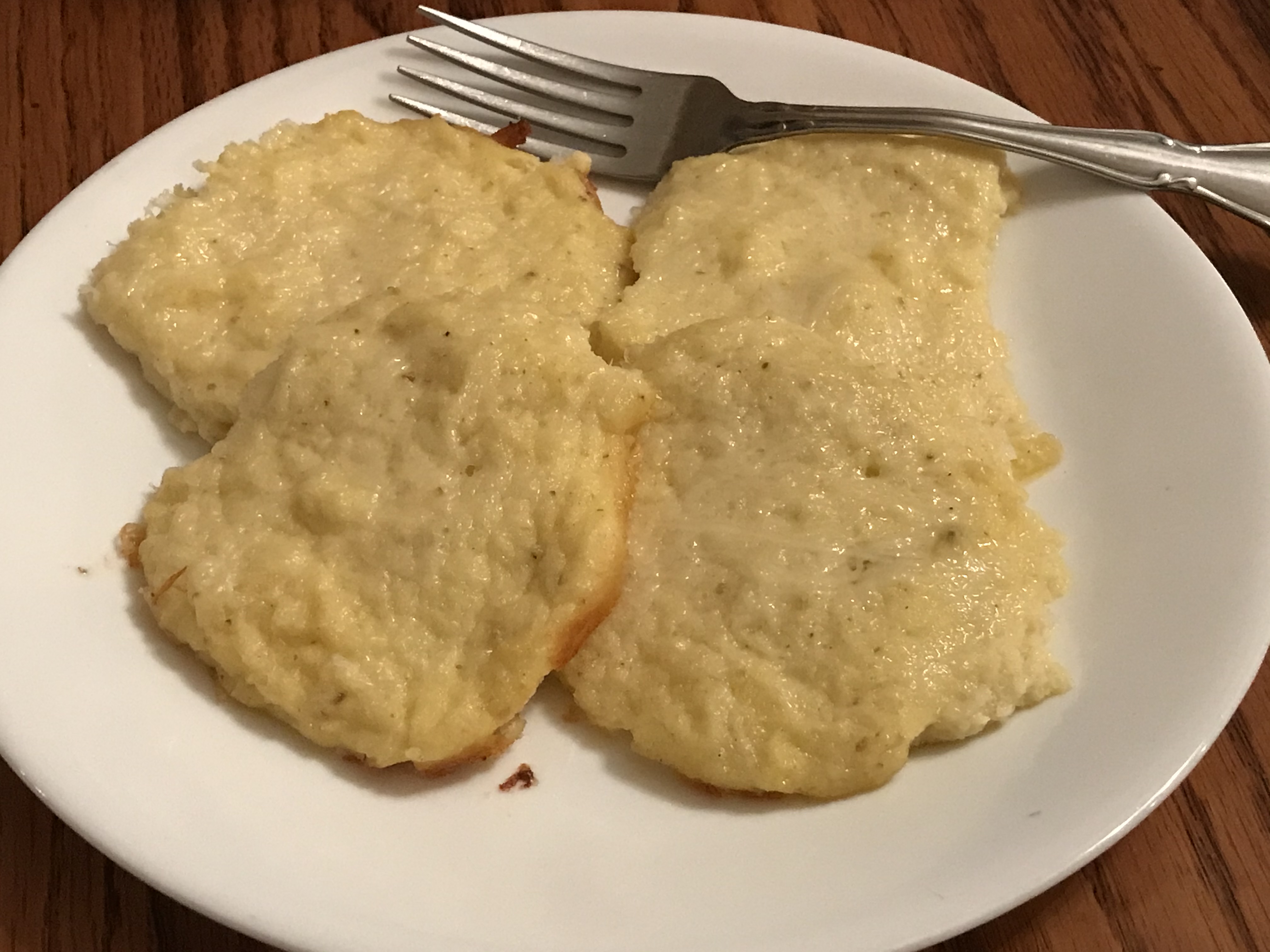
The next course was Roman-style gnocchi. Gnocchi are Italy’s version of the dumpling, the starchy filler to soak up the flavor of whatever it’s cooked with, found in various forms around the world. In most parts of Italy they are potato-based. What makes the Roman kind special is that they are made with semolina flour cooked in milk with nutmeg. Parmesan cheese and eggs are added to bind the mixture before it is cooled and cut into rounds. These are then topped with butter and more parmesan cheese and baked. I had some difficulty with these. The mixture didn’t firm up as much as I expected during cooling, which made cutting the circles out (with a glass) difficult. I ultimately resorted to forming them manually and layering them on the baking pan. My hands were a mess after this, but it worked pretty well. The end result was slightly crispy on the outside, soft and almost custardy on the inside, and delightfully rich.
Dessert was a pastry tart, this time with a layer of fig jam and another of ground almonds and walnuts, held together with eggs and sweetened. If you own the book, you might notice that the recipe calls for pine nuts, not walnuts. The thing is, pine nuts are really expensive. The recipe calls for over a cup, the little packets and bottles of them only contain around a third of that, and they each cost around four dollars. This would add up to at least twelve dollars just for pine nuts, and walnuts are a fraction of the cost. Plus, I’ve come to realize that most pine nuts, even from Italian brands, come from China. With recent aggression in the South China Sea, the broken treaty with Hong Kong, and the worst genocide since the Holocaust being conducted against Turkic-speaking Muslims in the western Xinjiang province, I would prefer to avoid buying Chinese goods whenever possible. It can’t be avoided entirely, but the more people forego Chinese goods in favor of alternatives, the more economic pressure will be put on the government. If enough people are committed, maybe they will be forced to reconsider their policies. Now, I wouldn’t normally get into politics on a food blog. However, this is more than politics. It is an issue of basic decency and treating other people like human beings. While no one can solve the issue on their own, everyone can do something. One easy way to start is to use American-grown California walnuts. Their flavor and texture makes for excellent pesto, and according to several episodes of The Great British Baking Show, figs and walnuts are a winning combination.
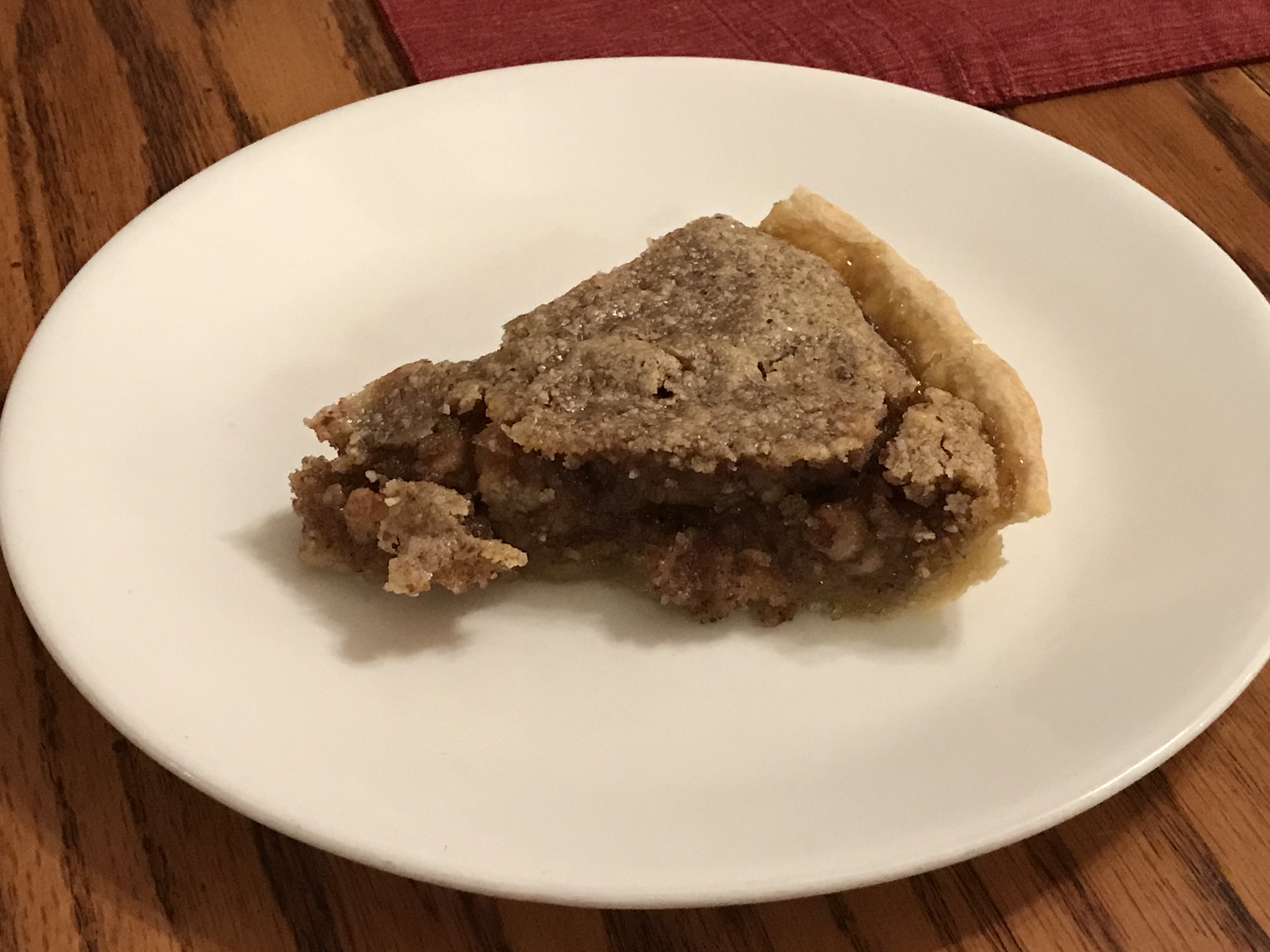
And they are. The fig jam and almond mixture are both pretty sweet, with the former being even sweeter than most other jams. Unlike almonds and pecans, walnuts don’t have much of a sweet flavor, making them an excellent choice to provide contrast. The tart was still a bit sweeter than I would have preferred, but the optional unsweetened whipped cream helped with this. Overall, it was really good. I opted to make the pastry rather than use a prepared pie shell. Called pasta frolla, it baked up nice and crispy. The crunch from the pastry and walnuts contrasted with the soft jam and almond mixture, and everything worked well together. I might reduce the sugar slightly if I were to make this again, but that’s just a matter of personal preference. A cup of coffee or tea adds further contrast.
 Feasting Through Time