egyptian cuisine, food history, recipes, vegetarian

Egyptian Rice and Beans: Kosheri

1000 Foods (pg. 711) for information, recipe is my own creation

            Kosheri or Kushari has nothing to do with kosher rules, but the Israelites may well have eaten an early variant in Egypt. Their Egyptian neighbors may have been eating it over a thousand years earlier, in the 3rd Millennium BC. Records indicate that wheat, barley, lentils, garlic, and onions were cooked together in clay pots for a combination of starch and protein. Ancient Egyptians may have added flavorings like butter, fat, or vinegar to make things more interesting, depending on what they could afford. At a time and place when most people ate little meat, the lentils were an essential source of protein.

            Even today, the starch/lentil combination is common in Egypt, particularly among those with less disposable income. Kosheri is a popular street food, often eaten for lunch. Rice, introduced at some point in the early centuries AD, is now the grain, pasta is added, sometimes browned in butter, and spicy tomato sauce is an essential flavoring. Interestingly, even though hot peppers didn’t really catch on in most of Europe when they were introduced from the Americas, Africans and Asians adopted them quickly and in much greater quantities. And presumably, early modern Egyptians found that tomatoes thrived in the sun and rich soil by the Nile.

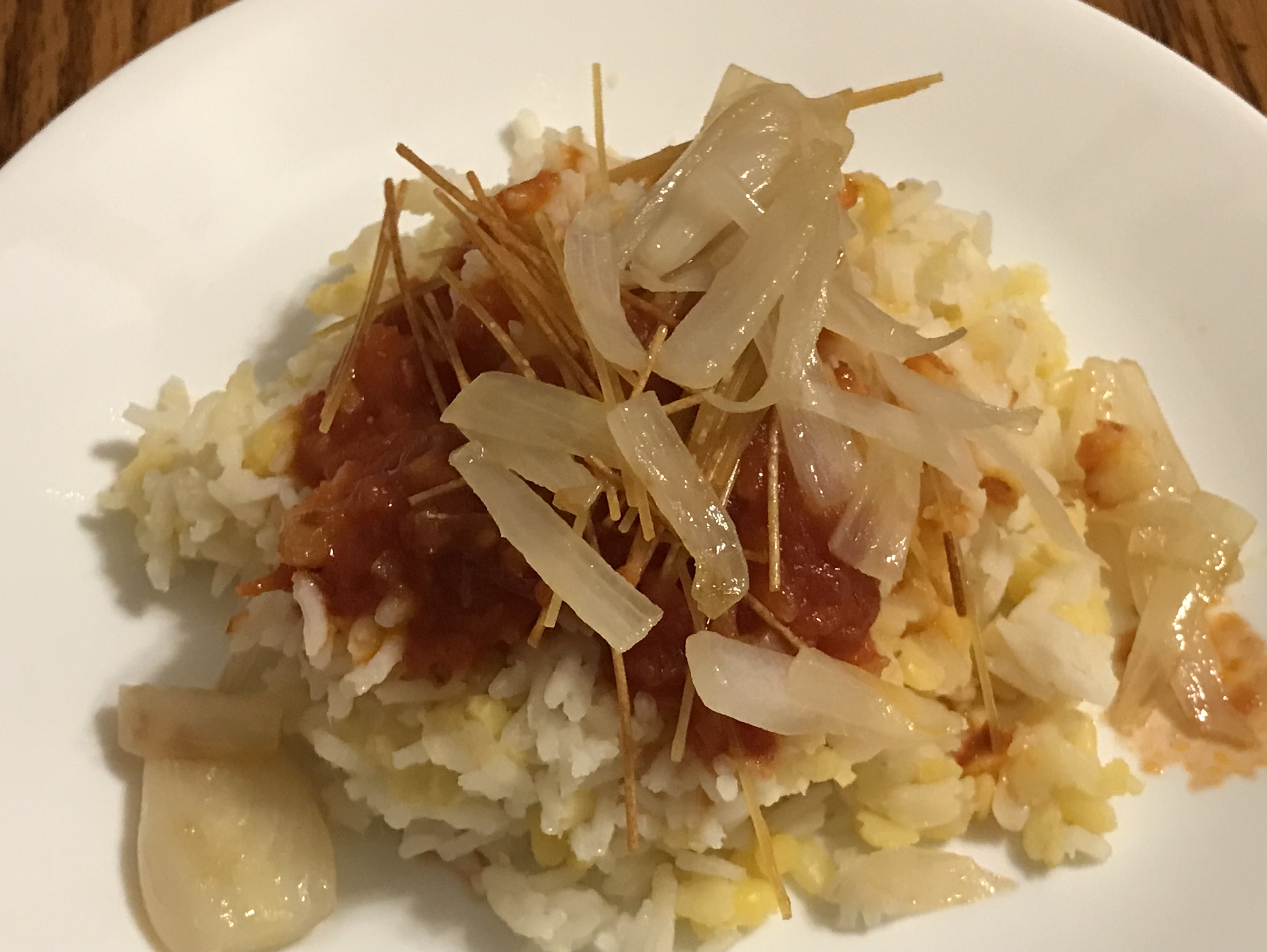
            To make kosheri, there are four elements needed: the rice/lentil mixture, tomato sauce flavored with garlic, vinegar, and hot pepper, onions browned in butter, and broken vermicelli (angel hair pasta), also browned in butter. Mimi Sheraton suggested that mastic was an essential flavoring so I tried it, but personally I think the kosheri is better without. It’s a balanced and flavorful vegetarian dish, and if the butter is replaced with oil, could even be made vegan.

            Here’s the recipe I developed. You need:

  • 2 cups long-grain rice
  • 1 cup lentils (I used the yellow variety, but other kinds would work)
  • Pinch mastic (optional, has a bit of a piney flavor)
  • Pinch salt
  • 1 tablespoon canola or vegetable oil
  • 6 cloves garlic, crushed and minced
  • ¼ cup vinegar (any kind but balsamic, which is too sweet)
  • 1 can crushed tomatoes, about 16 ounces
  • 1 yellow onion, peeled and thinly sliced
  • 4 tablespoons butter
  • 4 ounces vermicelli, broken into roughly 1-inch pieces

            To make it:

  1. For the sauce, heat the oil in a saucepan. When hot, add the garlic and cook until it starts to brown. Then add the vinegar and scrape the bottom of the pan.
  2. Stir in the crushed tomatoes, and leave sauce to simmer, stirring occasionally, while you prepare the rest of the ingredients.
  3. If using the mastic, grind it with a pinch of salt to reduce sticking.
  4. Bring 4 cups water to a boil, then add the lentils, salt, and optional mastic, partially cover the pot, and cook for 15 minutes.
  5. Add the rice and another cup of water, fully cover the pot, and cook another 15 minutes.
  6. Melt 2 tablespoons of the butter in a skillet over medium heat. Add the vermicelli and cook, stirring frequently, until the pasta browns. Empty the pasta onto a plate, but don’t wipe out the pan.
  7. Add the rest of the butter. When it’s melted, add the onions and cook, stirring frequently, until browned and reduced in volume.
  8. To serve the kosheri, add a portion of the rice/lentil mixture to each plate. Top with tomato sauce, sauteed onions, and browned vermicelli to taste.

            For more recipes, be sure to subscribe. It’s free, and you’ll get a notification whenever there’s a new post.

Standard
american cuisine, food history, recipes

Divine Citrus Refreshment: Ambrosia

1000 Foods (pgs. 519 – 520)

            According to Greek mythology, ambrosia was what the gods ate on Mt. Olympus. In the US, particularly the Southeast, it came to mean a mixture of oranges and grated coconut. It’s especially popular at Christmastime, peak season for oranges. In the past, difficulties with transportation made oranges and other citrus fruits relatively expensive in areas where they couldn’t be grown. As transportation improved in the late 19th Century and prices dropped, cooks in the US Southeast developed a layered dessert with sliced oranges and shredded coconut. A bit of powdered sugar helps the orange slices release some of their juices.

            Sometimes other fruits or a bit of liquor is added, but the oranges and coconut are always central. Presumably, this is the type of ambrosia featured in To Kill a Mockingbird, set in Alabama in the 1930s. Along with the ambrosia, Aunt Alexandra fixed three kinds of meat and two cakes. Presumably there was also bread, rolls, biscuits, or cornbread, and some sort of vegetables. In the 1950s, with the explosion in available convenience food, a mix of canned fruit, coconut, sometimes pecans and/or marshmallows, cool whip, and occasionally mayonnaise was developed. Without the mayonnaise, that actually sounds pretty good, but here we have the original, basic version.

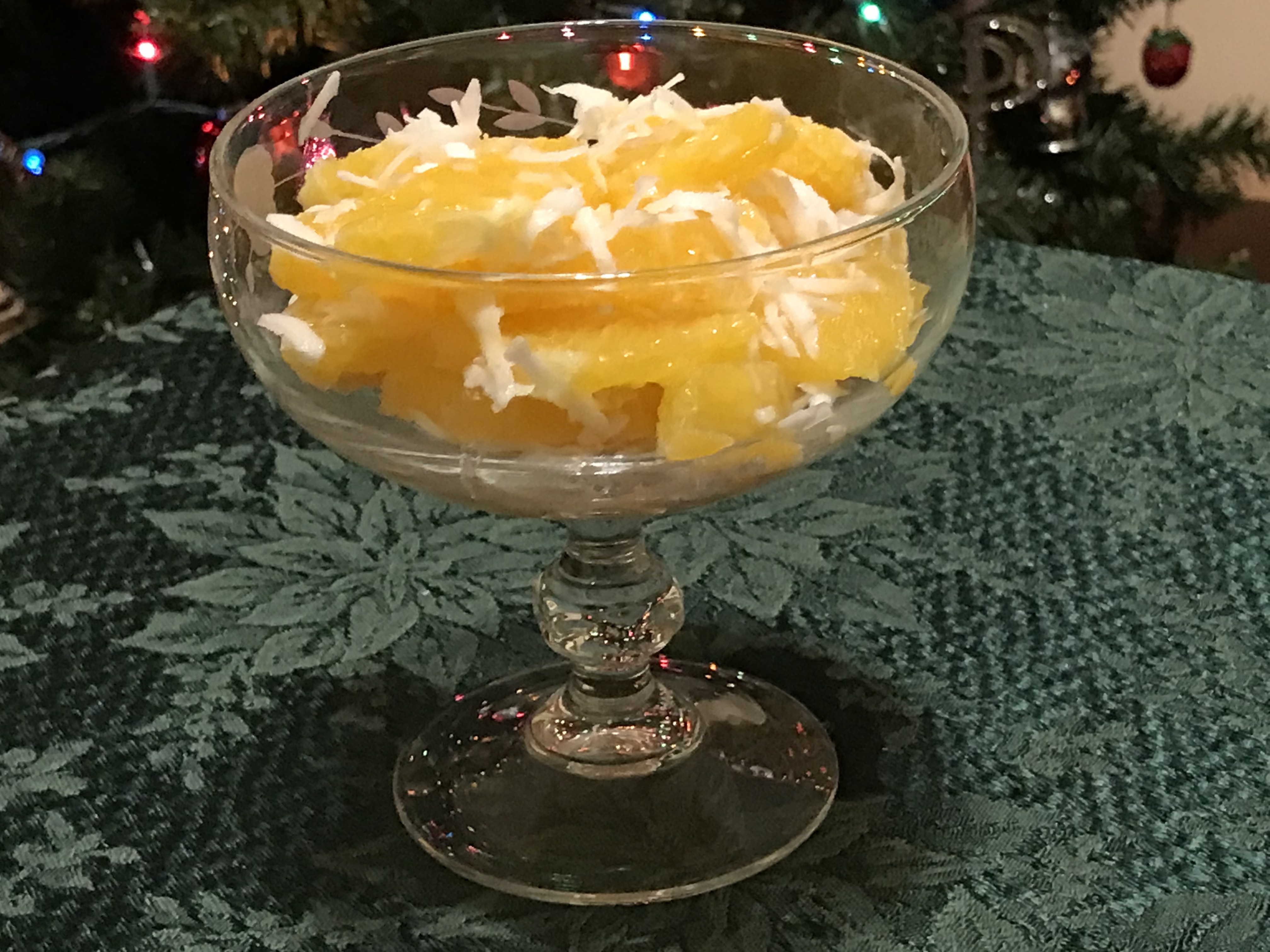
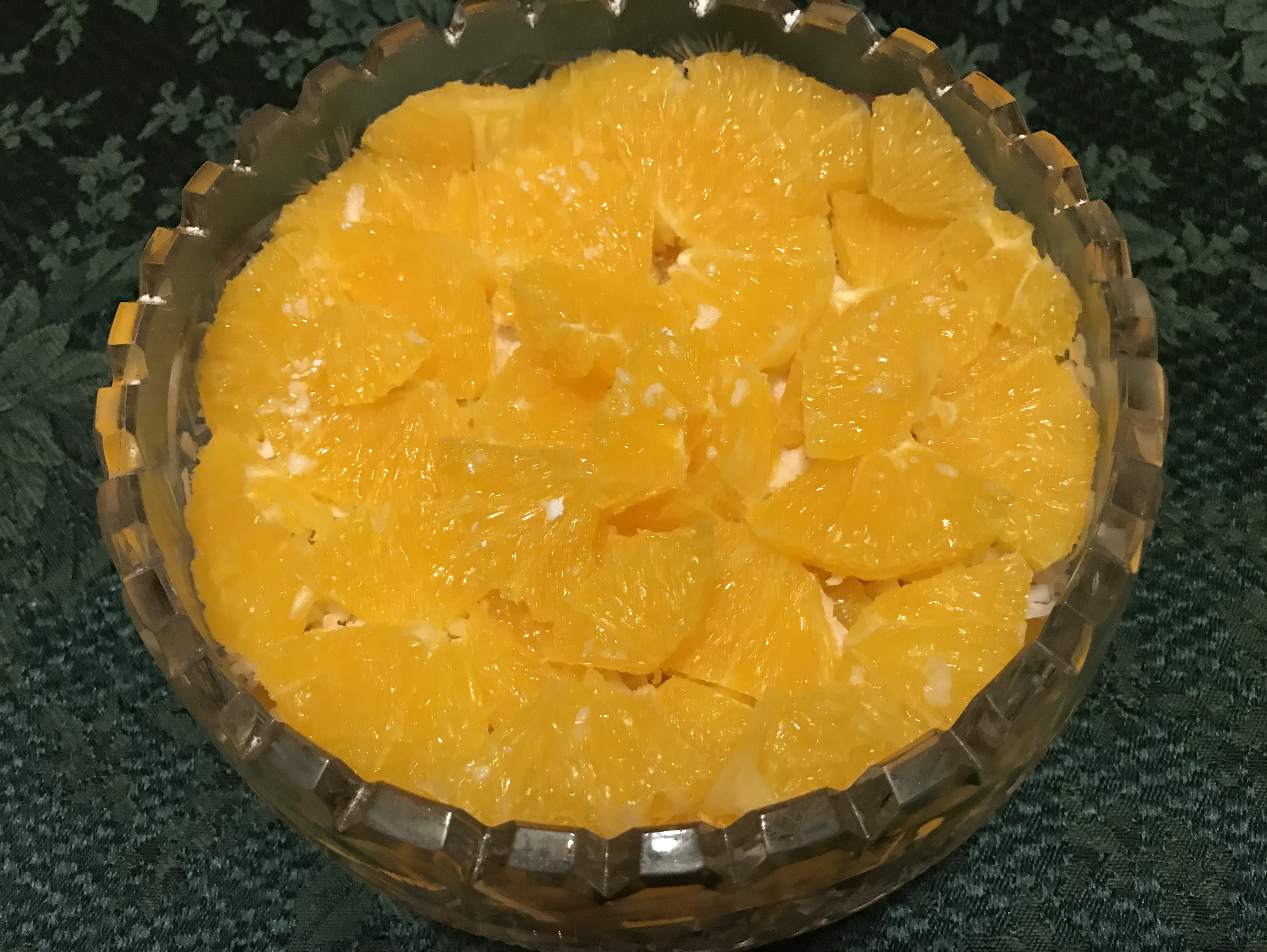
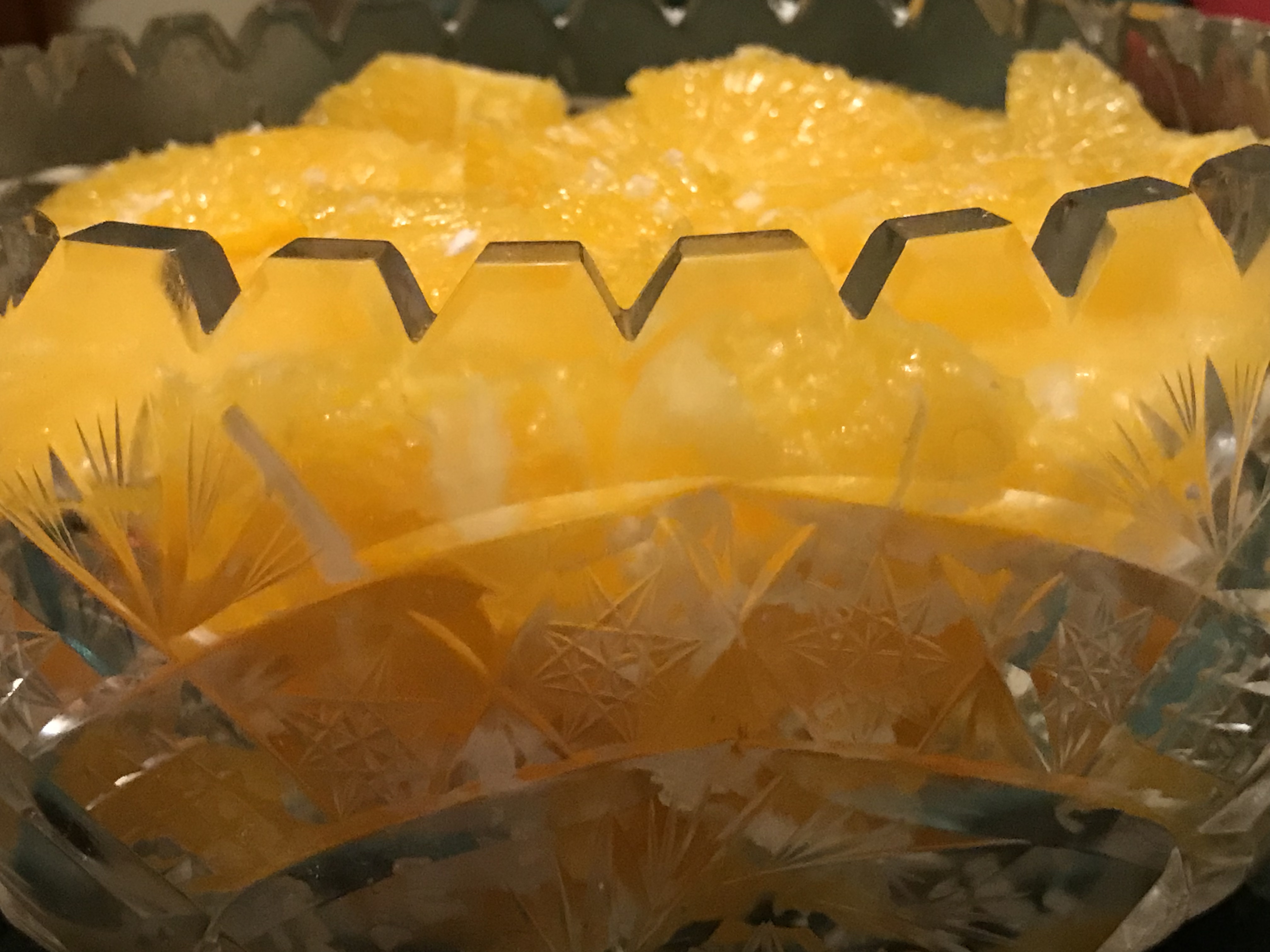
Doesn’t that look divine?

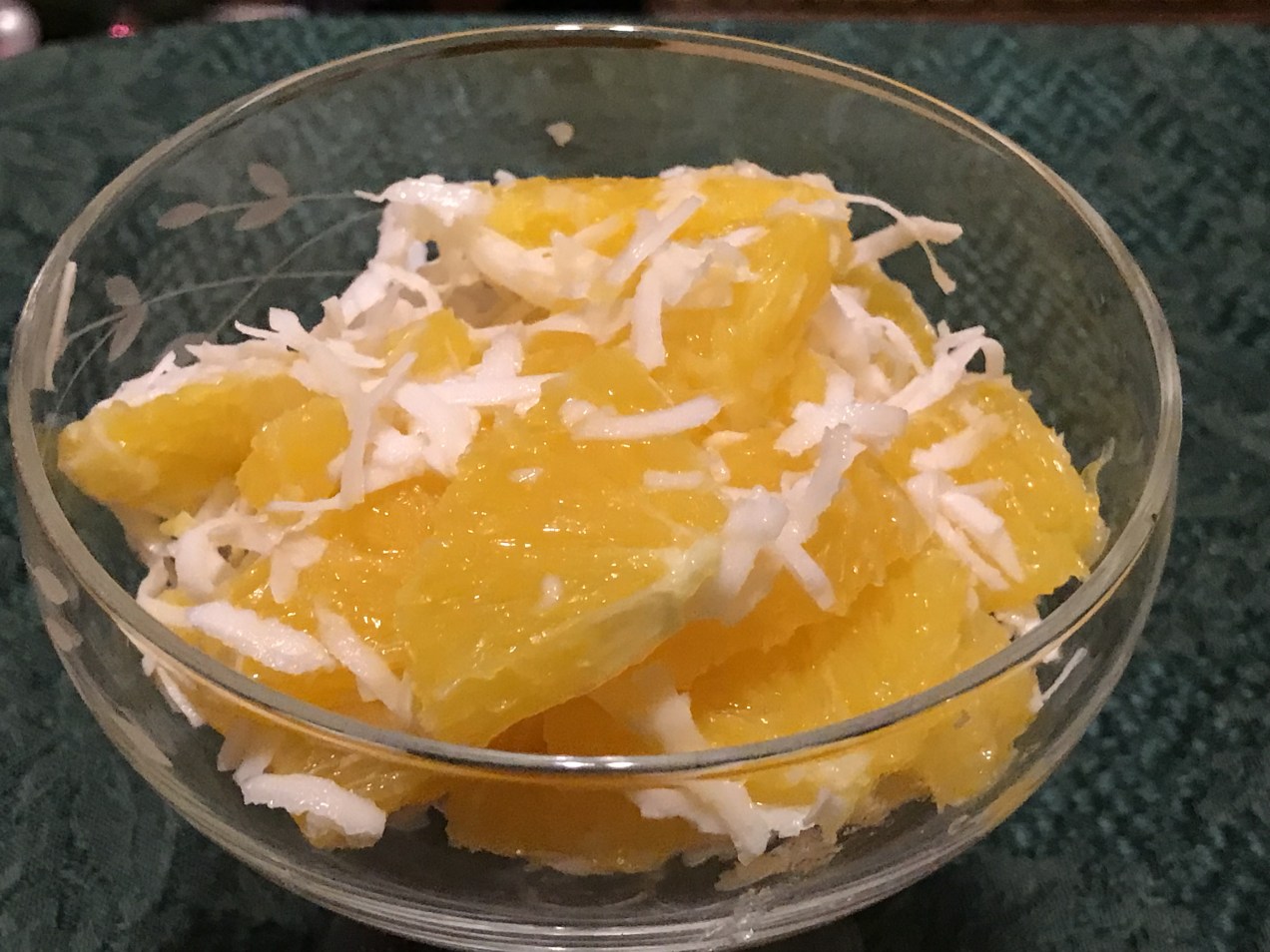
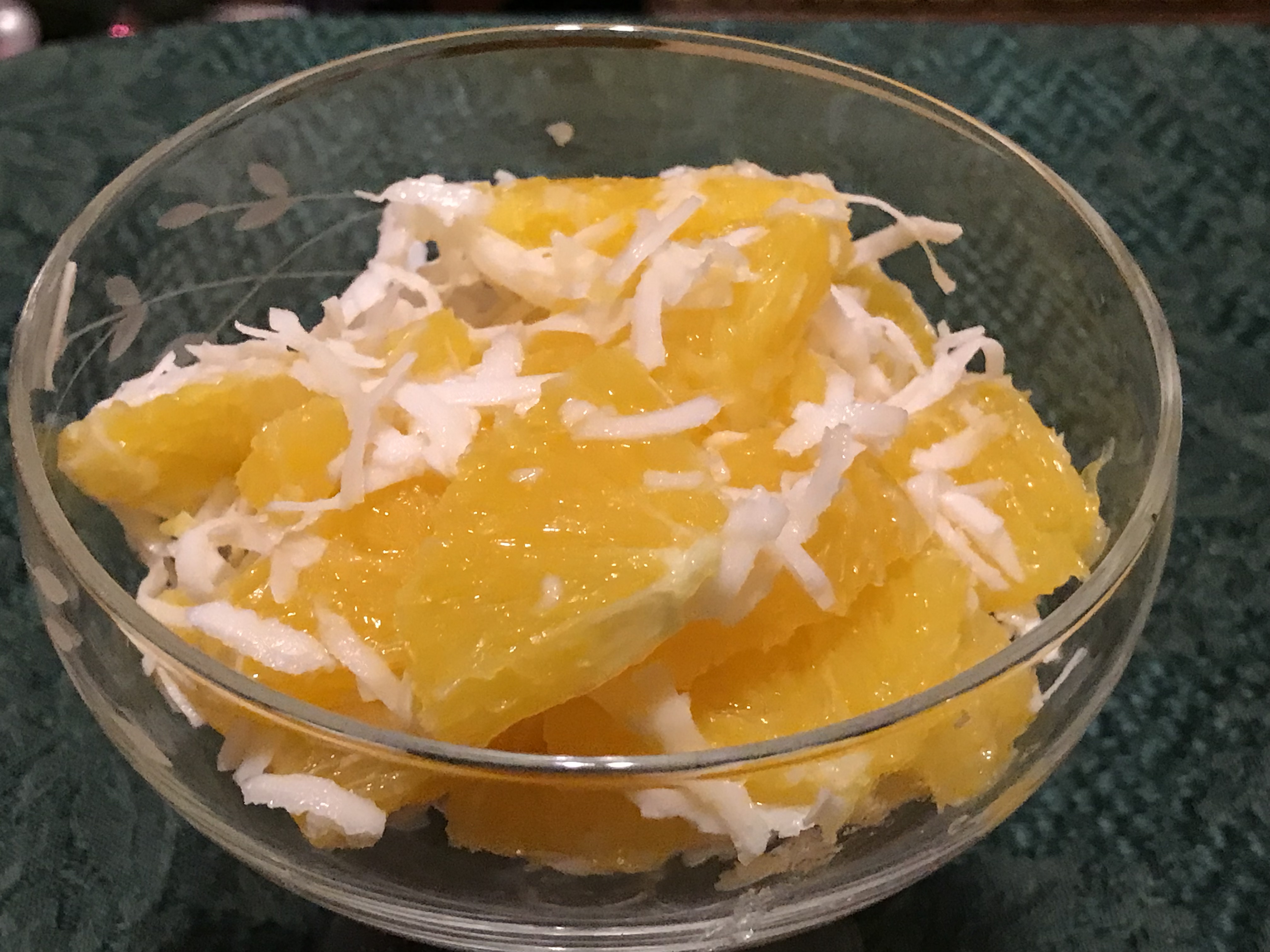
            It’s super simple to make. All you need are oranges, shredded coconut, and powdered sugar. I used five oranges and about a cup of coconut, soaked in hot water for about fifteen minutes to soften. The oranges are peeled, quartered, sliced, and layered in a glass serving dish. The slices are sprinkled with a bit of powdered sugar, then a layer of coconut, repeated until the oranges are used up. On the last layer of oranges is just the powdered sugar. The ambrosia is so pretty, and tastes just as good.

Standard
Uncategorized

Fraises au Jus Glace (Strawberries Ali-Bab)

Source: 1000 Foods (pgs. 92 – 93)

            In temperate climates, strawberries are one of the first fruits to ripen each season. While modern farming and shipping methods have made them available year-round, the fresh, ruby-red berries that come onto the market in early summer are special. Because fully ripe strawberries don’t ship or keep well, they are usually either flash-frozen or picked underripe for grocery store shelves. When the aromatic beauties appear at farm stands and farmers’ markets, people still go crazy for them. Many are eaten plain as a delicious, healthy snack or dessert. To preserve the bounty, they can be turned into jam (freezer jam is easy and maintains the aroma) and freeze very well. In fact, for winter desserts and smoothies, thawed frozen berries usually have a better flavor than out-of-season fresh berries.

            Of course, there are many ways to take advantage of the summer berries while they last. Every year I make at least one chocolate-strawberry pie with a cream cheese filling. Not only is it delicious, but it has an important virtue as a summer treat: the oven only needs to be turned on for long enough to bake the pie shell. For the same reason, if serving strawberries with pound cake, I’ve learned not to bake my own. During the winter I can use the oven to my heart’s content, but during summer the hour-long baking time almost inevitably leads to complaints. Luckily Sara Lee pound cakes are readily available in every grocery store, don’t heat up the kitchen, and have a quality level to complement the exquisite fruit.

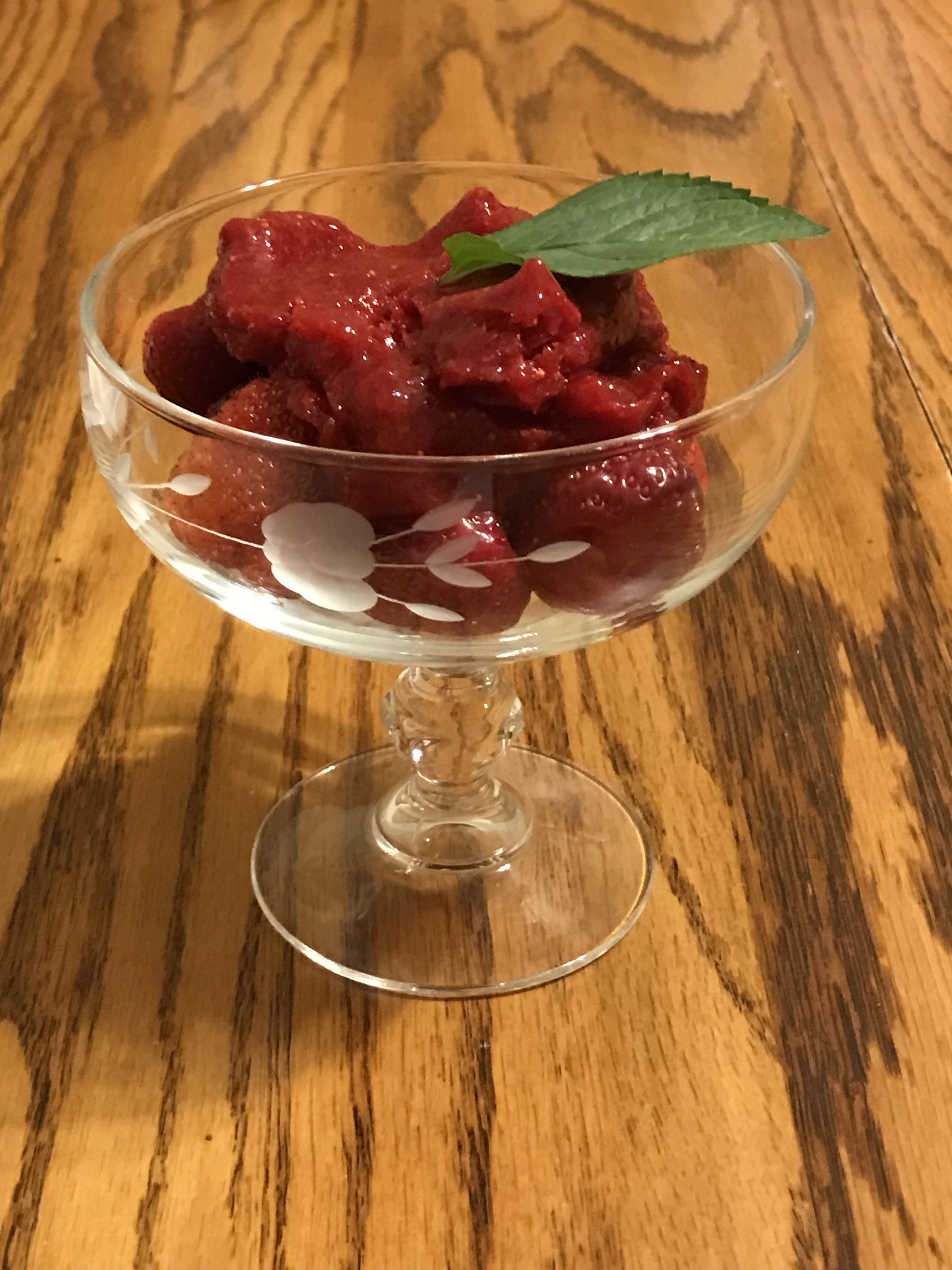
            This year, in addition to the aforementioned pie, I tried a new recipe suggested by Mimi Sheraton. Fraises au jus glace (otherwise known as strawberries Ali-Bab) is simple to make, just hull the strawberries, puree a few of the least pretty with a bit of sugar and lemon juice, partially freeze the mix, then toss with the rest of the berries. Adding a bit of orange liqueur to the frozen mix is optional, but I opted not to use any for a pure strawberry flavor. Good quality strawberries are essential, as pointed out by Ms. Sheraton.

            When the best strawberries are in season, this recipe was an excellent way to let them shine. Enhanced with just a bit of sugar (a few teaspoons among multiple people), there was nothing to overpower them, and the addition of the frozen puree as a “sauce” was a nice touch for summer. Between the flavor and very limited sugar, this will definitely make it into my annual recipe rotation.

Standard